The table below shows the percentage paid as tax on different income levels. Use it to answer the question. Tax System | $100 | $500 | $1000 Q | 10% | 10% | 10% T | 90% | 70% | 30% S | 20% | 65% | 40% R | 10% | 40% | 70% Which tax system is progressive? Tax system
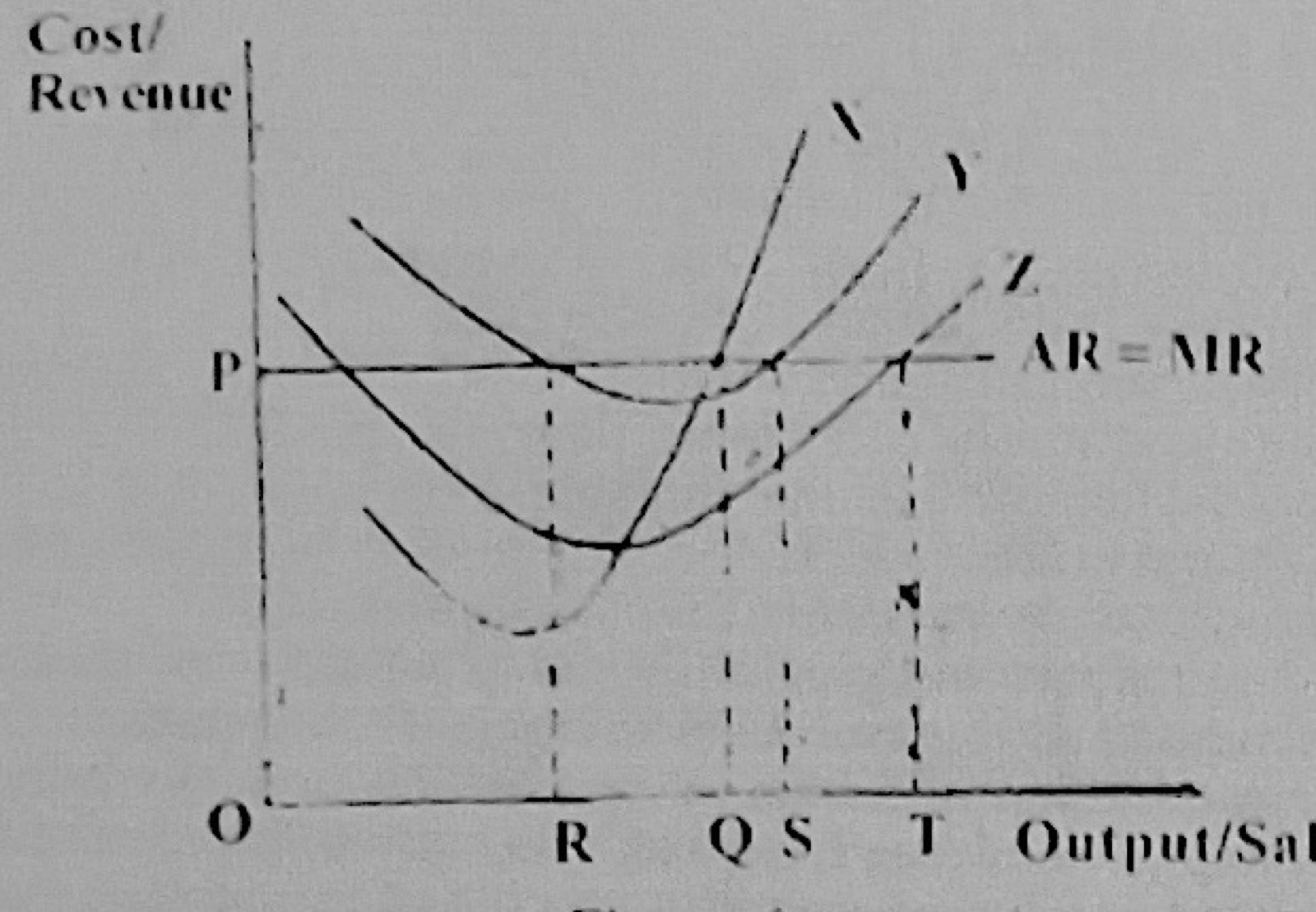
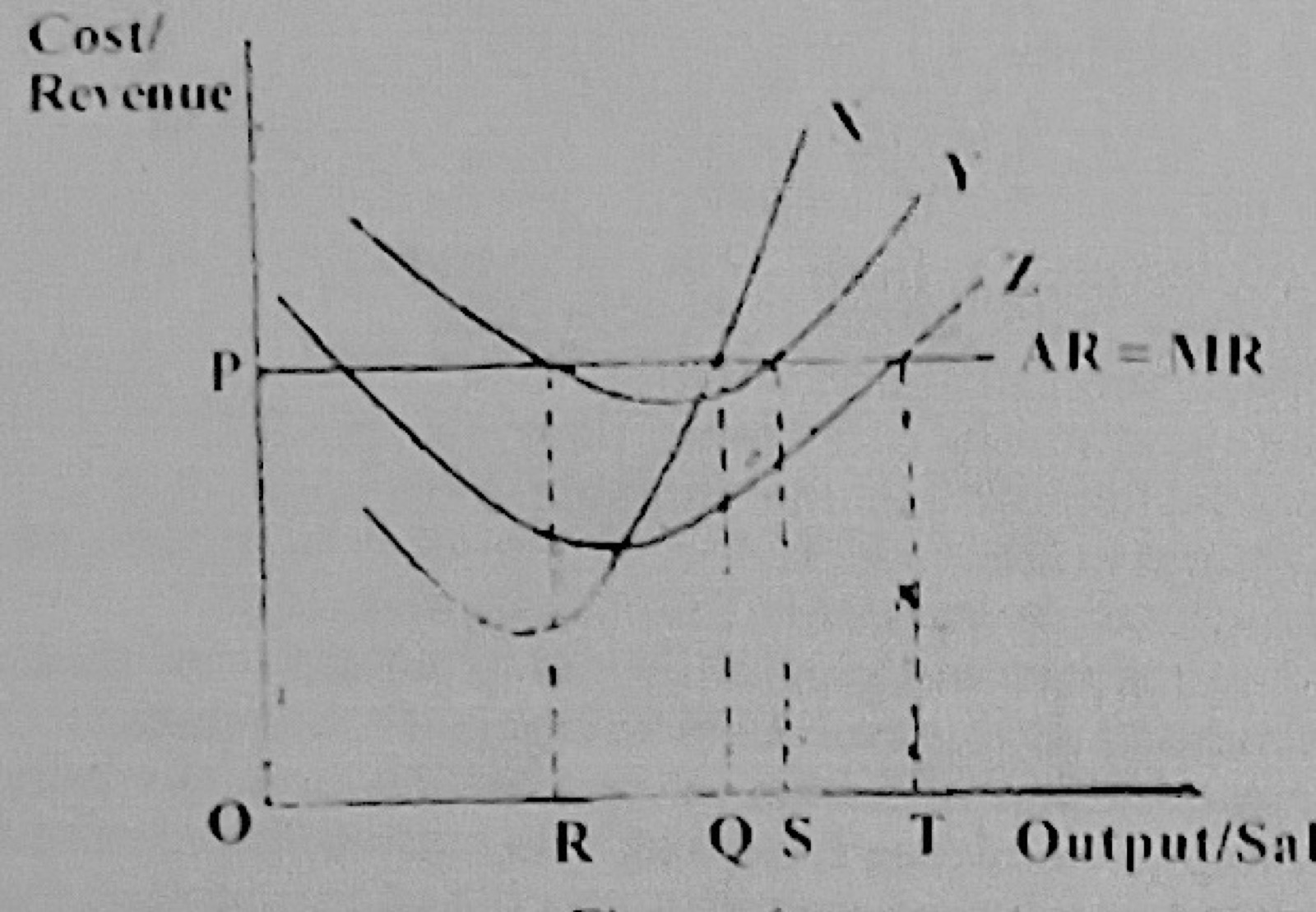
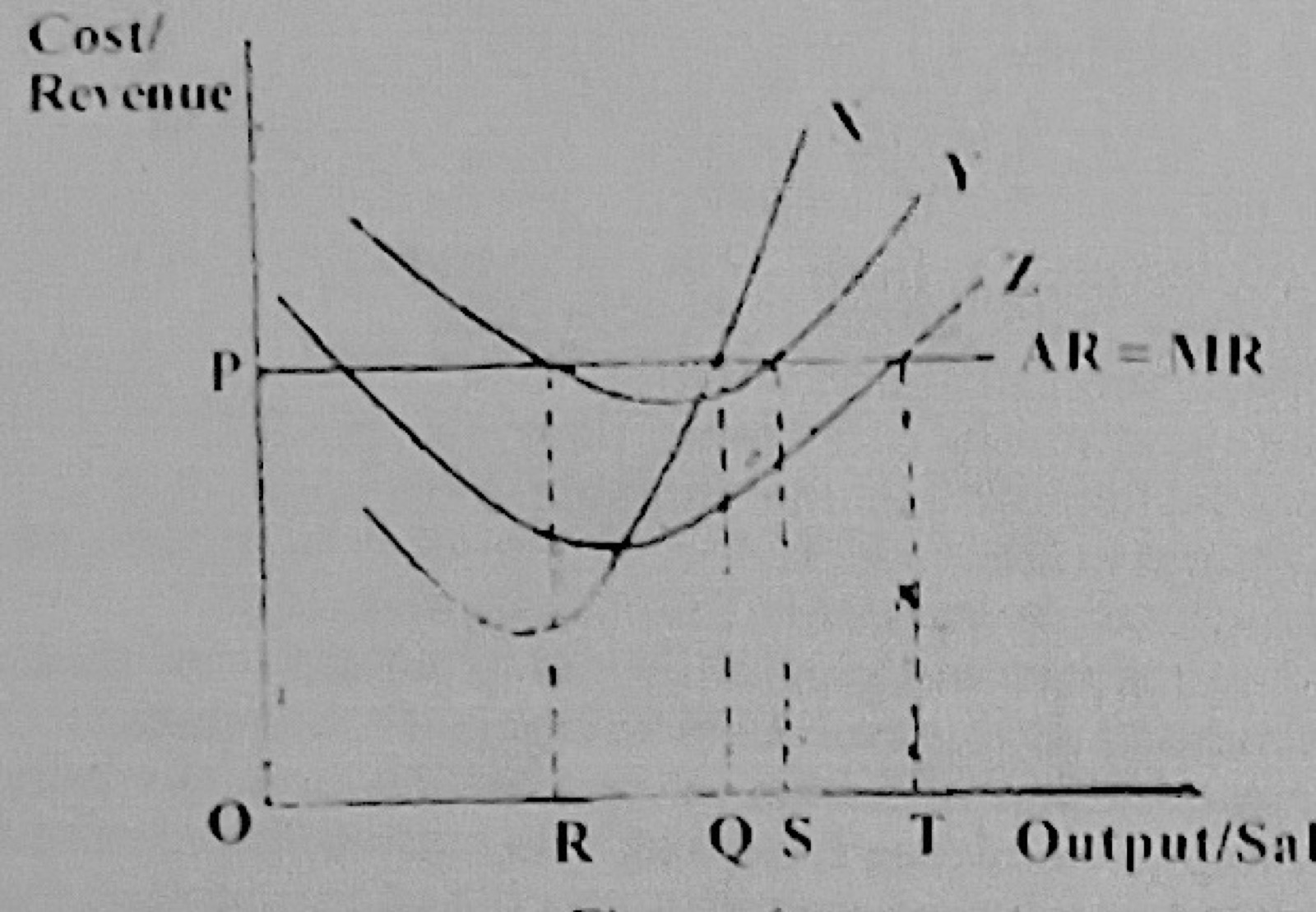
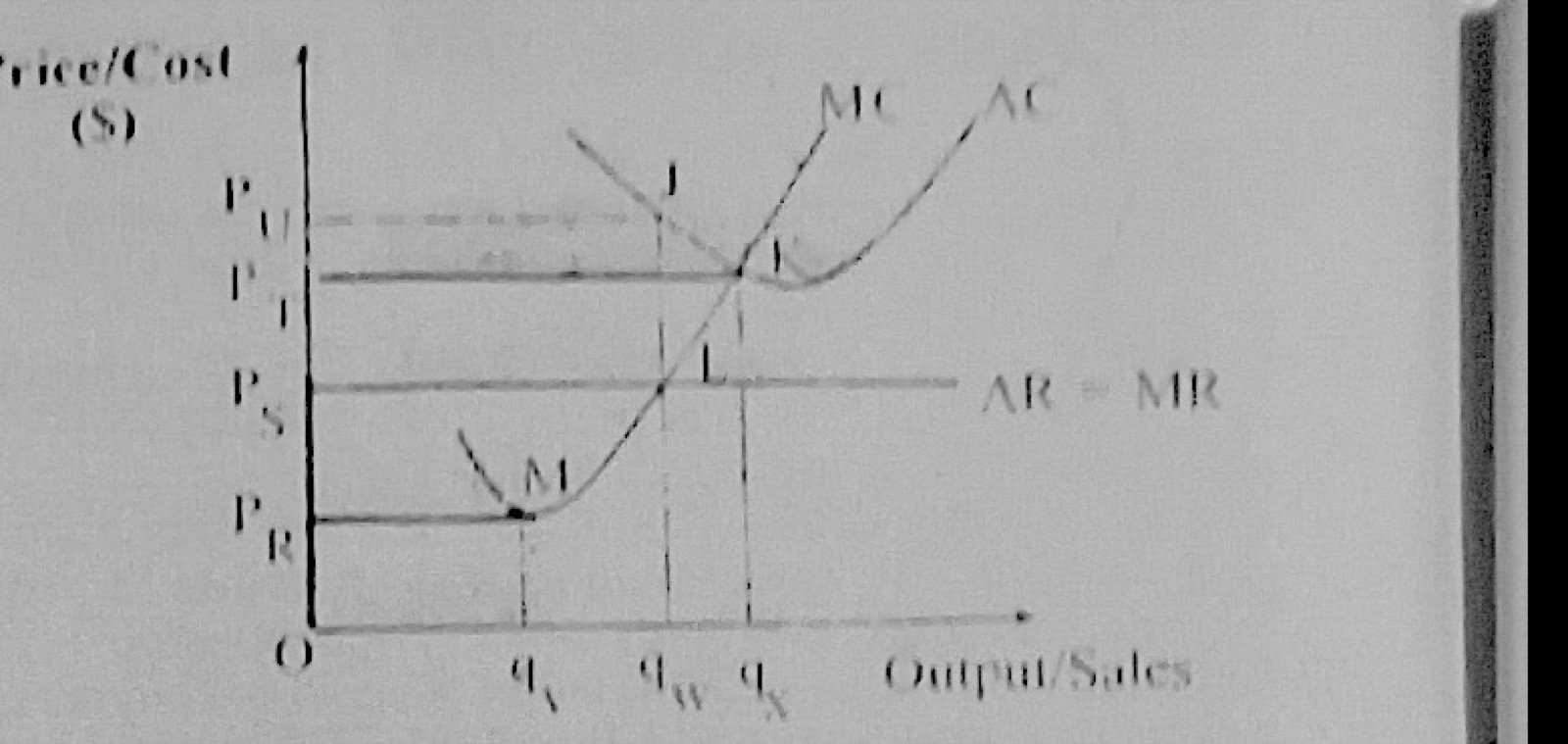
Figure 1 below shows the output, cost and revenue position of a business producing tissue paper. Study the diagram and answer the questions that follow. (a) Determine the firm's equilibrium price and output. (b) Which of the curves represents the market's demand curve? (c) In what market is the firm operating? Give a reason for your answer. (d) At the profit maximizing level of output, identify the area that represents: (i) total revenue; (ii) total cost; (iii) profit or loss. (e) What is the implication of the profit or loss earned on the market in 1(d)(iii)?
Show the model answer
Model answer
(a) Price PS; output qW (where MC = MR at L, MC rising). (b) The AR = MR line (the firm's demand curve; horizontal at PS). (c) Perfect competition: price is constant and P = AR = MR (the firm is a price taker). (d)(i) TR = rectangle OPSLqW; (ii) TC = rectangle OPUJqW (AC at qW is at J); (iii) loss = rectangle PSPUJL. (e) The firm is making a loss (price below average cost). In the short run it continues only if price covers average variable cost; in the long run, if losses continue, firms leave the industry until the remaining firms earn normal profit.
The terms of trade position for Country X for the years 2020 and 2021 are stated in table 1 below. Study the table and answer the questions that follow. Year | Price index of exports | Price index of imports 2020 | 180 | 150 2021 | 160 | 200 (a) Calculate the terms of trade for Country X in 2020 and 2021. (b) In what year(s) is the terms of trade: (i) favourable; (ii) unfavourable? Give a reason for your answer in each case. (c) State any two likely reasons for the terms of trade position identified in 2(b)(ii). (d) If the balance of trade in 2022 is $4,062,500 and the current account balance is $812,500, determine the country's balance of invisible trade. Explain your answer.
Show the model answer
Model answer
(a) 2020: 180/150 × 100 = 120; 2021: 160/200 × 100 = 80. (b)(i) Favourable in 2020: the figure (120) is above 100, so export prices are high relative to import prices and each unit of exports buys more imports. (ii) Unfavourable in 2021: the figure (80) is below 100, so export prices are low relative to import prices. (c) Any two: fall in world prices of the country's (primary) exports; rise in prices of imported manufactured goods; imported inflation; fall in demand for the exports; poor quality of exports; devaluation of the currency. (d) Current account = balance of trade + invisible balance, so invisible balance = 812,500 − 4,062,500 = −$3,250,000: a deficit, meaning the country pays more for services from abroad than it earns from services sold abroad.
Explanation
Terms of trade above 100 is favourable; below 100 is unfavourable.
(a) Distinguish between complementary goods and substitute goods. (b) Using diagrams, explain how a decrease in the supply of meat, other things being equal, will affect the equilibrium price and quantity of: (i) meat; (ii) fish.
Show the model answer
Model answer
(a) Complementary goods are used together, so demand for one depends on the other (e.g. car and petrol); substitute goods can be used in place of each other, so they compete (e.g. meat and fish). (b)(i) Meat: supply shifts left (S0S0 to S1S1) with demand unchanged; equilibrium price rises (P0 to P1) and quantity falls (q0 to q1). (ii) Fish: dearer meat makes consumers switch to fish, so demand for fish shifts right (D0D0 to D1D1) with supply unchanged; equilibrium price and quantity of fish both rise. Two labelled diagrams.
(a) Define minimum price control. (b) Identify any three reasons governments should introduce minimum prices for agricultural produce. (c) Outline any three disadvantages of imposing minimum price control on agricultural produce.
Show the model answer
Model answer
(a) Minimum price control is the fixing by government of a price, above the equilibrium, below which a commodity may not be sold (a price floor). (b) Any three: to protect farmers' incomes from exploitation by middlemen and buyers; to stabilise farm incomes against price fluctuations; to encourage production and food security; to raise the living standard of farmers; to help farmers plan; to reduce rural-urban drift. (c) Any three: surpluses and waste if storage is poor; government must spend money buying up surpluses; higher food prices for consumers; inefficient farmers are protected; black markets/selling below the legal price; resources may be wrongly allocated.
Explanation
A price floor creates a surplus that must be handled.
(a) Define production costs. (b) Distinguish between real cost and explicit cost. (c) With an example each, distinguish between fixed input and variable input. (d) State any four types of short-run costs.
Show the model answer
Model answer
(a) Production costs are all the expenses a firm incurs in producing goods and services (payments for factors and materials). (b) Real cost is the opportunity cost of a choice – the next best alternative forgone; explicit cost is the actual money payment made to outsiders for factors and materials (e.g. wages, rent). (c) A fixed input is one whose quantity cannot be changed in the short run, e.g. factory building, machinery; a variable input can be changed with output in the short run, e.g. raw materials, casual labour, fuel. (d) Any four: total fixed cost; total variable cost; total cost; average fixed cost; average variable cost; average total cost; marginal cost.
(a) Define monopoly. (b) State any three factors that give rise to monopolies. (c) With the aid of a diagram, explain the supernormal profit position of a monopolist.
Show the model answer
Model answer
(a) A monopoly is a market with a single seller of a product that has no close substitute, with barriers that keep other firms out. (b) Any three: patents and copyrights; government licence or law (statutory monopoly); sole control of a raw material; economies of scale (natural monopoly); huge capital requirement; mergers/cartels. (c) The monopolist produces where MC = MR (MC cutting MR from below) and charges the price read from the AR (demand) curve at that output. Because AR is above AC at that output, it earns supernormal profit = (AR − AC) × output, shown as the rectangle between price and AC above the equilibrium output. Diagram: downward-sloping AR and MR (MR below AR), U-shaped MC and AC, shaded profit rectangle.
(a) State any three instruments traded in the money market. (b) With a relevant example each, explain the condition under which a manufacturer will seek for funds from the: (i) money market; (ii) capital market. (c) Explain any three functions of Development banks.
Show the model answer
Model answer
(a) Any three: treasury bills; treasury certificates; commercial papers; bills of exchange; call money; certificates of deposit; bankers' acceptances. (b)(i) Money market – for short-term needs, e.g. to buy raw materials or pay wages for a few months (working capital) through an overdraft or commercial paper. (ii) Capital market – for long-term needs, e.g. to build a new factory or buy machinery, by issuing shares or debentures or taking a long-term loan. (c) Any three: provide medium- and long-term loans for agriculture, industry and other development projects; give technical and managerial advice to borrowers; help prepare feasibility studies; take equity stakes in new firms; promote small and medium enterprises; channel government and foreign funds to development.
Explanation
Short-term needs: money market; long-term needs: capital market.
(a) What is a regressive system of taxation? (b) Explain the following principles of taxation: (i) equity; (ii) certainty; (iii) economy. (c) Outline any three reasons why government imposes tax in a country.
Show the model answer
Model answer
(a) A regressive tax system is one in which the rate of tax falls as income rises, so the poor pay a larger share of their income than the rich. (b)(i) Equity: tax should be fair, according to ability to pay. (ii) Certainty: the amount, time and method of payment should be clear to the taxpayer. (iii) Economy: the cost of collecting a tax should be small compared with the revenue. (c) Any three: to raise revenue; to redistribute income; to discourage harmful goods; to protect local industries; to control inflation; to correct balance of payments deficit; to control monopolies.