A group of students took a test and the following frequency table shows the scores: Score: 0, 1, 2, 3, 4, 5 Frequency: 2, 3, 4, 2, 7, 2 Find the mean score
A.1.75
B.2
C.2.5
D.2.75
E.3
Show the answer and explanation
Answer: D (2.75)
Explanation
Σfx = 0 + 3 + 8 + 6 + 28 + 10 = 55 and Σf = 20, so the mean = 55 ÷ 20 = 2.75.
A group of students took a test and the following frequency table shows the scores: Score: 0, 1, 2, 3, 4, 5 Frequency: 2, 3, 4, 2, 7, 2 The median score is
A.0
B.2.5
C.3
D.5
E.7
Show the answer and explanation
Answer: C (3)
Explanation
There are 20 scores, so the median is the average of the 10th and 11th. Cumulative frequencies are 2, 5, 9, 11, …, so both the 10th and 11th scores are 3.
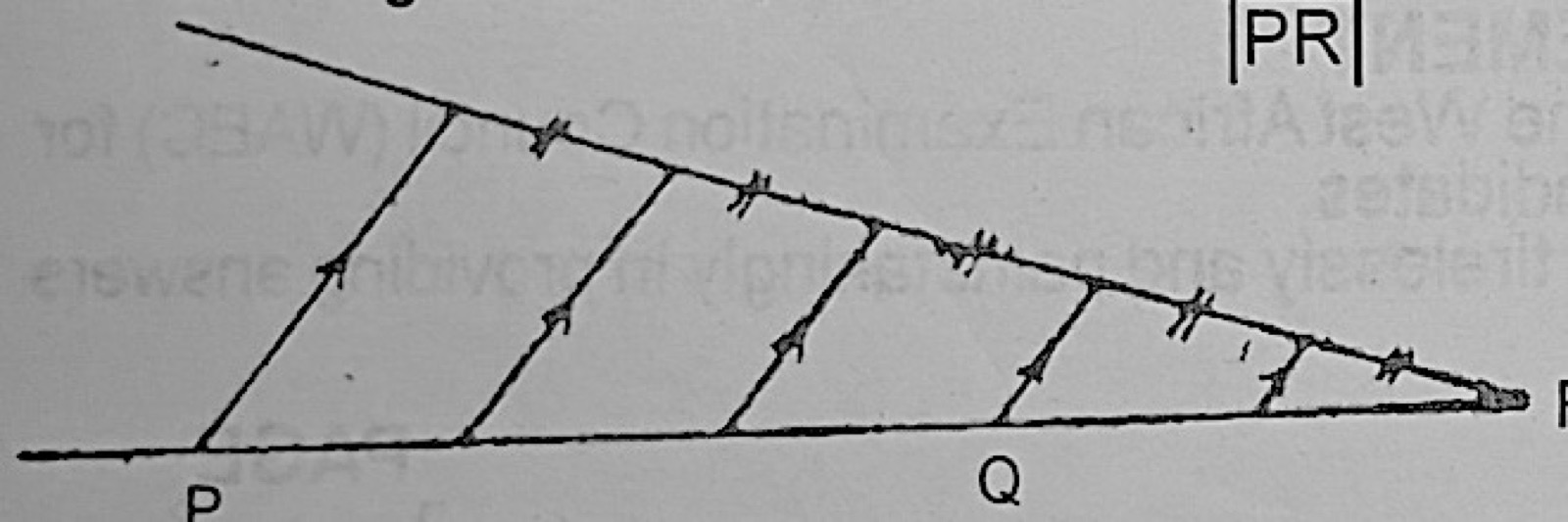
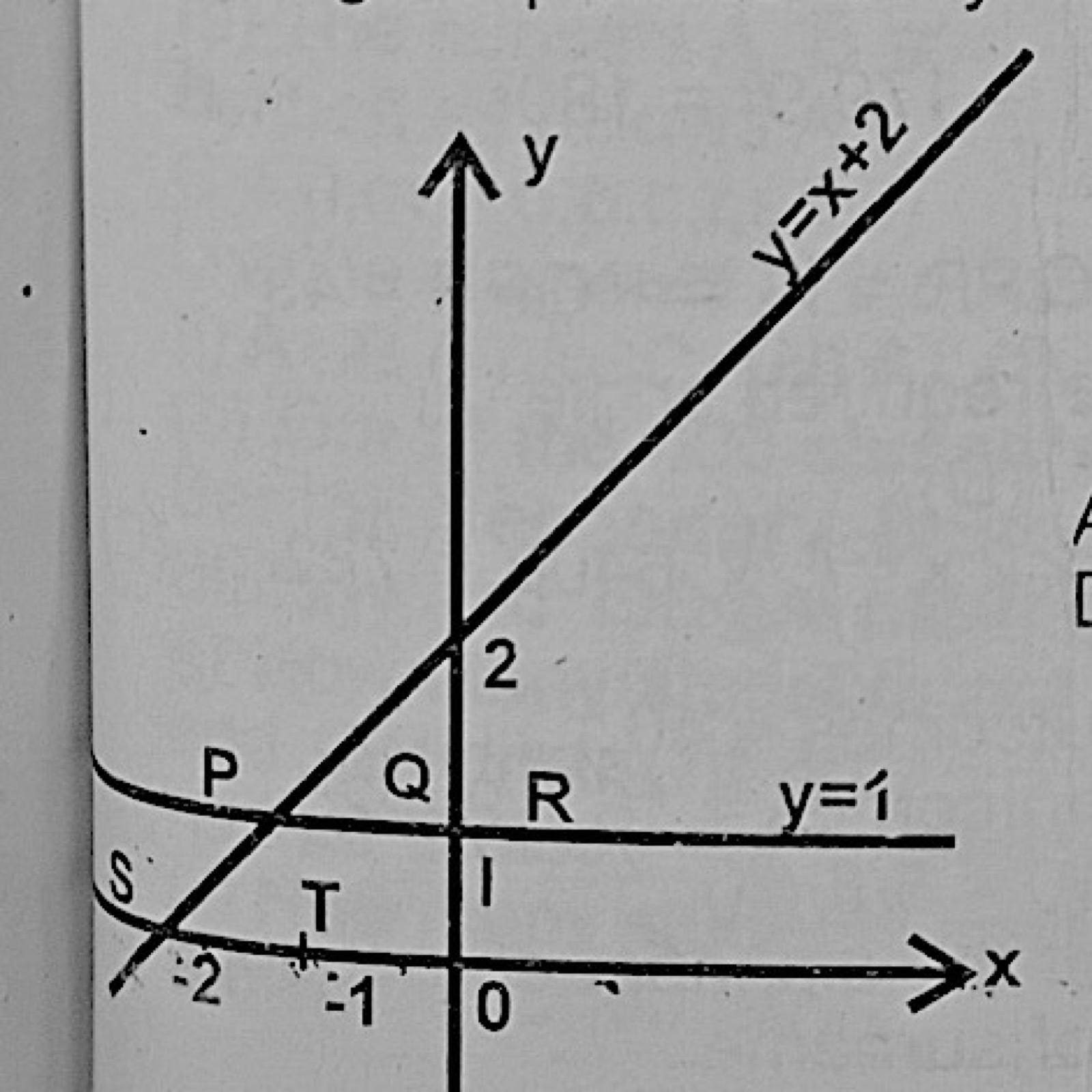
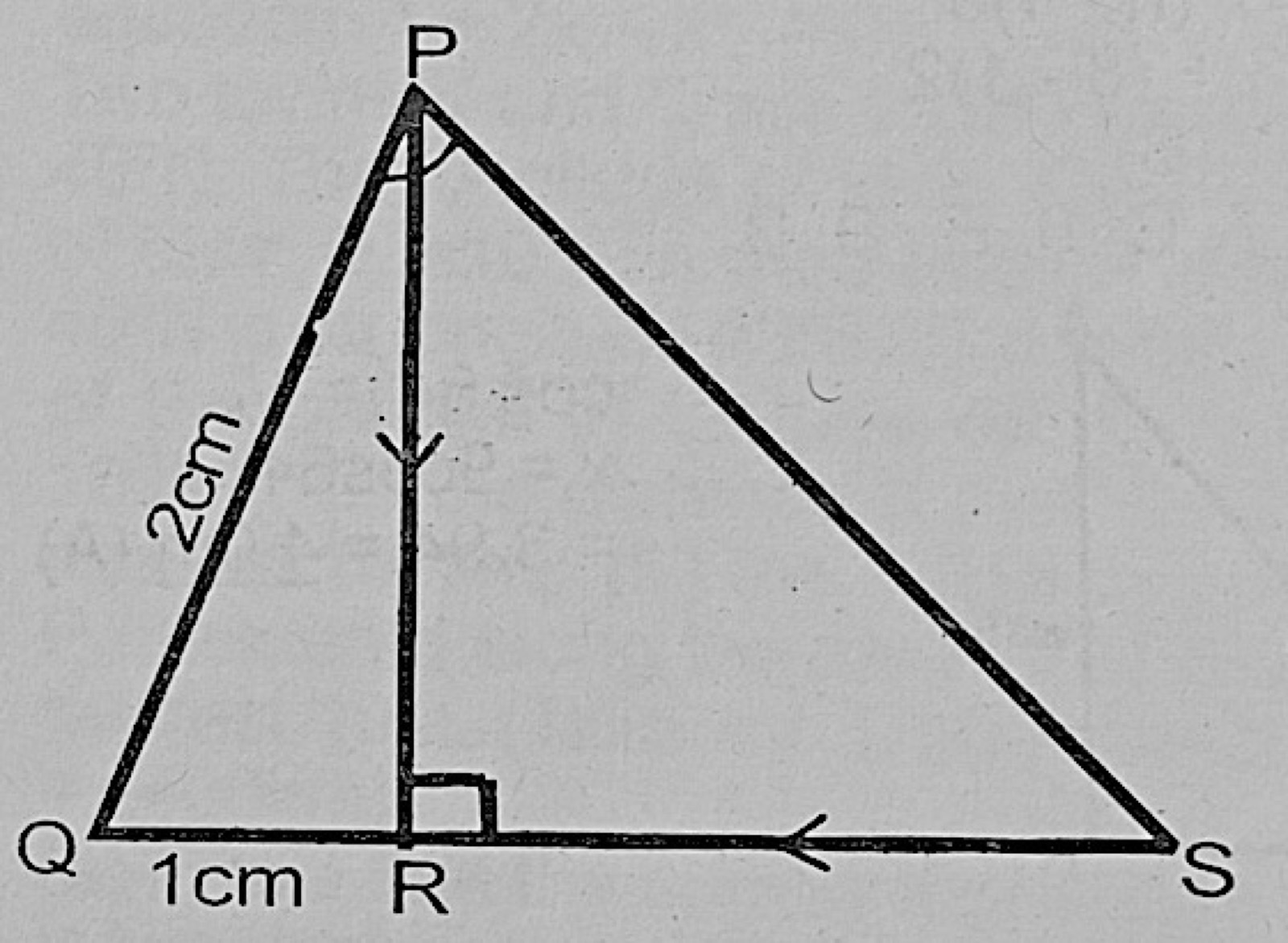
The parallel lines cut the upper line into 5 equal parts, so they also cut PR into 5 equal parts (intercept theorem). PQ covers 3 of them, so |PQ|/|PR| = 3/5.
A ladder 9m long against a vertical wall, making an angle of 64° with the horizontal ground. Calculate, correct to one decimal place, how far the foot of the ladder is from the wall.
A.4.0m
B.5.8m
C.7.1m
D.8.1m
E.18.5m
Show the answer and explanation
Answer: A (4.0m)
Explanation
Distance from wall = 9 cos 64° = 9 × 0.4384 = 3.95 ≈ 4.0 m.
The number 186 047 was corrected to 186 000. Which of the following can correctly describe the degree of approximation made? I. to the nearest hundred II. to the nearest thousand III. to 3 significant figures IV. to 4 significant figures
A.I&III only
B.I&IV only
C.II&III only
D.II&IV only
E.All of them.
Show the answer and explanation
Answer: E (All of them.)
Explanation
186 047 rounds to 186 000 to the nearest hundred (047 < 50), to the nearest thousand, to 3 s.f. (186|047) and to 4 s.f. (1860|47), so all four descriptions are correct.
A student is told to draw the graph of y = x2 + 4x − 6. He is then told to draw a linear graph on the same axis such that the intersection of the two graphs will give the solutions to the equation x2 + 4x − 7 = 0. What is the equation of the linear graph he needs to draw?
A.x = 1
B.x = −1
C.y = 1
D.y = −1
E.x + y = 1
Show the answer and explanation
Answer: C (y = 1)
Explanation
x2 + 4x − 7 = 0 is the same as x2 + 4x − 6 = 1, so the line needed is y = 1.
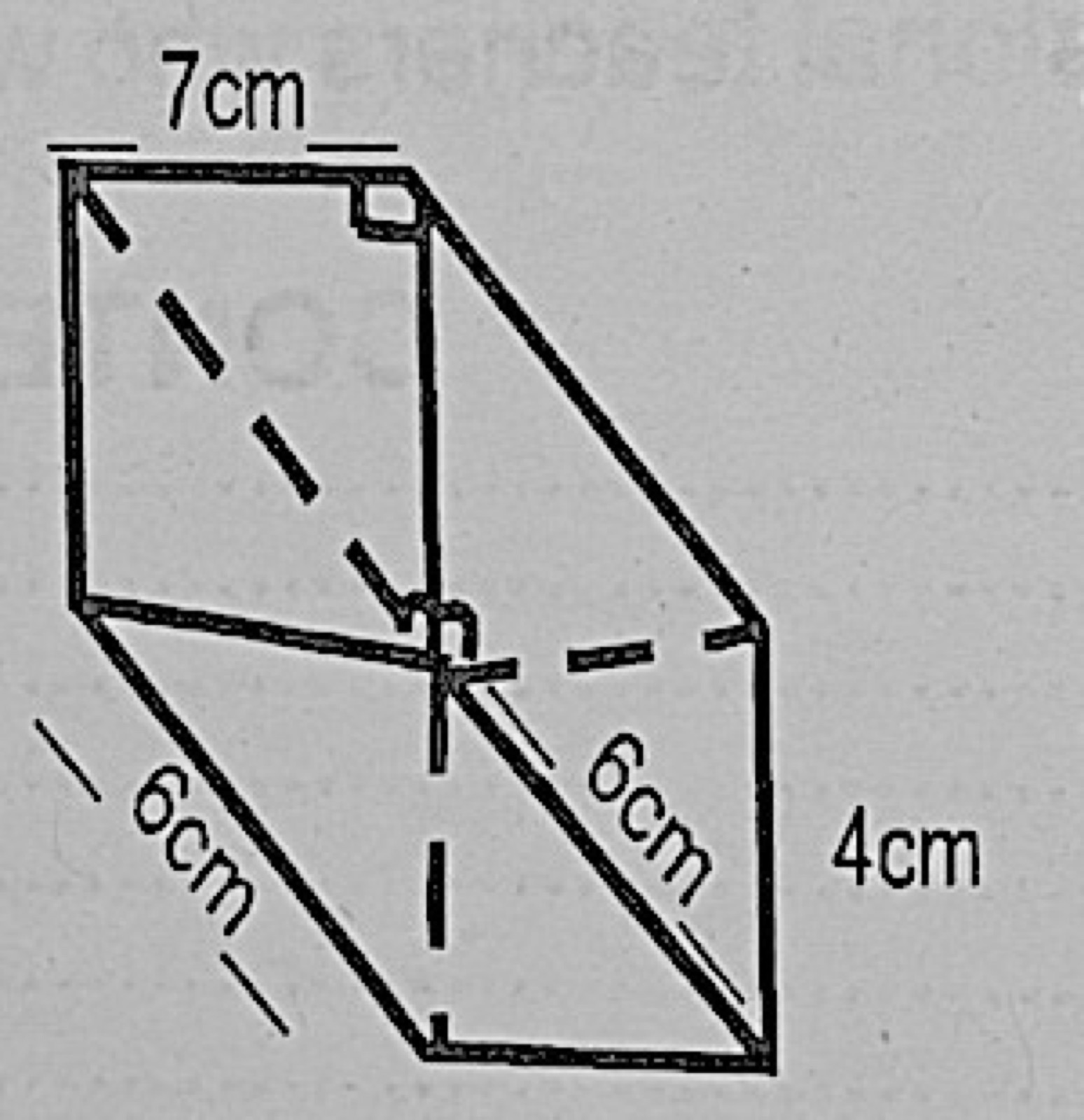
A water tank is made with a right-angled trapezium-shaped vertical cross-section so that when it is placed on sloping ground the top of the tank is level. The dimensions are as given in the diagram. By what number will you multiply your answer in 22 above to determine the capacity of the tank in litres?
A.1/10
B.1
C.10
D.100
E.1000.
Show the answer and explanation
Answer: E (1000.)
Explanation
1 m³ = 1000 litres, so multiply the volume in cubic metres by 1000.
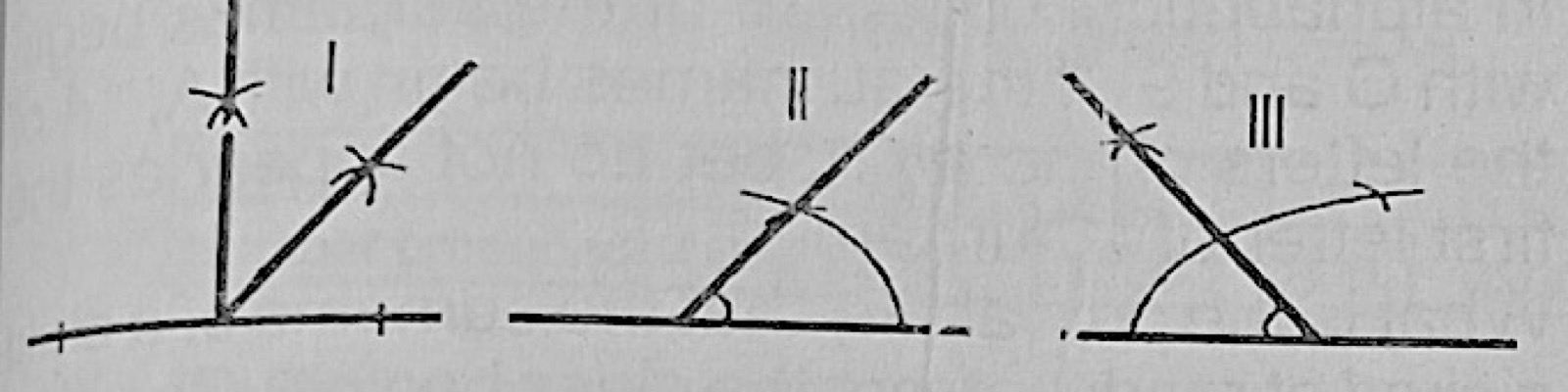
Which of the following is a correct method for constructing an angle of 60° at Q?
A.I only
B.II only
C.III only
D.I and II only
E.II and III only
Show the answer and explanation
Answer: B (II only)
Explanation
In II, an arc centred at the vertex cuts the line, and an arc of the same radius from that point cuts the first arc; joining gives an equilateral triangle, so 60°. Figure I bisects a right angle (45°).
The student measured the length of a room and obtained the measurement of 3.99m. If the percentage error of his measurement was 5% and his own measurement was smaller than the length, what is the length of the room?
A.3.78m
B.3.80m
C.4.18m
D.4.20m
E.4.788m.
Show the answer and explanation
Answer: D (4.20m)
Explanation
His reading is 5% less than the true length L, so 0.95L = 3.99 and L = 3.99 ÷ 0.95 = 4.20 m.
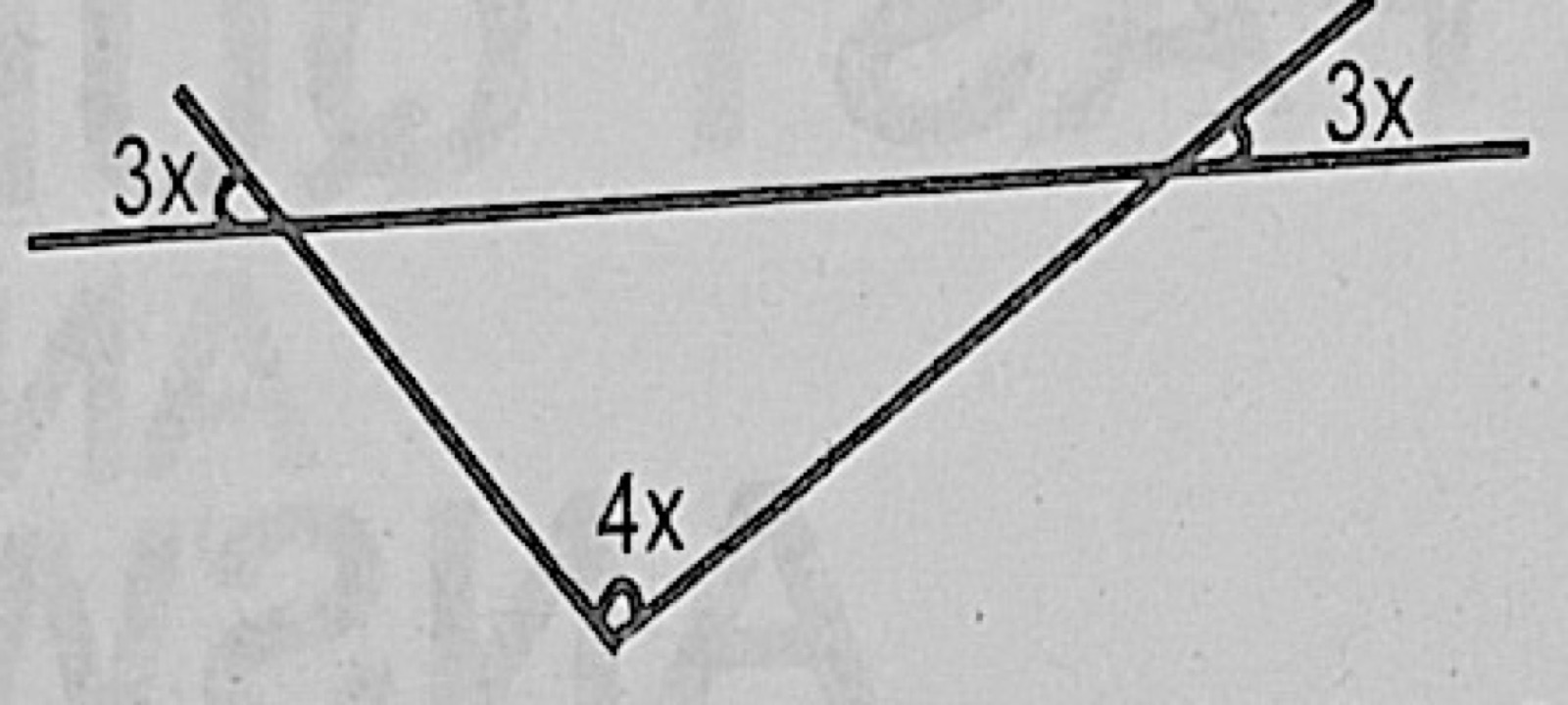
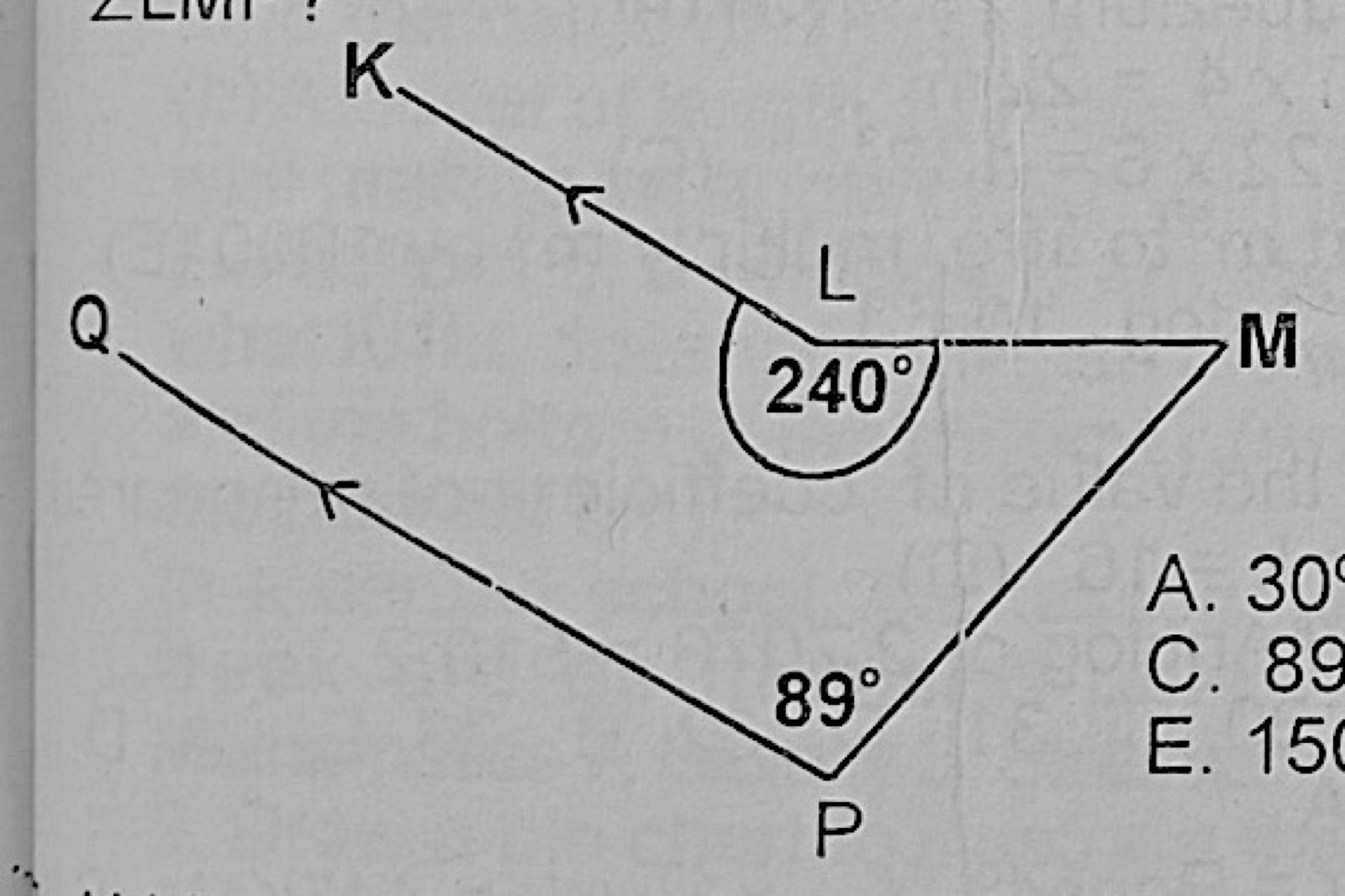
In the diagram below, LK//PQ, reflex angle KLM = 241° and ∠QPM = 89°. What is the value of ∠LMP?
A.30°
B.61°
C.89°
D.119°
E.150°
Show the answer and explanation
Answer: A (30°)
Explanation
Draw a line through M parallel to KL. ∠KLM = 360° − 241° = 119°, so the angle between ML and that line is 180° − 119° = 61°. The angle between MP and that line is 180° − 89° = 91° (co-interior with PQ). So ∠LMP = 91° − 61° = 30°.
Abidjan is 4° west of Accra and on the same circle of latitude. If the radius of this circle of latitude is 6370km, how far is Abidjan west of Accra, correct to the nearest kilometer? (Take π = 22/7)
A.222km
B.445km
C.390km
D.5005km
E.10010km.
Show the answer and explanation
Answer: B (445km)
Explanation
Distance = 4/360 × 2 × 22/7 × 6370 = 444.9 ≈ 445 km (the radius given is already the radius of the latitude circle).
A rope of length 18m is used to form a sector of a circle of radius 3.5m, on a school playing field. What is the size of the angle of the sector, correct to the nearest degree?
A.33°
B.40°
C.90°
D.180°
E.270°
Show the answer and explanation
Answer: D (180°)
Explanation
The rope forms two radii and the arc: arc = 18 − 2(3.5) = 11 m. The full circumference is 2 × 22/7 × 3.5 = 22 m, so the angle = 11/22 × 360° = 180°.
Cotonou and Niamey are on the same line of longitude and Niamey is 7° north of Cotonou. If the radius of the earth is 6400km, how far is Niamey north of Cotonou along the line of longitude, correct to the nearest kilometer? (Take π = 22/7)
A.391km
B.503km
C.782km
D.1006km
E.2012km.
Show the answer and explanation
Answer: C (782km)
Explanation
Distance along a great circle = 7/360 × 2 × 22/7 × 6400 = 782.2 ≈ 782 km.
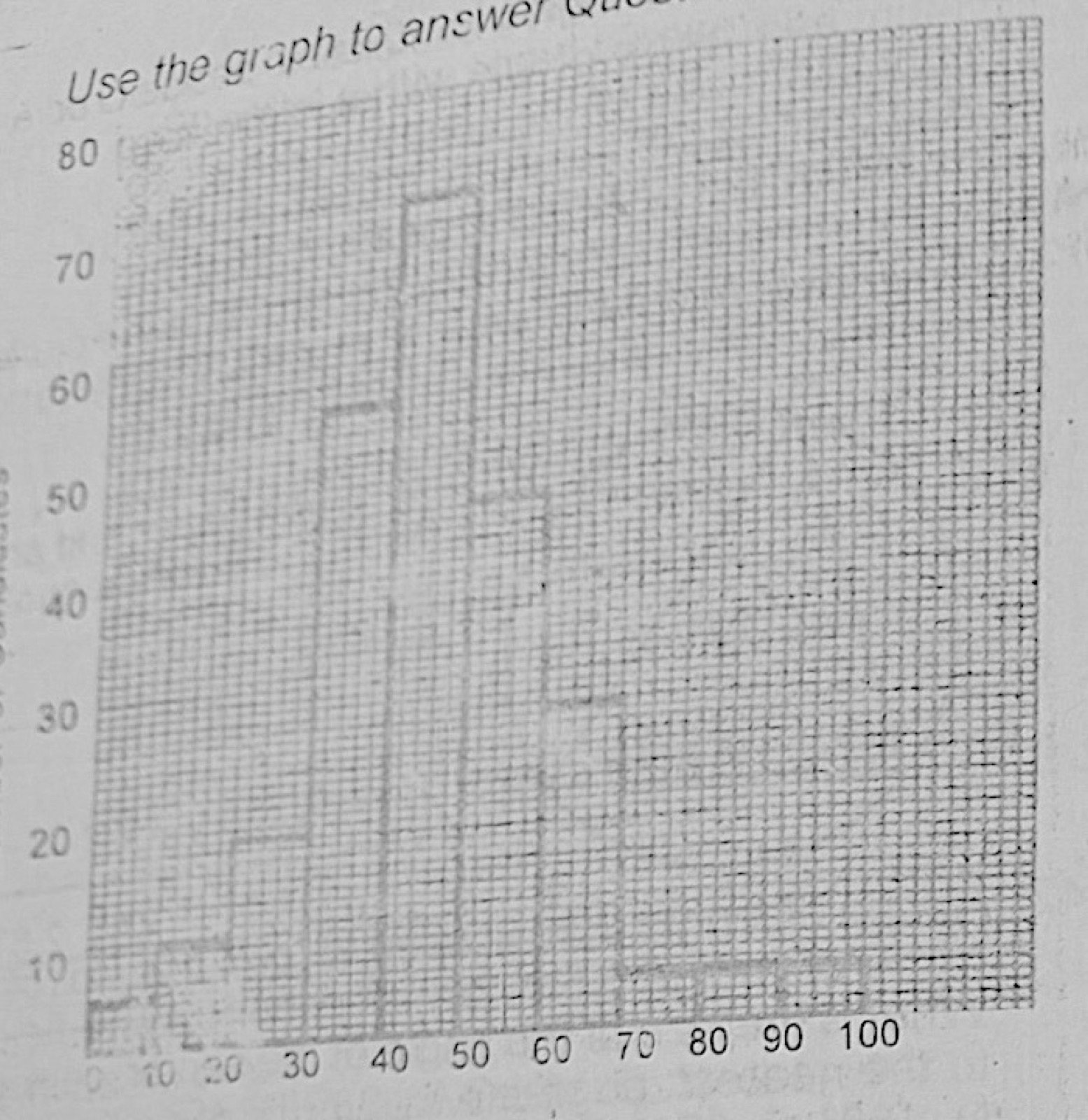
The histogram shows the number of candidates, in thousands, obtaining given ranges of marks in a State Examination. Find the total number of candidates that sat for the examination
A.80,000
B.120,000
C.250,000
D.260,000
E.270,000.
Show the answer and explanation
Answer: E (270,000.)
Explanation
Add the heights of all the bars (in thousands): roughly 5 + 10 + 20 + 57 + 75 + 50 + 30 + 7 + 7 + 7 ≈ 270, i.e. about 270,000 candidates.
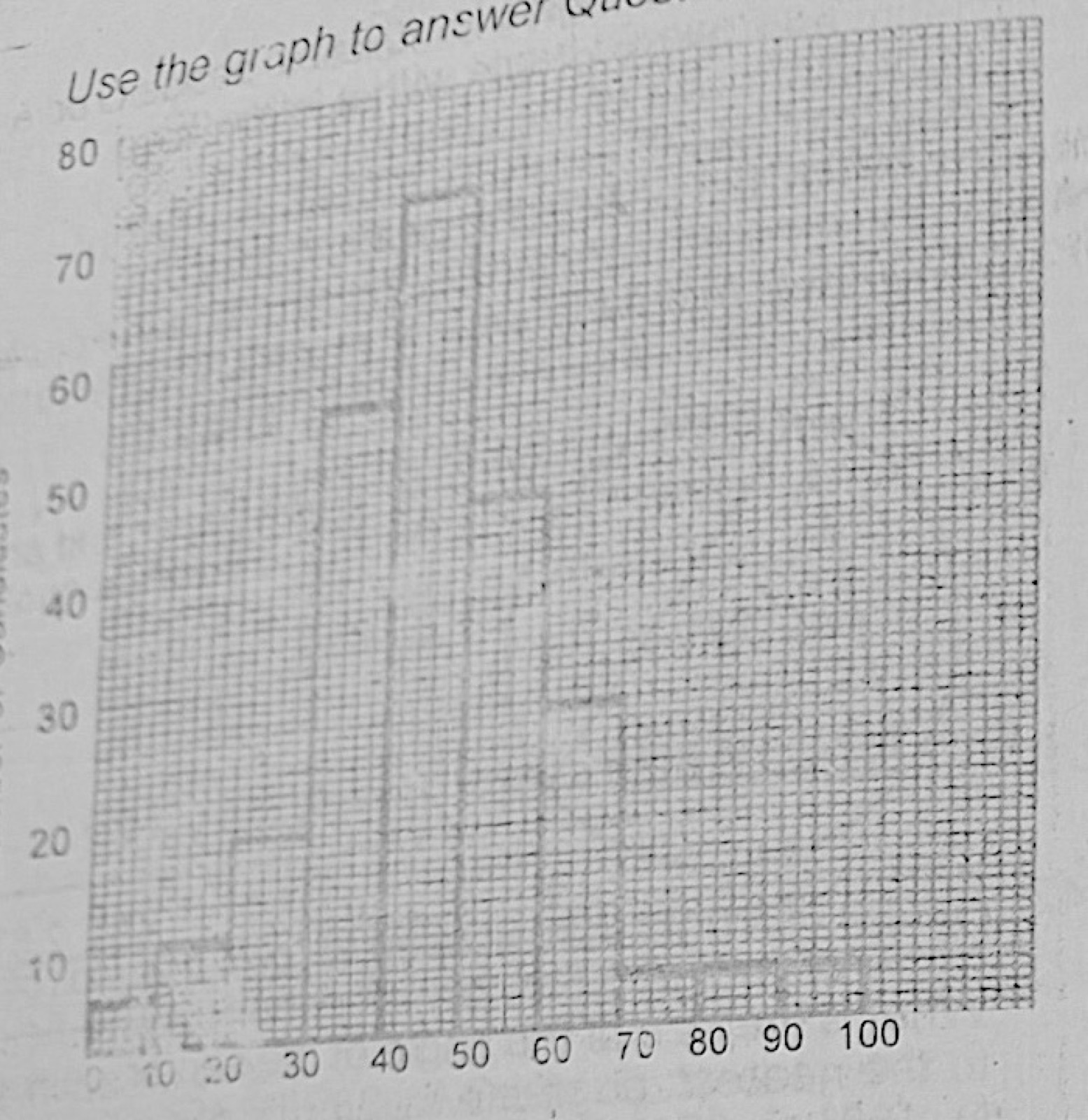
The histogram shows the number of candidates, in thousands, obtaining given ranges of marks in a State Examination. How many candidates scored at most 30%?
A.15,000
B.20,000
C.25,000
D.35,000
E.60,000
Show the answer and explanation
Answer: D (35,000)
Explanation
Add the bars for 0–10, 10–20 and 20–30: 5 + 10 + 20 = 35 thousand.
The surnames of 40 children in a class are arranged in alphabetical order. 16 of the surnames begin with O and 9 of the surnames begin with A. 14 of the letters of the alphabet do not appear as the first letter of a surname. What is the probability that the surname of a child picked at random from the class begins with either O or A?
A.5/8
B.7/8
C.9/16
D.14/25
E.31/40
Show the answer and explanation
Answer: A (5/8)
Explanation
16 + 9 = 25 of the 40 surnames begin with O or A, so the probability is 25/40 = 5/8.
The surnames of 40 children in a class are arranged in alphabetical order. 16 of the surnames begin with O and 9 of the surnames begin with A. 14 of the letters of the alphabet do not appear as the first letter of a surname. If more than one surname begins with a letter besides A and O, how many surnames begin with that letter?
A.2
B.3
C.4
D.5
E.6
Show the answer and explanation
Answer: E (6)
Explanation
26 − 14 = 12 letters are used; besides A and O that leaves 10 letters for 40 − 25 = 15 surnames. Each letter has at least one surname, so 9 letters have one each and the remaining letter has 15 − 9 = 6.
The number of items produced by a company over a five-year period is given below: Year: 1978, 1979, 1980, 1981, 1982 Number produced: 4100, 2500, 1500, 1800, 9200 (i) Plot a bar chart for this information (ii) What is the average production for the five-year period?
Show the model answer
Model answer
(i) Years on the horizontal axis, number produced on the vertical axis with a sensible scale (e.g. 1 cm to 1000); five separate bars of equal width with heights 4100, 2500, 1500, 1800 and 9200; title and labelled axes. (ii) Total = 4100 + 2500 + 1500 + 1800 + 9200 = 19 100 Average = 19 100 ÷ 5 = 3820 items per year.
Explanation
Bars must have equal widths and gaps; only the heights change.
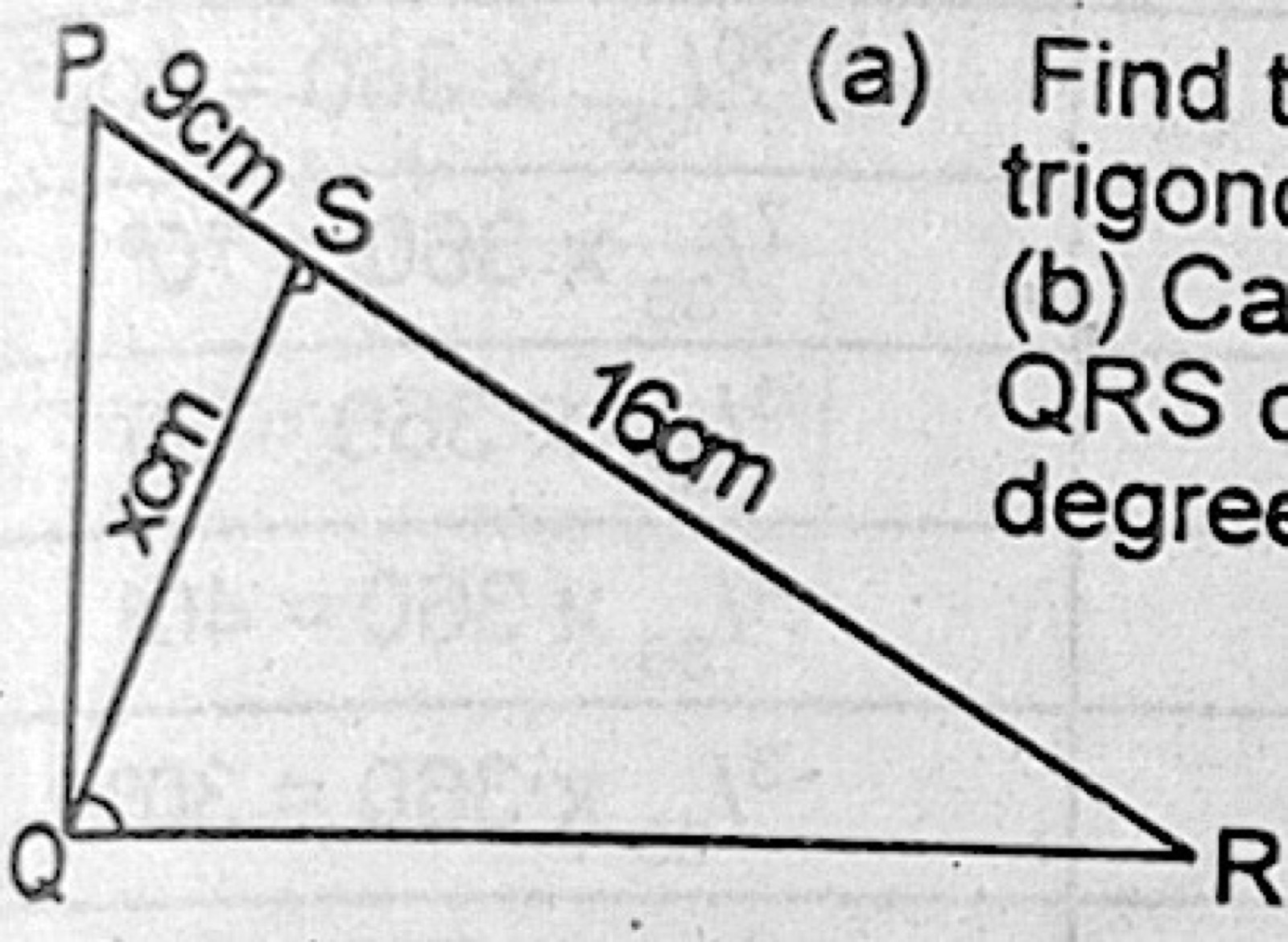
In the diagram below, ∠PQR = ∠PSQ = 90°, [PS] = 9cm, [SR] = 16cm and [SQ] = xcm. (a) Find the value of x using a trigonometric ratio. (b) Calculate: (i) the size of QRS correct to the nearest degree, (ii) PQ.
Show the model answer
Model answer
(a) Let ∠QRS = θ. In △QSR: tan θ = x/16. ∠PQS = 90° − ∠SQR = θ, so in △PQS: tan θ = 9/x. x/16 = 9/x ⇒ x2 = 144 ⇒ x = 12 cm. (b)(i) tan ∠QRS = 12/16 = 0.75 ⇒ ∠QRS = 36.87° ≈ 37°. (ii) PQ2 = PS2 + SQ2 = 81 + 144 = 225 ⇒ PQ = 15 cm (or PQ = PR sin 36.87° = 25 × 0.6 = 15 cm).
Explanation
Spot that ∠PQS equals ∠QRS; that links the two triangles.
(a) Given that sin α = 0.3907, use tables to find the value of: (i) tan α (ii) cos α (b) A ladder of length 4.5m leans against a vertical wall making an angle of 50° with the horizontal. If the bottom of a window is 4m above the ground, what is the distance between the top of the ladder and the bottom of the window? (Answer correct to the nearest cm).
Show the model answer
Model answer
(a) sin α = 0.3907 ⇒ α = 23°. (i) tan 23° = 0.4245 (ii) cos 23° = 0.9205. (b) Height of top of ladder = 4.5 sin 50° = 4.5 × 0.7660 = 3.447 m. Distance to bottom of window = 4 − 3.447 = 0.553 m = 55 cm (to the nearest cm).
Explanation
Find the angle from the sine table first, then read the other ratios.
In a certain school, the lesson periods for each week are as itemised below: English 10, Mathematics 7, Biology 3, Statistics 4, Igbo 3, others 9. Draw a pie chart to illustrate this information.
Show the model answer
Model answer
Total periods = 10 + 7 + 3 + 4 + 3 + 9 = 36. Angles (× 360°/36 = 10° per period): English 100°, Mathematics 70°, Biology 30°, Statistics 40°, Igbo 30°, Others 90° (total 360°). Draw a circle, measure the sectors with a protractor and label each sector.
A sector of a circle of radius 7cm subtending an angle of 270° at the centre of the circle, is used to form a cone. (a) Find the base radius of the cone, (b) Calculate the area of the base of the cone correct to the nearest square centimetre. (Take π = 22/7)
Show the model answer
Model answer
(a) Arc length = 270/360 × 2 × 22/7 × 7 = 33 cm. This arc becomes the base circumference: 2πr = 33 ⇒ r = 33 × 7/44 = 5.25 cm. (b) Base area = πr2 = 22/7 × 5.252 = 86.625 ≈ 87 cm².
Explanation
The arc of the sector becomes the circumference of the cone's base.
(a) The subsets A, B and C of a universal set are defined as follows: A = (m,a,p,e) B = (a,e,i,o,u) C = (l,m,n,o,p,q,r,s,t,u) List the elements of the following sets: (i) A∪B (ii) A∪C (iii) A∪(B∩C) (b) Out of the 400 students in the final year in a Senior Secondary School, 300 are offering Biology and 190 are offering Chemistry. (i) How many students are offering both Biology and Chemistry, if only 70 students are offering neither Biology nor Chemistry? (ii) How many students are offering at least one of Biology or Chemistry?
Show the model answer
Model answer
(a)(i) A∪B = {a, e, i, m, o, p, u} (ii) A∪C = {a, e, l, m, n, o, p, q, r, s, t, u} (iii) B∩C = {o, u}, so A∪(B∩C) = {a, e, m, o, p, u} (b) Let x offer both. n(B∪C) = 400 − 70 = 330. (300 − x) + x + (190 − x) = 330 ⇒ 490 − x = 330 ⇒ x = 160. (i) 160 students offer both. (ii) 330 students offer at least one of the two.
Explanation
Draw a Venn diagram; the 70 outside both circles are taken from the 400 first.
Illustrate the following on graph paper and shade the region which satisfies all the three inequalities at the same time. −x + 5y ≤ 10 3x − 4y ≤ 8 and x > −1
Show the model answer
Model answer
Draw the boundary lines: −x + 5y = 10 (through (−10, 0) and (0, 2)); 3x − 4y = 8 (through (0, −2) and (8/3, 0)); x = −1 (broken line, since the inequality is strict). −x + 5y ≤ 10: region below the first line (the origin satisfies it). 3x − 4y ≤ 8: region above the second line (the origin satisfies it). x > −1: region to the right of x = −1. The required region is the triangle with vertices (−1, 1.8), (−1, −2.75) and about (8.3, 3.5) where the two slanting lines meet; shade it (or shade the unwanted regions, and say which convention is used).
Explanation
Test the origin in each inequality to decide which side to keep.
The table below is for the relation y = 2 + x − x2 x: −2, −1.5, −1, −0.5, 0, 0.5, 1, 1.5, 2, 2.5, 3 y: −4, −1.75, 0, 1.25, 2, 2.25, 2, 1.25, 0, −1.75, −4 (a) Using a scale of 2cm to 1 unit on each axis, draw the graph of the relation in the interval −2 ≤ x ≤ 3. (b) From your graph, find the greatest value of y and the value of x for which this occurs, (c) Using the same scale and axis, draw the graph of y = 1 − x. (d) Use your graph to solve the equation 1 + 2x − x2 = 0.
Show the model answer
Model answer
(a) Plot the 11 points and join with a smooth curve (an upside-down parabola). (b) Greatest value y = 2.25, at x = 0.5. (c) Straight line through (0, 1), (1, 0) and (3, −2). (d) 2 + x − x2 = 1 − x is the same as 1 + 2x − x2 = 0, so the solutions are the x-values where the curve and the line cross: x ≈ −0.4 and x ≈ 2.4.
Explanation
Subtract the line's equation from the curve's to see why their crossing points solve the equation.
Two towns K and Q are on the parallel of latitude 46°N. The longitude of town K is 130°W and that of town Q is 103°. A third town P also on latitude 46°N is on longitude 23°E. Calculate: (i) the length of the parallel of latitude 46°N, to the nearest 100km, (ii) the distance K and Q, correct to the nearest 100km, (iii) the distance between Q and P measured along the parallel of latitude, to the nearest 10m. (Take π = 3.142, radius of the earth = 6400km).
Show the model answer
Model answer
Radius of the parallel = R cos 46° = 6400 × 0.6947. (i) Length = 2 × 3.142 × 6400 × 0.6947 = 27 938 km ≈ 27 900 km. (ii) K (130°W) and Q (103°W): difference 27°. Distance = 27/360 × 27 938 = 2095 km ≈ 2100 km. (iii) Q (103°W) and P (23°E): difference 103° + 23° = 126°. Distance = 126/360 × 27 938 = 9778 km ≈ 9780 km.
Explanation
Distances along a parallel use the radius R cos(latitude); add longitudes on opposite sides of Greenwich.
(a) Prove that the sum of the angles of a triangle is two right angles. (b) In a triangle LMN, the side MN is produced to P and the bisector of ∠LNP meets ML produced at Q. If ∠LMN = 46° and ∠MLN = 80°, calculate ∠LQN, stating clearly your reasons.
Show the model answer
Model answer
(a) Given △ABC. Produce BC to X and draw CY parallel to BA. ∠ACY = ∠BAC (alternate angles); ∠YCX = ∠ABC (corresponding angles). ∠ACB + ∠ACY + ∠YCX = 180° (angles on a straight line), so ∠C + ∠A + ∠B = 180° = two right angles. (b) ∠LNM = 180° − 46° − 80° = 54° (angle sum of a triangle). ∠LNP = 46° + 80° = 126° (exterior angle = sum of interior opposite angles). ∠LNQ = 126° ÷ 2 = 63° (NQ bisects ∠LNP). In △MNQ: ∠MNQ = 54° + 63° = 117°, so ∠LQN = ∠MQN = 180° − 46° − 117° = 17°.
Explanation
Find the exterior angle at N first, then halve it.
Using a ruler and a pair of compasses only. (a) Construct: (i) a △ABC such that |AB| = 5cm, |AC| = 7.5cm and ∠CAB = 120°. (ii) the locus l1 of points equidistant from A and B. (iii) the locus l2 of points equidistant from |AB| and AC, which passes through triangle ABC. (b) Label the point P where l1 and l2 intersect. (c) Measure |CP|.
Show the model answer
Model answer
(a)(i) Draw AB = 5 cm. At A construct 120° (two 60° arcs), mark C on that arm with AC = 7.5 cm, join BC. (ii) l1 is the perpendicular bisector of AB (arcs from A and B above and below, join the crossings). (iii) l2 is the bisector of ∠CAB (makes 60° with AB). (b) Mark P where the two loci meet. (c) |CP| ≈ 6.6 cm (accept about 6.5–6.8 cm).
Explanation
Construction arcs must be left visible; the equidistant-from-two-lines locus is an angle bisector.
The table below shows the frequency distribution of the marks of 800 candidates in an examination. Marks%: 0-9, 10-19, 20-29, 30-39, 40-49, 50-59, 60-69, 70-79, 80-89, 90-99 Frequency: 10, 40, 80, 140, 170, 130, 100, 70, 40, 20 (a)(i) Construct a cumulative frequency table, (ii) Draw the ogive: (iii) Use your ogive to determine the 50th percentile: (b) The candidates that scored less than 25% are to be withdrawn from the institution, while those that scored more than 75% are to be awarded scholarship. Estimate the number of candidates that will be retained, but who will not enjoy the award.
Show the model answer
Model answer
(a)(i) Upper class boundaries 9.5, 19.5, …, 99.5 with cumulative frequencies 10, 50, 130, 270, 440, 570, 670, 740, 780, 800. (ii) Plot cumulative frequency against upper class boundary and join with a smooth S-shaped curve. (iii) 50th percentile = median = the 400th candidate: about 39.5 + (130/170) × 10 ≈ 47 marks. (b) From the ogive: about 94 candidates scored below 25%; about 709 scored up to 75%, so about 91 scored above 75%. Retained without award ≈ 709 − 94 ≈ 615 candidates (accept roughly 600–630 from the graph).
Explanation
Plot against upper class boundaries, not class midpoints.