WAEC Civic Education 2019 past questions and answers

58 questions. Try each one, then open the answer to check yourself and read the explanation.

Question 2

Nationalism and National Symbols

Which of the following nationalists is associated with democratic socialism?

  1. A.Ahmadu Bello
  2. B.Tafawa Balewa
  3. C.Anthony Enahoro
  4. D.Obafemi Awolowo
Show the answer and explanation

Answer: D (Obafemi Awolowo)

Explanation

Obafemi Awolowo and his Action Group/UPN promoted democratic socialism (free education, welfare).

Open this question

Question 3

National Values

When a person is being fair, impartial and reasonable in dealing with others, such person is said to be

  1. A.responsible.
  2. B.tolerant.
  3. C.honest.
  4. D.humble.
Show the answer and explanation

Answer: C (honest.)

Explanation

Being fair and straightforward with others is a mark of honesty.

Open this question

Question 4

Human Rights

A limitation to the exercise of human right is

  1. A.war.
  2. B.deportation.
  3. C.migration.
  4. D.HIV/AIDS.
Show the answer and explanation

Answer: A (war.)

Explanation

During war or emergencies government may restrict some rights.

Open this question

Question 5

Rule of Law and Constituted Authority

Which of the following is not among the sources of authority?

  1. A.Societal
  2. B.Traditional
  3. C.Rational Legal
  4. D.Charismatic
Show the answer and explanation

Answer: A (Societal)

Explanation

Max Weber's sources of authority are traditional, charismatic and legal-rational.

Open this question

Question 6

National Values

Orderliness can be exhibited in the following ways except

  1. A.observing the traffic lights.
  2. B.queuing culture.
  3. C.decorum behaviour.
  4. D.interrupting an individual.
Show the answer and explanation

Answer: D (interrupting an individual.)

Explanation

Interrupting people is rude and disorderly.

Open this question

Question 7

Responsible Parenthood

Which of the following is a way of achieving responsible parenthood?

  1. A.Commitment
  2. B.Patriotism
  3. C.Favouritism
  4. D.Goodness
Show the answer and explanation

Answer: A (Commitment)

Explanation

Parents must be committed to their children's care and upbringing.

Open this question

Question 8

Citizenship and Citizenship Education

A citizen is someone who

  1. A.holds a chieftaincy title in the country.
  2. B.is a legal member of the country.
  3. C.has lived in the country for a long time.
  4. D.is a staunch supporter of the country's development.
Show the answer and explanation

Answer: B (is a legal member of the country.)

Explanation

A citizen is a legally recognised member of a state.

Open this question

Question 9

Responsible Parenthood

Incidences of broken home and irresponsible parenthood are the major causes of the following except

  1. A.unhealthy growth.
  2. B.armed robbery.
  3. C.migration.
  4. D.cultism.
Show the answer and explanation

Answer: C (migration.)

Explanation

Neglected children may grow up unhealthy or turn to robbery and cultism; migration is not caused by poor parenting.

Open this question

Question 10

Citizenship and Citizenship Education

Citizenship education will not help to achieve which of the following?

  1. A.National unity
  2. B.Education of the youth
  3. C.Moral decadence
  4. D.Promoting democracy
Show the answer and explanation

Answer: C (Moral decadence)

Explanation

Citizenship education fights moral decadence; it does not produce it.

Open this question

Question 11

National Values
WASSCE 2019: Imasuen and the accident victim
One fateful morning, Imasuen was going to school. A few distance away from the school gate, he saw an accident victim writhing in severe pain by the road side. The accident victim was hit by a motorcycle rider and left half-dead. Although Imasuen was already late for school, he decided to convey the victim to a nearby hospital before reporting the matter to a nearby police station.

From the story above, it could be said that Imasuen have demonstrated

  1. A.honesty.
  2. B.fair play.
  3. C.tolerance.
  4. D.selflessness.
Show the answer and explanation

Answer: D (selflessness.)

Explanation

He put the victim's needs before his own lateness: selflessness.

Open this question

Question 12

Traffic Regulations

The behaviour of the motorcycle rider in the above story depicts

  1. A.arrogance.
  2. B.unruly attitude.
  3. C.cruelty.
  4. D.aggressive behaviour.
Show the answer and explanation

Answer: C (cruelty.)

Explanation

Knocking someone down and leaving him half-dead without help is cruel.

Open this question

Question 13

National Values

The behaviour of Imasuen in the story above can help promote all the following except

  1. A.orderliness.
  2. B.peaceful coexistence.
  3. C.punctuality.
  4. D.stability.
Show the answer and explanation

Answer: C (punctuality.)

Explanation

Helping the victim made him later for school, so it did not promote punctuality.

Open this question

Question 14

Nationalism and National Symbols

Nationalism is a product of all the following features except

  1. A.cultural similarity.
  2. B.social complexity.
  3. C.shared interest.
  4. D.historical association.
Show the answer and explanation

Answer: B (social complexity.)

Explanation

Nationalism grows from shared culture, interests and history, not from social complexity.

Open this question

Question 15

Human Trafficking

Trafficked individuals are likely to have been

  1. A.corrupt and greedy.
  2. B.traumatized and stigmatized.
  3. C.dangerous and heartless.
  4. D.hardworking and courageous.
Show the answer and explanation

Answer: B (traumatized and stigmatized.)

Explanation

Victims suffer trauma and stigma from their abuse.

Open this question

Question 16

Drug Abuse

The drug usually referred to as marijuana is

  1. A.cannabis.
  2. B.cocaine.
  3. C.caffeine.
  4. D.heroin.
Show the answer and explanation

Answer: A (cannabis.)

Explanation

Marijuana (Indian hemp) is cannabis.

Open this question

Question 17

Youth Empowerment

The process of acquisition of necessary skills by young people for national development is known as

  1. A.sponsorship.
  2. B.encouragement
  3. C.motivation.
  4. D.empowerment.
Show the answer and explanation

Answer: D (empowerment.)

Explanation

Giving young people skills for self-reliance is youth empowerment.

Open this question

Question 18

Traffic Regulations

The Federal Road Safety Corps (FRSC) carries out all these functions except

  1. A.construction of motorable roads.
  2. B.effective patrol operation.
  3. C.inspection of vehicles.
  4. D.prompt rescue mission.
Show the answer and explanation

Answer: A (construction of motorable roads.)

Explanation

Road construction is done by the Ministry of Works, not the FRSC.

Open this question

Question 19

Human Rights

The inalienable entitlements of an individual in a society are known as

  1. A.basic necessities.
  2. B.natural justice.
  3. C.fundamental freedom.
  4. D.human rights.
Show the answer and explanation

Answer: D (human rights.)

Explanation

Human rights are inalienable entitlements of every person.

Open this question

Question 20

Cultism

Membership of an organization that is characterized by secrecy of operations is associated with

  1. A.activism.
  2. B.cultism.
  3. C.radicalism.
  4. D.spiritism.
Show the answer and explanation

Answer: B (cultism.)

Explanation

Cults operate in secret.

Open this question

Question 21

Democracy and Elections

The inability of citizens of a country to freely elect their leaders is a threat to

  1. A.federalism.
  2. B.totalitarianism.
  3. C.oligarchy.
  4. D.democracy.
Show the answer and explanation

Answer: D (democracy.)

Explanation

Free election of leaders is the heart of democracy.

Open this question

Question 22

HIV/AIDS

Being faithful in marriage can greatly assist to prevent

  1. A.unhealthy growth.
  2. B.extravagancy.
  3. C.hatred.
  4. D.HIV infection.
Show the answer and explanation

Answer: D (HIV infection.)

Explanation

Faithfulness to one uninfected partner protects against sexually transmitted HIV.

Open this question

Question 23

Cultism

Which of the following is a punitive measure against cultism?

  1. A.Counselling and enlightenment in school
  2. B.A true and sincere religious inculcation
  3. C.Arrest and prosecution of suspects
  4. D.Good parental responsibility and care
Show the answer and explanation

Answer: C (Arrest and prosecution of suspects)

Explanation

Arrest and prosecution punish offenders; the others are preventive.

Open this question

Question 24

Traffic Regulations

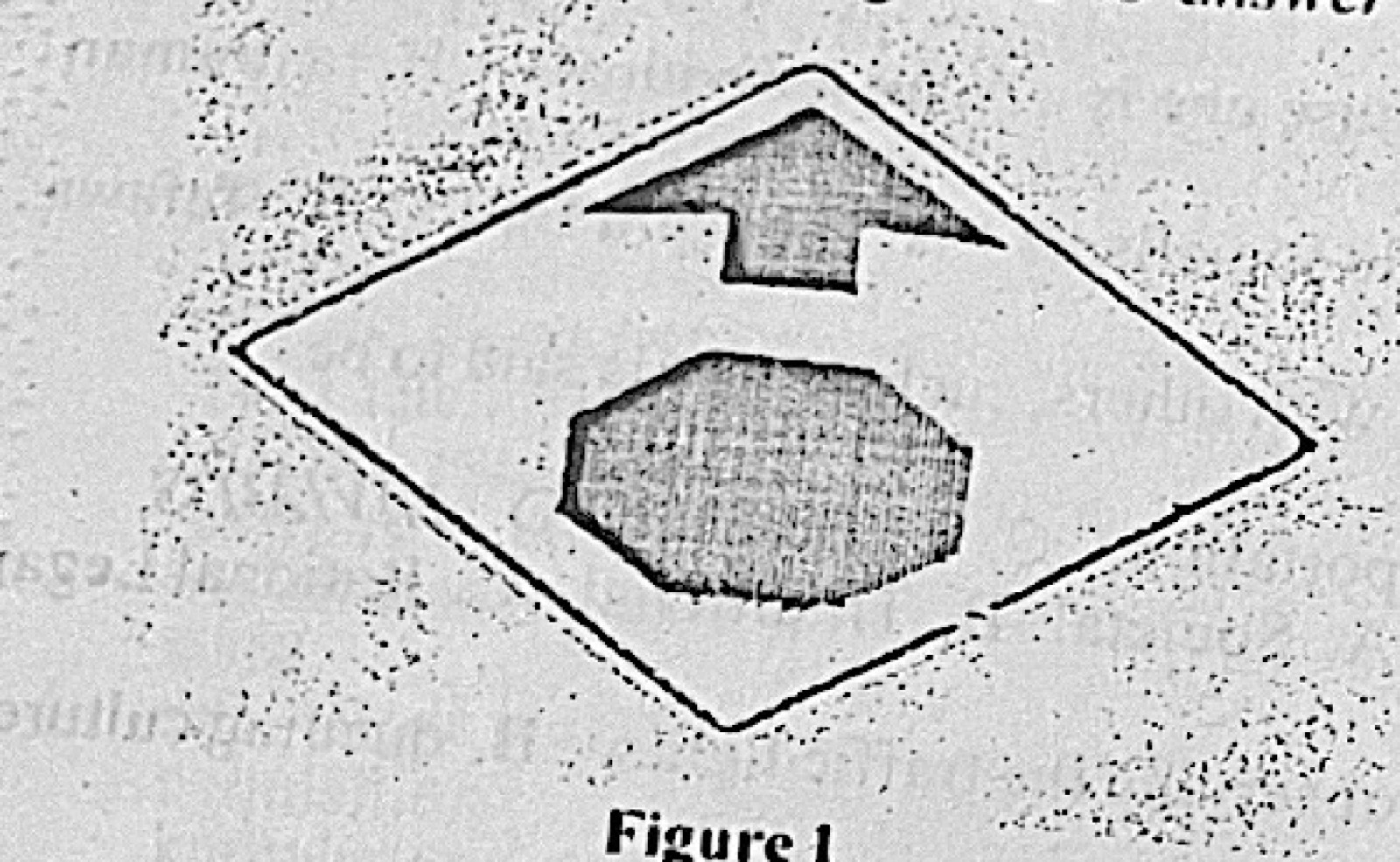
The road sign in Figure 1 indicates

Diagram for this question
  1. A.move ahead.
  2. B.stop ahead.
  3. C.speed limit
  4. D.wait a bit
Show the answer and explanation

Answer: B (stop ahead.)

Explanation

The diamond warning sign shows an arrow pointing to a stop (octagon) symbol: a stop sign is ahead.

Open this question

Question 25

Traffic Regulations

Authorized road users include the following except

  1. A.pedestrians.
  2. B.bicycle riders.
  3. C.roller skaters.
  4. D.tricycle riders.
Show the answer and explanation

Answer: C (roller skaters.)

Explanation

Roller skaters are not recognised road users on Nigerian highways.

Open this question

Question 26

Structure and Organs of Government

Which of the following is not a function of the judicial arm of government?

  1. A.Implementation of the law
  2. B.Pronouncement of punishment
  3. C.Adjudication of cases
  4. D.Interpretation of the law
Show the answer and explanation

Answer: A (Implementation of the law)

Explanation

Implementing laws is the work of the executive.

Open this question

Question 27

Human Trafficking

Trafficked children are likely to experience all the following except

  1. A.empowerment.
  2. B.prostitution.
  3. C.forced labour.
  4. D.unwanted pregnancy.
Show the answer and explanation

Answer: A (empowerment.)

Explanation

Trafficking exploits children; it does not empower them.

Open this question

Question 28

Nationalism and National Symbols

Which of the following is not a way of promoting national consciousness?

  1. A.Inter-school debate
  2. B.Multicultural education
  3. C.Sporting festivals
  4. D.Compensatory mechanism
Show the answer and explanation

Answer: D (Compensatory mechanism)

Explanation

Debates, multicultural education and sports bring people together; a compensatory mechanism is not a means of building national consciousness.

Open this question

Question 29

Structure and Organs of Government

The totality of legislative, executive and judicial powers constitutes

  1. A.sovereignty.
  2. B.authority.
  3. C.state.
  4. D.government.
Show the answer and explanation

Answer: D (government.)

Explanation

Government is made up of the three arms that exercise legislative, executive and judicial powers.

Open this question

Question 30

Interpersonal and Inter-communal Relationships
WASSCE 2019: Ate and Ube towns
Ate and Ube are two towns that have lived peacefully in the past years. Last year, they met and decided to build a hospital and raised fund towards the project. Everyone played his/her part to see that the completion of the project becomes a reality. The project was completed within six months.

What existed between Ate and Ube towns can best be termed

  1. A.boldness.
  2. B.commitment.
  3. C.courage.
  4. D.co-operation.
Show the answer and explanation

Answer: D (co-operation.)

Explanation

The two towns worked together to build the hospital: co-operation.

Open this question

Question 31

Interpersonal and Inter-communal Relationships

The relationship that existed between Ate and Ube towns will lead to all the following except

  1. A.promotion of harmony.
  2. B.unification.
  3. C.stunted development.
  4. D.achievement of goals.
Show the answer and explanation

Answer: C (stunted development.)

Explanation

Co-operation speeds development; it does not stunt it.

Open this question

Question 32

Cultism

Which of the following categories of students will not likely be a major target of campus cult membership recruitment?

  1. A.Proud children from wealthy homes
  2. B.Students with influential parents
  3. C.Bold and morally upright children
  4. D.Wayward and fun-loving students
Show the answer and explanation

Answer: C (Bold and morally upright children)

Explanation

Morally upright students are least likely to be lured into cults.

Open this question

Question 33

Human Trafficking

What do human traffickers use to instil fear into their victims?

  1. A.Confrontation
  2. B.Intimidation
  3. C.Elimination
  4. D.Exploitation
Show the answer and explanation

Answer: B (Intimidation)

Explanation

Traffickers use threats and intimidation (including oaths) to control victims.

Open this question

Question 34

Democracy and Elections

The origin of democracy is traced to the

  1. A.Romans.
  2. B.Greeks.
  3. C.Egyptians.
  4. D.British.
Show the answer and explanation

Answer: B (Greeks.)

Explanation

Democracy began in the ancient Greek city-state of Athens.

Open this question

Question 35

Youth Empowerment

Which of the following skills is needed for youth empowerment?

  1. A.Cross-curricula skills
  2. B.Non-cognitive skills
  3. C.Manipulative skills
  4. D.Transversal skills
Show the answer and explanation

Answer: C (Manipulative skills)

Explanation

Manipulative (hand) skills such as crafts and trades help youths earn a living.

Open this question

Question 36

The Constitution and Constitutional Democracy

Which of the following is not a feature of federal constitution?

  1. A.Division of power
  2. B.Supremacy of the constitution
  3. C.Flexibility of the constitution
  4. D.Written constitution
Show the answer and explanation

Answer: C (Flexibility of the constitution)

Explanation

A federal constitution is usually rigid, so the tiers cannot change it alone.

Open this question

Question 37

Human Trafficking

Which of the following is not a consequence of human trafficking?

  1. A.Relative deprivation
  2. B.Violation of rights
  3. C.Discontentment of individuals
  4. D.Family bonding and reunion
Show the answer and explanation

Answer: D (Family bonding and reunion)

Explanation

Trafficking breaks families apart.

Open this question

Question 38

Rule of Law and Constituted Authority

The principle of rule of law is upheld in the society in order to

  1. A.protect the citizens from arbitrary rule.
  2. B.accord immunity to the president.
  3. C.preserve customs and tradition of the society.
  4. D.encourage mass literacy and prosperity.
Show the answer and explanation

Answer: A (protect the citizens from arbitrary rule.)

Explanation

The rule of law limits government power and protects citizens from arbitrary rule.

Open this question

Question 39

The Constitution and Constitutional Democracy

Constitutional democracy is also known as

  1. A.communalism.
  2. B.limited government.
  3. C.communism.
  4. D.autocratic government.
Show the answer and explanation

Answer: B (limited government.)

Explanation

In a constitutional democracy government powers are limited by the constitution.

Open this question

Question 40

Democracy and Elections

Human rights are the cornerstones of

  1. A.democracy.
  2. B.plutocracy.
  3. C.aristocracy.
  4. D.theocracy.
Show the answer and explanation

Answer: A (democracy.)

Explanation

Respect for human rights is a foundation of democracy.

Open this question

Question 41

Democracy and Elections

In order to guarantee transparency and accountability in governance; leaders should ensure that

  1. A.constitutionalism thrives.
  2. B.the judiciary is supervised.
  3. C.immunity covers government officials.
  4. D.trials should be held in secret.
Show the answer and explanation

Answer: A (constitutionalism thrives.)

Explanation

When leaders follow the constitution, their actions are open and accountable.

Open this question

Question 42

Rule of Law and Constituted Authority

The diagram in Figure 2 symbolizes

Diagram for this question
  1. A.strength.
  2. B.authority.
  3. C.status.
  4. D.power.
Show the answer and explanation

Answer: B (authority.)

Explanation

Figure 2 is the mace, the symbol of the authority of the legislature.

Open this question

Question 43

Political Apathy and Popular Participation

Political apathy can be discouraged through

  1. A.voters' registration.
  2. B.registration of more political parties.
  3. C.support of government policies.
  4. D.free and fair elections.
Show the answer and explanation

Answer: D (free and fair elections.)

Explanation

When people trust that votes count, they take part.

Open this question

Question 44

Democracy and Elections
WASSCE 2019: Okiti town
Seven months ago, the people of Okiti town were seen in large numbers staging a peaceful protest against the nonchalant attitude of the provincial government concerning the provision of social amenities in the area. Some government officials came around and listened to their grievances. Today, things have changed for the better in Okiti town. There is a great improvement in infrastructural development and the people of the area now feel the presence of government in their town.

Which of the following is the consequence of government initial attitude towards Okiti community?

  1. A.Underdevelopment
  2. B.Corruption
  3. C.Ignorance
  4. D.Illiteracy
Show the answer and explanation

Answer: A (Underdevelopment)

Explanation

Government's neglect left Okiti without social amenities: underdevelopment.

Open this question

Question 45

Democracy and Elections

Which of the following is not portrayed in the write-up above?

  1. A.The importance of decentralization
  2. B.Government responsiveness
  3. C.Intra-governmental relations
  4. D.Freedom of expression
Show the answer and explanation

Answer: A (The importance of decentralization)

Explanation

The write-up shows a peaceful protest (expression) and government responding; it says nothing about decentralisation.

Open this question

Question 46

Democracy and Elections

From the above write-up, the action of Okiti people received prompt government attention because of the

  1. A.existence of democratic governance.
  2. B.need to support minority groups.
  3. C.need to reward patriotic citizens.
  4. D.election that was fast approaching.
Show the answer and explanation

Answer: A (existence of democratic governance.)

Explanation

In a democracy government listens to peaceful protest.

Open this question

Question 47

Democracy and Elections

Democracy could be described as a form of government in which people

  1. A.develop interest in good governance.
  2. B.produce sound political manifesto for national development.
  3. C.participate in the decision making process.
  4. D.contribute to political liberation.
Show the answer and explanation

Answer: C (participate in the decision making process.)

Explanation

Democracy lets the people take part in making decisions.

Open this question

Question 48

Civil Society

Which of the following is a focus of the activities of civil society?

  1. A.Anonymity
  2. B.Equity
  3. C.Position seeking
  4. D.Policy Implementation
Show the answer and explanation

Answer: B (Equity)

Explanation

Civil society works for fairness and justice (equity) in society.

Open this question

Question 49

Public Service

Which of the following principles prohibits public servants from being seen or heard in the public?

  1. A.Permanence
  2. B.Impartiality
  3. C.Meritocracy
  4. D.Anonymity
Show the answer and explanation

Answer: D (Anonymity)

Explanation

Anonymity keeps civil servants in the background while ministers speak publicly.

Open this question

Question 50

Political Apathy and Popular Participation

Which of the following is a consequence of political apathy?

  1. A.Unrest and secession in the country
  2. B.Emergence of incompetent leaders
  3. C.Lack of foreign direct investment
  4. D.Frequent military intervention
Show the answer and explanation

Answer: B (Emergence of incompetent leaders)

Explanation

When good citizens stay away from politics, incompetent leaders get into power.

Open this question

Theory question 101

Rule of Law and Constituted Authority

Section A: National Ethics, Discipline, Rights and Obligations
(a) Define the term justice.
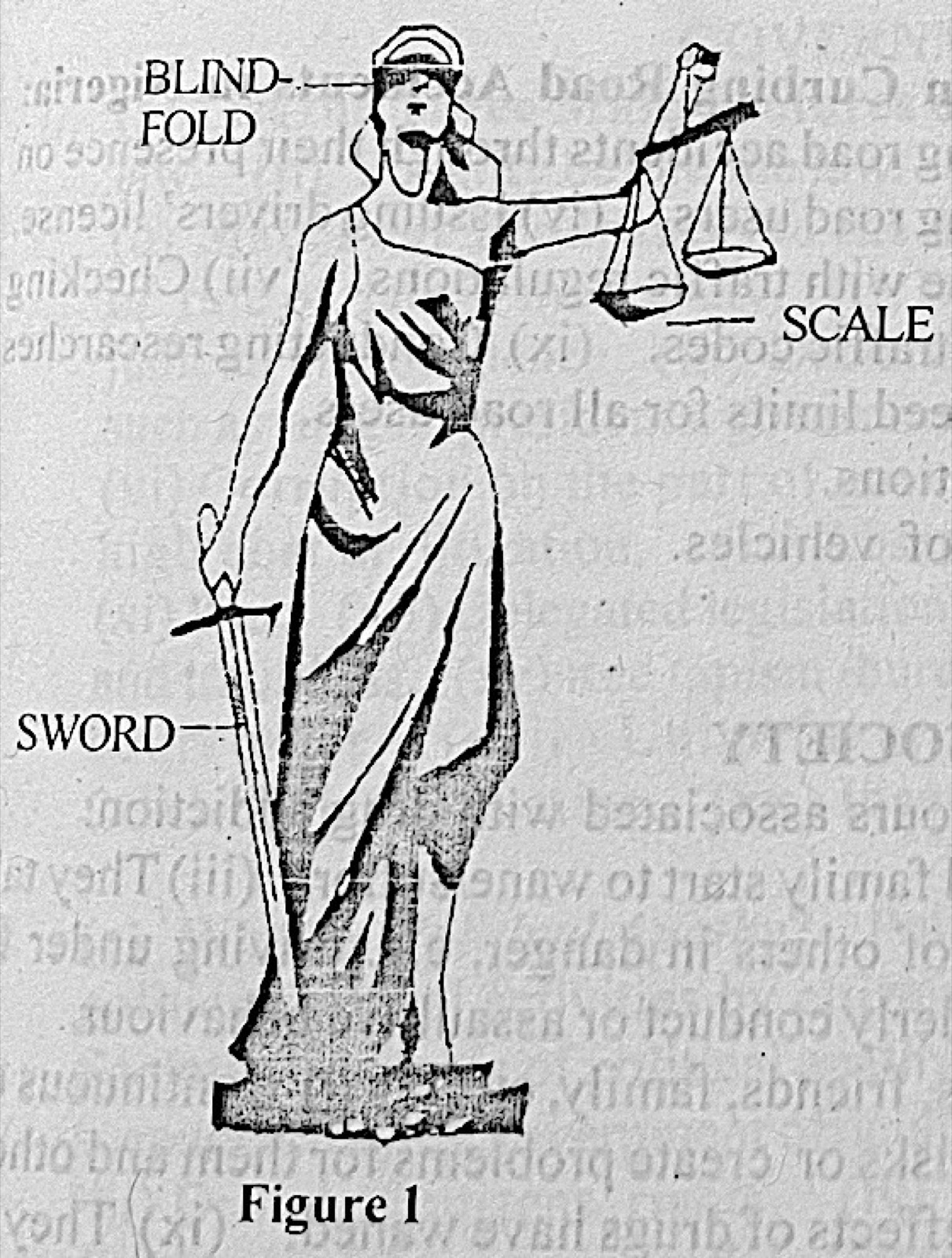
(b) Explain what the scale, sword and blindfold stand for in Figure 1.

Diagram for this question
Show the model answer
Model answer

(a) Justice is fairness: giving every person what is due to him, treating people equally and impartially according to law.
(b) Scale: balance; weighing the evidence of both sides fairly before judgement.
Sword: power and authority of the law to enforce judgement and punish wrongdoers; double edge shows justice can go either way.
Blindfold: impartiality; justice is blind to status, wealth, tribe or religion, so all are equal before the law.

Explanation

Explain all three symbols.

Open this question

Theory question 102

Nationalism and National Symbols

Section A: National Ethics, Discipline, Rights and Obligations
(a) State three significance of nationalism to political development in Nigeria.
(b) Highlight three nationalistic roles of Kwame Nkrumah.

Show the model answer
Model answer

(a) Any three:
Led to Nigeria's independence in 1960.
Promoted national unity and consciousness.
Led to the formation of political parties and newspapers.
Led to constitutional reforms and self-government.
Produced leaders who ran the new state.
(b) Kwame Nkrumah (Ghana), any three:
Led Ghana (Gold Coast) to independence in 1957, the first in sub-Saharan Africa.
Founded the Convention People's Party (1949) and led 'Positive Action' campaigns.
Promoted Pan-Africanism and African unity; helped found the OAU (1963).
Supported liberation movements in other African countries.
Was Ghana's first Prime Minister and President.

Explanation

Part (b) is about Nkrumah, not a Nigerian nationalist.

Open this question

Theory question 103

Traffic Regulations

Section A: National Ethics, Discipline, Rights and Obligations
Explain five roles of Federal Road Safety Corps (FRSC) in curbing road accidents in Nigeria.

Show the model answer
Model answer

Any five, explained:
Patrols highways and enforces traffic rules (speed limits, seat belts).
Educates motorists and the public on road safety.
Issues driver's licences and number plates after checks.
Checks vehicles for roadworthiness and removes unfit ones.
Rescues crash victims and clears obstructions.
Installs speed limiters / sets speed limits.
Researches causes of crashes and advises government.
Arrests and prosecutes traffic offenders.

Explanation

Five roles each with how it reduces crashes.

Open this question

Theory question 104

Drug Abuse

Section B: Emerging Issues in the Society
State five behaviours associated with drug addiction.

Show the model answer
Model answer

Any five:
Aggression and violence.
Withdrawal from family and friends.
Mood swings and depression.
Stealing / desperation for money to buy drugs.
Truancy and poor performance at school or work.
Neglect of personal hygiene.
Slurred speech, red eyes, staggering.
Lying and secretiveness.
Reckless behaviour.

Explanation

Five observable behaviours.

Open this question

Theory question 105

Human Trafficking

Section B: Emerging Issues in the Society
State five hardships that victims of human trafficking may experience in the hands of human traffickers.

Show the model answer
Model answer

Any five:
Forced labour without pay.
Forced prostitution and sexual abuse.
Physical torture and beatings.
Starvation and poor living conditions.
Seizure of travel documents / confinement.
Threats, oaths and intimidation.
Infection with HIV and other diseases.
Organ harvesting or death.

Explanation

Five hardships.

Open this question

Theory question 106

HIV/AIDS

Section B: Emerging Issues in the Society
(a) Explain the following: (i) HIV; (ii) AIDS.
(b) List nine symptoms of AIDS.

Show the model answer
Model answer

(a)(i) HIV (Human Immunodeficiency Virus) is the virus that attacks and weakens the body's immune system.
(ii) AIDS (Acquired Immune Deficiency Syndrome) is the advanced stage of HIV infection, when the immune system is so weak that the body suffers many infections.
(b) Any nine: rapid weight loss; persistent fever; chronic diarrhoea; persistent cough/tuberculosis; night sweats; skin rashes and sores; oral thrush; swollen lymph glands; extreme tiredness; loss of appetite; pneumonia; memory loss; hair loss.

Explanation

Distinguish HIV (virus) from AIDS (syndrome).

Open this question

Theory question 107

Rule of Law and Constituted Authority

Section C: Governmental System and Processes
(a) List the three main features of the rule of law.
(b) State four hindrances to the application of rule of law in the society.

Show the model answer
Model answer

(a) Supremacy of the law; equality before the law; respect for fundamental rights (A. V. Dicey's three principles).
(b) Any four:
Immunity clause.
State of emergency.
Military rule.
Illiteracy and ignorance of rights.
Corruption.
Delegated legislation and administrative tribunals.
Poverty / high cost of litigation.
Partisan or dependent judiciary.
Privileges of diplomats.

Explanation

Dicey's three features in (a).

Open this question

Theory question 108

Political Apathy and Popular Participation

Section C: Governmental System and Processes
(a) What is political apathy?
(b) State any two dangers of political apathy to the society.
(c) Highlight four ways of addressing political apathy.

Show the model answer
Model answer

(a) Political apathy is lack of interest or refusal of citizens to take part in political activities such as voting and joining parties.
(b) Any two: emergence of bad/incompetent leaders; low legitimacy of government; poor representation; corruption goes unchecked.
(c) Any four:
Free, fair and credible elections.
Political education by NOA, media and civil society.
Good governance and keeping promises.
Eliminating political violence.
Reducing poverty and illiteracy.
Internal democracy in parties.

Explanation

Three parts.

Open this question

Theory question 109

Civil Society

Section C: Governmental System and Processes
(a) Define civil society.
(b) Outline six impediments to the effectiveness of civil societies in Nigeria.

Show the model answer
Model answer

(a) Civil society is the body of non-governmental, non-profit, voluntary organisations through which citizens act together to pursue common interests and influence government, e.g. NBA, NUT, CAN, human rights groups.
(b) Any six:
Inadequate funding.
Government interference/harassment.
Lack of internal democracy and poor leadership.
Corruption of leaders.
Ethnic and religious divisions.
Illiteracy and apathy of members.
Partisan politics.
Lack of unity among groups.
Restrictive laws.
Explanation

Define and give six impediments.

Open this question