Which of the following statements is true about arthropods?
A.Prothorax bears only legs
B.Mesothorax bears only legs
C.Metathorax bears only wings
D.Prothorax bears only wings
Show the answer and explanation
Answer: A (Prothorax bears only legs)
Explanation
An insect's thorax has three segments, each with a pair of legs. The first (prothorax) has legs only; the second and third (mesothorax and metathorax) carry both legs and wings.
Active transport differs from diffusion in that active transport
A.is a very fast process
B.allows the movement of substances against concentration gradient.
C.takes place in both light and dark reactions of photosynthesis.
D.occurs in both plant and animal tissues.
Show the answer and explanation
Answer: B (allows the movement of substances against concentration gradient.)
Explanation
Active transport uses energy (ATP) to move substances from a low to a high concentration. Diffusion only moves them down the gradient, from high to low.
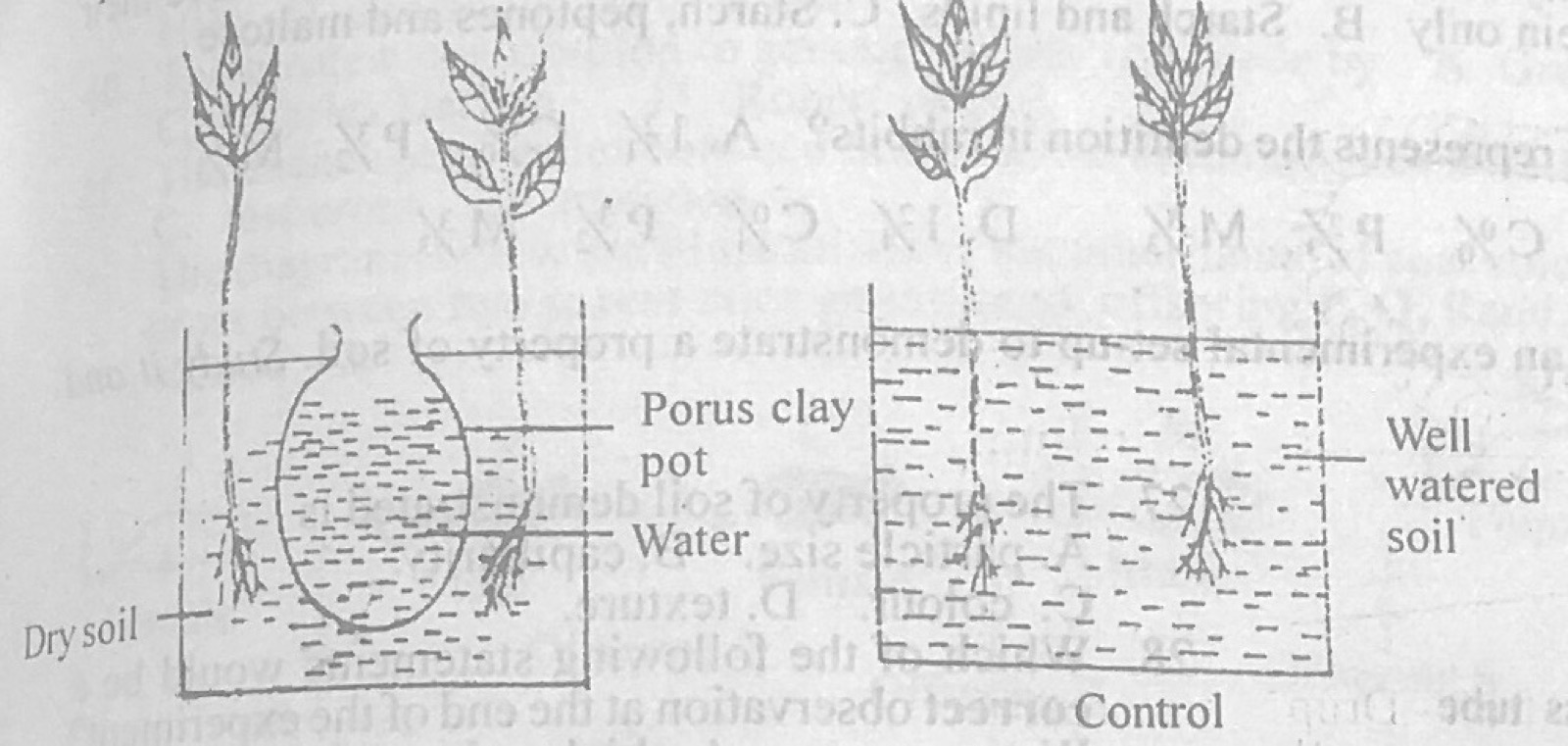
The diagrams below are illustrations of an experimental set-up to demonstrate a type of tropic response in plants. The type of response demonstrated is
A.phototropism.
B.geotropism.
C.hydrotropism.
D.thigmotropism.
Show the answer and explanation
Answer: C (hydrotropism.)
Explanation
The roots in dry soil grow towards the water seeping from the porous clay pot. A growth response towards water is hydrotropism.
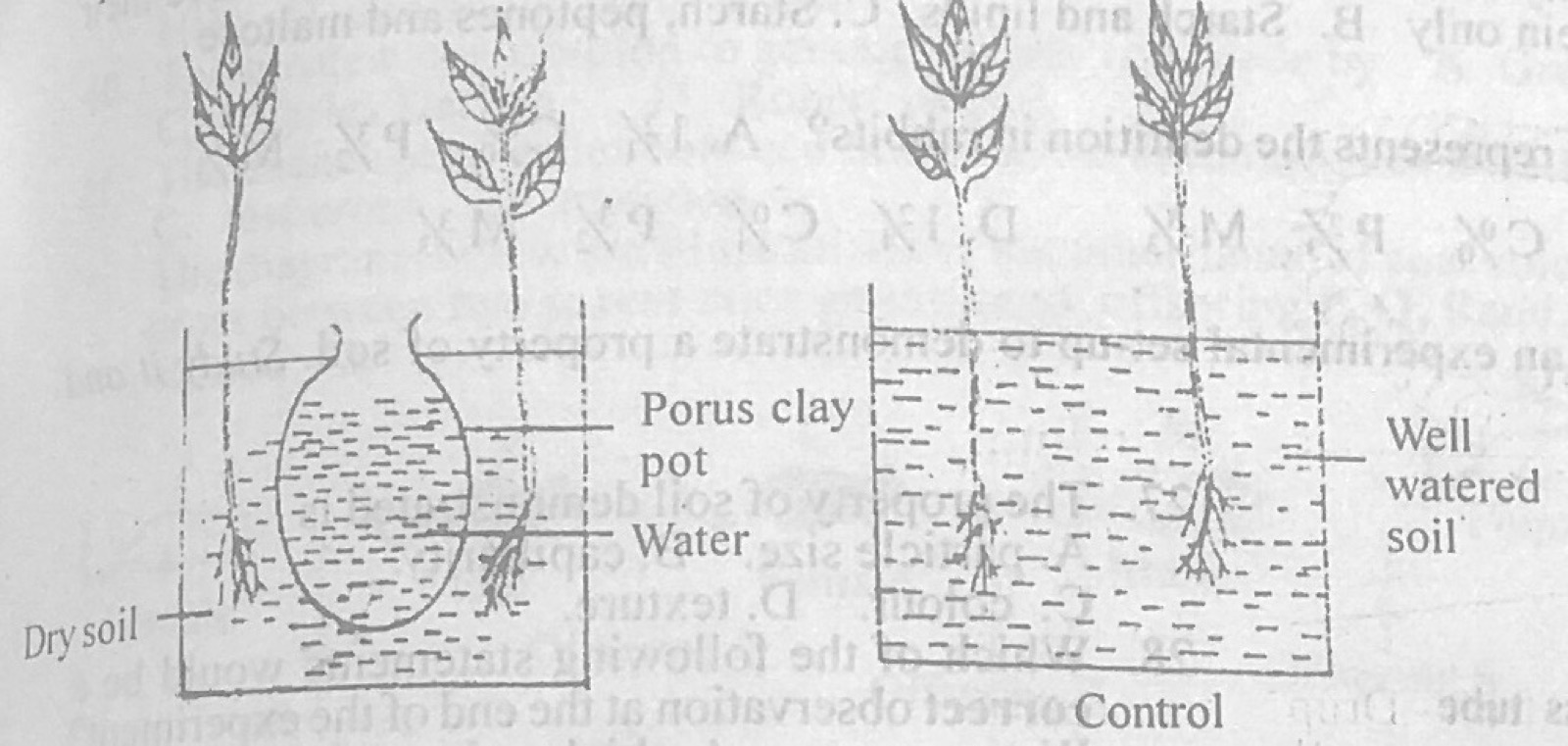
The diagrams below are illustrations of an experimental set-up to demonstrate a type of tropic response in plants. The conclusion drawn from the experiment is that
A.shoots of plants are negatively thigmotropic.
B.shoots of plants are negatively geotropic.
C.leaves of plants are positively phototropic.
D.roots of plants are positively hydrotropic.
Show the answer and explanation
Answer: D (roots of plants are positively hydrotropic.)
Explanation
The roots bend and grow towards the water source, so roots are positively hydrotropic.
A seedling was made to stand in a solution of red ink for three hours and a transverse section of the stem was examined under the microscope. The process being investigated was
A.the importance of micro elements to plants.
B.ascent of water through the xylem.
C.diffusion of coloured substances.
D.distribution of food in plants.
Show the answer and explanation
Answer: B (ascent of water through the xylem.)
Explanation
The dye travels with the water and stains only the xylem vessels. This shows that water rises up the stem through the xylem.
Which of the following statements about the response of neurones to stimulus is correct?
A.Neurones respond to stimulus of any strength
B.Neurones respond to all stimuli applied in rapid succession
C.Neurones respond more rapidly during the absolute refractory period
D.Intensity of stimulus must reach a threshold value before the neurones can be excited
Show the answer and explanation
Answer: D (Intensity of stimulus must reach a threshold value before the neurones can be excited)
Explanation
A neurone fires only when the stimulus reaches a minimum strength, the threshold. Weaker stimuli give no impulse, and during the refractory period it cannot fire at all.
Which of the following dental formulae represents the dentition in rabbits?
A.I 2/1, C 0/0, P 3/2, M 3/3
B.I 2/2, C 1/1, P 2/2, M 3/3
C.I 1/2, C 0/0, P 2/3, M 3/3
D.I 2/1, C 0/1, P 3/2, M 3/3
Show the answer and explanation
Answer: A (I 2/1, C 0/0, P 3/2, M 3/3)
Explanation
A rabbit has 2 upper and 1 lower incisor on each side, no canines (leaving a gap, the diastema), 3 upper and 2 lower premolars, and 3 molars above and below.
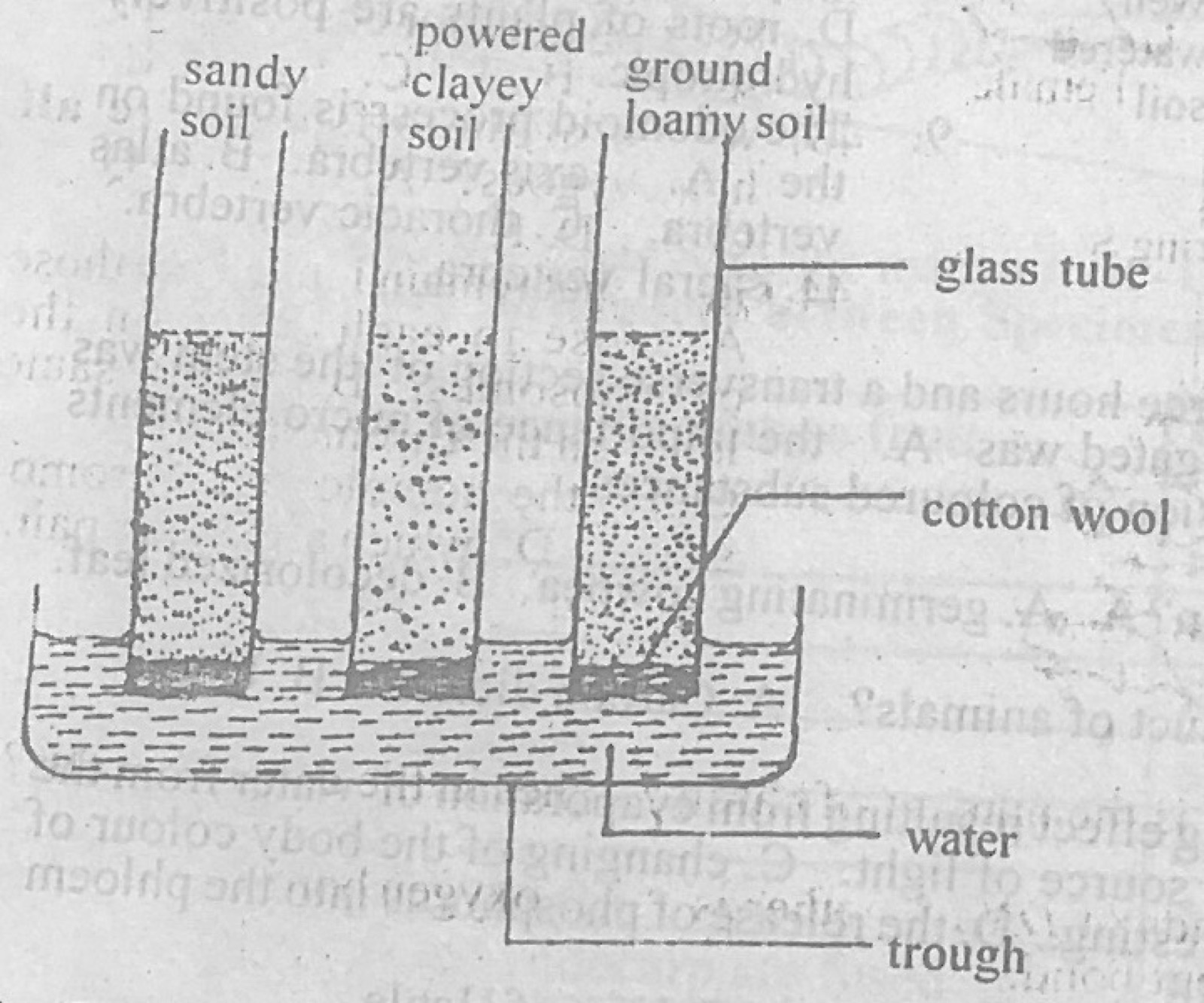
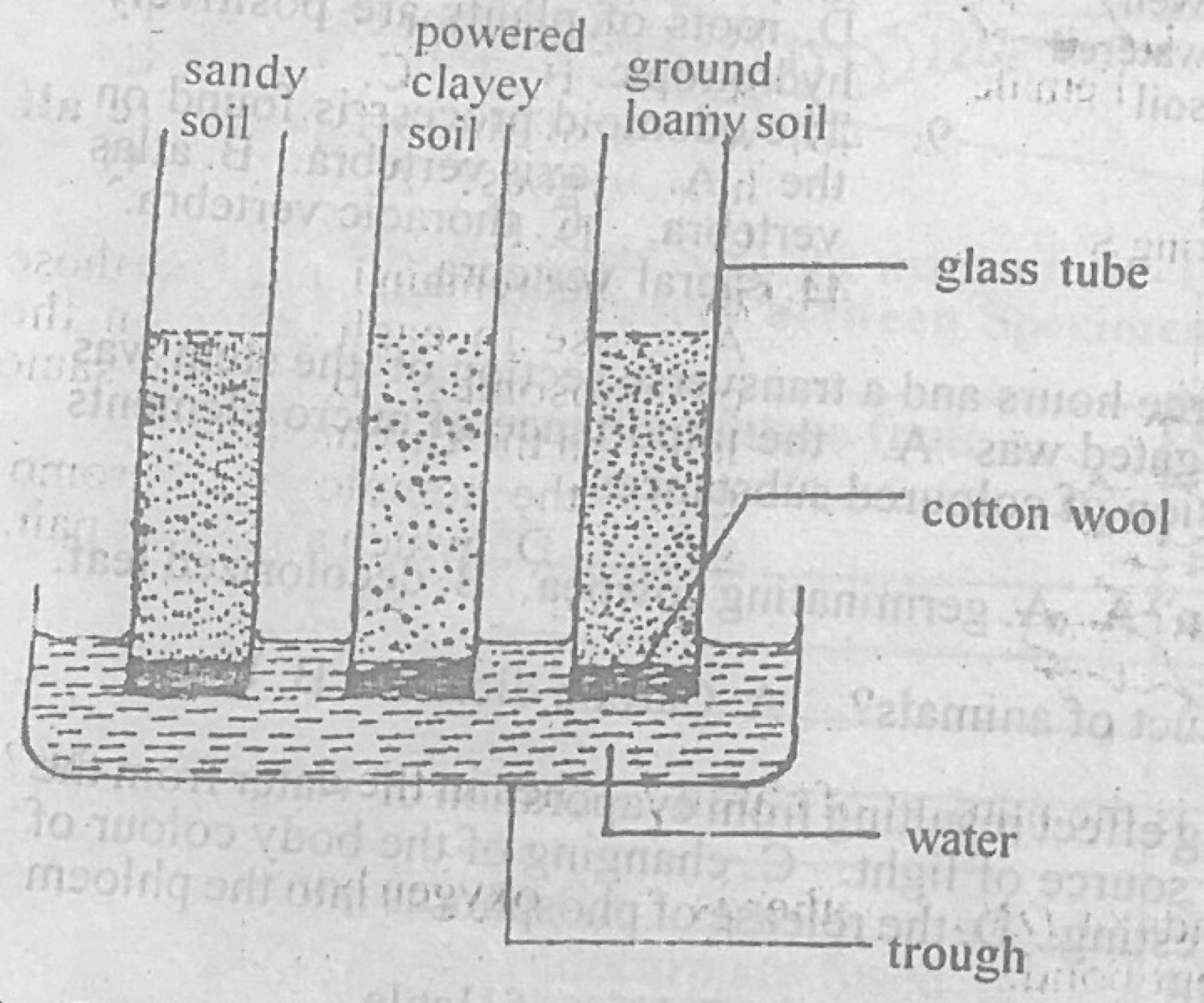
The diagram below is an illustration of an experimental set-up to demonstrate a property of soil. Which of the following statements would be a correct observation at the end of the experiment? Water moves
A.highest in sandy soil.
B.lowest in loamy soil.
C.to the same level in all soil types.
D.highest in clayey soil.
Show the answer and explanation
Answer: D (highest in clayey soil.)
Explanation
Clay has the smallest particles and the narrowest pore spaces, so water rises highest in it by capillarity. Water rises least in sandy soil.
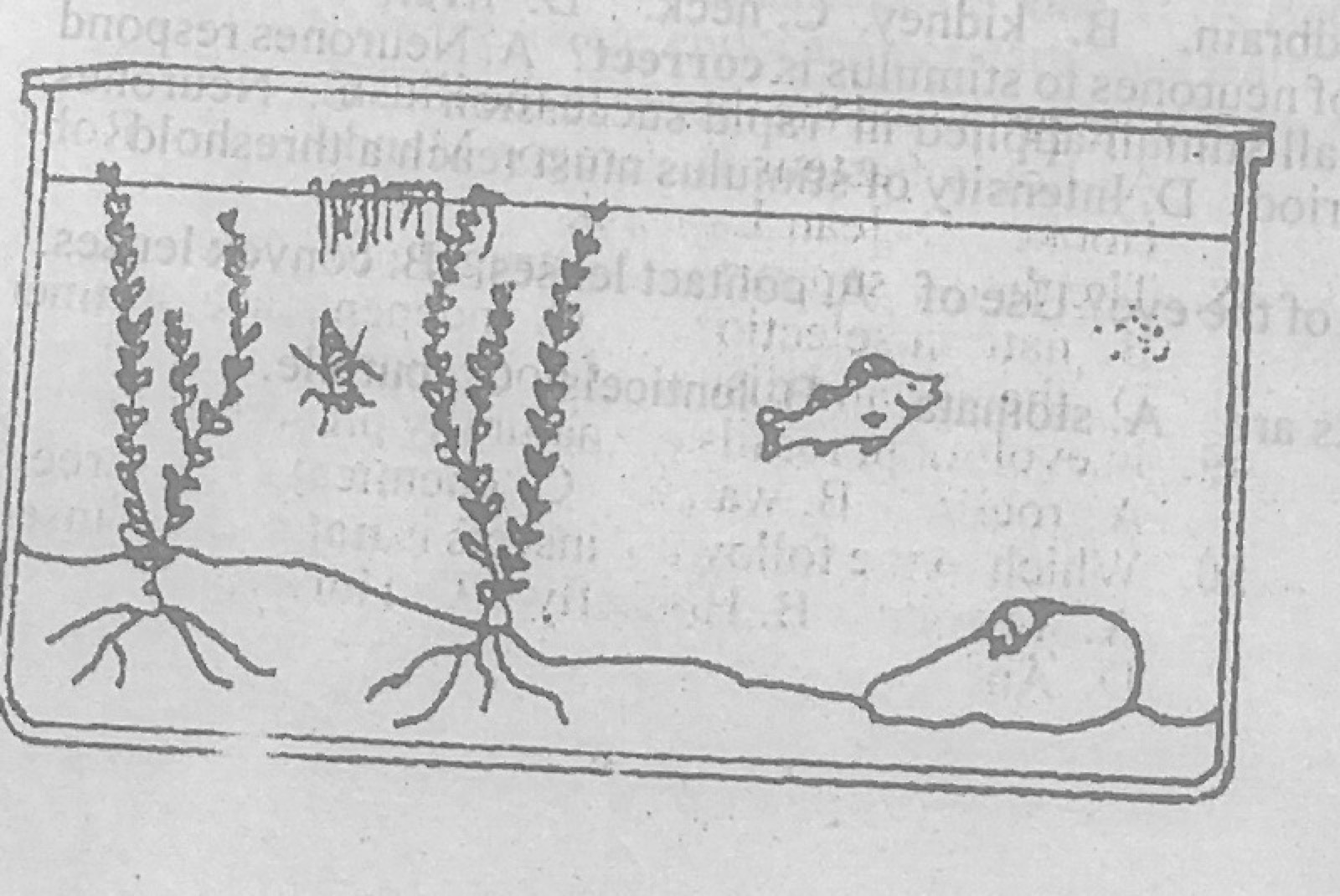
The diagram below is an illustration of organisms in an air-tight aquarium. The most important factor needed by the organisms is
A.light energy.
B.low humidity.
C.oxygen.
D.nitrate.
Show the answer and explanation
Answer: A (light energy.)
Explanation
The aquarium is sealed, so nothing comes in from outside except light. With light, the water plants photosynthesise and produce the oxygen and food that the fish, snail and insects need.
Xerophytes have the following characteristics aimed at conserving water except
A.thick cuticle.
B.broad leaf surfaces.
C.sunken stomata.
D.waxy cuticle.
Show the answer and explanation
Answer: B (broad leaf surfaces.)
Explanation
Broad leaves lose a lot of water by transpiration. Xerophytes have small, narrow or spiny leaves instead, along with thick waxy cuticles and sunken stomata.
Two unconscious patients X and Y whose blood group genotypes are AO and AB respectively were transfused with blood from the same donor. Patient X immediately showed signs of difficulty in breathing while patient Y showed no negative reaction. Patients X and Y were likely transfused with blood of genotype
A.OO.
B.AO.
C.BO.
D.AA.
Show the answer and explanation
Answer: C (BO.)
Explanation
Patient X is group A and has anti-B antibodies, so X reacted to blood carrying the B antigen. Patient Y is AB and accepts any group. A donor of genotype BO (group B) explains both results.
Two unconscious patients X and Y whose blood group genotypes are AO and AB respectively were transfused with blood from the same donor. Patient X immediately showed signs of difficulty in breathing while patient Y showed no negative reaction. What should the hospital have done to prevent patient X from showing the symptom described above? Patient X should have
A.undergone an agglutination test.
B.been asked for the blood group.
C.been screened for HIV
D.undergone malaria test.
Show the answer and explanation
Answer: A (undergone an agglutination test.)
Explanation
Before transfusion, the donor's and patient's blood should be mixed and checked for clumping (agglutination test, or cross-matching). This would have shown the blood was incompatible.
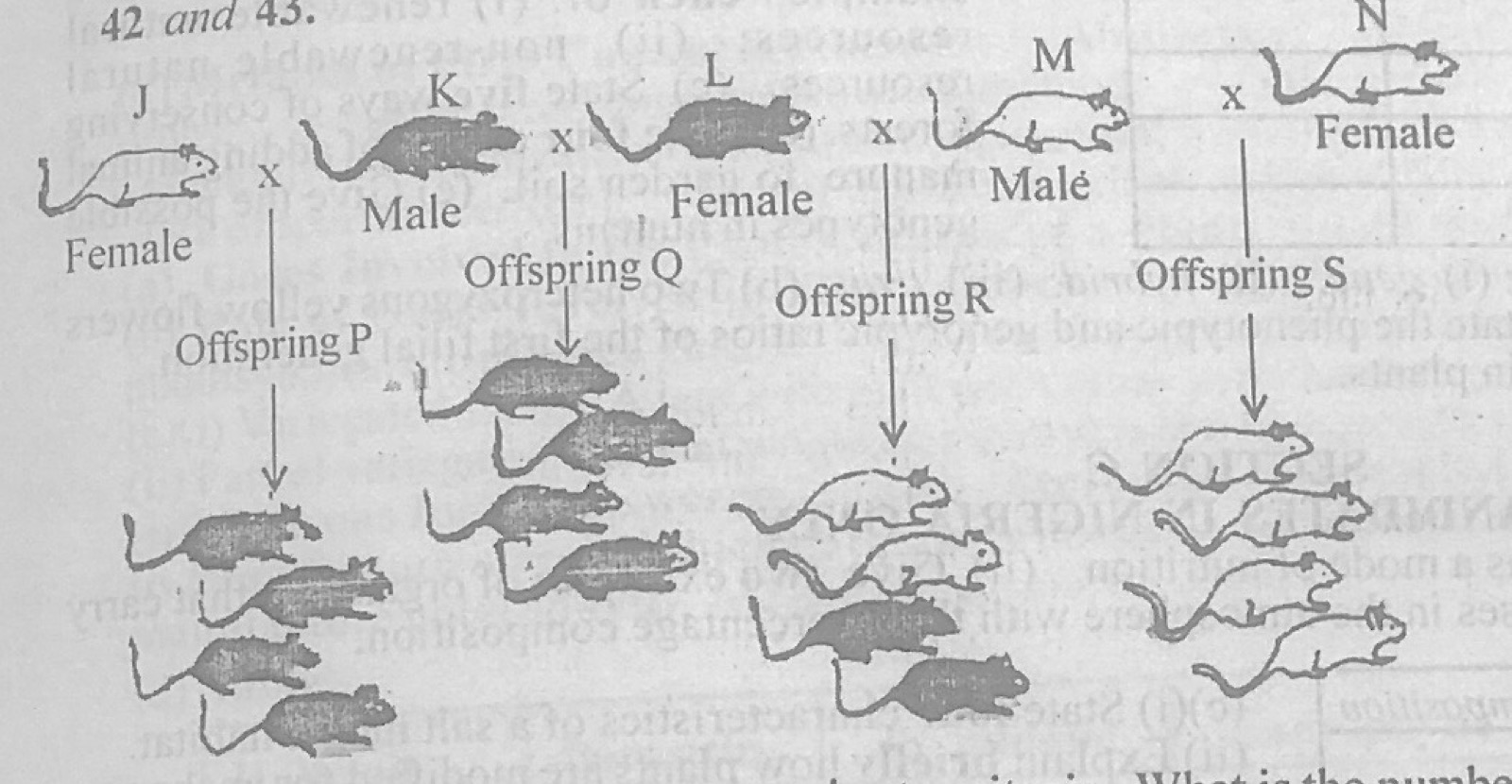
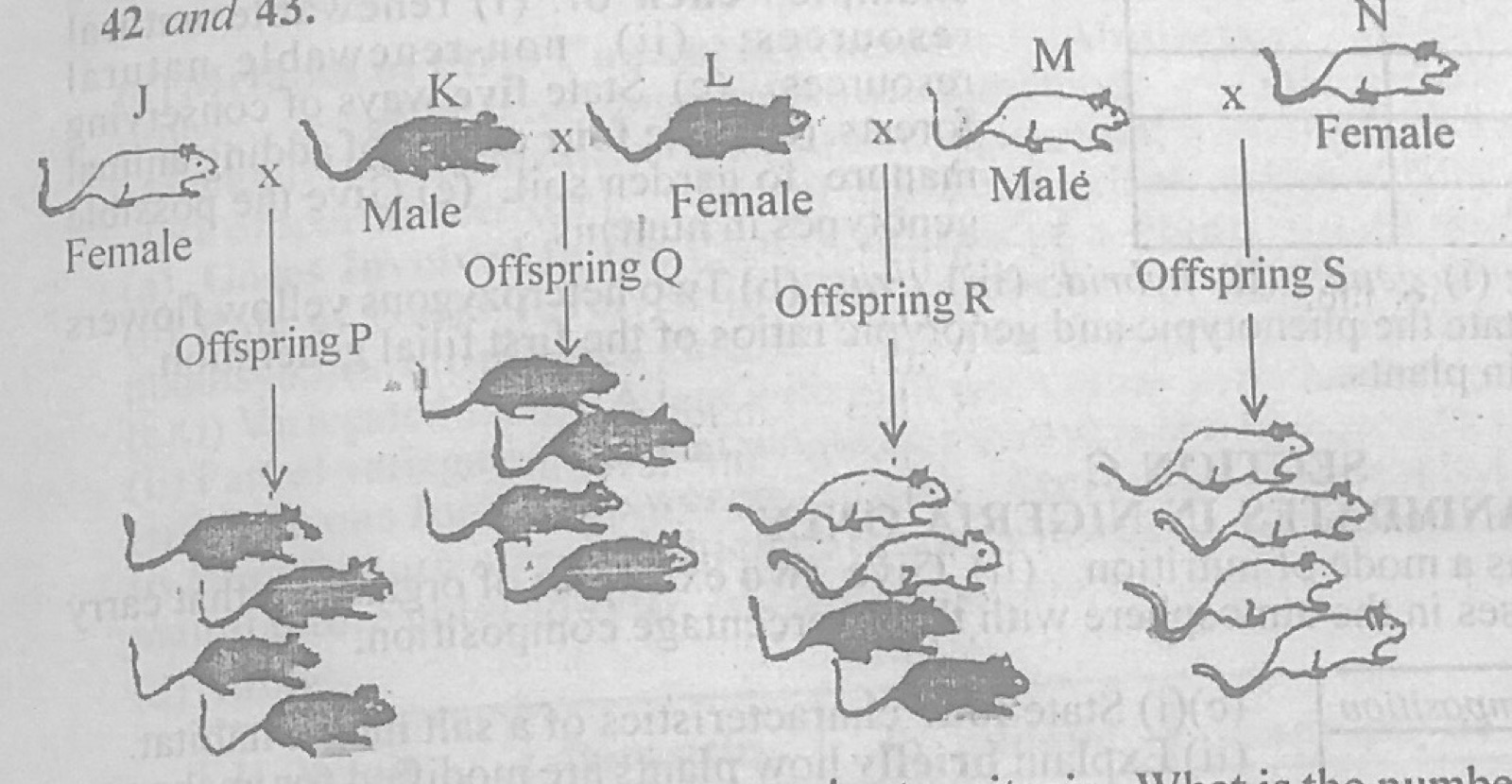
The diagrams below are illustrations of the inheritance of coat colour in mice. J, K, L, M and N are parents. The cross between two parent mice gave rise to offspring P, Q, R and S. Which parent mouse is heterozygous for coat colour?
A.M
B.J
C.K
D.L
Show the answer and explanation
Answer: D (L)
Explanation
L is black but, crossed with the white mouse M, gives both black and white young. So L must carry a hidden white allele: it is heterozygous.
The diagrams below are illustrations of the inheritance of coat colour in mice. J, K, L, M and N are parents. The cross between two parent mice gave rise to offspring P, Q, R and S. Which of the offspring are all homozygous?
A.P
B.Q
C.S
D.R
Show the answer and explanation
Answer: C (S)
Explanation
White is recessive. M and N are both white (homozygous recessive), so all their young S are white and homozygous too.
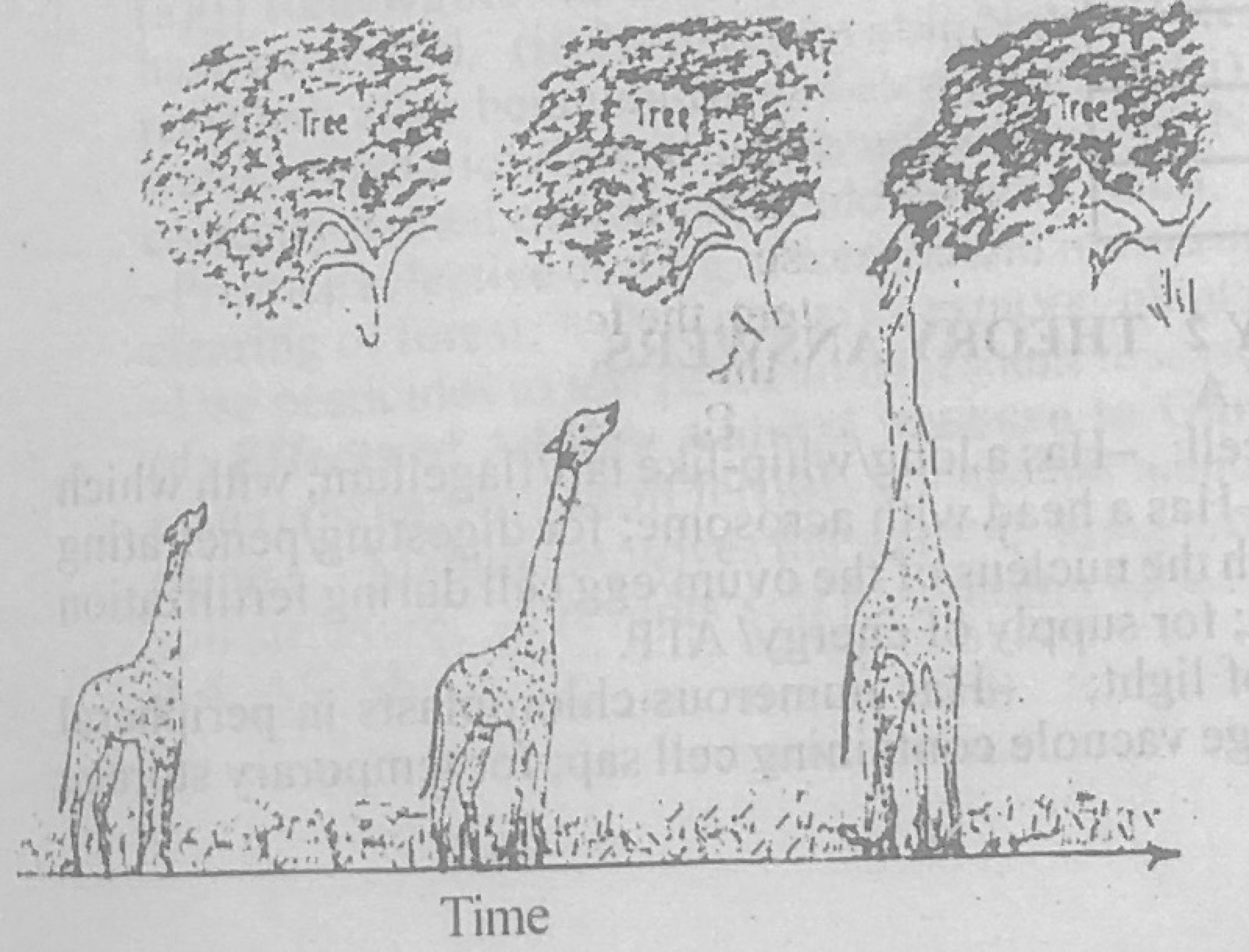
The diagram below is an illustration of one of the theories of evolution. The theory supports
A.struggle for survival.
B.natural selection.
C.independent assortment.
D.the use and disuse of body parts.
Show the answer and explanation
Answer: D (the use and disuse of body parts.)
Explanation
Lamarck's theory says that body parts that are used a lot grow bigger and those not used shrink, and these changes are inherited. This is the theory of use and disuse.
(a) Explain briefly how the structure of each of the following cells relate to their functions: (i) sperm cell; (ii) palisade cell. (b) Make a drawing 8 cm – 10 cm long of the front view of the female reproductive system in humans and label fully. (c) State two differences between reproduction in mammals and in amphibians. (d) State two methods of birth control in humans.
Show the model answer
Model answer
(a)(i) Sperm cell: long tail (flagellum) lets it swim to the ovum; acrosome in the head holds enzymes that digest a way into the egg; head has a nucleus with half the chromosomes (haploid) to fuse with the egg nucleus; middle piece packed with mitochondria supplies energy for swimming; small and streamlined. (ii) Palisade cell: many chloroplasts to trap light; long, column-shaped and packed close together just under the upper epidermis, at right angles to the surface, so many cells receive light; thin cell wall lets light and gases pass; chloroplasts can move towards the light; large vacuole holds water. (b) Front view drawing, 8–10 cm, with title and labels: ovaries, oviducts (Fallopian tubes) with funnels/fimbriae, uterus (with its wall/endometrium), cervix, vagina, (vulva). Symmetrical, clear lines, ruled label lines. (c) Any two: mammals have internal fertilisation / most amphibians have external fertilisation (in water); mammal embryo develops inside the uterus with a placenta / amphibian eggs develop outside in water; mammals produce few eggs / amphibians produce many eggs; mammals give birth to live young / amphibians lay eggs; mammals show much parental care and feed young on milk / amphibians show little or none; amphibians have a larval (tadpole) stage and metamorphosis / mammals do not. (d) Any two: condom; diaphragm/cap; contraceptive pill or injection; IUD (loop); spermicides; rhythm (safe period) method; withdrawal; abstinence; vasectomy or tubal ligation.
Explanation
Link every structural feature to its function with 'so that' or 'for'.
(a) Name the gases involved in the photosynthesis of a plant. (b) State one role each of the gases named in 2(a). (c)(i) What is a variegated leaf? (ii) Which part of the variegated leaf would test positive when treated with iodine solution? (iii) State two reasons for the answer in 2(c)(ii). (v) Name one mineral element required by plants for the formation of the part that would test positive in 2(c)(ii). (d) The table below indicates different methods by which organisms obtain food. Place the following organisms under the headings in the table below: Human, Mushroom, Venus flytrap, Waterleaf plant, Tapeworm, Elephant grass, Housefly, Lichen, Spirogyra, Rhizopus. Mode of Nutrition: Holozoic | Parasitic | Symbiotic | Saprophytic | Autotrophic
Show the model answer
Model answer
(a) Carbon (IV) oxide (CO2) and oxygen (O2). (b) CO2: raw material, its carbon is built into glucose. O2: by-product given off (released into the air for respiration). (c)(i) A variegated leaf has green parts (with chlorophyll) and white or yellow parts (without chlorophyll). (ii) The green parts. (iii) The green parts contain chlorophyll, which traps light for photosynthesis; so only they make glucose, which is stored as starch; the white parts lack chlorophyll and make no starch. (v) Magnesium (or nitrogen, or iron needed to make chlorophyll). (d) Holozoic: Human, Housefly. Parasitic: Tapeworm. Symbiotic: Lichen. Saprophytic: Mushroom, Rhizopus. Autotrophic: Waterleaf plant, Elephant grass, Spirogyra, Venus flytrap (it photosynthesises; it also traps insects, so it may be accepted as holozoic too).
Explanation
The part numbered (iv) is missing in the book; answer the parts as printed.
(a) Explain briefly the following terms: (i) renewable natural resources; (ii) non-renewable natural resources. (b) Give two examples each of: (i) renewable natural resources; (ii) non-renewable natural resources. (c) State five ways of conserving forests. (d) State four effects of adding animal manure to garden soil. (e) Give the possible genotypes in humans.
Show the model answer
Model answer
(a)(i) Renewable resources are natural resources that can be replaced naturally (or by people) after use, so they need not run out if managed well. (ii) Non-renewable resources exist in fixed amounts and cannot be replaced once used up, or take millions of years to form. (b)(i) Any two: water, soil, forests/plants, wildlife/animals, air, sunlight. (ii) Any two: petroleum (crude oil), coal, natural gas, minerals such as iron ore, tin, gold, limestone. (c) Any five: afforestation and reforestation; forest reserves; controlled/selective felling; ban on bush burning and control of forest fires; laws against illegal logging; use of alternative fuels instead of firewood; taungya system; education of the public; fire belts. (d) Any four: adds nutrients (nitrogen, phosphorus, potassium); adds humus, which improves soil structure; increases water-holding capacity; improves aeration; increases soil organisms; reduces erosion; buffers soil pH. (e) The question is unclear as printed. Likely meaning: haemoglobin genotypes AA, AS, SS (and AC, SC); or blood group genotypes AA, AO, BB, BO, AB, OO.
Explanation
Part (e) seems out of place in the paper; give the common human genotypes.
(a) Explain briefly the following terms: (i) gene; (ii) hybrid; (iii) trait. (b) Two heterozygous yellow flowers are crossed. Using a genetic diagram; state the phenotypic and genotypic ratios of the first filial generation. (c) State four transmittable characters in plants.
Show the model answer
Model answer
(a)(i) A gene is a unit of heredity, a section of DNA on a chromosome that controls one characteristic. (ii) A hybrid is the offspring of parents that differ genetically (e.g. of two different varieties or species); a heterozygous individual. (iii) A trait is a characteristic or feature of an organism that can be inherited, e.g. flower colour. (b) Let Y = yellow (dominant), y = other colour (e.g. white). Parents: Yy × Yy; gametes: Y, y and Y, y; F1: YY, Yy, Yy, yy. Genotypic ratio 1 YY : 2 Yy : 1 yy. Phenotypic ratio 3 yellow : 1 non-yellow (white). (c) Any four: height (tall/dwarf); flower colour; seed colour; seed shape (round/wrinkled); pod shape or colour; position of flowers; leaf shape; fruit colour; disease resistance.
Explanation
Show parents, gametes, fusion and offspring in the genetic diagram.
(a)(i) Explain brieflychemosynthesis as a mode of nutrition. (ii) Give two examples of organisms that carry out chemosynthesis. (b) List three gases in the atmosphere with their percentage composition. Gases in the atmosphere | Percentage composition (c)(i) State four characteristics of a salt marsh habitat. (ii) Explain briefly how plants are modified for anchorage in a salt marsh habitat. (d)(i) List four bacterial diseases associated with poor food hygiene. (ii) State three effects of poor food hygiene. (e) A person was involved in a car accident and became unconscious due to excessive blood loss. Explain briefly how the blood lost could be restored. (f) State three differences between tillage and bush burning as farming practices. Tillage | Bush burning
Show the model answer
Model answer
(a)(i) Chemosynthesis is a type of autotrophic nutrition in which some bacteria make their own food from simple inorganic substances using energy released by oxidising chemicals (e.g. ammonia, nitrites, iron or sulphur compounds) instead of light. (ii) Any two: Nitrosomonas; Nitrobacter; iron bacteria; sulphur bacteria (e.g. Thiobacillus). (b) Any three: nitrogen about 78%; oxygen about 21%; argon (noble gases) about 0.9%; carbon (IV) oxide about 0.03%; water vapour variable. (c)(i) Any four: water is salty/brackish and its salt level changes; flooded at high tide and exposed at low tide; soft, muddy, waterlogged soil; mud poor in oxygen; strong sunlight and high evaporation; tidal currents. (ii) Mangrove plants have stilt (prop) roots growing from the stem and spreading into the mud, which hold them firmly against tides; extensive branching roots; breathing roots (pneumatophores) also help. (d)(i) Any four: cholera; typhoid fever; bacillary dysentery; food poisoning (Salmonella, Staphylococcus); botulism; tuberculosis (from milk); diarrhoea caused by E. coli. (ii) Any three: spread of food-borne diseases; diarrhoea, vomiting and dehydration; death; food spoilage and waste; loss of working/school days and money. (e) He should be given a blood transfusion of matched (compatible) blood after cross-matching; meanwhile intravenous fluids (saline/plasma) restore volume; later the body replaces lost blood: bone marrow makes new red cells, liver makes plasma proteins; a diet rich in iron, protein and vitamins helps. (f) Any three: tillage loosens and turns the soil / bush burning clears vegetation by fire; tillage improves aeration and drainage / bush burning does not; tillage keeps organic matter, which can be turned in / burning destroys organic matter and soil organisms; tillage does not pollute the air / burning releases smoke and CO2; burning exposes soil to erosion / tillage (done properly) causes less erosion; burning quickly releases potash (ash) / tillage does not.
Explanation
Section C (candidates in Nigeria only). Use the tables for (b) and (f).