53 questions. Try each one, then open the answer to check yourself and read the explanation.
Question 1
Viruses, Monera, Protista and Fungi
An example of an organism that exists as a colony is
A.Spirogyra.
B.Paramecium.
C.Euglena.
D.Volvox.
Show the answer and explanation
Answer: D (Volvox.)
Explanation
Volvox is a hollow ball of many similar cells joined together, which is a colony. Spirogyra is a filament, and Paramecium and Euglena live as single cells.
In flowering plants the ovules are enclosed in an ovary, which becomes the fruit. Gymnosperms have no ovary, so their seeds lie exposed on cone scales.
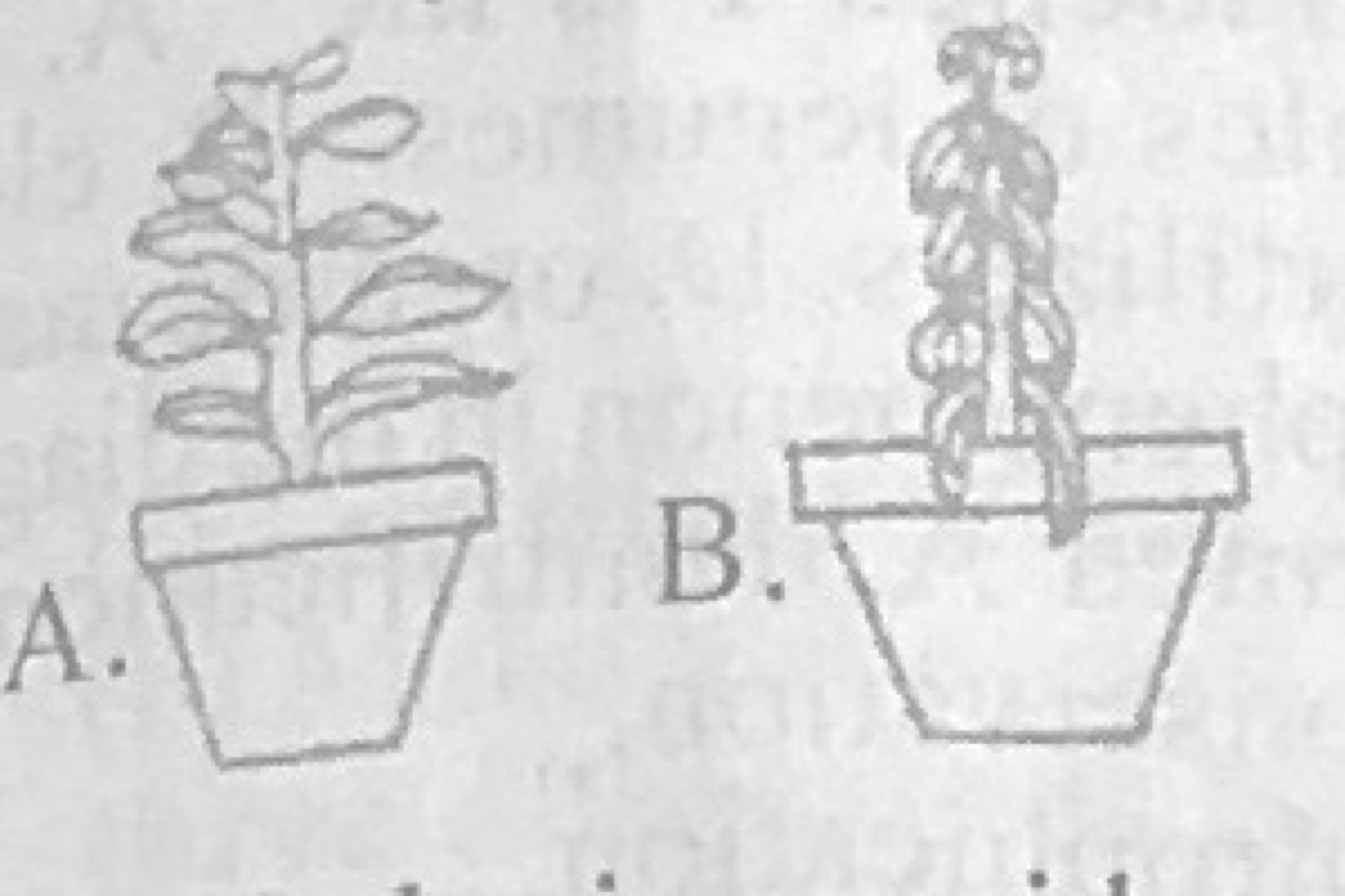
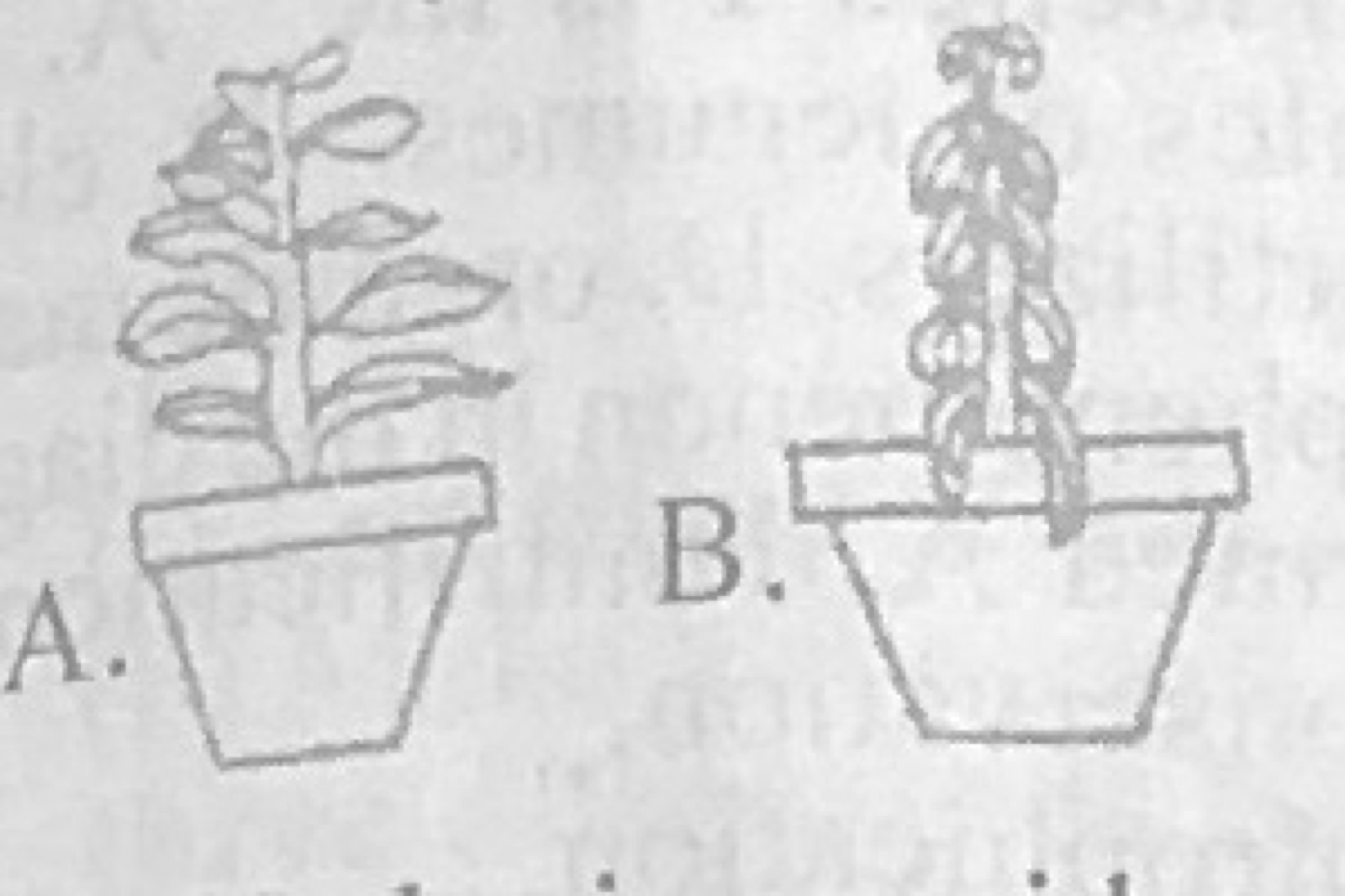
Plant A was seen to appear as plant B after seven hours. Study the diagrams carefully. The term that can be used to describe what happened to plant A after seven hours is
A.wilting.
B.competition.
C.transpiration.
D.osmosis.
Show the answer and explanation
Answer: A (wilting.)
Explanation
Plant A's leaves and stem drooped because its cells lost more water than they took in. This drooping is called wilting.
Plant A was seen to appear as plant B after seven hours. Study the diagrams carefully. The environmental factors responsible for the condition in plant B are
A.low humidity and low temperature.
B.high humidity and low temperature.
C.low humidity and high temperature.
D.high humidity and high temperature.
Show the answer and explanation
Answer: C (low humidity and high temperature.)
Explanation
Dry (low-humidity) and hot air makes water evaporate from the leaves fastest, so the plant loses water quickly and wilts.
Muscles can only pull. They work in antagonistic pairs (e.g. biceps and triceps): one contracts while the other relaxes, so the bone can be moved in both directions.
The exchange of gases between the environment and the respiratory organs of vertebrates is referred to as
A.inhalation.
B.respiration.
C.expiration.
D.breathing.
Show the answer and explanation
Answer: D (breathing.)
Explanation
Breathing is the movement of air into and out of the respiratory organs, which exchanges gases with the surroundings. Respiration is the release of energy inside cells.
Which of the following parts of the ear does not contain endolymph?
A.Semi-circular canals
B.Utriculus
C.Tympanum
D.Sacculus
Show the answer and explanation
Answer: C (Tympanum)
Explanation
Endolymph fills the inner ear (semicircular canals, utriculus, sacculus, cochlea). The tympanum (eardrum) is a membrane between the outer and middle ear.
The steps below are involved in the testing of a leaf for starch: I. Decolorize leaf II. Dip decolorized leaf in warm water III. Place leaf in boiling water IV. Add iodine solution The correct order for the test is
A.I, II, III and IV.
B.I, III, II and IV.
C.II, III, I and IV.
D.III, I, II and IV.
Show the answer and explanation
Answer: D (III, I, II and IV.)
Explanation
First boil the leaf in water to kill and soften it (III), then decolourise it in alcohol (I), dip it in warm water to soften it again (II), and finally add iodine (IV).
The steps below are involved in the testing of a leaf for starch: I. Decolorize leaf II. Dip decolorized leaf in warm water III. Place leaf in boiling water IV. Add iodine solution The best time to pluck the leaf for the experiment is
A.after being exposed to sunlight.
B.three hours after sunset.
C.before sunrise.
D.six hours after sunset.
Show the answer and explanation
Answer: A (after being exposed to sunlight.)
Explanation
A leaf that has been in sunlight has been photosynthesising and has stored starch, so the test will show a result.
C.they include primary, secondary and tertiary consumers.
D.some animals form part of several food chains.
Show the answer and explanation
Answer: D (some animals form part of several food chains.)
Explanation
A food web is made of many food chains linked together. Because one animal can eat, or be eaten by, several others, it appears in several chains, which makes the web complex.
Overcrowding leads to competition for food and space, death, and movement away (migration). Commensalism is a feeding relationship, not a result of overcrowding.
A noticeable physical appearance of individuals of the same species is called
A.physical variation.
B.physiological variation.
C.morphological variation.
D.discontinuous variation.
Show the answer and explanation
Answer: C (morphological variation.)
Explanation
Differences in visible features such as height, colour or shape are called morphological variation. Physiological variation is in body processes, such as blood group.
A blend of inherited and acquired characteristics shows
A.variation.
B.inheritance.
C.evolution.
D.heredity.
Show the answer and explanation
Answer: A (variation.)
Explanation
Individuals differ because of the genes they inherit and the features they acquire from their environment. These differences together are called variation.
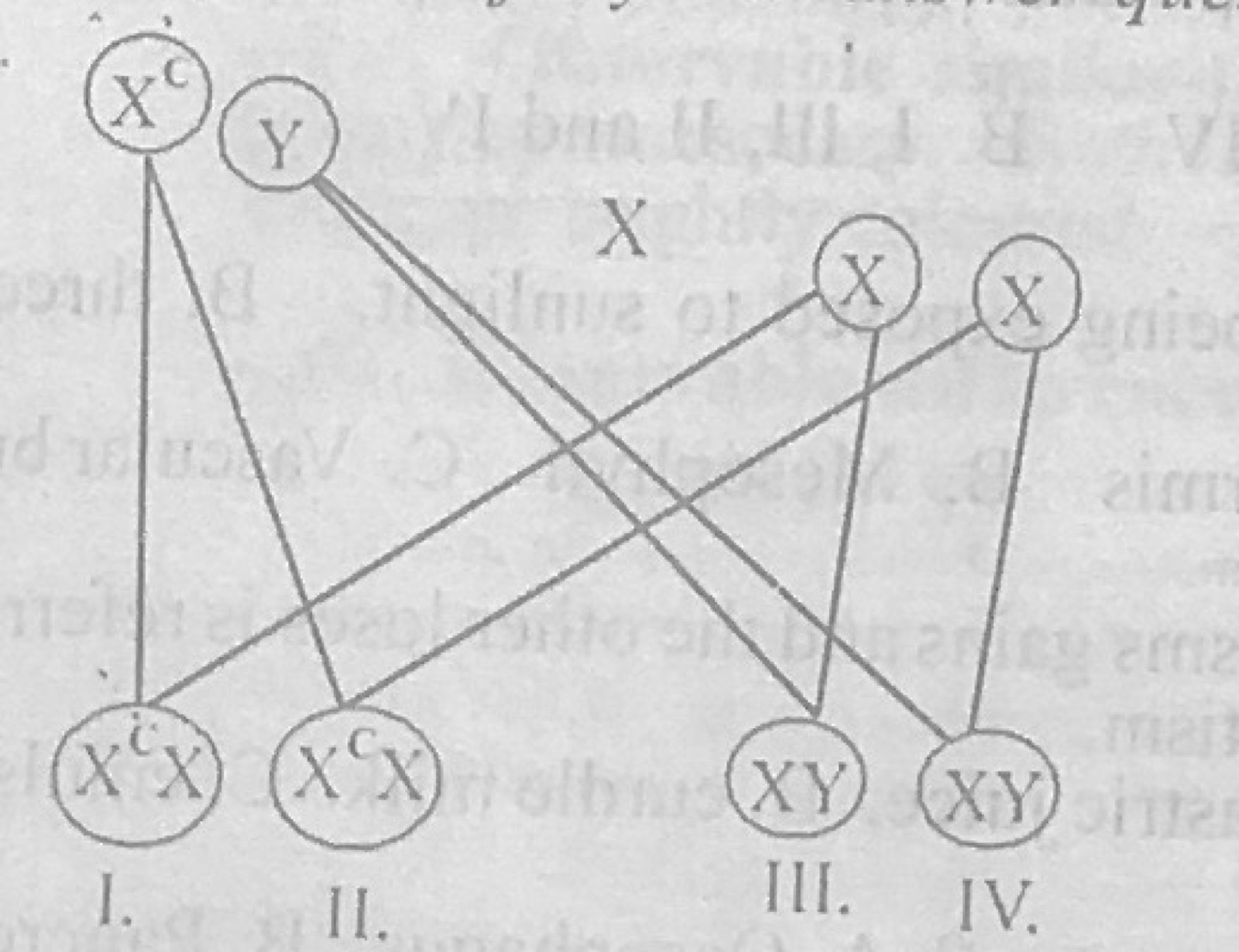
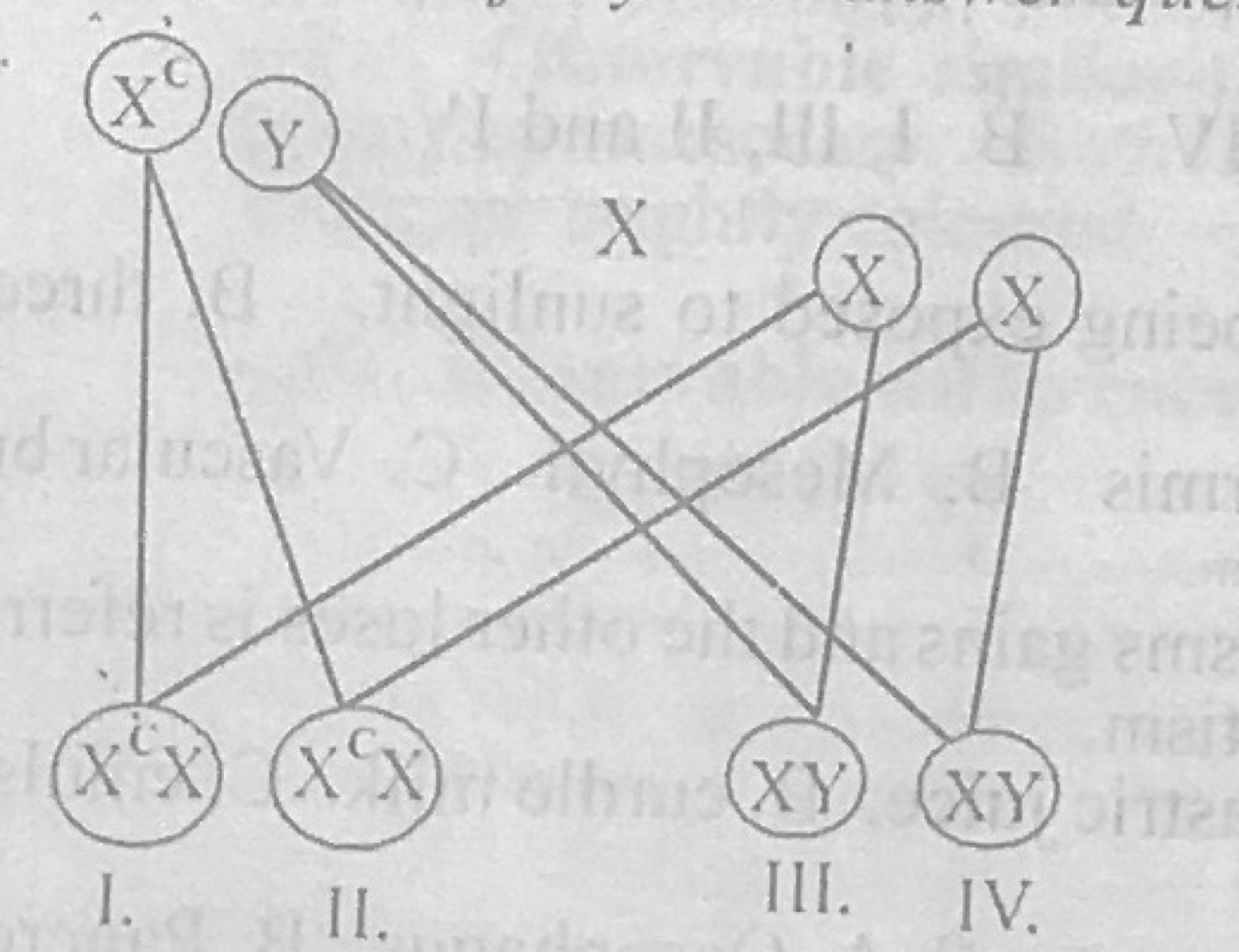
The illustration below represents a cross between a colour-blind male and a normal female. What is the genotypic ratio of carrier females to normal males in the cross?
A.1 : 1
B.2 : 3
C.3 : 4
D.4 : 1
Show the answer and explanation
Answer: A (1 : 1)
Explanation
The offspring are XcX, XcX, XY and XY: two carrier females and two normal males, a ratio of 2 : 2 = 1 : 1.
Which of the following scientists did not contribute to the development of genetics?
A.Wilhem Johannsen
B.Thomas Morgan
C.Gregor Mendel
D.Felix Durjadin
Show the answer and explanation
Answer: D (Felix Durjadin)
Explanation
Mendel founded genetics, Johannsen coined the word 'gene' and Morgan studied sex linkage in fruit flies. Felix Dujardin studied protoplasm in single-celled organisms, not genetics.
(a)(i) List three forms in which living cells exist. (ii) Give one example each of the forms listed in 1(a)(i). (b) Make a diagram, 6 cm – 10 cm long, of a typical plant cell and label fully. (c)(i) In a tabular form, state three differences between a plant cell and an animal cell. (ii) State three similarities between a plant cell and an animal cell.
Show the model answer
Model answer
(a)(i) Any three: as single free-living cells; as colonies; as filaments; as part of a many-celled organism (tissues). (ii) Single: Amoeba, Euglena, Chlamydomonas, Paramecium. Colony: Volvox, Pandorina, Eudorina. Filament: Spirogyra, Ulothrix, Oedogonium. Part of an organism: cheek cell, onion epidermal cell. (b) Diagram 6–10 cm long with a title, showing and labelling: cellulose cell wall, cell membrane, cytoplasm, large central vacuole with tonoplast, nucleus (with nucleolus), chloroplasts, mitochondria; extra marks for middle lamella, endoplasmic reticulum, Golgi body. Clean lines and ruled label lines. (c)(i) Any three in a table: plant cell has a cellulose cell wall / animal cell has none; plant has chloroplasts / animal has none; plant has one large central vacuole / animal has small or no vacuoles; plant stores starch / animal stores glycogen; plant cell has a regular shape / animal cell irregular; plant lacks centrioles / animal has centrioles. (ii) Any three: both have a cell membrane; both have cytoplasm; both have a nucleus; both have mitochondria, ribosomes, endoplasmic reticulum and Golgi bodies.
Explanation
Draw large and in pencil, keep the drawing within the size asked, and give it a title.
(a) In sequence, name the organs that constitute the alimentary canal of humans. (b) State: (i) three structural differences; (ii) three structural similarities; between the alimentary canal of a bird and human. (c) Explain briefly how the dentition of herbivores is adapted for feeding. (d) State two roles of the pancreas in digestion.
Show the model answer
Model answer
(a) Mouth (buccal cavity) → pharynx → oesophagus → stomach → small intestine (duodenum, ileum) → large intestine (caecum and appendix, colon) → rectum → anus. (b)(i) Any three: bird has a beak, human has lips and teeth; bird has no teeth, human has teeth; bird has a crop, human has none; bird has a gizzard, human has none; bird has two caeca, human has one caecum and appendix; bird's gut opens into a cloaca, human's into an anus. (ii) Any three: both have an oesophagus; both have a stomach (proventriculus in bird); both have a small intestine and large intestine; both have a liver and pancreas; both have a tongue. (c) Incisors are sharp and chisel-like for cutting grass (upper incisors replaced by a horny pad in cattle); canines are absent or small, leaving a gap (diastema) so the tongue can move food; premolars and molars are broad with ridges for grinding; jaws move sideways for grinding; molars have open roots and keep growing. (d) Any two: makes pancreatic juice with amylase (starch → maltose), trypsin (protein → peptides) and lipase (fat → fatty acids and glycerol); its alkaline juice (sodium hydrogencarbonate) neutralises acid chyme from the stomach.
Explanation
In (b), compare the same structure in both animals on each line.
(a)(i) What is a habitat? (ii) Explain brieflythree roles of a decomposer in an ecosystem. (b) Explain briefly energy flow in a freshwater habitat. (c)(i) State three harmful effects of microorganisms to plants. (ii) State six beneficial effects of microorganisms to humans.
Show the model answer
Model answer
(a)(i) A habitat is the natural place where an organism lives. (ii) Any three: break down dead plants and animals and their wastes; release mineral nutrients back into the soil or water (nutrient recycling); form humus that improves soil; clear away dead matter; release carbon (IV) oxide for photosynthesis. (b) The sun is the source of energy. Producers (phytoplankton, algae, water plants) trap light energy in photosynthesis. Primary consumers (zooplankton, tadpoles, small fish) eat the producers; secondary and tertiary consumers (bigger fish, birds) eat them. Energy flows in one direction along the chain; at each step much is lost as heat (respiration) and in wastes, so less energy reaches each higher level. Decomposers get energy from dead matter at every level. (c)(i) Any three: cause plant diseases (e.g. rusts, blights, mosaic); rot fruits and stored produce; lower crop yield; denitrifying bacteria remove nitrates from the soil. (ii) Any six: decay of dead matter recycles nutrients; nitrogen-fixing bacteria enrich the soil; yeast used in baking and brewing; bacteria used in making yoghurt, cheese and vinegar; making antibiotics (e.g. penicillin) and vaccines; bacteria in the gut make vitamins (B, K); sewage treatment; making biogas; retting of fibres and tanning of leather; used in genetic engineering (e.g. insulin).
Explanation
For energy flow, start from the sun and name a trophic level at each step.
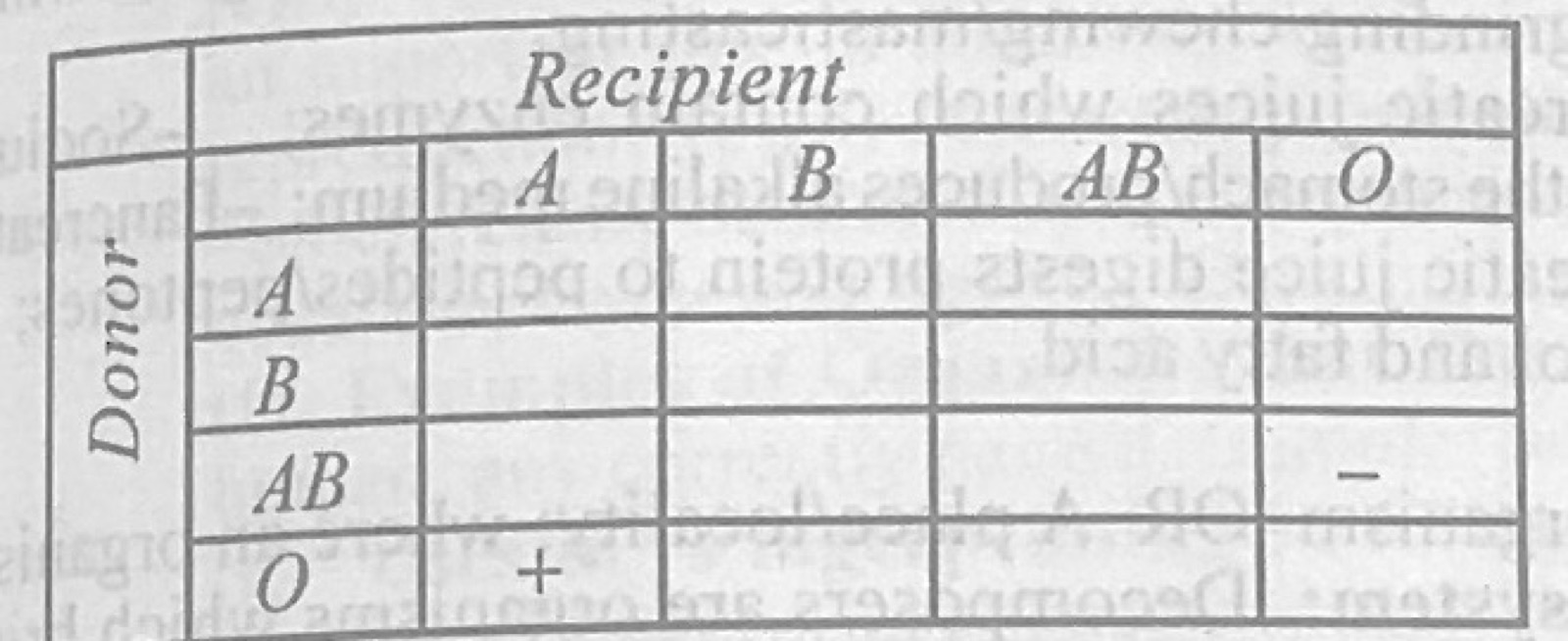
(a)(i) Explain the term agglutination as used in blood transfusion. (ii) The table below represents blood transfusion between blood donors and recipients. Copy and complete the table using the keys (+) to represent compatibility and (−) to represent incompatibility. (b) Explain how each of the following organisms are adapted for obtaining food: (i) Mosquito larva; (ii) Dodder plant; (iii) Grasshopper.
Show the model answer
Model answer
(a)(i) Agglutination is the clumping together of red blood cells when the antigens on the donor's cells meet the matching antibodies in the recipient's plasma (incompatible blood). (ii) Completed table (donor down, recipient across: A, B, AB, O): Donor A: +, −, +, − Donor B: −, +, +, − Donor AB: −, −, +, − Donor O: +, +, +, + (b)(i) Mosquito larva: mouth brushes create water currents that sweep tiny food particles (algae, bacteria) into the mouth; it hangs at the surface breathing through a siphon while it feeds. (ii) Dodder: a parasitic plant with no (or little) chlorophyll and no true leaves; its stem twines round the host and sends haustoria into the host's xylem and phloem to absorb water and food. (iii) Grasshopper: biting and chewing mouthparts – strong toothed mandibles cut and grind leaves, maxillae hold and pass food, labrum and labium hold food in place, palps taste and feel food.
Explanation
Remember O is the universal donor and AB the universal recipient.
(a) State two differences between tactic and nastic movements in plants. (b) Give two examples each of organisms that show: (i) tactic movement; (ii) nastic movement. (c)(i) State three ways of caring for the mammalian skin. (ii) List three stimuli to which the mammalian skin is sensitive. (d) State five effects of high temperature on a terrestrial habitat. (e)(i) What is courtship behaviour in animals? (ii) List three courtship behaviours in animals. (f) Name three organisms that carry out holozoic mode of nutrition. (g) Explain briefly how fingerprinting can be used to detect crime.
Show the model answer
Model answer
(a) Any two: tactic movement is movement of the whole organism from place to place / nastic is movement of a part only; tactic movement is directed by the direction of the stimulus / nastic is not related to the stimulus direction; tactic is shown by motile organisms or cells / nastic by fixed plants. (b)(i) Tactic: Chlamydomonas, Euglena, sperm of ferns or mosses, Paramecium. (ii) Nastic: Mimosa pudica (sensitive plant), morning glory or other flowers that open and close, leaves of legumes that fold at night, sundew/Venus flytrap. (c)(i) Any three: bathe regularly with soap and clean water; wear clean clothes; eat a balanced diet; avoid harmful bleaching creams; treat cuts and skin infections quickly; avoid too much sun. (ii) Any three: heat, cold, touch, pressure, pain. (d) Any five: increased evaporation dries the soil; plants lose more water and wilt; organisms may die of heat or dehydration; water bodies dry up; animals migrate, burrow or aestivate; enzymes may be denatured; more bush fires; faster decay of organic matter; vegetation becomes sparse (desert-like). (e)(i) Courtship behaviour is the pattern of actions animals show to attract a mate of the same species before mating. (ii) Any three: display of bright feathers (peacock, cock); dancing or special movements; calling or singing (frogs, birds, crickets); fighting between males; building nests or giving food; release of scents (pheromones); colour change. (f) Any three: humans, dog, cow, Amoeba, Hydra, grasshopper, any other animal that ingests solid food. (g) Every person has a unique fingerprint pattern that does not change. Prints left at a crime scene are lifted (with powder or chemicals) and compared with the fingerprints of suspects or with records; a match identifies the person who was there.
Explanation
Section C (candidates in Nigeria only). Several short parts: give exactly the number of points asked.