WAEC Biology 1997 past questions and answers

33 questions. Try each one, then open the answer to check yourself and read the explanation.

Question 1

Viruses, Monera, Protista and Fungi

Which of the following organisms possesses both plant and animal characteristics?

  1. A.Amoeba
  2. B.Paramecium
  3. C.Euglena
  4. D.Mucor
  5. E.Nitrobacter
Show the answer and explanation

Answer: C (Euglena)

Explanation

Euglena has chloroplasts like a plant but moves with a flagellum and has no cell wall, like an animal.

Open this question

Question 2

Cell Structure and Organisation

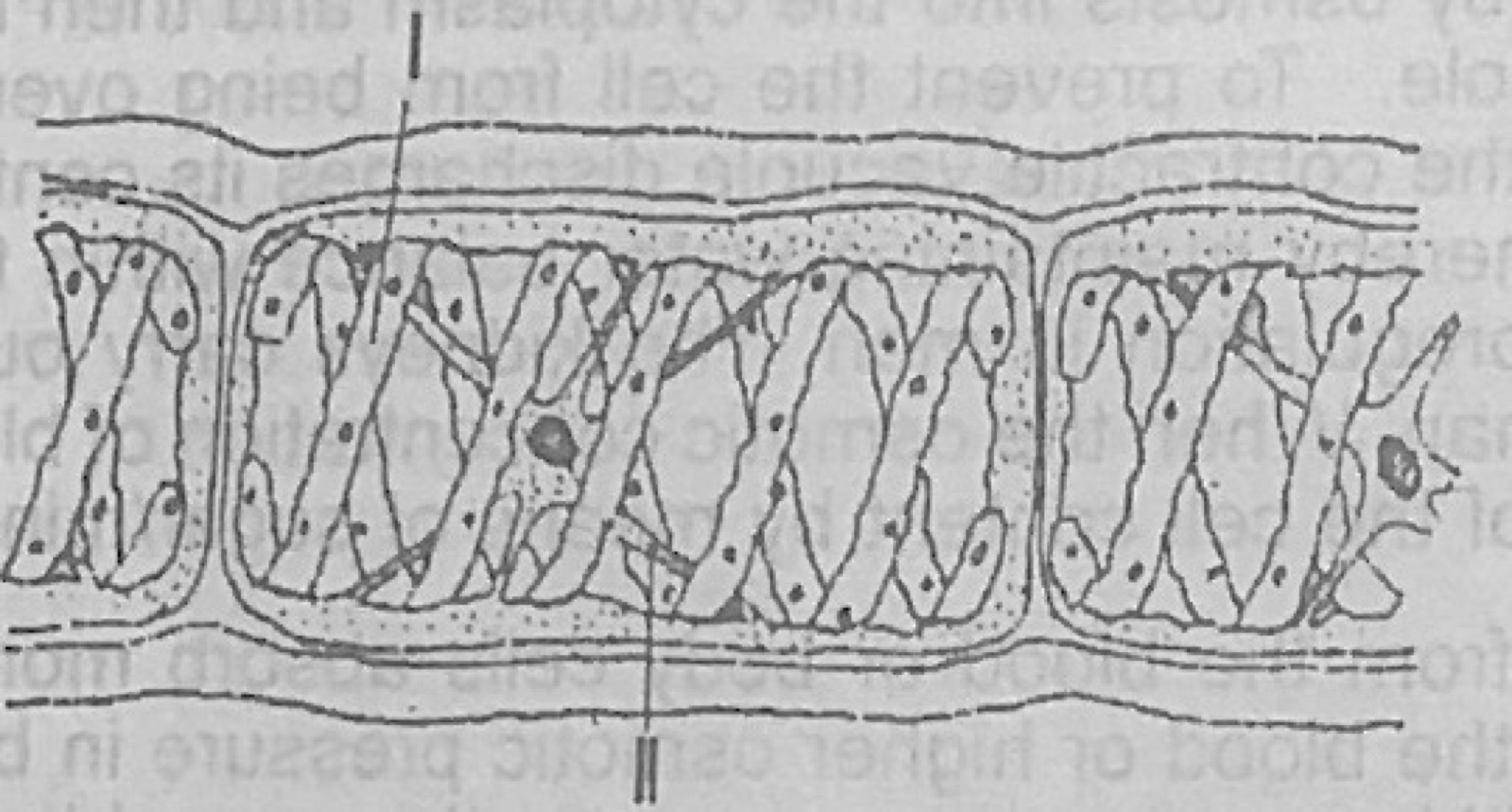
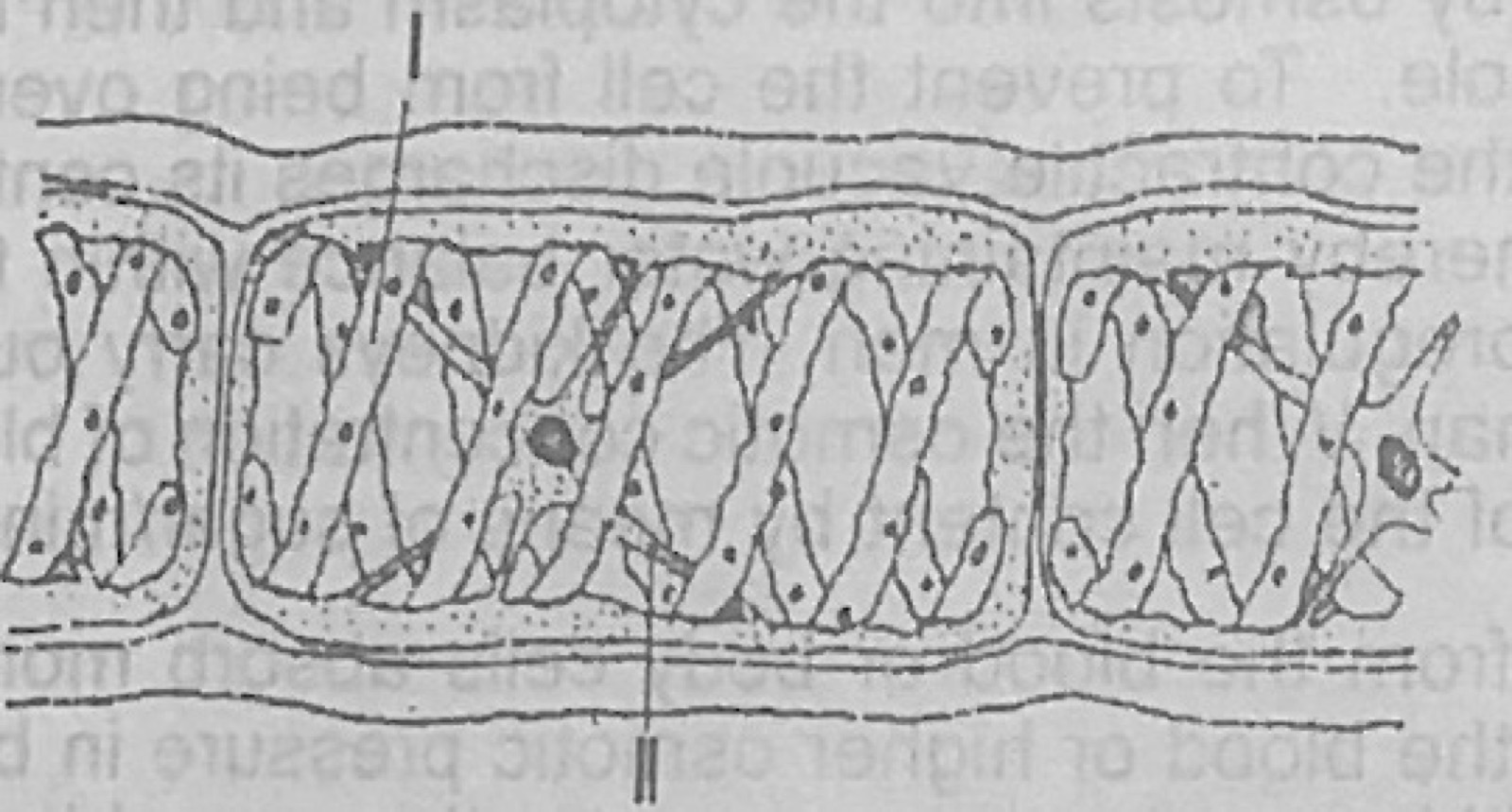
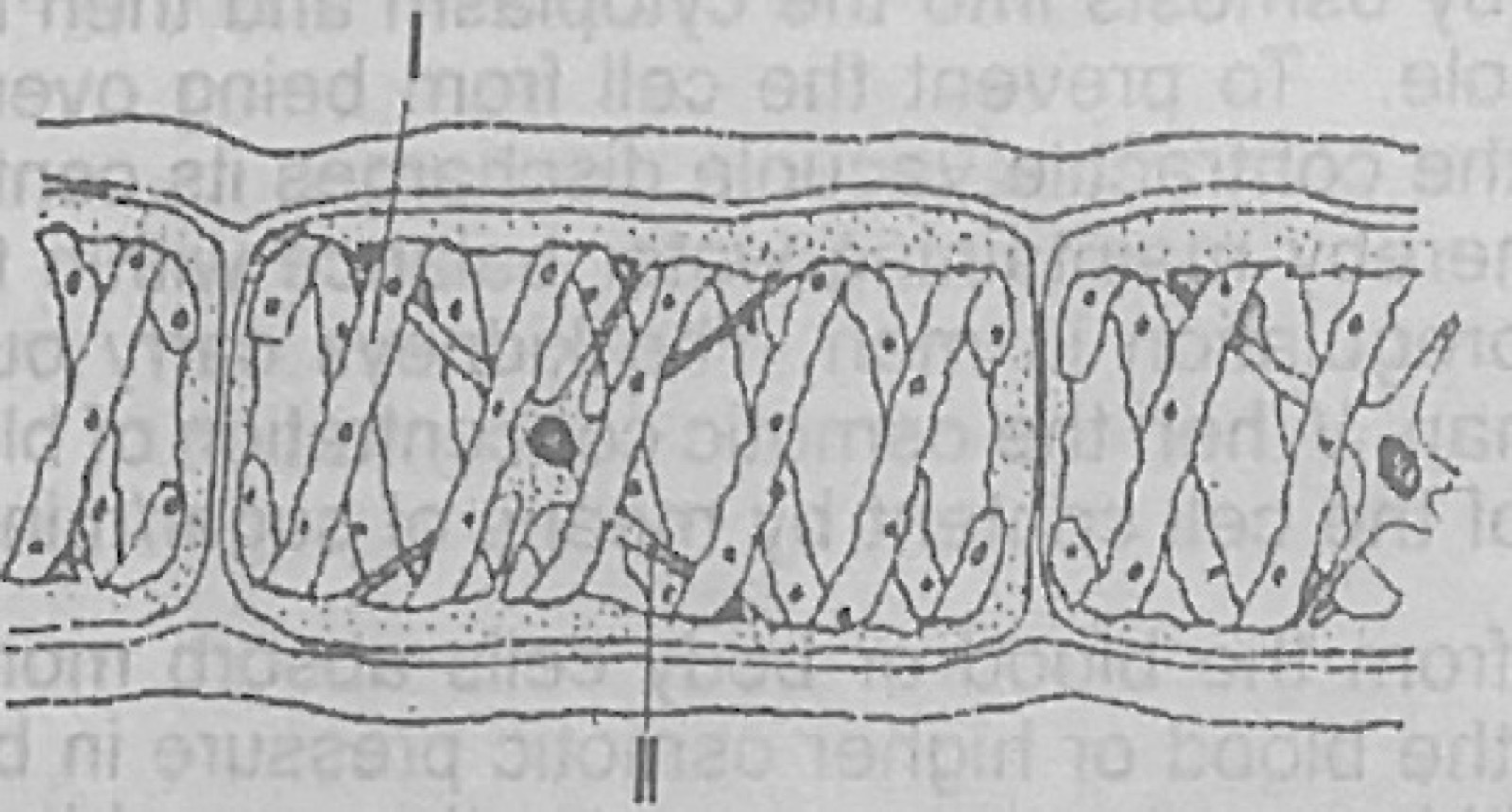
Use the diagram below to answer questions 2 to 4
The structure represented in the diagram above is

Diagram for this question
  1. A.a colony
  2. B.a tissue
  3. C.a filament
  4. D.a pseudopodium
  5. E.an organ
Show the answer and explanation

Answer: C (a filament)

Explanation

The cells are joined end to end in a single row: a filament (Spirogyra).

Open this question

Question 3

Cell Structure and Organisation

Use the diagram (a filamentous green alga, parts labelled I and II) to answer this question.
The part labelled I in the diagram is the

Diagram for this question
  1. A.cytoplasm
  2. B.chloroplast
  3. C.chlorophyll
  4. D.nucleus
  5. E.cell wall
Show the answer and explanation

Answer: B (chloroplast)

Explanation

I points to the spiral band running round the cell, the chloroplast.

Open this question

Question 4

Cell Structure and Organisation

Use the diagram (a filamentous green alga, parts labelled I and II) to answer this question.
What is the function of the part labellled II in the diagram? It

Diagram for this question
  1. A.manufactures food
  2. B.protects the chloroplast
  3. C.produces protein
  4. D.suspends the nucleus
  5. E.digests starch
Show the answer and explanation

Answer: D (suspends the nucleus)

Explanation

II points to the cytoplasmic strands that hold the nucleus in the middle of the vacuole.

Open this question

Question 5

Cell Structure and Organisation

Which of the following organelles helps to remove excess water from cells?

  1. A.Mitochondrion
  2. B.Ribosome
  3. C.Contractile vacuole
  4. D.Golgi body
  5. E.Nucleus
Show the answer and explanation

Answer: C (Contractile vacuole)

Explanation

The contractile vacuole collects and pumps out excess water.

Open this question

Question 6

Cell and Its Environment

Which of the following processes occurs by diffusion?

  1. A.Reabsorption of water in kidney tubules
  2. B.Entry of water into the cytoplasm of unicellular animals
  3. C.Absorption of water in the large intestine
  4. D.Exchange of nutrients between a mother and the foetus
  5. E.Movement of water in and out of living cells
Show the answer and explanation

Answer: D (Exchange of nutrients between a mother and the foetus)

Explanation

Food and oxygen pass from mother's blood to the foetus across the placenta by diffusion; the other options are movements of water (osmosis).

Open this question

Question 7

Respiration

Which of the following is a product of brewing when yeast is used as a fermenting agent?

  1. A.Nitrogen
  2. B.Oxygen
  3. C.Malt
  4. D.Ethanol
  5. E.Sucrose and glucose
Show the answer and explanation

Answer: D (Ethanol)

Explanation

Yeast ferments sugar into ethanol (alcohol) and carbon dioxide.

Open this question

Question 8

Support and Movement

Which of the following hind limb bones is equivalent to the humerus of the forelimb?

  1. A.Patella
  2. B.Tarsal
  3. C.Tibia
  4. D.Fibula
  5. E.Femur
Show the answer and explanation

Answer: E (Femur)

Explanation

The femur is the single upper bone of the hind limb, matching the humerus of the fore limb.

Open this question

Question 9

Transport in Animals

Clotting of blood is a function of

  1. A.vitamin C
  2. B.vitamin K
  3. C.vitamin B2
  4. D.vitamin E
  5. E.vitamin B12
Show the answer and explanation

Answer: B (vitamin K)

Explanation

Vitamin K is needed to make clotting factors such as prothrombin.

Open this question

Question 10

Respiration

Which of the following structures is associated with respiration in insects?

  1. A.Air sac
  2. B.Spiracle
  3. C.Lung
  4. D.Alveolus
  5. E.Gill
Show the answer and explanation

Answer: B (Spiracle)

Explanation

Air enters an insect's tracheae through spiracles along its body.

Open this question

Question 11

Structure of Flowering Plants

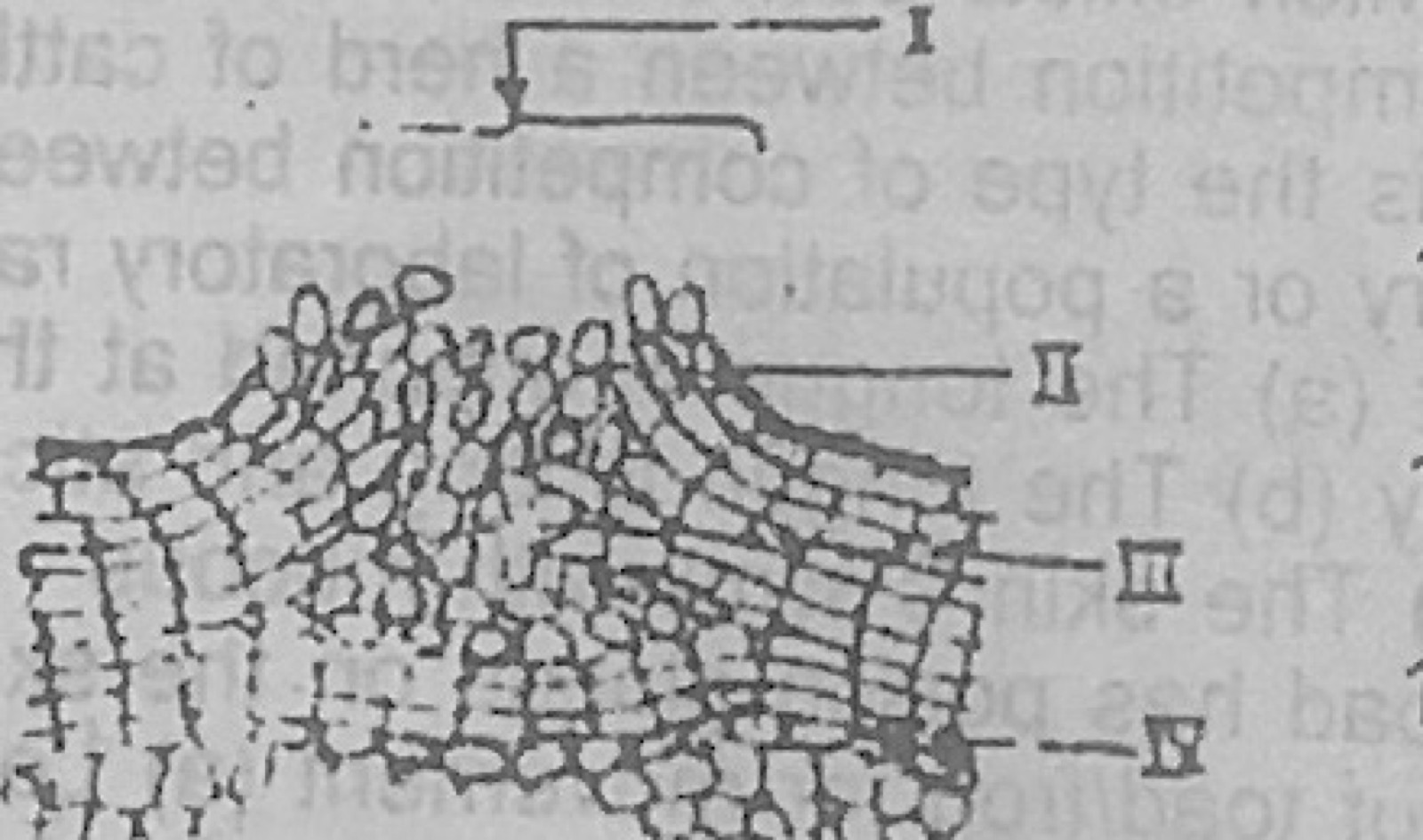
The diagram below represents a section of the stem of a plant. Use it to answer questions 11 and 12
Which of the labelled parts is made up of dead cells?

Diagram for this question
  1. A.III and IV
  2. B.I, II and IV
  3. C.IV and V
  4. D.II and III
  5. E.II and IV
Show the answer and explanation

Answer: D (II and III)

Explanation

The loose complementary cells of the lenticel (II) and the cork layer (III) are dead cells.

Open this question

Question 12

Structure of Flowering Plants

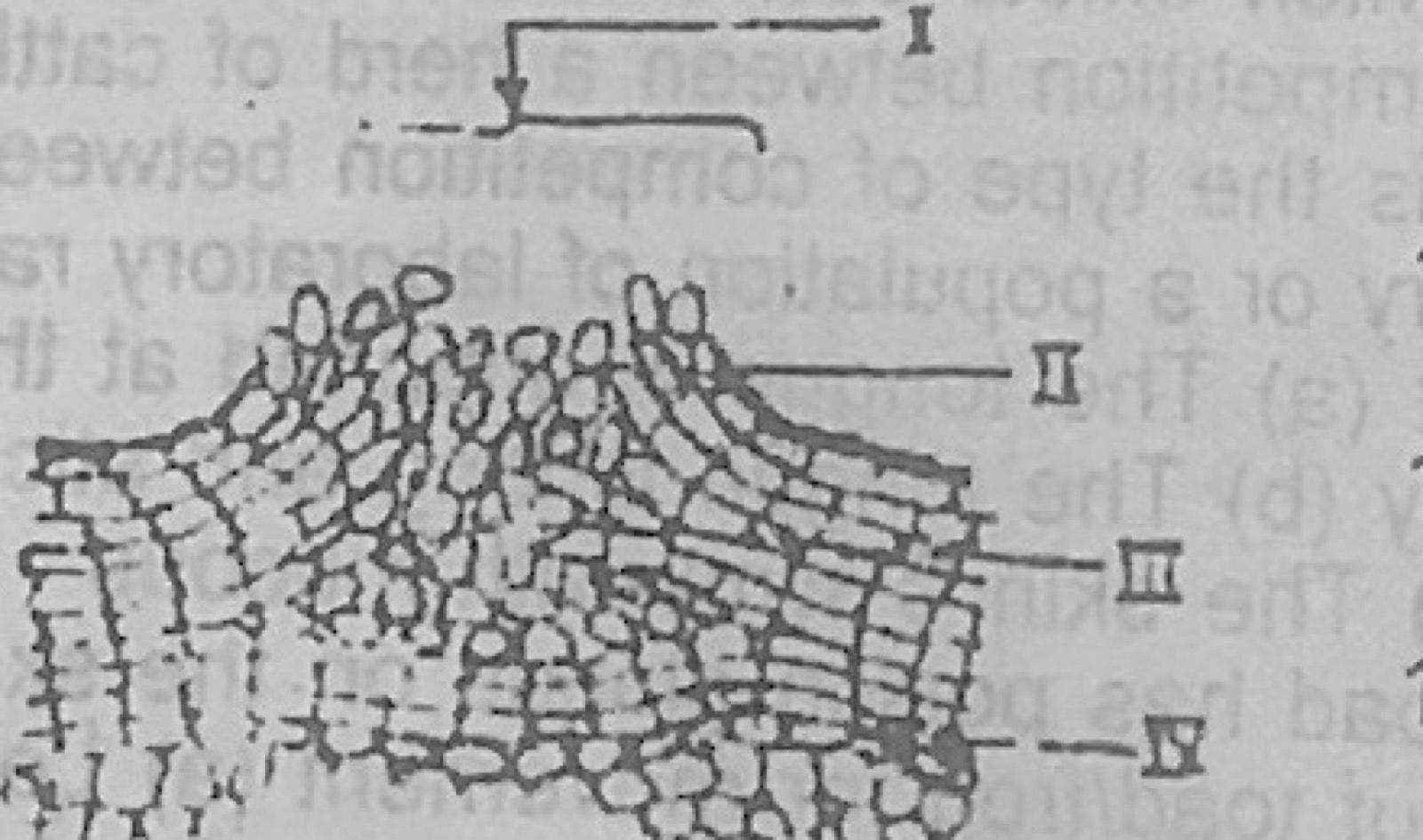
The diagram represents a section of the stem of a plant (parts labelled I to V).
The part labelled I in the diagram is called

Diagram for this question
  1. A.stoma
  2. B.epidermis
  3. C.lenticel
  4. D.cortex
  5. E.parenchyma
Show the answer and explanation

Answer: C (lenticel)

Explanation

The raised pore in the bark filled with loose cells is a lenticel.

Open this question

Question 13

Excretion

The malpighian tubule plays a major role in

  1. A.inspiration
  2. B.digestion
  3. C.secretion
  4. D.reproduction
  5. E.excretion
Show the answer and explanation

Answer: E (excretion)

Explanation

Malpighian tubules are the excretory organs of insects.

Open this question

Question 14

Excretion

Filtered blood from the kidney is carried back to the circulatory system through the

  1. A.hepatic portal vein
  2. B.renal artery
  3. C.renal vein
  4. D.pulmonary vein
  5. E.vena cava
Show the answer and explanation

Answer: C (renal vein)

Explanation

Blood leaves the kidney in the renal vein.

Open this question

Question 15

Hormonal Coordination

The early removal of the pituitary gland in animals may cause

  1. A.ceasation of growth
  2. B.gigantism
  3. C.poor mental development
  4. D.goitre
  5. E.inability to digest food
Show the answer and explanation

Answer: A (ceasation of growth)

Explanation

The pituitary makes growth hormone, so removing it early stops growth.

Open this question

Question 16

Plant Responses and Hormones

A high concentration of auxin in the root will

  1. A.inhibit growth
  2. B.stimulate growth
  3. C.not affect growth
  4. D.cause the root to rot
  5. E.reduce water absorption
Show the answer and explanation

Answer: A (inhibit growth)

Explanation

Roots are very sensitive to auxin: a concentration that makes shoots grow actually slows root growth.

Open this question

Question 17

Nervous Coordination

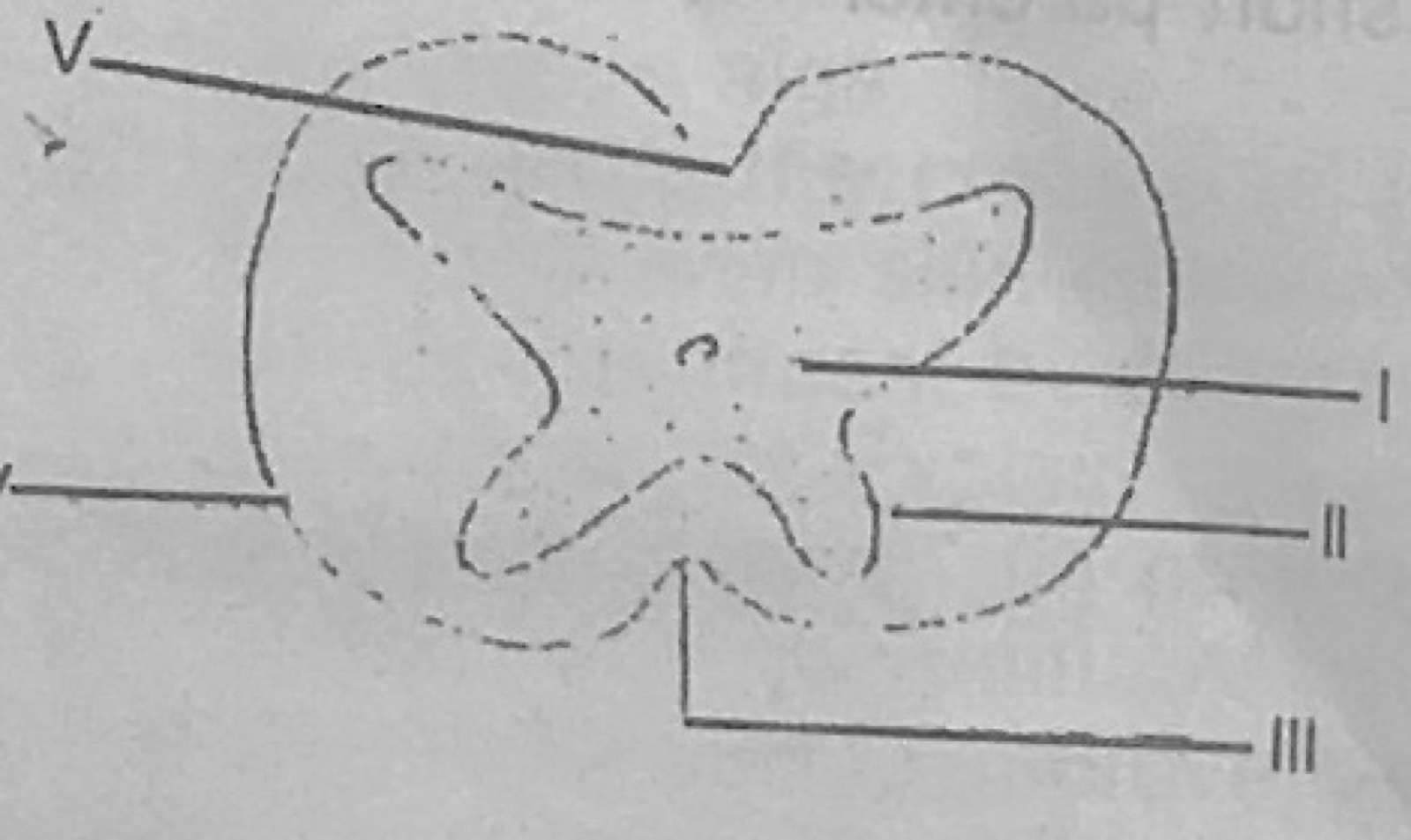
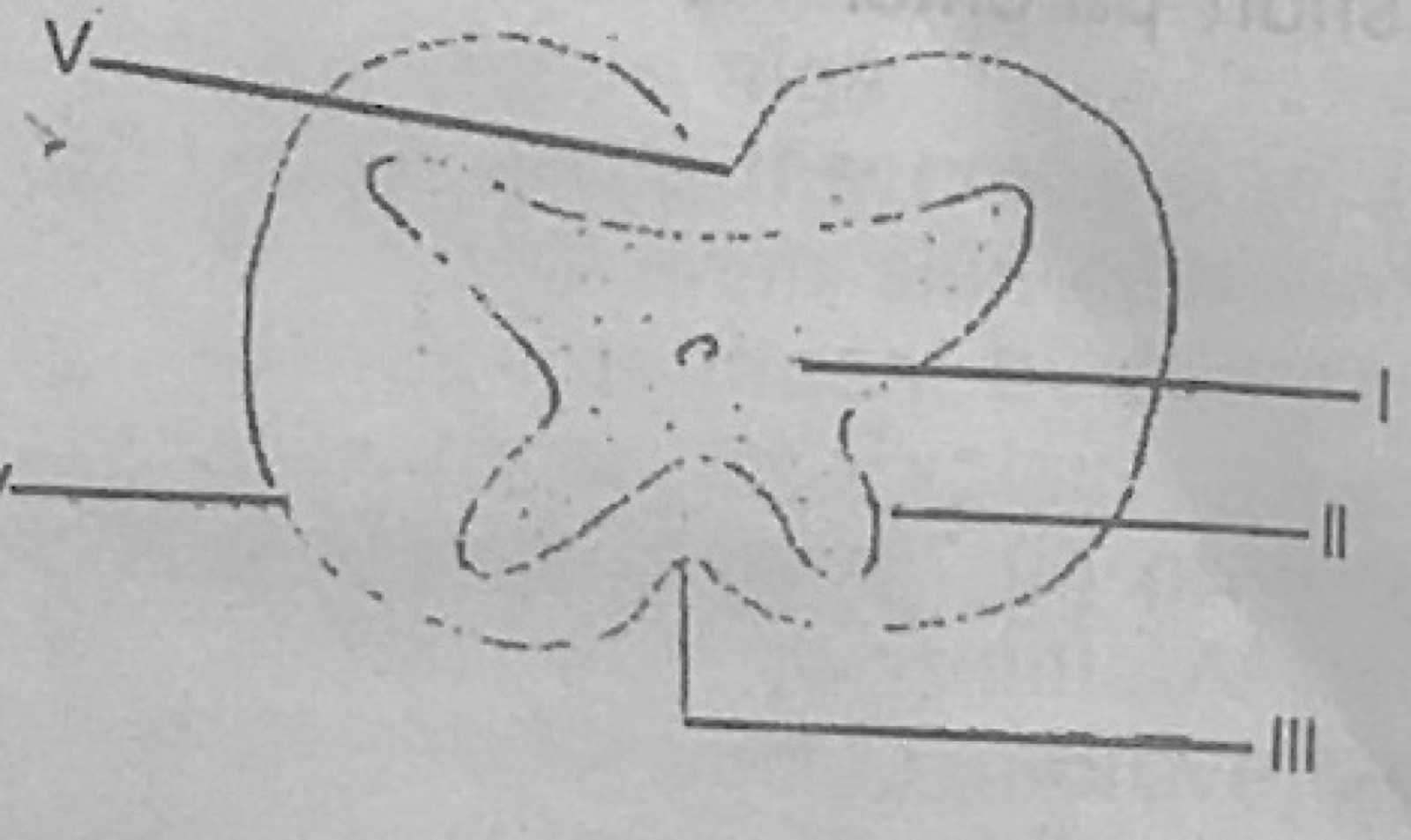
Study the diagram below and use it to answer questions 17 and 18
The part labelled II in the diagram is the

Diagram for this question
  1. A.central canal
  2. B.grey matter
  3. C.spinal cord
  4. D.dorsal root
  5. E.vertebrarterial canal
Show the answer and explanation

Answer: B (grey matter)

Explanation

II points to the edge of the H-shaped inner region, the grey matter.

Open this question

Question 18

Nervous Coordination

Use the diagram of a section of the spinal cord (parts labelled I to V).
Which of the labelled parts is filled with cerebrospinal fluid?

Diagram for this question
  1. A.V and I
  2. B.V only
  3. C.III only
  4. D.II and I
  5. E.I only
Show the answer and explanation

Answer: E (I only)

Explanation

I points to the central canal in the middle of the cord, which contains cerebrospinal fluid.

Open this question

Question 19

Nervous Coordination

Which of the following is an example of a reflex action?

  1. A.Sneezing
  2. B.Biting
  3. C.Dancing
  4. D.Singing
  5. E.Talking
Show the answer and explanation

Answer: A (Sneezing)

Explanation

Sneezing is automatic; the others are voluntary.

Open this question

Question 20

Reproduction in Animals

During mating, the male toad holds the female with its

  1. A.sticky tongue
  2. B.jelly
  3. C.webbed hind limbs
  4. D.nuptial pad
  5. E.gummy limbs
Show the answer and explanation

Answer: D (nuptial pad)

Explanation

Rough nuptial pads on the male's thumbs help him grip the female (amplexus).

Open this question

Question 51

Variation

One of the applications of variation is in

  1. A.determining the size and weight of individuals
  2. B.determining paternity
  3. C.conservation of wild life
  4. D.controlling of disease vectors
  5. E.sex determination
Show the answer and explanation

Answer: B (determining paternity)

Explanation

Inherited differences such as blood groups can help decide who a child's father is.

Open this question

Question 52

Transport in Animals

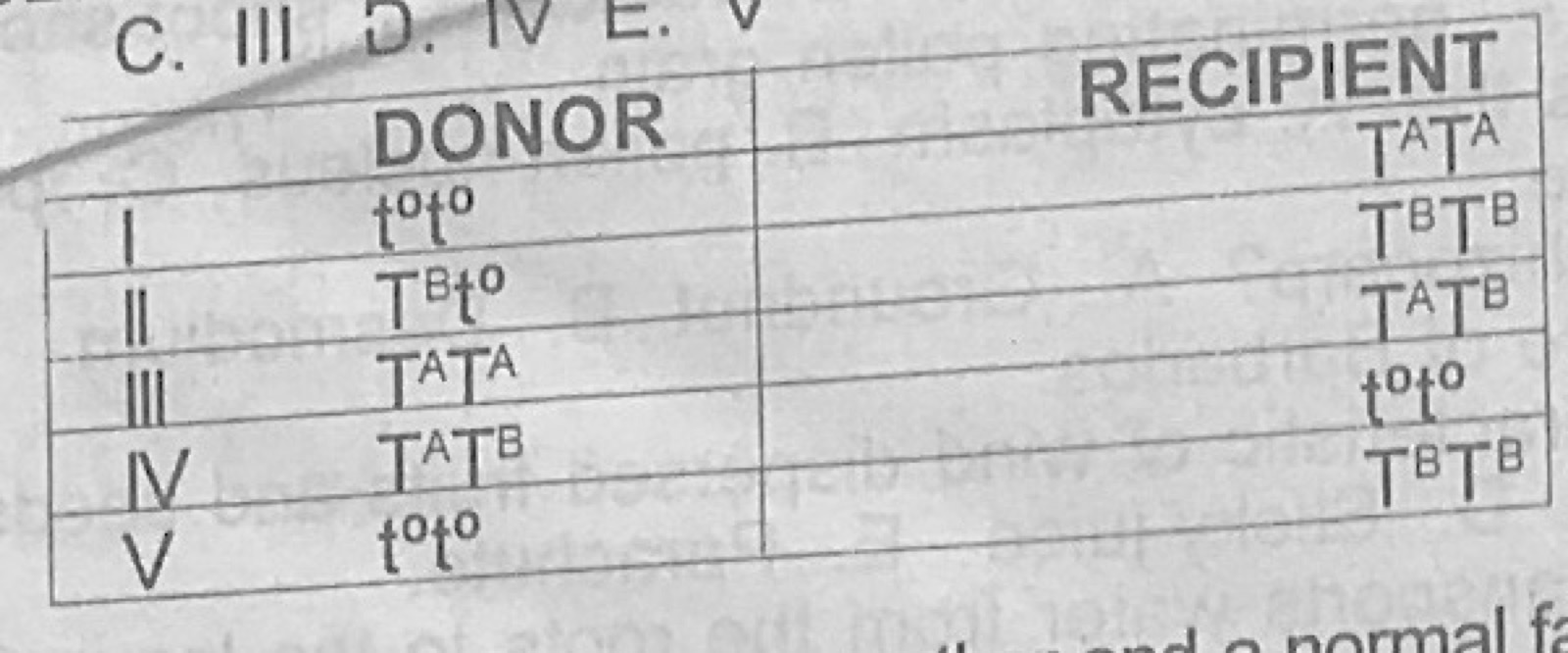
In which of the underlisted blood groupings is agglutination likely to occur during transfusion?
Donor → Recipient: I. toto → TATA; II. TBto → TBTB; III. TATA → TATB; IV. TATB → toto; V. toto → TBTB

Diagram for this question
  1. A.I
  2. B.II
  3. C.III
  4. D.IV
  5. E.V
Show the answer and explanation

Answer: D (IV)

Explanation

In IV an AB donor gives blood to a group O recipient, whose anti-A and anti-B antibodies clump the donor's cells.

Open this question

Question 53

Variation

Which of the following is not a morphological variation

  1. A.Shape of nose
  2. B.Colour of skin
  3. C.Colour of eyes
  4. D.Ear lobe
  5. E.Tongue rolling
Show the answer and explanation

Answer: E (Tongue rolling)

Explanation

Tongue rolling is an ability (physiological variation), not a difference in body form.

Open this question

Question 54

Cell Division

Which of the following is found in Meiosis but not in Meiosis?

  1. A.Chromatids
  2. B.Prophase
  3. C.Crossing over
  4. D.Spindle fibres
  5. E.Telophase
Show the answer and explanation

Answer: C (Crossing over)

Explanation

Crossing over between homologous chromosomes happens only in meiosis, not in mitosis.

Open this question

Question 55

Chromosomes, DNA and Sex Linkage

In man haemophilia is recessive and sex linked. The probability of a carrier mother and a normal father having a haemophilic male is

  1. A.1/4
  2. B.1/8
  3. C.2/3
  4. D.1/2
  5. E.1
Show the answer and explanation

Answer: A (1/4)

Explanation

XHXh × XHY gives XHXH, XHXh, XHY, XhY, so 1 child in 4 is a haemophilic boy.

Open this question

Question 57

Ecological Associations

In an inter-species competition, the less successful species usually

  1. A.reproduce faster
  2. B.become more active
  3. C.become domant
  4. D.occupy more space
  5. E.become eliminated
Show the answer and explanation

Answer: E (become eliminated)

Explanation

The species that loses the competition dies out or is driven out of the area.

Open this question

Question 58

Behaviour

Which of the following characteristics distinguishes the soldier termite from other members of the caste?

  1. A.Wingless, strong mandibles and large head
  2. B.Small head, small thorax and large abdomen
  3. C.Small head, wingless, and small thorax
  4. D.Small head, winged and small thorax
  5. E.Small mandibles, small head and wingless
Show the answer and explanation

Answer: A (Wingless, strong mandibles and large head)

Explanation

Soldiers are wingless with a large head and strong jaws for defence.

Open this question

Question 59

Behaviour

Bees communicate with one another to obtain information about the direction of food source through

  1. A.complicated set of dances
  2. B.smell
  3. C.contract notes
  4. D.observation
  5. E.sounds
Show the answer and explanation

Answer: A (complicated set of dances)

Explanation

A worker bee shows the direction and distance of food with the round and waggle dances.

Open this question

Question 60

Adaptation

Which of the following behavioural patterns describes adaptive colouration?

  1. A.Counter shading
  2. B.Hibernation
  3. C.Aestivation
  4. D.Aggregation
  5. E.Migration
Show the answer and explanation

Answer: A (Counter shading)

Explanation

Counter shading (dark back, pale belly) hides an animal; the others are not colour features.

Open this question

Theory question 101

Soil

(a) Describe an experiment to compare the water-holding capacity of sandy, loamy and clayey soils
(b) List three factors that may affect the water holding capacity of soil
(c) (i) State the characteristics of sandy and loamy soils (ii) What type of vegetation does each support?

Show the model answer
Model answer

(a) Dry equal masses of sand, loam and clay; place cotton wool in three funnels on measuring cylinders; put each soil in a funnel; pour the same volume of water (e.g. 100 cm³) on each; leave until dripping stops; measure the water collected
Water retained = water added − water collected; clay retains most, then loam, sand least
(b) Any three: particle size/texture; humus/organic matter content; soil structure (crumbs); amount of clay; pore spaces; compaction
(c)(i) Sandy: large coarse particles; large air spaces; well drained and aerated; holds little water; low in nutrients; warms quickly
Loamy: mixture of sand, silt and clay with humus; good crumb structure; moderate drainage and water retention; well aerated; fertile
(ii) Sandy soil – sparse vegetation (grasses, shrubs, drought-tolerant plants); loamy soil – luxuriant vegetation, good for most crops and forest

Explanation

State that equal masses of soil and equal volumes of water must be used.

Open this question

Theory question 102

Microorganisms and Health

(a) Explain the following terms (i) first aid (ii) artificial respiration (iii) dislocation (iv) haemorrhage
(b) (i) State three objectives of first aid (ii) Explain the procedure for administering the mouth-to-mouth method of artificial respiration
(c) (i) State three signs of dislocation (ii) Name two ways of stopping bleeding from an open wound.

Show the model answer
Model answer

(a)(i) First aid: immediate help given to an injured or suddenly ill person before medical help arrives
(ii) Artificial respiration: forcing air into the lungs of a person who has stopped breathing, to restart breathing
(iii) Dislocation: displacement of a bone from its normal position at a joint
(iv) Haemorrhage: heavy loss of blood from a damaged blood vessel
(b)(i) To preserve life; to prevent the condition becoming worse; to promote recovery; to relieve pain and reassure the victim
(ii) Lay the person on the back; clear the mouth and airway; tilt the head back and lift the chin; pinch the nose; take a deep breath, seal your mouth over theirs and blow until the chest rises; remove your mouth to let air out; repeat about 12–15 times a minute until breathing returns or help arrives
(c)(i) Any three: pain and swelling at the joint; deformity/abnormal shape; inability to move the joint; bruising; limb shorter or bent
(ii) Any two: direct pressure with a clean pad/dressing; raise the injured part; pressure on the pressure point/artery; tourniquet (only in severe cases); bandage firmly

Explanation

In (b)(ii) give the steps in order.

Open this question

Theory question 103

Reproduction in Animals

(a) Make a labelled diagram of the female reproductive organ of a (i) flowering plant (ii) mammal (man)
(b) State the functions of any two of the labelled parts in (a) (i) and (ii)
(c) Compare reproduction in mammals, amphibians and birds with respect to (i) number of eggs produced (ii) method of fertilization; (iii) parential care.

Show the model answer
Model answer

(a)(i) Carpel/pistil: stigma, style, ovary, ovary wall, ovule(s), placenta, micropyle, embryo sac/egg cell
(ii) Female system: ovaries, oviducts (Fallopian tubes) with funnels, uterus, cervix, vagina, vulva
(b) Plant (two): stigma – receives pollen; style – carries the pollen tube to the ovary; ovary – holds ovules and becomes the fruit; ovule – contains the egg and becomes the seed
Mammal (two): ovary – makes eggs and hormones; oviduct – carries the egg, site of fertilisation; uterus – embryo implants and develops; vagina – receives sperm, birth canal
(c)(i) Mammals – very few eggs; amphibians – very many eggs; birds – few eggs (more than mammals)
(ii) Mammals – internal; amphibians – external (in water); birds – internal
(iii) Mammals – much care (feeding with milk, protection); amphibians – little or none; birds – much care (incubating eggs, feeding young)

Explanation

Set out (c) as a table with the three animal groups as columns.

Open this question

Theory question 104

Conservation of Natural Resources

(a) Define the term "Conservation"
(b) State three reasons for conservation
(c) List four methods of conserving each of the following: (i) water (ii) wildlife (iii) forest
(d) Mention three forest or game reserves in Nigeria.

Show the model answer
Model answer

(a) Conservation is the planned management and wise use of natural resources so that they continue to be available for present and future generations
(b) Any three: to prevent extinction of plants and animals; to keep resources for future generations; to maintain ecological balance; for scientific research and education; for tourism and recreation; for economic benefit
(c)(i) Water: building dams/reservoirs; protecting catchment areas by planting trees; preventing pollution; treating and recycling waste water; avoiding waste; rain-water harvesting
(ii) Wildlife: game reserves/national parks; laws against poaching; closed hunting seasons; protecting endangered species; controlling bush burning; public education
(iii) Forest: afforestation/reafforestation; forest reserves; controlled felling (selective logging); preventing bush fires; taungya system; licensing timber cutting
(d) Any three: Yankari Game Reserve (Bauchi); Kainji Lake National Park/Borgu Game Reserve (Niger/Kwara); Old Oyo National Park (Oyo); Cross River National Park/Oban Hills (Cross River); Gashaka-Gumti (Taraba/Adamawa); Omo Forest Reserve (Ogun); Okomu (Edo)
Explanation

Give four separate methods for each resource.

Open this question