Advantages of dipping farm animals in acaricides include: I. protection against diseases II. control of ectoparasites III. reduction in skin irritation
A.I and II only
B.I and III only
C.II and III only
D.I, II and III
Show the answer and explanation
Answer: C (II and III only)
Explanation
Dipping kills ticks and other external parasites, which relieves skin irritation.
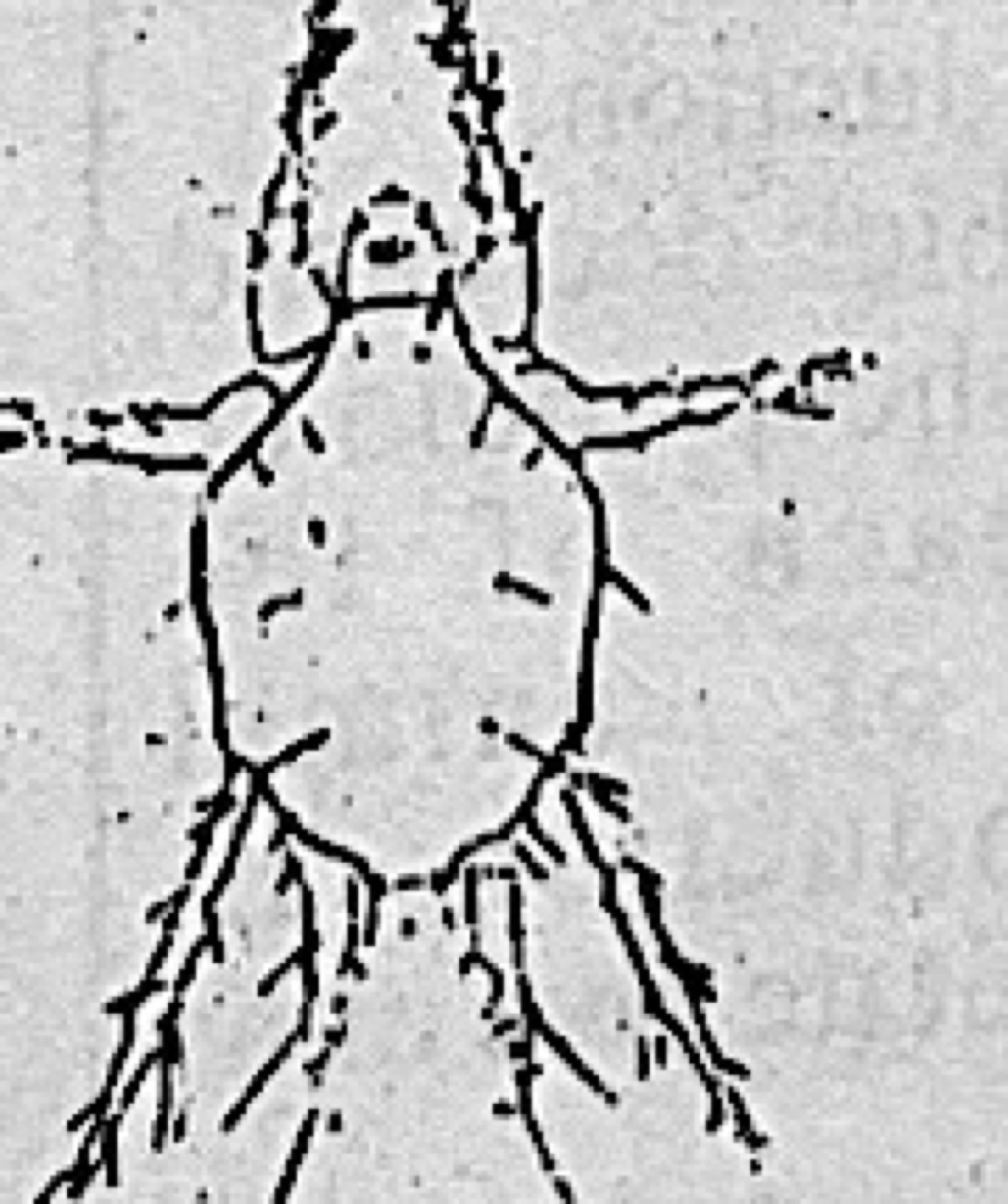
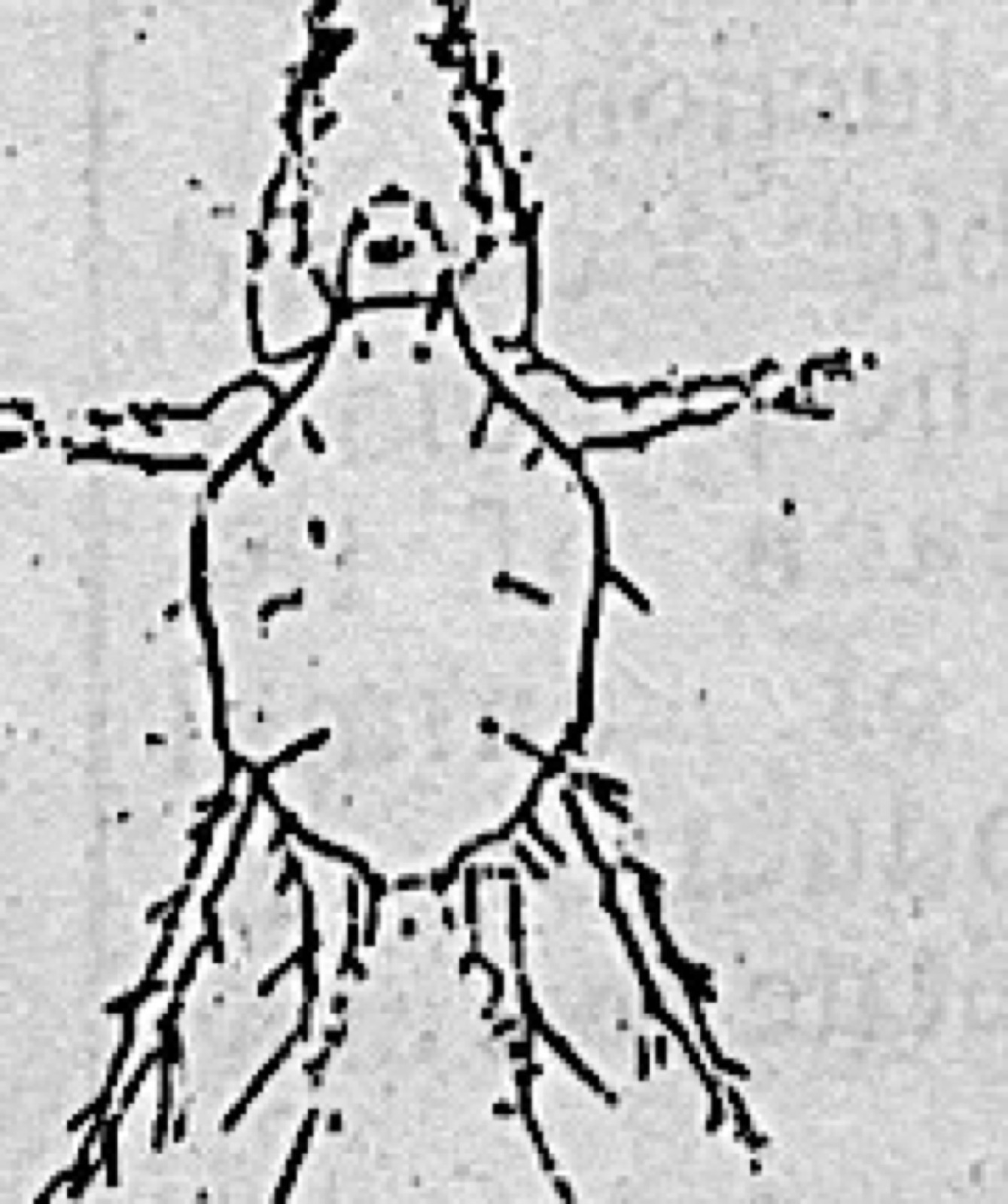
The diagram below illustrates a parasite of farm animals. Which of the following farm animals is affected by the illustrated parasite? I. Turkey II. Sheep III. Chicken
A.I and II only
B.I and III only
C.II and III only
D.I, II and III
Show the answer and explanation
Answer: D (I, II and III)
Explanation
Ticks attack sheep, and fowl ticks (Argas) attack chickens and turkeys, so all three are affected.
a. (i) Give five reasons why fresh meat could be preserved. (ii) Name five forms of processed meat. b. State four characteristics of local chicken in West Africa. c. (i) Mention three methods of semen collection. (ii) State three precautions that should be taken during the process of artificial insemination.
Show the model answer
Model answer
a(i) Any five: prevent spoilage by micro-organisms; prevent food poisoning; make meat last longer (store for future use/scarcity); reduce waste and loss; keep nutrients and flavour; allow transport to distant markets; stabilise prices (ii) Any five: smoked meat; dried meat (kundi); suya/kilishi; corned/canned beef; sausages; bacon; ham; salted/cured meat; minced meat; burgers b. Any four: small body size; low egg production and small eggs; slow growth; hardy and resistant to diseases; can scavenge for food; good brooders and mothers; can fly; various colours; tough meat c(i) Any three: artificial vagina; electro-ejaculator; massage method; collection from the vagina after natural service (ii) Any three: use semen from healthy, proven males; inseminate at the right time of heat; keep equipment clean and sterile; keep semen at the right temperature/thaw correctly; restrain the female properly; do not injure the cervix or uterus; trained person should do it
a. (i) Explain the term malnutrition as used in Animal Husbandry. (ii) If 10,000 layers were fed with diet containing 60% maize, 1.5% fishmeal, 28% groundnut cake and 1.5% oyster shell, name the limiting ingredients that are not included in the diet. (iii) State two importance of each of the nutrients named in 2 (a) (ii). b. Give two reasons why a poultry farmer should keep farm records. c. State four ways in which liver fluke could be prevented from completing its life cycle.
Show the model answer
Model answer
a(i) Malnutrition: poor health caused by feeding animals a diet that lacks some nutrients, or has them in excess or in wrong proportions (ii) Any of: vitamin–mineral premix; bone meal/dicalcium phosphate (phosphorus); common salt; essential amino acids (lysine, methionine); a fibre source such as wheat offal (iii) Two uses each, e.g. vitamins: growth and good health, disease resistance; phosphorus/bone meal: bone and eggshell formation, energy metabolism; salt: appetite and water balance, prevents feather pecking; lysine/methionine: growth and egg production, feathering b. Any two: shows profit or loss; helps planning; helps identify poor layers for culling; needed to obtain loans; helps disease control; detects theft c. Any four: drain swampy areas; kill water snails (molluscicides, ducks); avoid grazing animals on wet land; deworm animals regularly with flukicides; fence off ponds/swamps; rotational grazing; burn or plough infested pasture; dispose of infected livers properly
Explanation
In (a)(iii) give two points for each nutrient you named.
a. State two functions of each of the following reproductive hormones in livestock. (i) progesterone; (ii) androgen; (iii) oestrogen; (iv) luteinizing hormone b. Complete the table below. Common name | Botanical name | Type of forage Elephant grass | (i): | Grass Tropical kudzu | (ii): | Legume Gliricidia | (iii): | (iv): (v): | Andropogon gayanus | (vi) (vii): | Centrosema molle | Legume Leucaena | Leucaena leucocephala | (viii): Bahama grass | (ix) | Grass (x) | Panicum maximum | Grass c. Mention two methods of mating in animal production.
Show the model answer
Model answer
a(i) Progesterone: maintains pregnancy; prepares the uterus for implantation; develops the mammary glands; prevents heat during pregnancy (ii) Androgen (testosterone): development of male sex organs and sperm production; male characteristics and libido; muscle growth (iii) Oestrogen: causes heat signs; development of female characteristics and reproductive tract; growth of mammary ducts (iv) Luteinizing hormone: causes ovulation; forms the corpus luteum; stimulates testosterone production in males b. (i) Pennisetum purpureum; (ii) Pueraria phaseoloides; (iii) Gliricidia sepium; (iv) legume (browse); (v) gamba grass; (vi) grass; (vii) centro; (viii) legume (browse); (ix) Cynodon dactylon; (x) Guinea grass c. Any two: hand mating; pen mating; flock/pasture mating; artificial insemination
Explanation
Two functions for each hormone; botanical names in italics.
a. Explain each of the following terms as used in livestock production. i. parasite; ii pest b. Name three: (i) ectoparasites of sheep; (ii) insect pests of sheep c. State four damages that could be caused by pests in cattle. d. Give six signs that could be observed in a sick rabbit.
Show the model answer
Model answer
a(i) Parasite: an organism that lives in or on another organism (the host) and feeds on it, harming it (ii) Pest: any organism that damages or annoys livestock, their feed or products and so causes economic loss b(i) Any three: ticks; lice; keds; mites; fleas (ii) Any three: blowflies; nasal botfly; tsetse fly; biting flies (stable fly, horse fly); mosquitoes; lice c. Any four: suck blood causing anaemia; spread diseases; irritate animals, reducing feeding and weight; damage hides; reduce milk production; cause wounds that attract maggots d. Any six: dullness and isolation; loss of appetite; rough fur; diarrhoea or abnormal droppings; discharge from eyes/nose; sneezing/difficult breathing; weight loss; high temperature; scabs or sores on ears and feet; head tilt; swollen abdomen
a. State six ways in which diseases could be controlled in sheep production. b. Give three ways in which decreased feed intake of the flock of sheep could be improved. c. Explain each of the following methods of animal improvement. i. introduction; ii. selection; iii. breeding d. State five aims of animal improvement.
Show the model answer
Model answer
a. Any six: vaccination; dipping/spraying against ectoparasites; regular deworming; isolation of sick animals; quarantine of new stock; good sanitation; balanced feeding; avoid overcrowding; rotational grazing; foot trimming/footbath; prompt veterinary treatment b. Any three: give fresh, palatable forage; supplement with concentrates or salt licks; provide clean water; treat sick animals and deworm; reduce stress/heat (shade); avoid overcrowding at feeders; feed at regular times c(i) Introduction: bringing in better breeds from other areas or countries (ii) Selection: choosing the best animals as parents and culling the poor ones (iii) Breeding: planned mating of chosen animals (inbreeding, crossbreeding, line breeding) to combine or fix desirable traits d. Any five: higher yield of meat, milk, wool or eggs; faster growth; better feed conversion; resistance to diseases; adaptation to environment; higher fertility; better quality products
a. Complete the table below on the gestation period of farm animals. Animal | Gestation period (days) Sheep | (i): Rabbit | (ii): Cattle | (iii): b. State five ways in which a good housing is important for farm animals. c. Explain each of the following management practices in animal production. i. teeth clipping: ii. foster mothering; iii. docking d. Define the term dystocia. ii. State four causes of dystocia in farm animals.
Show the model answer
Model answer
a. (i) Sheep: about 145–150 days; (ii) Rabbit: about 30–32 days; (iii) Cattle: about 280–285 days b. Any five: protects from bad weather; protects from thieves and predators; makes feeding, watering and management easy; helps disease control; allows separation by age and sex; helps record keeping; makes collection of eggs/manure easy; improves productivity c(i) Teeth clipping: cutting the sharp needle teeth of newborn piglets so they do not injure the sow's teats or one another (ii) Foster mothering: letting a young animal be reared by a female that is not its mother, e.g. when the mother dies or has too many young (iii) Docking: cutting off part of the tail (lambs, piglets) for hygiene and to prevent fly strike or tail biting d(i) Dystocia: difficult or abnormal birth that needs help (ii) Any four: large foetus; wrong position/presentation of the foetus; narrow pelvis/immature female; weak uterine contractions; twins coming together; diseases or deformities of the foetus; over-fat female; uterine torsion