WAEC Agricultural Science 2026 past questions and answers

50 questions. Try each one, then open the answer to check yourself and read the explanation.

Question 1

Agricultural Development

An agricultural non-governmental organization in West Africa is

  1. A.National Agricultural Land Development Authority
  2. B.Institute of Agricultural Research and Training
  3. C.National Cereals Research Institute
  4. D.International Livestock Research Institute
Show the answer and explanation

Answer: D (International Livestock Research Institute)

Explanation

ILRI is an international body, not run by a West African government.

Open this question

Question 2

Agricultural Finance

Farmers' cooperative societies have contributed to agricultural development in West Africa through the
I. establishment of processing facilities for farmers
II. provision of potable water for farmers
III. provision of tractor hiring services for farmers

  1. A.I and II only.
  2. B.I and III only.
  3. C.II and III only.
  4. D.I, II and III.
Show the answer and explanation

Answer: D (I, II and III.)

Explanation

Co-operatives pool money to set up processing, water and tractor-hire services for members.

Open this question

Question 4

Farm Machinery and Mechanisation

The coulter and share are parts of a

  1. A.planter
  2. B.mouldboard plough
  3. C.cultivator
  4. D.disc plough
Show the answer and explanation

Answer: B (mouldboard plough)

Explanation

A mouldboard plough has a coulter, share and mouldboard.

Open this question

Question 5

Ornamental Plants

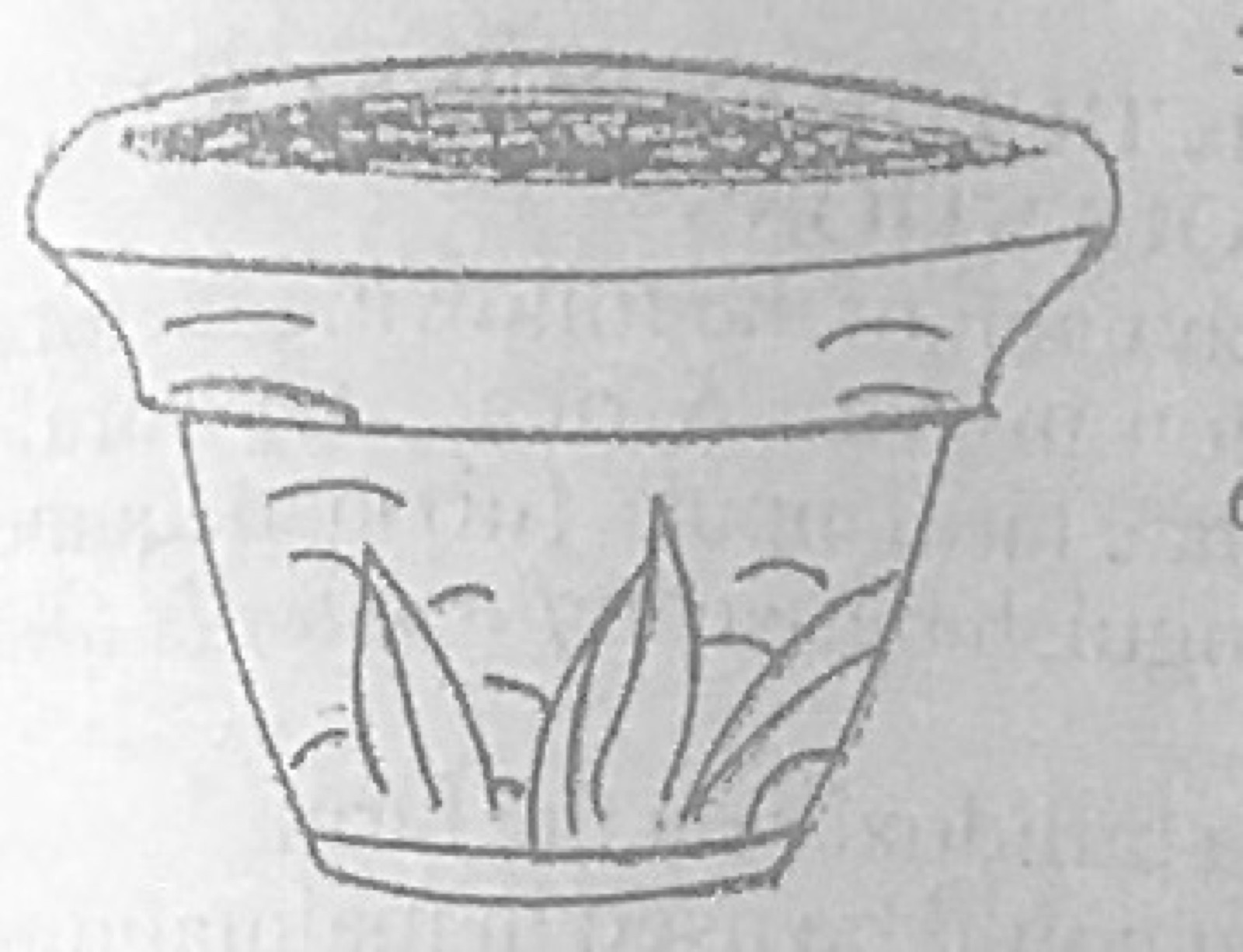
The diagram below illustrates a garden tool for cultivating ornamental plants.
An ornamental plant that could be grown in the illustrated garden tool is

Diagram for this question
  1. A.royal palm
  2. B.neem
  3. C.frangipani
  4. D.morning glory
Show the answer and explanation

Answer: D (morning glory)

Explanation

A small flowering plant like morning glory fits a flower pot; the others are trees.

Open this question

Question 6

Ornamental Plants

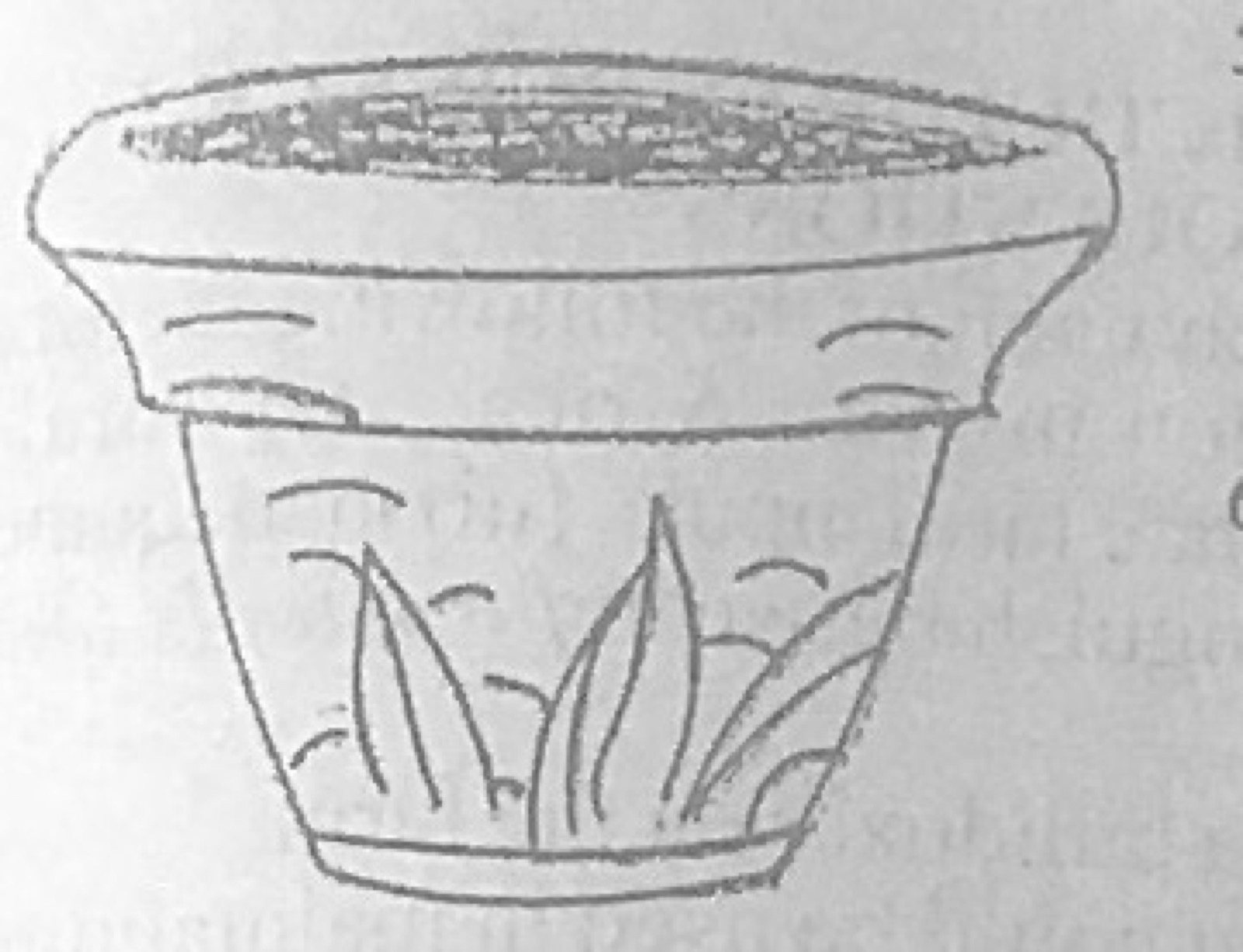
The diagram below illustrates a garden tool for cultivating ornamental plants.
Farm tools that could perform a similar function as the illustrated tool are
I. garden sieve
II. seed box
III. polyethene bag

Diagram for this question
  1. A.I and II only.
  2. B.I and III only.
  3. C.II and III only.
  4. D.I, II and III
Show the answer and explanation

Answer: C (II and III only.)

Explanation

Pots, seed boxes and polythene bags all hold soil for raising plants.

Open this question

Question 7

Farm Surveying and Planning

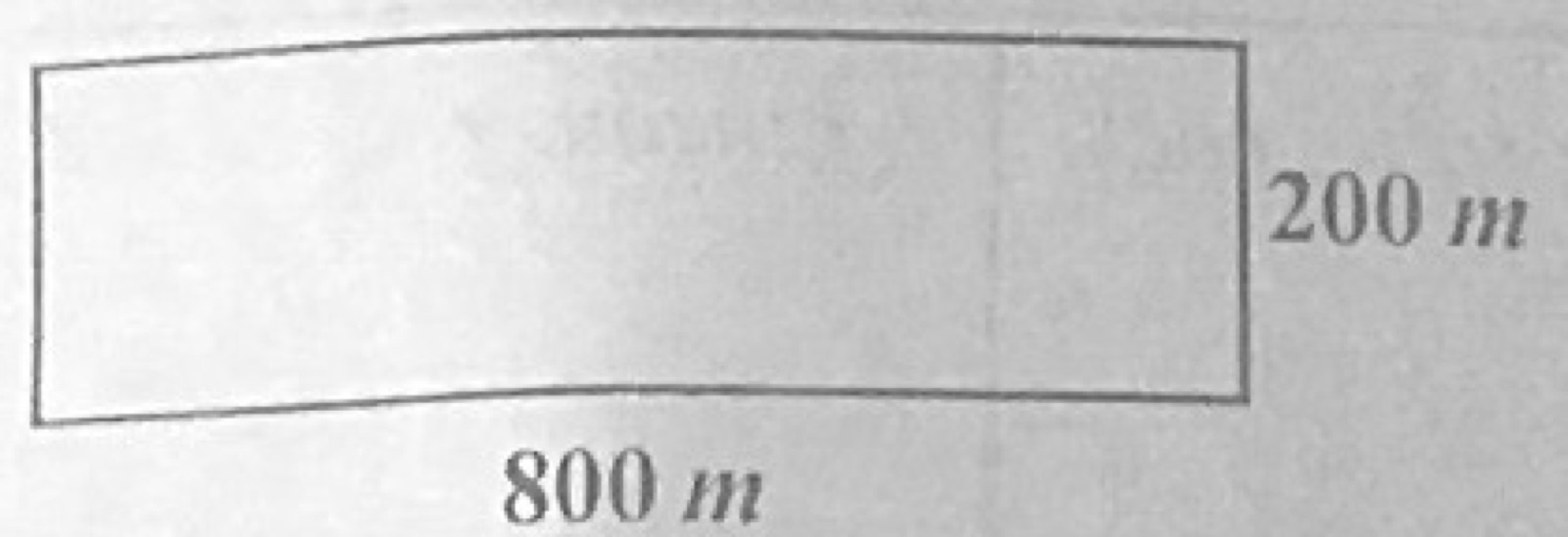
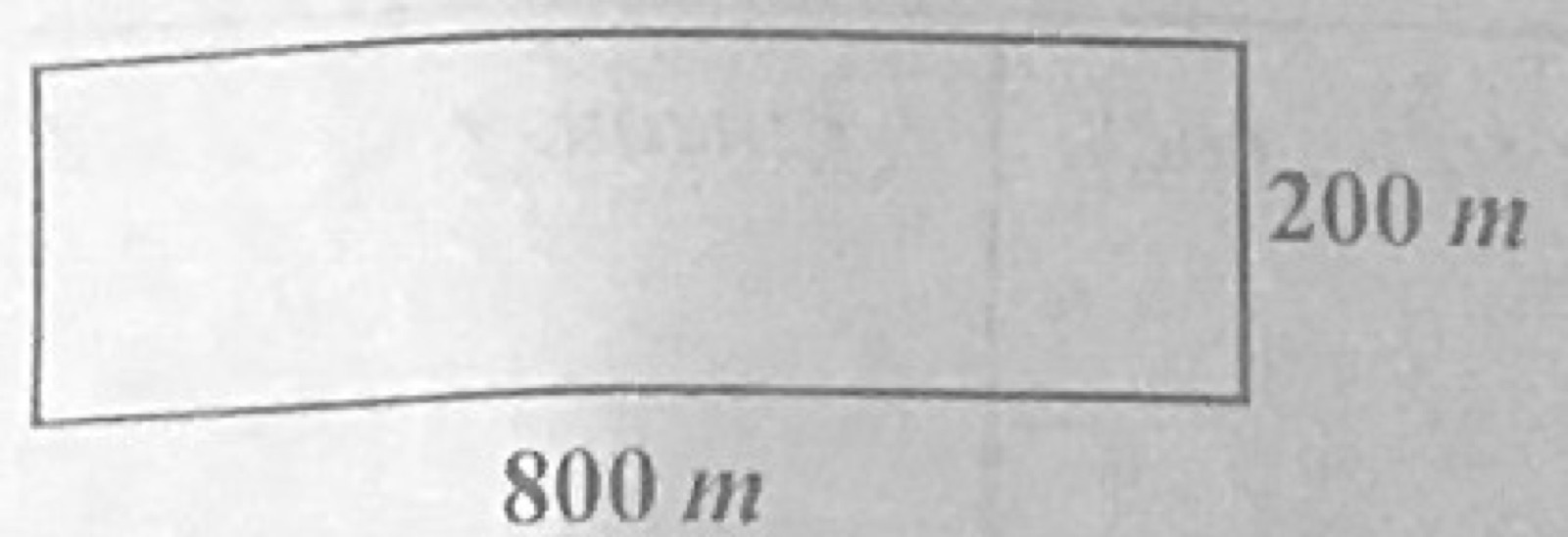
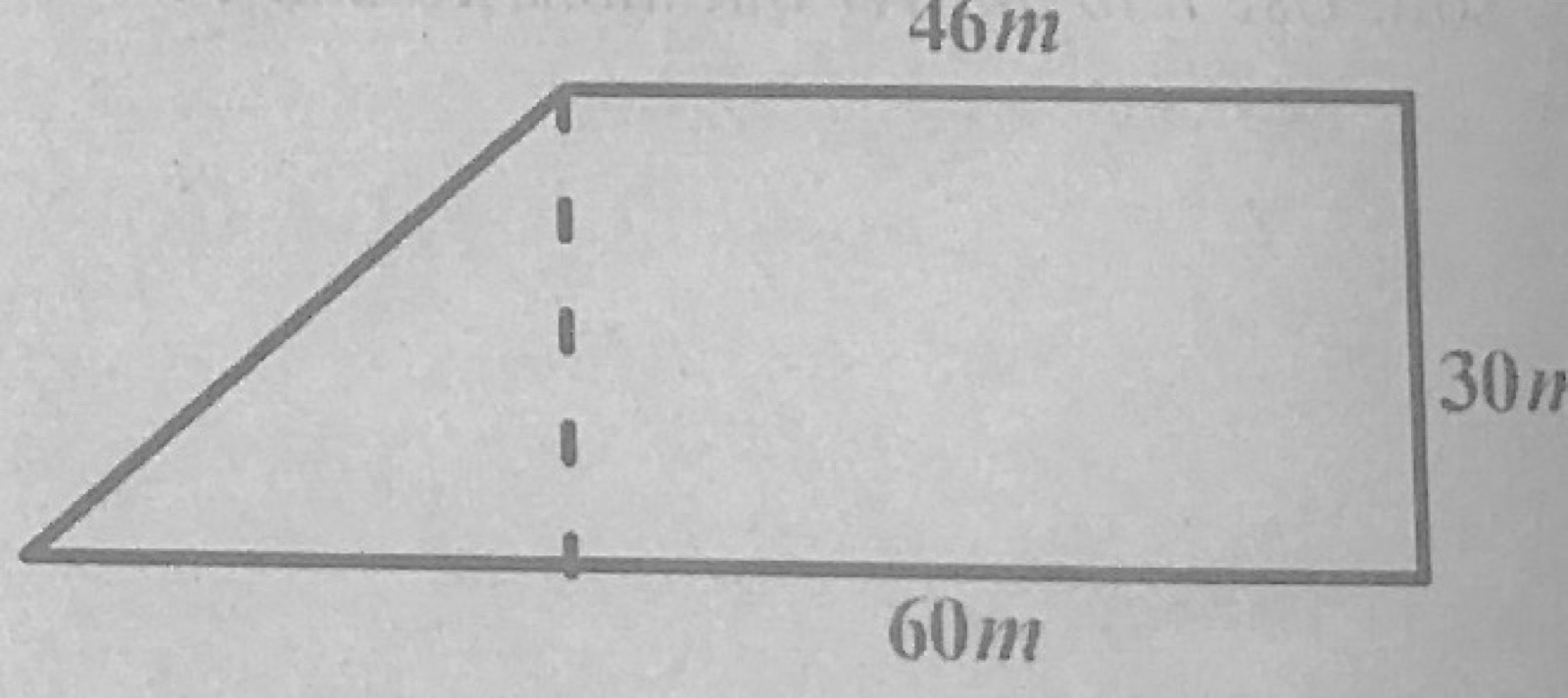
The diagram below illustrates the dimensions of a farmland after surveying.
The dimensions of the farmland were taken using

Diagram for this question
  1. A.an arrow.
  2. B.a peg.
  3. C.a measuring tape.
  4. D.a prismatic compass
Show the answer and explanation

Answer: C (a measuring tape.)

Explanation

Lengths are measured with a measuring tape.

Open this question

Question 8

Farm Surveying and Planning

The diagram below illustrates the dimensions of a farmland after surveying.
Calculate the area of the farmland in hectares.

Diagram for this question
  1. A.10 ha
  2. B.12.5 ha
  3. C.16 ha
  4. D.25 ha
Show the answer and explanation

Answer: C (16 ha)

Explanation

800 × 200 = 160,000 m² ÷ 10,000 = 16 ha.

Open this question

Question 9

Agricultural Development

Industries support agriculture through the supply of
I. labour
II. agrochemicals
III. fibre crops

  1. A.I and II only
  2. B.I and III only
  3. C.II and III only
  4. D.I, II and III
Show the answer and explanation

Answer: A (I and II only)

Explanation

Fibre crops flow from agriculture to industry, not the other way round.

Open this question

Question 10

Agricultural Ecology

Which of the following climatic factors limit the cultivation of oil palm in the northern parts of West Africa?
I. Rainfall
II. Temperature
III. Relative humidity

  1. A.I and II only
  2. B.I and III only
  3. C.II and III only
  4. D.I, II and III
Show the answer and explanation

Answer: B (I and III only)

Explanation

Oil palm needs heavy rain and humid air, which the dry north lacks.

Open this question

Question 11

Agricultural Ecology

The relationship between cattle egret and cattle could be described as

  1. A.symbiotic
  2. B.parasitic
  3. C.competitive
  4. D.predatory
Show the answer and explanation

Answer: A (symbiotic)

Explanation

The egret eats insects disturbed by cattle and ticks on them; both benefit.

Open this question

Question 13

Rocks and Soil Formation

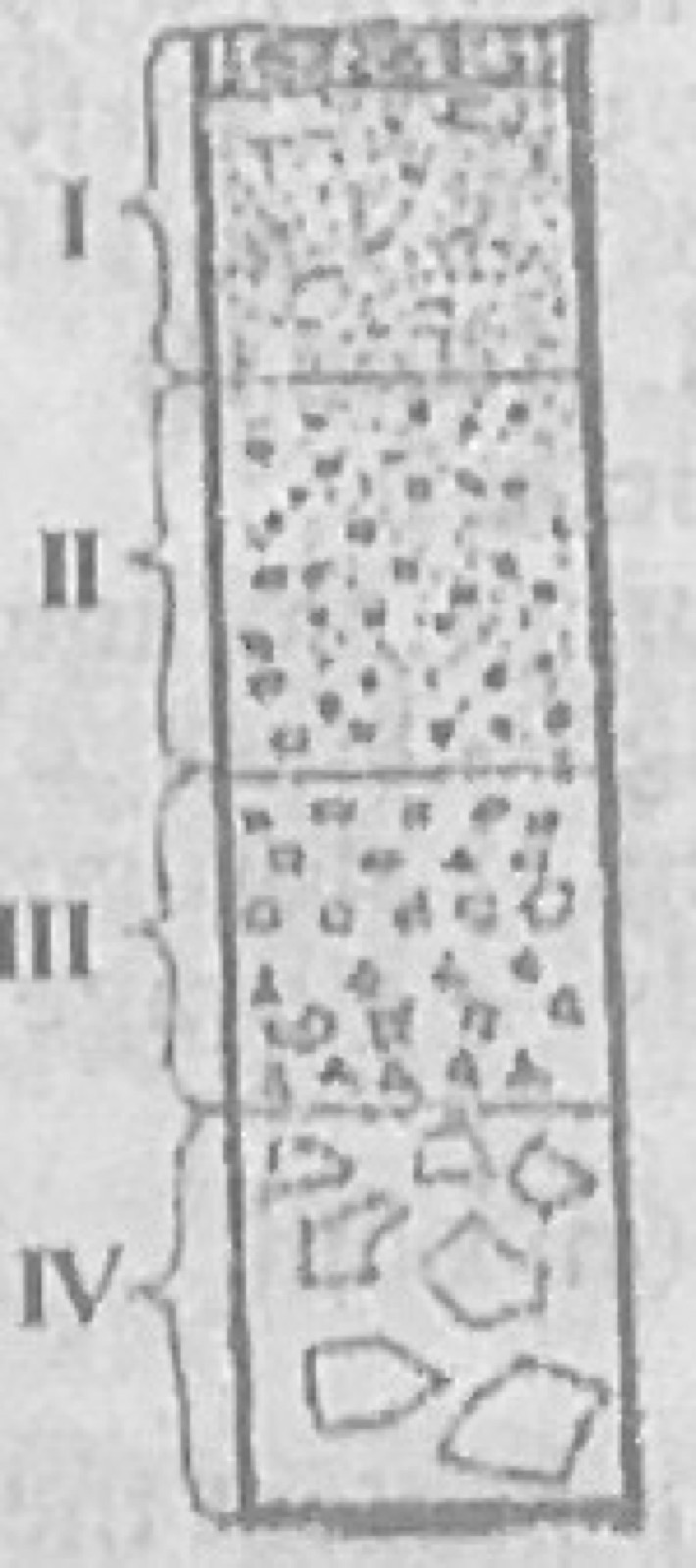
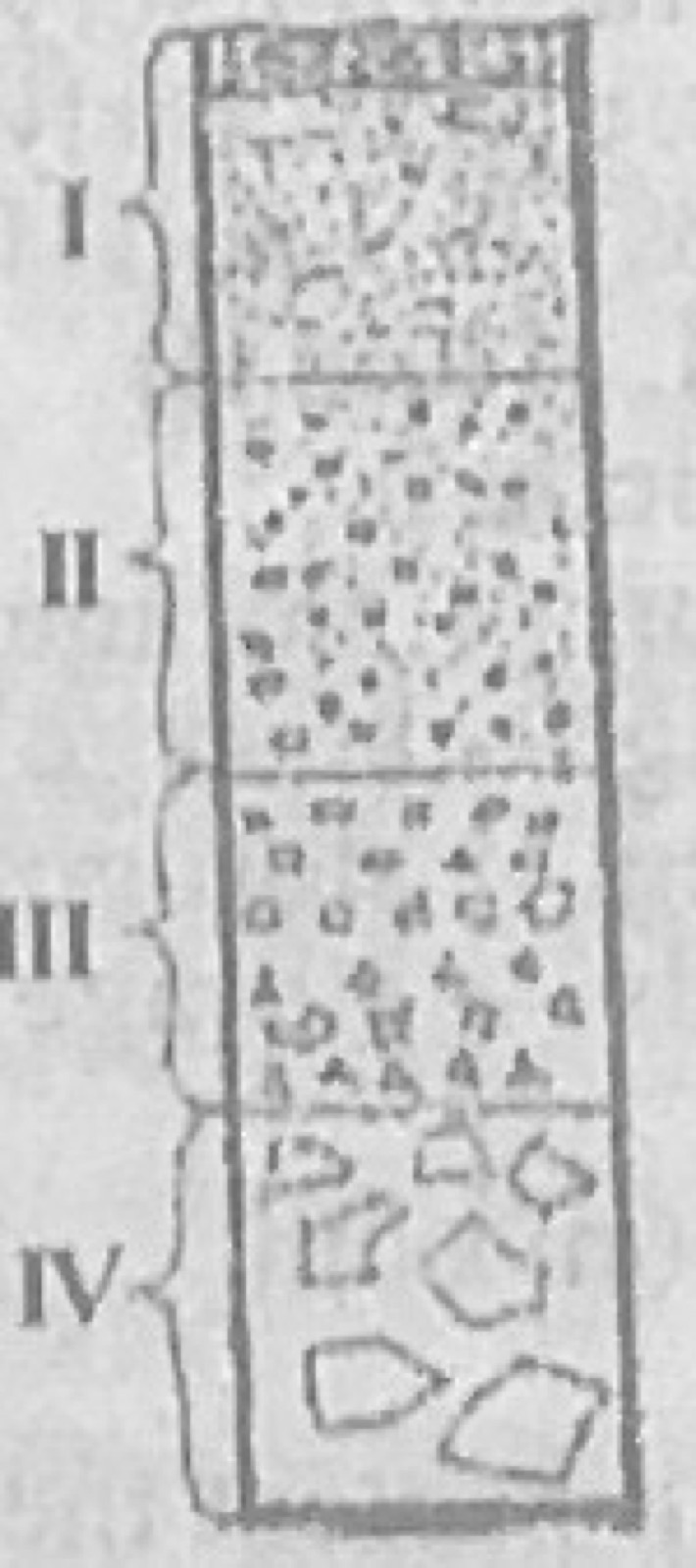
The diagram below illustrates the vertical section of a typical soil.
The layer that determines the chemical composition of soil is labelled

Diagram for this question
  1. A.I
  2. B.II
  3. C.III
  4. D.IV
Show the answer and explanation

Answer: D (IV)

Explanation

IV is the parent rock, from which the soil's minerals come.

Open this question

Question 14

Rocks and Soil Formation

The diagram below illustrates the vertical section of a typical soil.
The layer that supports the germination of tuber crops is labelled

Diagram for this question
  1. A.I
  2. B.II
  3. C.III
  4. D.IV
Show the answer and explanation

Answer: A (I)

Explanation

Planting setts germinate in the topsoil, layer I.

Open this question

Question 16

Soil Properties

Which of the following materials could be used to moderate soil temperature?

  1. A.Calcium ammonium nitrate
  2. B.Potassium sulphate
  3. C.Basic slag
  4. D.Farmyard manure
Show the answer and explanation

Answer: D (Farmyard manure)

Explanation

Organic manure insulates the soil and holds moisture.

Open this question

Question 17

Soil Fertility and Plant Nutrition

It is important to cover compost heaps in humid areas in order to

  1. A.aid fermentation of the compost materials
  2. B.increase the rate of decomposition of the heap
  3. C.protect the pit from being waterlogged
  4. D.prevent air from building up in the heap
Show the answer and explanation

Answer: C (protect the pit from being waterlogged)

Explanation

In wet areas a cover keeps rain from soaking the compost.

Open this question

Question 18

Soil Fertility and Plant Nutrition

Nitrogen is absorbed by crops in the form of

  1. A.nitrate ion
  2. B.ammonia gas
  3. C.nitric acid
  4. D.uric acid
Show the answer and explanation

Answer: A (nitrate ion)

Explanation

Roots take up nitrogen mainly as nitrate ions.

Open this question

Question 19

Irrigation and Drainage

An underground source of water for irrigation is

  1. A.river
  2. B.stream
  3. C.dam
  4. D.borehole
Show the answer and explanation

Answer: D (borehole)

Explanation

A borehole draws groundwater.

Open this question

Question 20

Crop Pests

If the expected yield of rice is 2 tonnes per hectare and 20% of the crop was destroyed by birds on the field, calculate the expected quantity of rice grains harvested.

  1. A.100 kg
  2. B.400 kg
  3. C.1,600kg
  4. D.2,400 kg
Show the answer and explanation

Answer: C (1,600kg)

Explanation

80% of 2,000 kg = 1,600 kg.

Open this question

Question 21

Processing and Storage of Farm Produce

Hulling is a post-harvest operation carried out in the processing of

  1. A.rice
  2. B.potato
  3. C.sugarcane
  4. D.pepper
Show the answer and explanation

Answer: A (rice)

Explanation

Hulling removes the husk from rice.

Open this question

Question 23

Crop Husbandry

A farmer in West Africa intercropped a variety of maize with groundnut on a farmland on April 24.
The earliest expected date of harvesting the maize would be

  1. A.May 24
  2. B.June 20
  3. C.July 22
  4. D.September 1
Show the answer and explanation

Answer: C (July 22)

Explanation

Early maize matures in about 90 days, which from 24 April is about 22 July.

Open this question

Question 24

Farming Systems

A farmer in West Africa intercropped a variety of maize with groundnut on a farmland on April 24.
A nutrient that would be supplied by groundnut in the intercropping system is

  1. A.magnesium
  2. B.potassium
  3. C.nitrogen
  4. D.phosphorus
Show the answer and explanation

Answer: C (nitrogen)

Explanation

Groundnut, a legume, fixes nitrogen.

Open this question

Question 25

Soil Fertility and Plant Nutrition

A farmer in West Africa intercropped a variety of maize with groundnut on a farmland on April 24.
If the farmer applied liquid fertilizer to the maize plants, the appropriate method of application would be

  1. A.ring
  2. B.side dressing
  3. C.top dressing
  4. D.foliar
Show the answer and explanation

Answer: D (foliar)

Explanation

Liquid fertilizer is sprayed on the leaves (foliar).

Open this question

Question 26

Crop Propagation

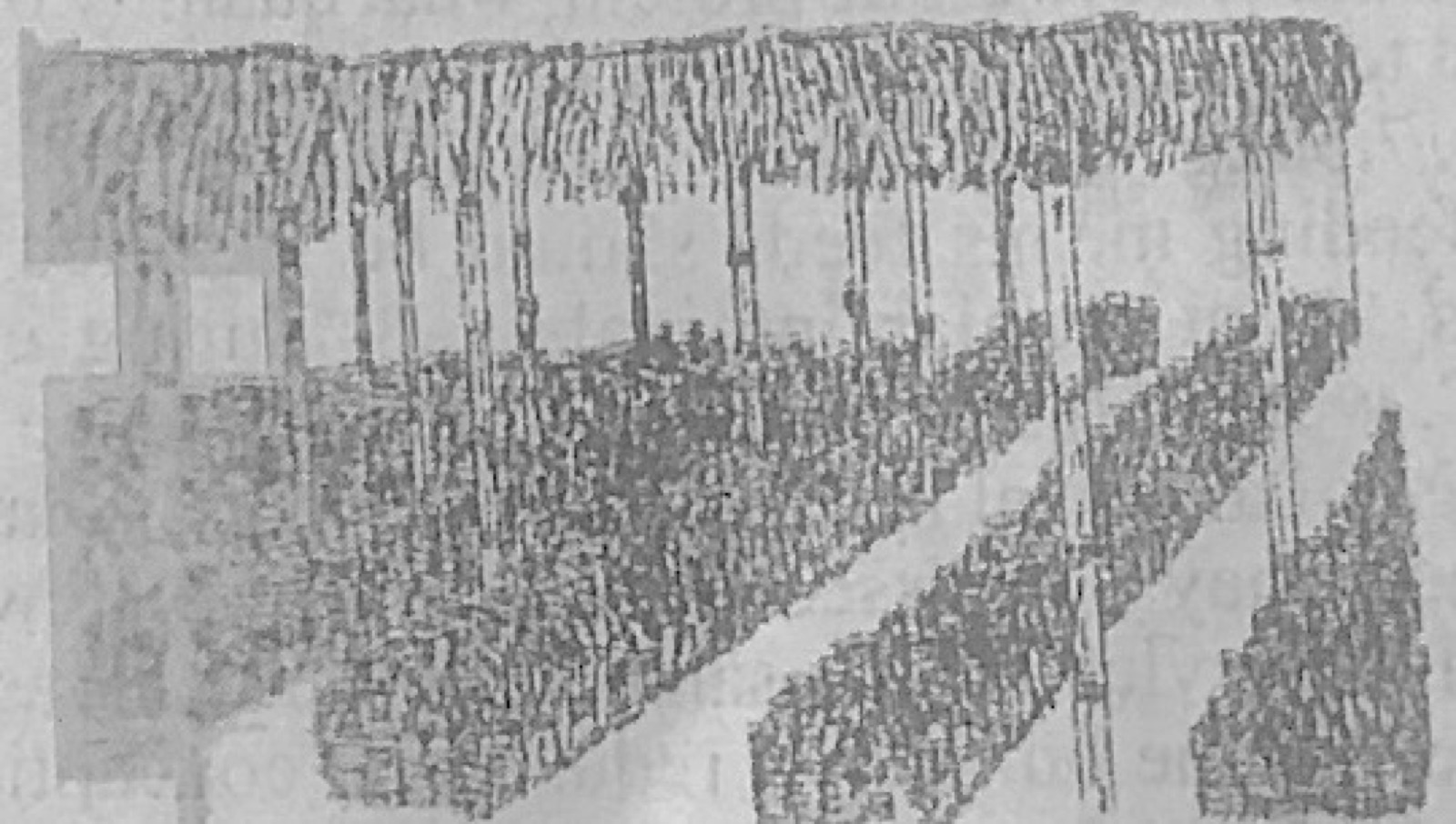
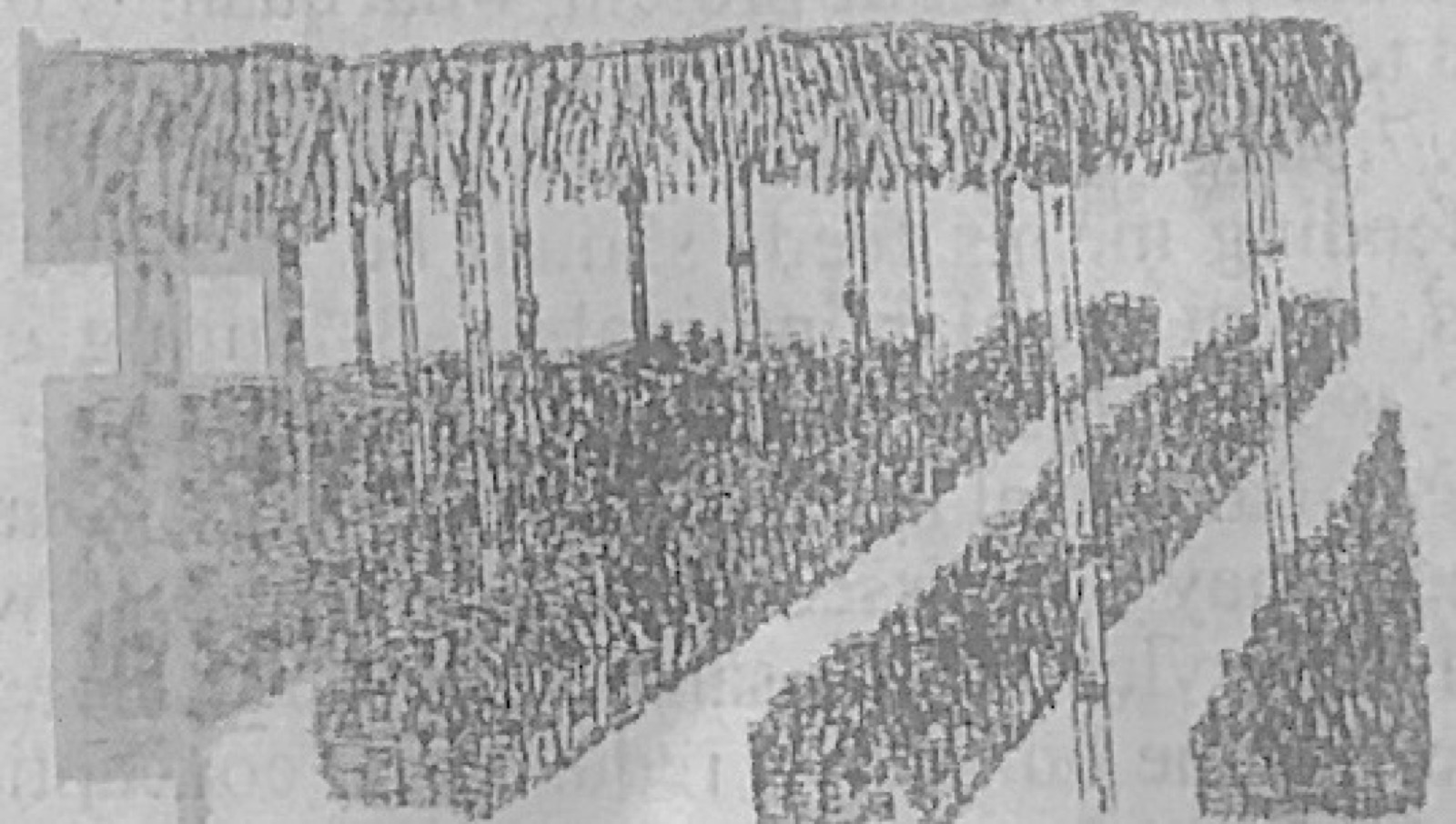
The diagram below illustrates a management practice carried out in a crop nursery.
The illustrated management practice is

Diagram for this question
  1. A.staking
  2. B.shading
  3. C.mulching
  4. D.rogueing
Show the answer and explanation

Answer: B (shading)

Explanation

The thatched roof over the seedbeds provides shade.

Open this question

Question 27

Crop Propagation

The diagram below illustrates a management practice carried out in a crop nursery.
Crops that could require the illustrated management practice are

Diagram for this question
  1. A.oil palm, cowpea and coconut
  2. B.pineapple, sweet potato and okro
  3. C.tomato, cocoa and citrus
  4. D.rubber, sugarcane and pepper
Show the answer and explanation

Answer: C (tomato, cocoa and citrus)

Explanation

Tomato, cocoa and citrus seedlings are raised under shade in nurseries.

Open this question

Question 29

Processing and Storage of Farm Produce

The correct sequence in the processing of cocoa is

  1. A.breaking of pods → drying → fermentation → storage
  2. B.fermentation → breaking of pods → drying → storage
  3. C.breaking of pods → fermentation → drying → storage
  4. D.drying → fermentation → breaking of pods → storage
Show the answer and explanation

Answer: C (breaking of pods → fermentation → drying → storage)

Explanation

Pods are broken, beans fermented, dried and then stored.

Open this question

Question 30

Land Preparation and Cultural Practices

The recommended spacing for oil palm is

  1. A.12m x 12m x 12m
  2. B.9m x9m x 9m
  3. C.6m x 6m x 6m
  4. D.2m x 2m x 2m
Show the answer and explanation

Answer: B (9m x9m x 9m)

Explanation

Oil palm is planted 9 m apart in a triangle.

Open this question

Question 31

Forestry and Wildlife

Forest regulations are important in order to
I. protect the ecosystem
II. reduce desert encroachment
III. promote sustainable products

  1. A.I and II only
  2. B.I and III only
  3. C.II and III only
  4. D.I, II and III
Show the answer and explanation

Answer: D (I, II and III)

Explanation

Forest laws protect the environment and keep forest products available.

Open this question

Question 32

Forestry and Wildlife

The common name of Tectona grandis is

  1. A.mahogany
  2. B.breadfruit
  3. C.teak
  4. D.baobab
Show the answer and explanation

Answer: C (teak)

Explanation

Tectona grandis is teak.

Open this question

Question 33

Weeds and Weed Control

Systemic herbicides could be used for controlling

  1. A.annual weeds and biennial weeds only
  2. B.annual weeds and perennial weeds only
  3. C.biennial weeds and perennial weeds only
  4. D.annual weeds, biennial weeds and perennial weeds
Show the answer and explanation

Answer: D (annual weeds, biennial weeds and perennial weeds)

Explanation

Systemic herbicides move through the whole plant and kill all kinds of weeds.

Open this question

Question 34

Crop Diseases

Tristeza is a common disease of

  1. A.Coffea arabica
  2. B.Gossypium spp.
  3. C.Ananas comosus
  4. D.Citrus spp
Show the answer and explanation

Answer: D (Citrus spp)

Explanation

Tristeza is a viral disease of citrus.

Open this question

Question 35

Animal Anatomy and Physiology

In which part of the alimentary canal of poultry is grit found?

  1. A.Crop
  2. B.Proventriculus
  3. C.Gizzard
  4. D.Caecum
Show the answer and explanation

Answer: C (Gizzard)

Explanation

Grit in the gizzard grinds food.

Open this question

Question 36

Poultry Production

Caparisation is usually carried out in

  1. A.bulls
  2. B.cockerels
  3. C.rams
  4. D.boars
Show the answer and explanation

Answer: B (cockerels)

Explanation

Caponisation is the castration of cockerels.

Open this question

Question 37

Animal Reproduction

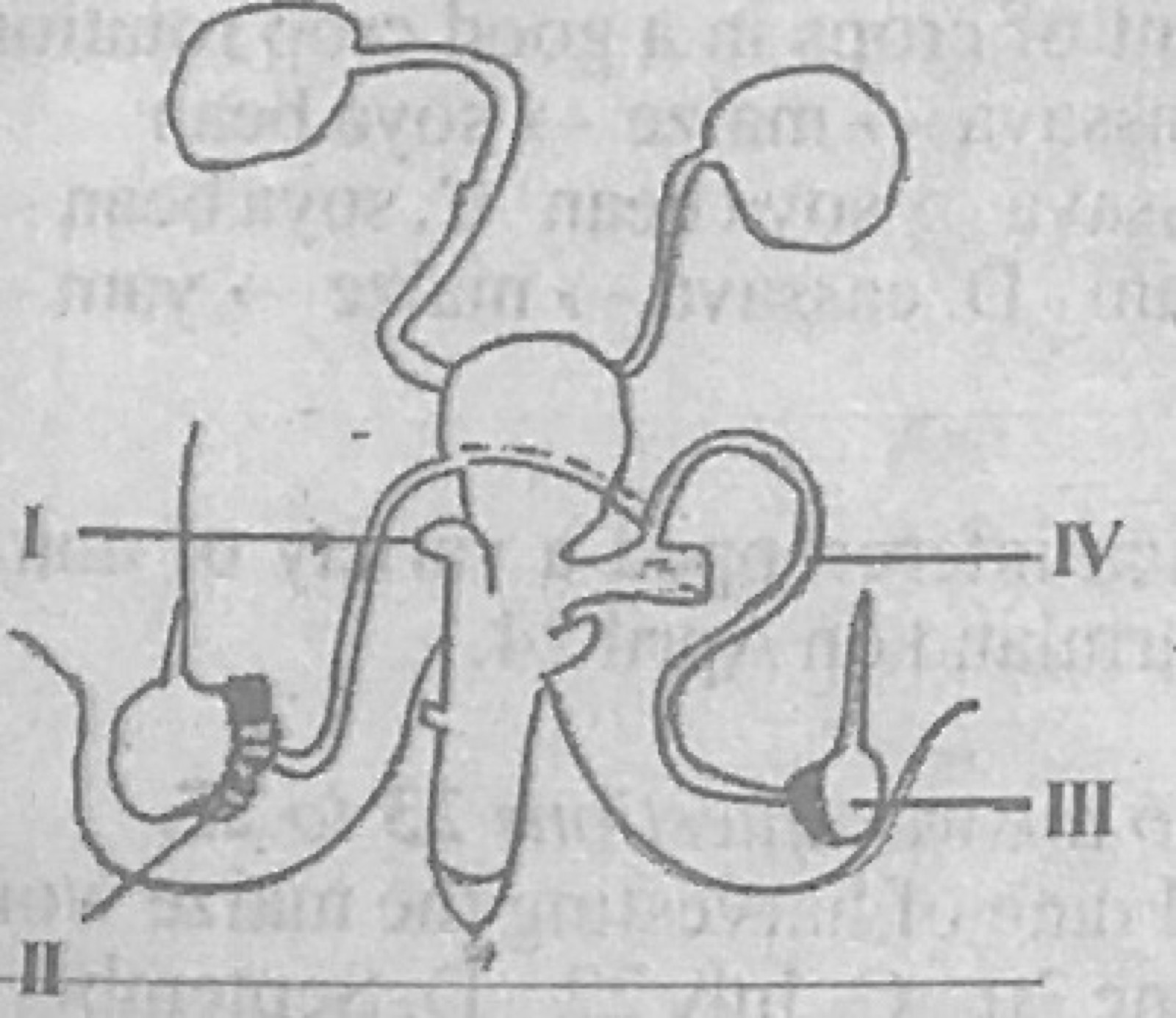
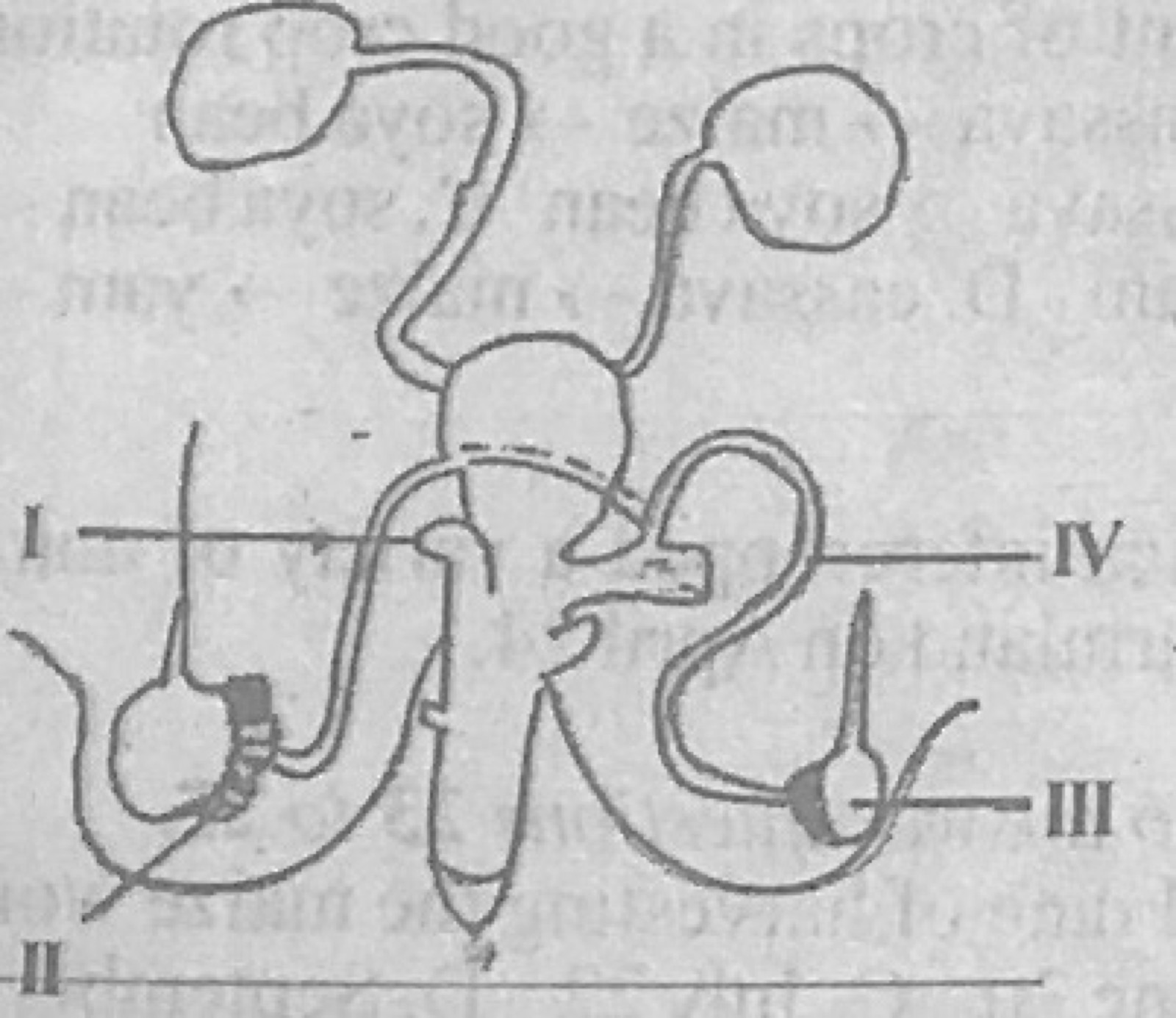
The diagram below illustrates the reproductive parts of a male farm animal.
Spermatogenesis occurs in the part labelled

Diagram for this question
  1. A.I
  2. B.II
  3. C.III
  4. D.IV
Show the answer and explanation

Answer: C (III)

Explanation

III is the testis, where sperm are made.

Open this question

Question 38

Animal Reproduction

The diagram below illustrates the reproductive parts of a male farm animal.
The part that secretes prostate fluid is labelled

Diagram for this question
  1. A.I
  2. B.II
  3. C.III
  4. D.IV
Show the answer and explanation

Answer: A (I)

Explanation

I points to the prostate gland at the base of the bladder.

Open this question

Question 39

Animal Reproduction

The diagram below illustrates the reproductive parts of a male farm animal.
The parts that would be of utmost interest to the farmer during castration are

Diagram for this question
  1. A.I and II
  2. B.II and III
  3. C.II and III
  4. D.III and IV
Show the answer and explanation

Answer: D (III and IV)

Explanation

Castration removes the testis (III) or crushes the spermatic cord/vas deferens (IV).

Open this question

Question 40

Poultry Production

In which of the following poultry management systems could fertile eggs be produced?
I. Deep litter
II. Battery cage
III. Free range

  1. A.I and II only
  2. B.I and III only
  3. C.II and III only
  4. D.I, II and III
Show the answer and explanation

Answer: B (I and III only)

Explanation

Fertile eggs need cocks to run with hens, which happens on deep litter or free range.

Open this question

Question 41

Animal Nutrition

Coprophagy refers to the

  1. A.regurgitation and chewing of cud by goats
  2. B.synthesis of vitamin B complex by cattle
  3. C.feeding of nutritious feed to piglets out of the reach of the sow
  4. D.reingestion of soft feaces by rabbits
Show the answer and explanation

Answer: D (reingestion of soft feaces by rabbits)

Explanation

Rabbits eat their soft night droppings to absorb nutrients.

Open this question

Question 42

Animal Nutrition

If fish meal contains 60% crude protein, what quantity of it should be fed to layers to supply 8kg of protein?

  1. A.4.80kg
  2. B.7.50kg
  3. C.13.33kg
  4. D.48.00kg
Show the answer and explanation

Answer: C (13.33kg)

Explanation

8 ÷ 0.6 = 13.33 kg.

Open this question

Question 43

Animal Nutrition

Ad libitum feeding means feeds should be supplied to farm animals

  1. A.at regular intervals
  2. B.during egg production
  3. C.without restriction
  4. D.for maintenance
Show the answer and explanation

Answer: C (without restriction)

Explanation

Ad libitum means freely, as much as the animal wants.

Open this question

Question 44

Animal Reproduction

A disadvantage of artificial insemination in cattle is that

  1. A.signs of heat may be missed by the farmer
  2. B.fewer animals could be serviced at the same time
  3. C.it increases the cost of feeding the bulls
  4. D.it reduces the conception rate and calving interval
Show the answer and explanation

Answer: A (signs of heat may be missed by the farmer)

Explanation

AI depends on the farmer spotting heat; a missed heat means a missed chance.

Open this question

Question 45

Fisheries and Aquaculture

Desilting of fish ponds helps to
I. repair cracks in the pond
II. control pond acidity
III. reduce turbidity in ponds

  1. A.I and II only
  2. B.I and III only
  3. C.II and III only
  4. D.I, II and III
Show the answer and explanation

Answer: C (II and III only)

Explanation

Removing silt and rotting mud reduces acidity and muddiness.

Open this question

Question 46

Basic Agricultural Economics

Agricultural produce for which demand increases due to a rise in the income of the consumer is referred to as

  1. A.substitute produce
  2. B.inferior produce
  3. C.luxury produce
  4. D.complementary produce
Show the answer and explanation

Answer: C (luxury produce)

Explanation

Demand for luxuries rises as incomes rise.

Open this question

Question 47

Farm Management and Records

Determine the cost price of a farm equipment that has a salvage value of N800,000.00, a useful life of 10 years and an annual depreciation of N300,000.00.

  1. A.N1,100,000.00
  2. B.N2,200,000.00
  3. C.N3,800,000.00
  4. D.N5,000,000.00
Show the answer and explanation

Answer: C (N3,800,000.00)

Explanation

Cost = (300,000 × 10) + 800,000 = N3,800,000.

Open this question

Question 49

Farm Management and Records

The equity of a farmer who has a liability of N200,000.00 and assets of N575,000.00 is

  1. A.N200,000.00
  2. B.N375,000.00
  3. C.N575,000.00
  4. D.N775,000.00
Show the answer and explanation

Answer: B (N375,000.00)

Explanation

Equity = assets − liabilities = 575,000 − 200,000 = N375,000.

Open this question

Question 50

Agricultural Extension

Extension methods that could be used to disseminate agricultural information to deaf but literate farmers are
I. radio
II. field trip
III. newspaper

  1. A.I and II only
  2. B.I and III only
  3. C.II and III only
  4. D.I, II and III
Show the answer and explanation

Answer: C (II and III only)

Explanation

Deaf farmers can see a field trip and read a newspaper but cannot hear radio.

Open this question

Theory question 101

Agricultural Development

(a) State three ways in which each of the following factors affects agricultural production in West Africa. (i) rural-urban migration; (ii) inadequate farm inputs; (iii) inadequate storage facilities
(b) Distinguish between farm tools and farm machinery.
(c) Give four functions of a bulldozer on the farm.
(d) Mention three tools that could be used in maintaining farm machinery.

Show the model answer
Model answer

(a)(i) Rural-urban migration (any three): shortage of farm labour; high cost of labour; lower output and food shortage; farms abandoned; ageing farmers slow to adopt innovations.
(ii) Inadequate inputs (any three): low yields; high cost of the few inputs available; farmers remain at subsistence level; crop failure; low income and poor quality produce.
(iii) Inadequate storage (any three): post-harvest losses and wastage; poor quality produce; glut at harvest forces low farm-gate prices; scarcity and high prices off-season; low farmers' income; food insecurity.
(b) Farm tools are simple hand-operated implements (e.g. hoe, cutlass) worked by human effort; farm machinery are mechanical, engine- or motor-powered machines (e.g. tractor, combine harvester) for large-scale operations.
(c) Any four: clearing bush and felling trees; stumping; levelling/grading land; moving earth; constructing farm roads, ditches, dams and ponds.
(d) Any three: spanner; screwdriver; pliers; hammer; grease gun; wire brush; file; jack; tyre gauge; wrench; socket set.

Explanation

Three effects for each factor in (a).

Open this question

Theory question 102

Rocks and Soil Formation

(a) Describe each of the following horizons in a soil profile. (i) horizon A; (ii) horizon B; (iii) horizon C; (iv) horizon D.
(b) Using the table below, classify each of the following rocks based on their mode of formation: marble, gabbro, dolomite, limestone, slate and coal. (Columns: Sedimentary rock, Metamorphic rock, Igneous rock.)
(c) State four effects of temperature on agricultural production.

Show the model answer
Model answer

(a)(i) Horizon A: the topsoil; dark, rich in humus and living organisms, most weathered and leached, most fertile; where most roots are.
(ii) Horizon B: the subsoil; reddish-brown, contains minerals (clay, iron and aluminium oxides) washed down from A; little humus and less fertile.
(iii) Horizon C: weathered parent material; partly broken rock fragments, little biological activity.
(iv) Horizon D: the bedrock; hard, unweathered parent rock with no living organisms.
(b) Sedimentary: limestone, dolomite, coal. Metamorphic: marble, slate. Igneous: gabbro.
(c) Any four: decides which crops and animals can be raised in an area; affects germination and breaking of dormancy; high temperature increases evaporation and transpiration, causing wilting; affects growth rate and ripening; high temperature causes heat stress, lower feed intake and production in animals; affects activity of soil organisms; influences pests and diseases.

Explanation

Put each rock in exactly one column.

Open this question

Theory question 103

Forestry and Wildlife

(a) Explain each of the following agro-forestry practices in West Africa. (i) alley cropping; (ii) ley farming; (iii) taungya system
(b) Give five reasons why agro-forestry is practised by farmers in West Africa.
(c)(i) Describe the water cycle. (ii) List two forms of water in the soil.

Show the model answer
Model answer

(a)(i) Alley cropping: arable crops are grown in alleys between rows of (usually leguminous) trees or shrubs such as Leucaena and Gliricidia, which are pruned regularly and the prunings used as mulch/green manure.
(ii) Ley farming: land is used for arable crops for some years and then put under grass/legume pasture for livestock for some years, in rotation.
(iii) Taungya system: farmers grow food crops between young forest trees during the early years of forest establishment, until the tree canopy closes.
(b) Any five: improves soil fertility (nitrogen, leaf litter); controls erosion; provides fuelwood, timber and fodder; diversifies income; provides shade and windbreaks; controls weeds; makes full use of land; conserves biodiversity and moisture.
(c)(i) Water from seas, rivers, soil and plants evaporates (and transpires) into water vapour; the vapour rises, cools and condenses into clouds; it falls back as rain (precipitation); some runs off into rivers and seas, some infiltrates the soil and becomes groundwater, and the cycle repeats.
(ii) Any two: gravitational water; capillary water; hygroscopic water.

Explanation

Name each stage of the cycle in order.

Open this question

Theory question 104

Crop Husbandry

(a) Discuss the cultivation of ginger under the following headings: (i) soil requirement; (ii) land preparation; (iii) planting material; (iv) spacing; (v) method of harvesting; (vi) two processing methods
(b) The diagram below shows the survey plan of a farmland. Use it to answer questions 4(b). (i) Calculate the area of the farmland. (ii) If a farmer sows two seeds of maize per hole on the farmland at a spacing of 30cm by 30cm, determine the expected number of maize stands on the farmland.
(c) A farmland intended for organic farming has an abundance of living organisms in the soil. Enumerate three organisms that could be found in the soil of the farmland.

Diagram for this question
Show the model answer
Model answer

(a)(i) Well-drained, fertile, loose sandy loam or loamy soil rich in organic matter.
(ii) Clear, plough and harrow, then make raised beds or ridges.
(iii) Rhizome pieces (setts) with one or two buds.
(iv) About 20–25 cm × 20–30 cm (e.g. 25 cm × 25 cm).
(v) Dig up the rhizomes with a hoe or fork when the leaves turn yellow and dry (about 8–10 months).
(vi) Any two: washing and peeling; splitting/slicing; sun drying; grinding into powder; making ginger oil/paste.
(b)(i) The plan is a trapezium: area = ½ × (46 + 60) × 30 = 1,590 m².
(ii) Area per hole = 0.3 × 0.3 = 0.09 m²; holes (stands) = 1,590 ÷ 0.09 ≈ 17,667 stands (about 35,333 seeds/plants at two per hole).
(c) Any three: earthworms; termites; ants; millipedes; bacteria; fungi; nematodes; protozoa.

Explanation

Parallel sides 46 m and 60 m, height 30 m.

Open this question

Theory question 105

Animal Anatomy and Physiology

(a) Mention two functions each of the following parts of the digestive system of poultry: (i) crop; (ii) gizzard; (iii) small intestine; (iv) large intestine.
(b)(i) Define the term ration as used in animal nutrition. (ii) Give four characteristics of roughages consumed by ruminants.
(c) An eco-friendly company is considering using fibre crops to replace plastics as packaging materials. Give four other uses of fibre crops.

Show the model answer
Model answer

(a)(i) Crop: stores food temporarily; softens/moistens food.
(ii) Gizzard: grinds food with grit; mixes food with enzymes from the proventriculus.
(iii) Small intestine: completes digestion of food; absorbs digested nutrients.
(iv) Large intestine: absorbs water; carries undigested waste to the cloaca.
(b)(i) A ration is the measured amount of feed given to an animal in 24 hours to meet its needs.
(ii) Any four: high crude fibre (over 18%); bulky; low in digestible nutrients and energy; low protein (except legumes); cheap and readily available; slowly digested; e.g. hay, straw, silage, pasture.
(c) Any four: textiles and clothing; ropes and twines; sacks and bags; mats and carpets; paper; fishing nets; medical cotton wool; mattress stuffing; seed oil and cake (cotton).

Explanation

Two functions per part in (a).

Open this question

Theory question 106

Marketing of Agricultural Produce

(a) Citrus farmers in a country harvested large quantities of sweet orange but were unable to get buyers quickly for the produce. (i) Mention four activities that should be carried out by the farmers before the oranges could reach the consumers. (ii) State five ways by which the government could encourage the distribution of the oranges to the market.
(b) Rural farmers in a community complained that extension officers hardly visited their farms. Highlight five factors that could contribute to this problem
(c) Give the scientific names of the tapeworm that affects each of the following farm animals: (i) cattle; (ii) pig
(d) Mention two ways of preventing the infestation of tapeworm on a pig farm.

Show the model answer
Model answer

(a)(i) Any four: harvesting at the right stage; sorting/grading; cleaning; packaging; storage (cold storage); transportation; processing into juice; advertising.
(ii) Any five: build good rural roads; provide storage and cold rooms; set up/encourage fruit-processing factories; provide market information; guaranteed minimum prices/buying through marketing boards; subsidise transport; encourage co-operatives; promote export.
(b) Any five: too few extension officers for many farmers; poor transport/mobility; bad rural roads; poor pay and motivation; lack of funds and equipment; officers given non-extension duties; insecurity in rural areas; poor supervision.
(c)(i) Taenia saginata. (ii) Taenia solium.
(d) Any two: proper disposal of human faeces/use of toilets so pigs cannot eat them; keep pigs confined; meat inspection and cooking pork well; deworm pigs and workers; clean feed and water.
Explanation

Taenia saginata in cattle, Taenia solium in pigs.

Open this question