A farmer designed the table below for implementation on a farm. Plot 1: Year 1 Yam, Year 2 Groundnut, Year 3 Maize, Year 4 Cowpea Plot 2: Groundnut, Maize, Cowpea, Yam Plot 3: Maize, Cowpea, Yam, Groundnut Plot 4: Cowpea, Yam, Groundnut, Maize The cropping system illustrated in the table is
A.mixed cropping.
B.crop rotation.
C.shifting cultivation.
D.land rotation.
Show the answer and explanation
Answer: B (crop rotation.)
Explanation
Each plot grows a different crop each year in a fixed order.
A farmer designed the table below for implementation on a farm. Plot 1: Year 1 Yam, Year 2 Groundnut, Year 3 Maize, Year 4 Cowpea Plot 2: Groundnut, Maize, Cowpea, Yam Plot 3: Maize, Cowpea, Yam, Groundnut Plot 4: Cowpea, Yam, Groundnut, Maize Which of the following crops can conveniently replace maize in the table?
A.Cassava
B.Cashew
C.Mango
D.Millet
Show the answer and explanation
Answer: D (Millet)
Explanation
A one-year rotation needs an annual crop of the same type, so millet (a cereal) replaces maize.
Which of the following statements about threshing of rice are true? I. Rice grains are separated from the panicle II. Breakage of some grains could occur III. The grains are polished
A.I and II only
B.I and III only
C.II and III only
D.I, II and III
Show the answer and explanation
Answer: A (I and II only)
Explanation
Threshing removes grains from the panicle and may break some; polishing is part of milling.
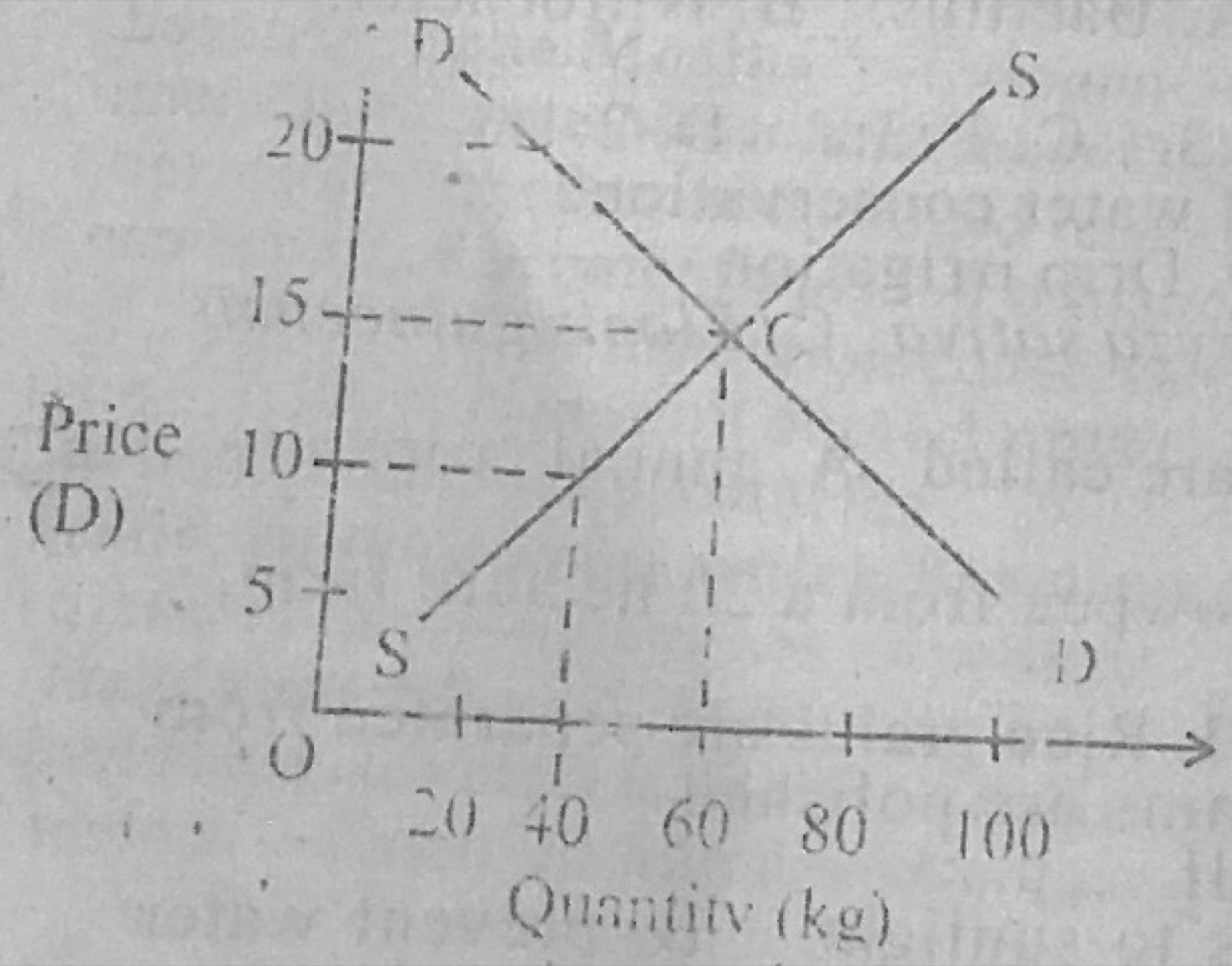
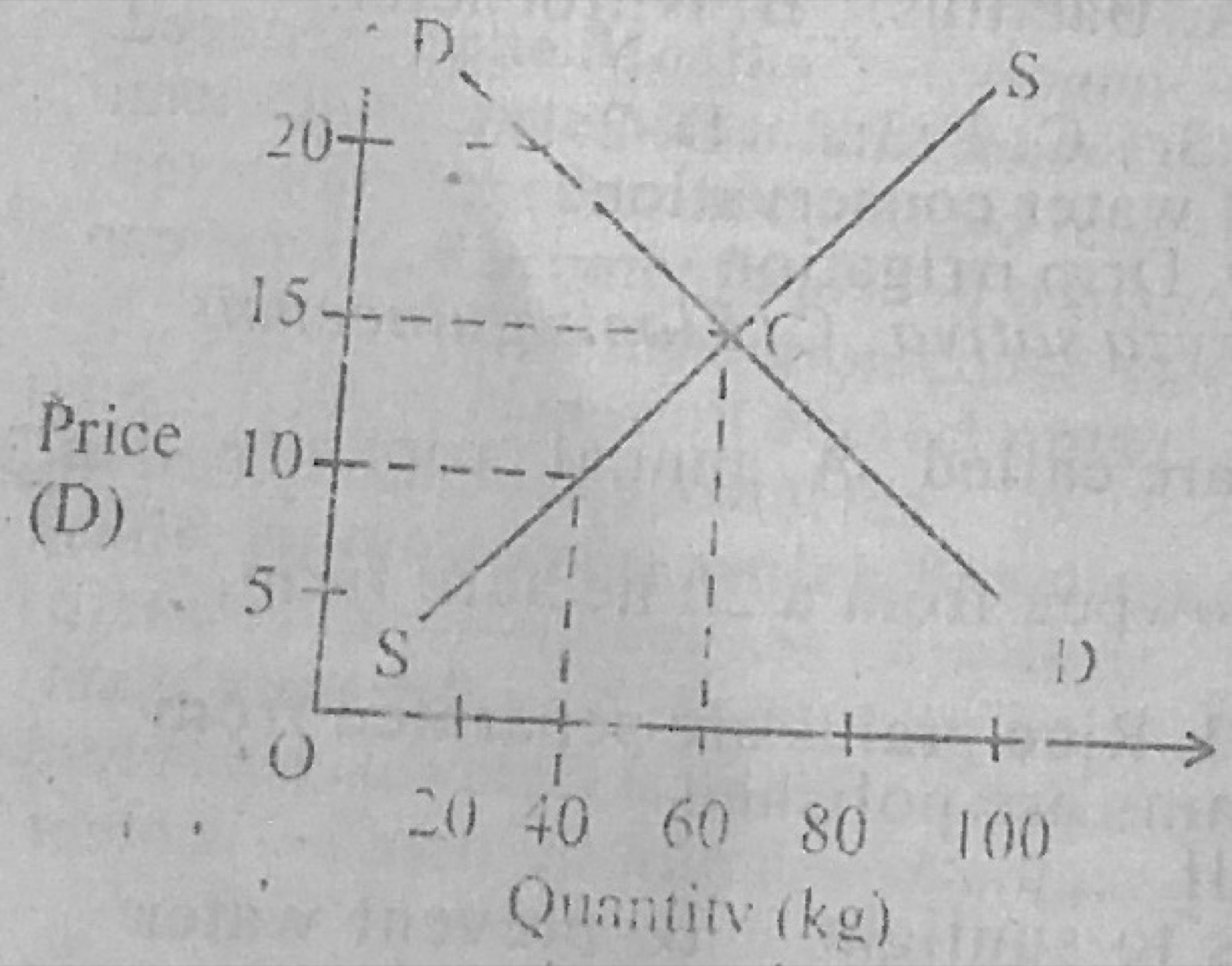
A total of 12,000 kg of maize was demanded at N20 per kg while 8,000 kg of it was demanded at N30 per kg. What is the percentage change in quantity demanded?
(a) Suggest two possible solutions to each of the following problems of agricultural development in West Africa: (i) poor transportation; (ii) environmental degradation; (iii) use of crude farm tools. (b) State three precautions that should be taken when using each of the following types of farm power: (i) animal power; (ii) electrical power. (c) Give six reasons for maintaining farm tools and implements.
Show the model answer
Model answer
(a)(i) Transport: build and maintain rural roads/rail/waterways; provide vehicles through co-operatives or subsidies; reduce fuel cost. (ii) Environmental degradation: erosion control and afforestation; laws against bush burning and pollution; irrigation and drainage; proper use of agrochemicals. (iii) Crude tools: tractor hiring services; subsidised modern implements; local fabrication of machines; train farmers in mechanisation; co-operatives to buy machines. (b)(i) Animal power (any three): use healthy, trained animals; do not overwork them; work them in cool hours; feed and water well; handle gently and remove sharp horn tips/use muzzles. (ii) Electrical power (any three): never touch live or bare wires; use insulated gloves/boots; repair faults promptly through qualified electricians; use voltage regulators/earthing; switch off appliances when not in use; keep water away from electrical points. (c) Any six: to keep them in good working condition; to prolong their life; to prevent rust and corrosion; to avoid breakdown during work; to reduce cost of repairs/replacement; to ensure safety of users; to save time; to increase efficiency of work.
(a) Explain each of the following terms as used in agricultural ecology: (i) soil texture; (ii) soil structure; (iii) soil profile. (b)(i) State three advantages of grafting. (ii) Name two tree crops that could be propagated by grafting. (c) List three cultural practices that could be used to replenish nutrients in the soil. (d) Give four measures that farmers could adopt to control pests in grain stores.
Show the model answer
Model answer
(a)(i) Soil texture: the relative proportions of sand, silt and clay particles in a soil (coarseness or fineness). (ii) Soil structure: the way soil particles are grouped or arranged into aggregates (crumbs, blocks, plates). (iii) Soil profile: a vertical section of soil from the surface down to the parent rock, showing the horizons. (b)(i) Any three: combines good qualities of stock and scion; early fruiting; plants true to type; disease/drought-resistant rootstock; propagates plants that do not root easily. (ii) Any two: citrus (orange); mango; avocado; cocoa; rubber; cashew. (c) Any three: crop rotation with legumes; bush fallowing; green manuring; cover cropping; mulching; organic manuring/composting; liming. (d) Any four: clean and fumigate the store before storage; dry grains properly; use storage insecticides/fumigants; airtight containers; rat guards/traps; inspect regularly and remove infested grain; use hermetic bags/silos.
(a) Discuss the cultivation of Citrus spp under the following headings: (i) method of propagation; (ii) spacing in the field; (iii) two nursery practices; (iv) two pests; (v) two diseases. (b) Define each the following terms: (i) surface irrigation; (ii) surface drainage. (c) Give three advantages each of the terms in 3(b). (i) Surface irrigation (ii) Surface drainage.
Show the model answer
Model answer
(a)(i) Budding (sweet orange buds on rough lemon/sour orange rootstock); also seeds for rootstocks and grafting. (ii) About 6 m × 6 m (7.5 m × 7.5 m). (iii) Any two: watering; shading; weeding; budding the rootstock; pest and disease control; hardening off; pricking out. (iv) Any two: fruit flies; aphids; scale insects; citrus butterfly (leaf eater); mealybugs; termites. (v) Any two: citrus tristeza; gummosis; citrus canker; scab; sooty mould; greening. (b)(i) Surface irrigation: applying water over the soil surface so that it flows by gravity (basin, furrow, flooding). (ii) Surface drainage: removing excess water from the soil surface through open ditches/channels. (c)(i) Surface irrigation (any three): cheap and simple; needs no special equipment; uses gravity; suitable for crops like rice; easy to operate. (ii) Surface drainage (any three): cheap to construct; prevents waterlogging; improves soil aeration; easy to inspect and maintain; allows early working of the land.
(a) With the aid of a diagram, describe the life cycle of the variegated grasshopper. (b) State five ways through which diseases are spread on crop farms. (c) State six characteristics of a good layer.
Show the model answer
Model answer
(a) Incomplete metamorphosis: egg → nymph (hopper) → adult. Females lay eggs in pods in moist soil; eggs hatch into wingless nymphs that look like small adults; nymphs moult several times (about five instars), developing wing buds; the final moult gives the winged adult. Diagram: cycle of egg pod → nymphs → adult with arrows. (b) Any five: wind; water/rain splash; insects (vectors); infected seeds and planting materials; contaminated tools; man (clothes, hands); animals; infected soil and crop debris. (c) Any six: bright red, large, moist comb and wattles; alert and active; wide, deep, soft abdomen; widely spaced pelvic bones; large, moist, oval vent; good appetite; bleached shanks and beak (yellow pigment used up); clean bright eyes; healthy and not broody.
(a) Complete the table below on diseases of farm animals: for Brucellosis and Aspergillosis, give the causal organism (i), (v); farm animal affected (ii), (vi); symptom (iii), (vii); and control (iv), (viii). (b) State five advantages of the battery cage system in poultry production. (c) Give five reasons why some agricultural extension programmes are not successful in West Africa.
Show the model answer
Model answer
(a) Brucellosis: (i) bacterium (Brucella abortus/melitensis); (ii) cattle, goats, sheep, pigs; (iii) abortion in late pregnancy, retained placenta, infertility, swollen testes; (iv) vaccination, test and slaughter infected animals, hygiene, burn aborted foetuses. Aspergillosis: (v) fungus (Aspergillus fumigatus); (vi) poultry (chicks); (vii) gasping/difficult breathing, loss of appetite, drowsiness, death; (viii) keep litter and feed dry and free of mould, good ventilation, disinfect incubators and houses, use fungicides/antifungal drugs. (b) Any five: more birds per unit space; easy to collect clean eggs; less egg breakage/eating; easy to detect and cull poor layers; less disease and parasite spread; easy feeding and watering, less feed waste; no litter needed; easy record keeping. (c) Any five: too few, poorly trained or poorly motivated extension staff; poor transport; illiteracy/conservatism of farmers; inputs not available or too costly; poor link between research and extension; language barriers; inadequate funding; innovations not suited to farmers' conditions.
(a)(i) Prepare a balance sheet for Newlife Farms for the year ended 31st December, 2016 using the information below: Closing valuation N600,000.00 Cash in bank N250,000.00 Loan payable to cooperatives N250,000.00 Debt payable to feed millers N100,000.00 Debt receivable from egg sellers N100,000.00 (ii) State two reasons why the balance sheet is important to a farm manager. (b) List five sources of agricultural loans in West Africa. (c) Give three reasons why the floor of a deep litter house is preferably covered with wood shavings instead of saw dust.
Show the model answer
Model answer
(a)(i) Newlife Farms balance sheet as at 31 December 2016. Assets: closing valuation N600,000; cash in bank N250,000; debt receivable from egg sellers N100,000; total assets N950,000. Liabilities: loan payable to cooperatives N250,000; debt payable to feed millers N100,000; total liabilities N350,000. Net worth (capital) = 950,000 − 350,000 = N600,000. (ii) Any two: shows the financial position/net worth of the farm; shows whether the farm is solvent; helps in getting loans; guides planning and decisions. (b) Any five: commercial banks; agricultural/development banks (e.g. Bank of Agriculture); co-operative societies; government agencies/schemes; money lenders; friends and relatives; microfinance banks; insurance companies; NGOs. (c) Any three: wood shavings absorb moisture well and stay dry; they are less dusty, so fewer respiratory problems; birds do not eat them as feed (sawdust may be eaten); they do not cake easily and stay loose; fewer mould problems.