Oil palm does best on slightly acid soils, around pH 5.5–6.5 (it tolerates down to about pH 4.5). Soils at pH 2.5–4.5 are too acid and pH above 7 is too alkaline for good growth.
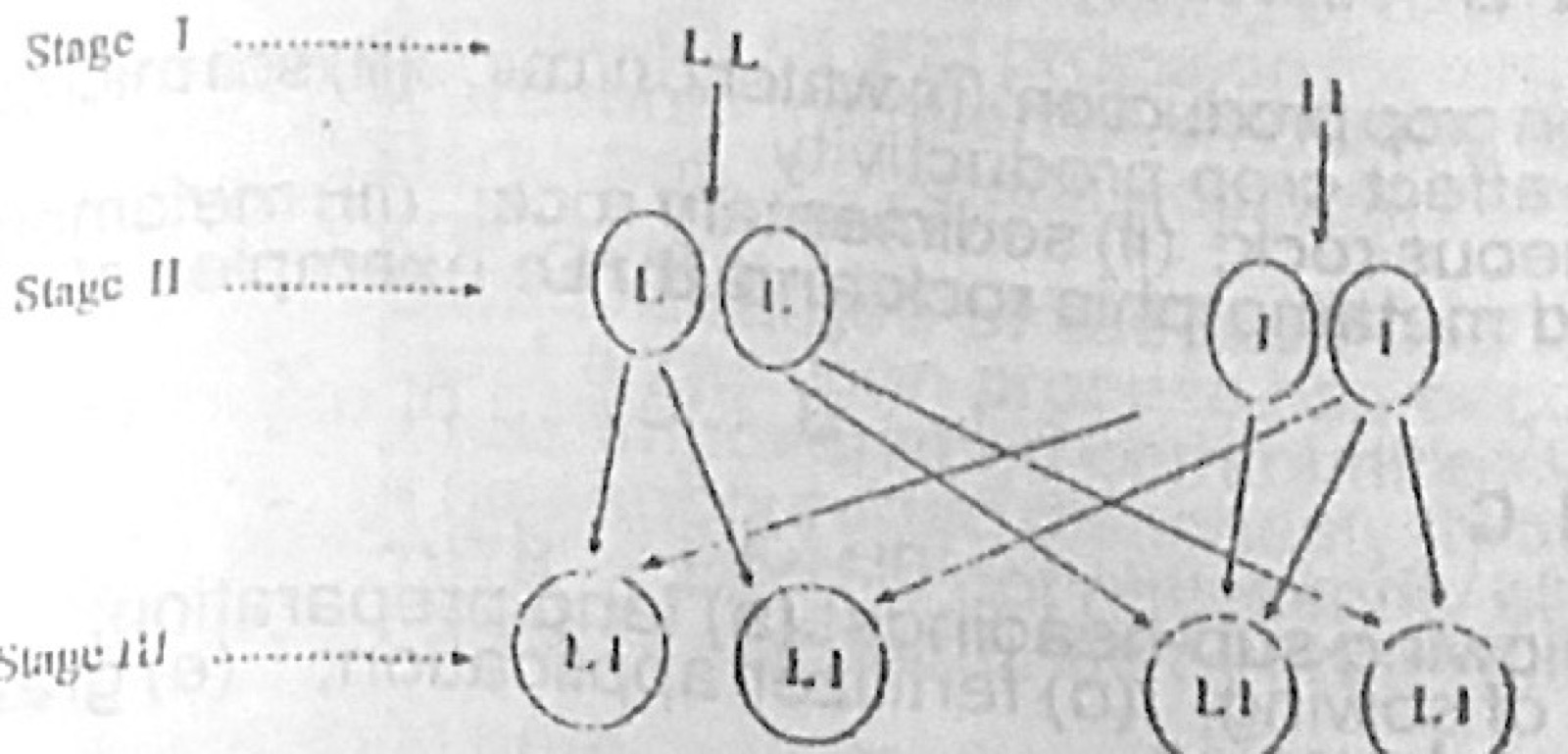
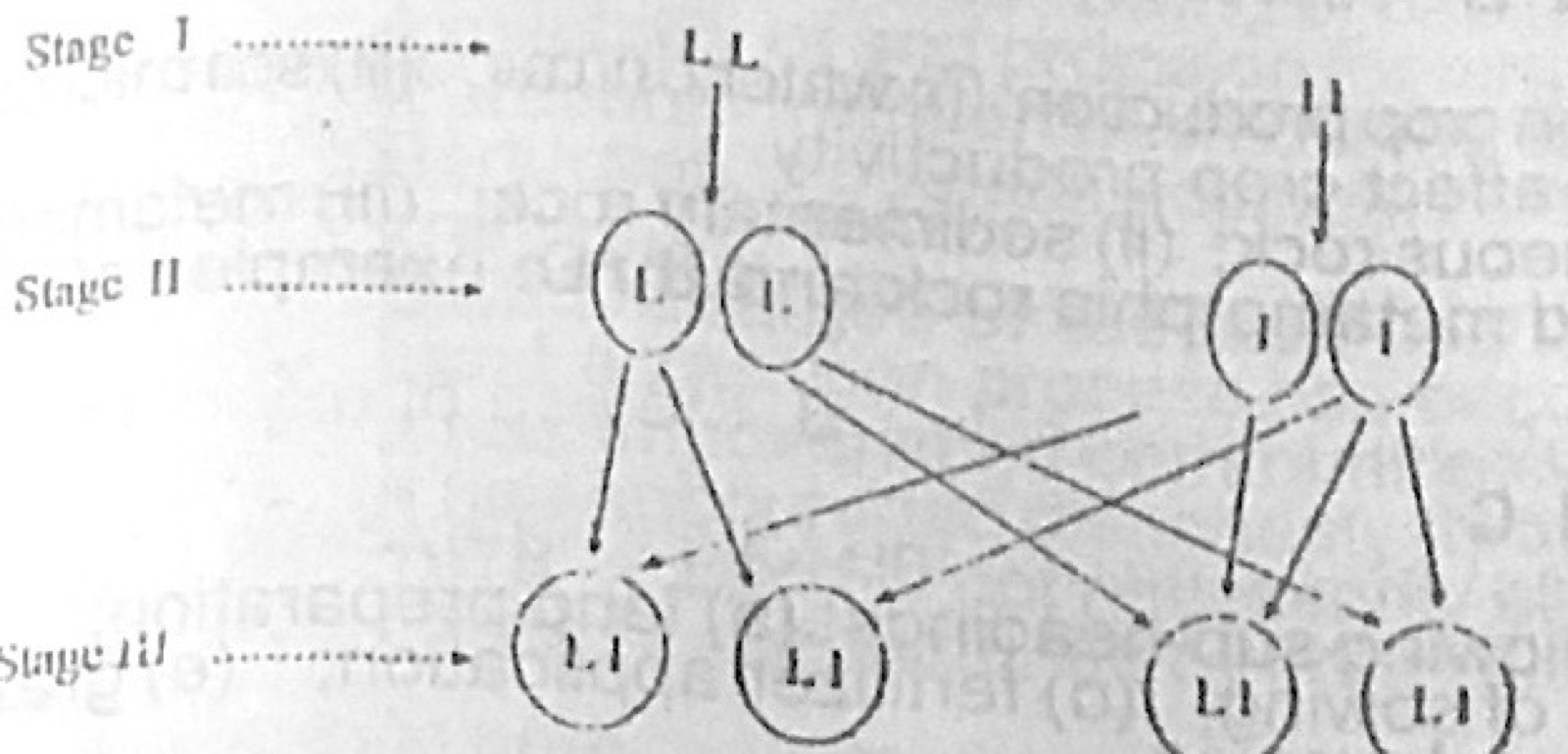
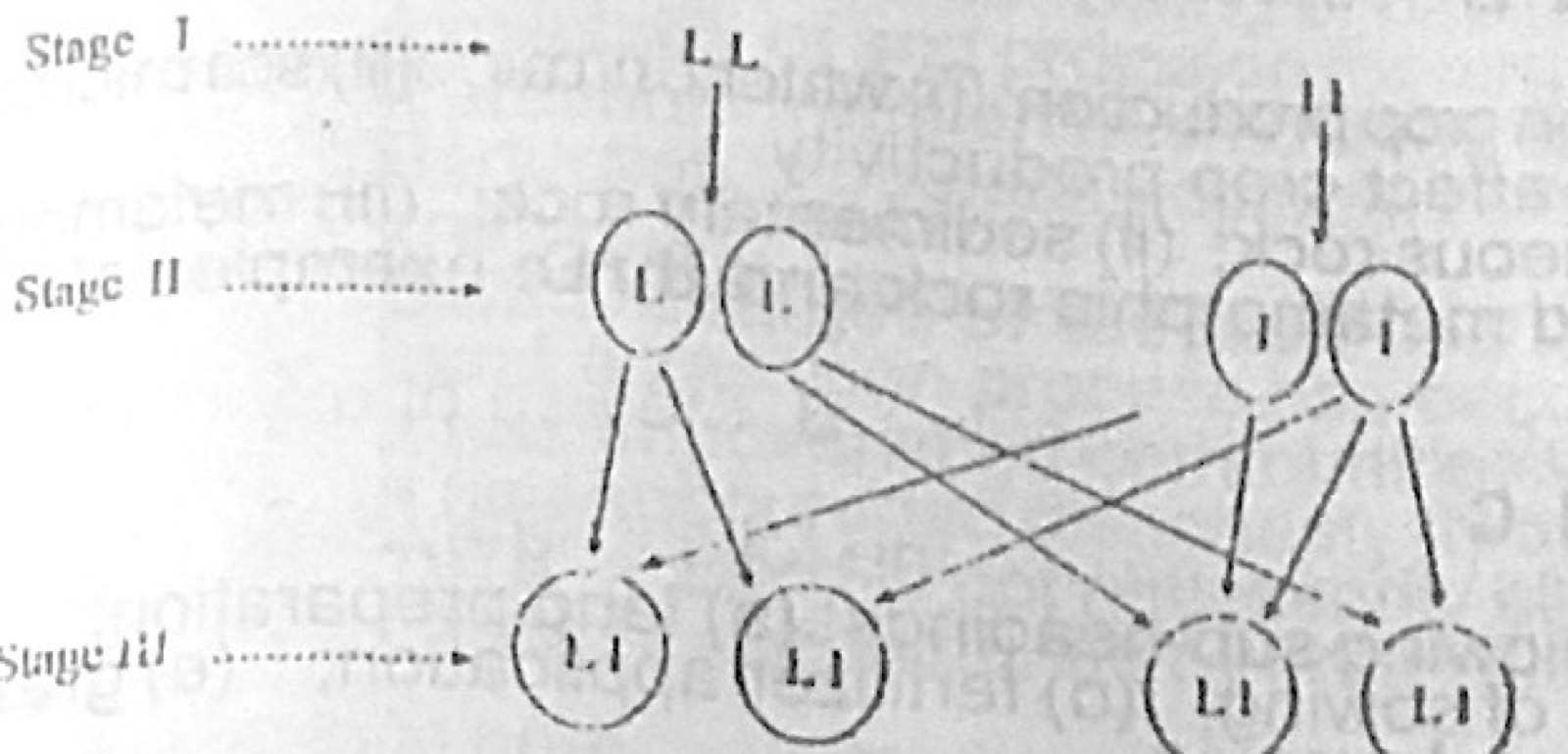
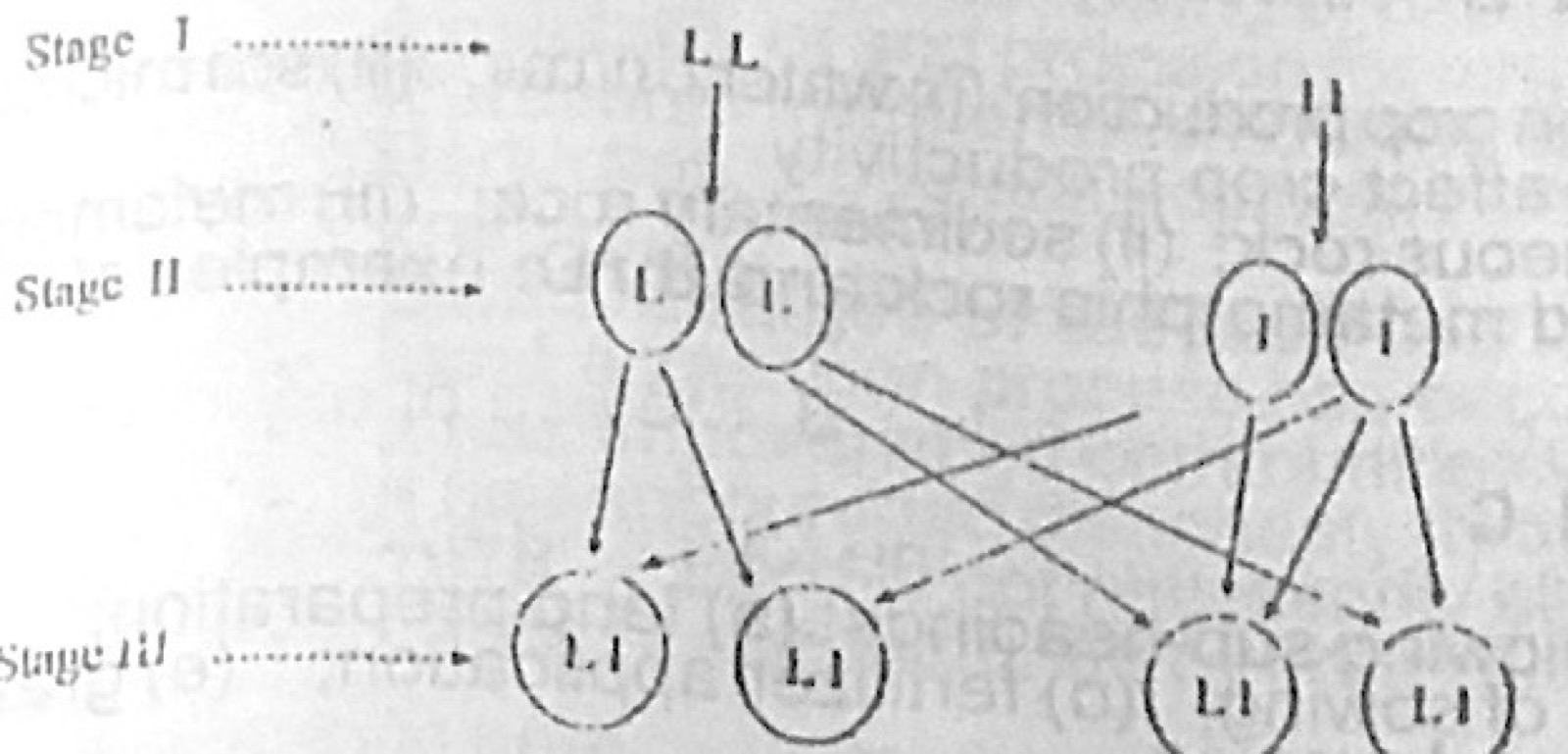
The diagram shows the crossing of a long fruited tomato (L) with a round fruited tomato plant (l). What will be the genotype ratio of the second filial generation?
The diagram shows the crossing of a long fruited tomato (L) with a round fruited tomato plant (l). The production of L and l in stage II is achieved through the process of
A.segregation
B.assortment
C.mutation
D.recessiveness.
Show the answer and explanation
Answer: A (segregation)
Explanation
The pair of alleles separate (segregate) into gametes.
The diagram shows the crossing of a long fruited tomato (L) with a round fruited tomato plant (l). Assuming complete dominance, the tomato fruits in stage III are all
(a) State four merits of each of the following: (i) agriculture; (ii) forestry; (iii) wildlife conservation. (b) List four non-agricultural uses of land.
Show the model answer
Model answer
(a)(i) Agriculture (any four): food; raw materials for industry; employment; income for farmers; foreign exchange; livestock feed (ii) Forestry (any four): timber and pulp; fuelwood; erosion control and watershed protection; medicinal plants; wild fruits and bush meat; gums, resins, latex; improves soil fertility and climate; revenue (iii) Wildlife conservation (any four): prevents extinction; tourism and revenue; education and research; bush meat (controlled); employment; maintains ecological balance (b) Any four: housing; industries/factories; roads, railways, airports; schools and institutions; markets; recreation and sports; mining; worship places and cemeteries
(a) Describe briefly four types of individual land tenure systems. (b) List four advantages and four disadvantages of the land use act.
Show the model answer
Model answer
(a) Any four: freehold/outright purchase – land bought and owned fully, can be passed to heirs; leasehold – land held for a fixed period under agreed conditions; gift – land given freely by the owner; tenancy/rent – user pays rent to landlord for the period of use; inheritance – land passed down within the family; pledge – land given as security for a loan; tenant at will of government (b) Advantages (any four): easier access to land; fewer land disputes and court cases; checks land speculation; land for government projects; secure title (certificate of occupancy) for loans; prevents fragmentation Disadvantages (any four): delay and bureaucracy in getting land; favours the rich and influential; corruption; inadequate compensation to original owners; government can revoke rights; discourages traditional owners from developing land
Explanation
Describe four systems, then list both sides of the Act.
(a) Discuss three effects of each of the following factors on crop production: (i) water; (ii) air; (iii) soil microbes. (b) List three edaphic and four climatic factors that affect crop productivity.
Show the model answer
Model answer
(a)(i) Water: needed for germination and photosynthesis; solvent and transport of nutrients; keeps cells turgid and cools by transpiration; too much causes waterlogging, too little causes wilting (ii) Air: oxygen for root and seed respiration; carbon dioxide for photosynthesis; nitrogen fixed by bacteria; wind helps pollination and seed dispersal but causes lodging (iii) Soil microbes: decompose organic matter releasing nutrients; fix nitrogen; improve soil structure; some cause plant diseases (b) Edaphic (any three): soil pH; texture; structure; fertility; organic matter; drainage; topography. Climatic (any four): rainfall; temperature; sunlight; relative humidity; wind
(a) Explain briefly the processes of formation of (i) igneous rock; (ii) sedimentary rock; (iii) metamorphic rock. (b) Give two examples of each of igneous and metamorphic rock and three examples of sedimentary rock.
Show the model answer
Model answer
(a)(i) Igneous: molten magma from inside the earth cools and solidifies, either underground (intrusive) or on the surface as lava (extrusive) (ii) Sedimentary: fragments of weathered rock and remains of organisms are carried by water/wind, deposited in layers and compacted and cemented over long periods (iii) Metamorphic: existing igneous or sedimentary rocks are changed in form and structure by great heat and pressure (b) Igneous: granite, basalt, gabbro, dolerite. Metamorphic: marble, slate, gneiss, quartzite, schist. Sedimentary: sandstone, shale, limestone, clay, coal, conglomerate
Explain pasture management practices under the following sub-headings: (a) land preparation; (b) three methods of propagation; (c) two methods of sowing; (d) fertilizer application; (e) grazing. (f) four management practices other than fertilizing and grazing.
Show the model answer
Model answer
(a) Clear the land, plough and harrow to a fine tilth; remove stumps and weeds (b) Seeds; stem cuttings; root splits/crown splits; stolons/runners; rhizomes (c) Broadcasting; drilling in rows (also dibbling) (d) Basal application of NPK or phosphate at sowing; nitrogen top-dressing after grazing or cutting for grasses; phosphate for legumes; farmyard manure (e) Rotational/paddock grazing at the correct stocking rate; avoid overgrazing; graze when forage is young and leafy; allow rest for regrowth (f) Any four: weed control; pest and disease control; reseeding/re-planting bare patches; irrigation; fencing/paddocking; controlled burning; topping (cutting back old growth); provision of water and shade
Give an account of the production of banana, using the following sub-headings: (a) one common variety; (b) planting materials; (c) propagation; (d) husbandry; (e) two common pests; (f) two common diseases and how each is controlled; (g) maturity period.
Show the model answer
Model answer
(a) Any one: Dwarf Cavendish; Giant Cavendish; Gros Michel; Lacatan; Robusta (b) Suckers (sword suckers preferred), corms/bits of corm (bullheads), tissue-culture plantlets (c) Vegetative: suckers planted in holes about 60 cm × 60 cm × 60 cm, filled with topsoil and manure, at a spacing of about 3 m × 3 m, at the start of the rains (d) Weeding; mulching; manure and fertilizer (high potassium); desuckering (keep 1–3 suckers per stool); propping/staking heavy bunches; removal of dead leaves; irrigation in dry season (e) Any two: banana weevil (Cosmopolites sordidus); nematodes; banana aphid; thrips (f) Any two with control: Sigatoka leaf spot (fungus) – fungicide sprays, remove infected leaves, good drainage; Panama/Fusarium wilt – resistant varieties, clean suckers, crop rotation; bunchy top (virus, aphid) – destroy infected plants, control aphids, clean planting material (g) About 9–15 months from planting to harvest of the first bunch
(a) Write short notes on the following: (i) maintenance ration; (ii) production ration; (iii) balanced ration; (iv) malnutrition. (b) Mention four factors normally considered when deciding the type of feed an animal should be placed on.
Show the model answer
Model answer
(a)(i) Maintenance ration: feed just enough to keep the animal alive and healthy at constant weight, with no production (ii) Production ration: extra feed above maintenance for growth, milk, eggs, meat, work or pregnancy (iii) Balanced ration: feed with all nutrients in the right amounts and proportions for the animal's needs in 24 hours (iv) Malnutrition: poor health due to an unbalanced diet – too little, too much or lack of a particular nutrient; shows as poor growth, deficiency diseases and low production (b) Any four: type/species of animal (ruminant or non-ruminant); age and size; purpose of production (eggs, meat, milk, work); physiological state (pregnancy, lactation); cost and availability of feed; palatability; health of animal
(a) Describe with the aid of a diagram the stomach of a named ruminant. (b) State three functions of the first compartment of the stomach of a ruminant.
Show the model answer
Model answer
(a) Named ruminant (e.g. cow, goat, sheep); labelled diagram showing oesophagus, rumen, reticulum, omasum, abomasum, duodenum. Rumen – largest compartment, stores and ferments feed with microbes; reticulum – honeycomb lining, traps foreign bodies and forms cud; omasum – many leaf-like folds, absorbs water and grinds; abomasum – true glandular stomach, secretes gastric juice (b) Rumen (any three): stores large quantities of feed; microbial fermentation/digestion of cellulose; production of volatile fatty acids; synthesis of microbial protein and B vitamins; churning/mixing of food; site from which cud is regurgitated
(a) Explain the following terms: (i) appreciation; (ii) depreciation; (iii) salvage value. (b) List two items on the farm which will normally appreciate in value. (c) A farmer bought a fairly used Fiat tractor for N12,000.00 in 1988. He later sold it for N3,000.00 in 1997 when he discovered that it was expensive to maintain. Find the tractor's: (i) salvage value; (ii) overall depreciation; (iii) annual depreciation.
Show the model answer
Model answer
(a)(i) Appreciation: increase in the value of an asset over time (ii) Depreciation: decrease in the value of an asset due to wear and tear, age or obsolescence (iii) Salvage value: the value or price of an asset at the end of its useful life (b) Any two: land; young livestock (calves, chicks, piglets); seedlings/young tree crops; buildings in some cases (c)(i) Salvage value = N3,000.00 (ii) Overall depreciation = 12,000 − 3,000 = N9,000.00 (iii) Years of use = 1997 − 1988 = 9; annual depreciation = 9,000 ÷ 9 = N1,000.00
Explanation
Show the working: cost − salvage value, then divide by years of use.
(a) Briefly explain (i) agricultural finance; (ii) agricultural credit. (b) Explain four significance of agricultural finance. (c) Mention one problem farmers encounter in obtaining credits from the following credit sources: (i) commercial banks; (ii) community banks; (iii) money lenders; (iv) family sources.
Show the model answer
Model answer
(a)(i) Agricultural finance: the study of how money/capital for farming is obtained, managed and used (ii) Agricultural credit: money or inputs lent to farmers to be repaid later, usually with interest (b) Any four: enables purchase of inputs and machinery; expansion of farm size; adoption of new technology; payment of labour; meeting emergencies; improved efficiency and income; acquisition of land (c)(i) Commercial banks: demand collateral and charge high interest; long procedures (ii) Community banks: small amounts available, short repayment period (iii) Money lenders: very high interest rates, exploitation (iv) Family sources: small amounts, may cause family quarrels if not repaid