WAEC Agricultural Science 1999 past questions and answers

68 questions. Try each one, then open the answer to check yourself and read the explanation.

Question 1

Introduction to Agriculture

The main objective of agriculture is

  1. A.income generation
  2. B.provision of employment
  3. C.food production
  4. D.provision of shelter.
Show the answer and explanation

Answer: C (food production)

Explanation

Agriculture exists first of all to produce food.

Open this question

Question 2

Agricultural Development

Food shortage can be minimised by

  1. A.efficient pest control services
  2. B.natural hazards
  3. C.illegal exportation of farm produce
  4. D.hoarding.
Show the answer and explanation

Answer: A (efficient pest control services)

Explanation

Controlling pests cuts crop losses; the others make shortages worse.

Open this question

Question 3

Introduction to Agriculture

Subsistence agriculture is characterised by

  1. A.used of machines
  2. B.large scale production
  3. C.small farm holdings
  4. D.intensive use of inputs.
Show the answer and explanation

Answer: C (small farm holdings)

Explanation

Subsistence farmers work small plots.

Open this question

Question 4

Introduction to Agriculture

Output is higher in commercial agriculture because of the following reasons except

  1. A.adequate finance
  2. B.cultivation of large hectares of land
  3. C.employment of large labour force
  4. D.utilization of complex farm machinery.
Show the answer and explanation

Answer: C (employment of large labour force)

Explanation

Commercial farms rely on machines rather than large labour forces.

Open this question

Question 5

Land Use and Land Tenure

The most common factor affecting land use is

  1. A.population pressure
  2. B.solar radiation
  3. C.climatic influence
  4. D.type of soil.
Show the answer and explanation

Answer: A (population pressure)

Explanation

Growing population competes for land for housing, roads and farming.

Open this question

Question 6

Agricultural Finance

Financial assistance from government to the farmers is usually in the following forms except

  1. A.loan
  2. B.tax
  3. C.credit
  4. D.subsidy.
Show the answer and explanation

Answer: B (tax)

Explanation

Tax is collected from farmers, not given to them.

Open this question

Question 7

Forestry and Wildlife

Which of the following groups of animals is usually kept in game reserves?

  1. A.Cattle, sheep and goats
  2. B.Camels, donkeys and horses
  3. C.Chickens, ducks and turkeys
  4. D.Lions, elephants and leopards.
Show the answer and explanation

Answer: D (Lions, elephants and leopards.)

Explanation

Game reserves protect wild animals.

Open this question

Question 8

Plant Forms and Crop Classification

The following processes in crops are sensitive to day-length except

  1. A.fruiting
  2. B.growth
  3. C.flowering
  4. D.branching.
Show the answer and explanation

Answer: D (branching.)

Explanation

Day length mainly controls flowering and fruiting (and related growth changes), not branching.

Open this question

Question 9

Soil Properties

Rain water is made available to crops through

  1. A.evaporation
  2. B.transpiration
  3. C.surface drainage
  4. D.root absorption.
Show the answer and explanation

Answer: D (root absorption.)

Explanation

Roots absorb the water held in the soil.

Open this question

Question 10

Rocks and Soil Formation

Which of the following rocks is formed from shale?

  1. A.Marble
  2. B.Slate
  3. C.Quartzite
  4. D.Limestone.
Show the answer and explanation

Answer: B (Slate)

Explanation

Shale changes to slate under heat and pressure.

Open this question

Question 11

Rocks and Soil Formation

The horizon of a soil profile which encourages the greatest level of microbial activity is

  1. A.A-horizon
  2. B.B-horizon
  3. C.C-horizon
  4. D.D-horizon.
Show the answer and explanation

Answer: A (A-horizon)

Explanation

The topsoil has the most organic matter and air.

Open this question

Question 12

Soil Properties

The easiest method of determining soil texture in the field is by

  1. A.moulding
  2. B.sieving
  3. C.feeling
  4. D.sedimenting.
Show the answer and explanation

Answer: C (feeling)

Explanation

Rubbing moist soil between the fingers (feel method) needs no equipment.

Open this question

Question 13

Soil Properties

The type of soil with a particle size of 0.02 to 0.002 mm is

  1. A.clay
  2. B.silt
  3. C.fine sand
  4. D.coarse sand.
Show the answer and explanation

Answer: B (silt)

Explanation

Silt is 0.002–0.02 mm.

Open this question

Question 14

Soil Fertility and Plant Nutrition

If urea fertilizer contains 46% nitrogen, calculate the amount of nitrogen in 25 kg bag of fertilizer?

  1. A.11.5 kg
  2. B.13.5 kg
  3. C.21.5 kg
  4. D.36.5 kg.
Show the answer and explanation

Answer: A (11.5 kg)

Explanation

46% of 25 kg = 11.5 kg.

Open this question

Question 15

Soil Fertility and Plant Nutrition

Fertile soil is one which

  1. A.is easily drained
  2. B.is well aerated
  3. C.can produce a good harvest of cowpea
  4. D.contain all essential plant nutrients in suitable proportions.
Show the answer and explanation

Answer: D (contain all essential plant nutrients in suitable proportions.)

Explanation

Fertility means having all nutrients in the right amounts.

Open this question

Question 16

Farming Systems

The effects of practising crop rotation include the following except

  1. A.maintaining and improving soil fertility
  2. B.controlling soil erosion
  3. C.preventing the build-up of pests and diseases
  4. D.adding humus to the soil.
Show the answer and explanation

Answer: D (adding humus to the soil.)

Explanation

Rotation itself does not add humus; manuring does.

Open this question

Question 17

Irrigation and Drainage

The method of irrigation suitable for use on a steep slope is

  1. A.sprinkler irrigation
  2. B.flood
  3. C.furrow irrigation
  4. D.shadoof.
Show the answer and explanation

Answer: A (sprinkler irrigation)

Explanation

Sprinklers spray water evenly whatever the slope.

Open this question

Question 18

Farm Power

The main source of power for subsistence agriculture is

  1. A.animal
  2. B.machine
  3. C.electricity
  4. D.man.
Show the answer and explanation

Answer: D (man.)

Explanation

Subsistence farmers rely on human labour.

Open this question

Question 19

Farm Power

The most suitable source of power for stationary equipment on the farm is

  1. A.machine
  2. B.electricity
  3. C.animal
  4. D.man.
Show the answer and explanation

Answer: B (electricity)

Explanation

Fixed machines (mills, pumps, incubators) run best on electricity.

Open this question

Question 20

Farm Machinery and Mechanisation

An important farm machine used for coupling many implements is

  1. A.disc harrow
  2. B.harvester
  3. C.tractor
  4. D.plough.
Show the answer and explanation

Answer: C (tractor)

Explanation

The tractor pulls and powers many implements.

Open this question

Question 21

Land Preparation and Cultural Practices

Which of the following is the correct order for land preparation?

  1. A.land clearing → ploughing → harrowing → ridging
  2. B.Land → clearing → harrowing → ploughing → ridging
  3. C.Land → clearing → ploughing ridging → harrowing
  4. D.Land → clearing → harrowing → ridging → ploughing.
Show the answer and explanation

Answer: A (land clearing → ploughing → harrowing → ridging)

Explanation

Clear, plough, harrow, then ridge.

Open this question

Question 22

Farm Surveying and Planning

Which of the following surveying equipment is used for measuring angles during farm surveying?

  1. A.Theodolite
  2. B.Measuring tape
  3. C.Gunter's chain
  4. D.Abney level.
Show the answer and explanation

Answer: A (Theodolite)

Explanation

A theodolite measures horizontal and vertical angles.

Open this question

Question 23

Farm Machinery and Mechanisation

Which of the following farm practices is not mechanised?

  1. A.Planting
  2. B.Fertilizer application
  3. C.Bush clearing
  4. D.Transplanting.
Show the answer and explanation

Answer: D (Transplanting.)

Explanation

Transplanting seedlings is usually done by hand on local farms.

Open this question

Question 24

Farm Machinery and Mechanisation

The main aim of mechanised agriculture is

  1. A.reducing maturation time for crops
  2. B.decreasing number of pests
  3. C.having a large land area for cultivation
  4. D.reducing cost of production.
Show the answer and explanation

Answer: C (having a large land area for cultivation)

Explanation

Machines let farmers cultivate much larger areas.

Open this question

Question 25

Crop Husbandry

The following are necessary operations in maize cultivation except

  1. A.weeding
  2. B.thinning
  3. C.nursery practices
  4. D.fertilizer application.
Show the answer and explanation

Answer: C (nursery practices)

Explanation

Maize is sown directly; no nursery is needed.

Open this question

Question 26

Processing and Storage of Farm Produce

Ginning is a method of processing

  1. A.cocoa
  2. B.cotton
  3. C.oil palm
  4. D.rubber.
Show the answer and explanation

Answer: B (cotton)

Explanation

Ginning separates cotton lint from seed.

Open this question

Question 27

Crop Propagation

Ginger is propagated by

  1. A.suckers
  2. B.rhizomes
  3. C.seeds
  4. D.tubers.
Show the answer and explanation

Answer: B (rhizomes)

Explanation

Ginger is planted from rhizome pieces.

Open this question

Question 28

Pasture and Forage Crops

Which of the following is not correct about Stylosanthes gracilis? It

  1. A.is an animal legume
  2. B.is propagated by seed
  3. C.is drought resistant
  4. D.produces nodules.
Show the answer and explanation

Answer: A (is an animal legume)

Explanation

Stylo is a perennial forage legume (a plant); "animal legume" is wrong.

Open this question

Question 29

Forestry and Wildlife

Which of the following is not a problem of forest management?

  1. A.Absence of adequate information on the ecosystems
  2. B.Inadequate support from government for the development of forest resources
  3. C.Planting different varieties of timber
  4. D.Indiscriminate destruction of forest resources by bush fire.
Show the answer and explanation

Answer: C (Planting different varieties of timber)

Explanation

Planting varied timber trees is good practice.

Open this question

Question 30

Forestry and Wildlife

The tree species commonly planted for pulpwood is

  1. A.Gmelina
  2. B.Cassia
  3. C.Albizia
  4. D.Tectona.
Show the answer and explanation

Answer: A (Gmelina)

Explanation

Gmelina is grown for paper pulp.

Open this question

Question 31

Crop Diseases

Root-knot disease in tomatoes is caused by

  1. A.virus
  2. B.nematode
  3. C.bacterium
  4. D.fungus.
Show the answer and explanation

Answer: B (nematode)

Explanation

Root-knot nematodes cause galls on roots.

Open this question

Question 32

Crop Pests

Callosobruchus maculatus is a common pest of

  1. A.maize
  2. B.cowpea
  3. C.rice
  4. D.millet.
Show the answer and explanation

Answer: B (cowpea)

Explanation

It is the cowpea (bean) weevil.

Open this question

Question 33

Crop Diseases

Gummosis disease of citrus is caused by

  1. A.aphids
  2. B.fungi
  3. C.white flies
  4. D.bacteria.
Show the answer and explanation

Answer: B (fungi)

Explanation

Citrus gummosis is caused by the fungus Phytophthora.

Open this question

Question 34

Weeds and Weed Control

Which of the following weeds is dispersed by wind?

  1. A.Pig weed (Boerhavia diffusa)
  2. B.Goat weed (Ageratum conizoides)
  3. C.Hausa thorns (Acanthospermum hispidum)
  4. D.Tridax (Tridax procumbens).
Show the answer and explanation

Answer: D (Tridax (Tridax procumbens).)

Explanation

Tridax seeds have feathery hairs (pappus) carried by wind.

Open this question

Question 35

Crop Diseases

The characteristic symptoms of mosaic disease of crops is usually observed on

  1. A.roots
  2. B.leaves
  3. C.stems
  4. D.fruits.
Show the answer and explanation

Answer: B (leaves)

Explanation

Mosaic shows as light and dark patches on leaves.

Open this question

Question 36

Crop Improvement

The correct sequence in the processes of crop improvement is

  1. A.introduction → selection → breeding
  2. B.breeding → selection → introduction
  3. C.breeding → introduction → selection
  4. D.introduction → breeding → selection
Show the answer and explanation

Answer: A (introduction → selection → breeding)

Explanation

Bring in materials, select the best, then breed them.

Open this question

Question 37

Basic Genetics

A condition in which a gene does not manifest observable characteristics in the presence of its dominant allele is known as

  1. A.dominance
  2. B.mutation
  3. C.recessiveness
  4. D.homozygosity.
Show the answer and explanation

Answer: C (recessiveness)

Explanation

A recessive gene is hidden by its dominant partner.

Open this question

Question 38

Poultry Production

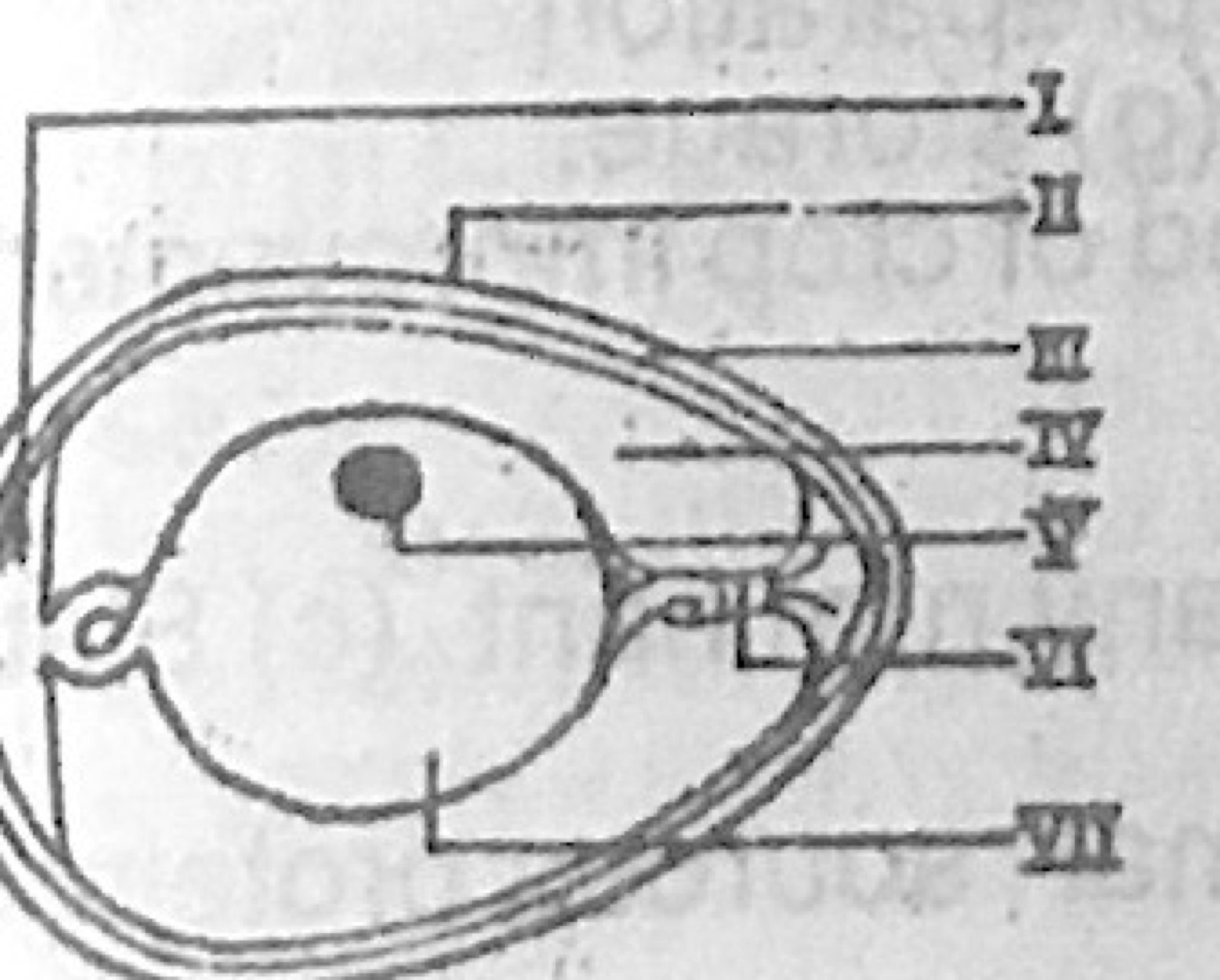
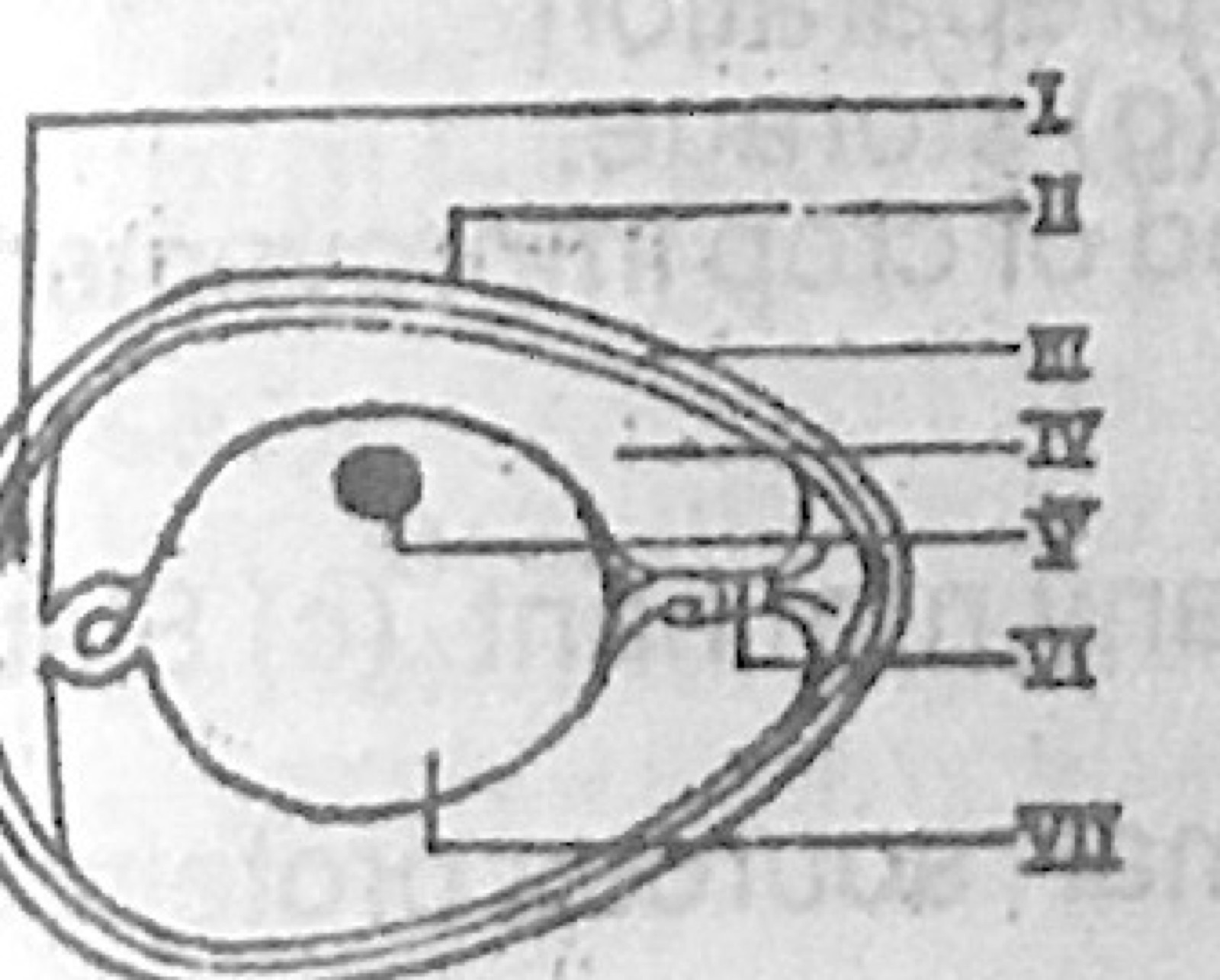
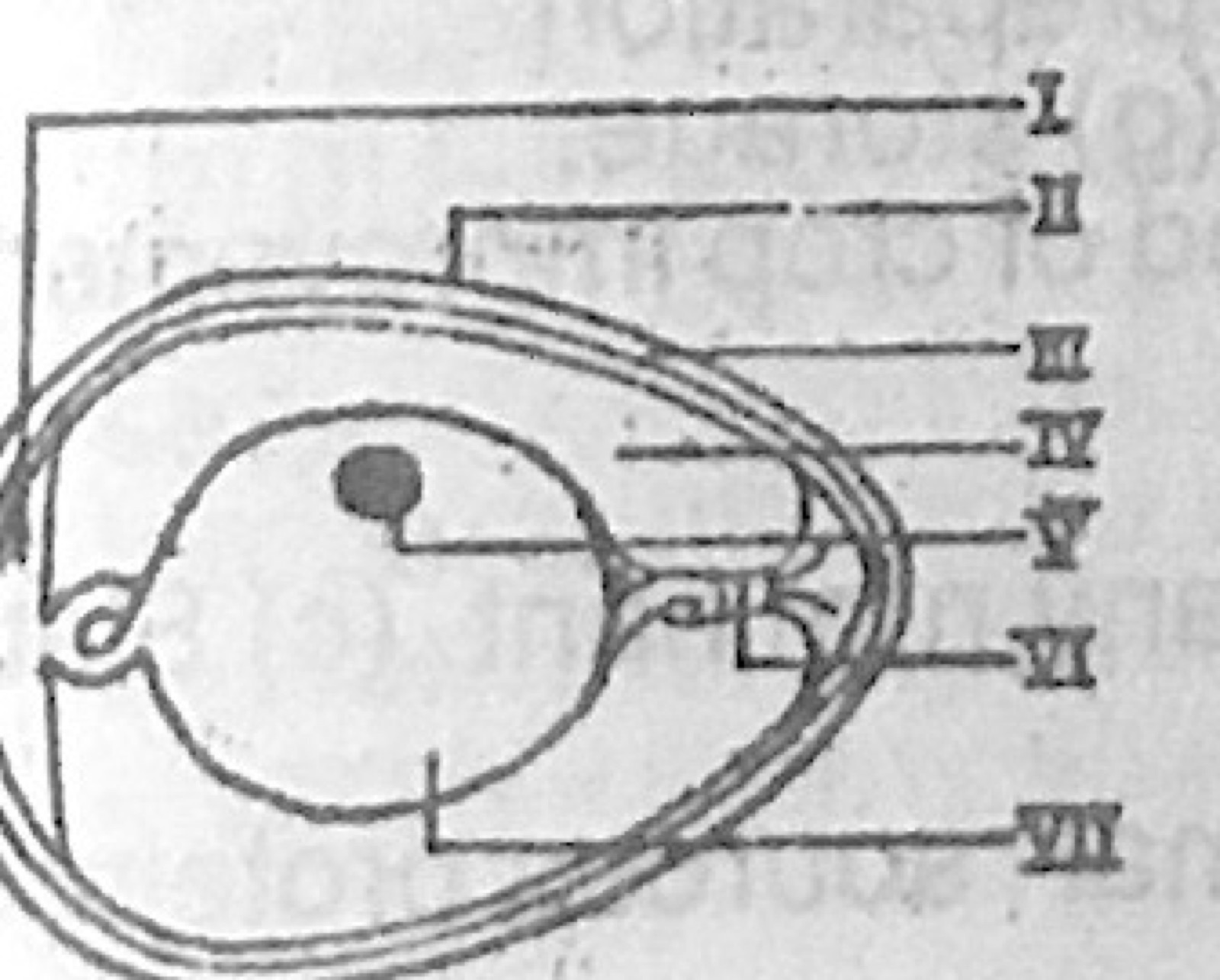
Use the diagram (a section of an egg, parts labelled I to VII). The parts orderly labelled as I - IV are

Diagram for this question
  1. A.shell, membrane, air space and albumen
  2. B.air space, shell, membrane and albumen
  3. C.albumen, air space, shell and membrane
  4. D.membrane, albumen, shell and air space.
Show the answer and explanation

Answer: B (air space, shell, membrane and albumen)

Explanation

The key reads I as the air space at the blunt end, then shell, shell membrane and albumen.

Open this question

Question 39

Poultry Production

Use the diagram (a section of an egg, parts labelled I to VII). The nucleus is the part labelled

Diagram for this question
  1. A.IV
  2. B.V
  3. C.VI
  4. D.VII.
Show the answer and explanation

Answer: B (V)

Explanation

V points to the dark spot on the yolk, the nucleus (germinal disc).

Open this question

Question 40

Poultry Production

Use the diagram (a section of an egg, parts labelled I to VII). The parts labelled V - VII are

Diagram for this question
  1. A.chalaza, yolk and nucleus
  2. B.yolk, nucleus and blood vessels
  3. C.nucleus, blood vessels and yolk
  4. D.nucleus, chalaza and yolk.
Show the answer and explanation

Answer: D (nucleus, chalaza and yolk.)

Explanation

V is the nucleus, VI the twisted chalaza and VII the yolk.

Open this question

Question 42

Animal Reproduction

The hormone responsible for milk let down in female farm animals is

  1. A.testosterone
  2. B.follicle stimulating hormone
  3. C.oxytocin
  4. D.androgen.
Show the answer and explanation

Answer: C (oxytocin)

Explanation

Oxytocin causes milk let-down.

Open this question

Question 43

Classification of Farm Animals

The adult male cattle is called

  1. A.bull
  2. B.ram
  3. C.boar
  4. D.buck
Show the answer and explanation

Answer: A (bull)

Explanation

A mature male cattle is a bull.

Open this question

Question 44

Livestock Management

An advantage of extensive system of rearing goats is

  1. A.low labour requirement
  2. B.easy control of diseases
  3. C.indiscriminate mating
  4. D.exposure to adverse weather conditions.
Show the answer and explanation

Answer: A (low labour requirement)

Explanation

Animals fend for themselves, so little labour is needed.

Open this question

Question 45

Poultry Production

Layers' ration contains more limestone than growers' ration because limestone

  1. A.is difficult for the growers to digest
  2. B.stimulates layers' appetite
  3. C.reduces the acidity in the gut of growers
  4. D.supplies sufficient minerals to layers for shell formation.
Show the answer and explanation

Answer: D (supplies sufficient minerals to layers for shell formation.)

Explanation

Limestone gives calcium for eggshells.

Open this question

Question 47

Pasture and Forage Crops

Which of the following is not a method of improving rangeland?

  1. A.Practising continuous grazing
  2. B.Routine and regular weeding
  3. C.Routine reseeding
  4. D.Regular application of fertilizers.
Show the answer and explanation

Answer: A (Practising continuous grazing)

Explanation

Continuous grazing wears out the range.

Open this question

Question 48

Animal Health

Miracidium is one of the stages in the life cycle of

  1. A.roundworm
  2. B.tapeworm
  3. C.liver fluke
  4. D.tick.
Show the answer and explanation

Answer: C (liver fluke)

Explanation

The miracidium is a liver-fluke larva.

Open this question

Question 49

Animal Health

Which of the following is not a symptom of foot and mouth disease of cattle?

  1. A.Excessive production of saliva
  2. B.Sores on feet and tongue
  3. C.Lameness
  4. D.Blood stained diarrhoea.
Show the answer and explanation

Answer: D (Blood stained diarrhoea.)

Explanation

Bloody diarrhoea is a sign of rinderpest or coccidiosis, not foot and mouth.

Open this question

Question 50

Animal Health

Heavy infestation of liver fluke causes poor absorption of fats in livestock by

  1. A.blocking bile ducts thus preventing flow of bile
  2. B.destroying fat-digesting enzymes
  3. C.reducing ingestion of fats
  4. D.inhibiting the action of the digestive enzymes.
Show the answer and explanation

Answer: A (blocking bile ducts thus preventing flow of bile)

Explanation

Flukes block the bile ducts, and bile is needed to emulsify fats.

Open this question

Question 51

Fisheries and Aquaculture

Methods of preserving fish include the following except

  1. A.boiling
  2. B.drying
  3. C.smoking
  4. D.salting.
Show the answer and explanation

Answer: A (boiling)

Explanation

Boiling cooks fish but does not preserve it.

Open this question

Question 52

Fisheries and Aquaculture

Which of the following fishing gears can be used for total harvesting of pond?

  1. A.Hook and line
  2. B.Harpoon
  3. C.Basket trap
  4. D.Dragnet.
Show the answer and explanation

Answer: D (Dragnet.)

Explanation

A dragnet sweeps the whole pond.

Open this question

Question 53

Animal Improvement

The practice of mating closely-related animals is called

  1. A.pen mating
  2. B.cross breeding
  3. C.out breeding
  4. D.in breeding.
Show the answer and explanation

Answer: D (in breeding.)

Explanation

Mating close relatives is inbreeding.

Open this question

Question 54

Basic Agricultural Economics

The natural resource utilized for production is

  1. A.capital
  2. B.management
  3. C.labour
  4. D.land.
Show the answer and explanation

Answer: D (land.)

Explanation

Land is the natural factor of production.

Open this question

Question 55

Basic Agricultural Economics

An increase in supply of agricultural produce can be caused by the following factors except

  1. A.reduced cost of production
  2. B.favourable weather conditions
  3. C.reduced taxation
  4. D.consumers buying less products.
Show the answer and explanation

Answer: D (consumers buying less products.)

Explanation

Consumers buying less is a fall in demand, not a cause of more supply.

Open this question

Question 56

Agricultural Finance

Which of the following constitutes subsidy in agricultural enterprise?

  1. A.Supply of fertilizer to farmers at reduced price
  2. B.Borrowing of money from a thrift society
  3. C.Provision of money to farmers through commercial banks
  4. D.Provision of services through co-operative societies.
Show the answer and explanation

Answer: A (Supply of fertilizer to farmers at reduced price)

Explanation

Selling inputs below cost is a subsidy.

Open this question

Question 57

Farm Management and Records

Records of money transactions in a farming business are termed

  1. A.farm inputs
  2. B.farm accounts
  3. C.capital
  4. D.farm liabilities.
Show the answer and explanation

Answer: B (farm accounts)

Explanation

Farm accounts record money received and spent.

Open this question

Question 58

Farm Management and Records

Calculate the salvage value of a tractor with a depreciation value of ₦10,580.00 and initial cost of ₦50,000.00 after a year of use.

  1. A.₦10,580.00
  2. B.₦30,290.00
  3. C.₦39,420.00
  4. D.₦60,580.00
Show the answer and explanation

Answer: C (₦39,420.00)

Explanation

50,000 − 10,580 = ₦39,420.

Open this question

Question 59

Marketing of Agricultural Produce

The main processes involved in the marketing of cotton include the following except

  1. A.weeding
  2. B.processing
  3. C.grading
  4. D.packaging.
Show the answer and explanation

Answer: A (weeding)

Explanation

Weeding is a production activity.

Open this question

Question 60

Agricultural Extension

Which of the following methods of agricultural extension aims at reaching a large number of farmers at the same time?

  1. A.Mass method
  2. B.Group method
  3. C.Individual method
  4. D.Contact method.
Show the answer and explanation

Answer: A (Mass method)

Explanation

Mass media reach many farmers at once.

Open this question

Theory question 101

Agricultural Development

Enumerate four possible solutions to each of the following problems of agricultural development in your country:
(a) poor transportation
(b) inadequate farm inputs
(c) crude tools
(d) inadequate storage facilities.

Show the model answer
Model answer

(a) Any four: build and maintain feeder roads, bridges and culverts; develop waterways and railways to rural areas; provide vehicles/boats at affordable cost; subsidise fuel and spare parts; credit to buy vehicles
(b) Any four: produce and distribute improved seeds, fertilizers and chemicals in time; subsidies on inputs; agro-service centres close to farmers; supply day-old chicks, feeds, drugs and vaccines; tractor hiring units; credit for inputs
(c) Any four: encourage local fabrication of suitable implements; introduce modern machines; tractor hiring services; train mechanics and operators; subsidies and loans to buy equipment
(d) Any four: build silos and stores in rural areas; teach farmers to build cribs, barns and rhumbus; provide cold stores; provide processing plants (mills, graters, presses); supply storage chemicals; credit

Explanation

Four solutions under each of the four problems.

Open this question

Theory question 102

Farm Power

(a) List four farming operations requiring electric power.
(b) State three advantages and three disadvantages for each of the following farm power (i) electricity (ii) animal.

Show the model answer
Model answer

(a) Any four: refrigeration/cold storage; incubation; milking machines; feed milling and mixing; drying of produce; shelling; water pumping; lighting of poultry houses; processing (threshing, parboiling)
(b)(i) Electricity – advantages: clean, fast, reliable for stationary work, easy to operate, versatile; disadvantages: expensive to install, risk of electric shock and fire, irregular supply, cannot be used for field operations
(ii) Animal – advantages: cheap to buy and keep, works on rough or wet land, gives manure, reduces drudgery, can carry produce from inaccessible areas; disadvantages: low power output, slow, needs feeding and guidance, gets tired and sick, needs training

Explanation

Three of each for both power sources.

Open this question

Theory question 103

Agricultural Ecology

(a) State two each of (i) climatic, (ii) biotic and (iii) edaphic factors affecting distribution and production of crops and animals in your country.
(b) State three climatic and two soil requirements for optimum production of each of yam and tomato.

Show the model answer
Model answer

(a)(i) Climatic: rainfall, temperature, relative humidity, sunlight, wind
(ii) Biotic: pests, diseases/pathogens, predators, parasites, weeds, soil micro-organisms, man
(iii) Edaphic: soil pH, texture, structure, fertility, topography, drainage
(b) Yam – climatic: temperature 25–30 °C; rainfall about 1000–1500 mm well distributed; high humidity/good sunlight; soil: deep, well-drained fertile loam; rich in organic matter/potassium
Tomato – climatic: temperature 18–29 °C; moderate rainfall (about 600–1500 mm) or irrigation; plenty of sunshine/low humidity; soil: well-drained sandy loam rich in organic matter; pH about 6–7

Explanation

Two examples per factor group; three climatic and two soil needs per crop.

Open this question

Theory question 104

Rocks and Soil Formation

(a) Describe briefly six ways in which soil organisms aid the formation of soils.
(b) State four ways in which soil organisms improve soils for crops growth.

Show the model answer
Model answer

(a) Any six: roots grow into rock cracks and split them; burrowing animals (earthworms, termites, rodents) mix and break materials; micro-organisms release acids (carbonic, organic) that dissolve rock minerals; lichens and mosses weather bare rock; decomposers break down dead matter to humus; organisms add organic matter when they die; termites/earthworms bring subsoil to the surface
(b) Any four: decompose organic matter to release nutrients; fix nitrogen (Rhizobium, Azotobacter); improve soil structure and aggregation; burrows improve aeration and drainage; add humus and raise water-holding capacity; mix soil layers

Explanation

Separate soil-forming roles from fertility-improving roles.

Open this question

Theory question 105

Crop Husbandry

Describe briefly the production of cowpea under the following headings:
(a) land preparation.
(b) planting.
(c) fertilizer application.
(d) weeding.
(e) harvesting.
(f) processing.
(g) storage.

Show the model answer
Model answer

(a) Clear, plough and harrow; make ridges or flat beds
(b) By seeds (treated with seed dressing), 2–3 seeds per hole, 2–5 cm deep; spacing about 60–75 cm × 20–30 cm; planted mid-season (June–August in the south, July in the north)
(c) Little nitrogen needed (it fixes its own); phosphorus fertilizer such as single superphosphate (about 100–200 kg/ha) at planting
(d) Hand weeding at 2–3 and 5–6 weeks or pre-emergence herbicide
(e) Pick dry pods by hand when they turn brown/yellow, about 60–90 days after planting, in several pickings
(f) Dry pods in the sun, thresh by beating, winnow and sort the seeds
(g) Dry seeds well; store in airtight containers/sacks; treat with storage insecticide (e.g. Actellic) or fumigate to control bruchids

Explanation

Give figures for spacing, depth and maturity time.

Open this question

Theory question 106

Crop Improvement

(a) State six aims of crop improvement.
(b) Explain briefly 'introduction' as a method of crop improvement

Show the model answer
Model answer

(a) Any six: higher yield; resistance to pests and diseases; better quality (nutrient content, taste, storage); adaptation to climate and soil (e.g. drought tolerance); early maturity; uniform growth suitable for mechanisation; better response to fertilizer; resistance to lodging and shattering
(b) Introduction is bringing crop varieties or species from another area or country into a new area; the introduced plants are tested (acclimatised) under local conditions and the best are released to farmers or used for breeding. It is quick and cheap but may bring new pests/diseases and some may not adapt

Explanation

Define introduction and say how it is carried out.

Open this question

Theory question 107

Livestock Management

(a) List four breeds of goats.
(b) Discuss briefly the extensive system of rearing any ruminant.
(c) State three reasons for rearing goats.
(d) List three common diseases of cattle.

Show the model answer
Model answer

(a) Any four: West African Dwarf; Red Sokoto (Maradi); Sahelian (Desert) goat; Kano Brown; Borno Red; Saanen; Anglo-Nubian; Boer
(b) Extensive system (e.g. cattle): animals roam freely to graze natural pasture, often with herdsmen (nomadic/transhumance); little or no housing, supplementary feed or veterinary care. Advantages: cheap, low labour. Disadvantages: slow growth, high losses to disease, theft, accidents and predators, uncontrolled breeding, crop damage and conflicts, low productivity
(c) Any three: meat; milk; skin for leather; manure; income; prolific and cheap to keep; religious/cultural uses
(d) Any three: rinderpest; foot and mouth disease; anthrax; trypanosomiasis; tuberculosis; brucellosis; contagious bovine pleuropneumonia; mastitis; redwater

Explanation

Short lists plus a paragraph on the extensive system.

Open this question

Theory question 108

Animal Nutrition

(a) State six functions of protein in the body of a farm animal.
(b) List five (i) animal-sources protein (ii) plant-protein source used in livestock feeding.

Show the model answer
Model answer

(a) Any six: growth of tissues; repair of worn-out tissues; formation of enzymes and hormones; production of milk, eggs, meat and wool; formation of antibodies; source of energy when carbohydrates are short; formation of blood (haemoglobin)
(b)(i) Any five: fish meal; blood meal; meat meal; bone and meat meal; feather meal; skim milk; crayfish; maggot meal; hatchery waste
(ii) Any five: groundnut cake; soya bean meal; cotton seed cake; palm kernel cake; sesame (beniseed) cake; leucaena/legume leaf meal; brewers' dried grains; cowpea

Explanation

Six functions, then five sources from each group.

Open this question

Theory question 109

Farm Management and Records

(a) Explain briefly the term 'farm valuation'.
(b) Prepare a Profit and Loss Account for a farm from the following information: maize seeds for planting ₦25,000.00; fertilizers used ₦14,800.00; pesticides ₦20,000.00; purchase of seed yams ₦50,000.00; tractor hire ₦60,000.00; transport cost ₦10,000.00; workers' wages ₦40,000.00; sale of maize cobs ₦250,000.00; yam tubers sold ₦200,000.00; opening valuation ₦440,000.00; closing valuation ₦200,000.00.

Show the model answer
Model answer

(a) Farm valuation is estimating the money value of all farm assets (land, buildings, machinery, livestock, produce in store) at a given time, usually at the start (opening) and end (closing) of the year
(b) Debit (expenses): opening valuation 440,000; maize seeds 25,000; fertilizers 14,800; pesticides 20,000; seed yams 50,000; tractor hire 60,000; transport 10,000; wages 40,000 – total ₦659,800
Credit (receipts): sale of maize cobs 250,000; yam tubers 200,000; closing valuation 200,000 – total ₦650,000
Net loss = 659,800 − 650,000 = ₦9,800.00

Explanation

Opening valuation and costs on the debit side; sales and closing valuation on the credit side.

Open this question

Theory question 110

Agricultural Extension

(a) Explain the term extension in agriculture.
(b) State eight functions of an extension agent.
(c) List six problems of agricultural extension in your country.

Show the model answer
Model answer

(a) Agricultural extension is the out-of-school education of farmers that carries research findings and improved practices to them and feeds their problems back to research, to raise output and living standards
(b) Any eight: teach improved methods; carry out demonstrations; link research and farmers; help farmers get inputs and credit; advise on marketing; organise farmers' groups/cooperatives; collect farmers' problems; inform farmers of government policies; motivate adoption of innovations; organise field days and shows; help in rural development
(c) Any six: illiteracy of farmers; few extension workers; poor transport; lack of teaching aids/funds; poor pay and motivation; language barriers; farmers' resistance to change; poor research–extension link; inputs not available; land tenure problems
Explanation

Define, then eight functions and six problems.

Open this question