(a) List six problems of agricultural development in Nigeria. (b) State five possible solutions to the problems of agricultural development listed in (a). (c) Explain five ways in which inadequate storage and processing facilities have affected agricultural development in Nigeria.
Show the model answer
Model answer
(a) Any six: land tenure; lack of credit; inadequate/costly inputs; poor storage and processing; poor transport; poor marketing; illiteracy/poor extension; pests and diseases; low mechanisation; lack of rural amenities (b) Any five matching solutions: land reform; cheap credit/agric banks; subsidised inputs; build storage and processing plants; rural roads; guaranteed prices/cooperatives; adult education and more extension workers; pest control services; tractor hiring units; rural electrification and water (c) Any five: heavy post-harvest losses (rot, pests); farmers forced to sell cheaply at harvest; scarcity and high prices in off-season; low farm income discourages production; poor quality produce/low market value; limited raw materials for industries; less export earnings; food insecurity
Write short notes on each of the following: (a) tractors (b) incubators (c) sprayers (d) shellers.
Show the model answer
Model answer
(a) Tractor: self-propelled machine (diesel/petrol) that pulls and powers implements (plough, harrow, ridger, trailer) through drawbar, hydraulics and power take-off; maintenance – check oil, water, tyres, grease (b) Incubator: box/cabinet that hatches fertile eggs by keeping temperature (about 37.5 °C), humidity and ventilation right, with egg turning; kerosene or electric (c) Sprayer: equipment (knapsack, motorised, boom) that applies liquid chemicals – pesticides, herbicides, foliar fertilizers – as fine droplets; wash after use (d) Sheller: hand or power machine that removes grains from maize cobs or shells groundnuts
Explanation
For each give what it is, its use and one care point.
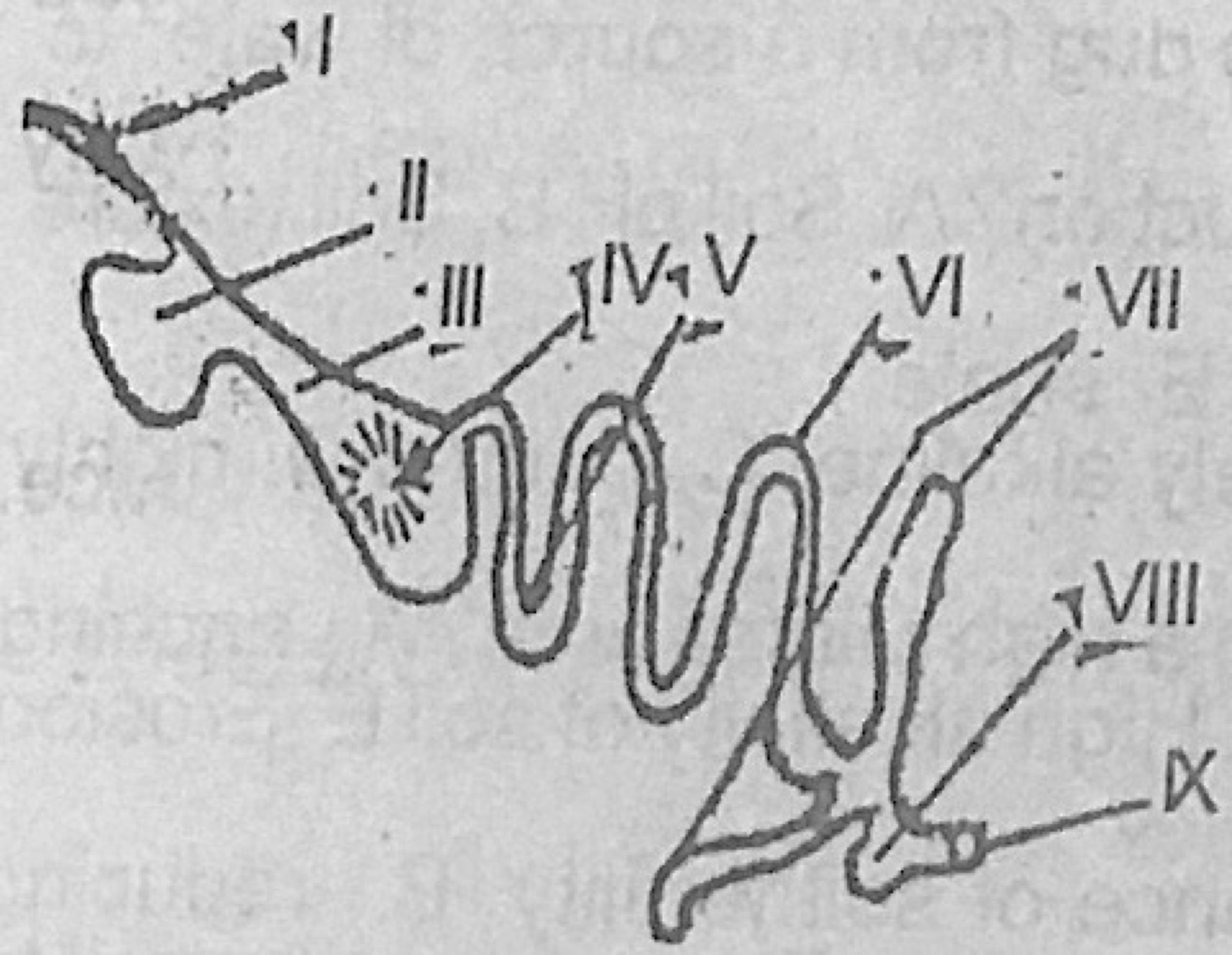
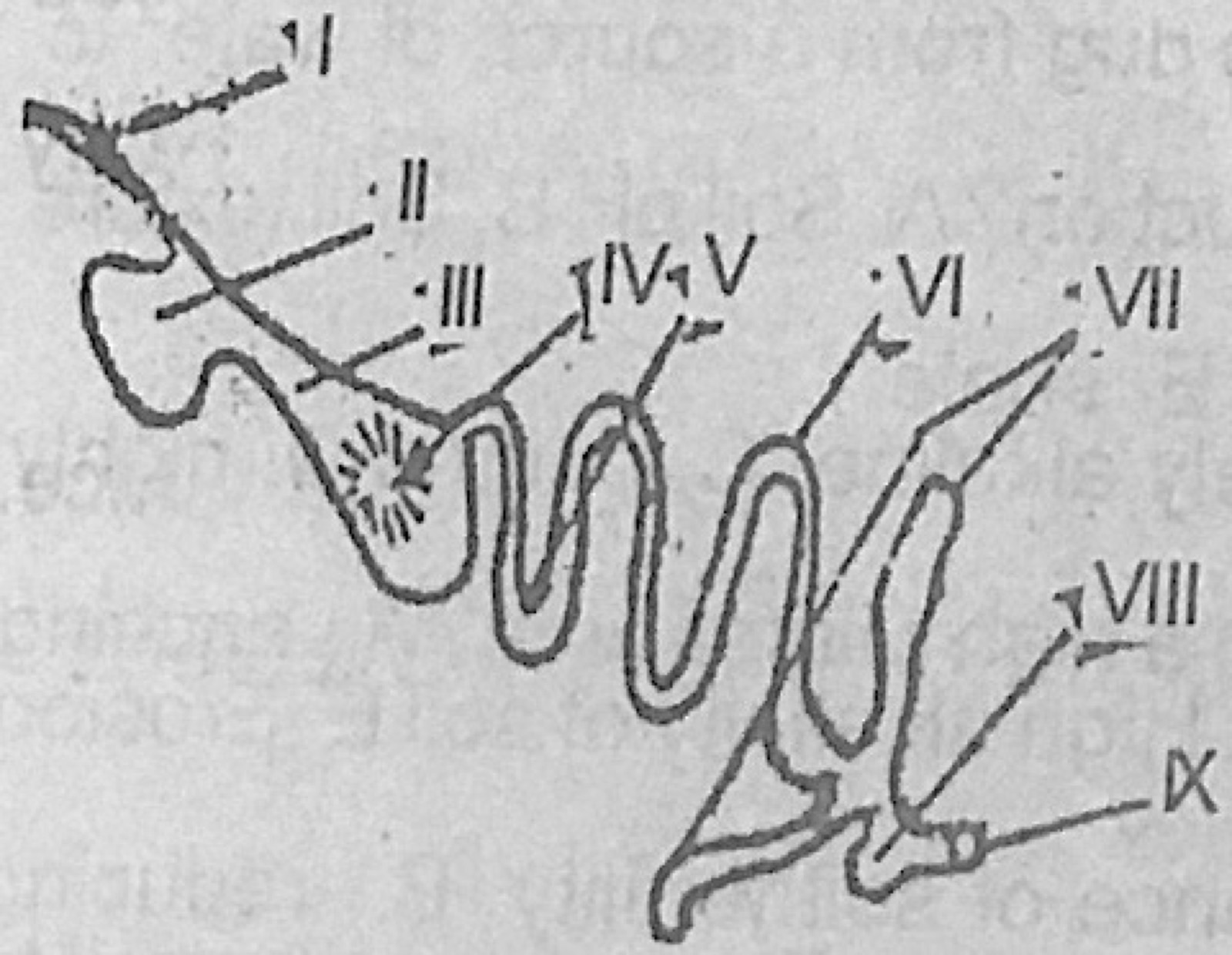
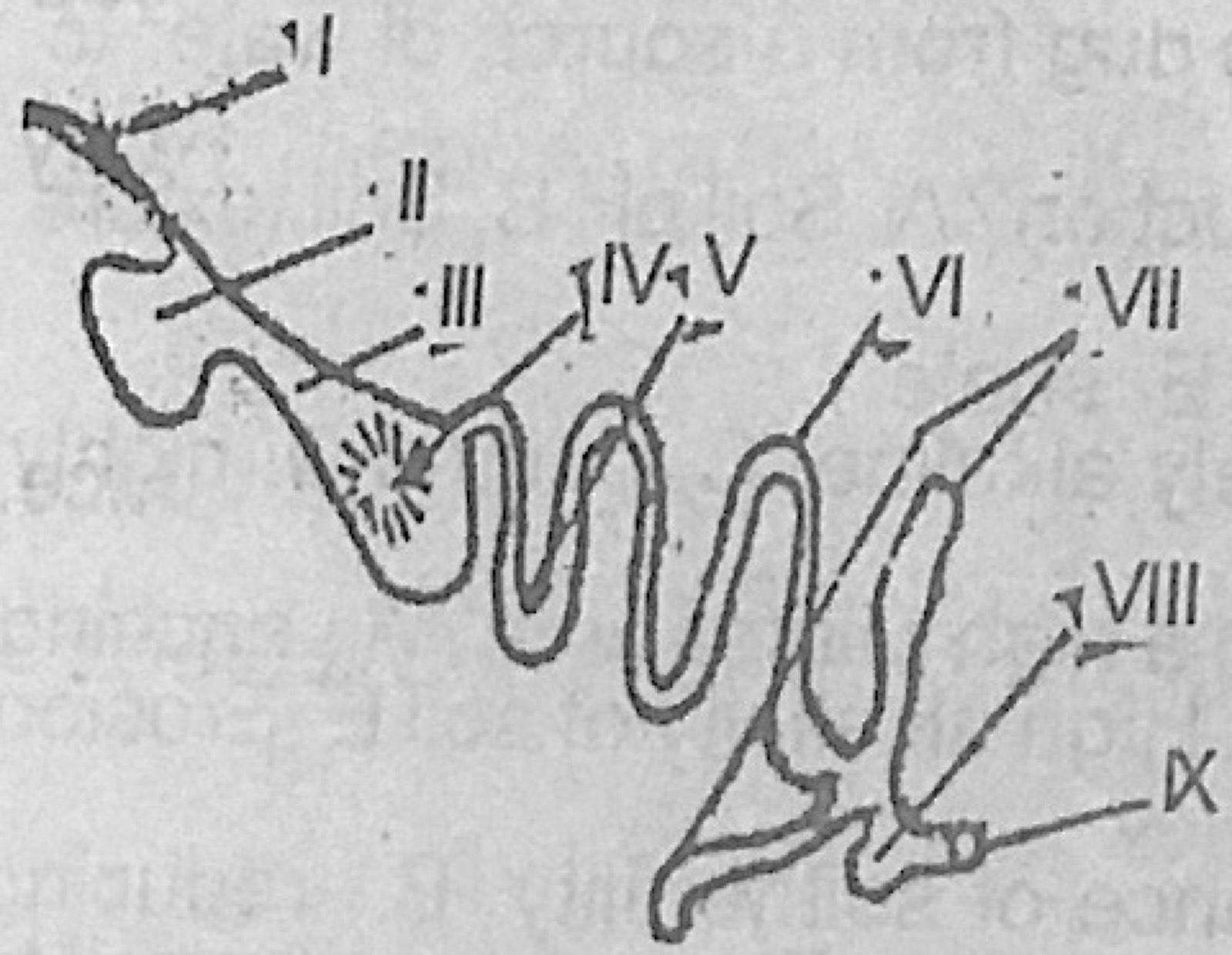
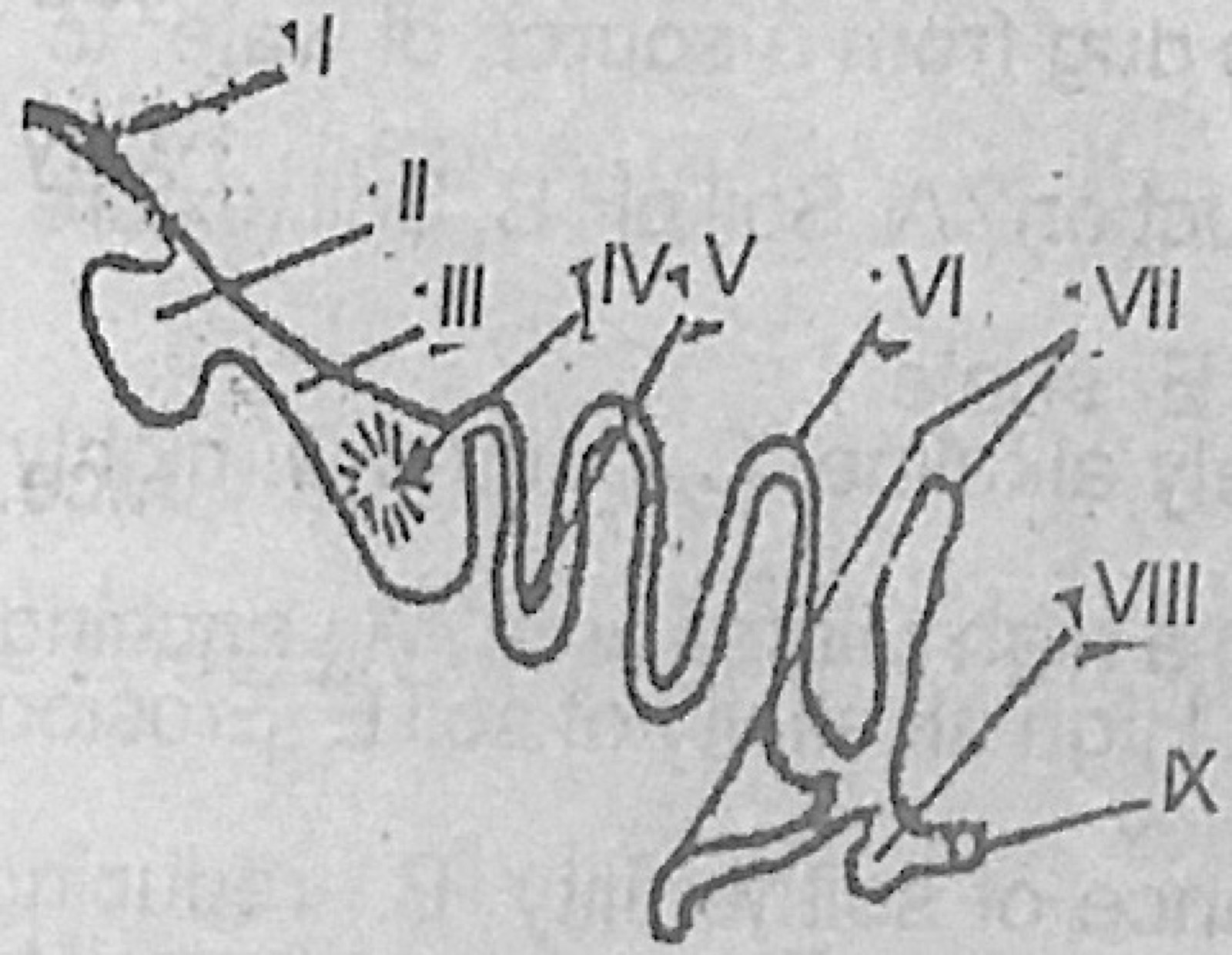
With the aid of a labelled diagram, describe briefly the nitrogen cycle.
Show the model answer
Model answer
Labelled diagram showing: atmospheric nitrogen → fixed by lightning and by bacteria (free-living Azotobacter, Clostridium; symbiotic Rhizobium in legume nodules) → nitrates/ammonium in soil Plants absorb nitrates → plant protein → eaten by animals → animal protein Death and excretion: dead plants/animals and wastes decomposed (ammonification) to ammonium Nitrification: Nitrosomonas changes ammonium to nitrite, Nitrobacter changes nitrite to nitrate Denitrification: bacteria (e.g. Pseudomonas) change nitrates back to nitrogen gas; losses also by leaching and volatilisation Fertilizers add nitrogen to the soil
(a)(i) Explain the term surface drainage. (ii) List three disadvantages of surface drainage. (b)(i) Define irrigation (ii) State two aims of irrigation (iii) List five problems associated with irrigation.
Show the model answer
Model answer
(a)(i) Surface drainage is removal of excess water from the land surface through open ditches, channels or furrows (ii) Any three: ditches take up farmland; hinder movement of machines; need frequent clearing (weeds, silt); cause erosion of channel banks; breeding sites for mosquitoes and snails (b)(i) Irrigation is the artificial application of water to land for crop production (ii) Any two: supply water when rain is not enough; allow all-year/dry-season farming; increase yields; soften soil for tillage; leach out salts (iii) Any five: salinity; waterlogging; high cost; water-borne diseases; erosion; leaching of nutrients; weed growth; scarcity of water; need for skilled labour
(a) Discuss briefly the rosette disease of groundnut under the following headings: (i) causal organism; (ii) symptoms; (iii) method of transmission; (iv) damage done; (v) preventive and control measures. (b) Assuming the spacing of a vegetable crop per stand is 30 cm x 30 cm, calculate the plant population expected in a portion of land measuring 60 m x 30 m.
Show the model answer
Model answer
(a)(i) A virus (groundnut rosette virus) (ii) Stunted bushy plants, short internodes, small crowded leaves forming a rosette, yellowing (chlorotic) or dark green mottled leaves (iii) Spread by aphids (Aphis craccivora) (iv) Stunting, few or no pods, large yield loss, death of young plants (v) Early planting; close spacing; resistant varieties; control aphids with insecticides; uproot and burn infected plants; crop rotation (b) Area = 60 m × 30 m = 1800 m²; area per plant = 0.3 m × 0.3 m = 0.09 m²; population = 1800 ÷ 0.09 = 20,000 plants
(a) Give two examples of crops belonging to each of the following groups of crops: (i) cereals, (ii) roots and tubers (iii) legumes (iv) vegetables. (v) fruits. (vi) beverages (vii) fibres. (viii) oil crops. (b) Discuss briefly the production of tomato under the following headings (i) sowing method. (ii) transplanting (iii) varieties. (iv) harvesting.
Show the model answer
Model answer
(a) Any two each: (i) maize, rice, sorghum, millet, wheat; (ii) yam, cassava, cocoyam, sweet potato; (iii) cowpea, groundnut, soya bean, pigeon pea; (iv) tomato, okra, amaranthus, pepper, cabbage; (v) orange, mango, pineapple, pawpaw, banana; (vi) cocoa, coffee, tea, kola; (vii) cotton, jute, kenaf, sisal; (viii) oil palm, groundnut, coconut, soya bean, sesame (b)(i) Seeds sown in nursery boxes or beds in drills, lightly covered, watered and shaded (ii) Seedlings hardened off and transplanted at 4–6 weeks (4–5 true leaves), preferably in the evening, at about 60 cm × 45–60 cm, watered after (iii) Any: Roma, Ife No.1, Ibadan Local, Marglobe, Money Maker, Tropimech, UC 82B, Derica (iv) Begin about 2–3 months after transplanting; pick by hand when fruits turn pink/red; harvest every few days; handle carefully
Explanation
Two crops per group, then the four tomato headings.
In a tabular form, state: (a) four food nutrients in livestock production; (b) two sources of each food nutrient stated in (a). (c) two functions of each nutrient stated in (a).
Show the model answer
Model answer
Table (any four rows): Carbohydrates – maize, cassava, guinea corn, molasses – supply energy; maintain body heat Proteins – fish meal, groundnut cake, soya bean meal, blood meal – growth and repair of tissues; production of eggs, milk, meat; enzymes/hormones Fats and oils – palm kernel cake, oilseeds, fish oil – concentrated energy; carry fat-soluble vitamins; insulation Minerals – bone meal, oyster shell, salt lick – bone and teeth formation; eggshell; blood formation; body regulation Vitamins – green forage, fish liver oil, premix – prevent deficiency diseases; aid growth and reproduction Water – drinking water, succulent feed – regulates body temperature; transports nutrients and wastes
(a) List ten tools or equipment used in a dairy cattle farm. (b) Name three harmful contaminants of milk in dairy farm. (c) Explain briefly three precautions which must be taken in order to obtain or produce clean milk.
Show the model answer
Model answer
(a) Any ten: milking machine; milking pail/bucket; milk churn/can; strainer/sieve; stool; milk cooler/refrigerator; weighing scale; feeding trough; water trough; drenching gun; hoof trimmer; burdizzo; dehorner; ear tagger; cattle crush; brush; teat dip cup; wheelbarrow; spade/fork (b) Any three: bacteria/germs (e.g. from mastitis, TB, brucellosis); dirt, dung and hair; antibiotic and drug residues; pesticide residues; flies; foreign water/adulterants (c) Any three: wash and dry the udder and teats before milking; milker must be clean and healthy with clean hands and short nails; use clean, sterilised utensils; milk in a clean place; discard first streams/milk from sick (mastitis) cows; cool milk quickly and keep it covered
Explanation
List ten items, three contaminants and three precautions with reasons.
(a)(i) Explain marketing in agriculture. (ii) Mention five stages involved in marketing agricultural produce. (b) Describe briefly four agents of marketing.
Show the model answer
Model answer
(a)(i) Marketing in agriculture is all the activities involved in moving produce from the farmer to the final consumer, including buying, selling, processing, storage, transport and grading (ii) Any five: assembling/collection; grading and standardisation; processing; packaging; storage; transportation; pricing; distribution/selling (wholesale, retail); advertising; financing; risk bearing (b) Any four: producers/farmers – sell directly; middlemen (merchants, wholesalers, retailers, brokers, commission agents) – buy and resell; cooperative societies – collect and sell members' produce; commodity/marketing boards – buy, grade and export; processors – buy raw produce for industry; government agencies
Explanation
Define, five stages, four agents with their roles.
(a) What is Agricultural Extension? (b) Enumerate seven roles of an Agricultural Extension Worker.
Show the model answer
Model answer
(a) Agricultural extension is the informal education of farmers outside the classroom, bringing improved farming practices and research findings to them to raise production and living standards (b) Any seven: teaches improved methods; demonstrates new practices; links research and farmers; helps farmers obtain inputs and credit; organises farmers into cooperatives/groups; advises on marketing; collects farmers' problems for research; informs farmers of government policies; motivates adoption of innovations; organises field days and shows; helps in rural community development