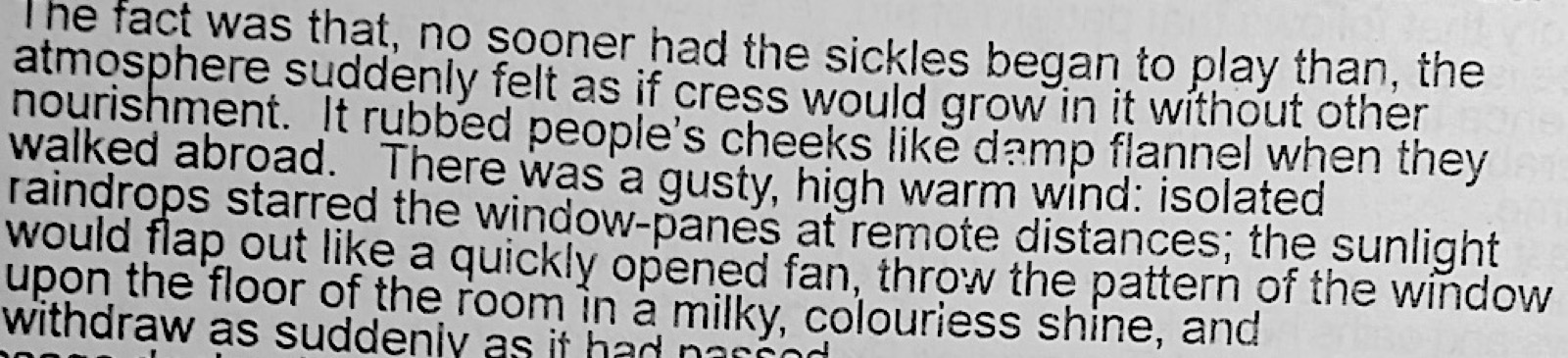
The Merchant of Venice (William Shakespeare). The speech asserts the speaker's demand for
A.mercy
B.reprieve
C.parole
D.justice
Show the answer and explanation
Answer: D (justice)
Explanation
Shylock argues that, being wronged, he has the same right to redress as any Christian; of the options, this is a demand for justice (as he sees it, revenge).
Literature 2, Section A: African Drama. Wole Soyinka: The Lion and the Jewel Discusss the theme of tradition and change in the play.
Show the model answer
Model answer
The conflict between tradition and modernity is the centre of the play. Baroka, the Bale of Ilujinle, stands for tradition: polygamy, wrestling, bride price, authority; he bribed the surveyor to keep the railway away. Lakunle, the schoolteacher, stands for (half-understood) Western change: he wants Sidi to marry without bride price, eat with knives and forks, live like a 'modern' couple. Sidi is torn between the two; the photographs in the stranger's magazine make her proud and vain. The mime of the Lost Traveller and the railway show the coming of the modern world to the village. Baroka shows that tradition can absorb change (his stamp machine) on its own terms. Ending: Sidi marries Baroka; tradition wins, and Lakunle's shallow modernity is mocked. Soyinka suggests that change should not mean rejecting one's culture.
Literature 2, Section A. James Ngugi: The Black Hermit Discuss the attempts of the Elders to bring Remi home and its significance.
Show the model answer
Model answer
Remi has left the village for the city after refusing to inherit Thoni, his late brother's wife; the tribe needs him as its educated leader. The Elders appeal to him through his mother and through messages, reminding him of his duty to the tribe. They seek help from the medicine man and travel to the city with a charm/medicine to bring him back. They plead with him in the city in the name of the tribe; Remi finally decides to return. Significance: shows the strength of tribal loyalty and tradition; reveals Remi's inner conflict between personal freedom, Christianity and the tribe. His return, however, leads to tragedy (Thoni's death), showing the cost of the clash between old and new.
Literature 2, Section A. James Ngugi: The Black Hermit Discuss the character and role of Ngoni in the play.
Show the model answer
Model answer
(The book prints 'Ngoni'; this is Nyobi, Remi's mother.) A widow and devout Christian who loves her son deeply. Caring and protective towards Thoni, Remi's wife, whom she treats as a daughter. Anxious and sorrowful at Remi's long absence; torn between her Christian faith and the tribe's customs. Role: links Remi with the village and Thoni; through her the audience sees the pain Remi's desertion causes. Represents the older generation caught between tradition and Christianity.
Literature 2, Section B: Non-African Drama. Richard B. Sheridan: The Rivals Discuss the conflict between Lydia and Mrs. Malaprop in the play.
Show the model answer
Model answer
Mrs Malaprop is Lydia's aunt and guardian; Lydia needs her consent to keep her whole fortune if she marries. Lydia, romantic from reading novels, loves the poor 'Ensign Beverley' and plans to elope. Mrs Malaprop discovers the affair, forbids it and locks Lydia up; she wants her to marry Captain Absolute, Sir Anthony's son. Lydia defies her and refuses to give up Beverley. The conflict is ironic: Beverley and Captain Absolute are the same man. Mrs Malaprop's misused words and her own secret romance with Sir Lucius add comedy. Resolution: Lydia learns the truth, is reconciled with Jack, and the conflict ends.
Literature 2, Section B. Richard B. Sheridan: The Rivals Discuss the character of Captain Absolute in the play.
Show the model answer
Model answer
Captain Jack Absolute is a young army officer, son of Sir Anthony Absolute. Clever and resourceful: disguises himself as poor Ensign Beverley to win Lydia's romantic heart. Witty and charming, with a good sense of humour. Deceitful and calculating, though in a light-hearted way; pretends obedience to his father. Respectful and affectionate son, though he quarrels with his hot-tempered father over marriage. Brave: ready to fight the duel with Sir Lucius; a loyal friend to Faulkland and Acres. He is the hero whose double identity drives the plot.
Literature 2, Section B. T. S. Eliot: Murder in the Cathedral Discuss any two of the following literary devices used in the play: (i) The Chorus; (ii) The Interlude; (iii) Imagery; (iv) Irony.
Show the model answer
Model answer
(i) The Chorus: the poor women of Canterbury, as in Greek tragedy; express fear and foreboding, comment on events, show the effect of Becket's fate on ordinary people, create atmosphere; their final hymn of praise shows their redemption. (ii) The Interlude: Becket's Christmas sermon in prose between the two parts; explains martyrdom (a martyr is made by God's design), shows Becket's acceptance of death, marks the passing of time and divides the play. (iii) Imagery: seasons and nature (winter, spring, harvest) for time and renewal; animal images (jackal, jackass, jackdaw) for evil and violence; blood and darkness for the coming murder; the wheel for God's design. (iv) Irony: the Fourth Tempter echoes Becket's own words; the Chorus fears the return they longed for; the Knights claim to act for the good of the state, but their act makes Becket a saint.
Literature 2, Section B. T. S. Eliot: Murder in the Cathedral Murder in the Cathedral is a tragic play. Do you agree?
Show the model answer
Model answer
Elements of tragedy: a great, noble hero (Archbishop, former Chancellor) who falls and dies violently. His struggle with pride and the temptation of glory (Fourth Tempter) is a tragic inner conflict. Conflict with the King (Church against state) leads to his death. The Chorus, as in Greek tragedy, creates foreboding and arouses pity and fear. Atmosphere of doom; the murder on stage. However, Becket's death is a martyrdom and a spiritual victory; the Chorus ends in praise, so the play is also a Christian triumph. Conclusion: tragic in form and events, but its ending turns death into glory.
Literature 2, Section C: African Poetry Discuss “The executioner's dream”, bringing out its significance.
Show the model answer
Model answer
Kwesi Brew's poem presents an executioner troubled by a dream about his victims. In the dream his victims confront him; one offers him a weeping eye, a reminder of the suffering he has caused. The victims' questions accuse him of cruelty and the pain of their last hours. Imagery of death, pain and blood and the dream form make his guilt vivid. Significance: the poem shows that killing destroys the killer's own humanity; conscience cannot be silenced. It condemns cruelty and the misuse of power and invites pity for the victims.
Explanation
Explain what happens in the poem and what it means.
Literature 2, Section C. African Poetry Comment on Cheney-Coker's use of language in the poem “Freetown”.
Show the model answer
Model answer
Syl Cheney-Coker writes in the first person, a personal, emotional voice of anguish. Apostrophe: he speaks directly to Freetown/Africa as to a person or mother. Imagery and symbols of rootlessness and colonial influence (e.g. himself wandering 'like a Fulani cow', the attraction of Europe). Contrasts between Africa and Europe, between love and shame for his origins. Diction of pain and disgust alongside hope of renewal. Effect: the language conveys the poet's alienation, self-hate and longing to identify with his land.
Literature 2, Section D: Non-African Poetry Discuss the character of Ulysses in the poem.
Show the model answer
Model answer
Tennyson's Ulysses is an aged king back in Ithaca, bored with ruling 'a savage race' beside 'an aged wife'. Restless and adventurous: 'I cannot rest from travel'; he wants to 'drink life to the lees'. Thirsty for knowledge and experience: to 'follow knowledge like a sinking star'. Proud of his past achievements and fame. Realistic about old age and death but determined: 'to strive, to seek, to find, and not to yield'. Leaves his kingdom to his son Telemachus, whom he trusts but sees as suited to quieter duties. A natural leader who inspires his mariners.
Literature 2, Section D. Non-African Poetry Discuss the use of imagery in “Ode to the West Wind”.
Show the model answer
Model answer
Shelley addresses the wild West Wind of autumn as 'destroyer and preserver'. Stanza 1: dead leaves driven like ghosts fleeing an enchanter, 'pestilence-stricken multitudes'; seeds lying like corpses in the grave until spring. Stanza 2: clouds like loose leaves; the wind as the hair of a fierce Maenad; the dirge of the dying year. Stanza 3: the Mediterranean sleeping and the Atlantic's waters parting before the wind. Stanza 4: the poet wants to be a leaf, a cloud, a wave; he has fallen 'upon the thorns of life'. Stanza 5: 'Make me thy lyre'; scatter his thoughts like ashes and sparks; 'If Winter comes, can Spring be far behind?' Effect: images of death and rebirth express the poet's despair and hope of renewal.
Literature 3, Section A: African Prose. Chinua Achebe: Anthills of the Savannah Compare and contrast the characters of General Sam and Ikem in the novel.
Show the model answer
Model answer
Similarities: childhood friends and schoolmates at Lord Byron's College; intelligent, proud, gifted. Sam: army officer trained at Sandhurst, charming and handsome; becomes Head of State after a coup. Sam grows vain, insecure and dictatorial (wants to be President for life); orders Ikem's removal and is linked to his death; he is overthrown and killed. Ikem: poet and editor of the National Gazette; idealistic, outspoken, critical of government; sympathises with the poor. Ikem is honest and courageous but rash; he is murdered by security agents. Contrast: Sam represents power and its corruption; Ikem the conscience of the nation.
Literature 3, Section A. Chinua Achebe: Anthills of the Savannah Compare and contrast the characters of Beatrice and Elewa in the novel.
Show the model answer
Model answer
Similarities: both are women loved by main characters (Beatrice by Chris, Elewa by Ikem); both loyal and strong; both survive at the end. Beatrice: highly educated (England), senior civil servant, sophisticated, articulate, reflective; associated with the goddess Idemili. Elewa: uneducated shop girl, speaks Pidgin, simple, earthy, honest and lively. Beatrice supports Elewa when Ikem is killed; Elewa gives birth to Ikem's daughter. Beatrice leads the naming ceremony of the baby, uniting them both in hope. Together they show women of different classes standing together.
Literature 3, Section A. Ayi Kwei Armah: The Beautyful Ones Are Not Yet Born Give an account of the man's encounter with the bus conductor, bringing out its significance.
Show the model answer
Model answer
In the opening scene the man rides a bus to work early in the morning. The conductor counts and sniffs the money he has collected, enjoying its smell. He thinks the man, who seems asleep, has seen him cheating with the money and is frightened, then angry. At the end of the ride he insults the man. Significance: introduces the theme of corruption and the worship of money ('the gleam'); shows how even ordinary people are corrupt. Shows the man as a silent, honest observer, isolated and misunderstood. Sets the tone of decay and disgust for the whole novel.
Literature 3, Section B: Non-African Prose. Thomas Hardy: Tess of the d'Urbervilles Examine the contribution of Fate to Tess' downfall.
Show the model answer
Model answer
Hardy shows Tess as a victim of fate and chance ('the President of the Immortals... had ended his sport with Tess'). Chance meeting of John Durbeyfield with Parson Tringham starts the d'Urberville story. The death of the horse Prince forces Tess to go to Trantridge, where Alec seduces her. Angel does not dance with her at the first May dance; they meet too late. Her confession letter slips under the carpet and Angel never reads it before the wedding. She overhears Angel's brothers and turns back from his parents' house. Her father's death and the family's eviction drive her back to Alec just before Angel returns. Conclusion: fate combines with society and character to destroy her.
Literature 3, Section B. Thomas Hardy: Tess of the d'Urbervilles Comment on Thomas Hardy's use of language in the novel.
Show the model answer
Model answer
Wessex dialect for rural characters (e.g. the Durbeyfields) gives realism and contrasts with Tess's schooled speech. Rich descriptions of nature and landscape (Blackmoor Vale, Talbothays, Flintcomb-Ash) that mirror Tess's moods. Symbolism and imagery: red colours, the d'Urberville coach, Stonehenge, birds. Biblical and classical allusions; philosophical comments by the narrator. Irony, especially in chance events and the title 'A Pure Woman'. Long, detailed sentences; formal, sometimes poetic diction. Effect: creates atmosphere, reveals character and supports the tragic theme.
Literature 3, Section B. Daniel Defoe: Robinson Crusoe Do you find Robinson Crusoe an attractive character? Support your answer with close reference to the text.
Show the model answer
Model answer
Attractive qualities: courage and endurance in surviving alone for years on the island. Resourcefulness and hard work: building shelter, making tools, pots, a boat, growing corn, taming goats. Methodical and patient: keeps a journal and calendar. Grows in faith and gratitude after his conversion. Unattractive qualities: disobeys his father; restless and greedy for gain. Sells Xury, the boy who helped him escape, to the Portuguese captain. Treats Friday as servant, teaches him to call him 'Master'; sees himself as lord of the island. Conclusion: a balanced answer, either way, supported by incidents.
Literature 3, Section B. Daniel Defoe: Robinson Crusoe Comment on the use of symbols in the novel.
Show the model answer
Model answer
The island: isolation and punishment, but also a place of self-discovery and Crusoe's 'kingdom' (colonial ownership). The footprint in the sand: fear of the unknown and of other people. The Bible: faith, conversion and providence. The money found on the wreck: the uselessness of wealth on the island, yet Crusoe keeps it. Friday: the 'native' colonised and converted by the European. Crusoe's journal and calendar: order and reason imposed on nature. Effect: the symbols carry the themes of survival, religion and colonialism.