WAEC Civic Education 2017 past questions and answers

57 questions. Try each one, then open the answer to check yourself and read the explanation.

Question 1

National Values

The standards that are considered ethical by an individual or the society is known as

  1. A.dignity.
  2. B.rights.
  3. C.values.
  4. D.materialism.
Show the answer and explanation

Answer: C (values.)

Explanation

Values are the standards of right and good conduct held by a person or society.

Open this question

Question 2

National Values

One significance of value in society is that it

  1. A.brings about peaceful co-existence of people
  2. B.makes one to acquire more properties.
  3. C.enhances an individual's access to education.
  4. D.promotes influx of aliens to the community.
Show the answer and explanation

Answer: A (brings about peaceful co-existence of people)

Explanation

Shared values guide behaviour, so people live together in peace.

Open this question

Question 3

Nationalism and National Symbols
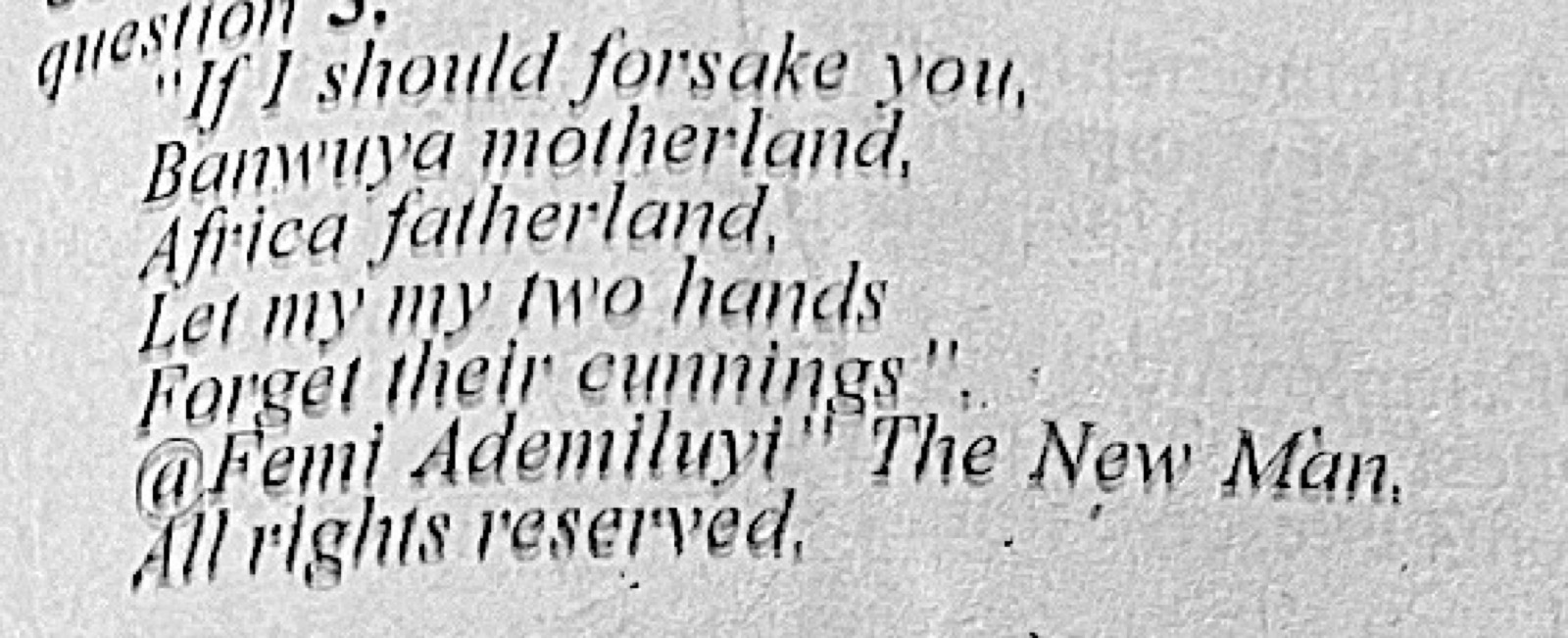
WASSCE 2017: from 'The New Man' by Femi Ademiluyi (poem extract)
The passage, as printed

The quotation shows that the speaker is

  1. A.nationalistic.
  2. B.opportunistic.
  3. C.subservient.
  4. D.reoriented.
Show the answer and explanation

Answer: A (nationalistic.)

Explanation

The speaker vows never to forsake his motherland and fatherland, showing love of country: nationalism.

Open this question

Question 4

Citizenship and Citizenship Education

The status of being a legal member of a country is referred to as

  1. A.alien.
  2. B.asylum.
  3. C.citizenship
  4. D.migrant
Show the answer and explanation

Answer: C (citizenship)

Explanation

Citizenship is legal membership of a state, with its rights and duties.

Open this question

Question 7

Human Rights

The rights of citizens can be guaranteed through

  1. A.gerrymandering.
  2. B.the writ of habeas corpus.
  3. C.prerogative of mercy.
  4. D.political immunity.
Show the answer and explanation

Answer: B (the writ of habeas corpus.)

Explanation

Habeas corpus makes the authorities bring a detained person before a court, protecting the right to personal liberty.

Open this question

Question 8

Rule of Law and Constituted Authority

The inalienable rights of citizens of a state can best be protected through

  1. A.an unwritten constitution.
  2. B.parliamentary system of government.
  3. C.unitary system of government.
  4. D.an independent judiciary.
Show the answer and explanation

Answer: D (an independent judiciary.)

Explanation

Independent courts can enforce rights even against the government.

Open this question

Question 9

Rule of Law and Constituted Authority

The society can be much more peaceful if individuals learn to

  1. A.respect and obey the laws of the land.
  2. B.gather knowledge about politics.
  3. C.understand the human rights commission.
  4. D.seek redress in the court of law.
Show the answer and explanation

Answer: A (respect and obey the laws of the land.)

Explanation

Obedience to the law prevents conflict and keeps peace.

Open this question

Question 10

National Values

The exhibition of queuing culture in a society is a good example of

  1. A.participation.
  2. B.empowerment.
  3. C.nationalism.
  4. D.orderliness.
Show the answer and explanation

Answer: D (orderliness.)

Explanation

Waiting one's turn in a queue is orderly behaviour.

Open this question

Question 11

Rule of Law and Constituted Authority

Constituted authority is necessary in the society because it

  1. A.promotes international relations.
  2. B.ensures security of lives and properties.
  3. C.serves as agent of socialization.
  4. D.provides scholarship for higher education.
Show the answer and explanation

Answer: B (ensures security of lives and properties.)

Explanation

Lawful authority keeps order and protects lives and property.

Open this question

Question 12

Responsible Parenthood

Responsible parenthood is important because it

  1. A.promotes procreation.
  2. B.fosters orderliness.
  3. C.grooms disciplined children.
  4. D.provides solution to all societal problems.
Show the answer and explanation

Answer: C (grooms disciplined children.)

Explanation

Responsible parents raise well-disciplined children.

Open this question

Question 13

Responsible Parenthood

Which of the following should not be encouraged by responsible parents?

  1. A.Moral development.
  2. B.Religious fundamentalism
  3. C.Spiritual development
  4. D.Respect for elders
Show the answer and explanation

Answer: B (Religious fundamentalism)

Explanation

Religious fundamentalism breeds intolerance and extremism.

Open this question

Question 14

Traffic Regulations

Road signs primarily serve as

  1. A.symbols to correct road users.
  2. B.signs to aid Federal Road Safety officials to apprehend defaulters.
  3. C.devices to guide traffic division of Police Command.
  4. D.precautionary devices to guide road users.
Show the answer and explanation

Answer: D (precautionary devices to guide road users.)

Explanation

Road signs warn, instruct and inform road users so they use the road safely.

Open this question

Question 15

Traffic Regulations

In obeying traffic rules, pedestrians are to walk on the left side of the road so as to

  1. A.buy things at the road side.
  2. B.see oncoming vehicles.
  3. C.cross at anytime.
  4. D.walk across junctions.
Show the answer and explanation

Answer: B (see oncoming vehicles.)

Explanation

In Nigeria vehicles drive on the right, so walking on the left lets pedestrians face and see oncoming traffic.

Open this question

Question 16

Rule of Law and Constituted Authority

From the diagram above, activities of deviants in the society can be curtailed by

Diagram for this question
  1. A.establishment of more prisons.
  2. B.ostracizing the deviants from the society.
  3. C.indulging the deviants with financial incentive.
  4. D.strengthening reformative institutions.
Show the answer and explanation

Answer: D (strengthening reformative institutions.)

Explanation

Reformatory institutions correct deviants and return them to society as useful members.

Open this question

Question 17

National Values

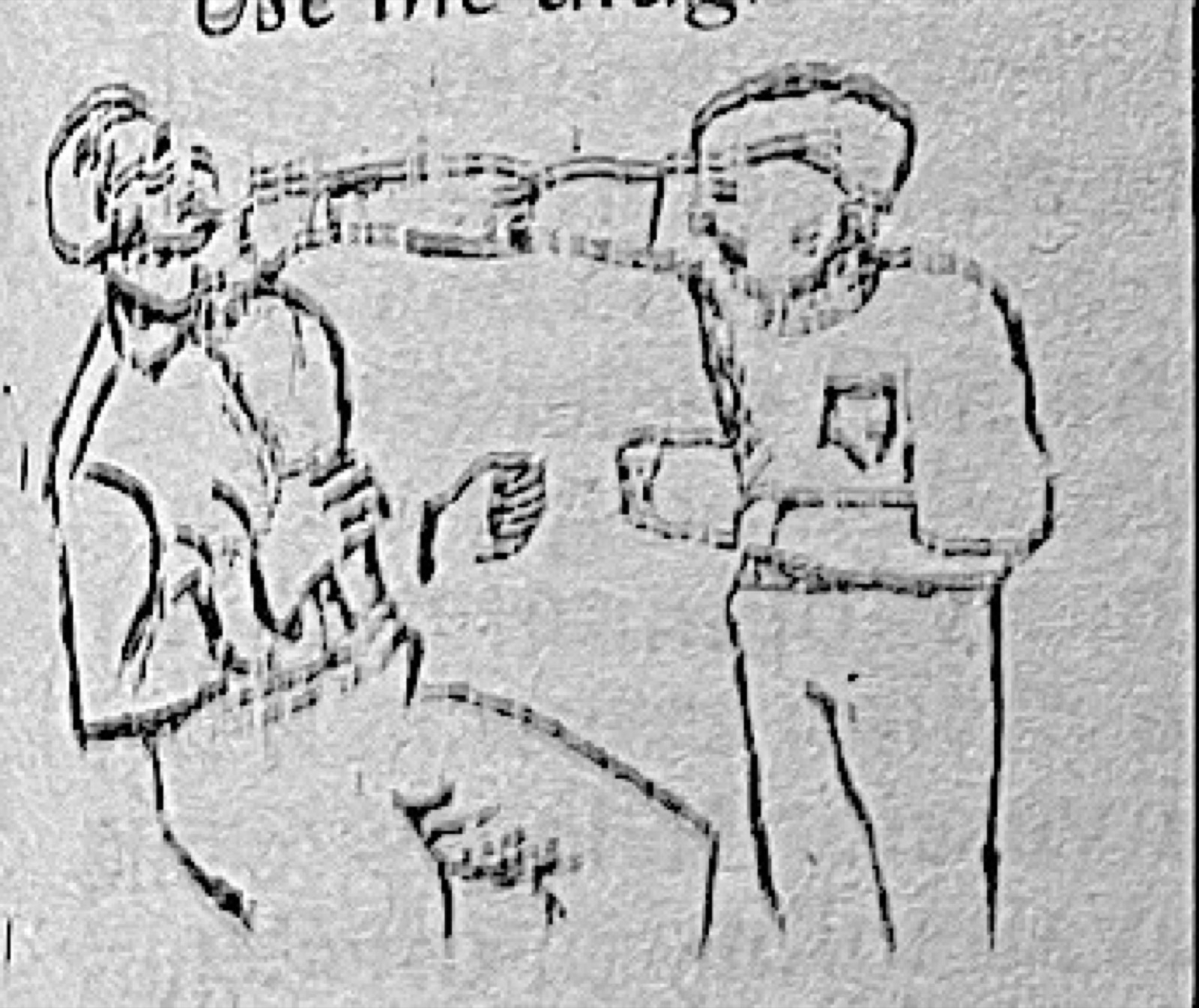
The act of the deviants in the picture above contradicts the skills of

Diagram for this question
  1. A.interpersonal relationships.
  2. B.entrepreneurship.
  3. C.inter-communal relationships.
  4. D.resolution.
Show the answer and explanation

Answer: A (interpersonal relationships.)

Explanation

Attacking another person goes against the skills of good interpersonal relationships such as respect and tolerance.

Open this question

Question 18

Interpersonal and Inter-communal Relationships

One of the skills that can be used in resolving inter-communal conflicts is

  1. A.coercion.
  2. B.mediation.
  3. C.suppression.
  4. D.harassment.
Show the answer and explanation

Answer: B (mediation.)

Explanation

Mediation brings in a neutral third party to help the sides reach agreement.

Open this question

Question 19

Cultism
WASSCE 2017: Johnson and Danladi
Johnson: Danladi, when are you leaving for school?
Danladi: School?
Johnson: Are you on break?
Danladi: No, but the school has been closed down due to clash between rival cult groups.
Johnson: What a terrible situation! I don't know when you are going to finish your programme. You have already spent six years in school for a 4-year programme due to frequent closure and compulsory breaks. So what will you be doing at home while the closure lasted?
Danladi: Roaming the street, visiting friends and attending social functions of course.
Johnson: You better engage yourself in a productive venture such as learning a new language, entrepreneurial skills, volunteer services and so on.

From the above dialogue, it is evident that cultism disrupts activities in the

  1. A.family.
  2. B.school.
  3. C.society.
  4. D.club
Show the answer and explanation

Answer: B (school.)

Explanation

Danladi's school was shut because of cult clashes.

Open this question

Question 20

Cultism

From the above dialogue, which of the following is likely to happen if cultism is eradicated from our campuses?

  1. A.Uninterrupted school programme
  2. B.Increase in the remuneration of staff of higher institutions
  3. C.Provision of scholarships for brilliant students
  4. D.Amicable resolution of disputes on campuses
Show the answer and explanation

Answer: A (Uninterrupted school programme)

Explanation

Without cult clashes, schools would not be closed, so programmes would run without interruption.

Open this question

Question 21

Cultism

Which of the following is not responsible for cult activities in schools and colleges?

  1. A.Perceived injustice
  2. B.Satisfaction of membership aspirations
  3. C.Personal protection
  4. D.Preservation of cultural heritage
Show the answer and explanation

Answer: D (Preservation of cultural heritage)

Explanation

Preserving culture is not a reason students join cults.

Open this question

Question 22

Drug Abuse

Drug abuse often leads to

  1. A.sexually transmitted diseases.
  2. B.cancerous illness.
  3. C.psychiatric disorder.
  4. D.incurable ailment.
Show the answer and explanation

Answer: C (psychiatric disorder.)

Explanation

Hard drugs damage the brain and often cause mental (psychiatric) illness.

Open this question

Question 23

Drug Abuse

Use of hard drugs could best be curtailed through

  1. A.compensation.
  2. B.rehabilitation.
  3. C.enlightenment.
  4. D.compromise.
Show the answer and explanation

Answer: C (enlightenment.)

Explanation

Enlightening people about the dangers stops them from starting drug use.

Open this question

Question 24

Drug Abuse

If an individual persists in the use of hard drugs, such individual is likely to exhibit

  1. A.hostile attitude towards religious organizations.
  2. B.unfriendly disposition towards foreigners.
  3. C.oppressive behaviour.
  4. D.emotional illness and aggression.
Show the answer and explanation

Answer: D (emotional illness and aggression.)

Explanation

Continued drug use leads to mental and emotional problems and violent behaviour.

Open this question

Question 25

Drug Abuse

Drug abuse can best be prevented in the society by

  1. A.arresting and prosecuting drug vendors.
  2. B.engaging in public enlightenment.
  3. C.canvassing capital punishment for drug peddlers.
  4. D.prohibiting the sales of drugs at the motor parks.
Show the answer and explanation

Answer: B (engaging in public enlightenment.)

Explanation

Public enlightenment prevents abuse before it starts.

Open this question

Question 26

Human Trafficking

Which of the following people suffer most in human trafficking?

  1. A.Girls
  2. B.Boys
  3. C.Children
  4. D.Adults
Show the answer and explanation

Answer: C (Children)

Explanation

Children, boys and girls alike, are the most vulnerable and most trafficked group.

Open this question

Question 27

HIV/AIDS

Which of the following is not a symptom of HIV/AIDS?

  1. A.Loss of appetite and weight
  2. B.Unexplained feverish condition
  3. C.Infections that often resist treatment
  4. D.Systematic growth of the body
Show the answer and explanation

Answer: D (Systematic growth of the body)

Explanation

HIV/AIDS causes weight loss, not growth of the body.

Open this question

Question 28

Human Trafficking

Which of the following cannot motivate human trafficking?

  1. A.Poverty
  2. B.Greed
  3. C.Low-self esteem
  4. D.Education
Show the answer and explanation

Answer: D (Education)

Explanation

Education makes people aware of traffickers' tricks, so it protects rather than motivates.

Open this question

Question 29

HIV/AIDS

One way of being infected with HIV/AIDS is through

  1. A.the use of unsterilized sharp objects.
  2. B.sitting close to HIV/AIDS infected persons.
  3. C.sharing clothes with HIV/AIDS infected persons.
  4. D.having handshake with people living with HIV/AIDS.
Show the answer and explanation

Answer: A (the use of unsterilized sharp objects.)

Explanation

HIV spreads through blood, for example on unsterilised needles or blades, not through casual contact.

Open this question

Question 30

HIV/AIDS

One of the preventive measures against the infection of HIV/AIDS is

  1. A.membership of Red Cross Society.
  2. B.faithfulness to a partner.
  3. C.becoming a medical staff.
  4. D.membership of campaign against AIDS.
Show the answer and explanation

Answer: B (faithfulness to a partner.)

Explanation

Being faithful to one uninfected partner reduces the risk of sexual transmission.

Open this question

Question 31

Youth Empowerment

Which of the following is not a skill for practical living?

  1. A.Life coping skill
  2. B.Manipulative skill
  3. C.Artistic skill
  4. D.Cyber crime skill
Show the answer and explanation

Answer: D (Cyber crime skill)

Explanation

Cybercrime is a crime, not a skill for practical living.

Open this question

Question 32

Youth Empowerment

Which of the following is not a reason for self-reliance?

  1. A.Creation of employment opportunities
  2. B.Innovation and creativity
  3. C.Diversification of the economy
  4. D.Quest for white collar jobs
Show the answer and explanation

Answer: D (Quest for white collar jobs)

Explanation

Self-reliance means creating one's own work rather than waiting for white-collar jobs.

Open this question

Question 33

The Constitution and Constitutional Democracy

In the constitution, the areas where both the federal and state governments exercise joint authority are on the

  1. A.residual list.
  2. B.concurrent list.
  3. C.exclusive list.
  4. D.reserved list.
Show the answer and explanation

Answer: B (concurrent list.)

Explanation

The concurrent legislative list contains matters on which both federal and state governments can make laws.

Open this question

Question 34

Structure and Organs of Government

Government is saddled with all the following responsibilities except

  1. A.prevention of internal disturbances.
  2. B.protection of lives and properties.
  3. C.promotion of industrial development.
  4. D.provision of all the needs of the citizens
Show the answer and explanation

Answer: D (provision of all the needs of the citizens)

Explanation

No government can provide all the needs of its citizens; citizens also work to meet their needs.

Open this question

Question 35

Democracy and Elections

A major feature of representative democracy is

  1. A.free and fair election.
  2. B.absolute application of law.
  3. C.civil liberty groups.
  4. D.enlightened electorates
Show the answer and explanation

Answer: A (free and fair election.)

Explanation

Representatives are chosen through free and fair elections.

Open this question

Question 36

The Constitution and Constitutional Democracy

A feature that distinguishes the 1979 Nigerian constitution from that of 1963 was the introduction of

  1. A.unitary system of government.
  2. B.republicanism.
  3. C.presidential system of government.
  4. D.westminster system.
Show the answer and explanation

Answer: C (presidential system of government.)

Explanation

The 1979 Constitution replaced the parliamentary (Westminster) system of 1963 with a presidential system.

Open this question

Question 37

Democracy and Elections

In a democracy, official opposition is allowed to

  1. A.bring down the government.
  2. B.pave way for military intervention.
  3. C.make government accountable.
  4. D.encourage crisis in a state
Show the answer and explanation

Answer: C (make government accountable.)

Explanation

The opposition criticises and checks the government, keeping it accountable.

Open this question

Question 38

Democracy and Elections

The beauty of democratic system of government is that

  1. A.the president has supreme power.
  2. B.political power resides in the people.
  3. C.there is absence of exploitation.
  4. D.political participation is limited.
Show the answer and explanation

Answer: B (political power resides in the people.)

Explanation

In a democracy sovereignty belongs to the people.

Open this question

Question 39

Rule of Law and Constituted Authority
WASSCE 2017: Mr. Ojuri
One morning, Mr. Ojuri was on his way to a bank in his neighbourhood to make enquiries. He was arrested for wandering and subsequently detained for seven days by the police without trial or access to his relatives.

From the above passage, it could be said that in a society where this incident happened, there is absence of

  1. A.court of law.
  2. B.rule of law.
  3. C.lawyers and solicitors.
  4. D.the press.
Show the answer and explanation

Answer: B (rule of law.)

Explanation

Detaining a man for a week without trial or access to his family violates his rights: the rule of law is absent.

Open this question

Question 40

Political Apathy and Popular Participation

The following can be classified as forms of political apathy except

  1. A.refusal to register and vote.
  2. B.lack of interest in politics.
  3. C.refusal to rig in an election.
  4. D.nonchalant attitude towards politicians.
Show the answer and explanation

Answer: C (refusal to rig in an election.)

Explanation

Refusing to rig is good conduct, not apathy; the other options all show lack of interest in politics.

Open this question

Question 41

Political Apathy and Popular Participation

The notion of perceiving the involvement of people in politics as devilish connotes political

  1. A.demonization.
  2. B.apathy.
  3. C.degeneration.
  4. D.discontent
Show the answer and explanation

Answer: A (demonization.)

Explanation

To demonize something is to present it as evil or devilish. Seeing people's involvement in politics as devilish is therefore political demonization; apathy (lack of interest) may follow from it but is not the notion itself.

Open this question

Question 42

Political Apathy and Popular Participation

The active involvement of people in the decision-making process in a state indicates political

  1. A.indoctrination.
  2. B.participation.
  3. C.struggle.
  4. D.apathy.
Show the answer and explanation

Answer: B (participation.)

Explanation

Taking part in decision-making is political participation.

Open this question

Question 43

Civil Society

A non-governmental organization that allows independent initiative of citizens is known as

  1. A.civil society.
  2. B.pressure group.
  3. C.religious group.
  4. D.professional society.
Show the answer and explanation

Answer: A (civil society.)

Explanation

Civil society is the space of non-governmental organisations through which citizens act independently.

Open this question

Question 44

Democracy and Elections

The effective way by which government can ascertain public support and reaction is through

  1. A.opinion leaders.
  2. B.party members.
  3. C.campaigns.
  4. D.elections.
Show the answer and explanation

Answer: D (elections.)

Explanation

Elections show directly how much support the people give a government.

Open this question

Question 45

Political Apathy and Popular Participation

The following are effects of political apathy except that it

  1. A.affects the quality of lives.
  2. B.leads to the enthronement of irresponsible leaders.
  3. C.promotes free and fair elections.
  4. D.ensures non-availability of dividends of democracy.
Show the answer and explanation

Answer: C (promotes free and fair elections.)

Explanation

Apathy does not promote free and fair elections; it makes rigging easier.

Open this question

Question 46

Political Apathy and Popular Participation

Which of the following is the best way through which citizens can participate in the politics of their country?

  1. A.Acquisition of higher degree in political science
  2. B.Standing for elective positions
  3. C.Learning the art and science of political sagacity
  4. D.Undergoing mentorship under prominent political leaders
Show the answer and explanation

Answer: B (Standing for elective positions)

Explanation

Contesting elections is direct, active participation in politics.

Open this question

Question 47

Public Service

The public service is important for ensuring

  1. A.continuity in governance.
  2. B.gender equality.
  3. C.professional equality.
  4. D.superiority of the pressure groups.
Show the answer and explanation

Answer: A (continuity in governance.)

Explanation

Civil servants remain when governments change, so they keep government running continuously.

Open this question

Question 48

Public Service

Political neutrality of civil servants means that they

  1. A.do not engage in partisan politics.
  2. B.should not be seen or heard.
  3. C.should not work with politicians.
  4. D.do not receive praises nor blames for their actions.
Show the answer and explanation

Answer: A (do not engage in partisan politics.)

Explanation

Neutral civil servants do not take part in party politics and serve any government fairly.

Open this question

Question 49

Public Service

The category of public service that has the closest contact with the political class is the

  1. A.manipulative class.
  2. B.administrative class.
  3. C.clerical class.
  4. D.technical class.
Show the answer and explanation

Answer: B (administrative class.)

Explanation

Senior administrative officers (permanent secretaries, directors) work directly with ministers.

Open this question

Question 50

Public Service

In the public service, another name for red-tapism is

  1. A.theocracy.
  2. B.bureaucracy.
  3. C.autocracy.
  4. D.democracy.
Show the answer and explanation

Answer: B (bureaucracy.)

Explanation

Red tape is the slow, rule-bound procedure associated with bureaucracy.

Open this question

Theory question 101

Interpersonal and Inter-communal Relationships

Section A: National Ethics, Discipline, Rights and Obligations
(a) Define interpersonal relationships.
(b) State four ways acts of kindness can promote interpersonal relationships.

Show the model answer
Model answer

(a) Interpersonal relationship is the association, interaction and connection between two or more persons, e.g. friends, family members, classmates, colleagues.
(b) Any four:
Builds trust and friendship.
Helping others in need creates goodwill and gratitude.
Reduces quarrels and conflicts.
Encourages others to reciprocate kindness.
Promotes mutual respect and understanding.
Makes people feel valued and accepted.
Promotes co-operation and teamwork.

Explanation

Define, then four ways kindness improves relationships.

Open this question

Theory question 102

Traffic Regulations

Section A: National Ethics, Discipline, Rights and Obligations
(a) Define traffic regulations.
(b) Outline six reasons why inspection of vehicle documents is necessary in Nigeria.

Show the model answer
Model answer

(a) Traffic regulations are the rules, signs and laws made to control the movement and conduct of vehicles, cyclists and pedestrians on the road for safety and order.
(b) Any six:
Confirms the vehicle is roadworthy.
Confirms the driver is licensed and qualified.
Detects stolen vehicles.
Ensures vehicles are registered and properly identified.
Ensures insurance cover for road users.
Checks payment of taxes and fees (revenue).
Helps in crime detection and security.
Reduces road accidents.

Explanation

Six separate reasons.

Open this question

Theory question 103

Responsible Parenthood

Section A: National Ethics, Discipline, Rights and Obligations
(a) Define responsible parenthood.
(b) Explain four importance of responsible parenthood to national development.

Show the model answer
Model answer

(a) Responsible parenthood is the duty of parents to give their children proper care, love, education, discipline and basic needs so they grow into good citizens.
(b) Any four, explained:
Produces disciplined, law-abiding citizens.
Reduces crime and social vices.
Produces educated, skilled manpower.
Promotes good health of children.
Promotes good values and national image.
Reduces the burden on government (fewer neglected children).
Helps population control through family planning.

Explanation

Link each point to national development.

Open this question

Theory question 104

Human Trafficking

Section B: Emerging Issues in the Society
Outline any five functions of the National Agency for the Prohibition of Traffic in Persons and other Related Matters (NAPTIP).

Show the model answer
Model answer

Any five:
Enforces anti-trafficking laws.
Investigates and prosecutes traffickers.
Rescues, counsels and rehabilitates victims.
Public enlightenment on the dangers of trafficking.
Works with local and international agencies (police, Interpol, embassies).
Keeps records and does research on trafficking.
Seizes assets of traffickers for victims' trust fund.
Note: since the 2015 Act the agency is called the National Agency for the Prohibition of Trafficking in Persons.

Explanation

Five functions.

Open this question

Theory question 105

Cultism

Section B: Emerging Issues in the Society
(a) State three reasons why high incidence of cultism constitutes a national problem.
(b) List five reasons why eradication of cultism in schools will promote national development.
(c) Highlight two factors hindering the eradication of cultism in Nigerian schools.

Show the model answer
Model answer

(a) Any three:
Loss of lives of youths.
Insecurity and fear on campuses and in society.
Disruption of academic calendars.
Leads to other crimes (robbery, kidnapping).
Produces half-baked, violent graduates; bad national image.
(b) Any five:
Stable academic calendar.
Better academic performance and quality graduates.
Safer campuses; less violence.
Saves lives of youths for the nation.
Reduced crime.
Better national image and investment.
Good moral values among youths.
(c) Any two:
Support/protection of cultists by influential people and politicians.
Secrecy of cult activities.
Weak enforcement of anti-cult rules.
Fear of reprisals.
Poor parental care.

Explanation

Three parts; keep lists short and distinct.

Open this question

Theory question 106

Drug Abuse

Section B: Emerging Issues in the Society
Explain five ways Civic Education can help eradicate drug addiction among youths.

Show the model answer
Model answer

Any five, explained:
Teaches the dangers of drug abuse.
Instils positive values (self-control, discipline).
Teaches life skills to resist peer pressure.
Informs youths about drug laws and penalties (NDLEA).
Encourages healthy activities (sports, clubs).
Promotes good citizenship and responsibility.
Teaches where to get help (counselling, rehabilitation).

Explanation

Five ways each with a short explanation.

Open this question

Theory question 107

Democracy and Elections

Section C: Governmental System and Processes
Explain any five of the following pillars of democracy: (a) constitution; (b) arms of government; (c) political parties; (d) free press; (e) armed forces; (f) civil societies.

Show the model answer
Model answer

Any five explained:
(a) Constitution: the supreme law that sets out how government is formed, limits its powers and guarantees rights.
(b) Arms of government: legislature, executive and judiciary share power and check one another.
(c) Political parties: organise candidates and policies, give voters choices and form government or opposition.
(d) Free press: informs the public, exposes wrongdoing and holds leaders accountable.
(e) Armed forces: defend the country and democratic order, and remain subordinate to civilian authority.
(f) Civil societies: non-governmental groups that educate citizens, defend rights and monitor government.

Explanation

Explain each pillar's role in democracy.

Open this question

Theory question 108

Public Service

Section C: Governmental System and Processes
(a) State three reasons why public service is important for the effective function of government.
(b) Identify three ways by which Public/Civic Service Commission contributes to the effective operation of public service in Nigeria.

Show the model answer
Model answer

(a) Any three:
Implements government policies.
Advises ministers / helps formulate policy.
Ensures continuity of government.
Delivers public services.
Keeps records and collects revenue.
(b) Any three:
Recruits staff on merit.
Promotes staff.
Disciplines erring staff.
Transfers and posts staff.
Organises training/promotion examinations.
Sets conditions of service and protects staff from political interference.

Explanation

Three and three.

Open this question

Theory question 109

Structure and Organs of Government

Section C: Governmental System and Processes
Highlight five relevance of power sharing among the three tiers of government in Nigeria.

Show the model answer
Model answer

Any five:
Prevents concentration of power at the centre / dictatorship.
Brings government closer to the people (local government).
Speeds up development at all levels.
Allows each tier to handle local needs and diversity.
Promotes participation of more people in government.
Reduces the workload of the federal government.
Promotes unity by giving groups a sense of belonging.
Clear division of functions (exclusive, concurrent, residual lists) reduces conflict.

Explanation

Five clear points on why dividing powers among federal, state and local governments helps.
Open this question