WAEC Biology 2025 past questions and answers

48 questions. Try each one, then open the answer to check yourself and read the explanation.

Question 1

Animal Nutrition

Chemical digestion in organisms is the

  1. A.breakdown of starch into carbohydrates.
  2. B.build up of simple soluble molecules into complex insoluble molecules.
  3. C.breakdown of complex molecules into simple molecules.
  4. D.build up of simple insoluble molecules into complex soluble molecules.
Show the answer and explanation

Answer: C (breakdown of complex molecules into simple molecules.)

Explanation

Chemical digestion uses enzymes to break large, complex food molecules into small, simple ones that can be absorbed.

Open this question

Question 3

Animal Nutrition

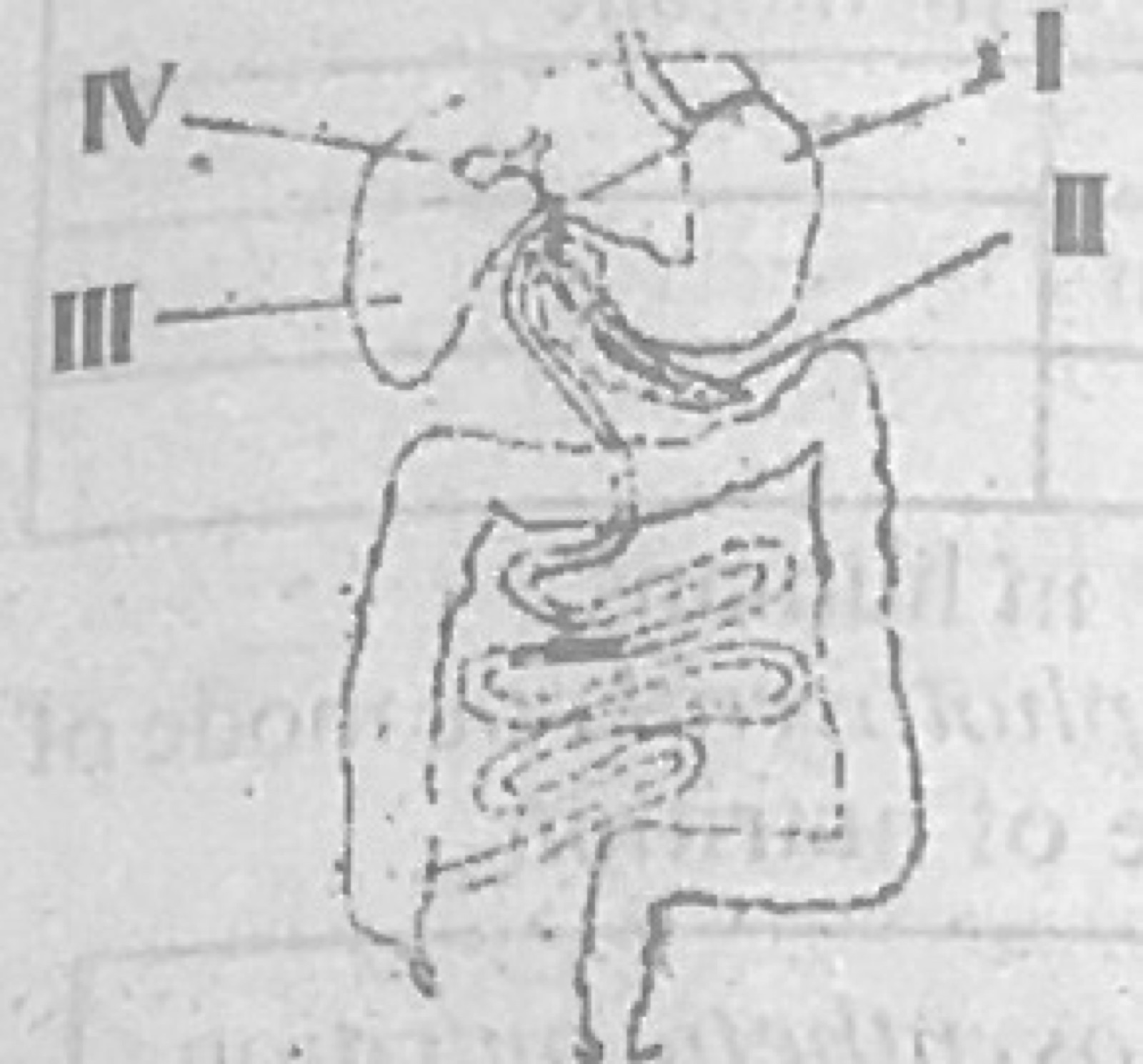
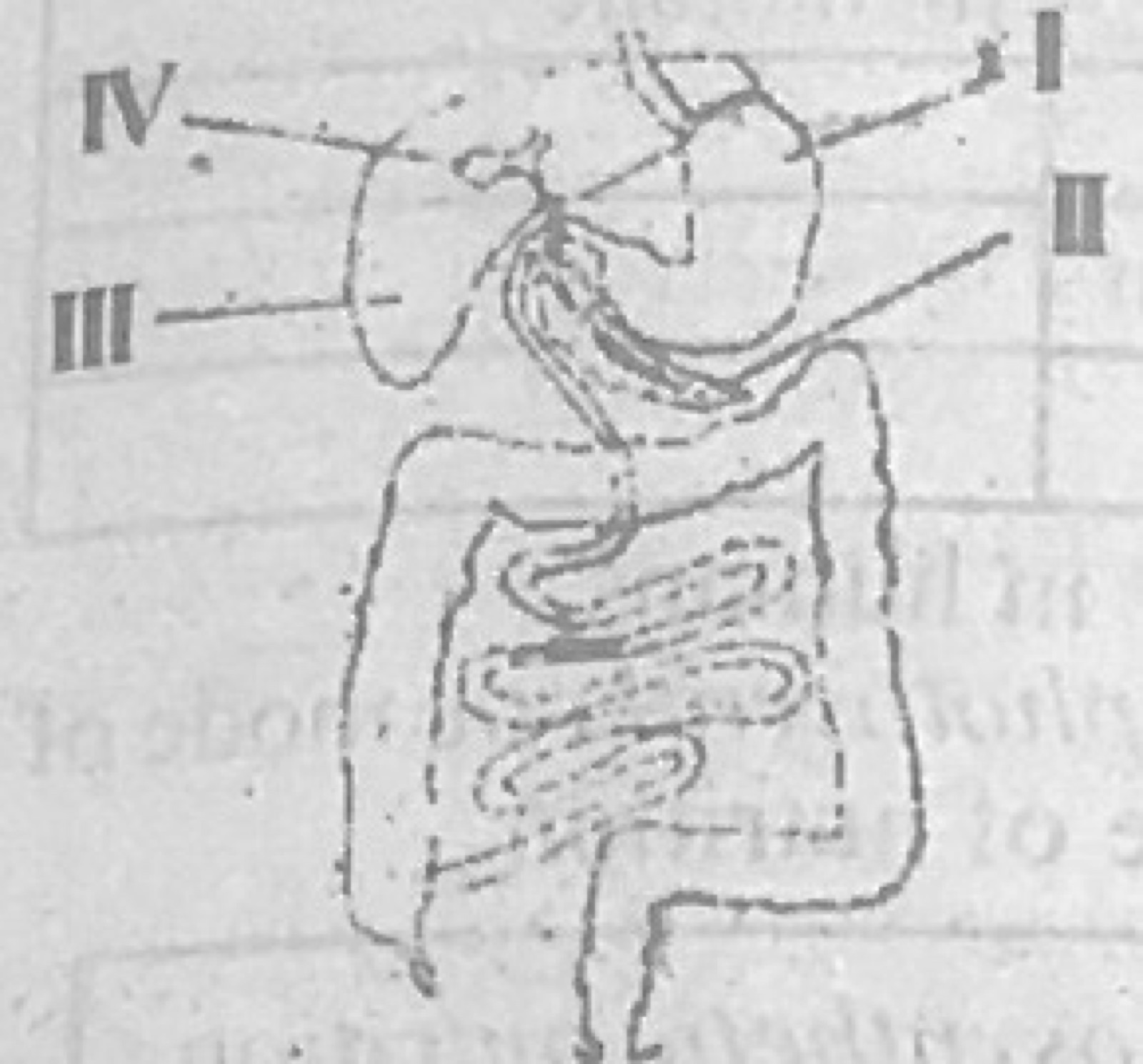
The diagram below is an illustration of a system in humans. Enzymatic digestion of protein begins in the part labelled

Diagram for this question
  1. A.IV.
  2. B.III.
  3. C.II.
  4. D.I.
Show the answer and explanation

Answer: D (I.)

Explanation

Protein digestion starts in the stomach, labelled I, where pepsin breaks proteins into peptones.

Open this question

Question 4

Animal Nutrition

The diagram below is an illustration of a system in humans. The parts that secrete substances involved in the digestion of fats are labelled

Diagram for this question
  1. A.I, II and III.
  2. B.II and III.
  3. C.I, III and IV.
  4. D.I and III.
Show the answer and explanation

Answer: B (II and III.)

Explanation

Fat digestion needs bile, made by the liver (III), and lipase, made by the pancreas (II). The gall bladder (IV) only stores bile and the stomach (I) makes no significant lipase.

Open this question

Question 5

Animal Nutrition

If the small intestine of an organism does not have villi, the organism will have a problem with

  1. A.digestion of food only.
  2. B.absorption of water.
  3. C.absorption of nutrients only.
  4. D.digestion of food and absorption of nutrients.
Show the answer and explanation

Answer: C (absorption of nutrients only.)

Explanation

Villi greatly increase the surface area of the small intestine for absorbing digested food; without them absorption of nutrients would suffer.

Open this question

Question 7

Ecological Associations

The relationship between a bean plant and a Tridax plant on a farmland is

  1. A.parasitism.
  2. B.epiphytism.
  3. C.competition.
  4. D.predation.
Show the answer and explanation

Answer: C (competition.)

Explanation

Tridax is a weed; it and the bean plant struggle for the same light, water and nutrients, which is competition.

Open this question

Question 8

Ecosystem and Ecological Factors

The following ecological factors affect all habitats except

  1. A.light.
  2. B.pressure.
  3. C.temperature.
  4. D.humidity.
Show the answer and explanation

Answer: D (humidity.)

Explanation

Light, temperature and pressure (air pressure on land, water pressure in water) act in every habitat, but humidity, the amount of water vapour in air, applies only to terrestrial habitats.

Open this question

Question 9

Ecosystem and Ecological Factors

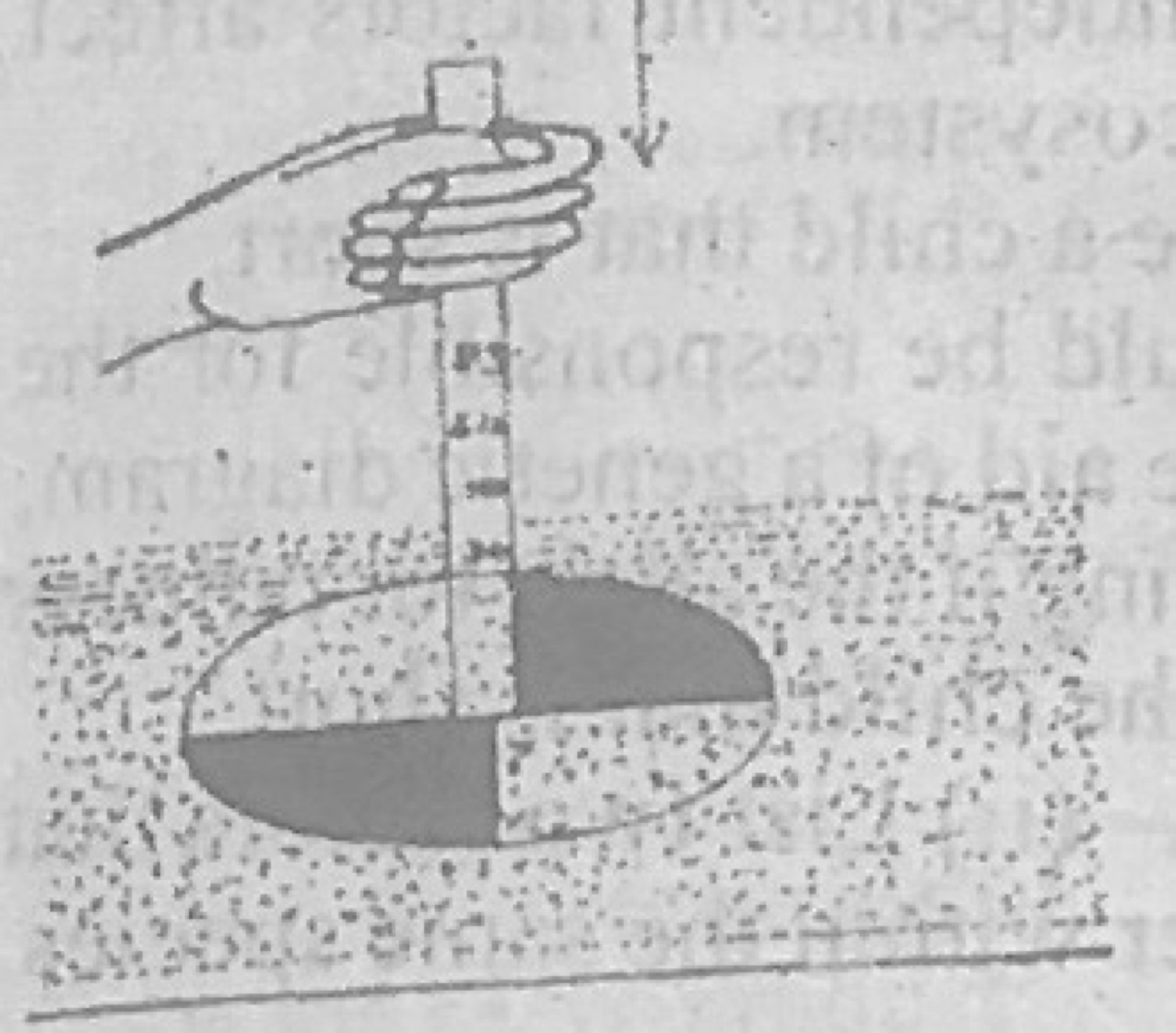
The diagram below is an illustration of an ecological instrument used in a habitat. The ecological instrument is a

Diagram for this question
  1. A.wind vane.
  2. B.Six's thermometer.
  3. C.Secchi disc.
  4. D.hygrometer.
Show the answer and explanation

Answer: C (Secchi disc.)

Explanation

The black-and-white disc lowered on a graduated rope or rod is a Secchi disc.

Open this question

Question 10

Ecosystem and Ecological Factors

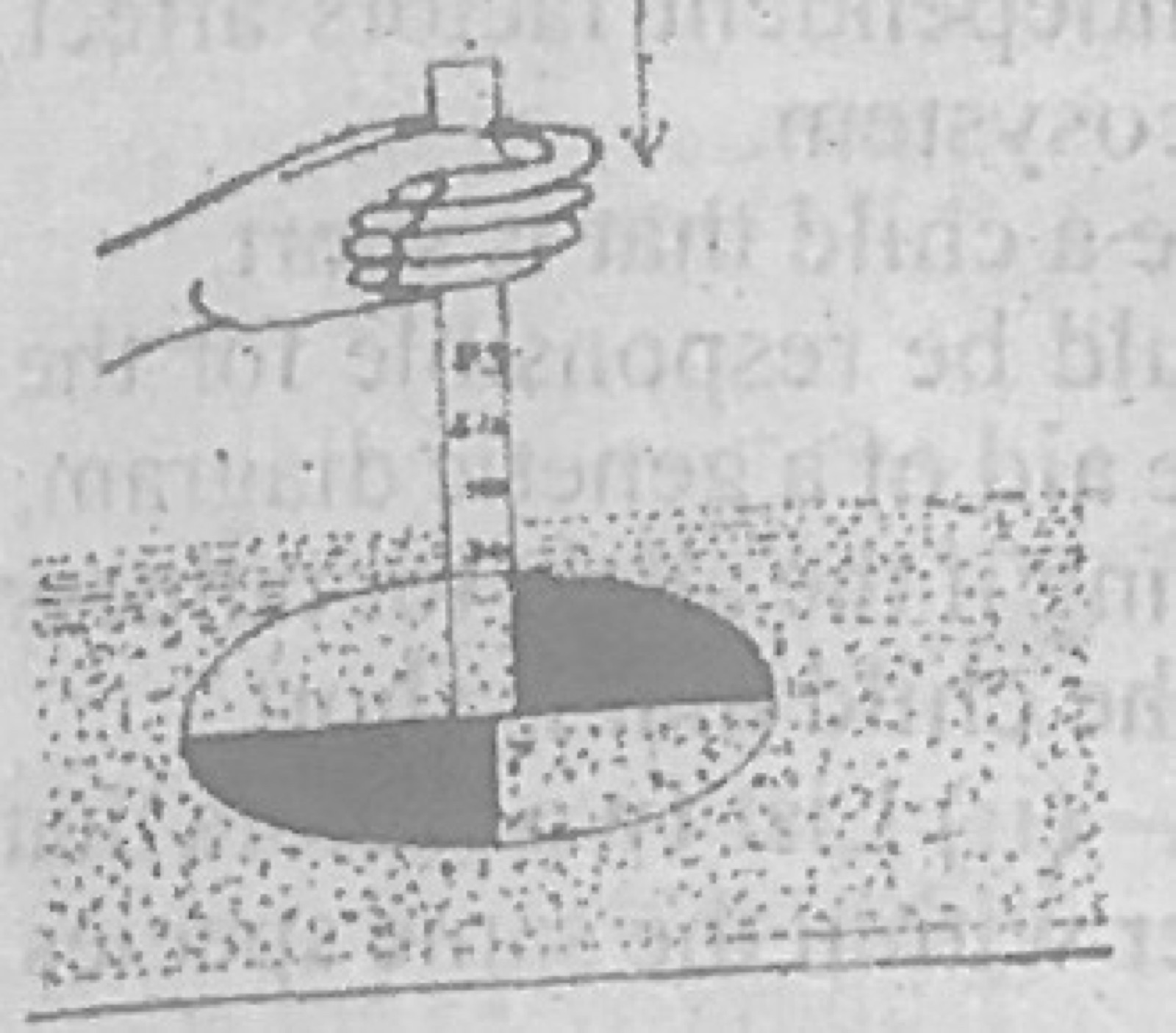
The diagram below is an illustration of an ecological instrument used in a habitat. The instrument is used to measure a factor

Diagram for this question
  1. A.on land.
  2. B.on grasses.
  3. C.in the atmosphere.
  4. D.in water.
Show the answer and explanation

Answer: D (in water.)

Explanation

A Secchi disc is lowered into water to measure turbidity (how far light penetrates).

Open this question

Question 11

Variation

Which of the following pairs of features is an example of discontinuous variation?

  1. A.Colour and weight
  2. B.Fingerprint and blood group
  3. C.Height and blood group
  4. D.Height and sex
Show the answer and explanation

Answer: B (Fingerprint and blood group)

Explanation

Fingerprint patterns and blood groups fall into distinct types with no in-between, so they are discontinuous. Height and weight vary continuously.

Open this question

Question 13

Chromosomes, DNA and Sex Linkage

Alleles are found on

  1. A.chromosomes.
  2. B.tissues.
  3. C.nucleus.
  4. D.nucleolus.
Show the answer and explanation

Answer: A (chromosomes.)

Explanation

Alleles are alternative forms of a gene, and genes are located on chromosomes.

Open this question

Question 14

Mendelian Inheritance

A couple heterozygous for albino genes have normal skin colour. What is the probability that their child would be an albino?

  1. A.1/2
  2. B.1/3
  3. C.1/4
  4. D.1
Show the answer and explanation

Answer: C (1/4)

Explanation

Aa x Aa gives AA, Aa, Aa and aa; only aa (one in four) is albino, so the probability is 1/4.

Open this question

Question 15

Chromosomes, DNA and Sex Linkage

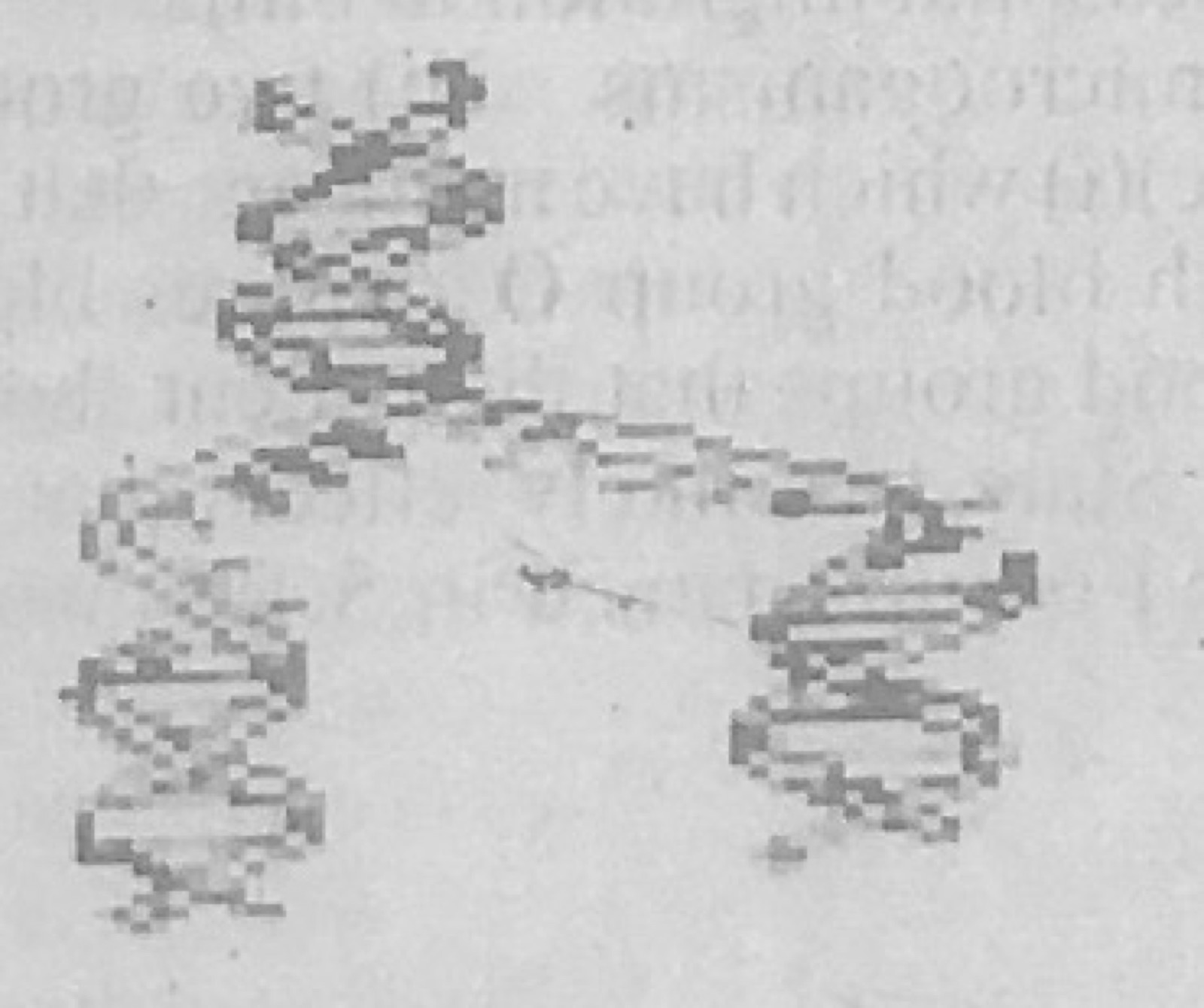
The process occurring in the illustrated molecule below is

Diagram for this question
  1. A.Protein synthesis.
  2. B.gene coding.
  3. C.DNA replication.
  4. D.gene mutation.
Show the answer and explanation

Answer: C (DNA replication.)

Explanation

The double helix is unzipping and each strand is being built into a new double helix, so the DNA is copying itself (replication).

Open this question

Question 16

Chromosomes, DNA and Sex Linkage

If the percentage of adenine in the DNA of a human is 32%, what will be the percentage of thymine?

  1. A.27%
  2. B.32%
  3. C.10%
  4. D.16%.
Show the answer and explanation

Answer: B (32%)

Explanation

Adenine always pairs with thymine, so DNA has equal amounts of each: 32% thymine.

Open this question

Question 18

Evolution

Lamarck's theory of evolution states that

  1. A.organisms transfer acquired characters to their offspring.
  2. B.organisms acquire genes from their parents.
  3. C.characteristics of organisms are not the sum of the characters of their parents.
  4. D.characteristics of organisms are determined by mutation.
Show the answer and explanation

Answer: A (organisms transfer acquired characters to their offspring.)

Explanation

Lamarck taught that characters gained during life through use and disuse are passed on to offspring (inheritance of acquired characters).

Open this question

Question 19

Behaviour

The castes of the organisms found in a beehive are

  1. A.soldiers, workers and king.
  2. B.king, queen and soldiers.
  3. C.drones, queen and workers.
  4. D.workers, soldiers and reproductives.
Show the answer and explanation

Answer: C (drones, queen and workers.)

Explanation

A honeybee colony has a queen, workers (sterile females) and drones (males). Soldiers and kings are termite castes.

Open this question

Question 21

Population Ecology

When Tilapia population in a pond reaches the carrying capacity, the population

  1. A.increases only.
  2. B.decreases only.
  3. C.alternately increases and decreases.
  4. D.remains unchanged.
Show the answer and explanation

Answer: C (alternately increases and decreases.)

Explanation

At carrying capacity births and deaths roughly balance, so the population goes up and down a little around that level.

Open this question

Question 22

Feeding Relationships and Energy Flow

Which of the following statements about the pyramid of energy is correct?

  1. A.Energy remains constant across trophic levels
  2. B.Energy decreases from the base to the apex of the pyramid
  3. C.Energy increases from the base to the apex of the pyramid
  4. D.Each trophic level is an independent energy source
Show the answer and explanation

Answer: B (Energy decreases from the base to the apex of the pyramid)

Explanation

Energy is lost as heat at every feeding level, so less energy reaches each higher level and the pyramid narrows upward.

Open this question

Question 24

Population Ecology

Which of the following statements correctly describes the term population? The number of

  1. A.bees and butterflies on a flower.
  2. B.flatworms and roundworms in the gut of an animal.
  3. C.Tilapia in a lake.
  4. D.fungus and snail on leaf litter.
Show the answer and explanation

Answer: C (Tilapia in a lake.)

Explanation

A population is the number of individuals of one species in an area, such as Tilapia in a lake. The other options mix two species.

Open this question

Question 25

Population Ecology

What is the population density of Ageratum sp. of frequency 1,850 on a land area measuring 100m2?

  1. A.0.50/m2
  2. B.0.05/m2
  3. C.18.50/m2
  4. D.18.05/m2
Show the answer and explanation

Answer: C (18.50/m2)

Explanation

Population density = number ÷ area = 1,850 ÷ 100 m2 = 18.50 per m2.

Open this question

Question 26

Microorganisms and Health

Which of the following activities does not control pathogens?

  1. A.Eating balanced diet
  2. B.Destroying the habitats of pathogens
  3. C.Exposure to ultraviolet radiation
  4. D.Use of disinfectants
Show the answer and explanation

Answer: A (Eating balanced diet)

Explanation

Destroying their breeding places, ultraviolet light and disinfectants all kill or remove pathogens. A balanced diet keeps the body healthy but does not act on the pathogens themselves.

Open this question

Question 27

Microorganisms and Health

Which of the following diseases could be prevented by a BCG vaccination?

  1. A.Tuberculosis
  2. B.Diphtheria
  3. C.Malaria
  4. D.Cholera
Show the answer and explanation

Answer: A (Tuberculosis)

Explanation

BCG (Bacille Calmette-Guérin) vaccine protects against tuberculosis.

Open this question

Question 28

Conservation of Natural Resources

The main effect of deforestation is

  1. A.survival of more species
  2. B.reduction of carbon (IV) oxide in the atmosphere
  3. C.creation of new habitats
  4. D.loss of soil particles
Show the answer and explanation

Answer: D (loss of soil particles)

Explanation

Without tree cover, rain and wind wash and blow away the topsoil, so soil erosion is the main effect.

Open this question

Question 29

Conservation of Natural Resources

Which of the following resources cannot be conserved?

  1. A.Forests and wildlife
  2. B.Domestic wastes
  3. C.Mineral resources
  4. D.Soil and water
Show the answer and explanation

Answer: B (Domestic wastes)

Explanation

Forests, wildlife, minerals, soil and water are natural resources that can be conserved. Domestic waste is not a natural resource to be conserved; it is something to be disposed of or recycled.

Open this question

Question 30

Conservation of Natural Resources

Which of the following activities is not suitable for forest conservation?

  1. A.Preventing bush fires
  2. B.Planting tree crops
  3. C.Felling of trees
  4. D.Planting seedlings
Show the answer and explanation

Answer: C (Felling of trees)

Explanation

Felling trees destroys the forest; the other activities protect or replace trees.

Open this question

Question 31

Cell and Its Environment

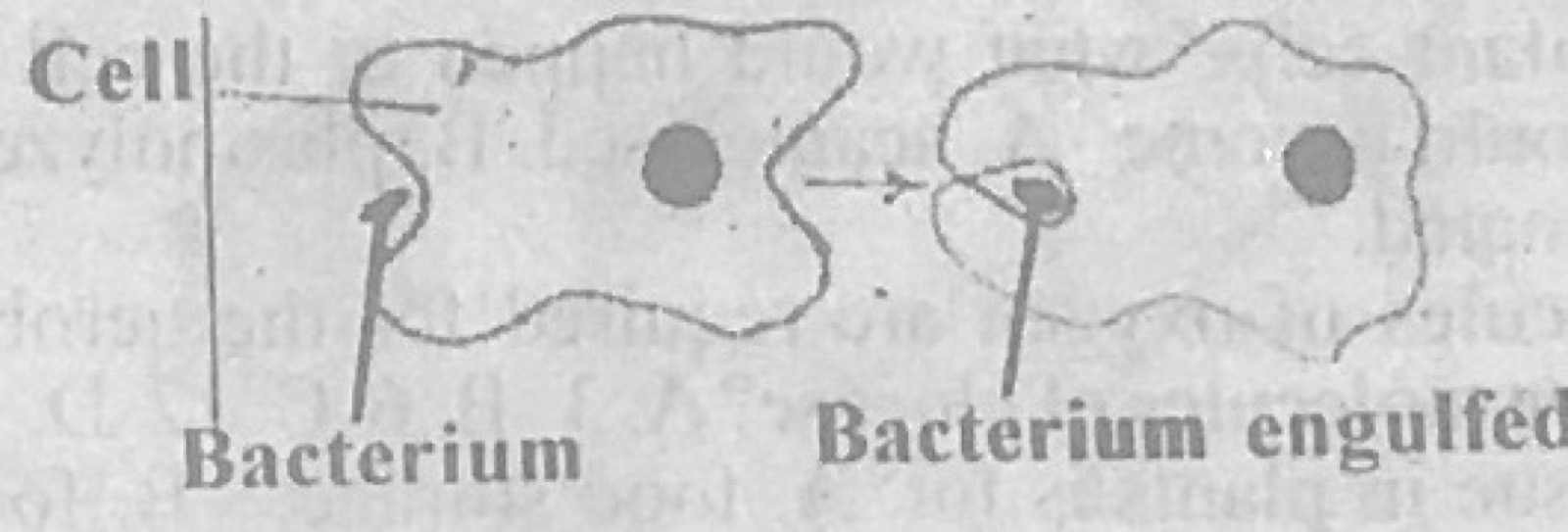
The diagram below is an illustration of a cell carrying out a biological process. The process is referred to as

Diagram for this question
  1. A.endocytosis.
  2. B.exocytosis.
  3. C.phagocytosis.
  4. D.pinocytosis.
Show the answer and explanation

Answer: C (phagocytosis.)

Explanation

The cell flows around the bacterium and engulfs it as a solid particle: this is phagocytosis ('cell eating').

Open this question

Question 32

Transport in Animals

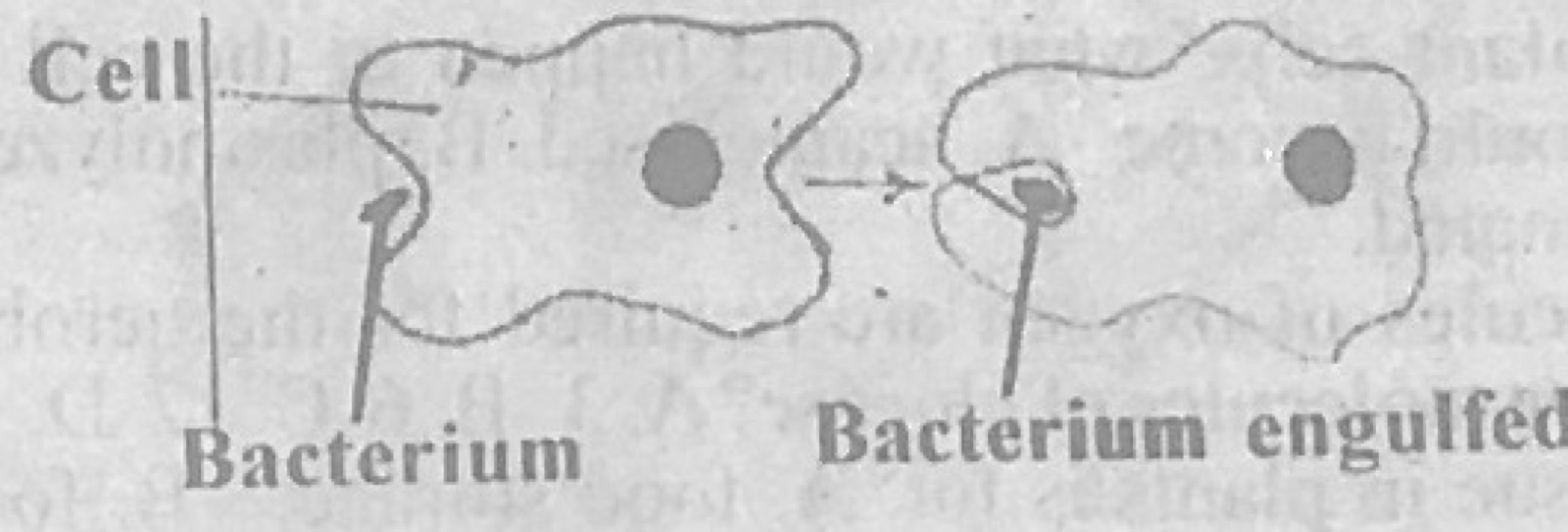
The diagram below is an illustration of a cell carrying out a biological process. The biological system that contains cells that carry out the illustrated biological process in humans is

Diagram for this question
  1. A.respiratory.
  2. B.nervous.
  3. C.reproduction.
  4. D.circulatory.
Show the answer and explanation

Answer: D (circulatory.)

Explanation

In humans, white blood cells (phagocytes) in the blood engulf bacteria, and blood is part of the circulatory system.

Open this question

Question 33

Respiration

Which of the following statements is not correct about respiration in plants?

  1. A.Energy is produced as the end product
  2. B.It occurs in the presence of oxygen
  3. C.It occurs in all plant tissues
  4. D.Light and chlorophyll must be present for it to occur
Show the answer and explanation

Answer: D (Light and chlorophyll must be present for it to occur)

Explanation

Respiration goes on in every living cell day and night and does not need light or chlorophyll; those are needed for photosynthesis.

Open this question

Question 34

Excretion

Urine, when compared with blood in mammals is hypertonic because

  1. A.urea is actively secreted into the renal tubules.
  2. B.much water has been removed from urine.
  3. C.urine contains high percentage of all cells.
  4. D.all traces of sugar have been removed from urine.
Show the answer and explanation

Answer: B (much water has been removed from urine.)

Explanation

As the filtrate flows along the tubule and collecting duct, much of its water is reabsorbed into the blood, so the urine left is more concentrated than blood.

Open this question

Question 35

Plant Responses and Hormones

The naturally produced auxin in plants is

  1. A.indole acetic acid.
  2. B.dichlorophenoxyacetic acid
  3. C.aldone
  4. D.florigen.
Show the answer and explanation

Answer: A (indole acetic acid.)

Explanation

Indole acetic acid (IAA) is the natural auxin; 2,4-D (dichlorophenoxyacetic acid) is a man-made one.

Open this question

Question 36

Nervous Coordination

The sympathetic nervous system causes

  1. A.increase in the secretion of saliva
  2. B.contraction of the bladder.
  3. C.constriction of the arteries.
  4. D.heartbeat to slow down.
Show the answer and explanation

Answer: C (constriction of the arteries.)

Explanation

The sympathetic system prepares the body for action: it narrows arteries to the skin and gut and speeds the heart. The other effects are parasympathetic.

Open this question

Question 37

Sense Organs

Long sightedness could be corrected using a

  1. A.biconvex lens.
  2. B.convex lens.
  3. C.biconcave lens.
  4. D.concave lens.
Show the answer and explanation

Answer: B (convex lens.)

Explanation

A long-sighted eye focuses near objects behind the retina; a converging (convex) lens brings the image forward onto the retina.

Open this question

Question 38

Sense Organs

During the process of hearing in mammals, the structure in the middle ear which receives the first vibration is the

  1. A.incus.
  2. B.malleus.
  3. C.oval window.
  4. D.round window.
Show the answer and explanation

Answer: B (malleus.)

Explanation

The eardrum passes its vibrations first to the malleus, then the incus and stapes; the oval window is the membrane between the middle and inner ear that receives them last.

Open this question

Question 39

Reproduction in Plants

An important characteristic of fruits dispersed by water is the presence of

  1. A.fibrous covering.
  2. B.smooth surface.
  3. C.water content.
  4. D.pericarp.
Show the answer and explanation

Answer: A (fibrous covering.)

Explanation

A fibrous, air-filled covering (as in coconut) lets the fruit float and be carried by water.

Open this question

Question 40

Plant Kingdom

Plants which grow and produce fruits within a year are called

  1. A.annuals.
  2. B.herbs.
  3. C.biennials.
  4. D.perennials.
Show the answer and explanation

Answer: A (annuals.)

Explanation

Annuals complete their life cycle, from seed to fruit, in one year or season.

Open this question

Question 41

Characteristics and Classification of Living Things

The Genus into which man is classified is

  1. A.Chordata.
  2. B.Mammalia.
  3. C.Homo.
  4. D.Sapiens.
Show the answer and explanation

Answer: C (Homo.)

Explanation

Man is Homo sapiens: the genus is Homo and the species is sapiens. Chordata is the phylum and Mammalia the class.

Open this question

Question 42

Reproduction in Animals

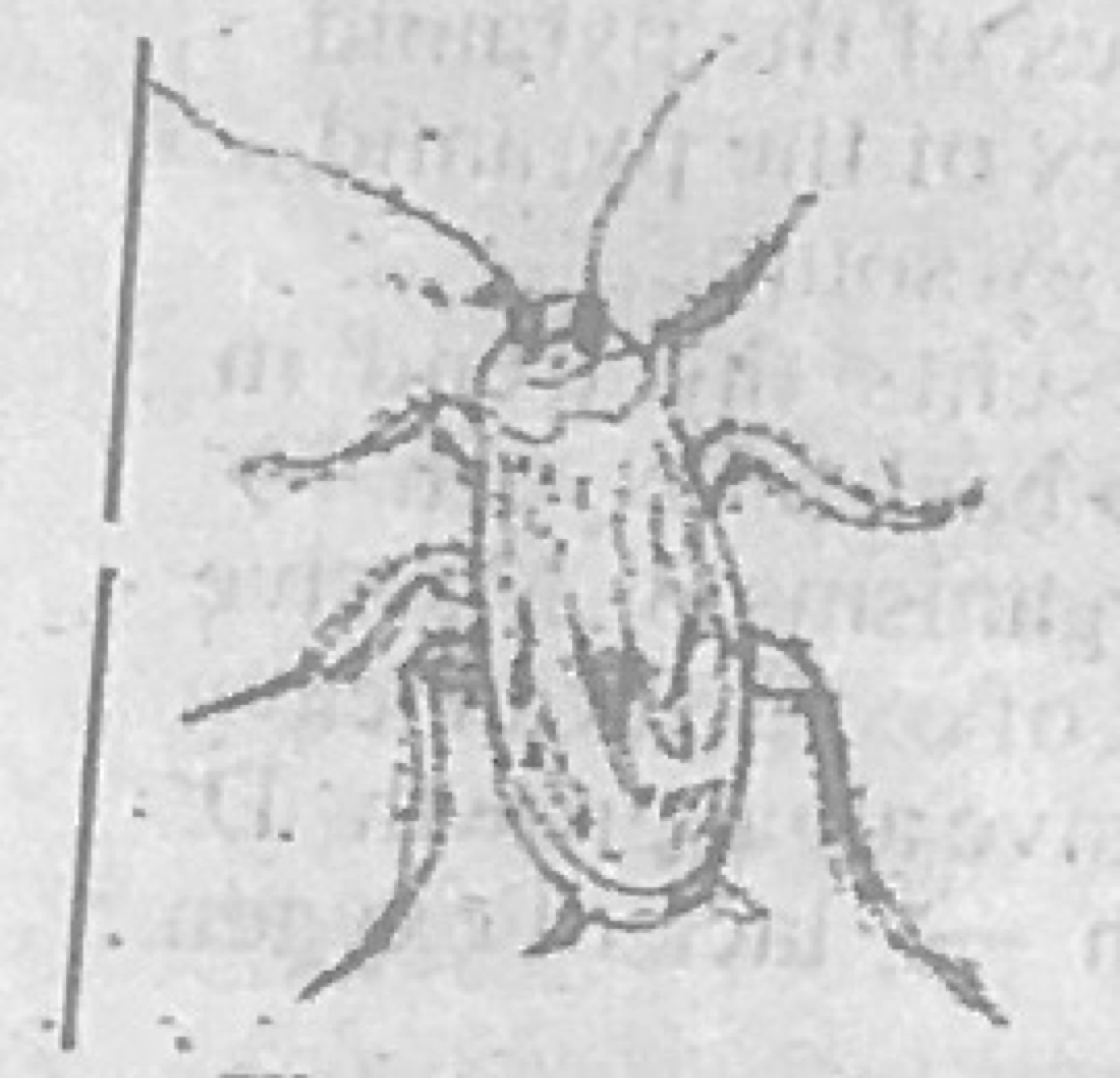
The diagram below is an illustration of the nymph of an insect. The organism illustrated is a stage in the development of

Diagram for this question
  1. A.grasshopper.
  2. B.mosquito.
  3. C.termite.
  4. D.cockroach.
Show the answer and explanation

Answer: D (cockroach.)

Explanation

The nymph has long antennae, a flat oval body and cerci, like a small wingless cockroach.

Open this question

Question 43

Reproduction in Animals

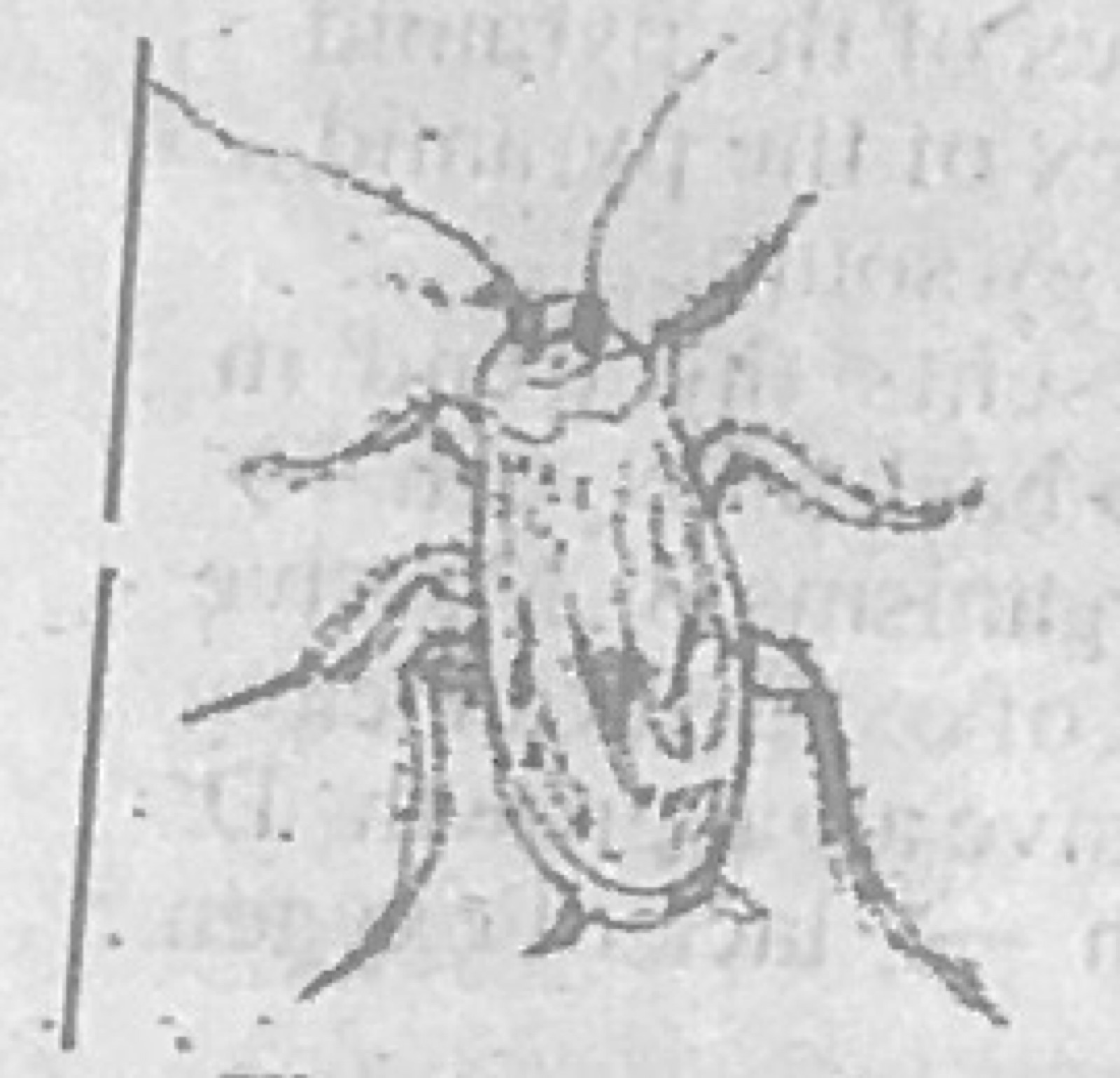
The diagram below is an illustration of the nymph of an insect. The growth process that would occur in the organism before it becomes an adult is

Diagram for this question
  1. A.respiration.
  2. B.locomotion.
  3. C.moulting.
  4. D.sensitivity.
Show the answer and explanation

Answer: C (moulting.)

Explanation

A nymph grows by shedding its hard exoskeleton several times (moulting or ecdysis) before becoming an adult.

Open this question

Question 44

Photosynthesis and Plant Nutrition

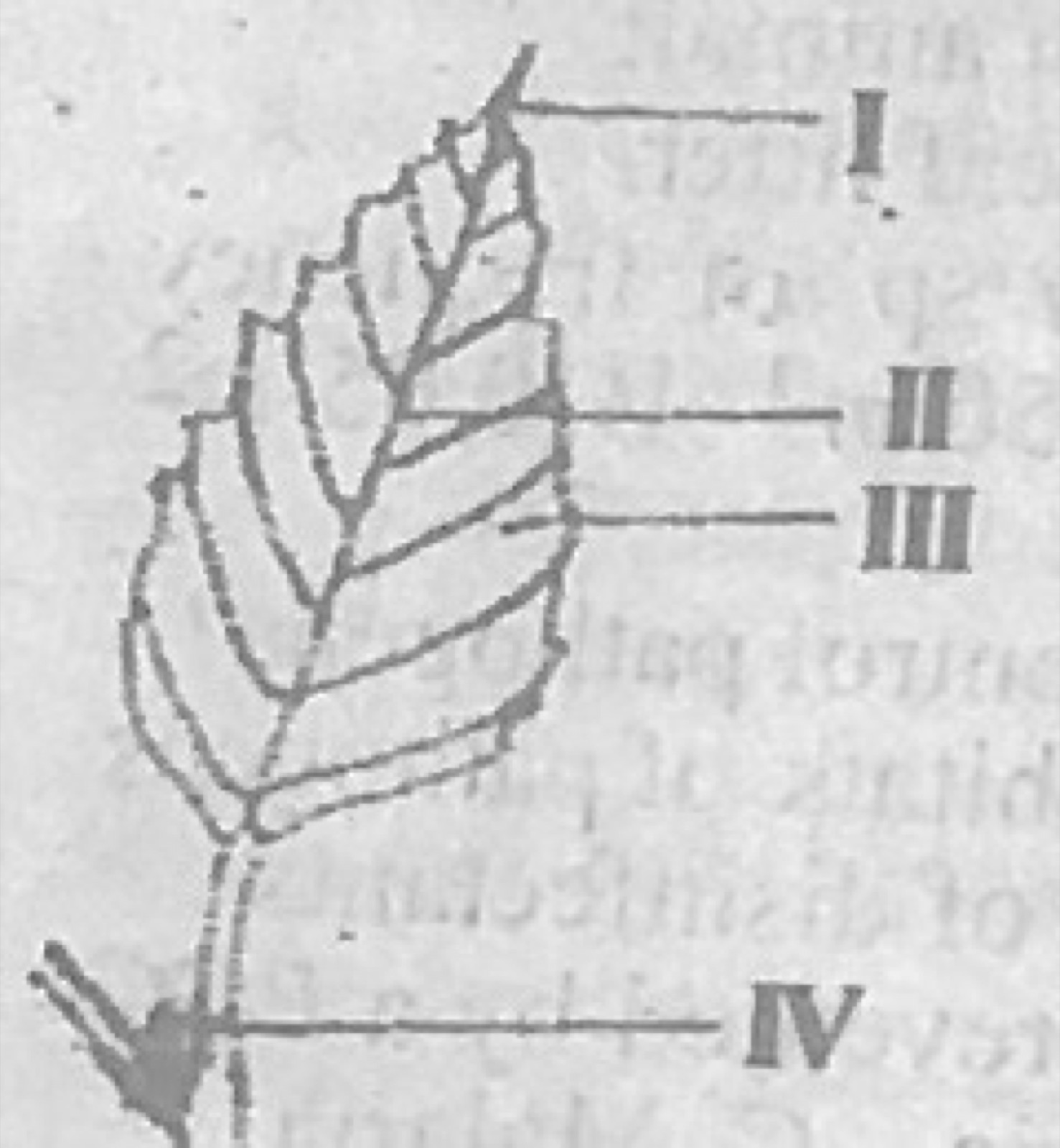
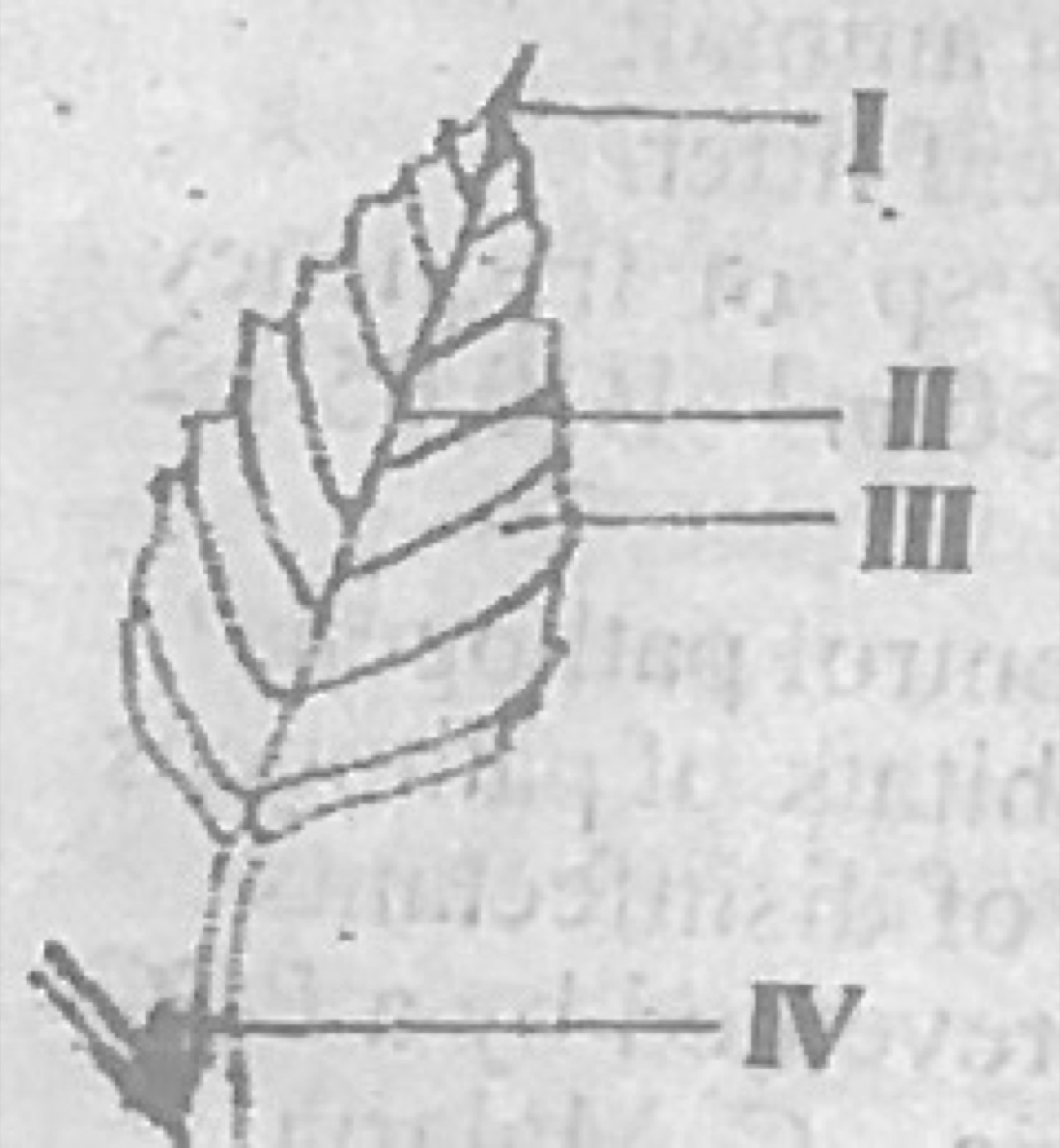
The diagram below is an illustration of a dicot leaf. The parts labelled I, II, III and IV respectively are

Diagram for this question
  1. A.apex, lamina, blade, axil.
  2. B.apex, midrib, lamina, axil.
  3. C.vein, apex, midrib, stalk.
  4. D.midrib, petiole, margin, stalk.
Show the answer and explanation

Answer: B (apex, midrib, lamina, axil.)

Explanation

I is the tip (apex), II the central vein (midrib), III the flat blade (lamina), and IV the angle where the leaf joins the stem (axil).

Open this question

Question 45

Structure of Flowering Plants

The diagram below is an illustration of a dicot leaf. The part that contains the phloem and xylem is labelled

Diagram for this question
  1. A.I.
  2. B.II.
  3. C.III.
  4. D.IV.
Show the answer and explanation

Answer: B (II.)

Explanation

The midrib (II) is the main vein, which carries the xylem and phloem through the leaf.

Open this question

Question 46

Cell Structure and Organisation

The functions of vacuoles in plants are storage and

  1. A.support.
  2. B.sensitivity.
  3. C.protection.
  4. D.strength.
Show the answer and explanation

Answer: A (support.)

Explanation

The vacuole stores cell sap and, by taking in water, keeps the cell turgid, which supports the plant.

Open this question

Question 48

Cell and Its Environment

Four cells each with osmotic potential of about 3% salt solution were immersed respectively into solutions of different concentrations as follows:
I - 1% salt solution.
II - 3% salt solution.
III - 6% salt solution.
IV - 10% salt solution.
If the cells are plant cells, what would happen to the cell in solution III? It would become

  1. A.heamolysed.
  2. B.plasmolyzed.
  3. C.turgid.
  4. D.crenated.
Show the answer and explanation

Answer: B (plasmolyzed.)

Explanation

The 6% solution is more concentrated than the cell, so the cell loses water and its cytoplasm shrinks away from the wall: it is plasmolysed.

Open this question

Question 49

Respiration

How many molecules of oxygen are required for the aerobic respiration of three molecules of glucose?

  1. A.3
  2. B.6
  3. C.12
  4. D.18
Show the answer and explanation

Answer: D (18)

Explanation

C6H12O6 + 6O2 → 6CO2 + 6H2O, so each glucose needs 6 oxygen molecules; 3 × 6 = 18.

Open this question

Question 50

Support and Movement

Sclerenchyma tissue in plants is for

  1. A.food storage.
  2. B.food transport.
  3. C.water conduction
  4. D.mechanical support.
Show the answer and explanation

Answer: D (mechanical support.)

Explanation

Sclerenchyma cells have thick lignified walls and give the plant mechanical strength and support.

Open this question

Theory question 101

Excretion

Section A
(a) Explain briefly the term excretion.
(b) Name two excretory products each of: (i) mammals; (ii) plants.
(c) Complete the table below.
Table columns: Organism | Excretory structure | Mechanism involved in excretion | Adaptation of the structure for excretion
Rows: Paramecium | ______ | ______ | Thin semi permeable membrane
Planaria | ______ | ______ | ______
Leaf of plant | ______ | Transpiration | ______
Earthworm | ______ | ______ | ______
(d) State three functions of the kidney in humans.

Show the model answer
Model answer

(a) Excretion is the removal from the body of the waste products of metabolism (e.g. carbon (IV) oxide, urea, excess water and salts) which would be harmful if they built up.
(b)(i) Mammals, any two: carbon (IV) oxide; urea; water; mineral salts; bile pigments. (ii) Plants, any two: oxygen; carbon (IV) oxide; water vapour; tannins; resins; gums; latex; alkaloids.
(c) Paramecium - contractile vacuole / cell membrane - diffusion and osmoregulation (vacuole fills and bursts at the surface) - thin, semi-permeable membrane with large surface.
Planaria - flame cells - beating cilia drive waste into excretory canals and out through pores - many flame cells with cilia, joined to a network of tubules.
Leaf of plant - stomata (lenticels) - transpiration/diffusion of gases - many stomata, thin leaf with large surface and air spaces; guard cells control opening.
Earthworm - nephridia - waste filtered from body fluid through ciliated funnels (nephrostomes) and out through nephridiopores - ciliated funnel, long coiled tubule surrounded by capillaries.
(d) Any three: removes urea and other nitrogenous wastes; regulates water balance (osmoregulation); regulates salt balance and pH of blood; removes drugs/toxins; helps control blood pressure.

Explanation

Each row of the table needs a structure, a mechanism and an adaptation.

Open this question

Theory question 102

Photosynthesis and Plant Nutrition

(a) State two differences between photosynthetic mode of nutrition and chemosynthetic mode of nutrition.
Table columns: Photosynthetic nutrition | Chemosynthetic nutrition
(b)(i) What are saprophytes? (ii) Give two examples of saprophytic organisms. (iii) Explain briefly the mode of feeding in saprophytes. (iv) State three ways by which saprophytes are of economic importance.
(c) State three characteristic features of carnivorous plants.
(d) State the feeding habit of (i) butterfly; (ii) mosquito larva; (iii) mucor; (iv) housefly.

Show the model answer
Model answer

(a) Any two: photosynthesis uses light energy, chemosynthesis uses energy from chemical reactions (oxidation of substances); photosynthesis needs chlorophyll, chemosynthesis does not; photosynthesis is carried out by green plants and algae, chemosynthesis by some bacteria (e.g. Nitrosomonas, iron and sulphur bacteria); photosynthesis releases oxygen, chemosynthesis usually does not.
(b)(i) Saprophytes are organisms that feed on dead and decaying organic matter.
(ii) Any two: Mucor; Rhizopus; mushroom; yeast; bacteria of decay.
(iii) They release digestive enzymes onto the dead matter (extracellular digestion), and the soluble products are absorbed through their hyphae or cell surface.
(iv) Any three: decompose dead bodies and recycle nutrients; yeast is used in baking and brewing; some are eaten (mushrooms); some give antibiotics; they spoil food, timber and leather.
(c) Any three: have special structures (pitchers, sticky hairs, hinged leaves) to trap insects; secrete enzymes to digest the prey; absorb nitrogen compounds from the prey; are green and photosynthesise; usually grow in soils poor in nitrogen.
(d)(i) Butterfly - sucking (fluid feeder, nectar through the proboscis). (ii) Mosquito larva - filter feeding. (iii) Mucor - saprophytic. (iv) Housefly - sponging/sucking of liquid food.

Explanation

Keep the differences in (a) as matching pairs.

Open this question

Theory question 103

Nutrient Cycling

(a) Explain briefly how carbon (IV) oxide and oxygen are balanced in nature.
(b) List five factors that affect the distribution of plants in their habitats.
(c)(i) What is overcrowding in an ecosystem? (ii) List five effects of overcrowding in an ecosystem.
(d)(i) Distinguish between density-dependent factors and density-independent factors in an ecosystem. (ii) Give two examples of density-dependent factors. (iii) Explain briefly how density-dependent factors and density-independent factors affect the dynamic equilibrium in an ecosystem.

Show the model answer
Model answer

(a) Green plants take in carbon (IV) oxide and give out oxygen in photosynthesis; plants, animals and decomposers take in oxygen and give out carbon (IV) oxide in respiration (and burning adds CO2). The two processes balance each other, keeping the amounts in the air fairly constant.
(b) Any five: light; temperature; rainfall/water; soil type and nutrients; pH; humidity; wind; topography; competition; animals (grazers, pollinators).
(c)(i) Overcrowding is when there are more organisms in an area than its resources can support.
(ii) Any five: competition for food, water, light and space; spread of diseases; shortage of food; build-up of wastes/pollution; stunted growth; increased death rate; emigration; lower reproduction; aggression.
(d)(i) Density-dependent factors have a greater effect as the population becomes denser; density-independent factors affect the population the same way whatever its density.
(ii) Any two: food supply; competition; disease; predation; accumulation of wastes; space.
(iii) Density-dependent factors increase deaths or lower births when the population is large and ease off when it is small, so the population is held around a balance (carrying capacity). Density-independent factors such as floods, drought, fire or sudden temperature change can kill many organisms at any density and upset the balance; the population later recovers.

Explanation

In (d)(i) the difference is whether the effect depends on population size.

Open this question

Theory question 104

Mendelian Inheritance

A tall man and a tall woman have a child that is short.
(a)(i) State two factors that could be responsible for the height of their child. (ii) With the aid of a genetic diagram, give the genotypes of their offspring if the allele for tallness is T. (iii) Give the genotype of the child that is short.
(b)(i) Define the term genotype. (ii) List two factors that could cause variation in character within the same species.
(c)(i) Define the term allele. (ii) State two differences between genotype and phenotype.
Table columns: Genotype | Phenotype

Show the model answer
Model answer

(a)(i) Heredity (both parents carry the recessive allele for shortness) and environmental factors such as poor nutrition or disease.
(ii) Both parents must be heterozygous: Tt x Tt. Gametes T, t and T, t. Offspring: TT, Tt, Tt, tt (3 tall : 1 short).
(iii) tt.
(b)(i) Genotype is the genetic make-up of an organism (the alleles it carries for a trait).
(ii) Any two: crossing over and independent assortment in meiosis; random fertilisation; mutation; environment (food, climate).
(c)(i) An allele is one of two or more alternative forms of a gene at the same position on a pair of chromosomes.
(ii) Genotype is the genetic make-up; phenotype is the observable characteristics. Genotype cannot be seen; phenotype can be seen or measured. Genotype is inherited; phenotype results from genotype acting with the environment.

Explanation

Show parents, gametes and offspring in the genetic diagram.

Open this question

Theory question 105

Ecosystem and Ecological Factors

Section B
(a) State five effects of high temperature on organisms in their habitats.
(b) Mention five effects of bush burning on the ecosystem.
(c) State four roles of the World Health Organization in the control of pandemic diseases.
(d)(i) Explain briefly countershading as an adaptive feature of Tilapia in freshwater habitats. (ii) Explain briefly seasonal migration in birds.
(e) Name: (i) five groups of microorganisms. (ii) two groups among the groups named in 5(e)(i) which have members that are pathogenic.
(f) A patient with blood group O requires blood transfusion. (i) Name two blood groups that the patient should not be transfused with. (ii) State two likely effects that the transfusion of any of the blood groups named in 5(f)(i) would have on the patient.

Show the model answer
Model answer

(a) Any five: increased water loss and wilting/dehydration; denaturing of enzymes and death; faster metabolism and respiration; animals seek shade or burrow (behavioural changes); aestivation; reduced dissolved oxygen in water; heat stress/sunburn; affects germination and flowering.
(b) Any five: kills plants, animals and soil organisms; destroys habitats; removes vegetation cover, leading to erosion; destroys humus and soil structure; releases carbon (IV) oxide and smoke (air pollution, global warming); loss of nutrients by volatilisation; encourages fire-resistant grasses (succession changes).
(c) Any four: monitors and reports disease outbreaks worldwide; issues guidelines and alerts to countries; supports vaccine development and vaccination campaigns; supplies drugs, equipment and experts; trains health workers; coordinates research and public health education.
(d)(i) Tilapia is dark on its back and pale on its belly. Seen from above it blends with the dark water/bottom, and seen from below it blends with the bright surface, so predators find it hard to see.
(ii) Seasonal migration is the regular movement of birds from one region to another at certain seasons (e.g. to escape cold or dry seasons and find food or breeding places), and their return later, e.g. swallows, cattle egrets.
(e)(i) Bacteria; viruses; fungi; protozoa; algae (accept rickettsia).
(ii) Any two of: bacteria, viruses, fungi, protozoa.
(f)(i) Any two: A; B; AB.
(ii) Any two: agglutination (clumping) of the donor red cells; blocked blood vessels; haemolysis of red cells; fever, shock, kidney failure or death.

Explanation

Group O has anti-A and anti-B antibodies in its plasma, so it can receive only group O blood.
Open this question