WAEC Animal Husbandry 2020 past questions and answers

45 questions. Try each one, then open the answer to check yourself and read the explanation.

Question 1

Livestock Management Practices

Docking is the process of removing an animal's

  1. A.horn.
  2. B.ovary.
  3. C.tail.
  4. D.testes.
Show the answer and explanation

Answer: C (tail.)

Explanation

Docking is cutting off part of the tail, e.g. in lambs and piglets.

Open this question

Question 2

Digestive System of Farm Animals

Cellulose is broken down in the rumen mainly with the help of

  1. A.bacteria.
  2. B.fungi.
  3. C.protozoa.
  4. D.viruses
Show the answer and explanation

Answer: A (bacteria.)

Explanation

Rumen bacteria produce cellulase, the enzyme that breaks down cellulose.

Open this question

Question 3

Parasites of Farm Animals

Which of the following parasites is controlled by dipping?

  1. A.Liver fluke
  2. B.Louse
  3. C.Tapeworm
  4. D.Tsetse fly
Show the answer and explanation

Answer: B (Louse)

Explanation

Dipping kills external parasites that live on the skin, such as lice and ticks.

Open this question

Question 4

Pasture and Forage

Fresh forage cut and served to farm animals in their shed is referred to as

  1. A.haulm.
  2. B.hay.
  3. C.silage.
  4. D.soilage.
Show the answer and explanation

Answer: D (soilage.)

Explanation

Soilage (zero grazing) is fresh green forage cut and carried to housed animals.

Open this question

Question 5

Farm Animals and Their Importance

Which of the following members of the bee colony produces honey?

  1. A.Brood
  2. B.Drone
  3. C.Queen
  4. D.Worker
Show the answer and explanation

Answer: D (Worker)

Explanation

Worker bees collect nectar and turn it into honey; the queen lays eggs, drones mate and the brood are the young.

Open this question

Question 6

Digestive System of Farm Animals

The process by which an animal re-ingests its soft faeces to recover unused nutrients is called

  1. A.coprophagy.
  2. B.digestion.
  3. C.regurgitation.
  4. D.rumination.
Show the answer and explanation

Answer: A (coprophagy.)

Explanation

Coprophagy, seen in rabbits, is eating the soft night faeces to re-digest them.

Open this question

Question 7

Poultry Production

Which of the following systems is most suitable for broiler production?

  1. A.Battery cage
  2. B.Deep litter
  3. C.Fold unit
  4. D.Free range
Show the answer and explanation

Answer: B (Deep litter)

Explanation

Broilers are heavy and grow fast; the deep litter system avoids breast blisters and leg problems that cages cause.

Open this question

Question 8

Animal Diseases

A symptom of fowl pox disease is

  1. A.galls on comb.
  2. B.twisting of neck.
  3. C.enlargement of gizzard.
  4. D.blood stained diarrhoea.
Show the answer and explanation

Answer: A (galls on comb.)

Explanation

Fowl pox causes wart-like scabs on the comb, wattles and face.

Open this question

Question 9

Animal Nutrition

Which of the following animals could be fed with a weaning ration?

  1. A.Bull
  2. B.Doe
  3. C.Kid
  4. D.Pullet
Show the answer and explanation

Answer: C (Kid)

Explanation

A weaning ration is for young mammals leaving their mother's milk, such as a kid (young goat).

Open this question

Question 10

Animal Diseases

What should a farmer do first if a sick bird is identified in a flock?

  1. A.Change the litter
  2. B.Isolate the bird
  3. C.Clean drinkers and feeders
  4. D.Call a veterinary personnel
Show the answer and explanation

Answer: B (Isolate the bird)

Explanation

Removing the sick bird first stops it spreading the disease to the rest of the flock.

Open this question

Question 12

Reproduction in Farm Animals

The diagram below illustrates a farm animal.
The gestation period of the animal is

Diagram for this question
  1. A.32 days.
  2. B.114days.
  3. C.150 days.
  4. D.282 days.
Show the answer and explanation

Answer: A (32 days.)

Explanation

The doe rabbit is pregnant for about 31–32 days.

Open this question

Question 13

Anatomy and Physiology of Farm Animals

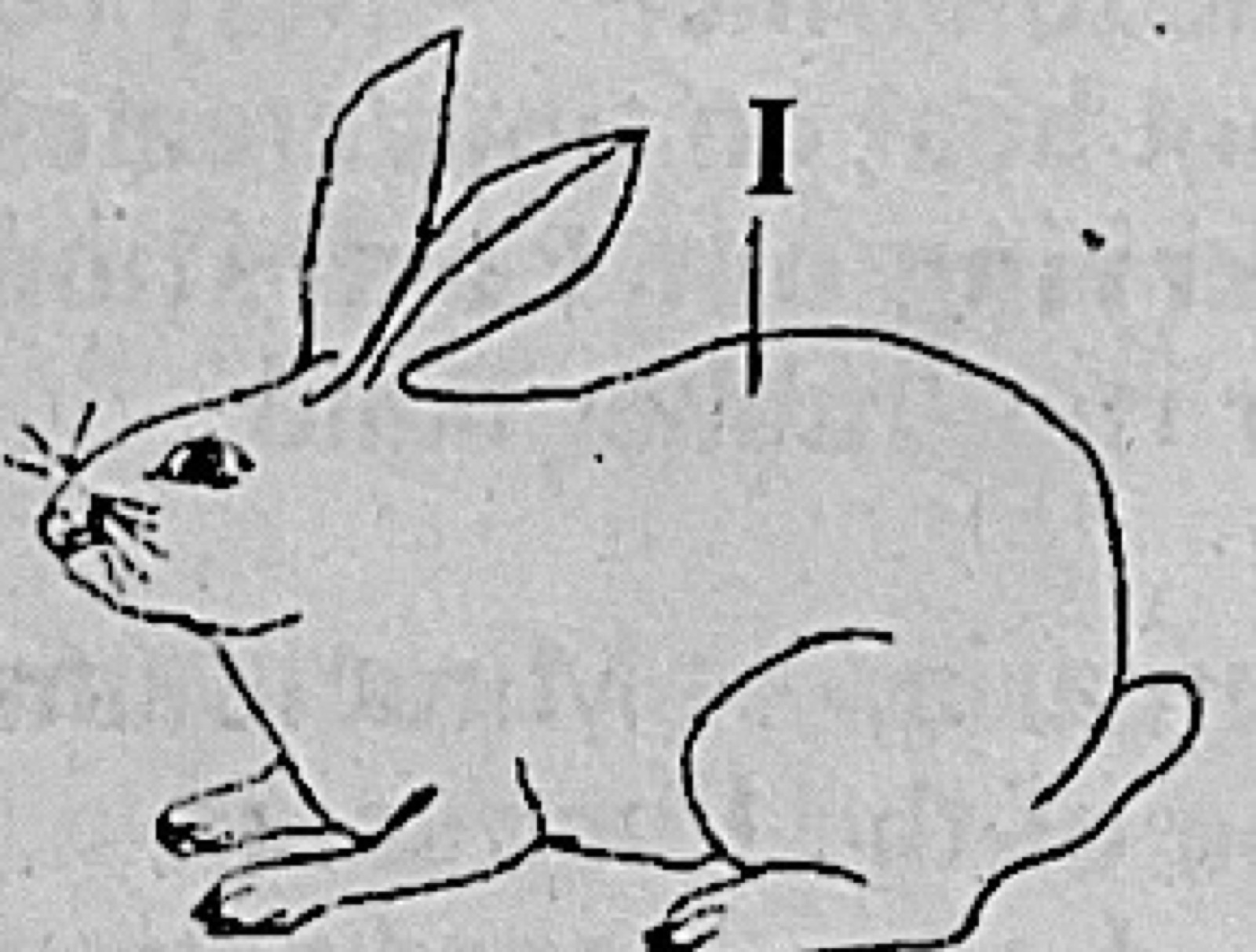
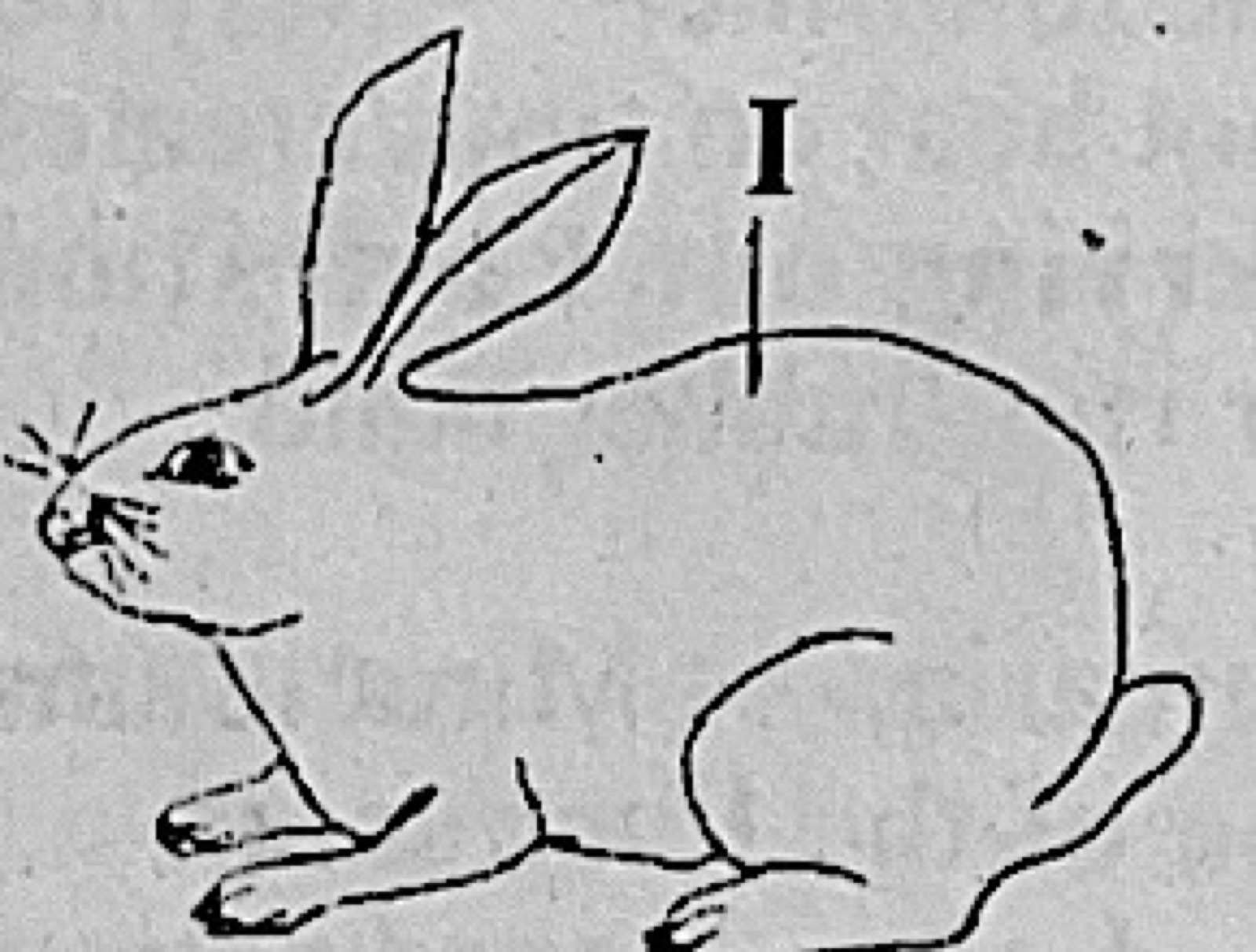
The diagram below illustrates a farm animal.
The part of the animal labelled I is called

Diagram for this question
  1. A.back.
  2. B.cleft.
  3. C.loin.
  4. D.rump.
Show the answer and explanation

Answer: A (back.)

Explanation

I points to the top line just behind the neck: the back.

Open this question

Question 14

Animal Nutrition

Which of the following factors is least considered in feed formulation for farm animals?

  1. A.Purpose of keeping animal.
  2. B.Health status of animal.
  3. C.Age of animal.
  4. D.Breed of animal.
Show the answer and explanation

Answer: D (Breed of animal.)

Explanation

Feeds are formulated mainly by age, purpose (e.g. layer, broiler) and health; breed matters least.

Open this question

Question 15

Animal Diseases

In poultry, cyclic movement and shaking of head are disease symptoms associated with

  1. A.coccidiosis.
  2. B.fowl pox.
  3. C.infectious coryza.
  4. D.Newcastle disease.
Show the answer and explanation

Answer: D (Newcastle disease.)

Explanation

Newcastle disease attacks the nervous system, causing twisting of the neck, circling and head shaking.

Open this question

Question 16

Pasture and Forage

Which of the following practices should be carried out by a farmer to encourage regrowth of pasture species?

  1. A.Seeding.
  2. B.Weed control.
  3. C.Good stocking.
  4. D.Controlled burning
Show the answer and explanation

Answer: D (Controlled burning)

Explanation

Controlled burning removes old, dry, fibrous growth so fresh shoots can sprout.

Open this question

Question 17

Poultry Production

To reduce the problem of cannibalism and egg sucking on a poultry farm, a farmer needs to carry out

  1. A.debeaking.
  2. B.delousing.
  3. C.desporing.
  4. D.deworming.
Show the answer and explanation

Answer: A (debeaking.)

Explanation

Trimming the beak stops birds from pecking each other and breaking eggs.

Open this question

Question 18

Animal Improvement and Breeding

Which of the following processes is not involved in artificial insemination?

  1. A.Ejaculation.
  2. B.Mating.
  3. C.Ovulation.
  4. D.Teasing.
Show the answer and explanation

Answer: B (Mating.)

Explanation

In AI the male and female never mate; semen is placed in the female by hand.

Open this question

Question 19

Animal Diseases

A nutritional disorder in cattle characterized by distended stomach is known as

  1. A.bloat.
  2. B.ketosis.
  3. C.perosis.
  4. D.rickets.
Show the answer and explanation

Answer: A (bloat.)

Explanation

Bloat is the build-up of gas that swells the rumen.

Open this question

Question 20

Pasture and Forage

The ability of forage crops to survive and spread is referred to as

  1. A.compatibility.
  2. B.persistence.
  3. C.profuseness.
  4. D.resistance.
Show the answer and explanation

Answer: B (persistence.)

Explanation

A persistent forage keeps surviving and spreading season after season.

Open this question

Question 21

Reproduction in Farm Animals

Which of the following farm animals is not correctly matched with its parturition terminology?

  1. A.Cattle → calving
  2. B.Goat → kidding
  3. C.Rabbit → kindling
  4. D.Sheep → whelping
Show the answer and explanation

Answer: D (Sheep → whelping)

Explanation

Sheep give birth by lambing; whelping is used for dogs.

Open this question

Question 22

Livestock Management Practices

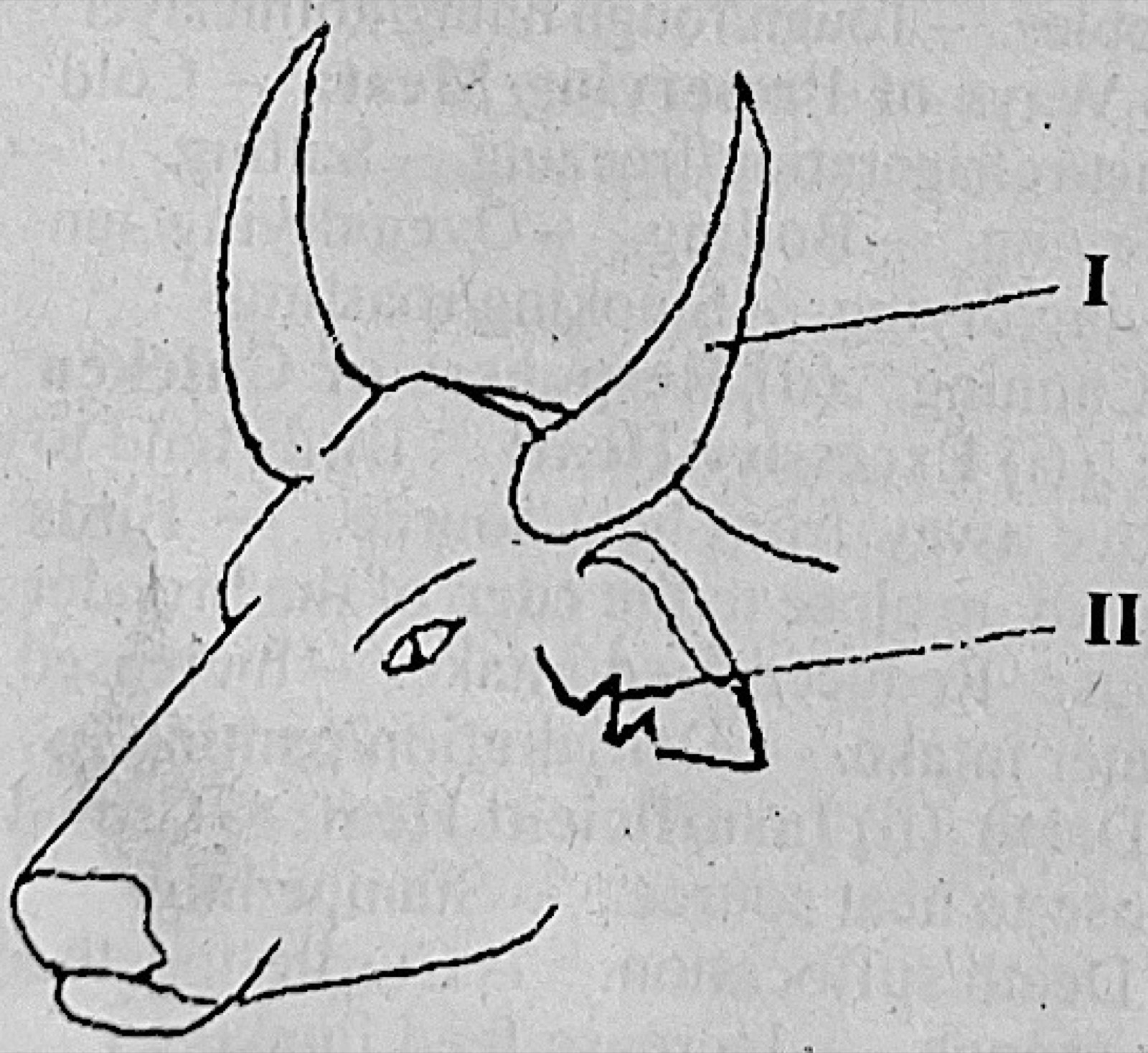
Study the diagram below.
The part labelled I could be removed by using

Diagram for this question
  1. A.hot iron.
  2. B.caustic soda.
  3. C.elastrator rubber.
  4. D.burdizzo pliers.
Show the answer and explanation

Answer: C (elastrator rubber.)

Explanation

I is a fully grown horn; tight elastrator rubber rings cut off its blood supply until it drops off. Hot iron and caustic soda are used only on horn buds of young calves.

Open this question

Question 23

Livestock Management Practices

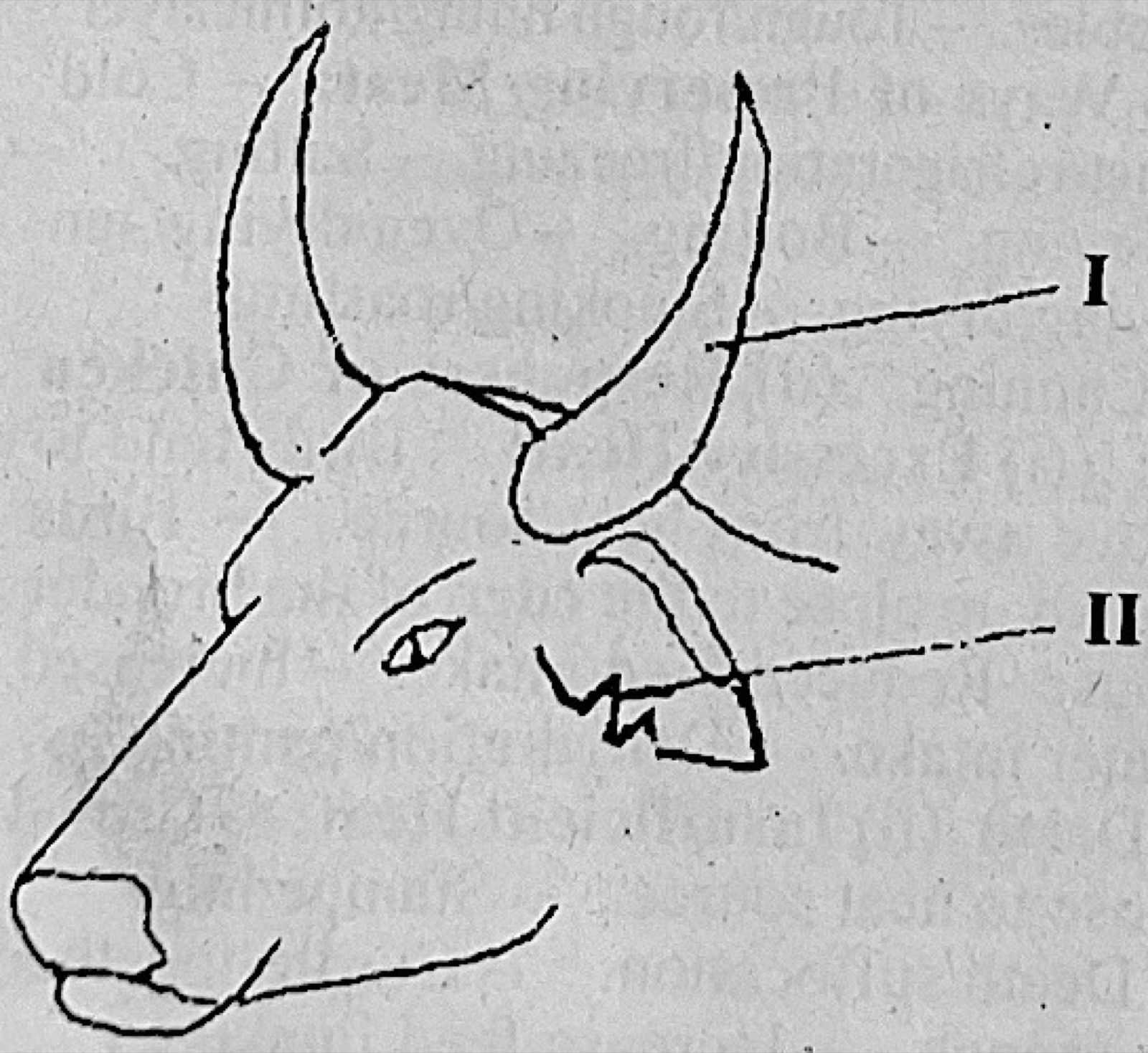
Study the diagram below.
The identification method carried out on the part labelled II is called ear

Diagram for this question
  1. A.cutting.
  2. B.notching.
  3. C.tagging.
  4. D.tattooing.
Show the answer and explanation

Answer: B (notching.)

Explanation

The V-shaped cut on the edge of the ear is an ear notch.

Open this question

Question 24

Poultry Production

Which of the following feed ingredients is required most in formulating ration for layers?

  1. A.Bone meal
  2. B.Mineral salt.
  3. C.Groundnut cake.
  4. D.Vitamin supplement.
Show the answer and explanation

Answer: A (Bone meal)

Explanation

Layers need a lot of calcium and phosphorus to form eggshells, supplied by bone meal.

Open this question

Question 25

Animal Improvement and Breeding

The selection of an animal from a group based on its performance is called

  1. A.family selection.
  2. B.progeny selection.
  3. C.pedigree selection.
  4. D.individual selection.
Show the answer and explanation

Answer: D (individual selection.)

Explanation

Individual (mass) selection judges each animal on its own performance.

Open this question

Question 26

Poultry Production

A farmer noticed the laying of soft-shelled eggs by a flock of layers. Which of the following minerals is likely deficient in the diet of the layers?

  1. A.Calcium.
  2. B.Iron.
  3. C.Manganese.
  4. D.Zinc.
Show the answer and explanation

Answer: A (Calcium.)

Explanation

Eggshell is mostly calcium carbonate, so too little calcium gives soft shells.

Open this question

Question 27

Animal Improvement and Breeding

One of the advantages of artificial insemination is that

  1. A.gestation period becomes shorter.
  2. B.it may reduce the rate of pregnancy.
  3. C.it takes a longer time to make the animals come on heat.
  4. D.the semen of the male animal can still be used after death.
Show the answer and explanation

Answer: D (the semen of the male animal can still be used after death.)

Explanation

Frozen semen can be stored and used long after the bull has died.

Open this question

Question 28

Animal Diseases

Chronic Respiratory Disease is prevalent in

  1. A.cattle.
  2. B.poultry.
  3. C.rabbit.
  4. D.swine.
Show the answer and explanation

Answer: B (poultry.)

Explanation

CRD, caused by Mycoplasma gallisepticum, is a common poultry disease.

Open this question

Question 29

Pasture and Forage

Forage crops could be ploughed in the soil to serve as

  1. A.compost manure.
  2. B.farmyard manure.
  3. C.green manure.
  4. D.cover crops.
Show the answer and explanation

Answer: C (green manure.)

Explanation

Green plants ploughed into the soil to rot and add nutrients are green manure.

Open this question

Question 30

Animal Diseases

Which of the following practices is most vital during introduction of a farm animal?

  1. A.Medication.
  2. B.Quarantine.
  3. C.Sanitation.
  4. D.Vaccination.
Show the answer and explanation

Answer: B (Quarantine.)

Explanation

New animals are kept apart (quarantined) first so any disease they carry shows before they join the herd.

Open this question

Question 31

Digestive System of Farm Animals

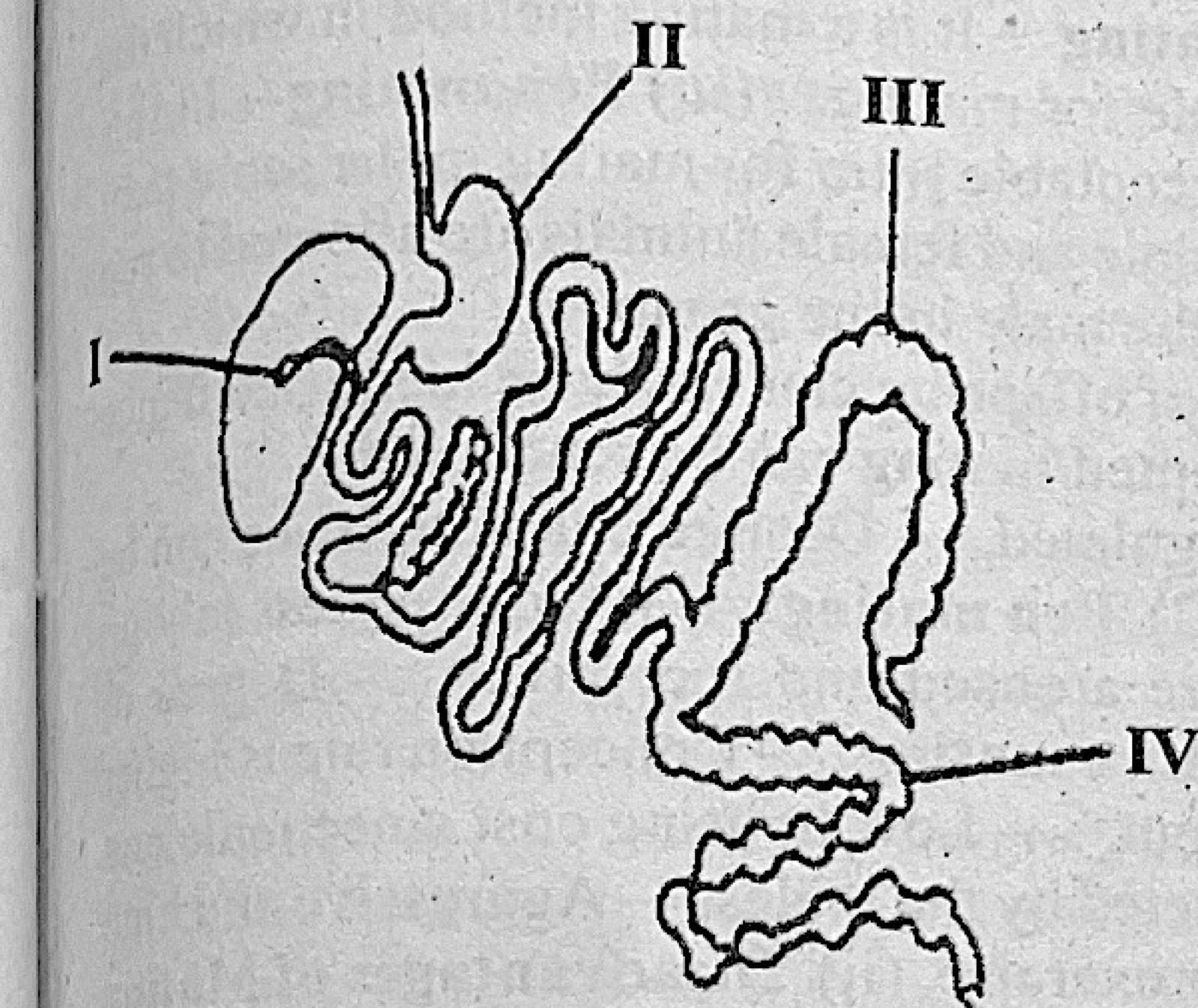
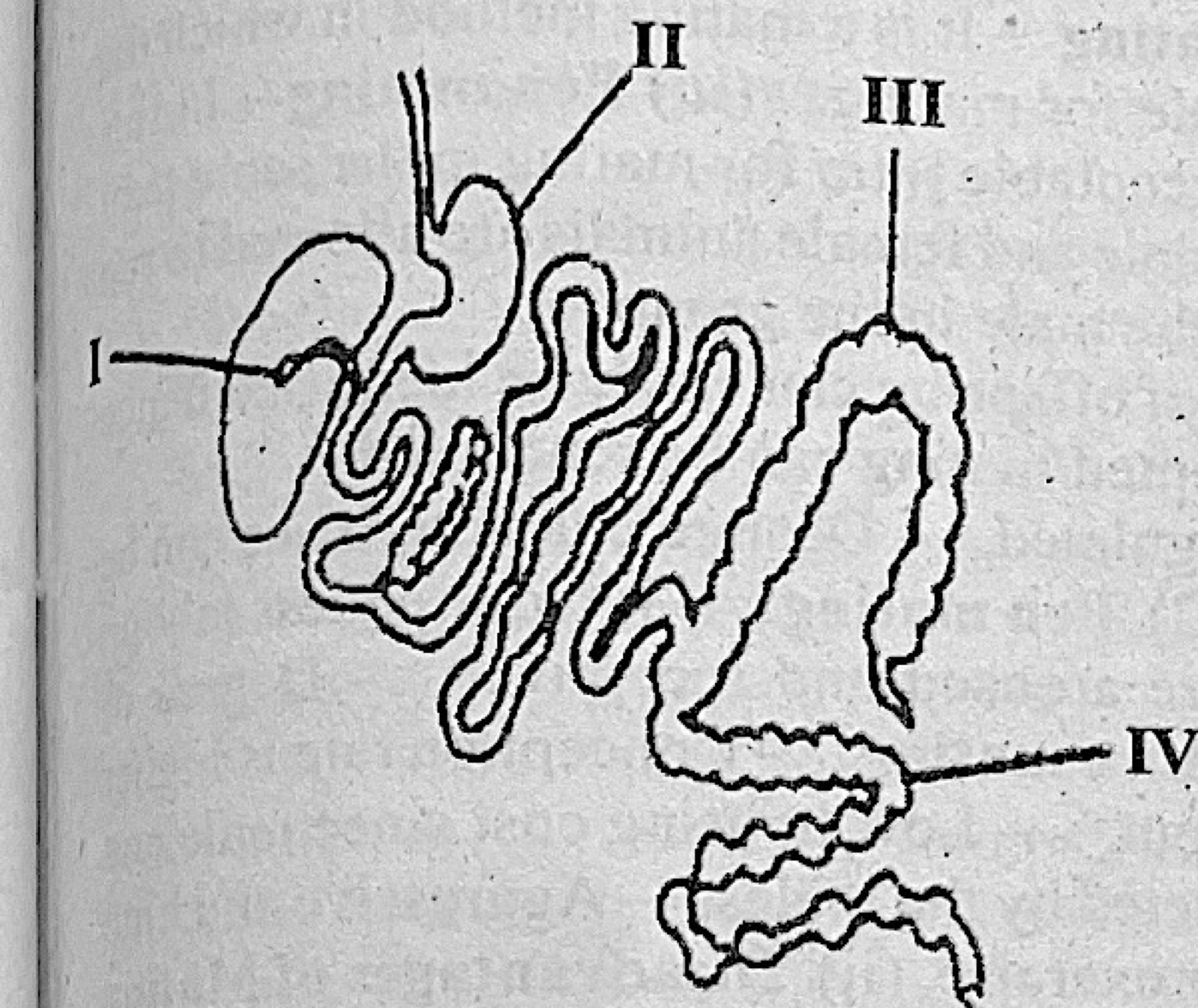
The diagram below illustrates the digestive system of a pseudo-ruminant.
Cellulose digestion by micro-organisms takes place in the part labelled

Diagram for this question
  1. A.I only.
  2. B.II only.
  3. C.III only.
  4. D.IV only.
Show the answer and explanation

Answer: C (III only.)

Explanation

III is the large, sacculated caecum, where microbes digest cellulose in a pseudo-ruminant such as the rabbit.

Open this question

Question 32

Digestive System of Farm Animals

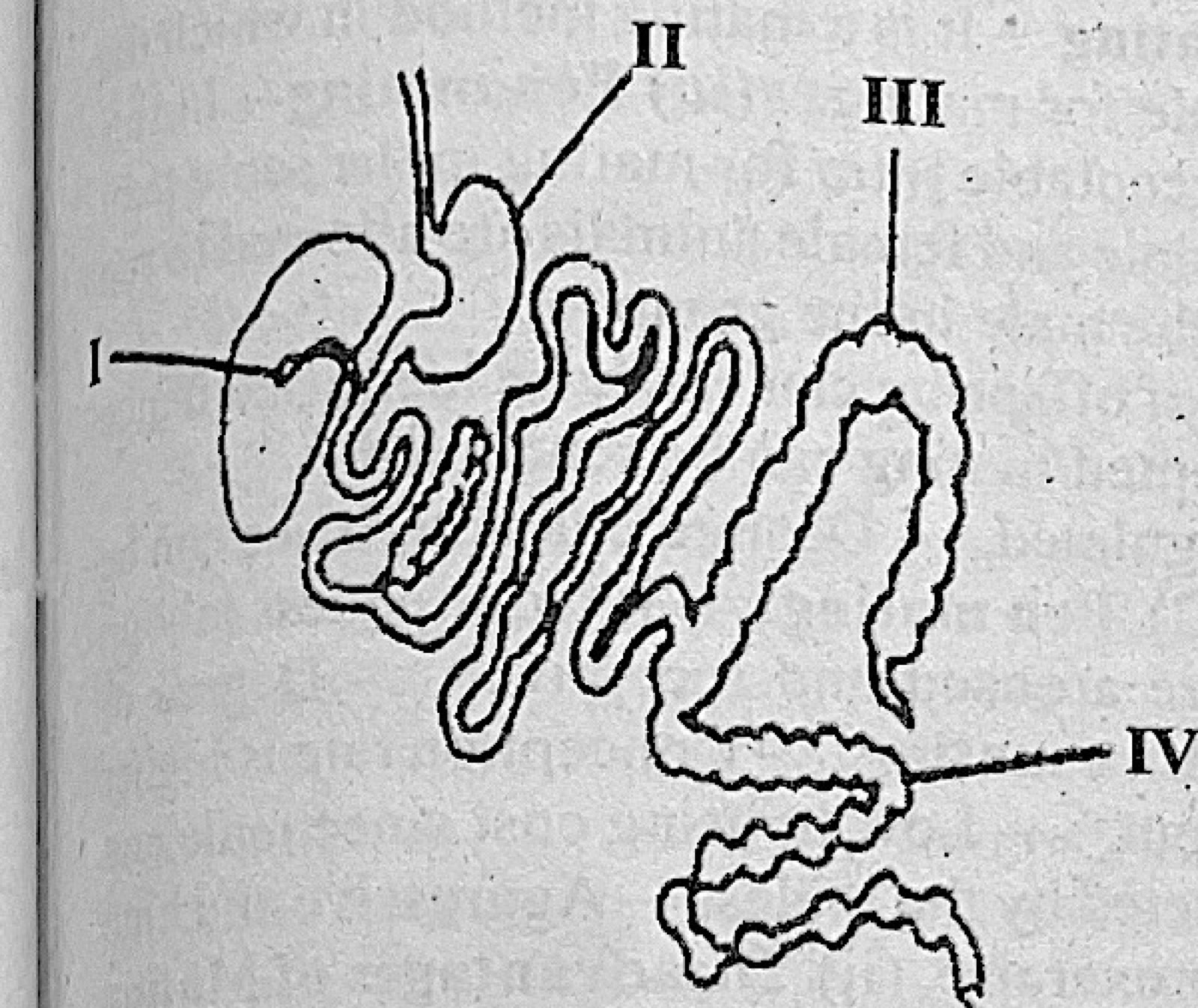
The diagram below illustrates the digestive system of a pseudo-ruminant.
Which of the following farm animals has the digestive system shown in the diagram?

Diagram for this question
  1. A.Chicken.
  2. B.Pig.
  3. C.Rabbit.
  4. D.Sheep.
Show the answer and explanation

Answer: C (Rabbit.)

Explanation

The rabbit has a simple stomach and a very large caecum: a pseudo-ruminant.

Open this question

Question 33

Digestive System of Farm Animals

The diagram below illustrates the digestive system of a pseudo-ruminant.
The parts labelled I and II are known respectively as

Diagram for this question
  1. A.stomach and caecum.
  2. B.liver and stomach.
  3. C.gall bladder and caecum.
  4. D.gall bladder and stomach.
Show the answer and explanation

Answer: D (gall bladder and stomach.)

Explanation

I points to the small gall bladder on the liver and II to the stomach.

Open this question

Question 34

Animal Improvement and Breeding

The function of an electro-ejaculator during artificial insemination is to

  1. A.collect semen.
  2. B.service the female.
  3. C.induce semen release.
  4. D.induce heat in the animal.
Show the answer and explanation

Answer: C (induce semen release.)

Explanation

An electro-ejaculator is a probe that gives mild electric pulses to the nerves of a male's reproductive organs, making him ejaculate. It is used for males that cannot mount or serve an artificial vagina.

Open this question

Question 35

Processing and Marketing of Animal Products

Which of the following terms is a technique used in processing farm animals?

  1. A.Fattening.
  2. B.Flushing.
  3. C.Slaughtering.
  4. D.Steaming up.
Show the answer and explanation

Answer: C (Slaughtering.)

Explanation

Slaughtering is the first step in processing animals into meat; the others are feeding practices.

Open this question

Question 36

Reproduction in Farm Animals

An ewe which is not lactating after lambing should be given

  1. A.antibiotics.
  2. B.oxytocin.
  3. C.iron dextran.
  4. D.progesterone.
Show the answer and explanation

Answer: B (oxytocin.)

Explanation

Oxytocin causes milk let-down.

Open this question

Question 37

Animal Nutrition

Which of the following vitamins is water soluble?

  1. A.Vitamin A.
  2. B.Vitamin B.
  3. C.Vitamin D.
  4. D.Vitamin E.
Show the answer and explanation

Answer: B (Vitamin B.)

Explanation

Vitamins B and C dissolve in water; A, D, E and K are fat-soluble.

Open this question

Question 38

Poultry Production

A record which shows all the assets on a poultry farm is called

  1. A.Inputs record.
  2. B.Inventory record.
  3. C.Labour record.
  4. D.Production record.
Show the answer and explanation

Answer: B (Inventory record.)

Explanation

An inventory lists everything the farm owns.

Open this question

Question 39

Parasites of Farm Animals

An organism that habours another organism is referred to as

  1. A.host.
  2. B.parasite.
  3. C.pest.
  4. D.predator.
Show the answer and explanation

Answer: A (host.)

Explanation

The host is the organism that a parasite lives in or on.

Open this question

Question 40

Pasture and Forage

The botanical name of Guinea grass is

  1. A.Pennisetum pupureum.
  2. B.Imperata cylindrica.
  3. C.Panicum maximum.
  4. D.Axonopus compressus.
Show the answer and explanation

Answer: C (Panicum maximum.)

Explanation

Guinea grass is Panicum maximum.

Open this question

Theory question 101

Animal Improvement and Breeding

(a) Explain each of the following mating methods in farm animals: (i) hand mating; (ii) pen mating; (iii) pasture mating. (b)(i) Mention two advantages of each of the mating methods explained in 1(a). (ii) Mention two disadvantages of each of the mating methods explained in 1(a). (c) Mention two methods of collecting semen from a bull.

Show the model answer
Model answer

(a)(i) Hand mating: the farmer detects a female on heat and brings her to a chosen male (or vice versa) for a controlled mating, then separates them
(ii) Pen mating: a selected male is kept in a pen with a group of females so he mates them as they come on heat
(iii) Pasture (flock) mating: males and females graze and run together freely and any male mates any female on heat
(b)(i) Advantages. Hand mating: sire known so records are accurate; prevents inbreeding and over-use of the male; date of birth can be predicted. Pen mating: less labour; heat is rarely missed; sire of the group known. Pasture mating: very little labour; high conception since no heat is missed; cheap
(ii) Disadvantages. Hand mating: needs skill to detect heat; more labour; heat may be missed. Pen mating: male may be overworked; exact mating dates not known; fighting if more than one male. Pasture mating: sire unknown, records difficult; inbreeding and mating of immature females; fighting among males
(c) Any two: artificial vagina; electro-ejaculator; massage of the ampullae/seminal vesicles through the rectum

Explanation

Two separate points for each method in (b).

Open this question

Theory question 102

Livestock Management Practices

(a) Explain each of the following terms as used in animal husbandry: (i) coprophagy; (ii) rumination; (iii) candling; (iv) tethering. (b) List four local materials which could be used for constructing a goat house. (c)(i) Name the three members of the honey bee colony. (ii) State five ways in which honey beekeeping is important.

Show the model answer
Model answer

(a)(i) Coprophagy: eating of its own soft faeces by an animal such as the rabbit, to re-digest them and gain vitamins and protein
(ii) Rumination: bringing back swallowed food (cud) from the rumen to the mouth to chew it again before swallowing
(iii) Candling: examining eggs against a bright light in a dark place to check fertility, embryo development or defects
(iv) Tethering: tying an animal with a rope to a peg or tree so that it grazes only within a circle
(b) Any four: bamboo; wood/planks/sticks; palm fronds/raffia; grass thatch; mud/clay bricks; rope/twine; stones
(c)(i) Queen, drone, worker
(ii) Any five: honey for food and medicine; beeswax for candles and cosmetics; pollination of crops; income and employment; propolis and royal jelly; foreign exchange; research/education

Explanation

One clear definition for each term.

Open this question

Theory question 103

Digestive System of Farm Animals

(a)(i) Explain the term monogastric. (ii) Give two examples of monogastric animals. (b) Explain each of the following terms as used in animal nutrition: (i) concentrate; (ii) additive. (c) State four ways in which roughage is important in the diet of farm animals. (d) List four materials which could be used in milking cow. (e) Mention two animals each which could be fed on each of the following forms of prepared feed: (i) pellets; (ii) mash.

Show the model answer
Model answer

(a)(i) A monogastric animal has a simple, single-chambered stomach and cannot digest much fibre
(ii) Any two: pig; poultry (chicken); rabbit; horse; dog
(b)(i) Concentrate: feed low in fibre and high in digestible nutrients (energy or protein), e.g. maize, groundnut cake, fish meal
(ii) Additive: a non-nutrient substance added in small amounts to feed to improve growth, health or feed use, e.g. antibiotics, coccidiostats, hormones, flavours, antioxidants
(c) Any four: provides bulk/fills the gut; fibre aids gut movement and prevents constipation; source of energy for ruminants via rumen microbes; stimulates rumination and saliva flow; keeps rumen healthy and maintains milk fat; cheap feed
(d) Any four: milking bucket/pail; stool; milking machine; udder towel and warm water/disinfectant; strip cup; milk can; sieve/strainer; teat dip
(e)(i) Pellets, any two: rabbits; fish; poultry (broilers); pigs; grasscutters
(ii) Mash, any two: poultry (chicks, layers); pigs; calves

Explanation

Keep definitions short and give examples.

Open this question

Theory question 104

Anatomy and Physiology of Farm Animals

(a) Mention two organs each in each of the following parts of rabbit: (i) head; (ii) thorax; (iii) abdomen. (b) State one function of each of the following organs in farm animals: (i) caecum; (ii) gizzard; (iii) crop; (iv) rumen; (v) lung. (c) State six practical ways of checking malnutrition in livestock production. (d) Mention three examples of non-traditional farm animals.

Show the model answer
Model answer

(a)(i) Head, any two: brain; eyes; ears; tongue; teeth; nose (ii) Thorax, any two: heart; lungs; trachea; oesophagus (iii) Abdomen, any two: stomach; liver; intestines; kidneys; caecum; pancreas; spleen; bladder; reproductive organs
(b)(i) Caecum: microbial digestion of cellulose (ii) Gizzard: grinds food with grit (iii) Crop: stores and softens food (iv) Rumen: microbial fermentation of fibre/storage of swallowed feed (v) Lung: gaseous exchange, taking in oxygen and removing carbon dioxide
(c) Any six: feed a balanced ration; give feed according to age and purpose; provide clean water at all times; give mineral licks and vitamin supplements; deworm regularly; avoid overcrowding at feeders; supplement in the dry season (hay, silage, concentrates); improve pastures; creep feed the young; store feed well to avoid spoilage
(d) Any three: snail; grasscutter (cane rat); bees; giant rat; quail; ostrich; guinea fowl; frog

Explanation

Match each function to the organ asked.

Open this question

Theory question 105

Pasture and Forage

(a) Explain the following terms as used in pasture and range management. (i) fodder; (ii) paddocking; (iii) reseeding; (iv) stocking rate; (v) natural pasture. (b) State five factors which could affect the establishment of pasture in West Africa. (c) State five ways in which weeds are of economic importance in livestock production.

Show the model answer
Model answer

(a)(i) Fodder: forage that is cut and carried to animals (fresh or conserved as hay or silage) instead of being grazed
(ii) Paddocking: dividing a pasture into fenced sections that are grazed in turn so each section can rest and regrow
(iii) Reseeding: sowing new seeds of good grasses/legumes on a degraded pasture to improve it
(iv) Stocking rate: the number of animals kept per unit area of pasture (e.g. per hectare) over a period
(v) Natural pasture: grassland made of grasses and legumes that grow on their own without being planted
(b) Any five: climate (rainfall, temperature); soil type and fertility; choice of suitable species; land tenure; cost of establishment/capital; pests and diseases; weeds; bush burning; labour and equipment; topography
(c) Any five: compete with forage for nutrients, water and light; reduce pasture yield; some are poisonous to animals; harbour pests and disease vectors; lower quality of produce (e.g. burrs in wool, taint in milk); increase cost of production; some are useful as feed or medicine

Explanation

Define each term in one sentence.

Open this question

Theory question 106

Reproduction in Farm Animals

(a) Explain each of the following terms as used in animal production: (i) flushing; (ii) dystocia; (iv) parturition. (b) State five ways in which fencing is important in livestock production. (c) Mention five ways in which rearing of rabbits is important. (d) List four disadvantages of deep litter system in poultry production.

Show the model answer
Model answer

(a)(i) Flushing: giving extra, high-quality feed to females two to three weeks before mating to raise ovulation and litter size
(ii) Dystocia: difficult or abnormal birth, needing assistance
(iv) Parturition: the act of giving birth to young at the end of pregnancy
(b) Any five: keeps animals in and prevents straying into crops; keeps out predators and thieves; allows rotational grazing/paddocking; separates animals by age, sex or health; controls breeding; reduces spread of disease; marks boundaries
(c) Any five: meat rich in protein; fur/pelt; manure; income; used in research and teaching; breeds quickly with short gestation; needs little space and capital; pets
(d) Any four: high disease risk (e.g. coccidiosis) as birds contact droppings; litter becomes wet and dirty; egg eating and cannibalism more common; floor eggs get dirty; more space per bird than cages; harder to identify poor layers; dust problems
Explanation

Short, distinct points.

Open this question