Question 1
Anatomy and Physiology of Farm AnimalsThe number of teats in a cow is
- A.two.
- B.four.
- C.six.
- D.eight.
Show the answer and explanation
Answer: B (four.)
Explanation
A cow's udder has four quarters, each with one teat.
45 questions. Try each one, then open the answer to check yourself and read the explanation.
The number of teats in a cow is
Answer: B (four.)
A cow's udder has four quarters, each with one teat.
The movement of digested feed into the bloodstream is known as
Answer: A (absorption.)
Absorption is the passage of digested food from the gut into the blood.
Selection of animals based on performance of ancestors is called
Answer: D (pedigree selection.)
Pedigree selection uses the records of an animal's parents and grandparents.
The incubation period of chicken egg is
Answer: B (21 days.)
Chicken eggs hatch after about 21 days of incubation.
Which of the following body systems determines the type of feed given to an animal?
Answer: B (Digestive)
Whether an animal is a ruminant or monogastric (its digestive system) decides what feed it can use, e.g. roughage or concentrates.
Which of the following farm animals are monogastrics? I. Camel II. Donkey III. Horse
Answer: C (II and III only)
Donkeys and horses have a simple stomach; the camel has a three-chambered stomach and chews the cud (pseudo-ruminant).
The first stage at which the tick attaches itself to the body of a grazing farm animal is
Answer: C (larva.)
Tick eggs hatch on the ground; the larva (seed tick) climbs grass and is the first stage to attach to and feed on the animal.
Which of the following organs is influenced by oxytocin?
Answer: D (Udder)
Oxytocin causes milk let-down from the udder (and contraction of the uterus at birth).
Which of the following methods are used in animal improvement? I. Introduction II. Isolation III. Selection
Answer: B (I and III only)
Introduction of better breeds and selection of the best animals are improvement methods; isolation is a disease-control measure.
The vector that transmits trypanosomiasis is
Answer: C (tsetsefly.)
The tsetse fly carries trypanosomes from animal to animal when it sucks blood.
Which of the following identification methods could be used in poultry production?
Answer: A (Banding)
Birds are identified with numbered leg or wing bands; branding and ear notching are for cattle, pigs and other mammals.
An example of a non-ruminant herbivore is
Answer: B (horse.)
The horse eats only plant material but has a simple stomach, digesting fibre in its large caecum; the pig is an omnivore.
Digestion in the rumen is mainly
Answer: D (microbial.)
Bacteria and protozoa in the rumen ferment and break down the fibre.
The diagram below is an illustration of the reproductive structure of a farm animal.
The structure illustrated in the diagram is found in
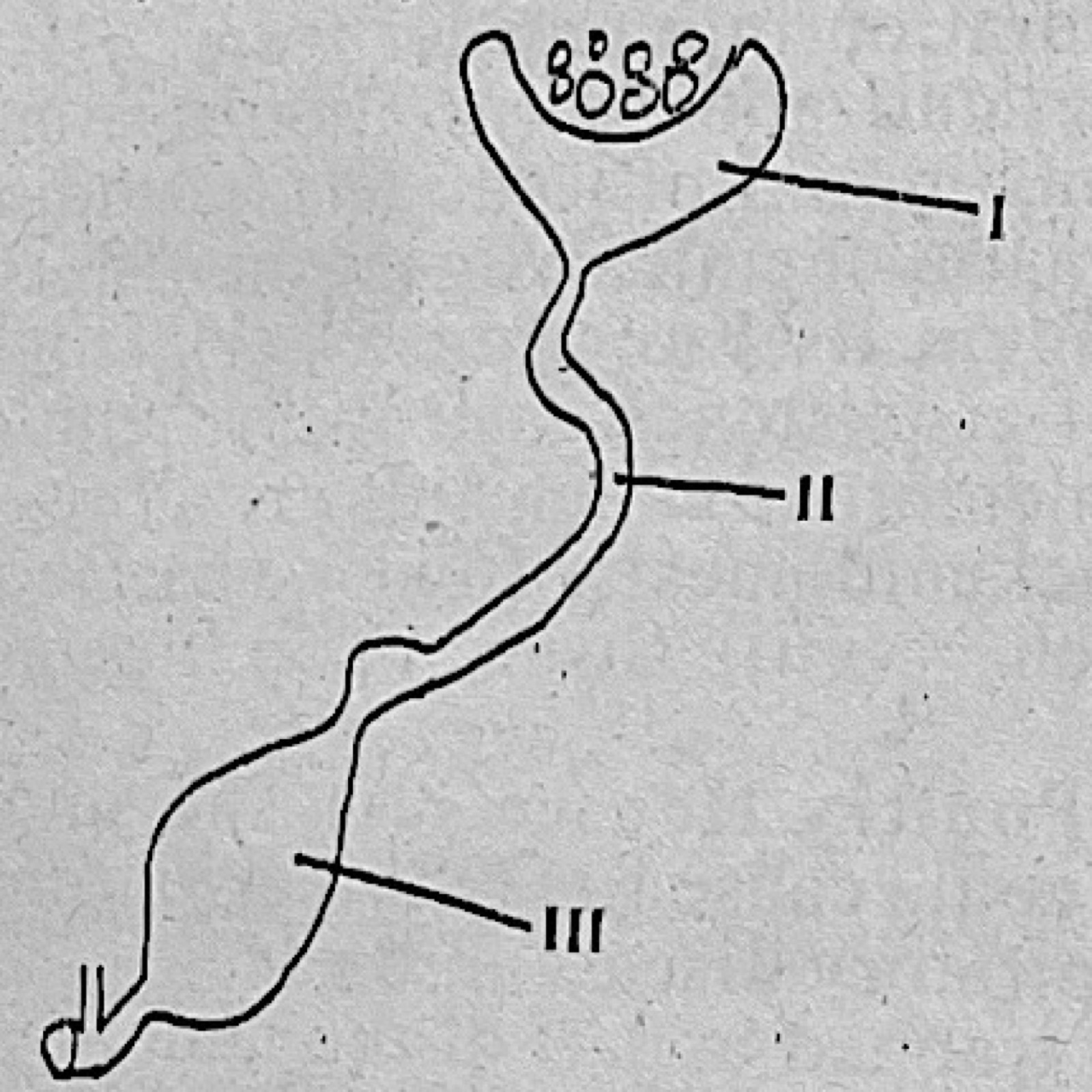
Answer: C (poultry.)
It shows a single ovary with developing yolks and one long oviduct: the reproductive tract of a hen.
The diagram below is an illustration of the reproductive structure of a farm animal.
The parts labelled I and II are
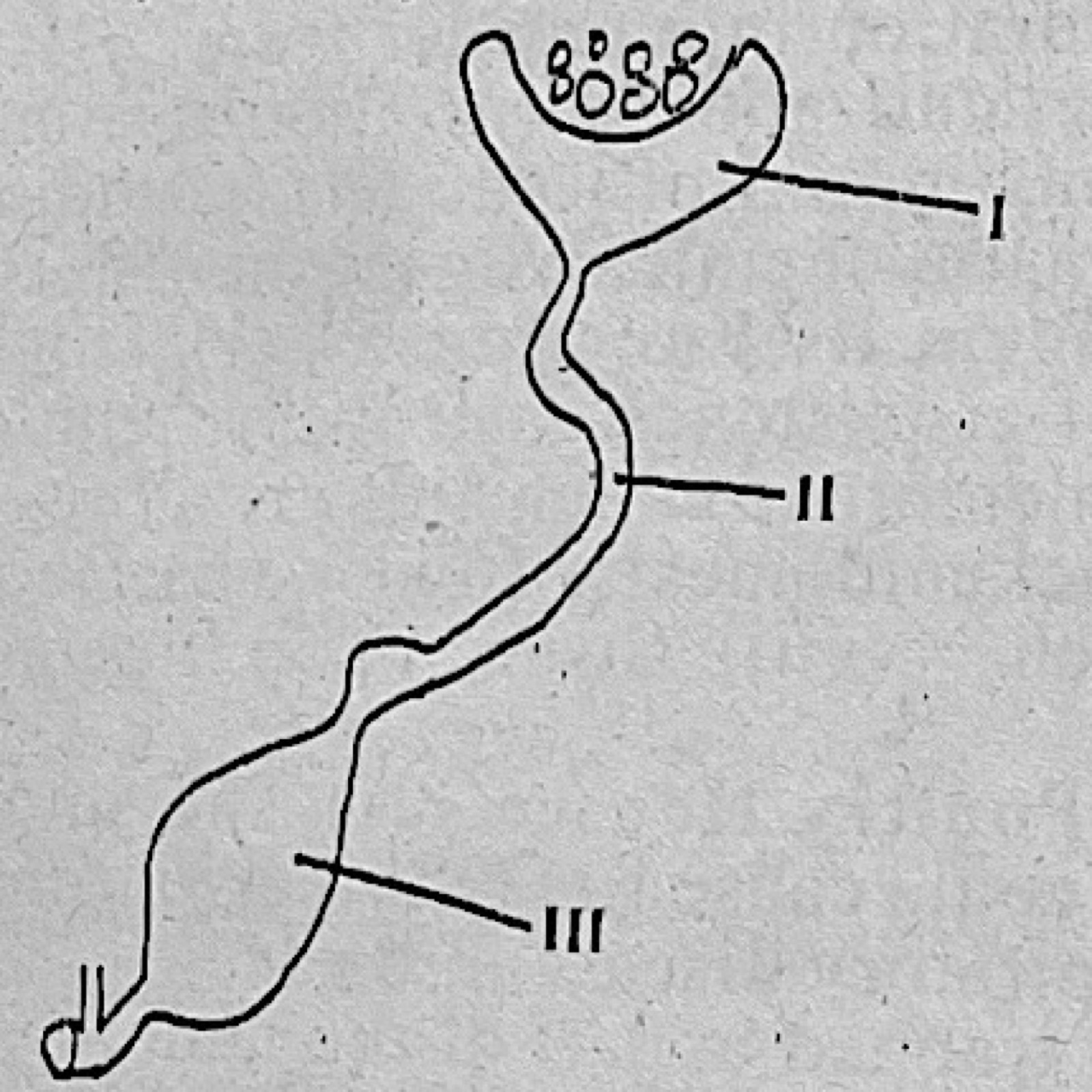
Answer: D (infundibulum and magnum.)
I is the funnel that catches the yolk (infundibulum) and II the long section that adds albumen (magnum).
The diagram below is an illustration of the reproductive structure of a farm animal.
The main function of the part labelled III is
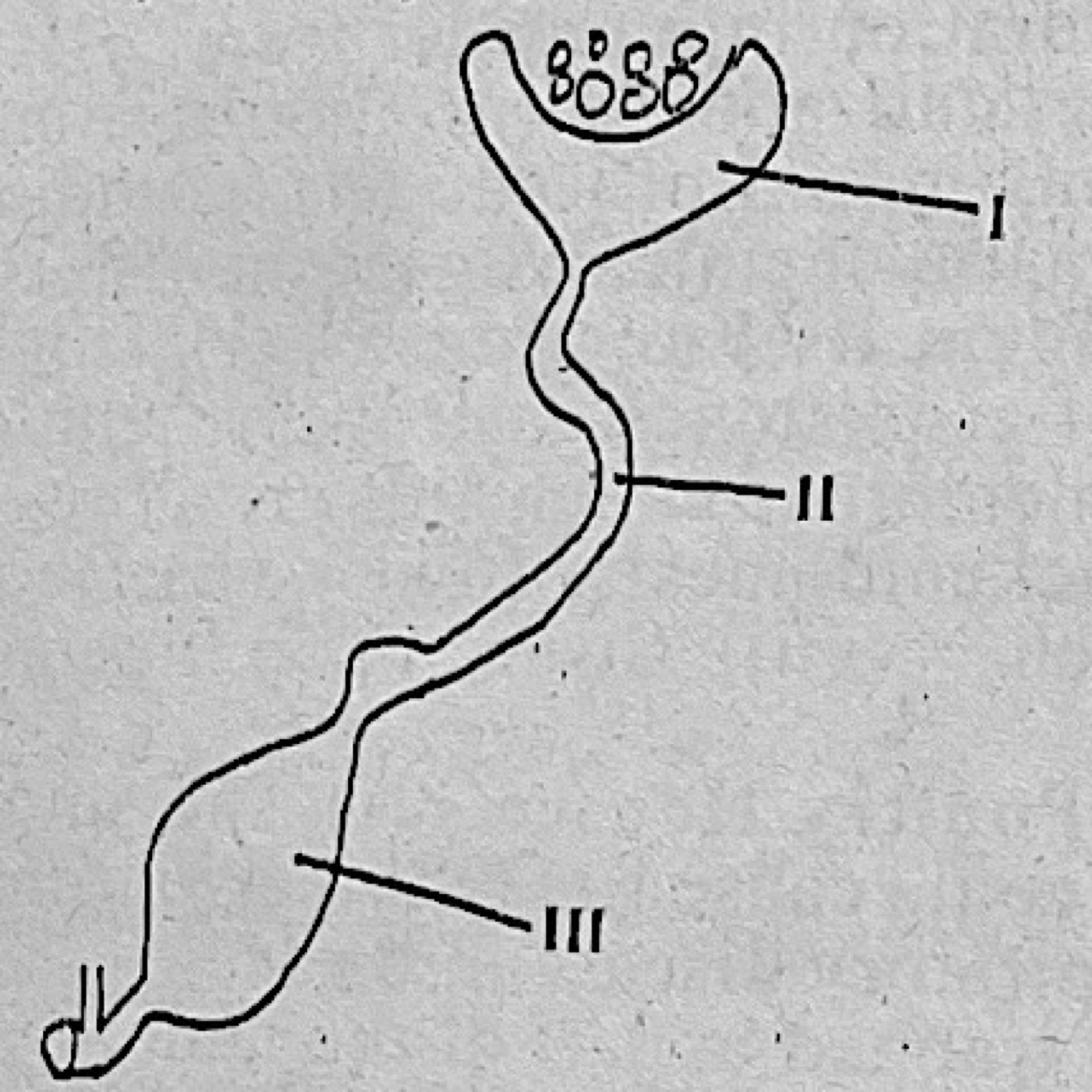
Answer: A (formation of egg shell.)
III is the shell gland (uterus) of the hen's oviduct, where the shell is laid down around the egg.
Which of the following farm animals could be used for breeding purposes?
Answer: A (Buck)
A buck is an uncastrated male (goat or rabbit); bullocks, hogs (barrows) and wethers are castrated.
Anaemia in farm animals is caused by
Answer: D (iron deficiency.)
Iron is needed to make haemoglobin; too little causes anaemia.
During the incubation of fertilized poultry egg, food and protection to the embryo are provided by the
Answer: A (albumen.)
The albumen (egg white) supplies water and protein to the embryo and cushions it against shock.
An example of a humpless cattle is
Answer: C (N'Dama.)
N'Dama is a humpless (taurine) breed; White Fulani and Red Bororo are humped Zebu, and Keteku is a cross.
Which of the following diseases of sheep is transmitted by tick?
Answer: C (Heartwater)
Heartwater is caused by a rickettsia passed on by the bont tick (Amblyomma).
Lush green forage is wilted before feeding to ruminants to prevent
Answer: B (bloat.)
Young lush forage (especially legumes) ferments fast and causes frothy bloat; wilting reduces this.
Female animals that are not accepted by their male counterparts could reproduce through
Answer: D (artificial insemination.)
Artificial insemination does not need the male to mate with the female.
Oestrus cycle in the ewe occurs every
Answer: C (17-21 days.)
The ewe comes on heat about every 17 days, which falls in the 17–21 day range.
Which of the following management practices is carried out in poultry farming?
Answer: A (Deworming)
Birds are dewormed; docking, disbudding and weaning are done on mammals.
The diagram below is an illustration of the leg of a farm animal.
The part labelled I is the
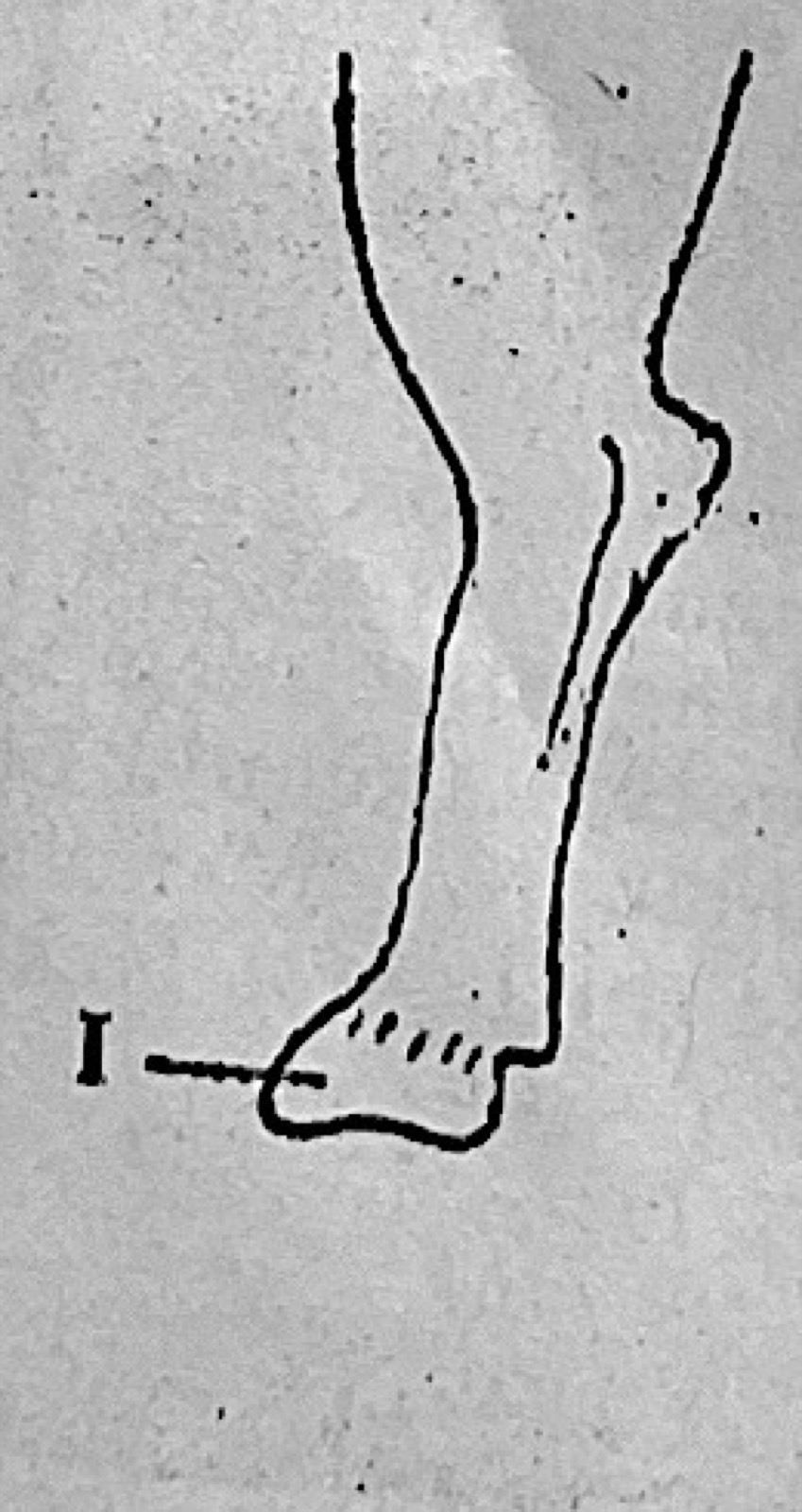
Answer: B (hoof.)
I points to the horny covering at the end of the foot: the hoof.
The diagram below is an illustration of the leg of a farm animal.
Which of the following operations may be carried out on the part labelled I?
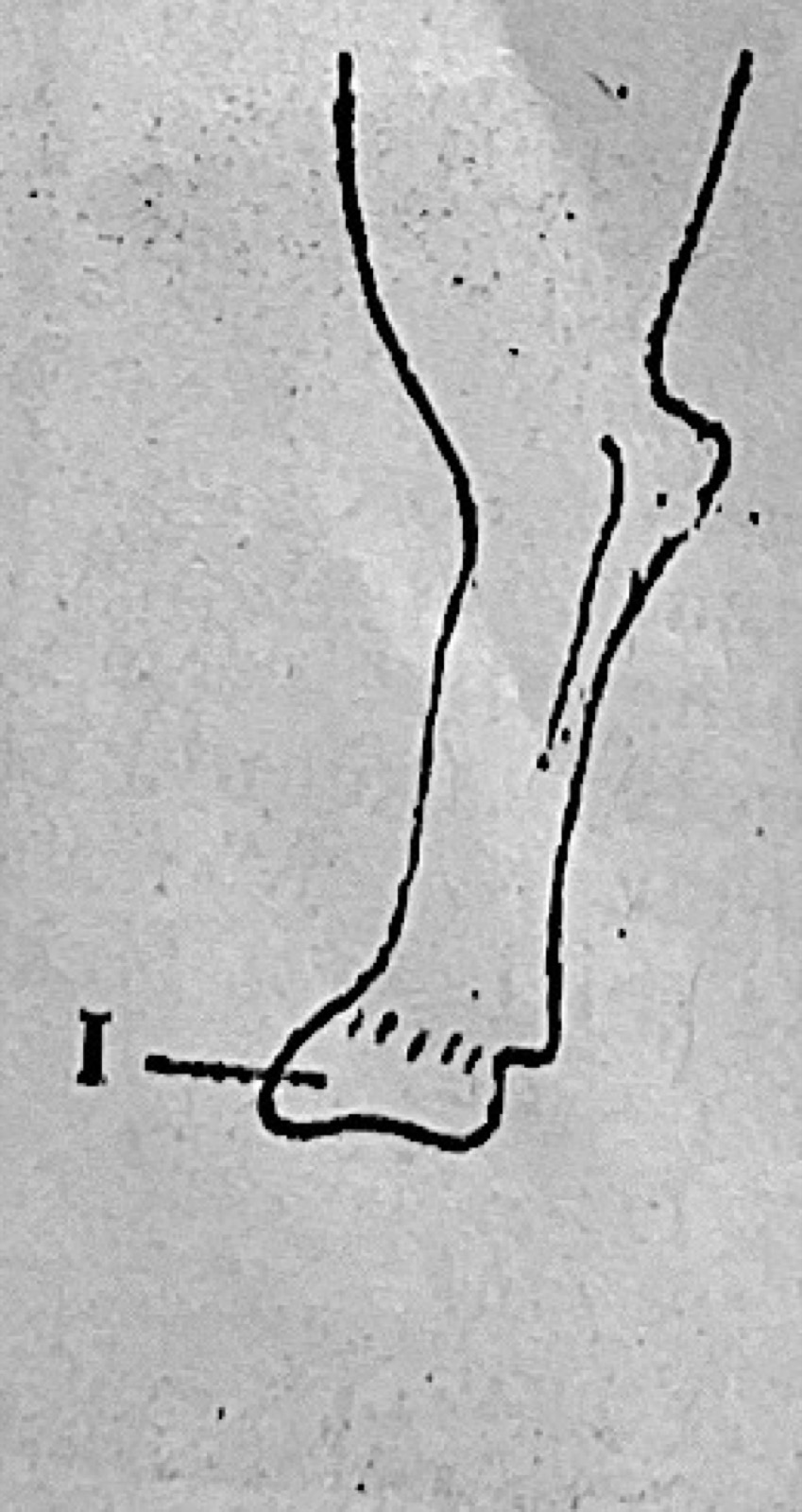
Answer: D (Trimming)
Overgrown hooves are trimmed to prevent lameness.
Which of the following products could be obtained from poultry by-products?
Answer: B (Pillow)
Poultry feathers are used to stuff pillows.
Which of the following management practices is used in the identification of livestock?
Answer: A (Branding)
Branding puts a permanent mark on the skin to identify the animal.
A disease that could result from giving animals mouldy feed is
Answer: B (aspergillosis.)
Aspergillosis is caused by the Aspergillus fungus that grows on mouldy feed and litter.
The benefits of planting grass-legume mixture does not include
Answer: C (decreased soil fertility.)
Legumes fix nitrogen, so a grass-legume mixture increases soil fertility, not decreases it.
In artificial insemination, semen collected is stored in liquid
Answer: C (nitrogen.)
Semen is frozen and stored in liquid nitrogen at about −196 °C.
The system in which a lamb is raised by another ewe is known as
Answer: B (fostering.)
Fostering means a young animal is reared by a female that is not its mother.
Which of the following excretory organs maintains a healthy balance of body fluids in farm animals?
Answer: A (Kidney)
The kidneys control how much water and salt is kept or passed out in urine (osmoregulation).
The disease caused by the bacterium Bacillus anthracis in pigs is
Answer: A (anthrax.)
Bacillus anthracis causes anthrax.
Which of the following plants is a pasture legume?
Answer: B (Pueraria phaseoloides)
Pueraria is a legume; the others are grasses.
Muscle rigidity and non-responsiveness to stimulus in dead farm animals is known as
Answer: C (rigor mortis.)
Rigor mortis is the stiffening of muscles after death.
The amount of feed given to a farm animal daily is known as
Answer: A (ration.)
A ration is the feed given to an animal in a 24-hour period.
Foot and mouth disease in sheep is caused by a
Answer: D (virus.)
Foot and mouth disease is caused by a virus.
(a) State six causes of low egg production in chicken. (b) Name three parts of the digestive system of pigs. (c) Enumerate six ways in which cattle production is important in West Africa. (d) State five uses of poultry eggs.
(a) Any six: old age of birds; moulting; disease and parasite attack; poor/unbalanced feeding (low protein, calcium); inadequate water; too little light (short day length); heat stress/poor ventilation; overcrowding; broodiness; poor breed/strain; stress from noise or handling; vices such as egg eating
(b) Any three: mouth; oesophagus; stomach; small intestine; large intestine/caecum; rectum; anus; liver; pancreas
(c) Any six: source of meat and milk; hides and skins for leather; source of income and employment; draught power/transport; manure; by-products (bone meal, blood meal, horns); foreign exchange; cultural uses (bride price, festivals); raw materials for industries
(d) Any five: food (protein) for humans; hatching to produce chicks; vaccine production; baking and confectionery; shampoo/cosmetics; source of income; eggshell as calcium in feed; research
Keep each point short and distinct.
(a) Name three management systems in farm animal production. (b) State three ways in which housing is important in the management of farm animals. (c) Mention four advantages associated with each of the following systems of keeping poultry: (i) deep litter; (ii) battery cage. (d) State three features of a suitable housing unit for rearing each of the following animals: (i) snails; (ii) grasscutter
(a) Extensive (free range); semi-intensive; intensive
(b) Any three: protects animals from bad weather; protects against thieves and predators; makes feeding, watering and other routines easier; helps disease control and record keeping; makes collection of eggs/manure easy
(c)(i) Deep litter, any four: litter manure is valuable; birds have room to exercise; less capital than battery cages; fewer leg and breast problems; birds' vices reduced if well managed; good for both layers and broilers
(ii) Battery cage, any four: more birds per unit space; clean eggs collected easily; egg eating and cannibalism reduced; easy to identify and cull poor layers; feed wastage low; less disease and parasite spread since birds do not touch droppings
(d)(i) Snailery, any three: cool, damp and shaded; well drained soft soil; escape-proof fence/net; protection from predators and direct sun; feeding and watering troughs
(ii) Grasscutter hutch/cage, any three: strong wire or concrete walls (grasscutters gnaw); well ventilated; easy to clean; protection from predators and rain; enough space with feeders and drinkers; cool, quiet place
Name three systems in (a); give separate advantages for each poultry system in (c).
(a) Define the term digestion in farm animals. (b) In a tabular form, give four differences between the digestive systems of a chicken and a goat. (c) List five methods of improving rangeland. (d) Name the end product of digestion of each of the following nutrients: (i) carbohydrate; (ii) protein; (iii) fat and oil. (e) State four functions of proteins in farm animals. (f) Mention two digestive enzymes found in the small intestines of a pig.
(a) Digestion is the breakdown of large, insoluble food substances into small, soluble molecules that can be absorbed into the blood
(b) Any four differences (chicken vs goat): has a beak, no teeth vs has teeth/no upper incisors with a dental pad; has a crop vs no crop; has a gizzard to grind feed vs grinding done by chewing the cud; proventriculus (simple glandular stomach) vs four-chambered stomach (rumen, reticulum, omasum, abomasum); two caeca vs one caecum; ends in a cloaca vs ends in an anus; does not ruminate vs ruminates; little microbial digestion vs microbial digestion of fibre in rumen
(c) Any five: reseeding with better grasses and legumes; controlled/rotational grazing; controlled burning; fertilizer application; weed and bush control; provision of water points; erosion control; fallowing/resting; pest control
(d)(i) Carbohydrate: glucose/simple sugars (volatile fatty acids in ruminants) (ii) Protein: amino acids (iii) Fat and oil: fatty acids and glycerol
(e) Any four: growth (body building); repair of worn-out tissues; formation of enzymes and hormones; formation of antibodies; production of milk, eggs, wool; source of energy when in excess
(f) Any two: trypsin; amylase; lipase; maltase; sucrase; lactase; peptidase/erepsin
In (b) set out the differences in two columns, one for each animal.
(a) Give three reasons for keeping goats. (b) (i) Define the term oestrus as used in farm animals. (ii) State three signs of heat in a sow. (c) Complete the table below.
FARM ANIMAL | ADULT FEMALE | PARTURITION | YOUNG ONE
I | Cow | II | III
Goat | IV | V | VI
VII | XI | Lambing | IX
X | XI | XII | Piglet
(a) Any three: meat (chevon); milk; skin for leather; manure; income; social/religious uses; control of bush/weeds
(b)(i) Oestrus is the period when a female animal is on heat and will accept the male for mating
(ii) Any three: swollen, reddish vulva; mucus discharge; restlessness and grunting; loss of appetite; standing still when pressed on the back (stands for the boar); mounting other pigs; ears erect
(c) I: cattle; II: calving; III: calf; IV: doe/nanny; V: kidding; VI: kid; VII: sheep; the adult female in the third row: ewe; IX: lamb; X: pig; the adult female in the fourth row: sow; XII: farrowing
Fill each Roman numeral in (c) with one word.
(a) State four functions of carbohydrates in farm animals. (b) List four organs associated with respiration in farm animals. (c) Mention two diseases that affect the respiratory system of farm animals (d) Define the following terms as used in animal physiology: (i) exhalation; (ii) inhalation; (iii) peristalsis; (iv) ovulation; (v) rumination.
(a) Any four: supply energy; produce body heat/keep body warm; stored as fat for later energy; spare protein for growth; fibre aids digestion/gut movement; milk sugar (lactose) and milk fat production
(b) Any four: nostrils/nose; pharynx; larynx; trachea; bronchi; bronchioles; lungs/alveoli; diaphragm; air sacs (poultry)
(c) Any two: pneumonia; tuberculosis; contagious bovine pleuropneumonia; chronic respiratory disease (poultry); Newcastle disease; aspergillosis; peste des petits ruminants
(d)(i) Exhalation: breathing out, the movement of air carrying carbon dioxide out of the lungs
(ii) Inhalation: breathing in, drawing air rich in oxygen into the lungs
(iii) Peristalsis: wave-like contractions of the gut wall muscles that push food along the alimentary canal
(iv) Ovulation: release of a mature egg (ovum) from the ovary
(v) Rumination: chewing the cud, bringing swallowed food back to the mouth to chew it again (in ruminants)
Give a one-sentence definition for each term in (d).
(a) Define the term animal improvement. (b) (i) Explain the term introduction as used in animal improvement. (ii) State three advantages and three disadvantages of introduction as a method of animal improvement. (c) (i) Define the term progeny selection. (ii) State five desirable characteristics that could be used in selecting animals used for improvement. (d) State three advantages of artificial insemination
(a) Animal improvement is the use of breeding and management methods to produce animals with better qualities (yield, growth, disease resistance) than their parents
(b)(i) Introduction: bringing in new breeds (often exotic) from another area or country to use alone or to cross with local animals
(ii) Advantages, any three: quick way to get high-yielding animals; brings in new desirable genes; can be crossed with local breeds for hybrid vigour; improves product quality. Disadvantages, any three: introduced animals may not adapt to the climate; may bring in new diseases; expensive to import and maintain; need better feed and management; local breeds may be lost
(c)(i) Progeny selection (progeny testing): choosing parent animals by judging the performance of their offspring
(ii) Any five: high yield (milk, eggs, meat); fast growth rate; good feed conversion; disease resistance; high fertility/prolificacy; good mothering ability; adaptation to climate; good conformation; docility
(d) Any three: one male can serve many females; prevents spread of venereal diseases; semen can be stored and transported; reduces cost of keeping males; allows use of very large or dead superior males
Define, then give the separate advantages and disadvantages asked for.