WAEC Agricultural Science 2018 past questions and answers

53 questions. Try each one, then open the answer to check yourself and read the explanation.

Question 1

Agricultural Development

Which of the following problems does not cause wastage of farm produce?

  1. A.Use of crude farm tools
  2. B.Poor transportation network
  3. C.Inadequate processing facilities
  4. D.Inadequate storage facilities
Show the answer and explanation

Answer: A (Use of crude farm tools)

Explanation

Crude tools limit how much is produced, but wastage comes from poor transport, processing and storage.

Open this question

Question 2

Farm Machinery and Mechanisation

Which of the following statements is not a reason for providing tractor-hiring services to farmers? To

  1. A.encourage farm mechanization.
  2. B.increase the area of land to be cultivated.
  3. C.increase the cost of production.
  4. D.boost food production.
Show the answer and explanation

Answer: C (increase the cost of production.)

Explanation

Tractor hiring is meant to lower costs and raise output, not to raise costs.

Open this question

Question 3

Land Use and Land Tenure

The land tenure system which involves the outright purchase of land is

  1. A.leasehold.
  2. B.communal.
  3. C.freehold.
  4. D.inheritance.
Show the answer and explanation

Answer: C (freehold.)

Explanation

Buying land outright gives the buyer freehold ownership.

Open this question

Question 5

Farm Machinery and Mechanisation

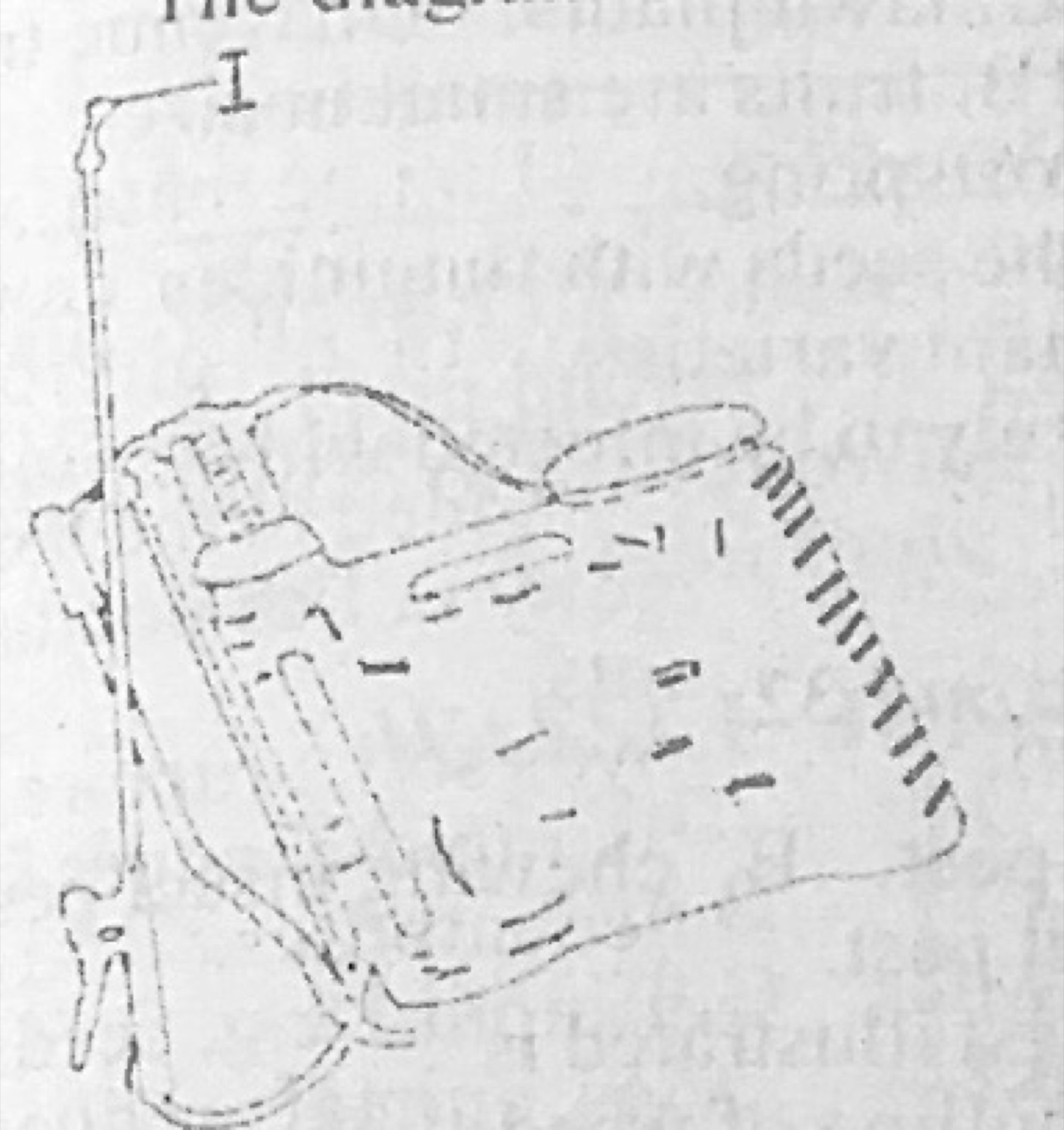
The diagram below illustrates a farm equipment.
The part of the equipment labelled I is used to

Diagram for this question
  1. A.control pressure.
  2. B.store liquid.
  3. C.prevent leakages.
  4. D.reduce liquid to droplets.
Show the answer and explanation

Answer: D (reduce liquid to droplets.)

Explanation

I is the nozzle at the end of the lance, which breaks the liquid into fine droplets.

Open this question

Question 6

Farm Machinery and Mechanisation

Which of the following devices is not a tractor-coupled implement?

  1. A.Plough
  2. B.Sheller
  3. C.Ridger
  4. D.Harrow
Show the answer and explanation

Answer: B (Sheller)

Explanation

A sheller is a stationary machine; ploughs, ridgers and harrows are pulled by tractors.

Open this question

Question 7

Farm Power

Which of the following statements is not true of electrical power? It

  1. A.can be generated from solar energy.
  2. B.is the cleanest source of farm power.
  3. C.can perform farm work on its own.
  4. D.is capital intensive.
Show the answer and explanation

Answer: C (can perform farm work on its own.)

Explanation

Electricity needs machines (motors, pumps) to do work; it does nothing on its own.

Open this question

Question 8

Farm Surveying and Planning

The survey equipment used for measuring angular distance is

  1. A.offset staff.
  2. B.measuring tape.
  3. C.ranging pole.
  4. D.prismatic compass.
Show the answer and explanation

Answer: D (prismatic compass.)

Explanation

A prismatic compass measures bearings (angles).

Open this question

Question 9

Farming Systems

The practice of growing arable and forage crops alternately on a piece of land is called

  1. A.ley farming.
  2. B.mixed farming.
  3. C.alley farming.
  4. D.pastoral farming.
Show the answer and explanation

Answer: A (ley farming.)

Explanation

Ley farming rotates arable crops with grass/legume pasture.

Open this question

Question 10

Agricultural Development

Which of the following groups of raw materials are used in textiles industries?

  1. A.Guinea corn, wheat and kenaf
  2. B.Cotton, jute and wool
  3. C.Coffee, cotton and cocoa
  4. D.Wool, palm kernel and maize
Show the answer and explanation

Answer: B (Cotton, jute and wool)

Explanation

Cotton, jute and wool are all fibres used for making cloth.

Open this question

Question 11

Rocks and Soil Formation

Which of the following is an example of igneous rock?

  1. A.Basalt
  2. B.Dolomite
  3. C.Limestone
  4. D.Marble
Show the answer and explanation

Answer: A (Basalt)

Explanation

Basalt forms from cooled lava.

Open this question

Question 12

Rocks and Soil Formation

The chemical composition of soil is mostly influenced by

  1. A.climate.
  2. B.time.
  3. C.topography.
  4. D.parent material.
Show the answer and explanation

Answer: D (parent material.)

Explanation

Soil minerals come from the rock it formed from.

Open this question

Question 13

Soil Properties

The structure of loam could be described as

  1. A.single-grained.
  2. B.blocky.
  3. C.crumby.
  4. D.platy.
Show the answer and explanation

Answer: C (crumby.)

Explanation

Loam has a good crumb structure.

Open this question

Question 14

Soil Properties

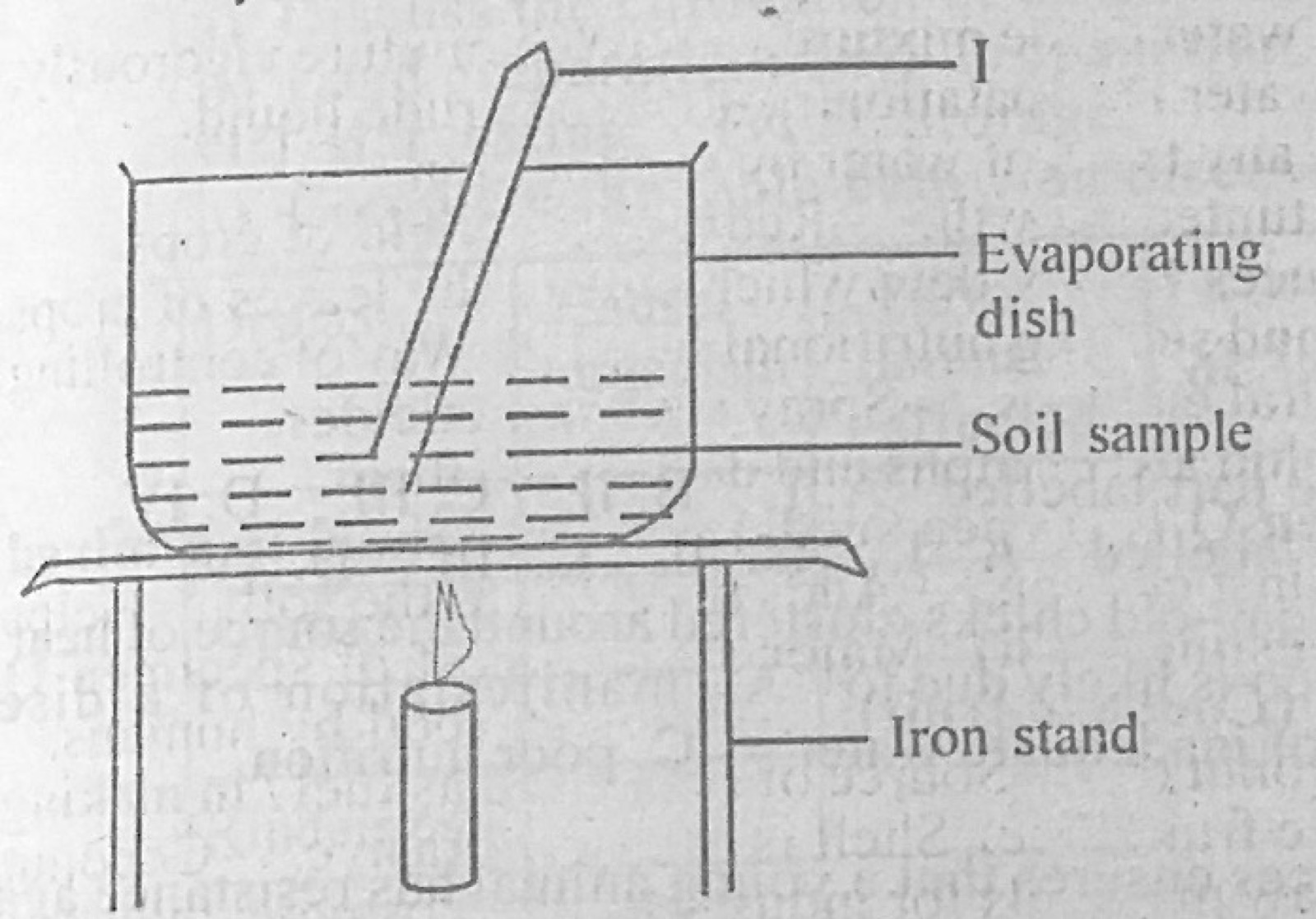
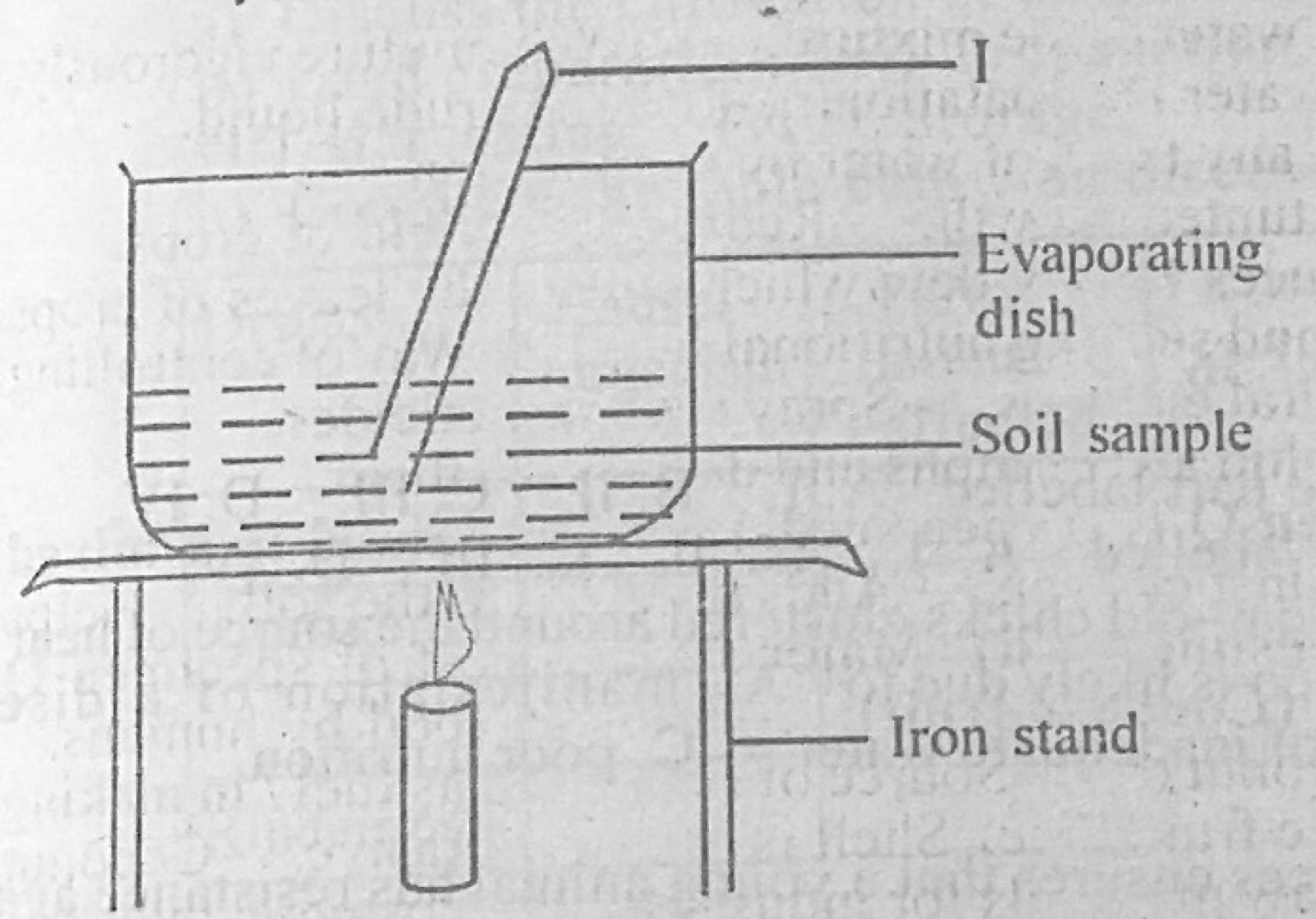
Study the diagram below.
The aim of the experiment illustrated in the diagram is to

Diagram for this question
  1. A.determine soil texture.
  2. B.ascertain water content of soil.
  3. C.examine the structure of soil.
  4. D.determine soil acidity.
Show the answer and explanation

Answer: B (ascertain water content of soil.)

Explanation

Heating a soil sample drives off its water, so the weight lost gives the water content.

Open this question

Question 15

Soil Properties

Study the diagram below.
The purpose of the part labelled I in the experiment is to

Diagram for this question
  1. A.allow proper aggregation of soil particles.
  2. B.allow even evaporation of water.
  3. C.prevent water from escaping.
  4. D.distribute water around the soil.
Show the answer and explanation

Answer: B (allow even evaporation of water.)

Explanation

I is a stirring rod; stirring lets the water evaporate evenly.

Open this question

Question 16

Land Preparation and Cultural Practices

A beneficial effect of bush burning on the soil is the

  1. A.reduction of soil microbial activities.
  2. B.exposure of soil surface to erosion.
  3. C.destruction of weed seeds.
  4. D.destruction of soil organic matter.
Show the answer and explanation

Answer: C (destruction of weed seeds.)

Explanation

Fire kills weed seeds; the other effects are harmful.

Open this question

Question 17

Soil Fertility and Plant Nutrition

Which of the following practices does not replenish lost soil nutrients?

  1. A.Crop rotation
  2. B.Fallowing
  3. C.Liming
  4. D.Bush burning
Show the answer and explanation

Answer: D (Bush burning)

Explanation

Burning destroys organic matter and nitrogen.

Open this question

Question 18

Soil Fertility and Plant Nutrition

The use of inorganic fertilizer is preferable to organic manure because inorganic fertilizer

  1. A.improves soil structure.
  2. B.releases nutrients to the soil faster.
  3. C.reduces leaching of soil nutrients.
  4. D.improves soil water holding capacity.
Show the answer and explanation

Answer: B (releases nutrients to the soil faster.)

Explanation

Inorganic fertilizers dissolve quickly and give nutrients at once.

Open this question

Question 19

Irrigation and Drainage

Which of the following statements describes an advantage of underground drainage? It

  1. A.allows for free movement of farm machinery.
  2. B.checks the growth of weeds.
  3. C.improves soil texture.
  4. D.increases organic matter content of soil.
Show the answer and explanation

Answer: A (allows for free movement of farm machinery.)

Explanation

Buried drains leave no open ditches, so machines move freely.

Open this question

Question 20

Plant Forms and Crop Classification

Which of the following crops is usually classified as a vegetable?

  1. A.Lycopersicon esculentum
  2. B.Ananas sativa
  3. C.Hevea brasiliensis
  4. D.Theobroma cacao
Show the answer and explanation

Answer: A (Lycopersicon esculentum)

Explanation

Lycopersicon esculentum is tomato, a vegetable.

Open this question

Question 21

Crop Husbandry

A groundnut variety produces a steady seed yield of 350 kg per hectare. What will be the yield of the variety on a 10-hectare farm?

  1. A.35 kg
  2. B.350 kg
  3. C.3,500 kg
  4. D.7,000 kg
Show the answer and explanation

Answer: C (3,500 kg)

Explanation

Yield = 350 kg/ha × 10 ha = 3,500 kg.

Open this question

Question 22

Land Preparation and Cultural Practices

Thinning is a farm operation in which

  1. A.empty spaces where seeds did not germinate are replanted.
  2. B.the number of seedlings per stand is reduced to one or two.
  3. C.fertilizers and manures are applied to crops.
  4. D.effort is made to control pests.
Show the answer and explanation

Answer: B (the number of seedlings per stand is reduced to one or two.)

Explanation

Thinning removes extra seedlings; replanting gaps is supplying.

Open this question

Question 23

Pasture and Forage Crops

Which of the following plants is not a pasture grass?

  1. A.Pennisetum purpureum
  2. B.Axonopus compressus
  3. C.Stylosanthes gracilis
  4. D.Panicum maximum
Show the answer and explanation

Answer: C (Stylosanthes gracilis)

Explanation

Stylosanthes is a legume, not a grass.

Open this question

Question 24

Animal Improvement

One advantage of cross breeding is that the

  1. A.offspring resemble the recessive parent.
  2. B.yield of the offspring may not be comparable to those of the parents.
  3. C.offspring perform better than the average of the parents.
  4. D.offspring cannot survive adverse environmental conditions.
Show the answer and explanation

Answer: C (offspring perform better than the average of the parents.)

Explanation

Hybrid vigour makes crossbred offspring better than the parents' average.

Open this question

Question 25

Basic Genetics

Assuming that brown colour is dominant over black colour in cowpea. What percentage of the F1 generation will have brown colour, if a homozygous brown cowpea is crossed with a homozygous black cowpea?

  1. A.100%
  2. B.75%
  3. C.50%
  4. D.25%
Show the answer and explanation

Answer: A (100%)

Explanation

BB × bb gives all Bb, which are brown, so 100%.

Open this question

Question 26

Ornamental Plants

Ornamental plants are commonly used for the following purposes except

  1. A.for exterior decorations.
  2. B.as sources of perfumes.
  3. C.provision of shade.
  4. D.as bedding materials for animals.
Show the answer and explanation

Answer: D (as bedding materials for animals.)

Explanation

Ornamentals are for beauty, scent and shade, not animal bedding.

Open this question

Question 27

Ornamental Plants

Hibiscus and Croton are examples of

  1. A.ground covers.
  2. B.hedge plants.
  3. C.lawn plants.
  4. D.avenue trees.
Show the answer and explanation

Answer: B (hedge plants.)

Explanation

Hibiscus and croton are shrubs grown as hedges.

Open this question

Question 29

Crop Diseases

An effective method of preventing viral diseases in crops is by

  1. A.treating the seeds with fungicides.
  2. B.practising crop rotation.
  3. C.regular spraying of crops.
  4. D.planting resistant varieties.
Show the answer and explanation

Answer: D (planting resistant varieties.)

Explanation

Viruses can't be killed with chemicals; resistant varieties prevent the disease.

Open this question

Question 30

Crop Diseases

A groundnut plant showing stunted growth with, yellow or mottled leaves is likely to be infected with

  1. A.blight.
  2. B.tikka.
  3. C.rosette.
  4. D.anthracnose.
Show the answer and explanation

Answer: C (rosette.)

Explanation

Groundnut rosette causes stunted, bushy plants with yellow, mottled leaves.

Open this question

Question 31

Crop Pests

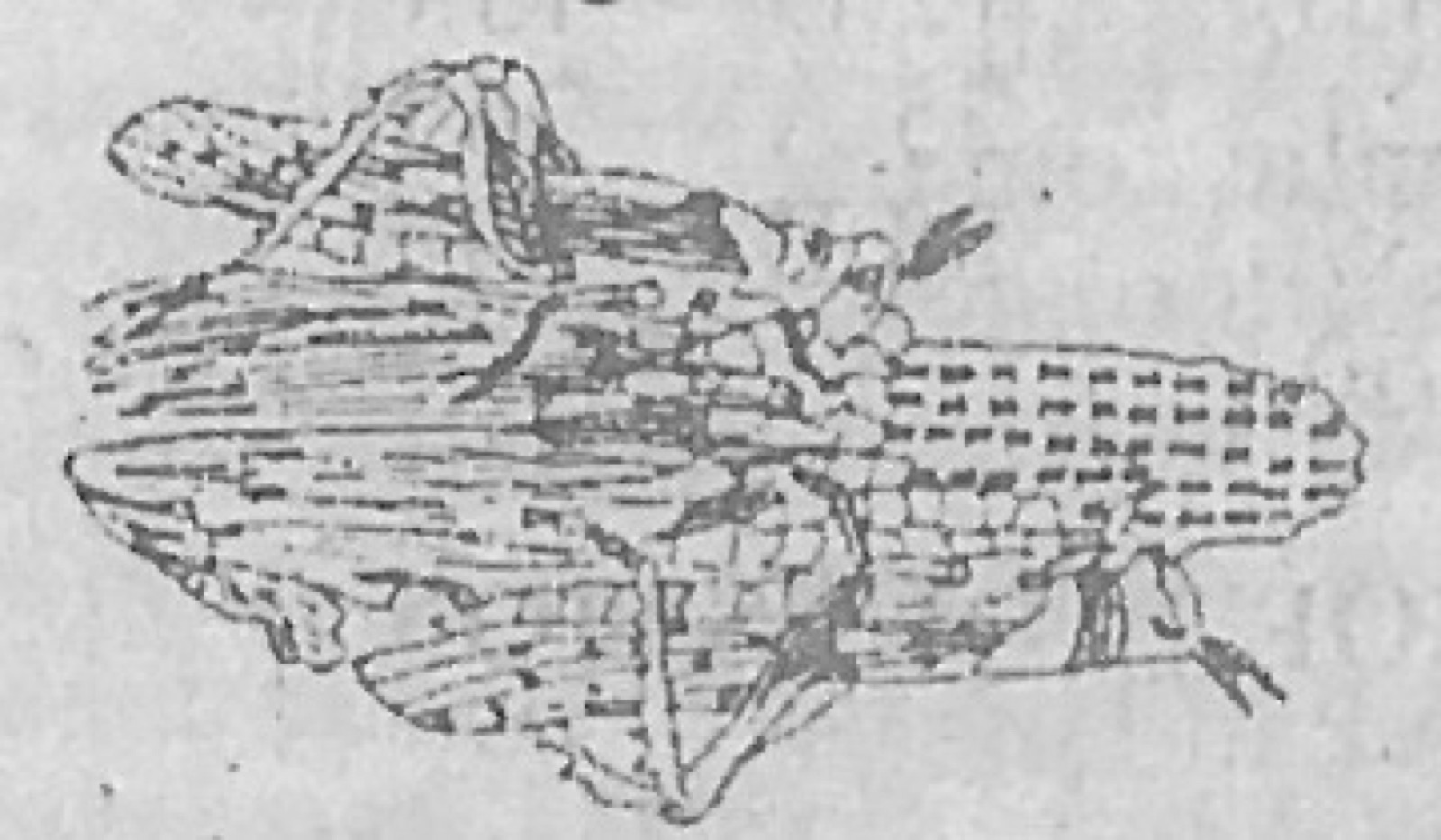
The diagram below illustrates a crop pest.
The pest illustrated is a

Diagram for this question
  1. A.boring insect pest.
  2. B.chewing insect pest.
  3. C.sucking insect pest.
  4. D.piercing insect pest.
Show the answer and explanation

Answer: B (chewing insect pest.)

Explanation

The pest on the maize cob feeds by biting and chewing the grains.

Open this question

Question 32

Crop Pests

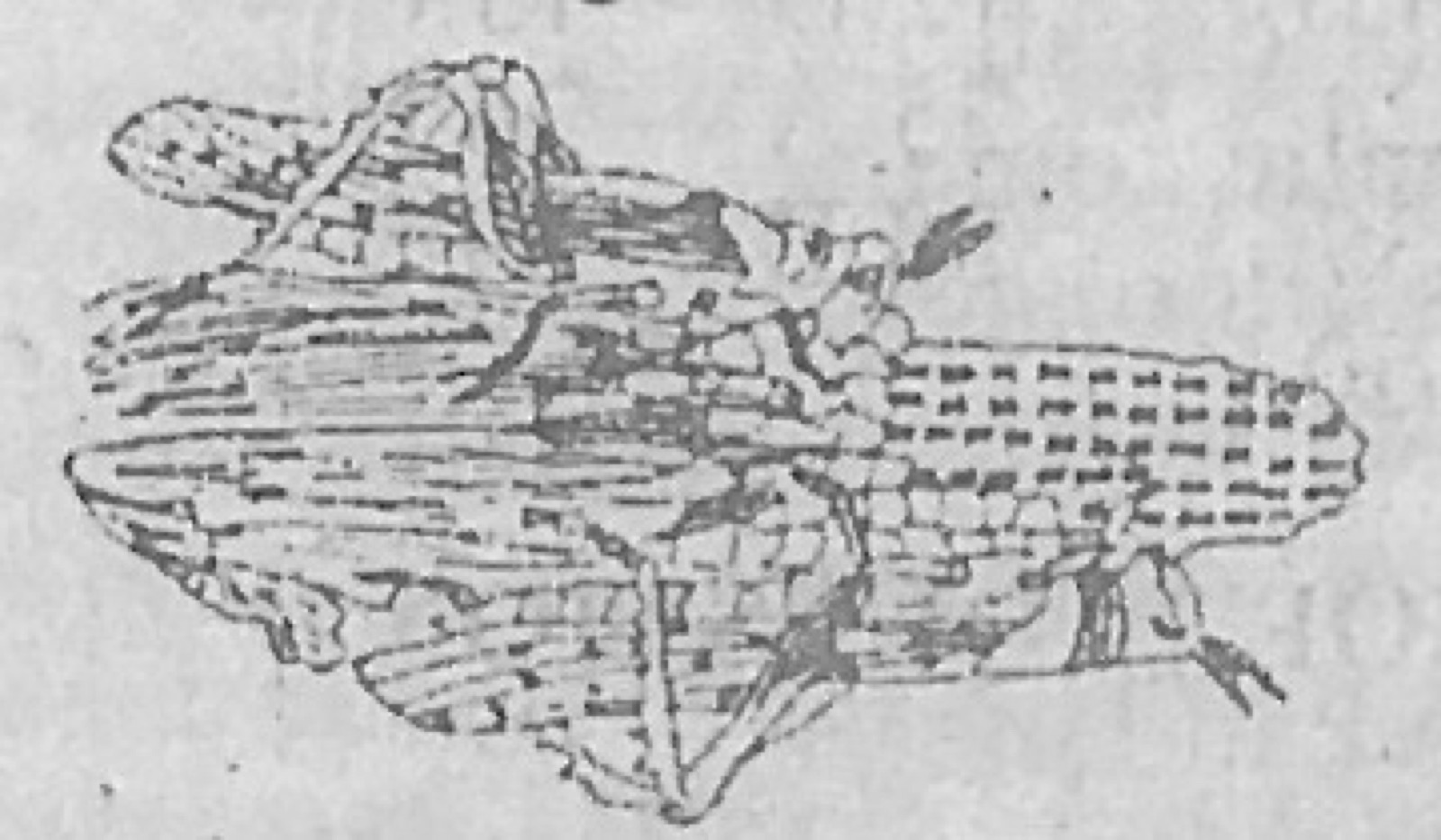
The diagram below illustrates a crop pest.
A cultural method used in controlling the pest illustrated is

Diagram for this question
  1. A.spraying with insecticides.
  2. B.hand pulling of weeds.
  3. C.fumigation of store.
  4. D.early planting.
Show the answer and explanation

Answer: D (early planting.)

Explanation

Cultural control changes farm practice, such as planting early to escape the pest.

Open this question

Question 33

Animal Anatomy and Physiology

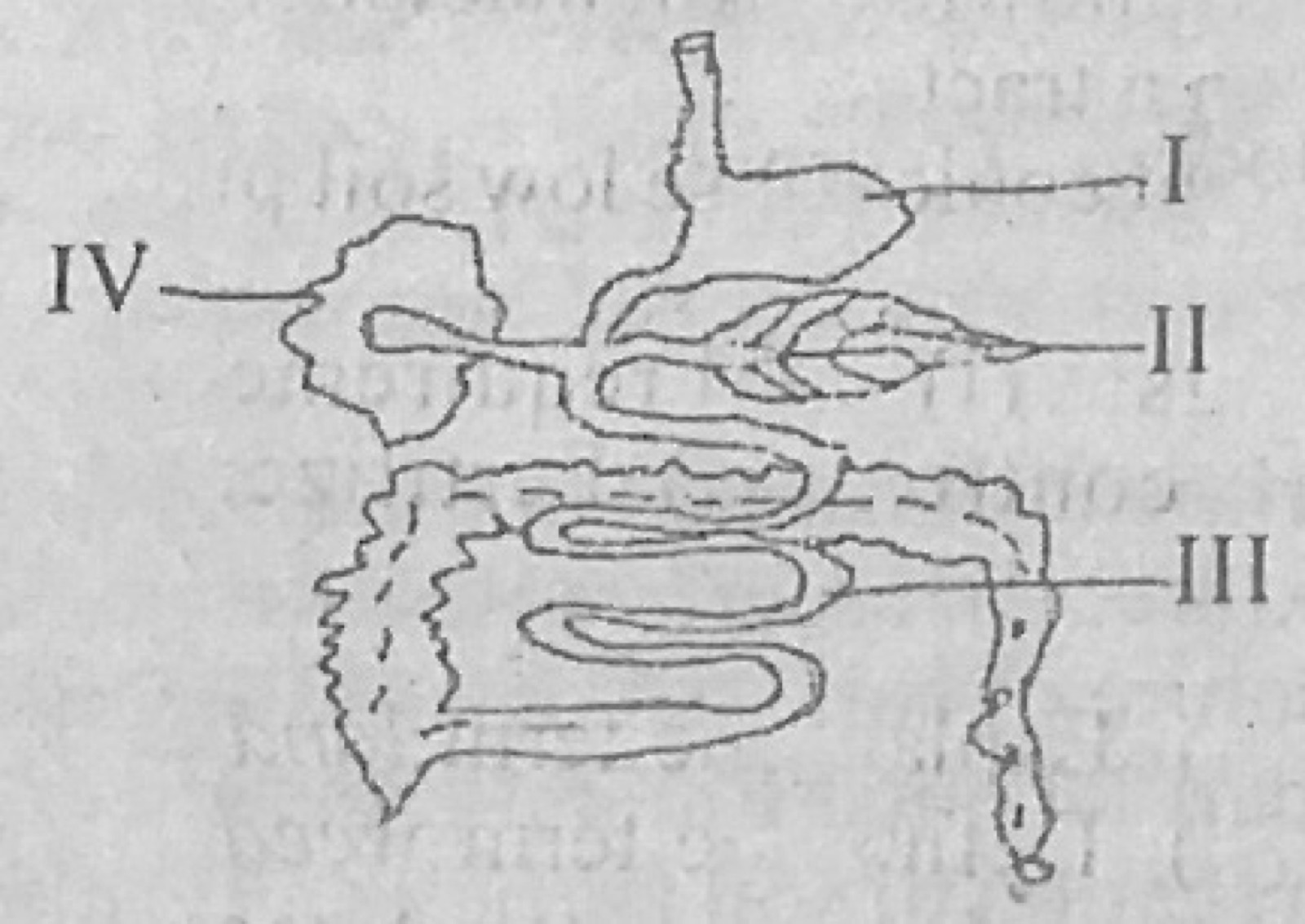
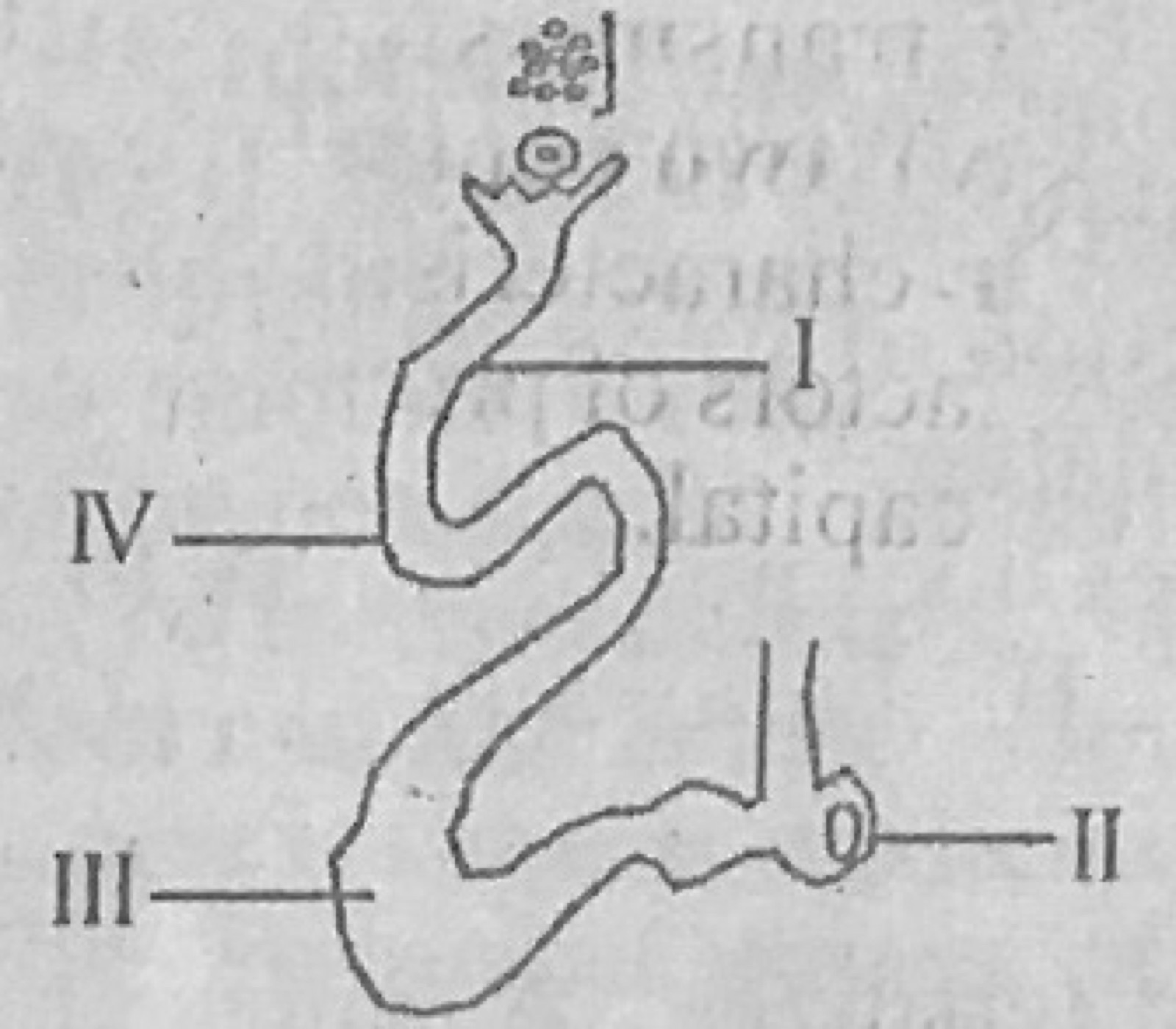
The diagram below illustrates the digestive tract of a farm animal.
Deamination is a function of the part labelled

Diagram for this question
  1. A.I.
  2. B.II.
  3. C.III.
  4. D.IV.
Show the answer and explanation

Answer: D (IV.)

Explanation

The liver (IV) removes the amino group from excess amino acids.

Open this question

Question 35

Poultry Production

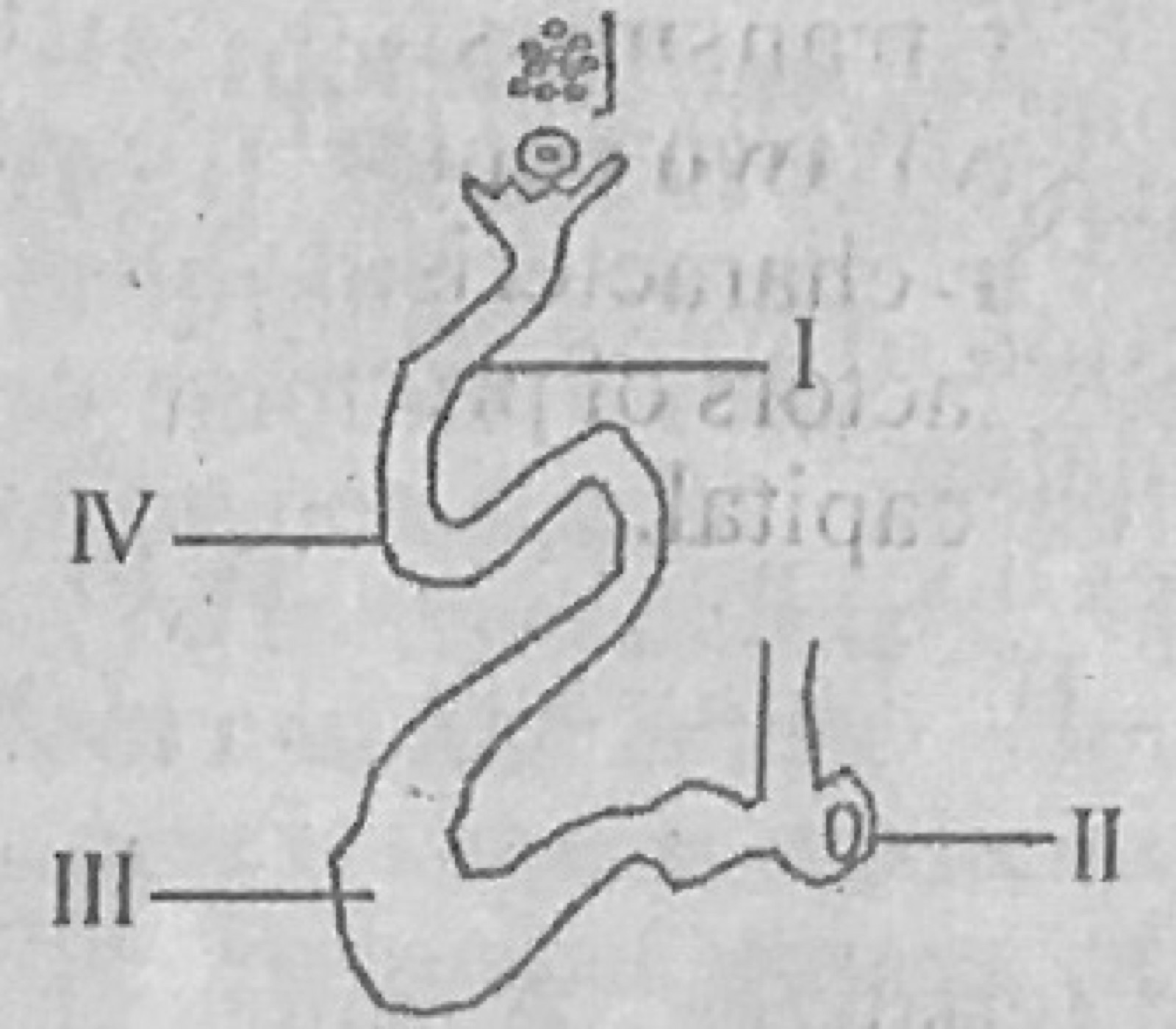
Study the diagram below.
Fertilization takes place in the part labelled

Diagram for this question
  1. A.I.
  2. B.II.
  3. C.III.
  4. D.IV.
Show the answer and explanation

Answer: A (I.)

Explanation

I is the infundibulum, where the ovum is fertilised.

Open this question

Question 36

Poultry Production

Study the diagram below.
Chalaza is formed in the part labelled

Diagram for this question
  1. A.I.
  2. B.II.
  3. C.III
  4. D.IV.
Show the answer and explanation

Answer: D (IV.)

Explanation

IV is the magnum, where albumen and chalazae are laid down.

Open this question

Question 37

Poultry Production

A farmer observed that all his day-old chicks clustered around the source of heat in a brooder house. This observation is likely due to

  1. A.manifestation of a disease outbreak.
  2. B.thirst because of inadequate water.
  3. C.poor nutrition.
  4. D.low temperature.
Show the answer and explanation

Answer: D (low temperature.)

Explanation

Chicks huddle round the heater when the brooder is too cold.

Open this question

Question 38

Animal Health

Which of the following practices ensures that a young animal has resistance against diseases?

  1. A.Regular visits of the veterinary doctors
  2. B.Giving the animal a maintenance ration
  3. C.Regular dipping of animal
  4. D.Giving the animal access to colostrum
Show the answer and explanation

Answer: D (Giving the animal access to colostrum)

Explanation

Colostrum carries antibodies that protect the newborn.

Open this question

Question 39

Animal Nutrition

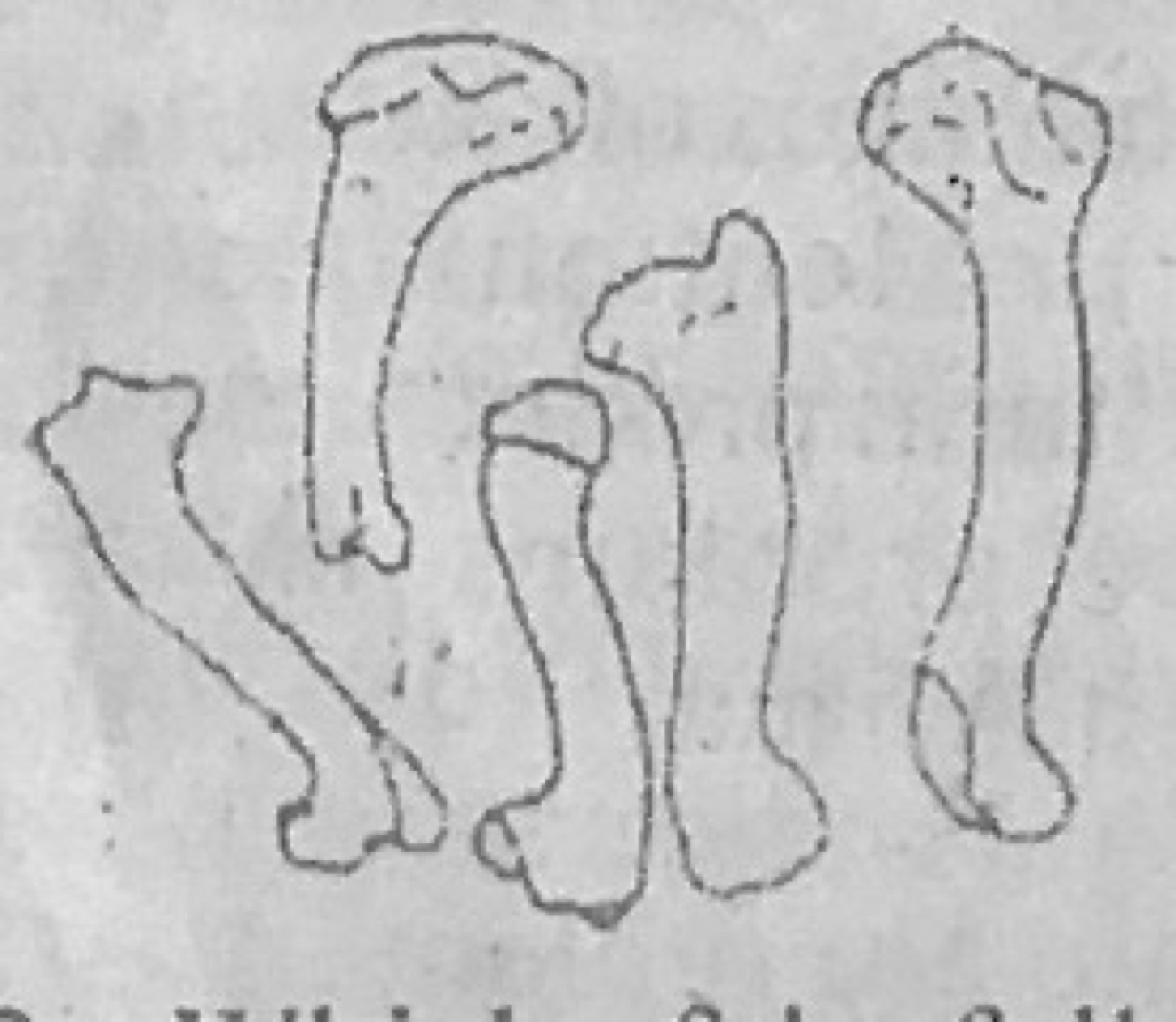
Study the diagram below.
The animal by-product illustrated may be prepared and fed to farm animals as a source of

Diagram for this question
  1. A.sodium.
  2. B.iron.
  3. C.calcium.
  4. D.nitrogen.
Show the answer and explanation

Answer: C (calcium.)

Explanation

The bones are made into bone meal, rich in calcium and phosphorus.

Open this question

Question 40

Livestock Management

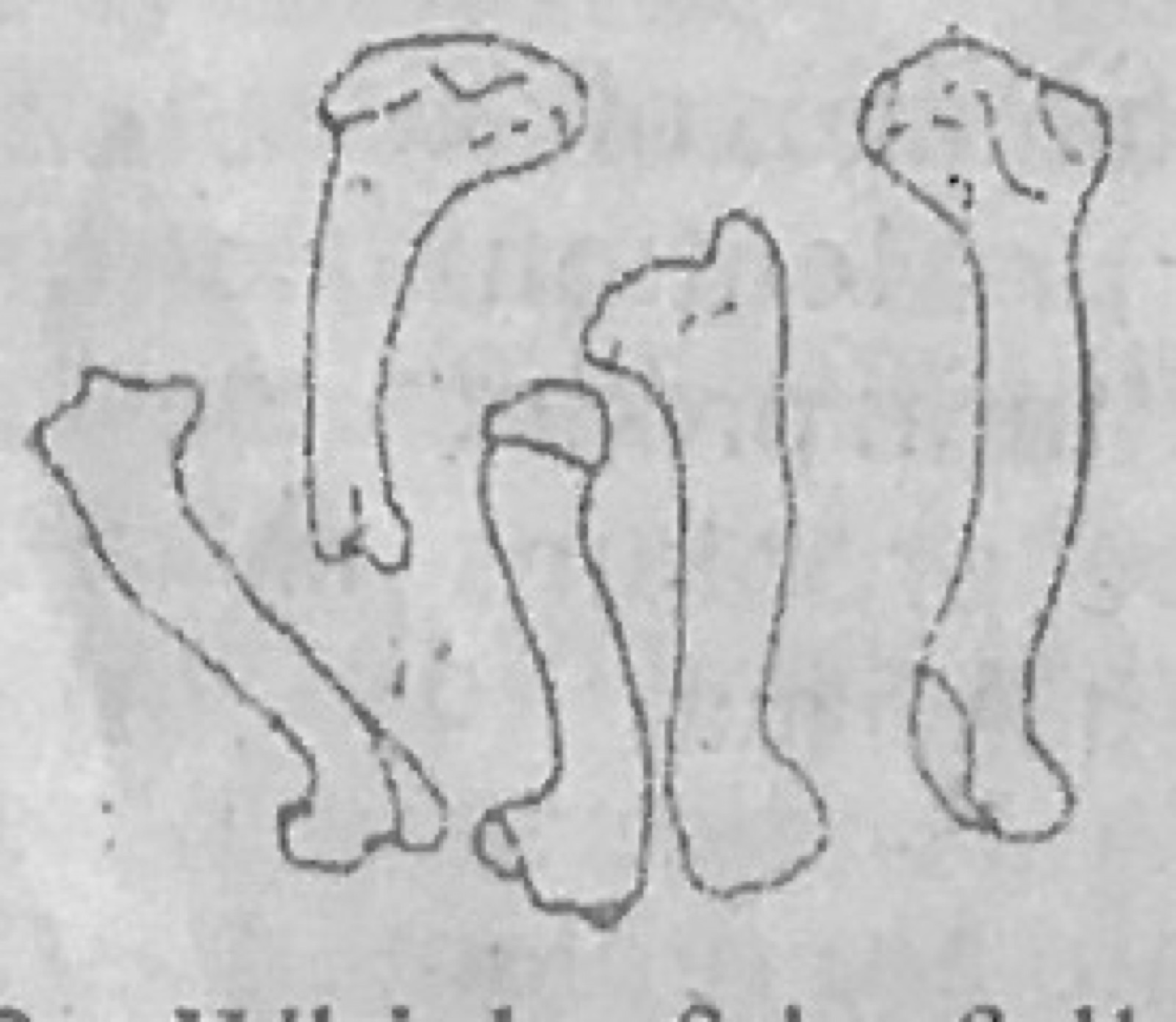
Study the diagram below.
The animal by-product illustrated is not used in making

Diagram for this question
  1. A.fertilizer.
  2. B.bone meal.
  3. C.button.
  4. D.leather.
Show the answer and explanation

Answer: D (leather.)

Explanation

Leather comes from hides and skins, not bones.

Open this question

Question 41

Animal Nutrition

Vitamin K deficiency in farm animals causes

  1. A.night blindness.
  2. B.sterility in both sexes.
  3. C.delayed blood clothing.
  4. D.delayed ovulation.
Show the answer and explanation

Answer: C (delayed blood clothing.)

Explanation

Vitamin K is needed for blood clotting.

Open this question

Question 42

Animal Reproduction

Which of the following methods is not used in collecting semen for artificial insemination?

  1. A.Massage method
  2. B.Use of artificial vagina
  3. C.Herd mating of the animals
  4. D.Electro-ejaculation method
Show the answer and explanation

Answer: C (Herd mating of the animals)

Explanation

Herd mating is natural mating, not semen collection.

Open this question

Question 43

Animal Health

Complete eradication of tsetse flies will be an effective control measure for

  1. A.aspergillosis.
  2. B.trypanosomiasis.
  3. C.fowl pox.
  4. D.swine fever.
Show the answer and explanation

Answer: B (trypanosomiasis.)

Explanation

Tsetse flies carry trypanosomes.

Open this question

Question 44

Animal Health

Which of the following diseases is caused by a virus?

  1. A.Brucellosis
  2. B.Trypanosomiasis
  3. C.Rinderpest
  4. D.Tuberculosis
Show the answer and explanation

Answer: C (Rinderpest)

Explanation

Rinderpest is viral; brucellosis and TB are bacterial and trypanosomiasis is protozoan.

Open this question

Question 45

Livestock Management

Bees are regarded as friends of the farmer because they

  1. A.usually sting the farmer.
  2. B.are harmless insects.
  3. C.help in pollination.
  4. D.produce nectar for human use.
Show the answer and explanation

Answer: C (help in pollination.)

Explanation

Bees pollinate crops as they collect nectar.

Open this question

Question 46

Basic Agricultural Economics

Use the demand schedule below.
Price (N) 12 — Quantity Demanded 200 kg
Price (N) 8 — Quantity Demanded 240 kg
What is the percentage change in quantity demanded?

  1. A.16.67%
  2. B.20.00%
  3. C.40.00%
  4. D.83.33%
Show the answer and explanation

Answer: B (20.00%)

Explanation

(240 − 200) ÷ 200 × 100 = 20%.

Open this question

Question 47

Basic Agricultural Economics

Use the demand schedule below.
Price (N) 12 — Quantity Demanded 200 kg
Price (N) 8 — Quantity Demanded 240 kg
What is the percentage change in price?

  1. A.33.33%
  2. B.40.00%
  3. C.50.00%
  4. D.66.67%
Show the answer and explanation

Answer: A (33.33%)

Explanation

(12 − 8) ÷ 12 × 100 = 33.33%.

Open this question

Question 48

Basic Agricultural Economics

Use the demand schedule below.
Price (N) 12 — Quantity Demanded 200 kg
Price (N) 8 — Quantity Demanded 240 kg
What is the price elasticity of demand of the commodity?

  1. A.0.3
  2. B.0.4
  3. C.0.5
  4. D.0.6
Show the answer and explanation

Answer: D (0.6)

Explanation

Elasticity = % change in quantity ÷ % change in price = 20 ÷ 33.33 = 0.6.

Open this question

Question 49

Farm Management and Records

Which of the following farm documents is usually prepared at the end of the year?

  1. A.Farm budget
  2. B.Labour record
  3. C.Farm inventory
  4. D.Profit and loss account
Show the answer and explanation

Answer: D (Profit and loss account)

Explanation

The profit and loss account sums up the year's income and expenses.

Open this question

Question 50

Agricultural Extension

Which of the following agricultural extension methods is aimed at reaching an individual farmer at a particular time?

  1. A.Film show
  2. B.Farm visit
  3. C.Electronic media
  4. D.Field trip
Show the answer and explanation

Answer: B (Farm visit)

Explanation

A farm visit is an individual method.

Open this question

Theory question 101

Agricultural Development

(a) Explain four ways in which each of the following factors hinders agricultural development in West Africa: (i) Basic amenities; (ii) Farm input.
(b) State three uses each of the following farm machinery: (i) Tractor; (ii) Bulldozer.
(c) State four daily maintenance practices carried out on a tractor.

Show the model answer
Model answer

(a)(i) Basic amenities (any four): bad rural roads make evacuation of produce hard and costly; no electricity for processing and storage; no pipe-borne water or health care, so farmers are less productive; lack of schools and recreation drives youths to towns, reducing farm labour.
(ii) Farm inputs (any four): high cost/scarcity of fertilizers and agrochemicals lowers yields; few improved seeds and breeds; lack of machines forces use of crude tools; costly feeds and drugs for animals; inputs arrive late.
(b)(i) Tractor (any three): pulls ploughs, harrows and ridgers; drives machines through the PTO (sprayers, mowers, shellers); transports produce with a trailer; pumps water.
(ii) Bulldozer (any three): clears bush and fells trees; removes stumps; levels land; constructs farm roads, dams and ponds.
(c) Any four: check engine oil level; check radiator water; check tyre pressure; check fuel level; check battery water; grease moving parts; clean air cleaner; wash the tractor after use; check for leaks/loose bolts.

Explanation

Four ways for each factor in (a).

Open this question

Theory question 102

Soil Properties

(a) State four functions of soil water to crops.
(b) Outline five factors that could cause low soil pH.
(c) Explain the life cycle of liver fluke.

Show the model answer
Model answer

(a) Any four: dissolves nutrients and carries them into roots; needed for photosynthesis; keeps cells turgid; cools the plant through transpiration; needed for germination; helps weathering/microbial activity.
(b) Any five: leaching of bases (Ca, Mg) by heavy rain; continuous use of acid-forming fertilizers (e.g. sulphate of ammonia); acidic parent rock; decomposition of organic matter (organic acids); removal of bases by crops; waterlogging; acid rain.
(c) Adult fluke lives in the bile ducts of the liver of sheep/cattle and lays eggs; eggs pass out with faeces; in water they hatch into miracidia; miracidia enter a water snail (Limnaea), where they multiply (sporocyst → redia → cercaria); cercariae leave the snail and encyst on grass as metacercariae; the animal eats the grass; young flukes bore through the gut wall to the liver and grow into adults.

Explanation

Mention the snail as intermediate host.

Open this question

Theory question 103

Crop Husbandry

(a) Discuss the cultivation of cassava under the following headings: (i) Soil requirements. (ii) Land preparation. (iii) Propagation. (iv) Spacing. (v) Weed control. (vi) Fertilizer requirement. (vii) Harvesting. (viii) Storage.
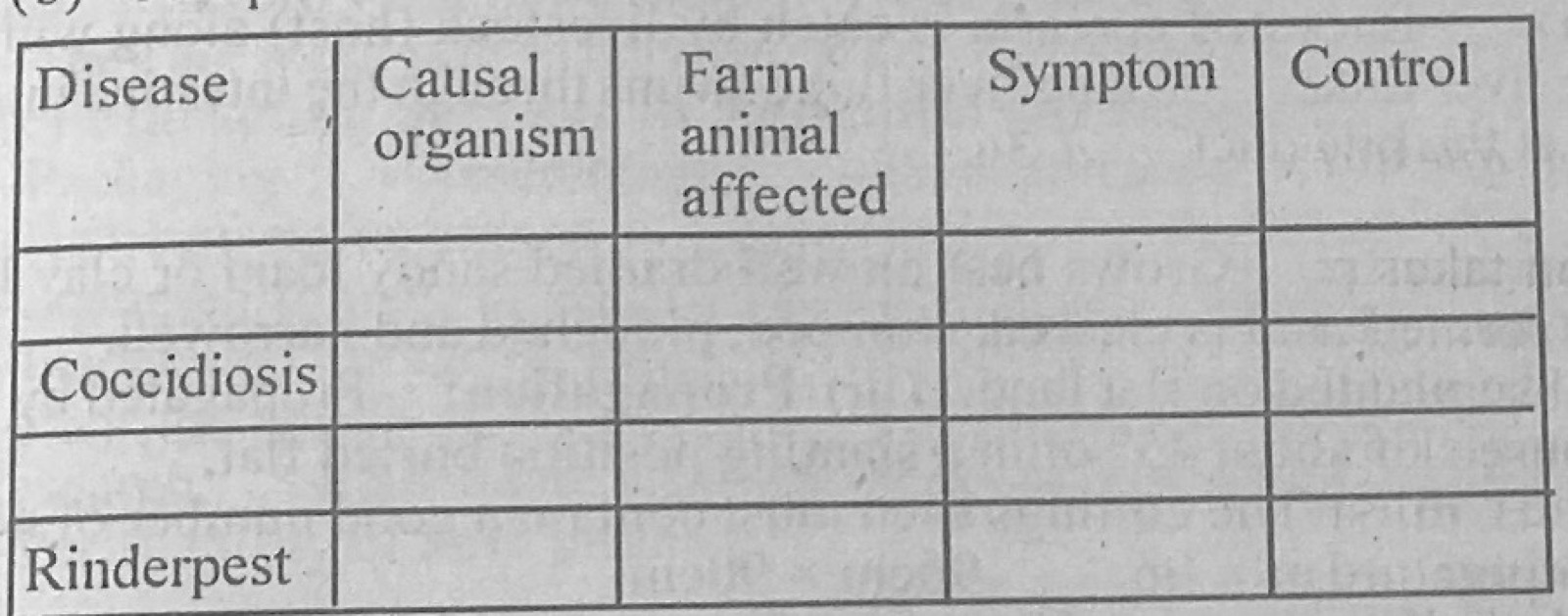
(b) Complete the table below on diseases of farm animals: for Coccidiosis and Rinderpest, give the causal organism, farm animal affected, symptom and control.

Diagram for this question
Show the model answer
Model answer

(a)(i) Deep, loose, well-drained loamy/sandy-loam soil.
(ii) Clear the bush, plough or make mounds/ridges.
(iii) Stem cuttings 20–30 cm long with several nodes, planted slanting or vertically.
(iv) About 1 m × 1 m.
(v) Hand weeding/hoeing 2–3 times, or pre-emergence herbicides; cover crops.
(vi) NPK (e.g. 15:15:15) or organic manure; potassium is important for tuber formation.
(vii) 6–18 months after planting by uprooting/lifting the tubers with a cutlass or hoe.
(viii) Leave in the ground until needed; process into garri, flour or chips; or keep peeled tubers in cold storage.
(b) Coccidiosis: causal organism – protozoan (Eimeria spp.); animals – poultry, rabbits (also sheep, goats); symptoms – bloody diarrhoea, droopiness, ruffled feathers, emaciation; control – coccidiostats in feed/water, dry clean litter, hygiene.
Rinderpest: causal organism – virus; animals – cattle, sheep, goats; symptoms – high fever, eye and nose discharge, mouth sores, bloody diarrhoea, high mortality; control – vaccination, quarantine, slaughter and burn infected animals.

Explanation

One clear point per heading for cassava.

Open this question

Theory question 104

Crop Diseases

(a) Explain the term land tenure system.
(b) Define the term weed.
(c) Discuss groundnut rosette diseases under the following headings: (i) causal organism; (ii) mode of transmission; (iii) two symptoms; (iv) two control measures.
(d) State four characteristics of each of the following factors of production (i) land; (ii) capital.

Show the model answer
Model answer

(a) Land tenure system is the way land is owned, acquired, used and transferred by individuals, families, communities or government.
(b) A weed is any plant growing where it is not wanted (out of place).
(c)(i) A virus (groundnut rosette virus).
(ii) Spread by aphids (Aphis craccivora).
(iii) Any two: stunted, bushy plants; small, crinkled, yellow or mottled leaves; few or no pods.
(iv) Any two: resistant varieties; early and close planting; control aphids with insecticides; uproot and burn infected plants; crop rotation.
(d)(i) Land (any four): a free gift of nature; fixed in supply; immobile; varies in fertility and location; subject to diminishing returns; its reward is rent.
(ii) Capital (any four): man-made; depreciates with use; mobile; can be increased by saving; its reward is interest; its supply depends on savings.

Explanation

Name the aphid vector for the rosette virus.

Open this question

Theory question 105

Basic Agricultural Economics

(a) Explain the term colostrum.
(b) Draw and label structure of a chicken egg.
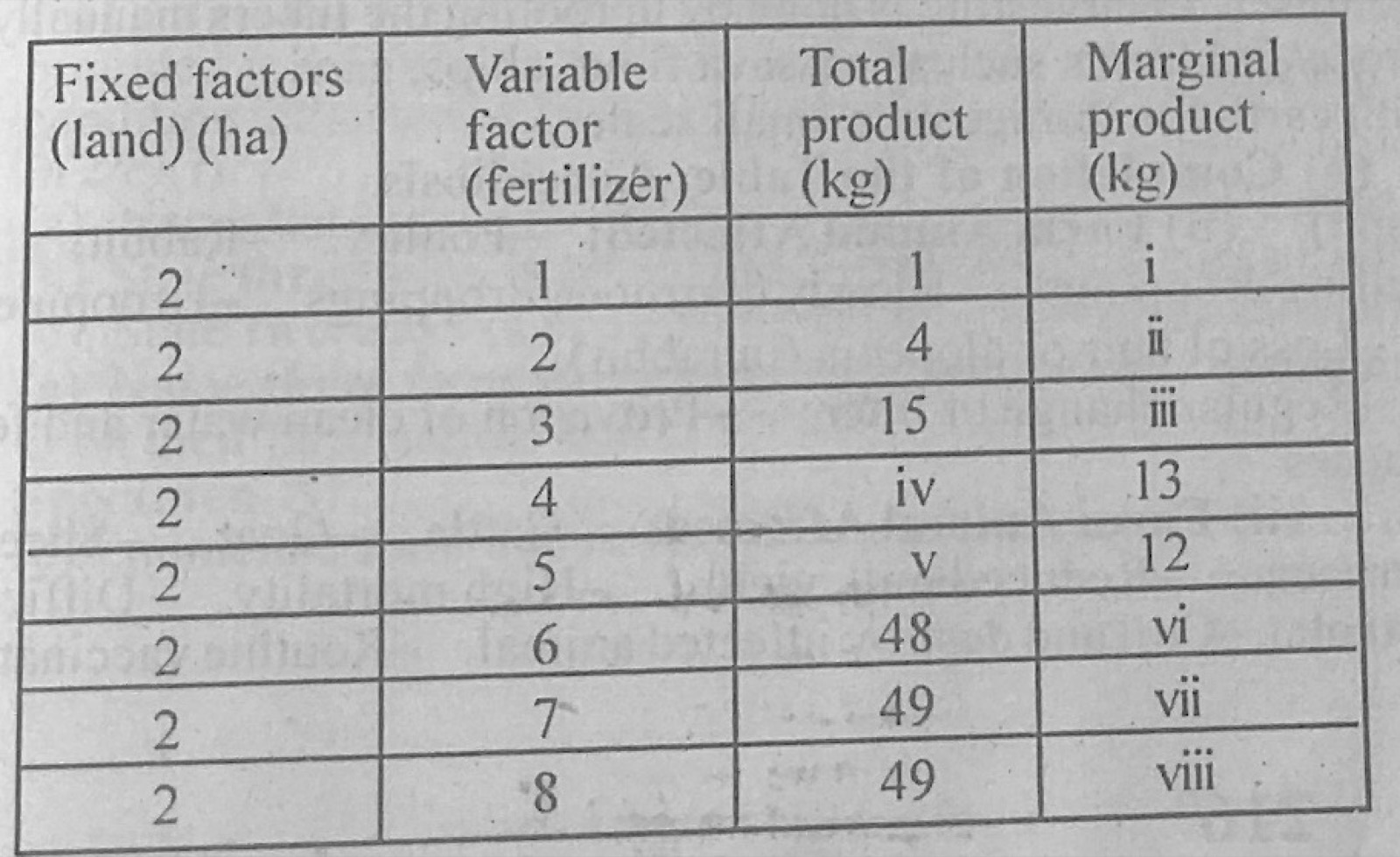
(c) Study and complete the table below which illustrates the law of diminishing returns. (Fixed factor: 2 ha of land in every row. Fertilizer 1 to 8 units give total products of 1, 4, 15, iv, v, 48, 49, 49 kg; the marginal products are i, ii, iii, 13, 12, vi, vii, viii kg.)

Diagram for this question
Show the model answer
Model answer

(a) Colostrum is the first thick, yellowish milk produced by a mammal for a few days after giving birth; it is rich in antibodies, protein and vitamins and is a laxative.
(b) Labelled diagram showing: shell; outer and inner shell membranes; air space (blunt end); thin and thick albumen; chalazae; yolk; vitelline membrane; germinal disc (blastoderm).
(c) Marginal product = change in total product: (i) 1 kg; (ii) 4 − 1 = 3 kg; (iii) 15 − 4 = 11 kg; (iv) total = 15 + 13 = 28 kg; (v) total = 28 + 12 = 40 kg; (vi) 48 − 40 = 8 kg; (vii) 49 − 48 = 1 kg; (viii) 49 − 49 = 0 kg.

Explanation

Marginal product = present total product − previous total product.

Open this question

Theory question 106

Livestock Management

(a) State four management practices carried out in production.
(b) Give four advantages of dehorning in cattle production.
(c) Mention five marketing services in agricultural production.
(d) Outline five problems of agricultural marketing in West Africa.

Show the model answer
Model answer

(a) Any four: feeding; housing; disease and parasite control; breeding/mating; record keeping; weeding/fertilizer application (crops); identification; culling.
(b) Any four: prevents injury to other animals and handlers; animals are easier to handle; less space needed in pens and transport; reduces damage to hides; reduces bullying at feeding troughs; animals are calmer.
(c) Any five: assembling; grading and standardisation; processing; storage; transportation; packaging; financing; advertising; distribution/selling; risk bearing.
(d) Any five: poor roads and transport; inadequate storage and processing facilities; perishability of produce; price fluctuations; activities of middlemen; lack of market information; poor grading/standards; small scattered output; inadequate credit.
Explanation

List services as single words or phrases.

Open this question