If rows of crops are spaced 1.0 m apart with one seed sown per stand, determine the spacing between stands to obtain a plant population of 40,000 plants per hectare.
A.0.25 m.
B.0.45 m.
C.0.50 m.
D.1.00 m.
Show the answer and explanation
Answer: A (0.25 m.)
Explanation
Area per plant = 10,000 m² ÷ 40,000 = 0.25 m²; divide by the 1.0 m row width to get 0.25 m.
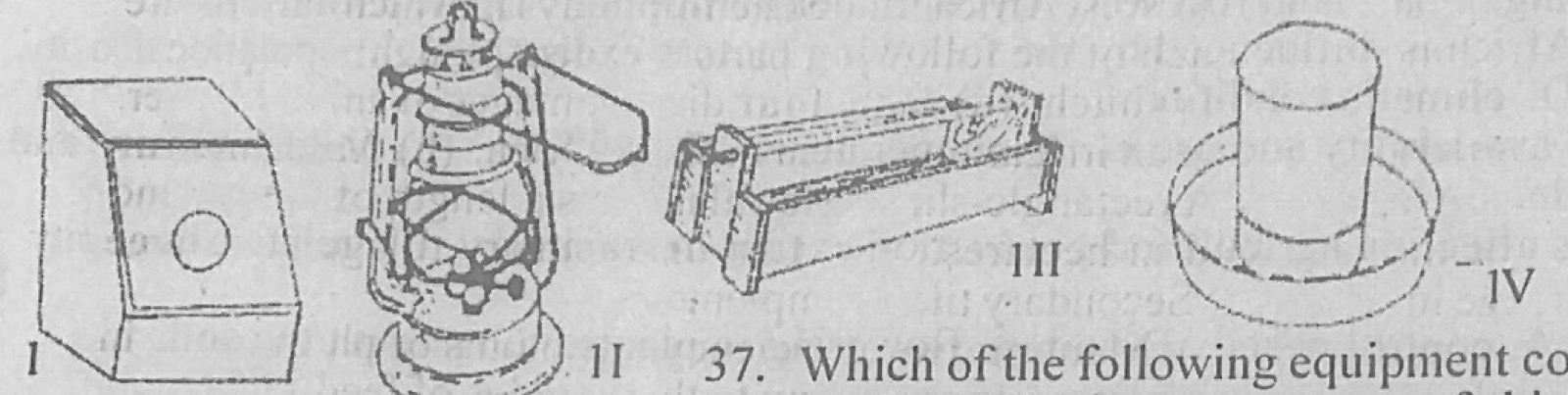
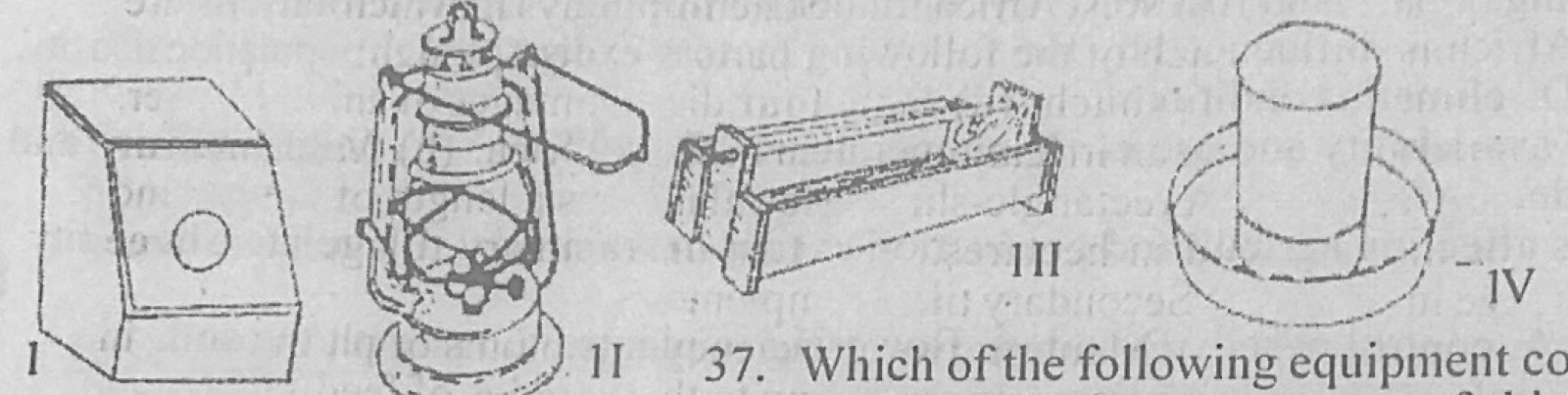
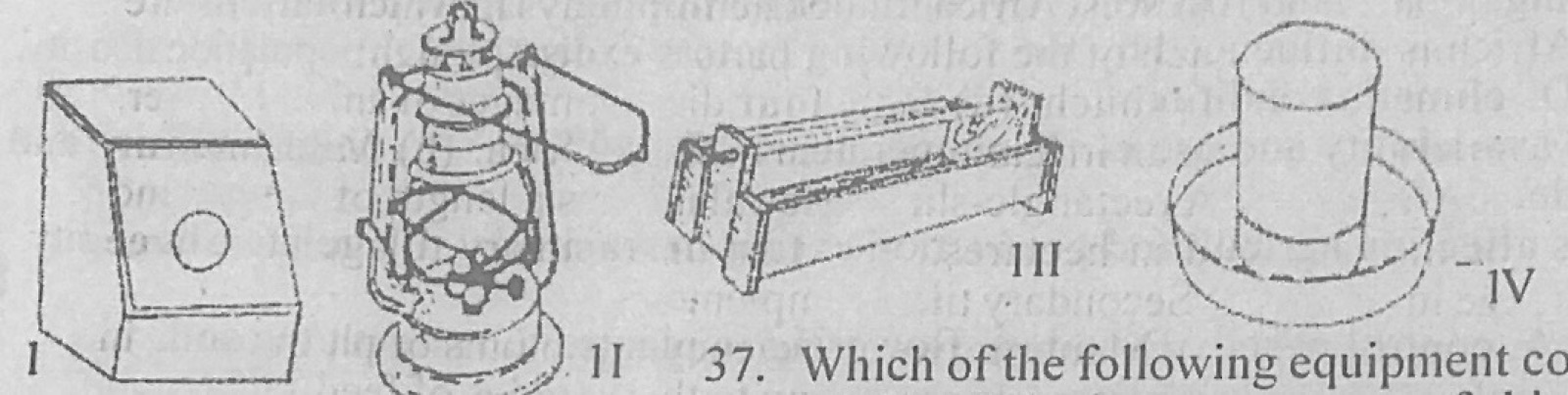
Study the illustrated poultry equipment. Which of the following equipment could be used in place of the equipment labelled II in the management of chicks?
A.Incubator
B.Feeder
C.Electric bulb
D.Egg candler
Show the answer and explanation
Answer: C (Electric bulb)
Explanation
II is a lantern giving heat; an electric bulb can do the same.
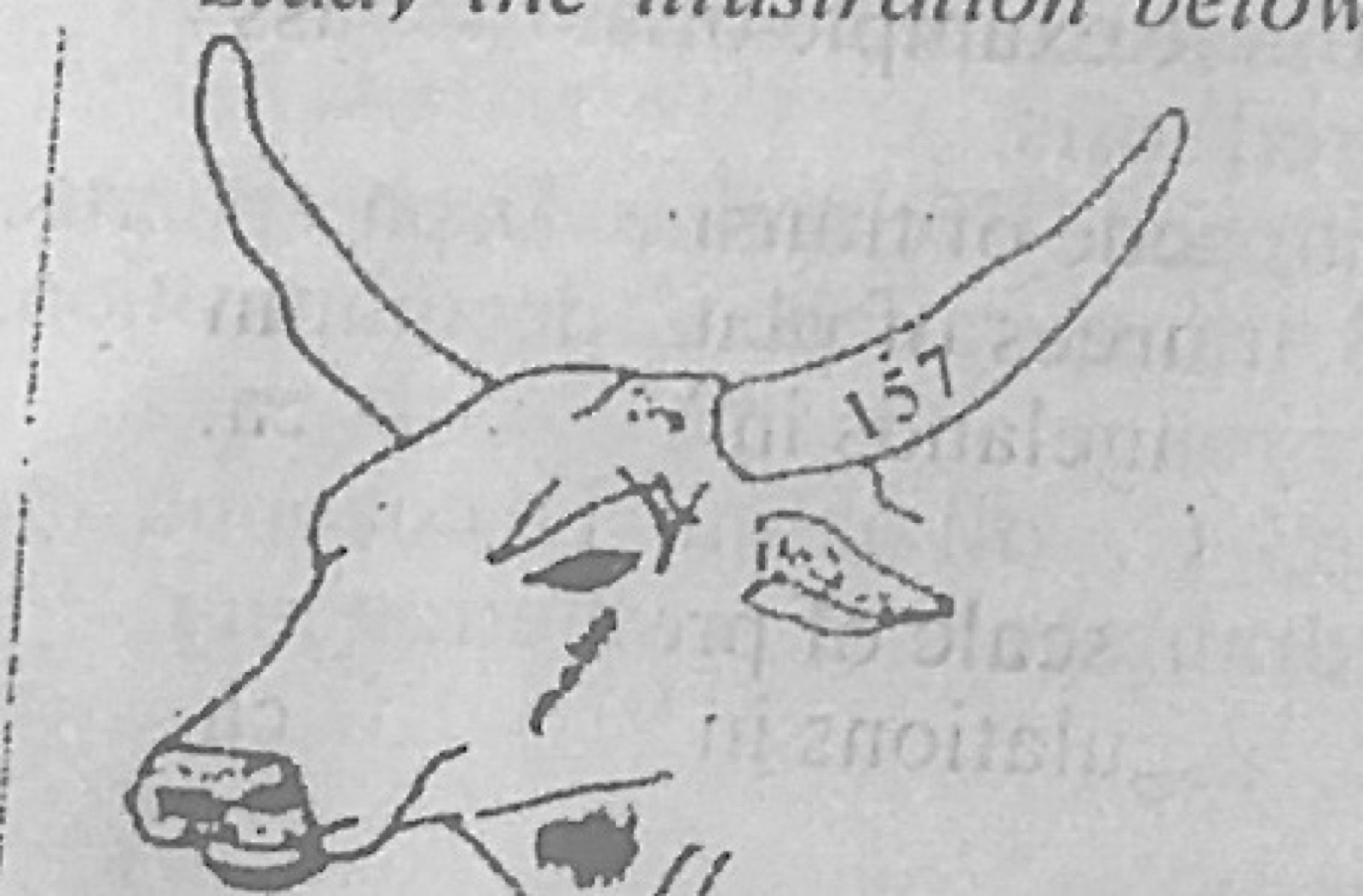
Study the illustration below. What is the name given to the identification method illustrated above?
A.Tagging
B.Neck chaining
C.Ear notching
D.Branding
Show the answer and explanation
Answer: D (Branding)
Explanation
The animal is identified by the number 157 marked (burnt) on its horn. Marking numbers on the skin or horn with a hot iron or chemical is branding; tagging would show a tag fixed in the ear.
Use the table below. Demand and Supply Schedules for Mangoes Price of fruit (Le) — Supply (No. of baskets) — Demand (No. of baskets): 1,000.00 — 10 — 60 2,000.00 — 20 — 50 3,000.00 — 30 — 40 4,000.00 — 40 — 30 5,000.00 — 50 — 20 6,000.00 — 60 — 10 At a unit price of Le 1,000.00, what will be the excess demand over supply of mangoes?
A.50 baskets
B.40 baskets
C.20 baskets
D.10 baskets
Show the answer and explanation
Answer: A (50 baskets)
Explanation
At Le 1,000 demand is 60 and supply is 10, so excess demand = 50 baskets.
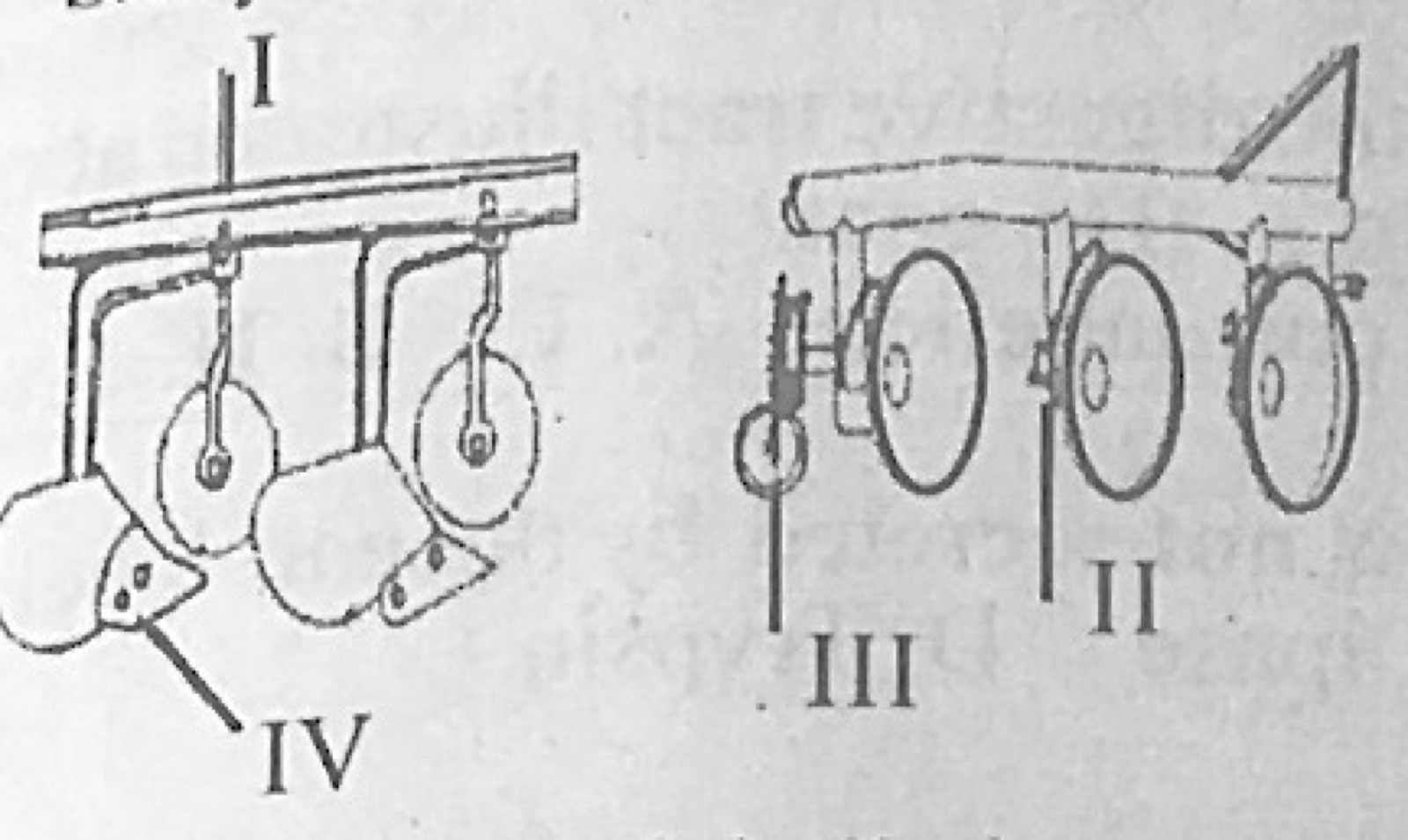
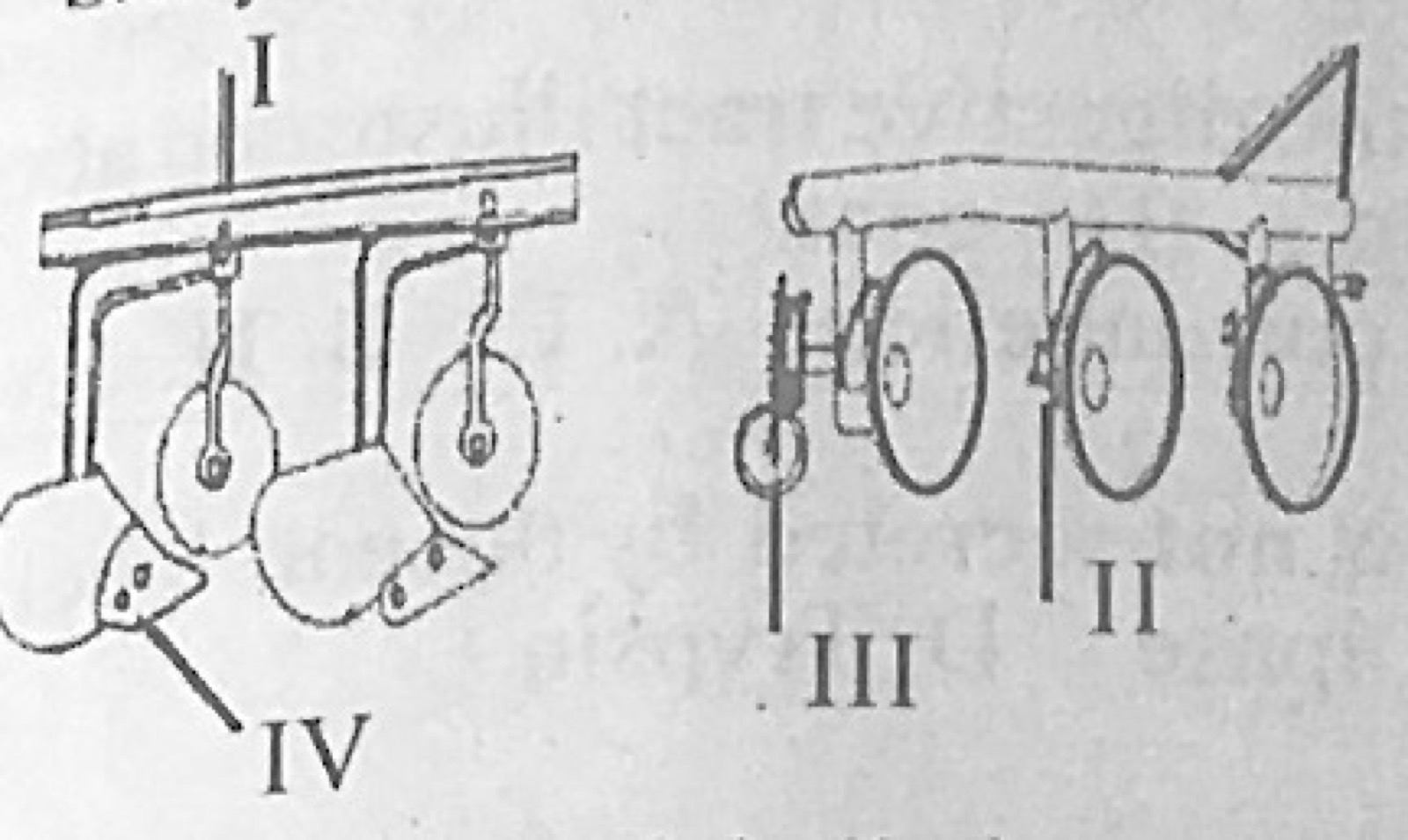
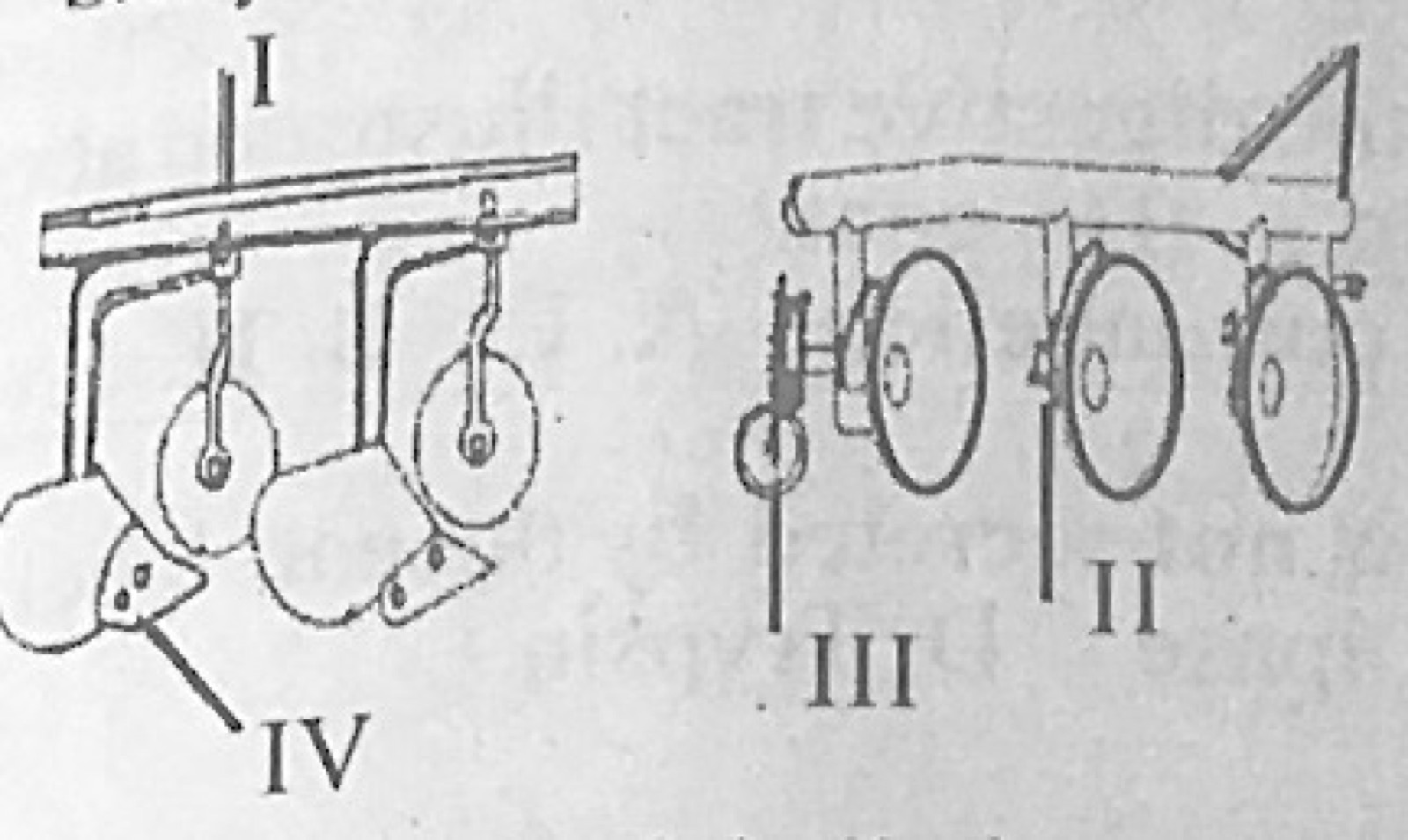
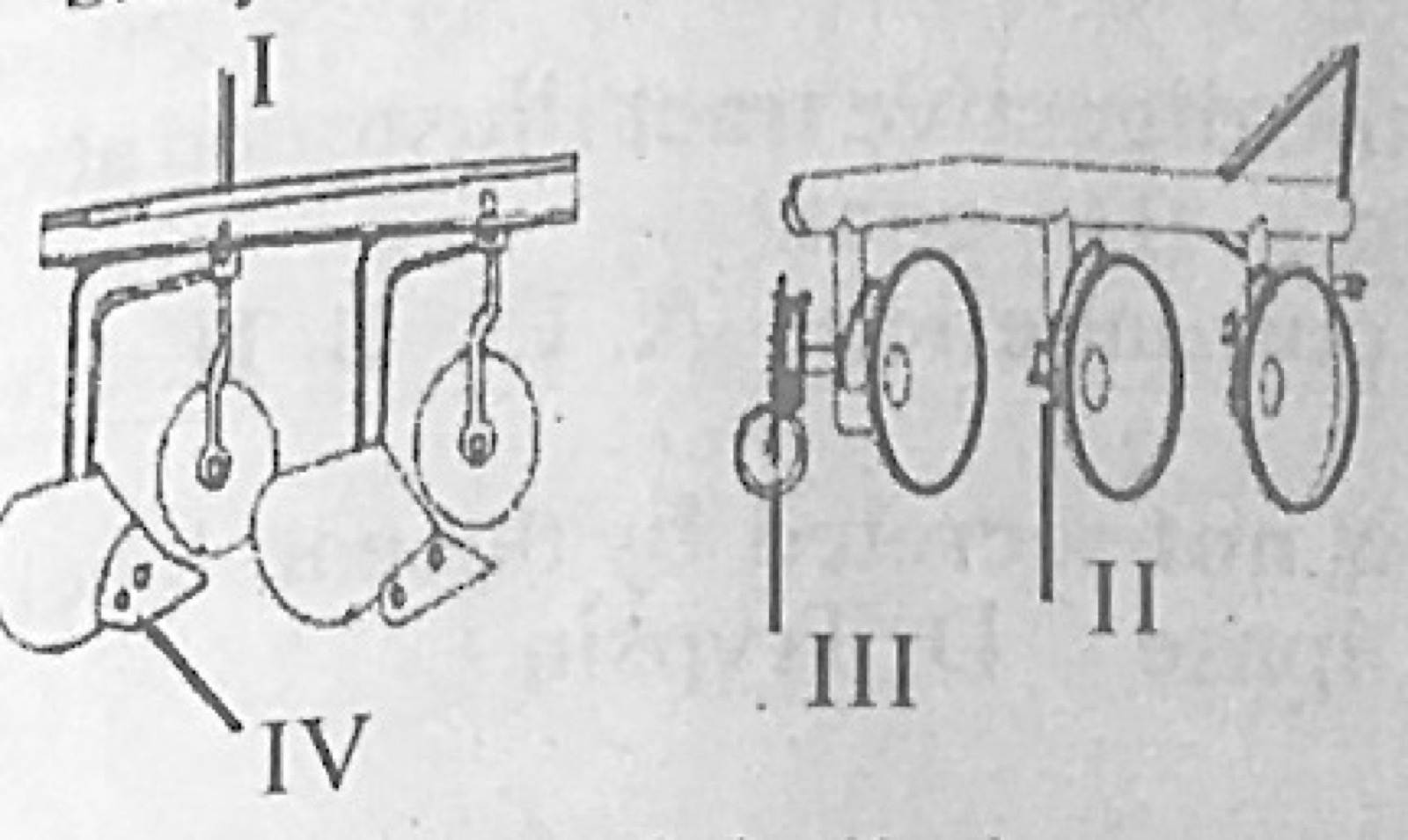
(a) List five non-governmental agricultural organizations in West Africa. (b) State four ways in which agriculture and industry are interrelated. (c) Give one function of each of the following parts of a disc plough: (i) disc; (ii) beam; (iii) furrow wheel; (iv) disc scraper; (v) hitch. (d) State four disadvantages of animal power.
Show the model answer
Model answer
(a) Any five: IITA; ILRI (formerly ILCA); WARDA/AfricaRice; ICRISAT; IFAD; ICRAF; Catholic Relief Services; World Vision; ADRA; Heifer International; Hunger Project. (b) Any four: agriculture supplies raw materials to industries; agriculture provides food for industrial workers; agriculture provides a market for industrial goods (tools, machines, fertilizers, chemicals); industries process, package and add value to farm produce; industries provide machinery and inputs to farms; both provide employment and income for each other. (c)(i) Disc: cuts, lifts and turns the soil. (ii) Beam: main frame to which other parts are attached. (iii) Furrow wheel: runs in the furrow, steadies the plough and takes side thrust. (iv) Disc scraper: removes soil sticking to the disc. (v) Hitch: attaches the plough to the tractor. (d) Any four: animals are slow and tire easily; need feeding and care even when idle; can be attacked by diseases (e.g. trypanosomiasis); cannot work long hours or in hot weather; low power output; need training; dung can spread disease; not suitable for large-scale work.
(a) State five factors that should be considered in choosing an irrigation system in West Africa. (b) Mention four problems associated with irrigation in West Africa. (c) A rectangle-shaped farmland has a length of 0.4 km and a breadth of 2,400 m, calculate the area of the farmland in hectares. (d) List one primary tillage and three secondary tillage implements. Primary tillage implement: Secondary tillage implements:
Show the model answer
Model answer
(a) Any five: source and quantity of water; topography/slope of the land; soil type (infiltration, drainage); type of crop; cost of the system/capital; climate (evaporation); available labour and skill; size of farm. (b) Any four: high cost of installation and maintenance; waterlogging; salinity/salt build-up; spread of water-borne diseases (bilharzia, malaria); soil erosion; shortage of water/skilled staff; weed growth. (c) Length = 0.4 km = 400 m. Area = 400 m × 2,400 m = 960,000 m². In hectares: 960,000 ÷ 10,000 = 96 ha. (d) Primary: disc plough (or mouldboard plough, chisel plough). Secondary (three): harrow; ridger; rotavator; cultivator.
Explanation
Convert km to m before multiplying; 1 ha = 10,000 m².
(a) Draw a well labelled diagram of the water cycle. (b) Mention two deficiency symptoms of phosphorus in crops. (c) Using the table below, classify the following insect-pests according to their modes of feeding: (i) weevil; (ii) locust; (iii) scale insect; (iv) armyworm; (v) earworm; (vi) cotton stainer; (vii) green spidermites; (viii) thrips; (ix) capsids; (x) yam beetle.
Show the model answer
Model answer
(a) Diagram showing: sea/rivers/lakes; evaporation and transpiration from plants; water vapour rising and condensing into clouds; precipitation (rain); run-off back into rivers; infiltration/percolation into soil and ground water; arrows completing the cycle. (b) Any two: poor root development; stunted growth; purplish/dark-green leaves; delayed maturity; poor flowering, fruiting and seed formation. (c) Biting and chewing: locust; armyworm; yam beetle. Piercing and sucking: scale insect; cotton stainer; green spider mites; thrips; capsids. Boring: weevil; earworm.
Explanation
Label every process with an arrow in the water cycle.
(a) Discuss maize smut disease under the following headings: (i) causal organism; (ii) mode of transmission; (iii) two symptoms; (iv) two cultural control measures. (b) Enumerate four forest management practices in West Africa. (c)(i) State four classes of farm animals based on their uses. (ii) Give one example of each class stated in 4(c)(i).
Show the model answer
Model answer
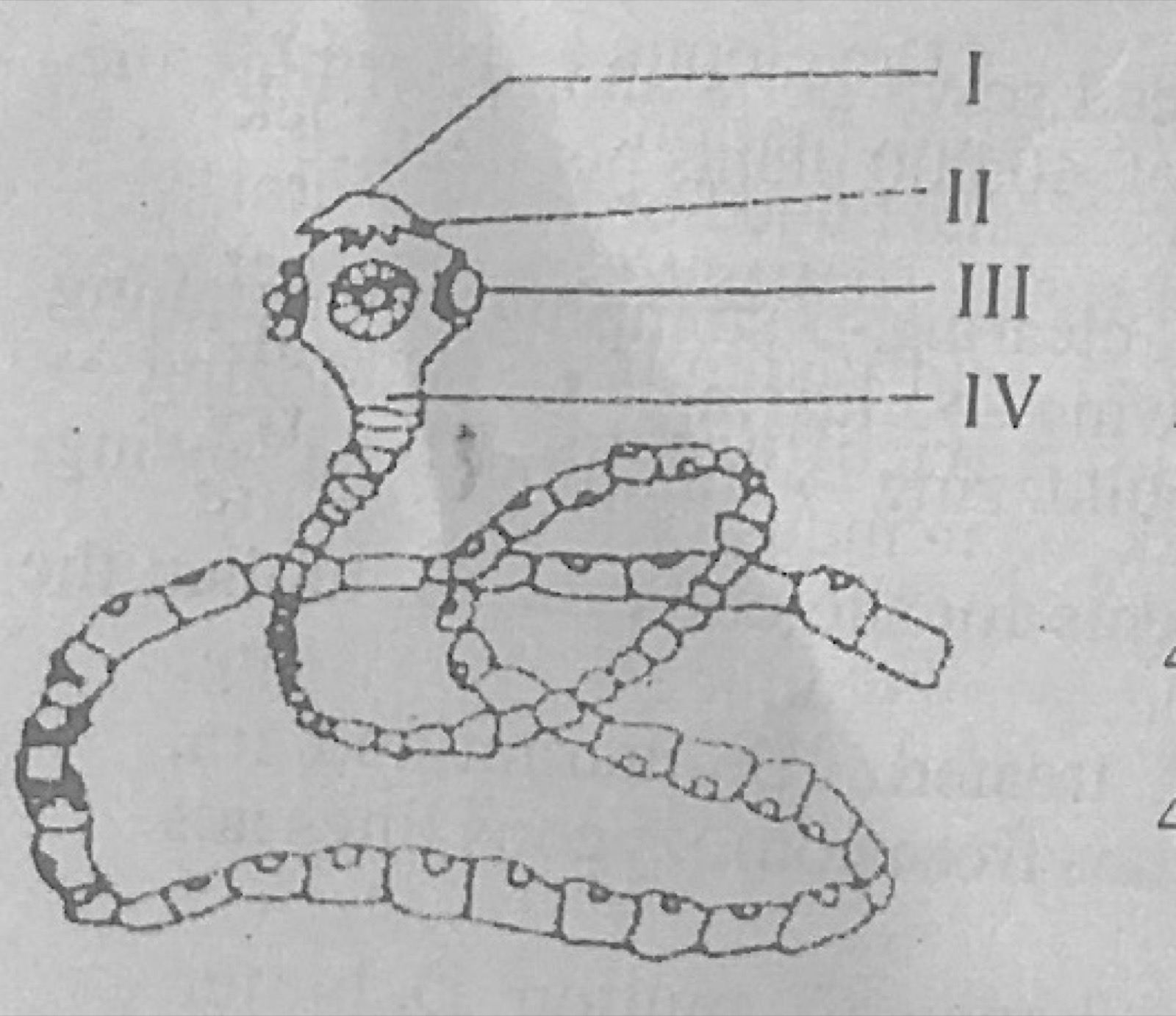
(a)(i) A fungus, Ustilago maydis. (ii) Spores carried by wind and rain splash; spores survive in soil and crop debris; infected seed. (iii) Any two: swollen whitish galls on ears, tassels, stems and leaves; galls burst to release black powdery spores; reduced or no grain; stunted plants. (iv) Any two: crop rotation; remove and burn infected plants before galls burst; plant resistant varieties; field sanitation; avoid injury to plants; balanced fertilizer use. (b) Any four: regeneration/reforestation; afforestation; selective exploitation/felling; taungya system; forest reserves and regulations; control of bush burning; establishing forest plantations; licensing of timber contractors. (c) Classes with an example each: work animals – horse, donkey, bullock; meat (beef) animals – cattle, goat, pig; milk (dairy) animals – cattle, goat; egg producers – chicken, duck; wool/fibre – sheep; pets/companions – dog, cat; game/recreation – horse.
(a) Discuss anthrax disease under the following headings: (i) causal organism; (ii) mode of transmission; (iii) two symptoms; (iv) two prevention and control measures. (b)(i) List four sources of plant protein in livestock feeds. (ii) Give three examples of forage legumes that could be found in rangelands in West Africa. (c) Mention five characteristics of labour as a factor of agricultural production.
Show the model answer
Model answer
(a)(i) A bacterium, Bacillus anthracis. (ii) Spores taken in with contaminated feed, water or pasture; contact with infected carcasses, hides or wounds; inhaling spores. (iii) Any two: sudden death; high fever; bleeding (dark, unclotted blood) from natural openings; swellings on neck and body; difficult breathing; carcass does not stiffen. (iv) Any two: annual vaccination; do not open carcasses – burn or bury them deep with lime; quarantine and isolation; disinfect premises; treat early cases with antibiotics. (b)(i) Any four: groundnut cake; soyabean meal; cotton seed cake; palm kernel cake; cowpea/beans; leaf meal (Leucaena); brewer's dried grains. (ii) Any three: Centrosema pubescens; Stylosanthes gracilis; Calopogonium mucunoides; Pueraria phaseoloides; Leucaena leucocephala; Gliricidia sepium. (c) Any five: labour is human effort (physical and mental); it is mobile; it cannot be stored; it is supplied by people who need wages; its efficiency varies with skill, health and training; it is perishable; supply depends on population; it can be skilled or unskilled; the reward is wages/salary.
(a) Explain briefly each of the following basic economic concepts: (i) scarcity; (ii) scale of preference. (b) Give four reasons why agricultural insurance is important. (c) State five fishery regulations in West Africa. (d) Give five reasons why beekeeping is important.
Show the model answer
Model answer
(a)(i) Scarcity: resources (land, labour, capital) are limited compared with the unlimited wants they must satisfy. (ii) Scale of preference: a list of wants arranged in order of importance, so the most pressing are satisfied first with the limited resources. (b) Any four: compensates farmers for losses; encourages farmers to invest and adopt new ideas; makes it easier to get loans (security for lenders); reduces risk and uncertainty; keeps farmers in business after disasters; encourages large-scale farming. (c) Any five: minimum mesh size of nets; ban on fishing with poison, chemicals and explosives; closed seasons/areas for breeding; licensing of fishermen and boats; minimum size of fish that may be caught; ban on catching fingerlings/brood stock; control of pollution of waters; limits on foreign trawlers in territorial waters. (d) Any five: honey for food and sale; beeswax for candles, polish and cosmetics; pollination of crops; income/employment; medicinal products (propolis, royal jelly, venom); needs little land and capital; raw material for industries.