(a) Define the term land tenure system and give four examples. (b)(i) Discuss briefly land use decree (ii) State two advantages and two disadvantages of the decree.
Show the model answer
Model answer
(a) Land tenure is the system by which land is owned, held, acquired and used by individuals or communities. Examples (any four): communal; inheritance; leasehold; rent/tenancy; outright purchase; gift; pledge; government/state ownership (b)(i) The Land Use Decree (1978) vested all land in each state in the Governor, to hold in trust for the people; land is allocated through certificates of occupancy (urban) and local governments (rural); individuals hold rights of occupancy, not ownership (ii) Advantages (any two): easier access to land for agriculture and government projects; checks land speculation; reduces land disputes; gives secure title for loans. Disadvantages (any two): delays and bureaucracy in getting land; the rich and influential acquire more land; reduces traditional owners' rights/compensation disputes; corruption
Explanation
Define, give four examples, then discuss the decree.
(a) What is farm surveying? (b)(i) List six surveying instruments (ii) Write short notes on any four surveying instruments listed in (i).
Show the model answer
Model answer
(a) Farm surveying is measuring and mapping farmland to determine its size, shape, boundaries and features (b)(i) Any six: ranging poles; Gunter's chain; measuring tape; prismatic compass; theodolite; arrows/pins; offset staff; cross-staff; plane table; level and staff (ii) Any four: ranging pole – painted pole for marking stations and straight lines; Gunter's chain – 20.1 m chain of 100 links for measuring distance; measuring tape – linen or steel tape for measuring short distances; prismatic compass – measures bearings; theodolite – measures horizontal and vertical angles; cross-staff – sets out right angles
(a) Define the term Irrigation. (b) List six sources of water for irrigation. (c) Give three reasons why irrigation schemes are necessary in Nigeria. (d) State two similarities and three differences between sprinkler and surface irrigation.
Show the model answer
Model answer
(a) Irrigation is the artificial supply of water to soil for crop growth (b) Any six: rivers; streams; lakes; dams/reservoirs; wells/boreholes; ponds; springs; rain-water harvesting tanks (c) Any three: rainfall is seasonal and unreliable, especially in the north; allows dry-season (all-year) cropping; increases yields; allows early planting; supports crops with high water needs (rice, vegetables); food security (d) Similarities: both are artificial ways of applying water to crops; both need a water source (and often a pump) and planning/management Differences: surface is cheaper, sprinkler expensive; surface needs level or gently sloping land, sprinkler suits any slope; surface wastes more water, sprinkler uses water efficiently; sprinkler needs pressure/pumps and pipes, surface uses gravity channels; surface may cause waterlogging and salinity
Explanation
Answer every part; differences are best in a table.
List and discuss briefly four climatic factors that affect agricultural production in Nigeria.
Show the model answer
Model answer
Any four: rainfall – decides seasons, planting dates and crops grown; too much causes erosion/leaching, too little causes drought; temperature – affects germination, growth, ripening, and animal comfort and production; sunlight – needed for photosynthesis; day length affects flowering; intensity affects drying; relative humidity – affects transpiration, drying of produce and disease spread; wind – helps pollination and seed dispersal but causes lodging, erosion and spreads pests/diseases
Explanation
Name four and explain each with its good and bad effects.
(a) Explain what is meant by natural grassland. (b) State five characteristics of natural grassland. (c) List four grasses and three pasture legumes commonly found in natural grasslands.
Show the model answer
Model answer
(a) Natural grassland (range) is land covered mainly by grasses and some legumes and scattered shrubs that grow naturally without being planted, used for grazing (b) Any five: grows without planting; mixture of many species, some unpalatable; low yield and quality; seasonal growth (lush in rains, dry in dry season); often has weeds and shrubs; not fertilised or managed; subject to bush fires; low carrying capacity (c) Grasses (any four): spear grass, guinea grass, elephant grass, gamba grass, giant star grass, Bahama grass, carpet grass. Legumes (any three): Centrosema, Stylosanthes, Calopogonium, Pueraria (kudzu), wild cowpea
(a) Define the term Taungya system. (b) State five conditions that favour the practice of taungya system in Nigeria. (c) State two advantages of the system to each of the following (i) farmers (ii) foresters.
Show the model answer
Model answer
(a) Taungya is a system in which farmers grow food crops between young forest trees on forest land, tending the trees until their canopy closes (b) Any five: shortage of farmland/high population pressure; availability of forest reserve land; landless farmers willing to work; government forestry policy supporting it; fertile forest soils; suitable climate for both crops and trees; demand for timber (c)(i) Farmers: free/cheap fertile land; food and income from crops; fewer land disputes (ii) Foresters: cheap establishment and weeding of tree seedlings; reduced cost of forest regeneration; trees protected from fire and grazing
Explanation
Define, then five conditions and two advantages each.
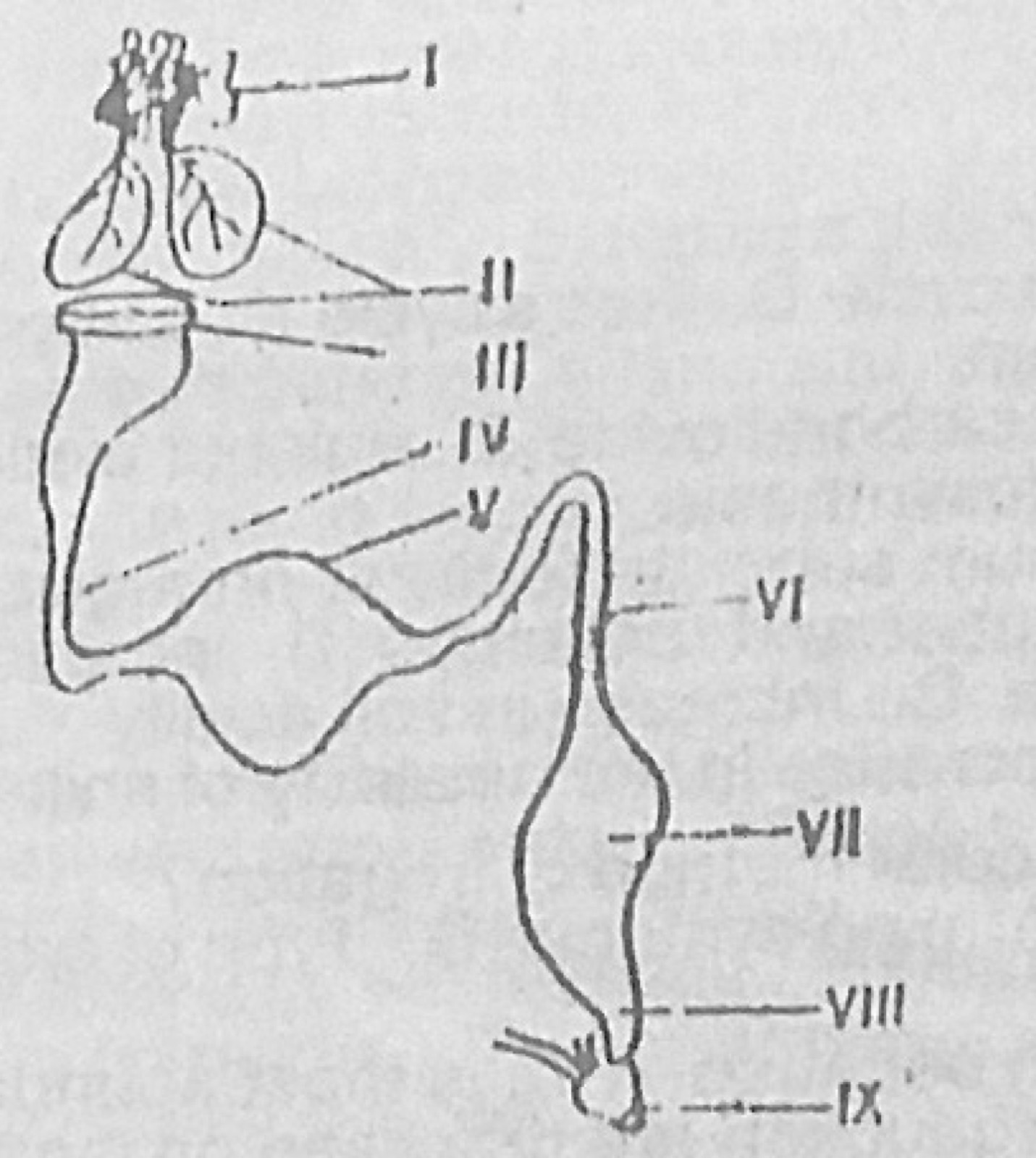
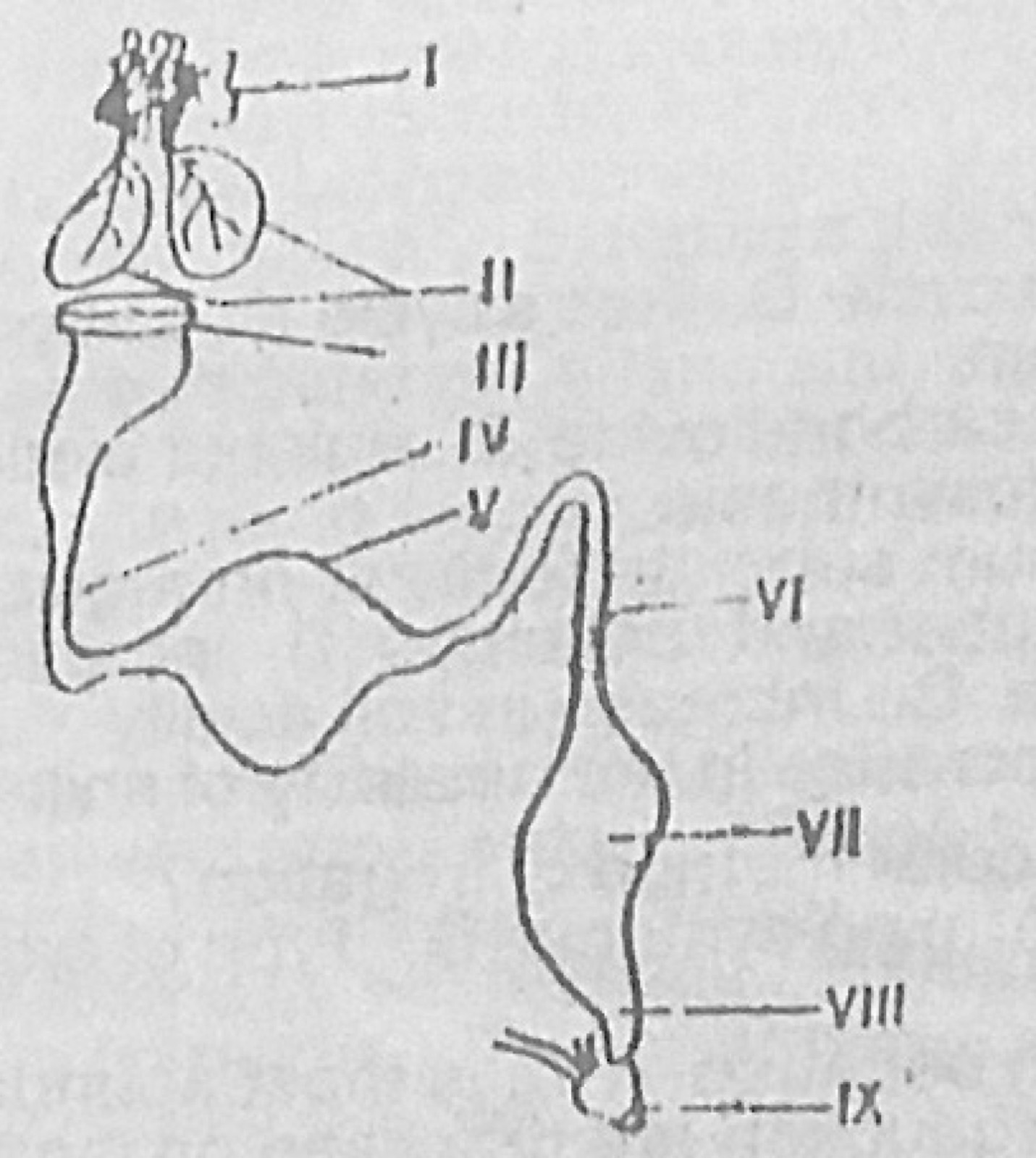
Describe briefly the processes of egg formation in poultry.
Show the model answer
Model answer
Ovary releases the mature yolk (ovum) into the infundibulum, where fertilisation takes place (about 15–30 minutes) Magnum: thick albumen added (about 3 hours) Isthmus: inner and outer shell membranes formed, shape fixed (about 1¼ hours) Uterus (shell gland): thin albumen and water added, shell (calcium carbonate) and pigment deposited (about 20 hours) Vagina: cuticle added; egg passes to the cloaca and is laid; whole process about 24–26 hours
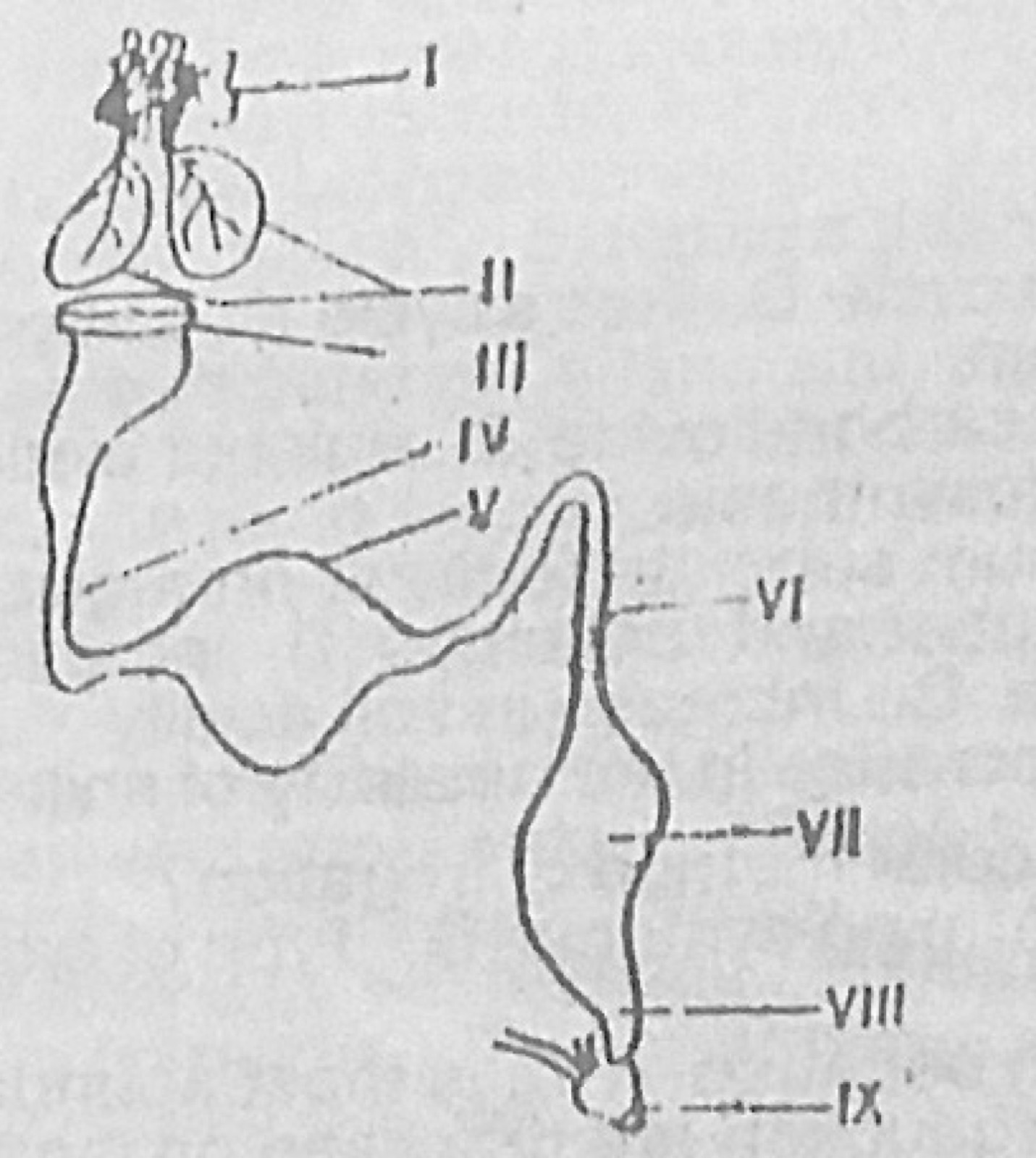
With the aid of a labelled diagram, describe digestion in a named ruminant.
Show the model answer
Model answer
Named ruminant (e.g. cow); labelled diagram: mouth, oesophagus, rumen, reticulum, omasum, abomasum, small intestine, large intestine/caecum, rectum, anus Mouth: feed chewed briefly and mixed with saliva, swallowed Rumen: microbes (bacteria, protozoa) ferment cellulose into volatile fatty acids, make microbial protein and B vitamins; gases belched Reticulum: further mixing; food formed into cud which is regurgitated, re-chewed (rumination) and swallowed Omasum: water absorbed, food ground by leaves (folds) Abomasum (true stomach): gastric juice (HCl, pepsin) digests protein Small intestine: enzymes from pancreas and bile complete digestion; nutrients absorbed Large intestine/caecum: water absorbed, some microbial fermentation; waste passed out as faeces
Explanation
A clear labelled diagram plus the role of each compartment.
Write short notes on the following in agricultural production: (a) land (b) capital (c) labour (d) farm manager.
Show the model answer
Model answer
(a) Land: all natural resources (soil, water, minerals, forests) used for production; fixed in supply, immobile; reward is rent (b) Capital: man-made goods used to produce more goods – tools, machines, buildings, money; reward is interest (c) Labour: human physical and mental effort; can be family, hired, skilled or unskilled; reward is wages/salaries (d) Farm manager (entrepreneur): plans, organises and combines the other factors, takes decisions and bears risks; reward is profit
Explanation
For each factor give its meaning, an example and its reward.
(a) Define the terms demand and supply and state the laws governing them. (b) Explain the implications of demand and supply on agricultural production.
Show the model answer
Model answer
(a) Demand: the quantity of a commodity consumers are willing and able to buy at a given price and time. Law: the higher the price, the lower the quantity demanded, other things being equal Supply: the quantity of a commodity producers are willing and able to offer for sale at a given price and time. Law: the higher the price, the higher the quantity supplied, other things being equal (b) Any reasonable implications: high demand/prices encourage farmers to produce more; surplus at harvest lowers prices and farmers' income; scarcity in off-season raises prices, so storage pays; farmers should produce what is demanded (consumer sovereignty); supply of farm produce is inelastic in the short run (seasonal), causing price fluctuations; government may fix prices or buy surplus to stabilise income
Explanation
State both laws, then link price changes to farmers' decisions.