Question 47
Rates of ReactionThe following graph demonstrates the rate of reaction between calcium carbonate (marble) and dilute hydrochloric acid. The graph shows that the rate of reaction is initially greatest when
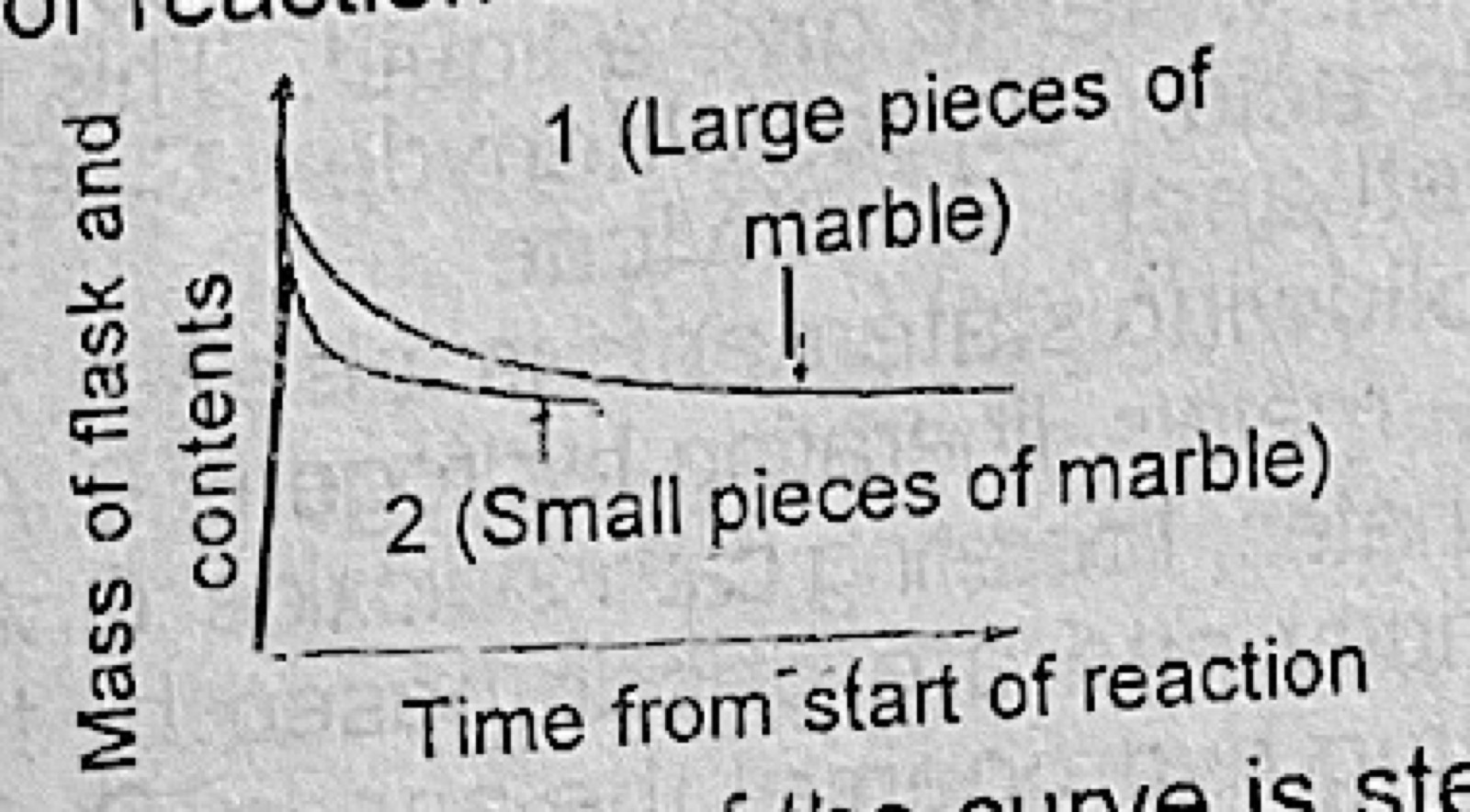
- A.the initial slope of the curve is steepest and this occur when small pieces of marble are used and is due to a small surface area of reactant
- B.the initial slope of the curve is least steep and this occur when large pieces of marble are used and is due to a small surface area of reactant.
- C.the initial slope of the curve is steepest and this occurs when small pieces of marble are used and is due to a large surface area of reactant
- D.the initial slope of the curve is steepest and this occur when large pieces of marble are used and is due to a large surface area of reactant
- E.the initial slope of the curve is least steep and this occur when small pieces of marble are used and is due to the increased surface area of the reactant.
Show the answer and explanation
Answer: C (the initial slope of the curve is steepest and this occurs when small pieces of marble are used and is due to a large surface area of reactant)
Explanation
The mass falls fastest (steepest slope) at the start with small pieces of marble, because many small pieces have a larger total surface area in contact with the acid.