JAMB Biology 2004 past questions and answers

47 questions. Try each one, then open the answer to check yourself and read the explanation.

Question 1

Cell Structure and Organisation

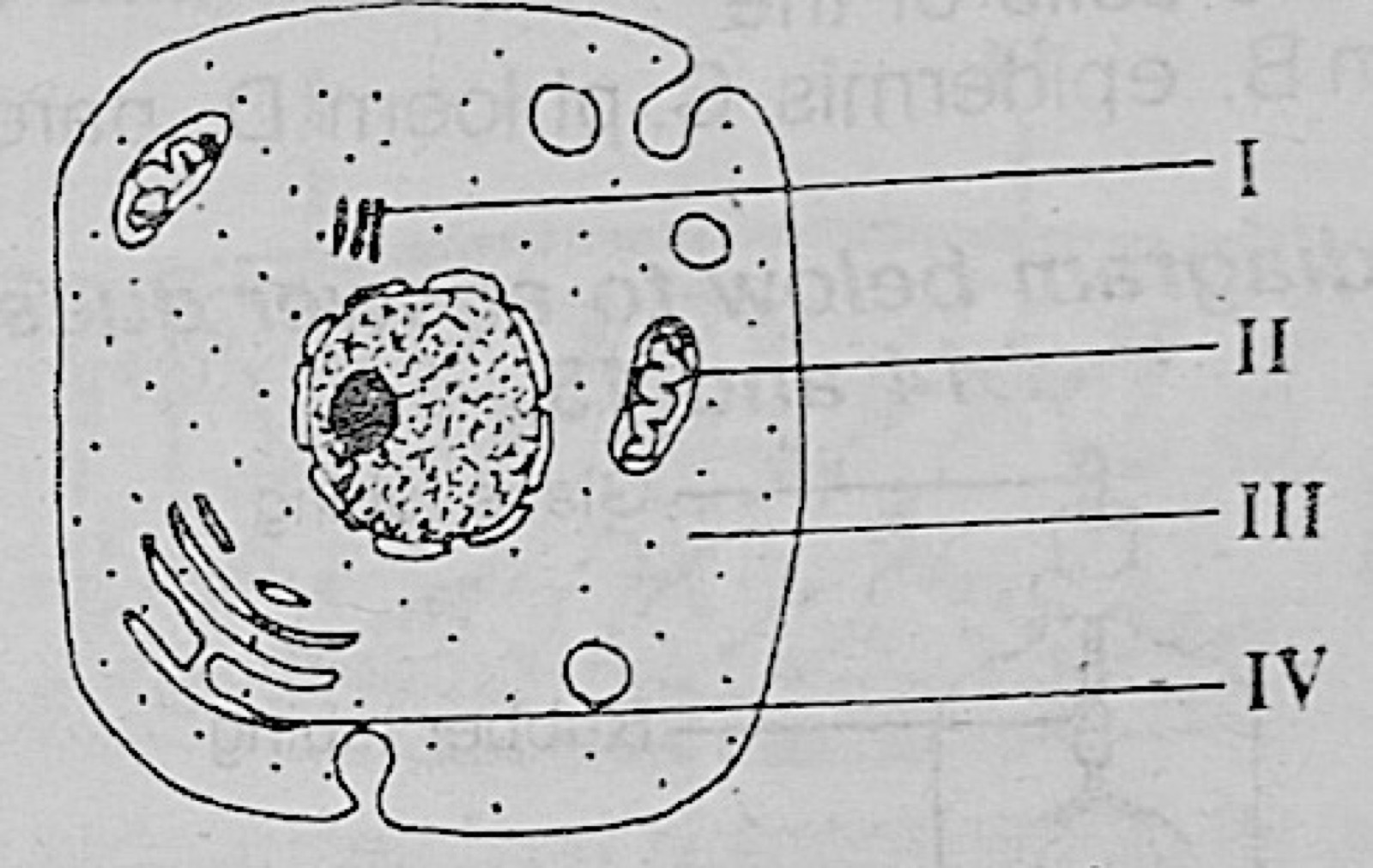
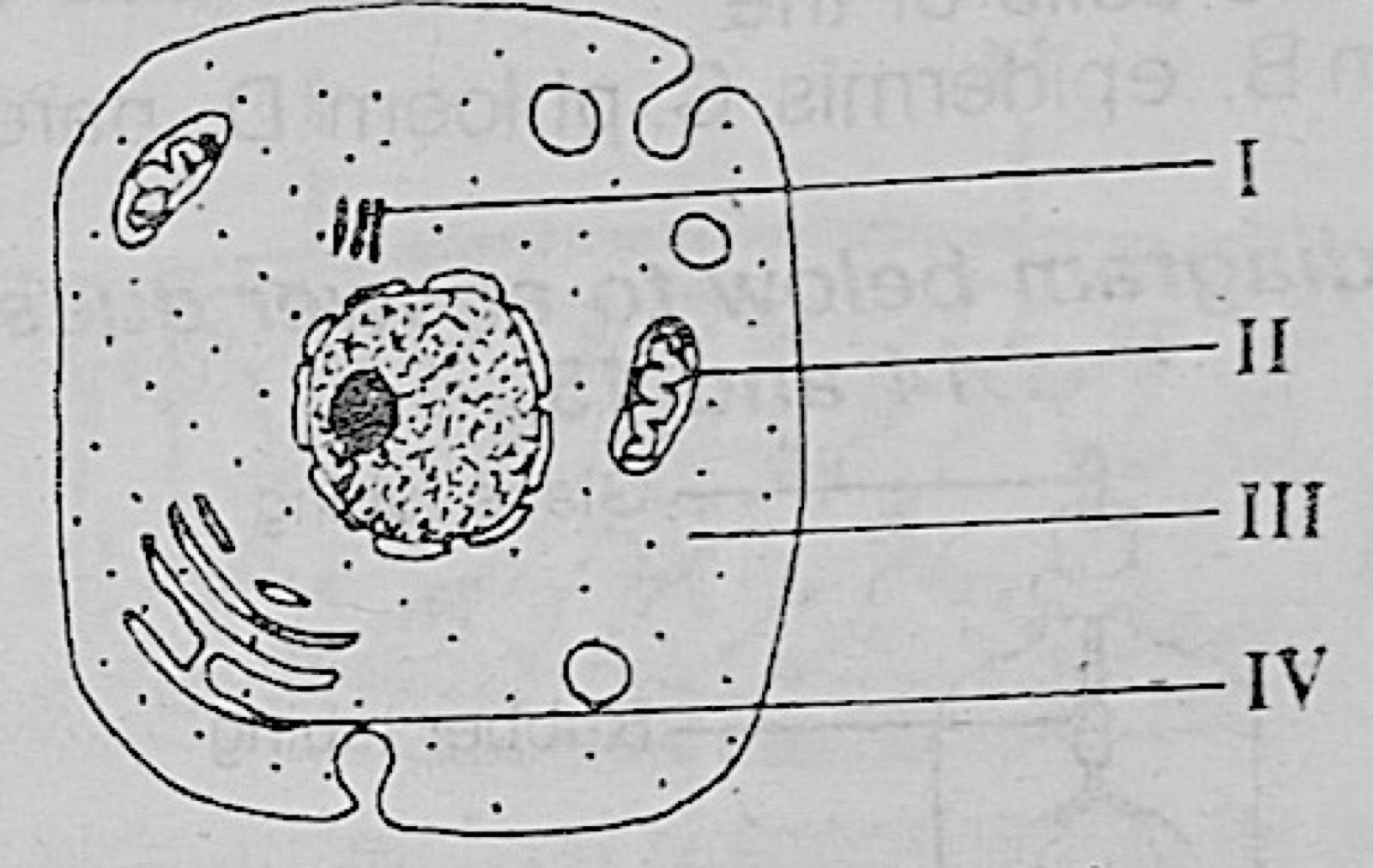
Use the diagram of the cell to answer: The endoplasmic reticulum is represented by the part labelled

Diagram for this question
  1. A.I
  2. B.II
  3. C.III
  4. D.IV
Show the answer and explanation

Answer: D (IV)

Explanation

IV points to the stack of folded membranes near the edge of the cell. This network of membranes is the endoplasmic reticulum.

Open this question

Question 2

Cell Structure and Organisation

Use the diagram of the cell to answer: The part labelled II is responsible for

Diagram for this question
  1. A.photosynthesis
  2. B.respiration
  3. C.protein synthesis
  4. D.excretion
Show the answer and explanation

Answer: B (respiration)

Explanation

II is a mitochondrion, recognised by its folded inner membrane. Mitochondria carry out aerobic respiration to release energy.

Open this question

Question 3

Cell Structure and Organisation

The rods in the retina of the eye are examples of

  1. A.cells
  2. B.tissues
  3. C.organs
  4. D.systems
Show the answer and explanation

Answer: A (cells)

Explanation

Each rod is a single light-sensitive cell. Many rods and cones together form the retina tissue.

Open this question

Question 4

Plant Kingdom

The absence of special food and water-conducting systems restricts the body size in

  1. A.algae, liverworts and mosses
  2. B.liverworts, mosses and ferns
  3. C.the bryophytes and the pteridophytes
  4. D.the thallophytes and the pteridophytes
Show the answer and explanation

Answer: A (algae, liverworts and mosses)

Explanation

Algae, liverworts and mosses have no xylem or phloem, so they stay small and rely on diffusion. Ferns (pteridophytes) do have vascular tissue.

Open this question

Question 6

Viruses, Monera, Protista and Fungi

The most common characteristic of the fungal hyphae is the possession of

  1. A.cell-like compartments with one nucleus each
  2. B.cell walls that are both rigid and chitinous
  3. C.a multicellular mycelium in the substrate
  4. D.cell-like partitions formed by cross-walls
Show the answer and explanation

Answer: B (cell walls that are both rigid and chitinous)

Explanation

All fungal hyphae have rigid walls made of chitin. Many hyphae, as in Rhizopus, have no cross-walls, so they are not divided into one-nucleus compartments.

Open this question

Question 7

Animal Kingdom

Insects are considered the most successful among the invertebrates because they

  1. A.possess exoskeletons
  2. B.survive in various environmental conditions
  3. C.have wings for flight
  4. D.possess the ability to change their forms
Show the answer and explanation

Answer: B (survive in various environmental conditions)

Explanation

Insects live almost everywhere: on land, in fresh water, in deserts and in the cold. Surviving in so many conditions is what makes them so successful.

Open this question

Question 8

Animal Kingdom

The larval stage of a mosquito is called

  1. A.wriggler
  2. B.grub
  3. C.maggot
  4. D.caterpillar
Show the answer and explanation

Answer: A (wriggler)

Explanation

Mosquito larvae wriggle through the water, so they are called wrigglers. Maggots are housefly larvae and caterpillars are butterfly or moth larvae.

Open this question

Question 9

Behaviour

The function of the long-winged reproductives in a termite colony is to

  1. A.disperse the population
  2. B.feed the young
  3. C.participate in swarming
  4. D.protect the young
Show the answer and explanation

Answer: A (disperse the population)

Explanation

The winged reproductives fly out of the nest, pair up and start new colonies elsewhere. This spreads (disperses) the termite population.

Open this question

Question 10

Animal Kingdom

A peculiar characteristic of mammals is that they

  1. A.have teeth
  2. B.are warm-blooded
  3. C.have lungs
  4. D.have sebaceous glands
Show the answer and explanation

Answer: D (have sebaceous glands)

Explanation

Sebaceous (oil) glands in the skin are found only in mammals. Birds are also warm-blooded, and reptiles also have lungs and teeth.

Open this question

Question 11

Structure of Flowering Plants

In the internal structure of plants, a wide pith in the centre is common to

  1. A.dicot stems and monocot stems
  2. B.dicot stems and monocot roots
  3. C.dicot roots and monocot roots
  4. D.dicot roots and monocot stems
Show the answer and explanation

Answer: B (dicot stems and monocot roots)

Explanation

Dicot stems have a ring of bundles around a central pith, and monocot roots have a ring of xylem and phloem around a large pith. Dicot roots have xylem in the centre and monocot stems have scattered bundles.

Open this question

Question 13

Cell Structure and Organisation

All living cells require water because it

  1. A.is a medium for all metabolic reactions
  2. B.is a medium that neutralizes acids in cells
  3. C.is the main source of energy for the cells
  4. D.prevents the development of diseases in cells
Show the answer and explanation

Answer: A (is a medium for all metabolic reactions)

Explanation

The chemical reactions of the cell take place in water. Water dissolves the substances so that they can react.

Open this question

Question 14

Food Substances and Enzymes

The breakdown of fats and oils into simpler absorbable compounds is catalyzed by the group of enzymes called

  1. A.lipases
  2. B.hydrolases
  3. C.amylases
  4. D.peptidases
Show the answer and explanation

Answer: A (lipases)

Explanation

Lipases break fats and oils into fatty acids and glycerol, which can be absorbed. Amylases digest starch and peptidases digest proteins.

Open this question

Question 15

Cell and Its Environment

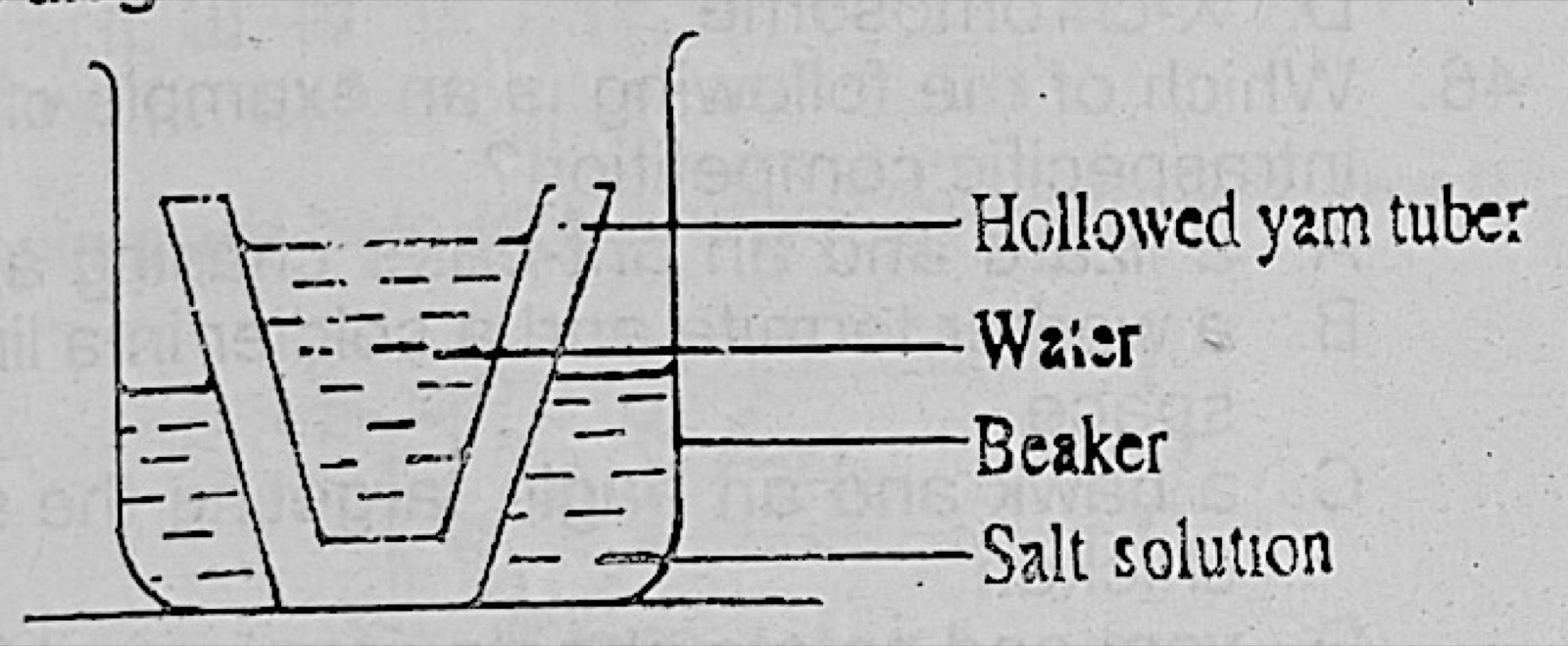
Use the diagram of the yam set-up to answer: Yam is used in this set-up because it

Diagram for this question
  1. A.is permeable to the salt solution
  2. B.is a plant material
  3. C.acts as a storage organ
  4. D.acts as a semi-permeable membrane
Show the answer and explanation

Answer: D (acts as a semi-permeable membrane)

Explanation

The living yam tissue lets water pass through but holds back the dissolved salt. It works as a semi-permeable membrane for osmosis.

Open this question

Question 16

Cell and Its Environment

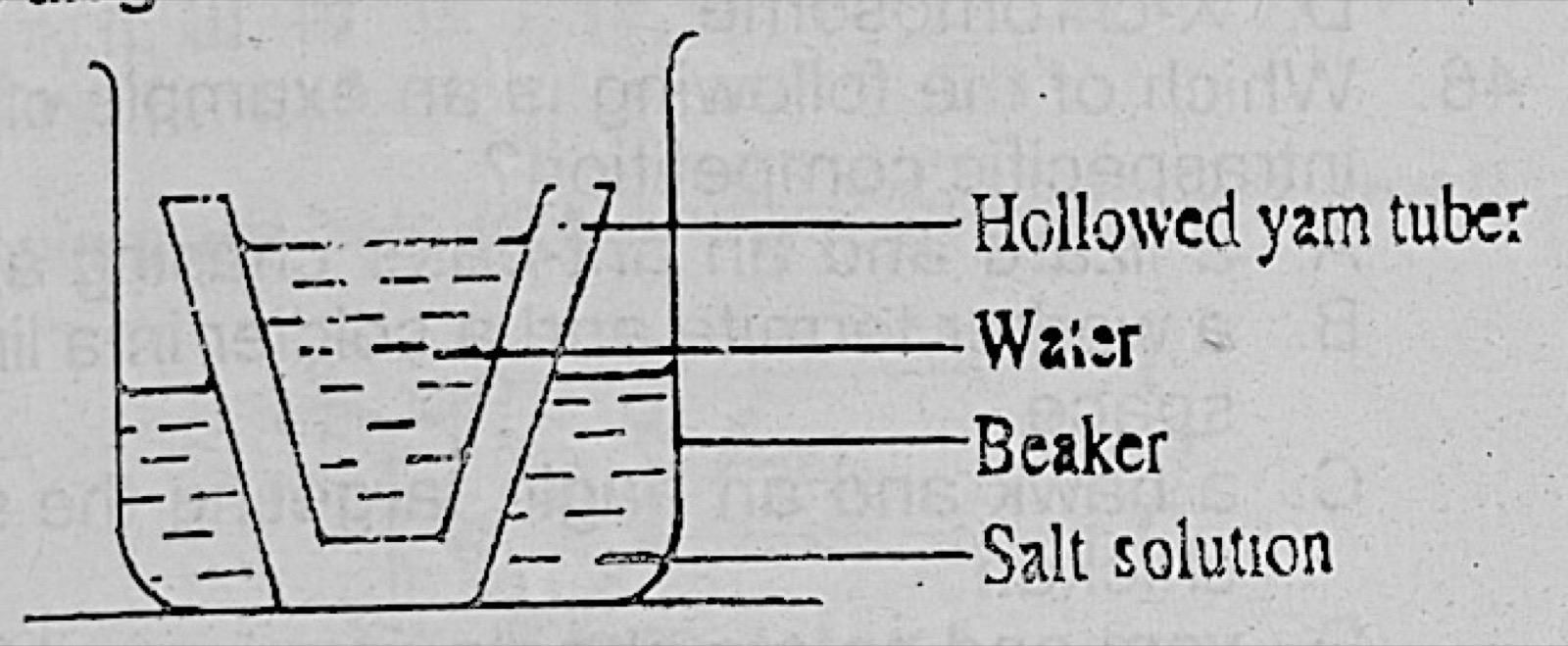
Use the diagram of the yam set-up to answer: Which of the following results is to be expected if the set-up is left for several hours?

Diagram for this question
  1. A.decrease in the size of the yam
  2. B.movement of the salt solution into the water
  3. C.decrease in the volume of water inside the yam
  4. D.movement of water from the salt solution into the yam
Show the answer and explanation

Answer: C (decrease in the volume of water inside the yam)

Explanation

The water inside the hollow yam is more dilute than the salt solution outside. Water moves out through the yam by osmosis, so the water inside goes down.

Open this question

Question 17

Respiration

The surface of an alveolus in a mammal is well supplied with tiny blood vessels known as

  1. A.arterioles
  2. B.venules
  3. C.arteries
  4. D.capillaries
Show the answer and explanation

Answer: D (capillaries)

Explanation

Each alveolus is covered with a network of capillaries. Their thin walls let oxygen and carbon(IV) oxide diffuse quickly.

Open this question

Question 18

Respiration

The anaerobic fermentation of a glucose molecule yields

  1. A.38 ATP molecules
  2. B.2 ATP molecules and alcohol
  3. C.pyruvic acid and alcohol
  4. D.water and carbon (IV) oxide
Show the answer and explanation

Answer: B (2 ATP molecules and alcohol)

Explanation

Yeast fermentation turns one glucose molecule into alcohol and carbon(IV) oxide, with a net gain of only 2 ATP. Aerobic respiration gives about 38 ATP, water and carbon(IV) oxide.

Open this question

Question 19

Cell and Its Environment

The opening of the stoma is controlled by the

  1. A.presence of a pore
  2. B.increase in solute concentration in the guard cells
  3. C.presence of guard cells
  4. D.decrease in solute concentration in the guard cells
Show the answer and explanation

Answer: B (increase in solute concentration in the guard cells)

Explanation

When solutes build up in the guard cells, water enters them by osmosis. The guard cells swell and curve apart, opening the stoma.

Open this question

Question 20

Homeostasis

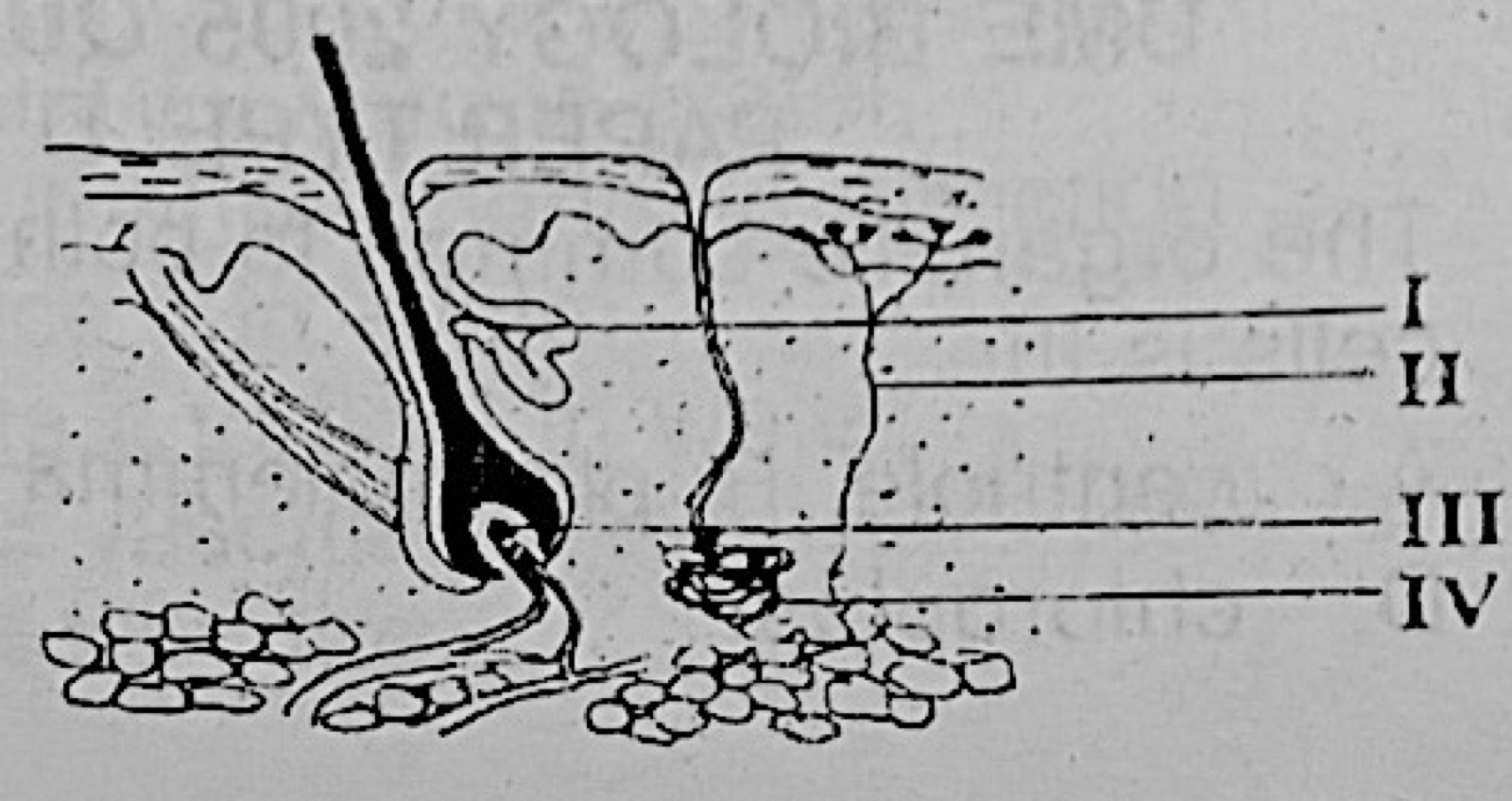
Use the diagram of the skin to answer: The sweat gland is the structure labelled

Diagram for this question
  1. A.I
  2. B.II
  3. C.III
  4. D.IV
Show the answer and explanation

Answer: D (IV)

Explanation

IV points to the coiled tube deep in the dermis. That coiled tube is the sweat gland.

Open this question

Question 22

Support and Movement

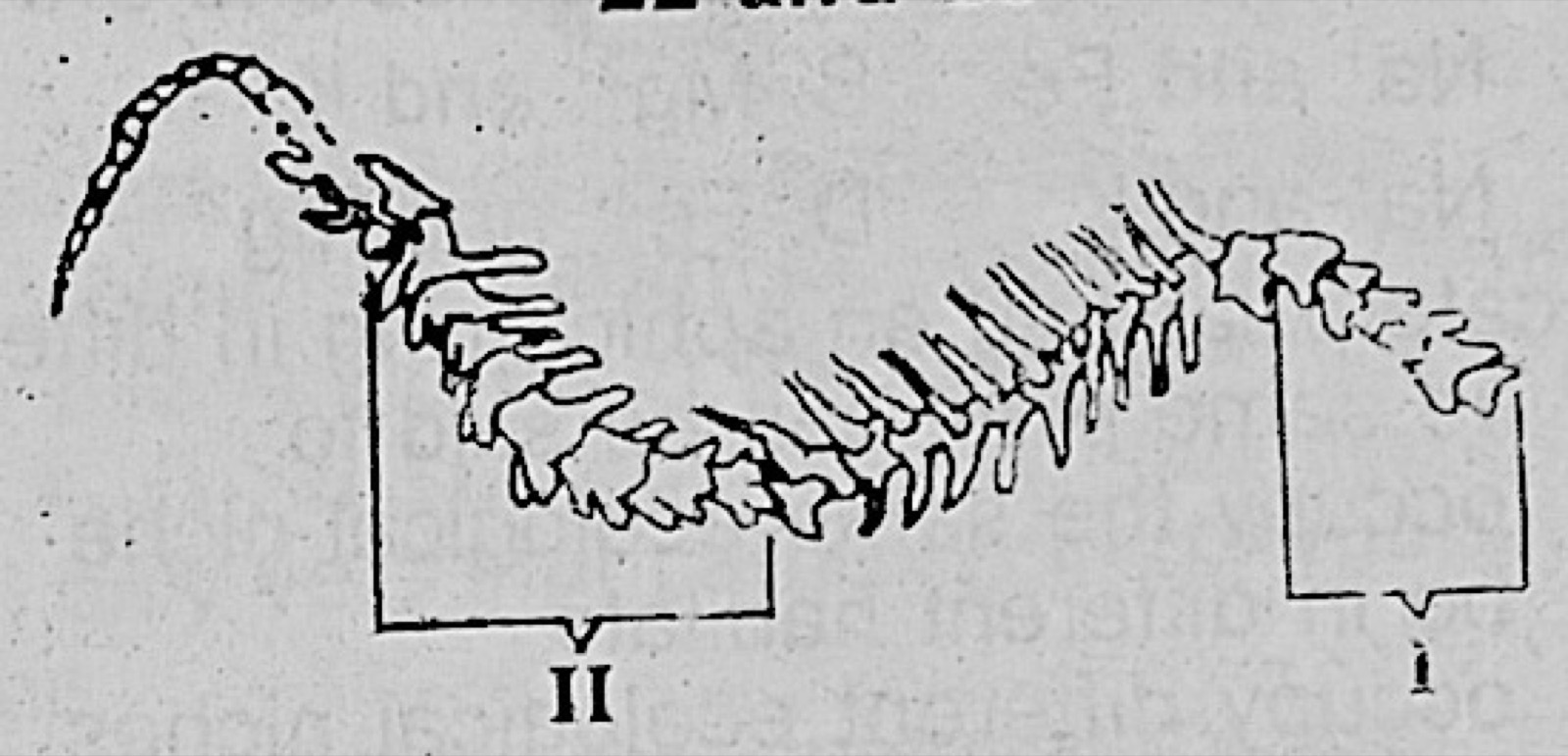
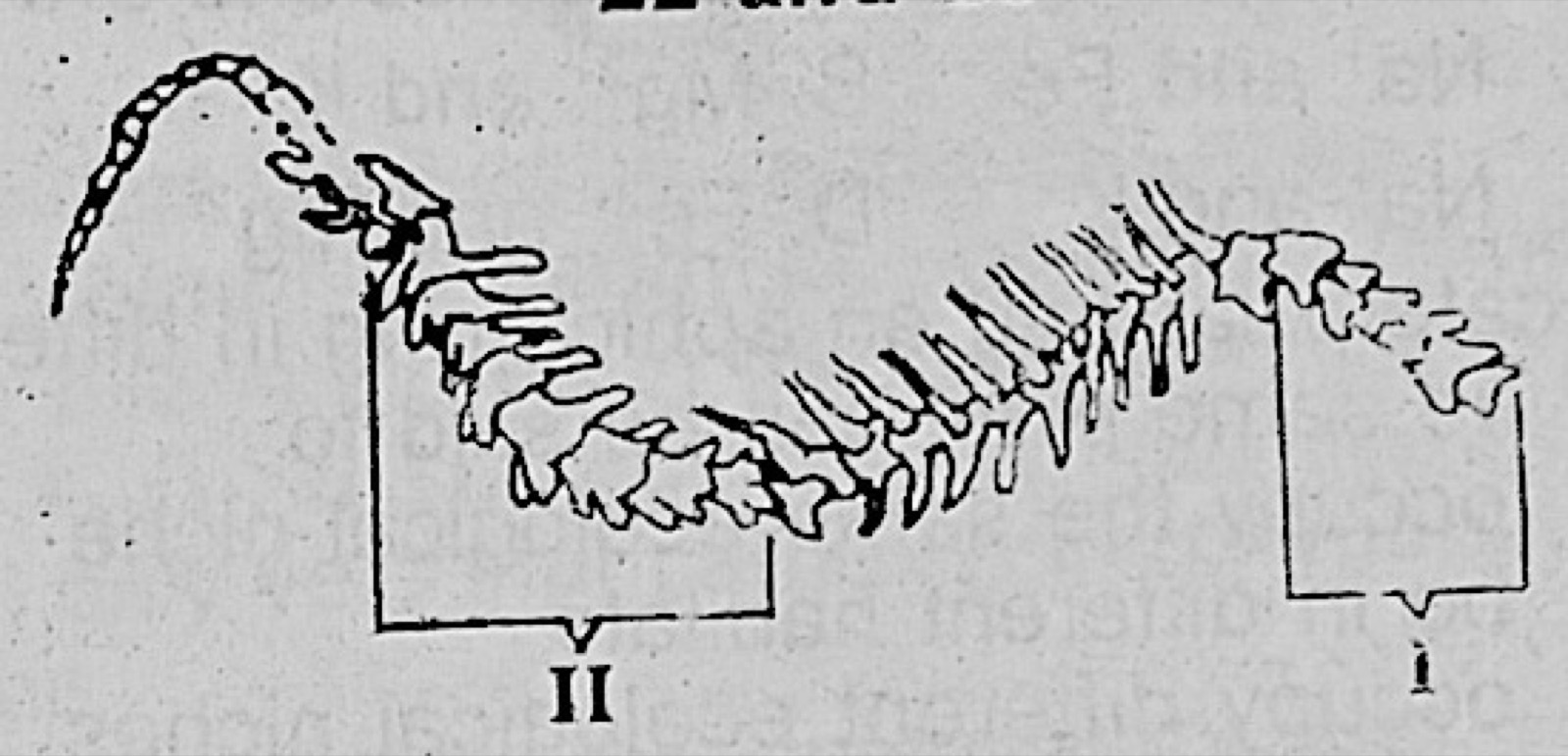
Use the diagram of the vertebral column to answer: The bones labelled II are called

Diagram for this question
  1. A.cervical vertebrae
  2. B.sacral vertebrae
  3. C.thoracic vertebrae
  4. D.lumbar vertebrae
Show the answer and explanation

Answer: D (lumbar vertebrae)

Explanation

Region II lies between the thoracic vertebrae (with long spines) and the tail end. These large vertebrae of the lower back are the lumbar vertebrae.

Open this question

Question 23

Support and Movement

Use the diagram of the vertebral column to answer: The type of joint between adjacent bones in the part labelled II is the

Diagram for this question
  1. A.ball-and-socket joint
  2. B.sliding joint
  3. C.hinge joint
  4. D.suture joint
Show the answer and explanation

Answer: B (sliding joint)

Explanation

Neighbouring vertebrae glide slightly over each other at their joint surfaces. These are sliding (gliding) joints, which give the backbone some flexibility.

Open this question

Question 24

Reproduction in Animals

The type of reproduction that is common to both Hydra and yeast is

  1. A.conjugation
  2. B.binary fission
  3. C.grafting
  4. D.budding
Show the answer and explanation

Answer: D (budding)

Explanation

Both Hydra and yeast grow small outgrowths (buds) that develop into new individuals. This is budding.

Open this question

Question 25

Reproduction in Plants

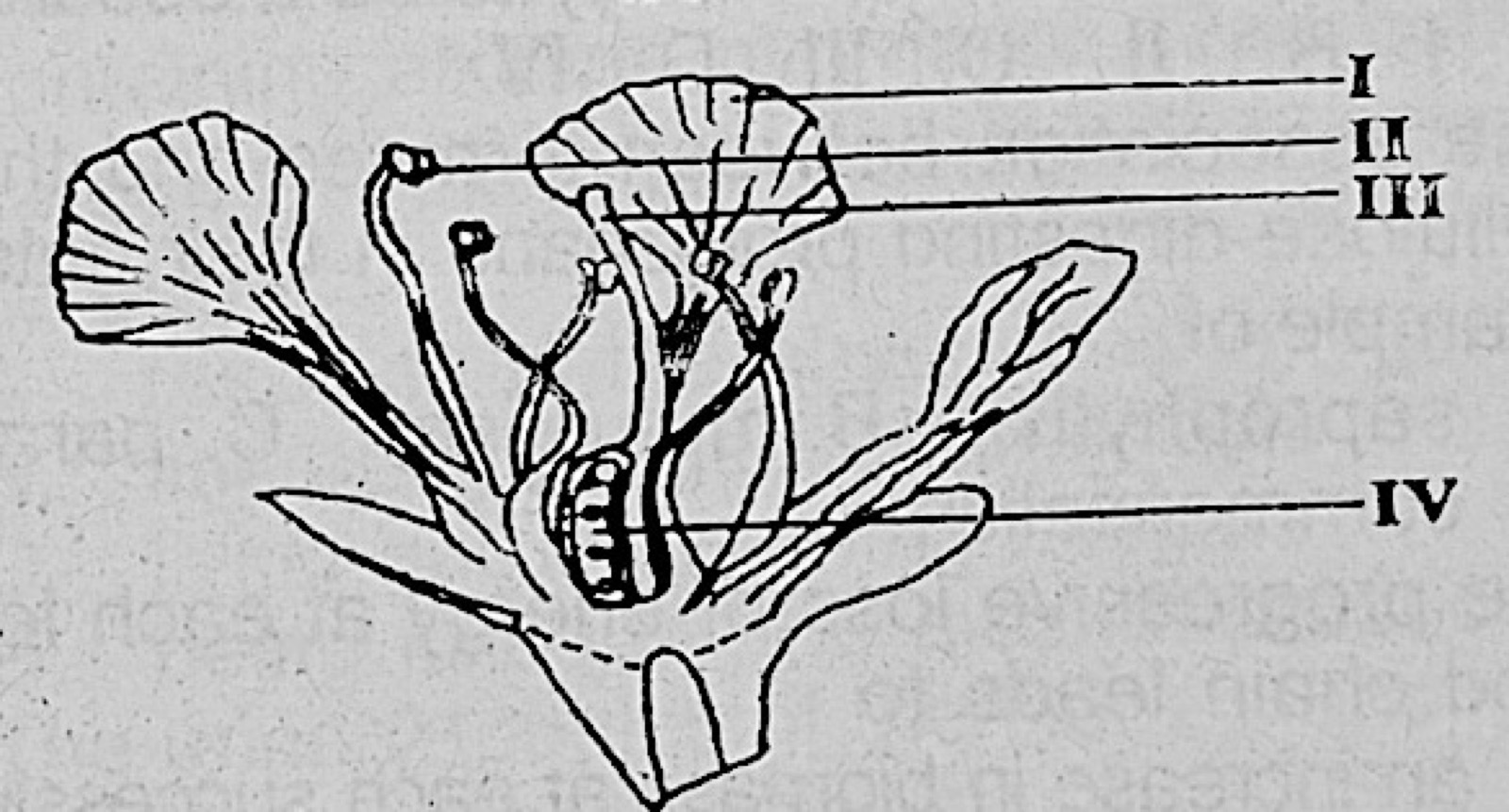
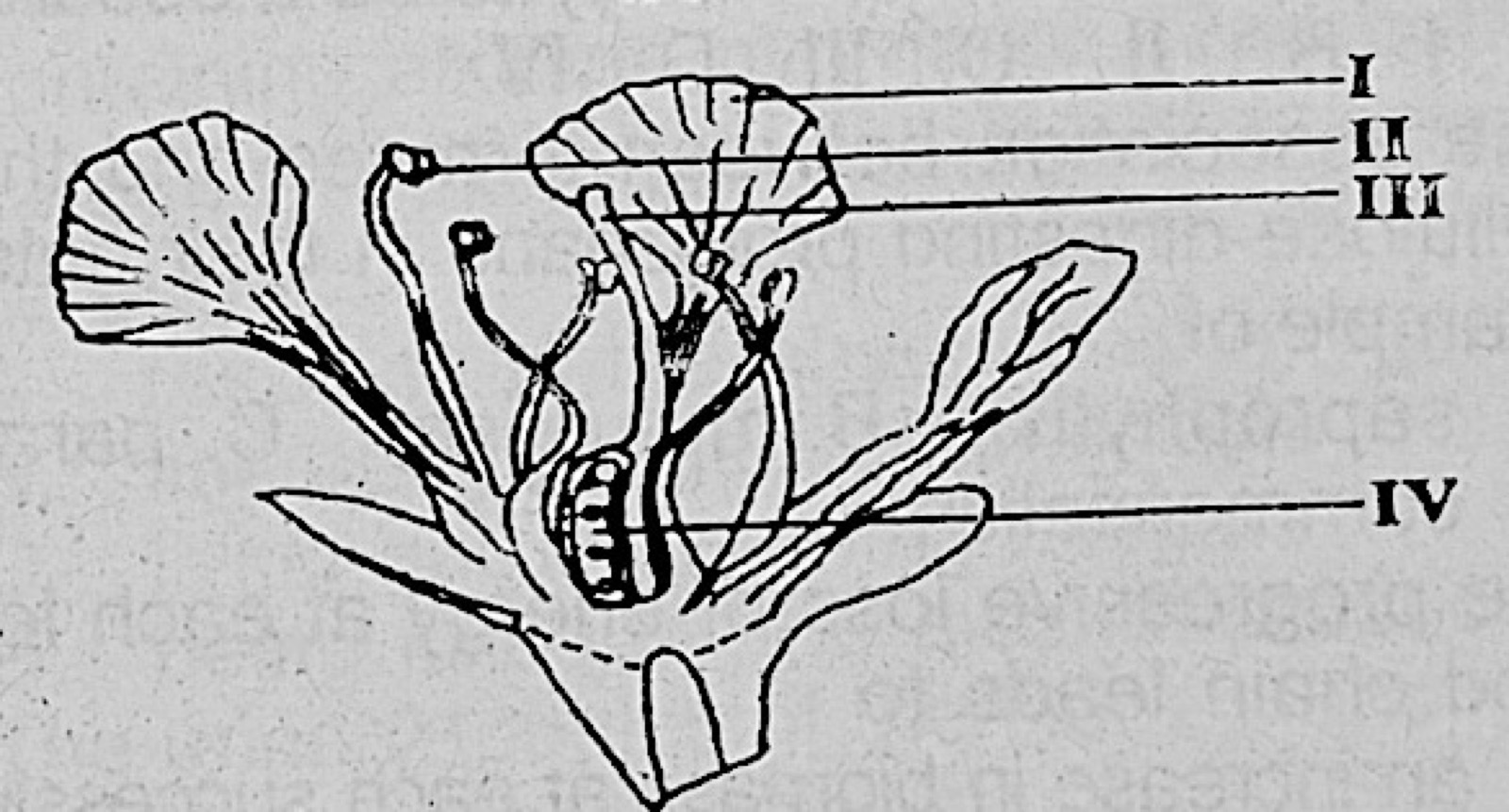
Use the diagram of the flower to answer: The part labelled II is the

Diagram for this question
  1. A.style
  2. B.filament
  3. C.stigma
  4. D.anther
Show the answer and explanation

Answer: D (anther)

Explanation

II points to the knob at the top of a stamen. This is the anther, which makes pollen.

Open this question

Question 26

Reproduction in Plants

Use the diagram of the flower to answer: The process of pollination involves the transfer of pollens from

Diagram for this question
  1. A.I to II
  2. B.II to III
  3. C.III to IV
  4. D.IV to I
Show the answer and explanation

Answer: B (II to III)

Explanation

Pollination is the transfer of pollen from the anther (II) to the stigma (III).

Open this question

Question 27

Reproduction in Animals

The eggs of birds contain relatively larger quantities of yolk than those of amphibians and reptiles because

  1. A.birds are generally bigger in size
  2. B.embryonic development is longer in birds
  3. C.those of birds are fertilized internally
  4. D.birds lay shelled eggs
Show the answer and explanation

Answer: B (embryonic development is longer in birds)

Explanation

A bird embryo develops for a long time inside the egg until it hatches as a well-formed chick. It needs a large food store, the yolk, to last that long.

Open this question

Question 28

Growth and Development

Epigeal germination of a seed is characterized by

  1. A.more rapid elongation of the hypocotyl than the epicotyl
  2. B.more rapid elongation of the epicotyl than the hypocotyl
  3. C.equal growth rate of both the hypocotyl and epicotyl
  4. D.lack of growth of the hypocotyl
Show the answer and explanation

Answer: A (more rapid elongation of the hypocotyl than the epicotyl)

Explanation

In epigeal germination (e.g. bean) the hypocotyl lengthens quickly and carries the cotyledons above the ground. In hypogeal germination the epicotyl grows more and the cotyledons stay below.

Open this question

Question 29

Nervous Coordination

Nervous control differs from hormonal control in that the former

  1. A.involves only chemical transmission
  2. B.is a slower process
  3. C.produces short-term changes
  4. D.has no specific pathway
Show the answer and explanation

Answer: C (produces short-term changes)

Explanation

Nerve impulses act quickly and their effects end quickly. Hormones act more slowly but their effects last longer.

Open this question

Question 30

Hormonal Coordination

If a nursing mother is not producing enough milk, her hormonal system is probably deficient in

  1. A.prolactin
  2. B.testosterone
  3. C.thyroxin
  4. D.insulin
Show the answer and explanation

Answer: A (prolactin)

Explanation

Prolactin from the pituitary gland stimulates the mammary glands to produce milk.

Open this question

Question 31

Nervous Coordination

The two key cations involved in the action potential of nervous transmissions are

  1. A.Na+ and Fe2+
  2. B.Mg2+ and K+
  3. C.Na+ and K+
  4. D.Fe2+ and Mg2+
Show the answer and explanation

Answer: C (Na+ and K+)

Explanation

A nerve impulse happens when sodium ions rush into the nerve fibre and potassium ions then move out. So Na+ and K+ are the key ions.

Open this question

Question 32

Ecosystem and Ecological Factors

A caterpillar and an aphid living in different parts of the same plant can be said to

  1. A.occupy the same ecological niche
  2. B.be in different habitats
  3. C.occupy different ecological niches
  4. D.be in similar microhabitats
Show the answer and explanation

Answer: C (occupy different ecological niches)

Explanation

A niche is an organism's role and way of life. The caterpillar chews leaves while the aphid sucks sap from another part, so they share a habitat but have different niches.

Open this question

Question 33

Habitats and Biomes

Use the table to answer:
Ecological zone | Temperature (°C) | Rainfall (mm)
I | 45 | 300
II | 32 | 2000
III | 30 | 2200
IV | 15 | 800

High relative humidity will be expected in zones

  1. A.I and III
  2. B.I and IV
  3. C.II and III
  4. D.II and IV
Show the answer and explanation

Answer: C (II and III)

Explanation

Zones II and III have the highest rainfall (2000 mm and 2200 mm). Places with heavy rain have moist air, so high relative humidity.

Open this question

Question 34

Habitats and Biomes

Use the table to answer:
Ecological zone | Temperature (°C) | Rainfall (mm)
I | 45 | 300
II | 32 | 2000
III | 30 | 2200
IV | 15 | 800

Which of the zones is likely to be a desert?

  1. A.I
  2. B.II
  3. C.III
  4. D.IV
Show the answer and explanation

Answer: A (I)

Explanation

Zone I is the hottest (45 °C) and has the least rain (300 mm). Hot and dry conditions describe a desert.

Open this question

Question 35

Ecological Associations

The association between termites and the cellulose-digesting protozoans in their guts is an example of

  1. A.saprophytism
  2. B.mutualism
  3. C.parasitism
  4. D.commensalism
Show the answer and explanation

Answer: B (mutualism)

Explanation

The protozoa digest cellulose for the termite and get food and shelter in return. Both benefit, so it is mutualism.

Open this question

Question 36

Feeding Relationships and Energy Flow

The progressive loss of energy at each level in a food chain leads to

  1. A.an increase in biomass at each successive level
  2. B.a decrease in biomass at each successive level
  3. C.an increase in the number of organisms at each successive level
  4. D.an increase in the total weight of living matter at each successive level
Show the answer and explanation

Answer: B (a decrease in biomass at each successive level)

Explanation

Energy is lost as heat at each feeding level, so less is left to build new living matter. Biomass gets smaller at each higher level.

Open this question

Question 37

Adaptation

One adaptation of reptiles to water loss is the presence of

  1. A.keratinous scales
  2. B.claws on limbs
  3. C.long tails
  4. D.long sticky tongues
Show the answer and explanation

Answer: A (keratinous scales)

Explanation

Reptiles have dry skin covered in horny (keratin) scales. These scales are waterproof and reduce water loss on land.

Open this question

Question 38

Habitats and Biomes

A state in Nigeria that is most susceptible to desert encroachment is

  1. A.Kwara
  2. B.Taraba
  3. C.Kaduna
  4. D.Katsina
Show the answer and explanation

Answer: D (Katsina)

Explanation

Katsina is in the far north, on the edge of the Sahara, where rainfall is lowest. The desert is spreading south into such states.

Open this question

Question 39

Population Ecology

The scarcity of food causes a sudden decrease in population size by

  1. A.decreasing the reproductive rate
  2. B.bringing about immigration
  3. C.raising the mortality rate
  4. D.minimizing the rate of competition
Show the answer and explanation

Answer: C (raising the mortality rate)

Explanation

When food runs short, many organisms starve and die. A higher death rate quickly reduces the population.

Open this question

Question 40

Soil

The soil type that will be most difficult to plough in a wet season is one that is

  1. A.loamy
  2. B.clayey
  3. C.sandy
  4. D.silty
Show the answer and explanation

Answer: B (clayey)

Explanation

Wet clay soil is sticky and heavy because its fine particles hold a lot of water. This makes it very hard to plough.

Open this question

Question 41

Soil

A farm practice that results in the loss of soil fertility is

  1. A.mixed farming
  2. B.bush fallowing
  3. C.shifting cultivation
  4. D.continuous cropping
Show the answer and explanation

Answer: D (continuous cropping)

Explanation

Growing crops on the same land year after year removes nutrients without giving the soil time to recover. Bush fallowing and shifting cultivation let the soil rest.

Open this question

Question 42

Variation

Paternity disputes can most accurately be resolved through the use of

  1. A.fingerprinting
  2. B.blood group typing
  3. C.DNA analysis
  4. D.tongue-rolling
Show the answer and explanation

Answer: C (DNA analysis)

Explanation

A child gets half of its DNA from each parent. Comparing DNA can show who the father is with great accuracy; blood groups can only rule people out.

Open this question

Question 43

Mendelian Inheritance

In a Mendelian cross of red and white varieties of the four o'clock plant, the F1 generation expresses incomplete dominance by having flowers which are

  1. A.white
  2. B.red
  3. C.pink
  4. D.multicoloured
Show the answer and explanation

Answer: C (pink)

Explanation

With incomplete dominance neither allele fully masks the other. Red × white gives pink flowers in between.

Open this question

Question 44

Mendelian Inheritance

Identical twins inherit their genes from

  1. A.different eggs and sperms
  2. B.the same egg and sperm
  3. C.two eggs and a sperm
  4. D.one egg and two sperms
Show the answer and explanation

Answer: B (the same egg and sperm)

Explanation

Identical twins come from one fertilised egg (one egg and one sperm) that splits into two embryos. So they have the same genes.

Open this question

Question 45

Chromosomes, DNA and Sex Linkage

Sex-linked genes are located on

  1. A.Y-chromosome
  2. B.X- and Y - chromosomes
  3. C.homologous chromosomes
  4. D.X-chromosome
Show the answer and explanation

Answer: D (X-chromosome)

Explanation

Sex-linked traits such as colour-blindness and haemophilia are carried on the X chromosome. The Y chromosome carries very few genes.

Open this question

Question 46

Ecological Associations

Which of the following is an example of intraspecific competition?

  1. A.a lizard and an ant-eater chasing an insect
  2. B.a worker termite and a soldier in a limited space
  3. C.a hawk and an eagle targeting the same chicken
  4. D.yam and potato shoots growing out through the same window
Show the answer and explanation

Answer: B (a worker termite and a soldier in a limited space)

Explanation

Intraspecific competition is between members of the same species. A worker and a soldier termite are both termites; the other pairs are different species.
Open this question

Question 47

Adaptation

Plants survive hot dry conditions by

  1. A.storing water in large parenchyma cells
  2. B.producing numerous leaves
  3. C.having numerous stomata
  4. D.having evergreen leaves
Show the answer and explanation

Answer: A (storing water in large parenchyma cells)

Explanation

Desert plants such as cacti store water in large parenchyma cells in their stems or leaves. Many leaves or stomata would lose more water.

Open this question

Question 48

Animal Nutrition

Rodents gnaw on food with their

  1. A.molar teeth
  2. B.strong jaws
  3. C.flat-ridged teeth
  4. D.chisel-like front teeth
Show the answer and explanation

Answer: D (chisel-like front teeth)

Explanation

Rodents such as rats have long, chisel-shaped front teeth (incisors) that keep growing. They use them to gnaw hard food.

Open this question

Question 49

Adaptation

The spots and stripes of the leopard and tiger are examples of

  1. A.cryptic colouration
  2. B.warning colouration
  3. C.disruptive colouration
  4. D.countershading
Show the answer and explanation

Answer: C (disruptive colouration)

Explanation

Spots and stripes break up the outline of the animal's body. In grass or shade this disruptive pattern makes it hard to see.

Open this question

Question 50

Evolution

An evidence of the relationship between living organisms and their extinct relatives can best be obtained from

  1. A.embryology
  2. B.comparative anatomy
  3. C.comparative physiology
  4. D.palaeontology
Show the answer and explanation

Answer: D (palaeontology)

Explanation

Extinct organisms survive only as fossils. Palaeontology, the study of fossils, links them to living organisms.

Open this question