WAEC Civic Education 2015 past questions and answers

58 questions. Try each one, then open the answer to check yourself and read the explanation.

Question 1

National Values

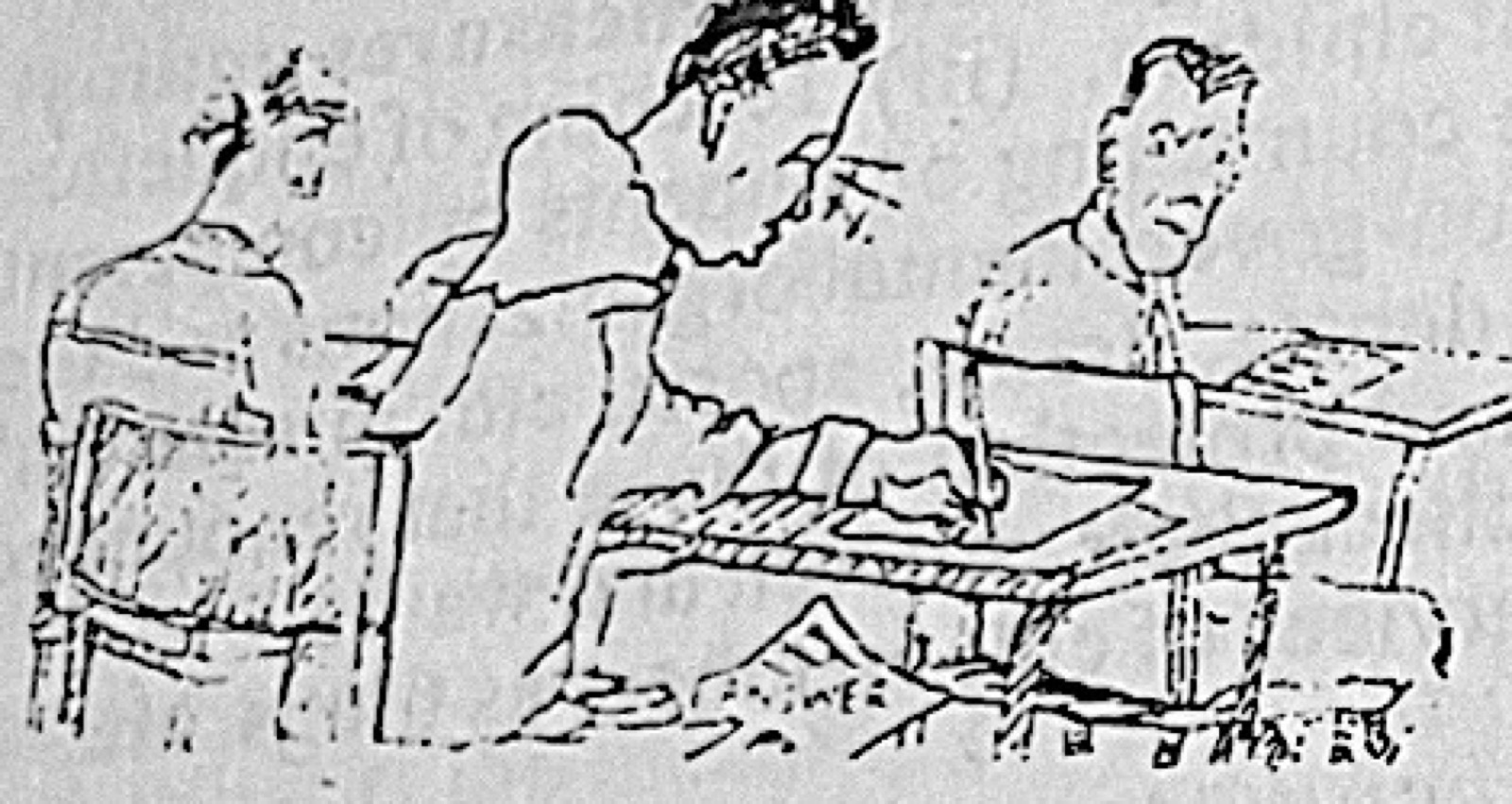
From the above diagram, which major condition may have encouraged candidates to engage in examination malpractice?

Diagram for this question
  1. A.Public perception that it is normal to cheat
  2. B.Inadequate preparation for the examination
  3. C.The supervisors are negligent
  4. D.School authorities encourage cheating
Show the answer and explanation

Answer: B (Inadequate preparation for the examination)

Explanation

Candidates who have not prepared well are tempted to copy from others, as the candidate in the picture is doing.

Open this question

Question 2

National Values

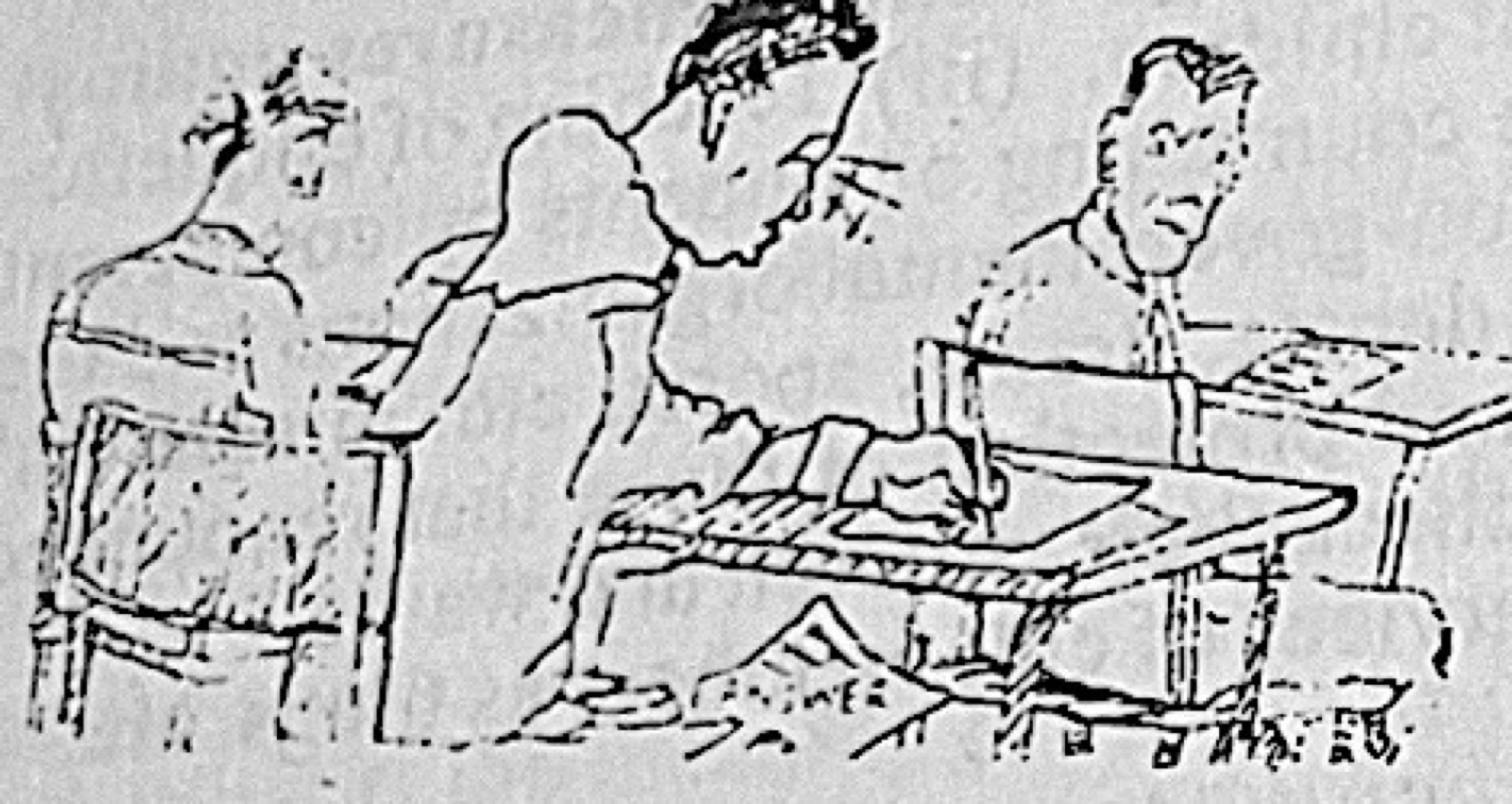
Which of the following statements may be true about the behaviour of the candidates in the diagram?

Diagram for this question
  1. A.The candidates are doing what is ethical
  2. B.Candidates involved in malpractice should be banned for life
  3. C.Their action can also affect innocent candidates
  4. D.Their misconduct will guarantee a reliable certificate
Show the answer and explanation

Answer: C (Their action can also affect innocent candidates)

Explanation

Malpractice can lead to cancellation of a whole centre's results, punishing innocent candidates too.

Open this question

Question 3

National Values

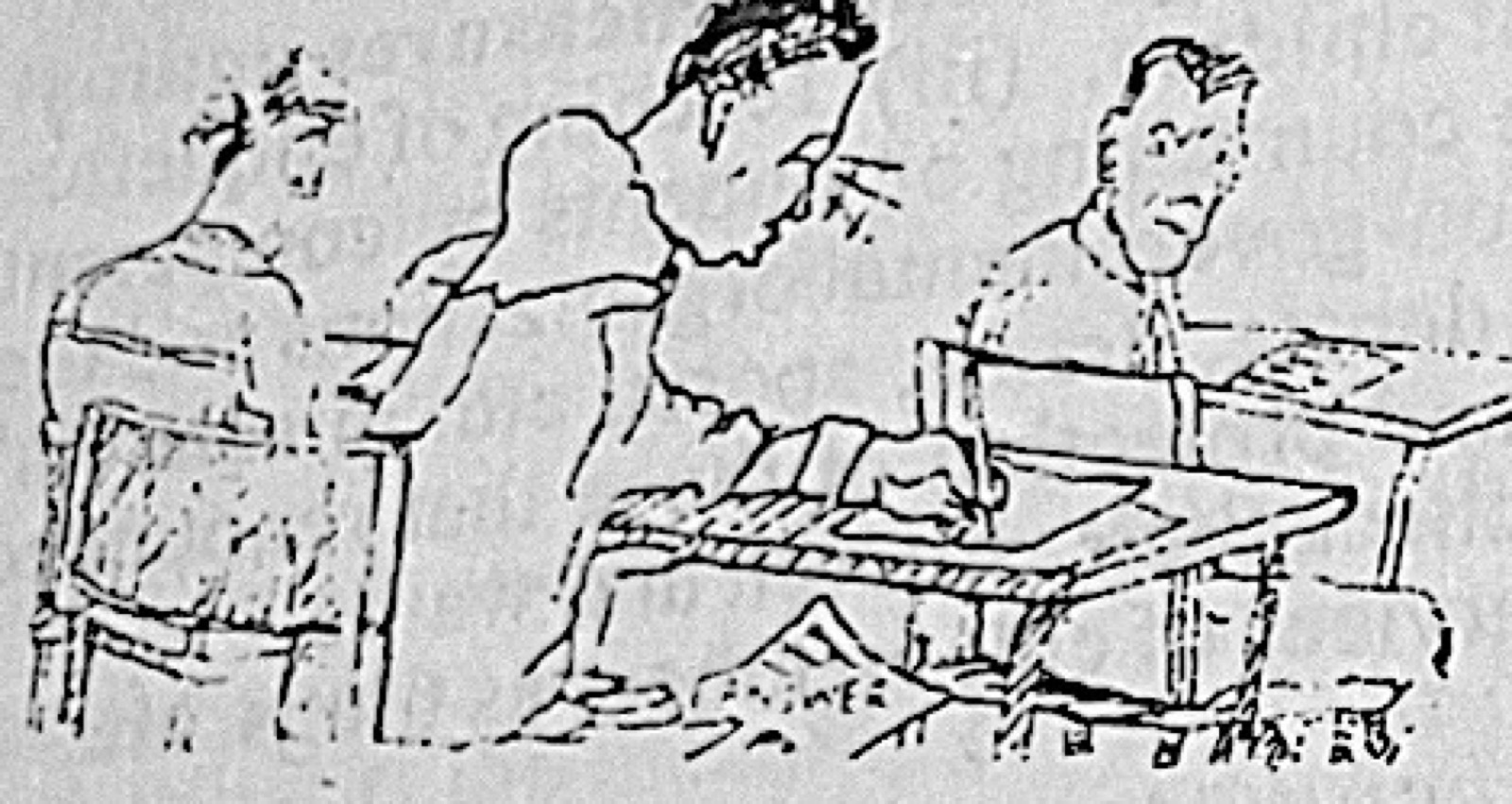
Based on the above diagram, the candidates would not have cheated if

Diagram for this question
  1. A.they were well-spaced.
  2. B.there was an invigilator.
  3. C.they were hardworking.
  4. D.there was nobody to copy from.
Show the answer and explanation

Answer: C (they were hardworking.)

Explanation

Hardworking, well-prepared candidates have no need to copy; cheating comes from lack of preparation.

Open this question

Question 4

Human Rights

In which year did the United Nations General Assembly adopt the Universal Declaration of Human Rights?

  1. A.1945
  2. B.1946
  3. C.1947
  4. D.1948
Show the answer and explanation

Answer: D (1948)

Explanation

The UN General Assembly adopted the UDHR on 10 December 1948 (1945 is when the UN itself was founded).

Open this question

Question 5

Traffic Regulations

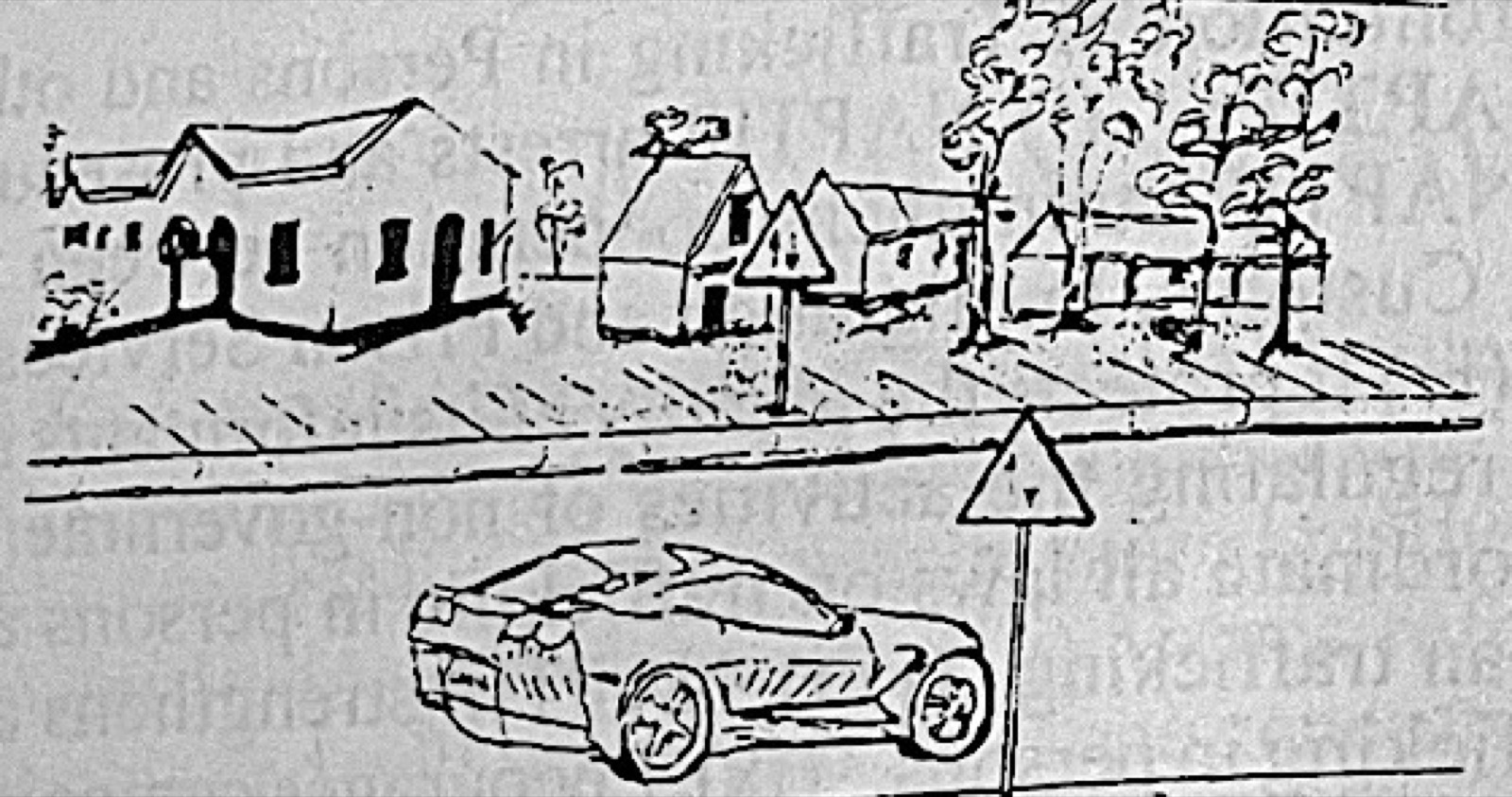
The road signs in the picture above indicate

Diagram for this question
  1. A.two ways traffic ahead.
  2. B.dualized carriage way ahead.
  3. C.two junctions ahead.
  4. D.two exit routes ahead.
Show the answer and explanation

Answer: A (two ways traffic ahead.)

Explanation

The triangular warning signs in the picture warn drivers of two-way traffic ahead.

Open this question

Question 6

Traffic Regulations

Two forms of road signs are regulatory and

  1. A.punitive.
  2. B.informative.
  3. C.persuasive.
  4. D.inhibitive.
Show the answer and explanation

Answer: B (informative.)

Explanation

Road signs are regulatory (orders), warning and informative (giving information such as directions).

Open this question

Question 7

Interpersonal and Inter-communal Relationships

Which of the following factors does not affect interpersonal relationship?

  1. A.Communication
  2. B.Withdrawal
  3. C.Compatibility
  4. D.Forgiveness
Show the answer and explanation

Answer: B (Withdrawal)

Explanation

Communication, compatibility and forgiveness all affect how well people relate to one another. Withdrawal is a stage in a relationship breaking down, not a factor that affects relationships.

Open this question

Question 8

Cultism

The following cadre of students are the main target for campus cult membership except

  1. A.students from wealthy homes.
  2. B.students from influential parents.
  3. C.bold and morally sound students.
  4. D.wayward and fun-loving students.
Show the answer and explanation

Answer: C (bold and morally sound students.)

Explanation

Cults target rich, well-connected or wayward students; morally sound students are least likely to be recruited.

Open this question

Question 9

Drug Abuse

The National Agency for Food and Drug Administration and Control (NAFDAC) was established in

  1. A.1993.
  2. B.1996.
  3. C.1999.
  4. D.2001.
Show the answer and explanation

Answer: A (1993.)

Explanation

NAFDAC was created by Decree No. 15 of 1993.

Open this question

Question 10

Human Trafficking

National Agency for the Prohibition of Traffic in Persons (NAPTIP) is an initiative of

  1. A.Federal Government of Nigeria.
  2. B.United States Agency for International Development.
  3. C.Woman Trafficking and Child Labour Eradication Foundation.
  4. D.United Nations Office on Drugs and Crime.
Show the answer and explanation

Answer: A (Federal Government of Nigeria.)

Explanation

NAPTIP is a federal government agency set up by the Trafficking in Persons Act of 2003 (WOTCLEF campaigned for the law). Since 2015 its name is National Agency for the Prohibition of Trafficking in Persons.

Open this question

Question 11

HIV/AIDS

World AIDS Day is observed on

  1. A.20th May.
  2. B.30th July.
  3. C.27th August
  4. D.1st December.
Show the answer and explanation

Answer: D (1st December.)

Explanation

World AIDS Day has been marked every 1 December since 1988.

Open this question

Question 12

Youth Empowerment

An enabling environment created to help an individual have effective control of his/her situation is known as

  1. A.reinforcement.
  2. B.empowerment.
  3. C.endowment.
  4. D.enhancement.
Show the answer and explanation

Answer: B (empowerment.)

Explanation

Empowerment gives people the means and confidence to take control of their lives.

Open this question

Question 13

Structure and Organs of Government

In order to avoid undue interference in the process of governance, there should be

  1. A.clear cut separation of governmental powers.
  2. B.proper fusion of governmental powers and functions.
  3. C.more roles for traditional rulers in the governmental process.
  4. D.additional responsibility for local government council.
Show the answer and explanation

Answer: A (clear cut separation of governmental powers.)

Explanation

When each arm of government has its own clearly separated powers, one arm cannot unduly interfere with another.

Open this question

Question 14

Public Service

Red-tapism is one of the shortcomings of

  1. A.private enterprise.
  2. B.public service.
  3. C.non-governmental organization.
  4. D.pressure groups.
Show the answer and explanation

Answer: B (public service.)

Explanation

Red tape (slow, rule-bound procedure) is a well-known weakness of the public (civil) service.

Open this question

Question 15

Nationalism and National Symbols

An ideology that aims at promoting national consciousness and identity is

  1. A.nationalism.
  2. B.socialization.
  3. C.civic culture.
  4. D.progressivism.
Show the answer and explanation

Answer: A (nationalism.)

Explanation

Nationalism is love for and identification with one's nation.

Open this question

Question 16

Human Rights

Human rights are described as inviolable mainly because they are

  1. A.authoritative declaration.
  2. B.enforceable everywhere.
  3. C.not to be unnecessarily taken away.
  4. D.legal declaration instruments.
Show the answer and explanation

Answer: C (not to be unnecessarily taken away.)

Explanation

Inviolable means they must not be violated or taken away without lawful reason.

Open this question

Question 17

Rule of Law and Constituted Authority

Law and order can best be maintained in Nigeria through the

  1. A.prohibition of public protest.
  2. B.enforcement of rules and regulations.
  3. C.use of divide and rule policy.
  4. D.promotion of indigenization policy.
Show the answer and explanation

Answer: B (enforcement of rules and regulations.)

Explanation

Law and order is kept when rules and regulations are enforced fairly on everyone.

Open this question

Question 18

Responsible Parenthood

A responsible parent is someone who

  1. A.cares and provides for the children.
  2. B.indulges the children because of love.
  3. C.works in order to receive salary.
  4. D.employs house-helps to take care of the children.
Show the answer and explanation

Answer: A (cares and provides for the children.)

Explanation

A responsible parent cares for and provides the needs of the children.

Open this question

Question 19

Responsible Parenthood

A major way of promoting responsible parenthood is through

  1. A.sex education.
  2. B.sound education.
  3. C.population control measures.
  4. D.tax reduction measures.
Show the answer and explanation

Answer: B (sound education.)

Explanation

Well-educated parents understand their duties and are better able to raise their children properly.

Open this question

Question 20

Interpersonal and Inter-communal Relationships

Which of the following is not included in the stages of interpersonal relationships?

  1. A.Rejuvenation
  2. B.Deterioration
  3. C.Termination
  4. D.Continuation
Show the answer and explanation

Answer: A (Rejuvenation)

Explanation

The stages are acquaintance, build-up, continuation, deterioration and termination; rejuvenation is not one of them.

Open this question

Question 21

Cultism

Cultism in tertiary institution in Nigeria was originally introduced to

  1. A.perpetuate the use of local gin and alcohol.
  2. B.harass opponents of University administrators.
  3. C.fight colonialism and oppressive rules.
  4. D.promote inter-communal marriages.
Show the answer and explanation

Answer: C (fight colonialism and oppressive rules.)

Explanation

The first campus confraternity (Pyrates, 1952, University College Ibadan) was formed to fight colonial attitudes and oppression.

Open this question

Question 22

Drug Abuse

Which of the following is not a function of the National Drug Law Enforcement Agency (NDLEA)?

  1. A.Applying and implementing drug laws
  2. B.Arresting, investigating and prosecuting drug traffickers
  3. C.Undertaking the registration of companies dealing in drugs
  4. D.Carrying out enlightenment campaigns on drug trafficking
Show the answer and explanation

Answer: C (Undertaking the registration of companies dealing in drugs)

Explanation

Registering drug products and companies is the work of NAFDAC and the Pharmacists Council, not the NDLEA.

Open this question

Question 23

Drug Abuse

An individual who finds it difficult to control in-take of drug is known as drug

  1. A.baron.
  2. B.trafficker.
  3. C.mogul
  4. D.addict
Show the answer and explanation

Answer: D (addict)

Explanation

An addict is dependent on a drug and cannot control its use.

Open this question

Question 24

Drug Abuse

The NDLEA personnel are not usually found in

  1. A.international airports.
  2. B.seaports.
  3. C.border crossings.
  4. D.foreign embassies.
Show the answer and explanation

Answer: D (foreign embassies.)

Explanation

NDLEA officers guard entry points such as airports, seaports and borders; foreign embassies are outside their posts.

Open this question

Question 25

Human Trafficking

Which of the following statements best describes Human trafficking?

  1. A.Recruitment of youths as casual workers
  2. B.Desperate desire by youths to travel abroad
  3. C.Buying and selling of humans for selfish purposes
  4. D.Transportation of goods and services through human portage
Show the answer and explanation

Answer: C (Buying and selling of humans for selfish purposes)

Explanation

Human trafficking is trading in people (recruiting, moving and selling them) for exploitation.

Open this question

Question 26

Youth Empowerment
WASSCE 2015: Youths in Kantoga Republic
One major trend in Kantoga Republic today, especially during elections, is the engagement of youths by some politicians for political thuggery, rigging, stuffing of ballot boxes and other related electoral offences. Most of the youths who are engaged in these crimes have no means of livelihood or are school drop-outs. These youths are Kantoguans who ought to benefit from the enormous wealth and resources of the nation. Unfortunately, this is the case at the moment. Indeed, it is the duty of government, especially at the centre, to provide entrepreneurial skill acquisition programme and start-up funds for small scale businesses to empower the youths. This will reduce the chances of engagement of youths for wrong purposes.

From the above write-up, what category of Kantoguan youths deserves to be effectively empowered?

  1. A.Children of the ruling political class
  2. B.Unemployed youths and school drop-outs
  3. C.University undergraduates
  4. D.Youth wing of religious organizations
Show the answer and explanation

Answer: B (Unemployed youths and school drop-outs)

Explanation

The write-up says the youths used for thuggery have no livelihood or are school drop-outs.

Open this question

Question 27

Youth Empowerment

The responsibility of empowering the youths rests mostly with

  1. A.the political class.
  2. B.religious organizations.
  3. C.university administrators.
  4. D.national government.
Show the answer and explanation

Answer: D (national government.)

Explanation

The write-up says it is the duty of government, especially at the centre (national government).

Open this question

Question 28

Youth Empowerment

Base on the write-up, what immediate measures can those in authority take to empower the youths?

  1. A.Build more youth orientation camps in the country
  2. B.Enhance religious and moral education in schools and colleges
  3. C.Provide entrepreneurial training with adequate fund
  4. D.Provide free meal for the teeming unemployed youths
Show the answer and explanation

Answer: C (Provide entrepreneurial training with adequate fund)

Explanation

The write-up recommends entrepreneurial skill acquisition and start-up funds.

Open this question

Question 29

Civil Society

A very important segment of the society which is distinct from government, business and home is the

  1. A.civil society.
  2. B.public service.
  3. C.mass media.
  4. D.traditional institution.
Show the answer and explanation

Answer: A (civil society.)

Explanation

Civil society is the space of voluntary organisations outside government, business and the family.

Open this question

Question 30

HIV/AIDS

HIV/AIDS is generally described as terminal in nature because it is

  1. A.preventable.
  2. B.transmittable.
  3. C.avertable.
  4. D.incurable.
Show the answer and explanation

Answer: D (incurable.)

Explanation

A terminal illness is one with no cure; HIV/AIDS has no cure, although drugs can control it.

Open this question

Question 31

Interpersonal and Inter-communal Relationships

Inter-communal relationship is best described as

  1. A.the interaction between individuals, groups or organizations with common aspirations.
  2. B.the interaction among individuals and professionals in a social setting.
  3. C.loyalty to community leaders so as to achieve rapid communal development.
  4. D.respect for collective national symbols in order to foster nationalistic feeling.
Show the answer and explanation

Answer: A (the interaction between individuals, groups or organizations with common aspirations.)

Explanation

Inter-communal relationship is the interaction between people, groups and communities that share common interests.

Open this question

Question 32

Public Service

A situation whereby someone is obliged to inform a superior about his actions and decisions for the purpose of control is

  1. A.probity.
  2. B.self-discipline.
  3. C.accountability.
  4. D.fair play.
Show the answer and explanation

Answer: C (accountability.)

Explanation

Accountability means being answerable to someone for one's actions and decisions.

Open this question

Question 33

Human Rights

Read the quotation: "All human beings are born free and equal in dignity and rights. They are endowed with reason and conscience and should act towards one another in a spirit of brotherhood".
The above quotation summarizes the

  1. A.Universal Declaration of Human Rights.
  2. B.African Charter on Human Rights.
  3. C.Geneva Conventions and Protocols.
  4. D.United Nations Organization Charter.
Show the answer and explanation

Answer: A (Universal Declaration of Human Rights.)

Explanation

These words are Article 1 of the Universal Declaration of Human Rights.

Open this question

Question 34

Responsible Parenthood

Effect the and responsible parenthood is primarily

  1. A.a national duty.
  2. B.a military duty.
  3. C.a political duty.
  4. D.an economic duty.
Show the answer and explanation

Answer: A (a national duty.)

Explanation

Raising children well produces good citizens, so responsible parenthood is a national duty.

Open this question

Question 35

Interpersonal and Inter-communal Relationships

Association and affiliation between two or more people is called

  1. A.multilateral relations.
  2. B.bilateral relations.
  3. C.inter-communal relations.
  4. D.interpersonal relations.
Show the answer and explanation

Answer: D (interpersonal relations.)

Explanation

Relations between people are interpersonal relations; bilateral and multilateral describe relations between countries.

Open this question

Question 36

Structure and Organs of Government

A bill passed by the National Assembly requires the assent of the president before it becomes law. The law can be declared null and void by the court of law. The process above emphasizes the

  1. A.supremacy of judiciary over other arms of government.
  2. B.relationship among the arms of government.
  3. C.importance of law makers in a democracy.
  4. D.fundamentals of the rule of law.
Show the answer and explanation

Answer: B (relationship among the arms of government.)

Explanation

The legislature, executive and judiciary each play a part and check one another: checks and balances among the arms.

Open this question

Question 37

Rule of Law and Constituted Authority

The idea that "Law should be impartial with the people who break it" implies

  1. A.principle of fair hearing.
  2. B.right to legal representation.
  3. C.equality before the law.
  4. D.prerogative writ of habeas corpus.
Show the answer and explanation

Answer: C (equality before the law.)

Explanation

Impartial law treats every offender alike, which is equality before the law.

Open this question

Question 38

Foreign Policy and International Organisations

The foreign policy objectives of Nigeria as enshrined in the 1999 Constitution exclude the promotion of

  1. A.national interest.
  2. B.African integration.
  3. C.support for donor agencies.
  4. D.just world economic order.
Show the answer and explanation

Answer: C (support for donor agencies.)

Explanation

Section 19 of the 1999 Constitution lists national interest, African integration and a just world economic order, but not support for donor agencies.

Open this question

Question 39

Democracy and Elections

Democracy can promote national development if there is

  1. A.good governance.
  2. B.promotion of culture.
  3. C.immunity for leaders.
  4. D.registration of parties.
Show the answer and explanation

Answer: A (good governance.)

Explanation

Democracy brings development when it delivers good governance: accountable leaders and good use of resources.

Open this question

Question 40

Civil Society

A major civil society group which campaigned against military rule prior to the advent of the Fourth Republic in Nigeria is the

  1. A.Campaign for Democracy.
  2. B.Save Nigeria Group.
  3. C.Civil Liberties Organization.
  4. D.National Democratic Coalition.
Show the answer and explanation

Answer: D (National Democratic Coalition.)

Explanation

NADECO, formed in 1994, led the campaign against the Abacha military regime and for the return to civil rule in 1999.

Open this question

Question 41

Public Service

Which of the following functions is not performed by the Public Service Commission?

  1. A.Evaluating the performance of ministries and departments
  2. B.Advising government on technical matters
  3. C.Preparing the annual budget and assenting to it
  4. D.Organizing enlightenment programme and training
Show the answer and explanation

Answer: C (Preparing the annual budget and assenting to it)

Explanation

The budget is prepared by the executive and assented to by the President/Governor, not by the Public Service Commission.

Open this question

Question 43

Democracy and Elections

Democracy is yet to take firm root in Africa because

  1. A.it retards African development.
  2. B.African leaders are not experienced enough.
  3. C.most African leaders detest the will of the people.
  4. D.it is an expensive system of government.
Show the answer and explanation

Answer: C (most African leaders detest the will of the people.)

Explanation

Many African leaders rig elections and cling to power against the people's will, which undermines democracy.

Open this question

Question 44

Nationalism and National Symbols

Nationalism ensures the following except

  1. A.national consciousness
  2. B.secession in a country.
  3. C.national integration.
  4. D.unity in a country.
Show the answer and explanation

Answer: B (secession in a country.)

Explanation

Nationalism unites people; secession breaks a country apart.

Open this question

Question 45

National Values

Justice demands that people should always do what is

  1. A.persistently convenient.
  2. B.consistently right.
  3. C.individually acceptable.
  4. D.courageously necessary.
Show the answer and explanation

Answer: B (consistently right.)

Explanation

Justice means always doing what is right and fair.

Open this question

Question 46

National Values

Orderliness in the society is good mainly because it

  1. A.discourages poverty.
  2. B.promotes peace and stability.
  3. C.guarantees employment for youths.
  4. D.ensures maximum rewards from leaders.
Show the answer and explanation

Answer: B (promotes peace and stability.)

Explanation

When people behave in an orderly way, there is peace and stability.

Open this question

Question 47

Rule of Law and Constituted Authority

Which of the following is necessary for the effective application of the rule of Law?

  1. A.Political will to ensure that laws are obeyed
  2. B.Employment opportunities for all citizens
  3. C.The fusion of the three arms of government
  4. D.Extension of the retirement age of judges
Show the answer and explanation

Answer: A (Political will to ensure that laws are obeyed)

Explanation

The rule of law works only when leaders are determined to obey and enforce the law.

Open this question

Question 48

Political Apathy and Popular Participation
WASSCE 2015: Zubair and Ade on election day
Zubair: Today is the day for gubernatorial elections, Ade what are you waiting for? Let us go and cast our votes for candidates of our choice.
Ade: I have no interest in an election which would not yield any dividend of democracy. Our political elite are only concerned about their interest when they get to the position of authority. For crying out loud, I have made up my mind that I will not vote again.
Zubair: Haba! Ade, don't you remember Abraham Lincoln's words that 'all men are not just, all men are not true.' But... for every scoundrel there is a hero, that for every selfish politician, there is a dedicated leader!' Come on, go and cast your vote so that we can choose the right person for the position and change the political, economic and social directions of our great state.

Ade's action as shown in the dialogue is a demonstration of political

  1. A.wisdom.
  2. B.apathy.
  3. C.lawlessness.
  4. D.participation.
Show the answer and explanation

Answer: B (apathy.)

Explanation

Ade refuses to vote because he has lost interest: political apathy.

Open this question

Question 49

Political Apathy and Popular Participation

It could be inferred from the dialogue that failure to vote in an election would

  1. A.guarantee citizens rights.
  2. B.encourage the emergence of a responsive government.
  3. C.promote accountability in governance.
  4. D.perpetuate irresponsible leadership.
Show the answer and explanation

Answer: D (perpetuate irresponsible leadership.)

Explanation

If good citizens do not vote, selfish leaders stay in power.

Open this question

Question 50

Political Apathy and Popular Participation

From the above dialogue, political leaders can encourage citizens to perform their civic duties by

  1. A.fulfilling their electoral promises.
  2. B.travelling overseas to seek for foreign investors.
  3. C.engaging in religious activities.
  4. D.visiting all the local governments in the country.
Show the answer and explanation

Answer: A (fulfilling their electoral promises.)

Explanation

Ade stopped voting because leaders did not deliver; keeping promises restores trust and participation.

Open this question

Theory question 101

Rule of Law and Constituted Authority

Section A: National Ethics, Discipline, Rights and Obligations
(a) List six characteristics of a society exhibiting law and order.
(b) Explain any three of the characteristics mentioned in (a) above.

Show the model answer
Model answer

(a) Any six:
Obedience to laws and constituted authority.
Peace and security of lives and property.
Respect for the rights of others.
Orderly behaviour, e.g. queuing, obeying traffic rules.
Peaceful elections and peaceful settlement of disputes.
Low crime rate.
Accountability of leaders.
Tolerance of opposing views and religions.
Due process and justice.
(b) Three of the listed points explained, e.g.:
Obedience to law: citizens and leaders keep the law willingly, so there is little lawlessness.
Security: people move and do business freely without fear.
Peaceful settlement of disputes: conflicts go to courts or dialogue instead of violence.

Explanation

List six, then explain three of the same ones.

Open this question

Theory question 102

Nationalism and National Symbols

Section A: National Ethics, Discipline, Rights and Obligations
(a) Define national integration.
(b) State four ways through which national integration can be promoted in Nigeria.

Show the model answer
Model answer

(a) National integration is the process of bringing people of different ethnic, religious and cultural groups together into one united nation with a common identity and loyalty.
(b) Any four:
Fair representation of all groups in government (federal character).
Equal distribution of resources and amenities.
Programmes such as NYSC and unity schools.
Inter-ethnic marriages and cultural exchange.
Common national symbols, language and values; public enlightenment (NOA).
Good leadership and justice for all groups.
Religious and ethnic tolerance.

Explanation

Define, then four ways.

Open this question

Theory question 103

Citizenship and Citizenship Education

Section A: National Ethics, Discipline, Rights and Obligations
(a) Mention any six civic problems in the society.
(b) State three ways in which Nigerian citizens can be engaged in solving civic problems.

Show the model answer
Model answer

(a) Any six:
Corruption.
Political apathy.
Disobedience to laws / indiscipline.
Electoral malpractice and political violence.
Tax evasion.
Vandalism of public property.
Ethnic and religious intolerance.
Examination malpractice.
Cultism and drug abuse.
(b) Any three:
Citizenship education and public enlightenment.
Taking part in community service and self-help projects.
Reporting crimes and corrupt practices.
Voting and active political participation.
Joining civil society groups and NGOs.
Obeying laws and setting good examples.

Explanation

Six short civic problems, three ways citizens can help.

Open this question

Theory question 104

Human Trafficking

Section B: Emerging Issues in the Society
(a) List five effects of human trafficking.
(b)(i) What does WOTCLEF stand for?
(ii) Identify three activities of WOTCLEF aimed at curbing human trafficking in Nigeria.

Show the model answer
Model answer

(a) Any five:
Death of victims.
Spread of HIV/AIDS and other STDs.
Physical and emotional abuse of victims.
Loss of education and future of victims.
Bad image for Nigeria.
Loss of manpower.
Increase in crime.
(b)(i) WOTCLEF: Women Trafficking and Child Labour Eradication Foundation (an NGO founded in 1999 by Titi Atiku Abubakar).
(ii) Any three:
Public enlightenment campaigns on the dangers of trafficking.
Rescue, care and rehabilitation of victims (shelters, skills training).
Sponsored the bill that led to the 2003 anti-trafficking law and NAPTIP.
Works with NAPTIP, police and international bodies.
Empowerment and skills programmes for women and girls.

Explanation

Give the full meaning of WOTCLEF exactly.

Open this question

Theory question 105

Drug Abuse

Section B: Emerging Issues in the Society
(a) What is drug trafficking?
(b) State four social consequences of drug abuse.

Show the model answer
Model answer

(a) Drug trafficking is the illegal production, transportation, distribution and sale of prohibited drugs such as cocaine, heroin and cannabis.
(b) Any four:
Crime and violence (robbery, cultism, thuggery).
Mental illness and early death.
Broken homes and family problems.
School drop-out and poor academic performance.
Unemployment and loss of manpower.
Spread of HIV/AIDS through shared needles.
Stigma and bad image for the family and nation.

Explanation

Define trafficking (not abuse) in (a).

Open this question

Theory question 106

Cultism

Section B: Emerging Issues in the Society
(a) Explain three reasons students join cults.
(b) State three government policies on cultism.

Show the model answer
Model answer

(a) Any three, explained:
Peer pressure from friends.
Desire for protection.
Desire for power, popularity or to be feared.
Poor parental care / broken homes.
To gain unfair advantages (grades, money).
Frustration or revenge.
(b) Any three:
Cultism is banned by law; secret cults are prohibited in schools (e.g. state anti-cultism laws).
Expulsion of students found to be cult members.
New students sign an undertaking (oath) not to join cults.
Prosecution of cultists in court.
Public enlightenment and anti-cult campaigns in schools.

Explanation

Explain each reason; state government measures, not personal advice.

Open this question

Theory question 107

Civil Society

Section C: Governmental System and Processes
Highlight five roles civil society can play in promoting popular participation.

Show the model answer
Model answer

Any five:
Political education of citizens on their rights and duties.
Mobilising people to register and vote.
Monitoring elections to make them credible.
Serving as a link between people and government.
Advocacy for good governance and accountability.
Defending human rights and the rule of law.
Encouraging women and youths to take part in politics.

Explanation

Five clear roles.

Open this question

Theory question 108

Political Apathy and Popular Participation

Section C: Governmental System and Processes
Describe five ways through which the Nigerian society can benefit from citizen's active participation in the political process.

Show the model answer
Model answer

Any five, described:
Election of credible leaders.
Legitimacy and stability of government.
Accountability of leaders to the people.
Policies that reflect the wishes of the people.
Protection of citizens' rights.
Political awareness and education of citizens.
Reduced political apathy and violence.
National unity and sense of belonging.

Explanation

Describe five benefits, one sentence each.

Open this question

Theory question 109

National Values

Section C: Governmental System and Processes
(a) Define national development.
(b) Explain four ways in which corruption has retarded the development of the Nigerian State.

Show the model answer
Model answer

(a) National development is the overall improvement in the economic, social and political life of a country and the well-being of its citizens.
(b) Any four, explained:
Public funds are stolen, so projects are abandoned or not done.
Poor infrastructure (roads, power, hospitals) from inflated or fake contracts.
Bad image abroad discourages foreign investment.
Unemployment and poverty increase.
Merit is ignored, so incompetent people hold office.
Weak institutions and loss of public trust.
Electoral fraud brings bad leaders to power.

Explanation

Define development, then show how each corrupt act blocks it.
Open this question