The bursting of a red blood cell placed in a hypotonic solution is called
A.crenation.
B.haemolysis.
C.plasmolysis.
D.cytolysis.
Show the answer and explanation
Answer: B (haemolysis.)
Explanation
In a hypotonic solution water enters the red cell by osmosis until it bursts; the bursting of red cells is haemolysis. Crenation is shrinking in a hypertonic solution.
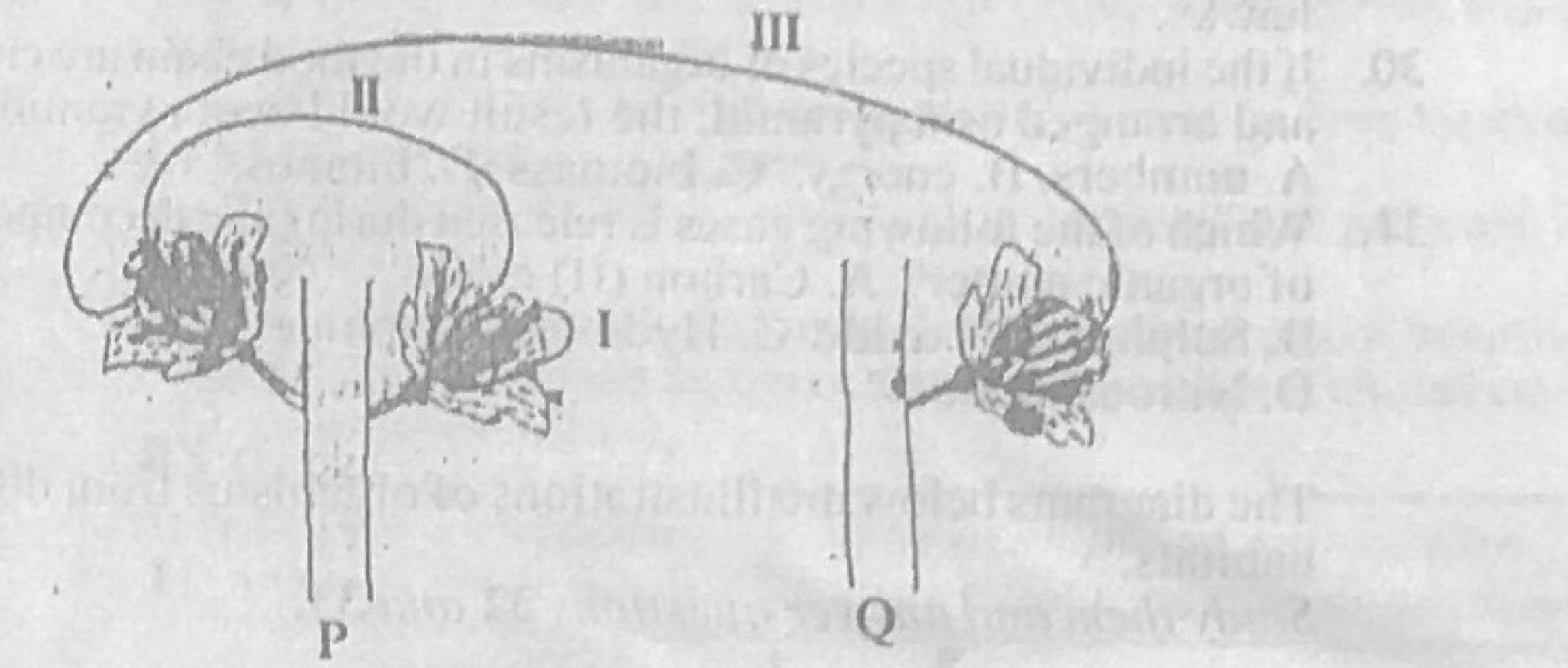
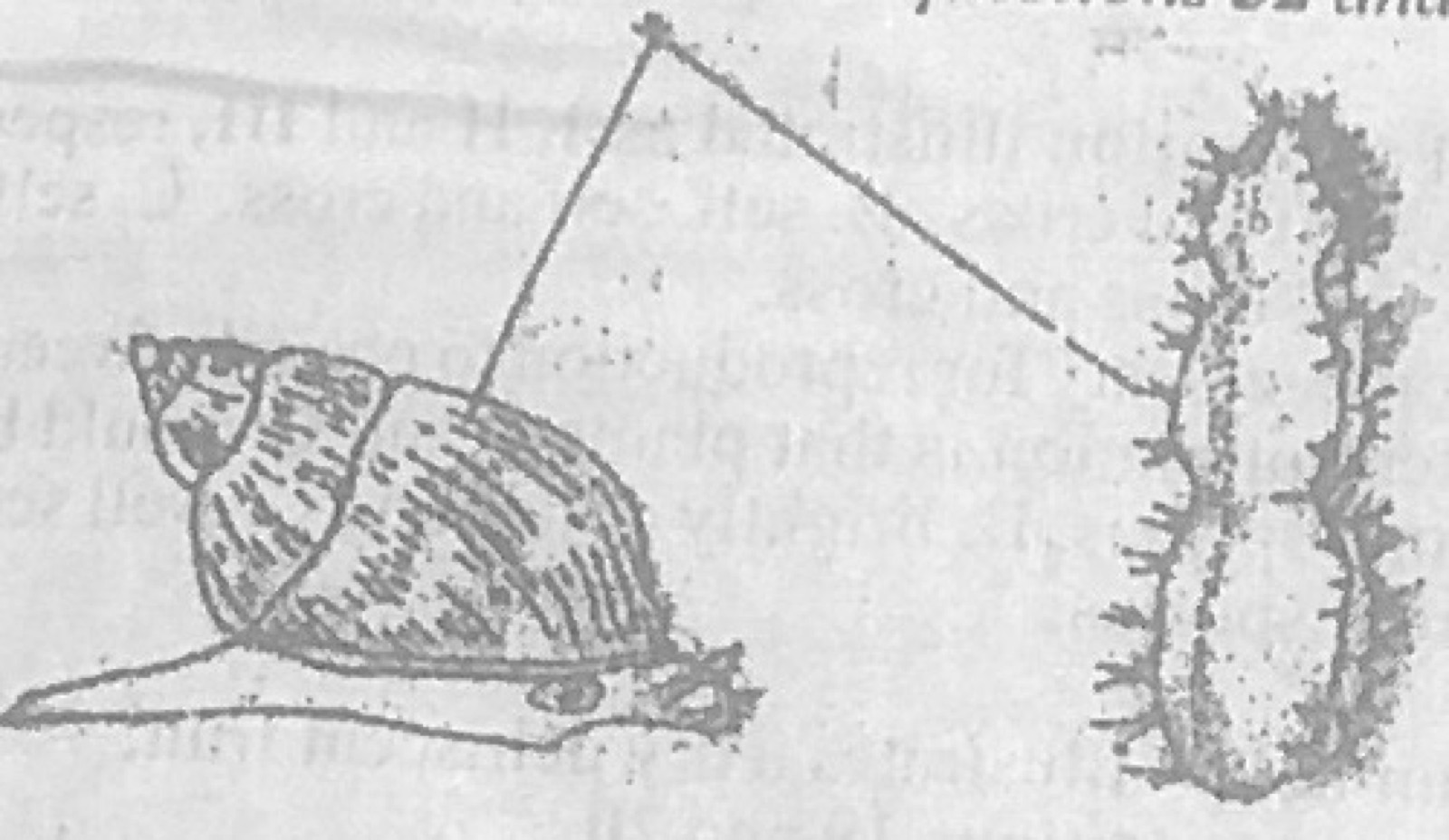
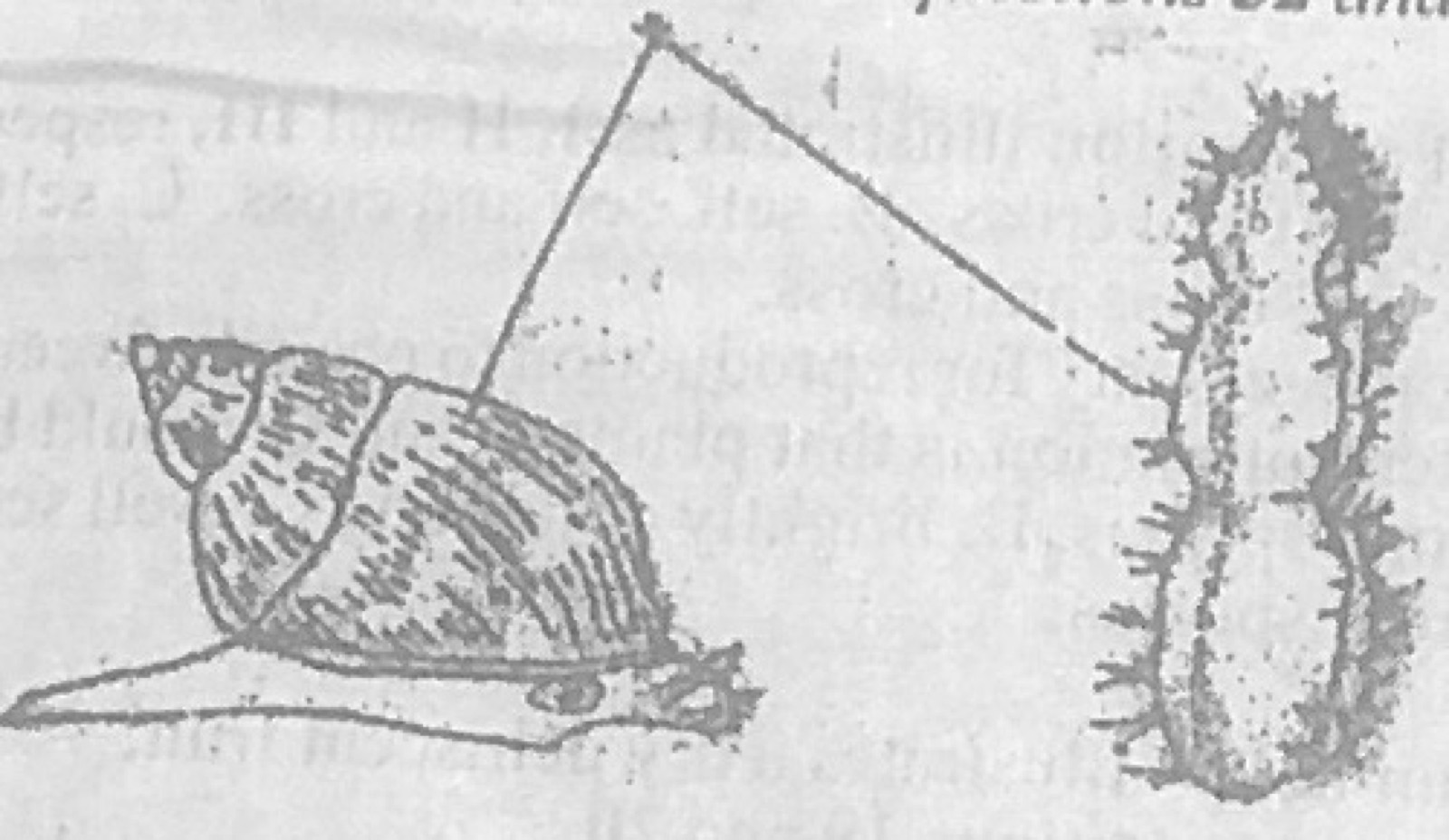
The diagram below is an illustration of two plants P and Q. Arrows I, II and III illustrate the transfer of pollen grains among flowers of plants P and Q. The types of pollination illustrated as I, II and III, respectively are
A.cross, self and cross.
B.self, self and cross.
C.self, cross and self.
D.self, cross and cross.
Show the answer and explanation
Answer: B (self, self and cross.)
Explanation
I and II move pollen between flowers of the same plant P, which is self-pollination. III carries pollen from plant P to plant Q, which is cross-pollination.
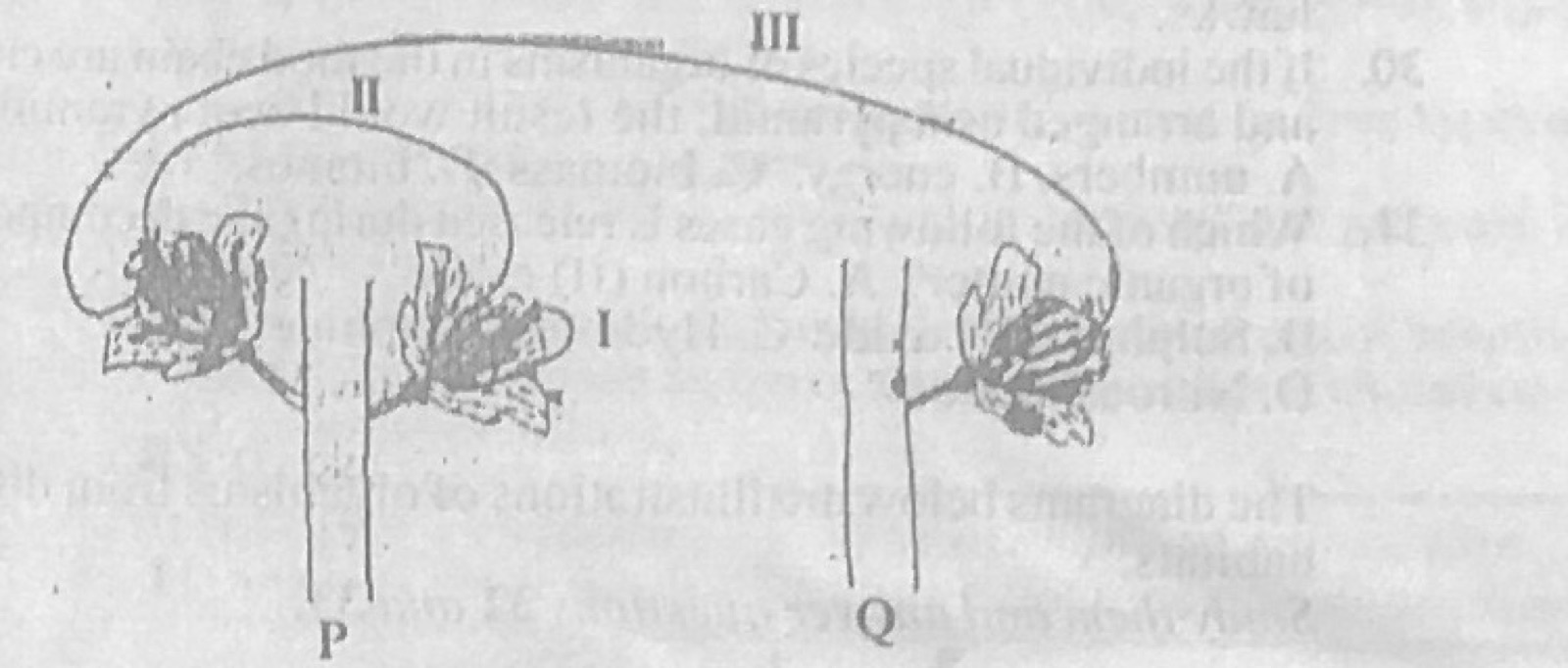
The diagram below is an illustration of two plants P and Q. Arrows I, II and III illustrate the transfer of pollen grains among flowers of plants P and Q. The condition necessary for reproduction to occur between plants P and Q after pollination is that plants P and Q should be
A.of the same species.
B.brightly coloured.
C.well scented.
D.of different species.
Show the answer and explanation
Answer: A (of the same species.)
Explanation
Pollen can only fertilise ovules of a plant of the same species, so P and Q must be one species.
The element required for chlorophyll formation in plants is
A.iron.
B.Calcium.
C.phosphorus.
D.sulphur.
Show the answer and explanation
Answer: A (iron.)
Explanation
Iron is needed by the enzymes that make chlorophyll, so lack of iron causes yellow leaves (chlorosis). Magnesium, which is part of the chlorophyll molecule, is not among the options.
The illustration below is a food chain: Grasses → Grasshoppers → Lizards → Hawks. Which of the following statements is not correct about the food chain? The number of
A.grasses eaten by grasshoppers is greater than the number of grasshoppers.
B.grasses eaten by grasshoppers is fewer than the number of grasshoppers.
C.grasshoppers eaten by lizards is greater than the number of lizards.
D.lizards eaten by hawks is greater than the number of hawks.
Show the answer and explanation
Answer: B (grasses eaten by grasshoppers is fewer than the number of grasshoppers.)
Explanation
Each consumer eats many organisms from the level below, so the grasses eaten are more than the grasshoppers. Statement B says the opposite, so it is the incorrect one.
The illustration below is a food chain: Grasses → Grasshoppers → Lizards → Hawks. If the individual species of organisms in the food chain are counted and arranged as a pyramid, the result would be a pyramid of
A.numbers.
B.energy.
C.biomass
D.biomes.
Show the answer and explanation
Answer: A (numbers.)
Explanation
Counting the individuals at each feeding level gives a pyramid of numbers.
Which of the following gases is released during the decomposition of organic matter?
A.Carbon (II) oxide
B.Sulphur (IV) oxide
C.Hydrogen sulphide
D.Nitrous oxide
Show the answer and explanation
Answer: C (Hydrogen sulphide)
Explanation
When proteins in dead matter rot, their sulphur is released as hydrogen sulphide, the gas that gives decay its rotten-egg smell. Carbon (II) oxide comes from incomplete burning, not decay.
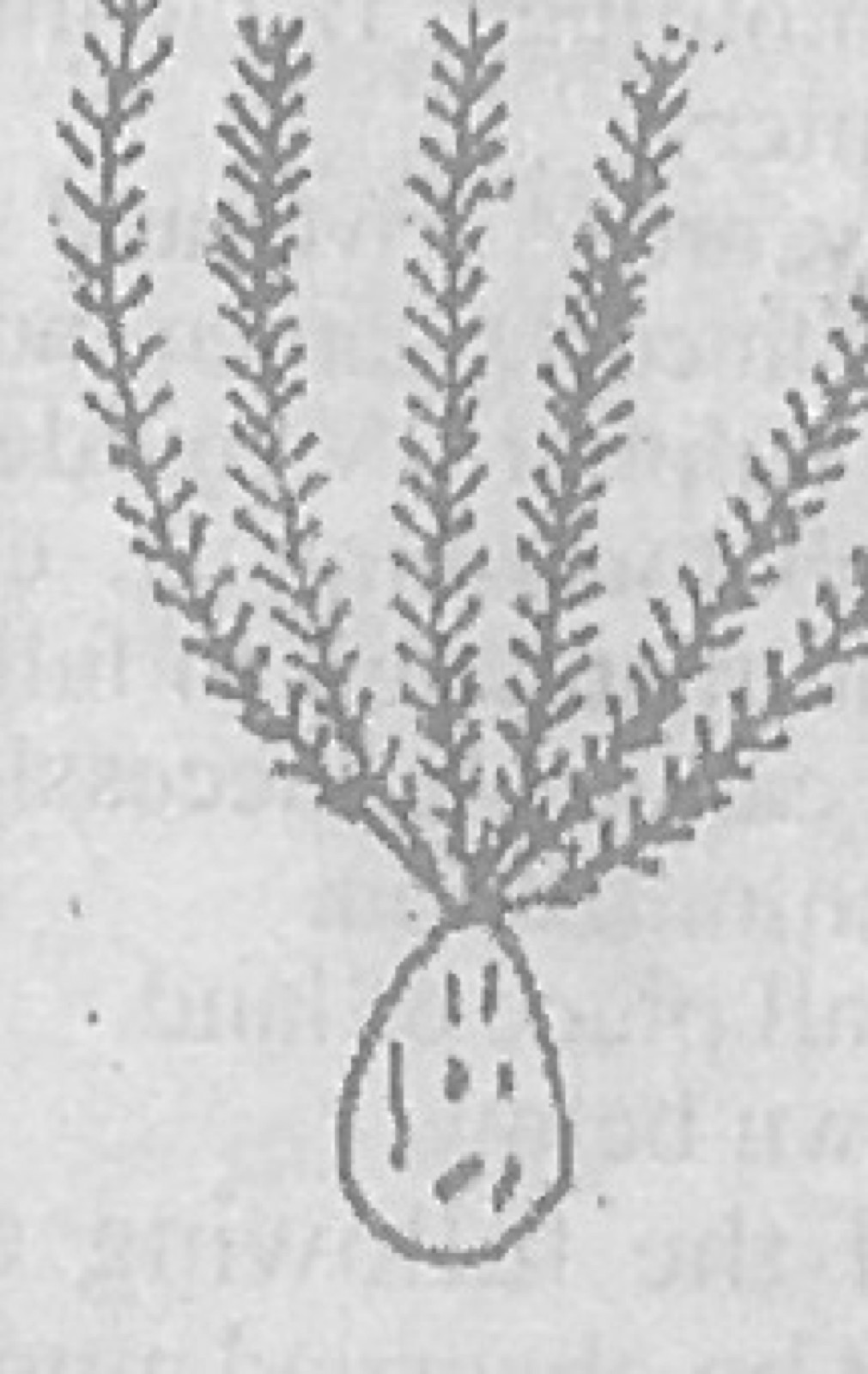
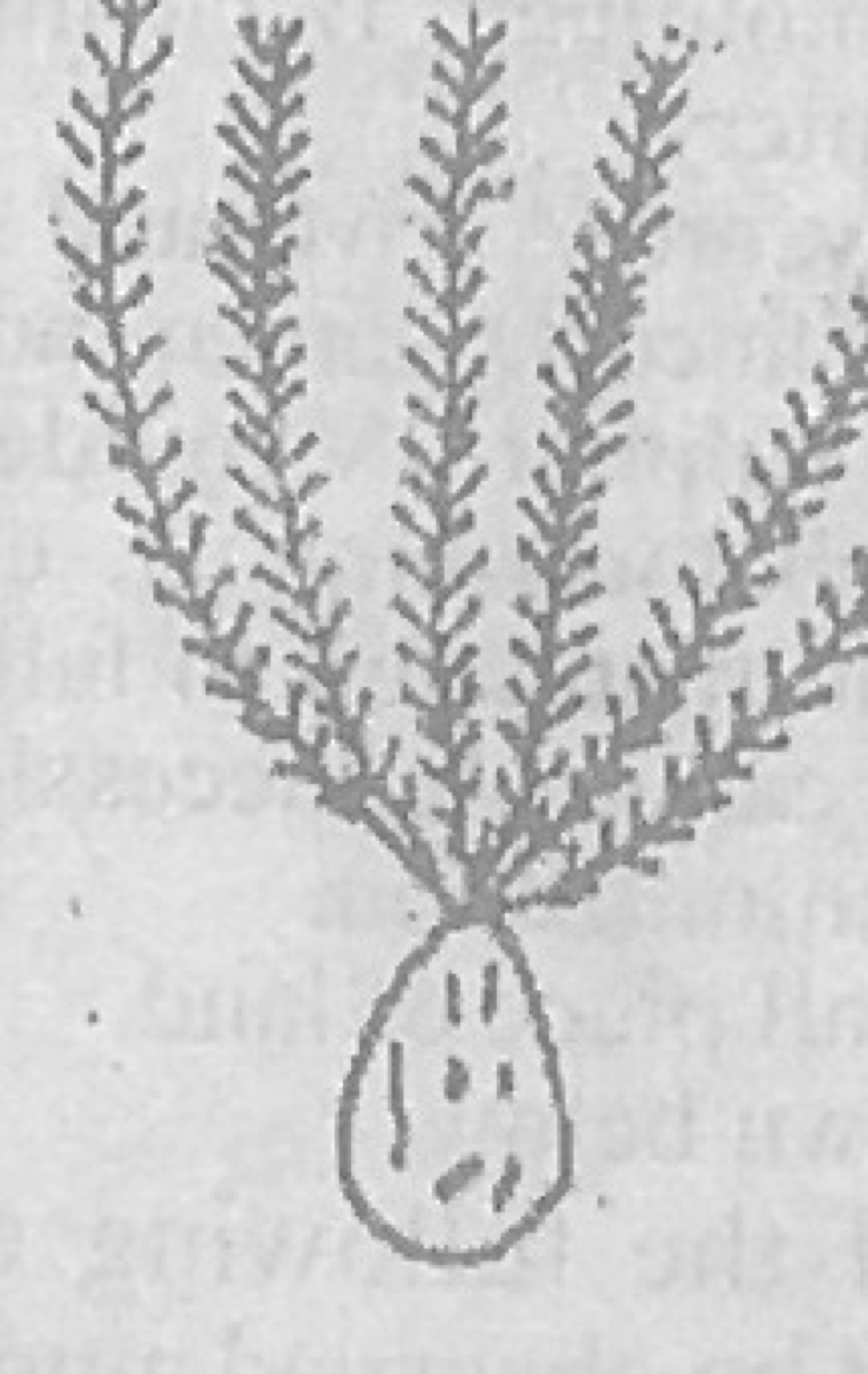
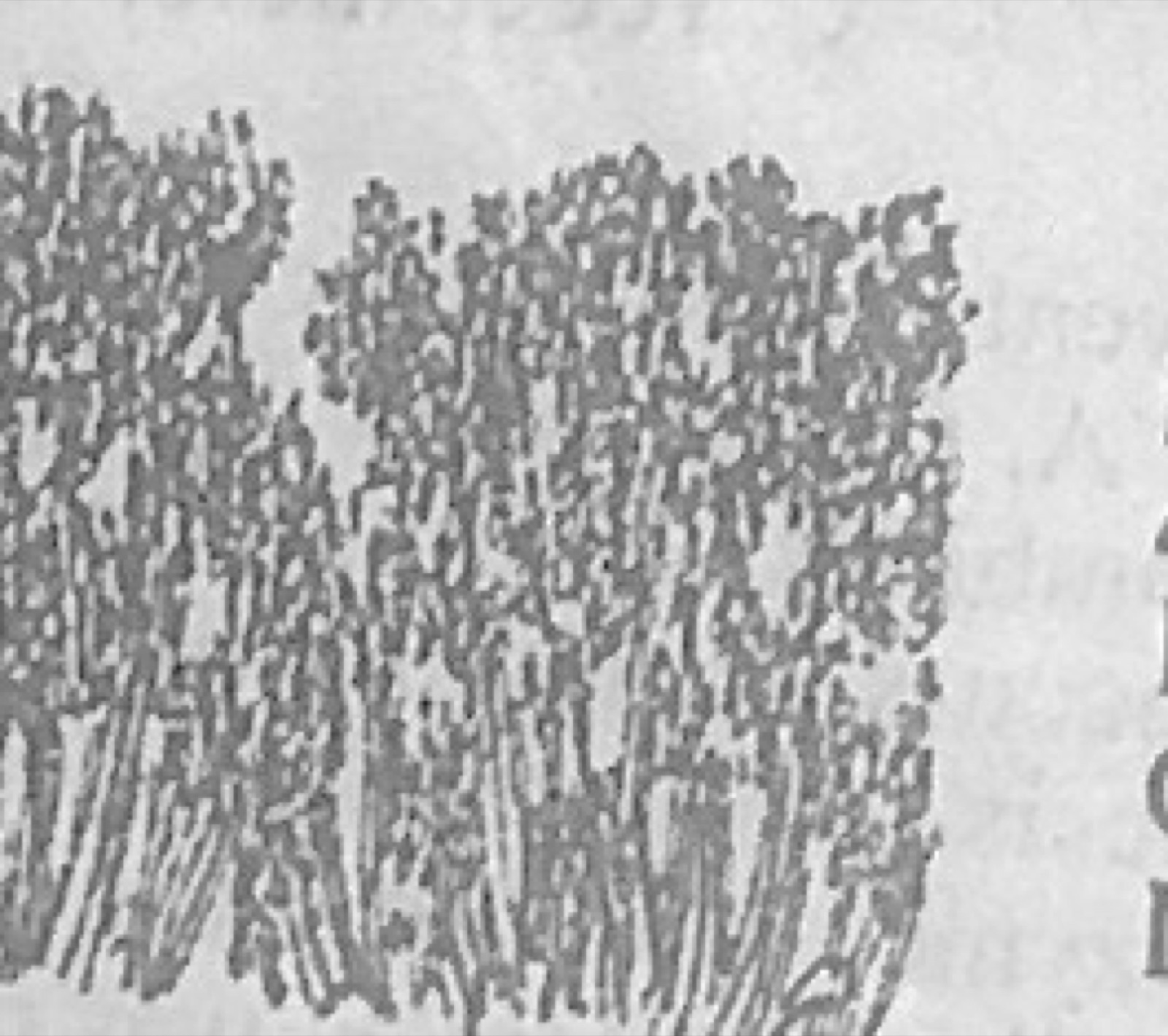
A farmer planted many seeds on a small piece of land. The plants that germinated are as shown below. Which of the following effects would not be observed among the population of the plants?
A.Rise in disease condition.
B.Death.
C.Mutualistic relationship.
D.Competition.
Show the answer and explanation
Answer: C (Mutualistic relationship.)
Explanation
Overcrowding causes competition for light, water and nutrients, faster spread of disease and death of weak plants. It does not create mutualism.
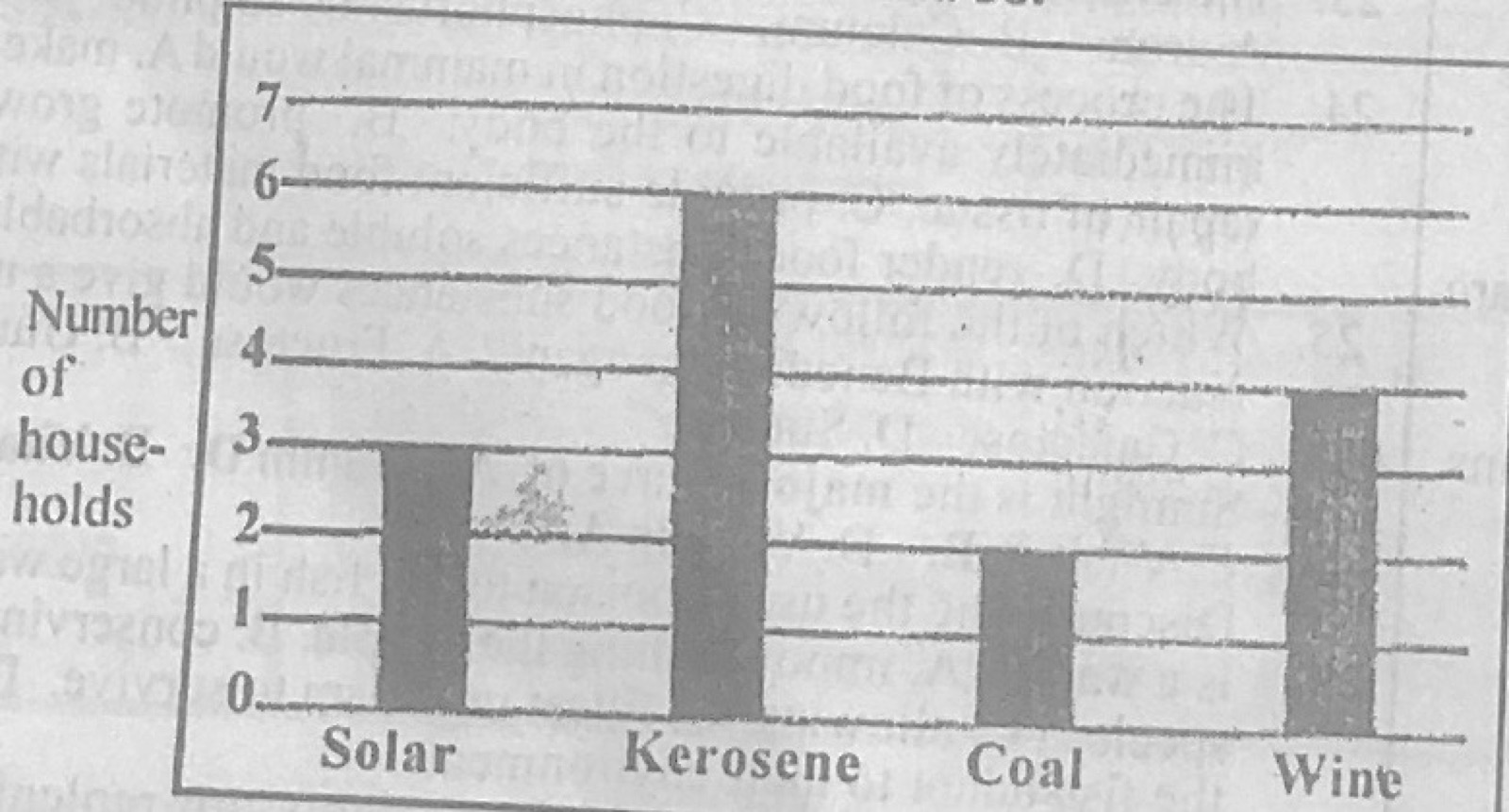
The bar chart below shows the data of sources of energy used for cooking in a community. The two sources of energy that would mostly lead to pollution in the community are
A.solar and kerosene.
B.coal and wind.
C.kerosene and coal.
D.solar and wind.
Show the answer and explanation
Answer: C (kerosene and coal.)
Explanation
Burning kerosene and coal releases smoke, soot and harmful gases; solar and wind energy are clean.
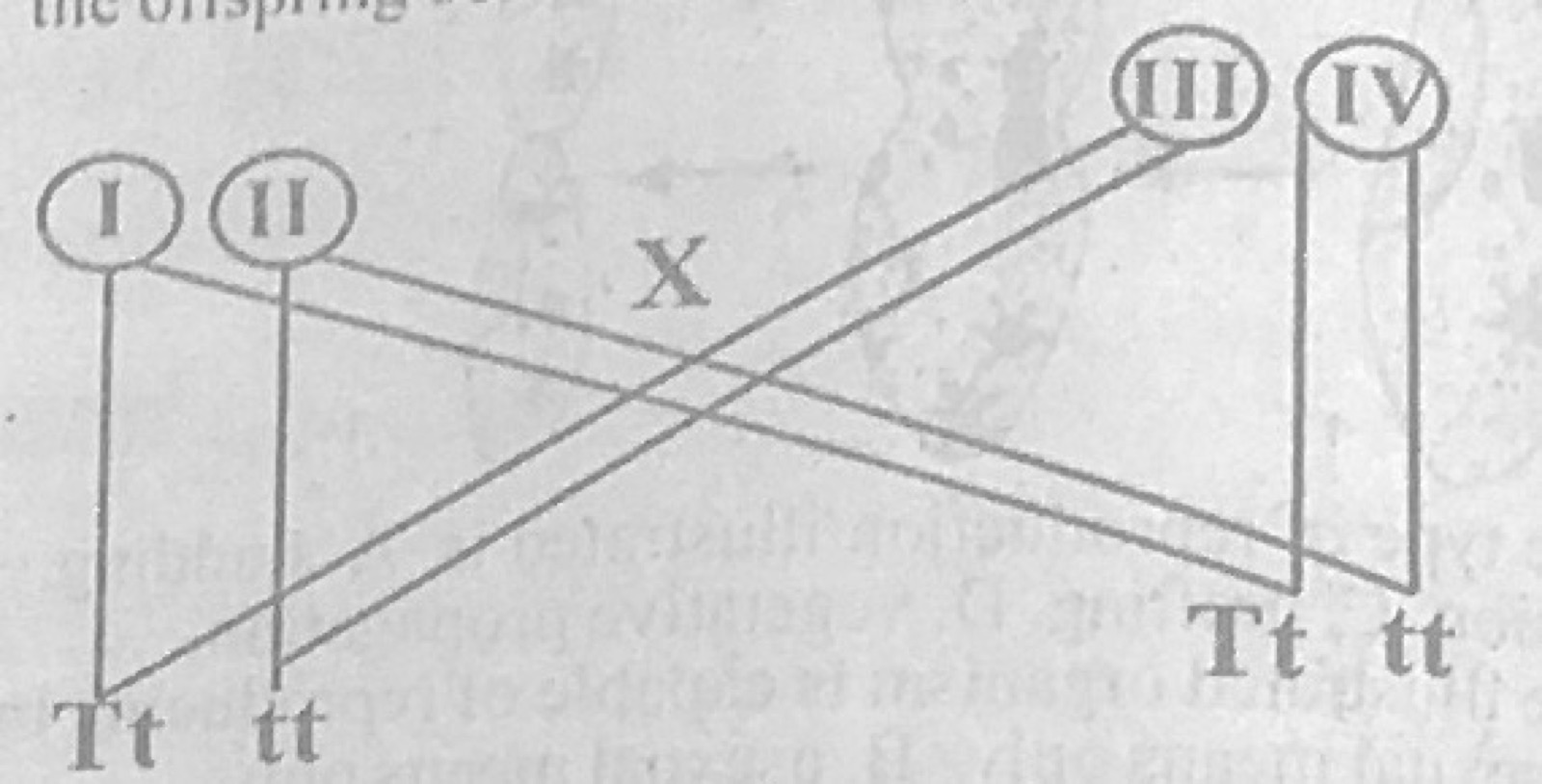
The diagram below is an illustration of the genetic cross between two parents. The parental gametes I, II, III and IV gave rise to the offspring below. Gametes I, II, III and IV, respectively are
A.T, T, T and t.
B.T, t, t and t.
C.T, T, t and t.
D.T, t, T and t.
Show the answer and explanation
Answer: B (T, t, t and t.)
Explanation
I and III give Tt while II and III give tt, so III is t, I is T and II is t. I and IV give Tt, so IV is also t.
In a test, a student paired some scientists with their famous work as shown below. I. Charles Darwin → preservation of some food with heat II. Gregor Mendel → natural selection III. Jean Baptiste Lamarck → inheritance of acquired characteristics IV. Louis Pasteur → independent assortment of genes The scientists that are not correctly paired with their famous works are
A.I and II only.
B.II and III only.
C.I, II and IV.
D.II, III and IV.
Show the answer and explanation
Answer: C (I, II and IV.)
Explanation
Darwin proposed natural selection, Mendel independent assortment, and Pasteur food preservation by heat. Only Lamarck (III) is correctly paired.
In a test, a student paired some scientists with their famous work as shown below. I. Charles Darwin → preservation of some food with heat II. Gregor Mendel → natural selection III. Jean Baptiste Lamarck → inheritance of acquired characteristics IV. Louis Pasteur → independent assortment of genes Which of the scientists were involved in the study of evolution?
A.I and III
B.II and III
C.I, II and IV
D.II, III and IV
Show the answer and explanation
Answer: A (I and III)
Explanation
Darwin (natural selection) and Lamarck (use and disuse, inheritance of acquired characters) both put forward theories of evolution.
Section A (a) State one function each of the following parts of the nephron: (i) glomerulus; (ii) Bowman's capsule; (iii) Proximal convoluted tubule; (iv) distal convoluted tubule. (b) Complete the table below: Table columns: Organism | Structure for excretion | Form in which waste is excreted by organism Rows: ______ | Contractile vacuole | ______ Flatworm | ______ | ______ Earthworm | ______ | ______ Cockroach | ______ | ______ Human | ______ | Liquid ______ | Stomatal pore | ______ (c) List five excretory products of plants.
Show the model answer
Model answer
(a)(i) Glomerulus: ultrafiltration of blood under high pressure. (ii) Bowman's capsule: collects the glomerular filtrate and passes it into the tubule. (iii) Proximal convoluted tubule: selective reabsorption of glucose, amino acids, salts, vitamins and much water. (iv) Distal convoluted tubule: reabsorbs more water and salts (osmoregulation) and secretes some ions (e.g. H+, K+) into the urine. (b) Amoeba/Paramecium - contractile vacuole - liquid (and gases by diffusion); Flatworm - flame cells - liquid; Earthworm - nephridia - liquid; Cockroach - Malpighian tubules - solid (uric acid); Human - kidney (also skin, lungs) - liquid (urine); Green plant - stomatal pore - gas (carbon (IV) oxide, oxygen, water vapour). (c) Any five: oxygen; carbon (IV) oxide; water; tannins; resins; gums; latex; alkaloids (e.g. quinine, caffeine, nicotine, morphine); oxalic acid / calcium oxalate crystals; anthocyanins.
Explanation
In (b), fill every blank: the organism, its excretory structure and the state of its waste.
An individual ate a hot and large meal of cassava with salty groundnut soup. The individual was sweating profusely and did not drink water after the meal. (a) State one role each played by the following organs involved in the activity above: (i) mouth; (ii) skin; (iii) tongue; (iv) kidney; (v) stomach; (vi) small intestine; (vii) large intestine; (viii) liver. (b) Name three of the organs listed in 2(a) that contain enzymes needed to breakdown the food. (c) Name three digestive enzymes that would be involved in the digestion of the meal. (d) Name two end products of the meal after digestion. (e)(i) State one effect that the excess salt in the meal might have on the individual. (ii) State three advantages that the individual would derive from the meal.
Show the model answer
Model answer
(a)(i) Mouth: teeth chew the food; saliva (ptyalin) begins starch digestion. (ii) Skin: sweat glands remove water and salt and cool the body. (iii) Tongue: tastes the food and rolls it into a bolus for swallowing. (iv) Kidney: removes excess salt and conserves water (osmoregulation), producing concentrated urine. (v) Stomach: stores and churns food; pepsin starts protein digestion; acid kills germs. (vi) Small intestine: completes digestion of starch, proteins and fats and absorbs the products through the villi. (vii) Large intestine: absorbs water from undigested food and forms faeces. (viii) Liver: makes bile to emulsify fats; stores excess glucose as glycogen; deaminates excess amino acids. (b) Mouth, stomach, small intestine (also accept pancreas/duodenum if listed). (c) Any three: salivary amylase (ptyalin); pancreatic amylase; maltase; pepsin; trypsin; erepsin (peptidase); lipase. (d) Any two: glucose; amino acids; fatty acids and glycerol. (e)(i) Any one: raised blood pressure; thirst and dehydration; strain on the kidneys; water retention/swelling. (ii) Any three: energy from the cassava (carbohydrate); protein from groundnut for growth and repair; oil (fat) from the soup for energy and warmth; minerals and vitamins.
Explanation
Link each organ's role to this salty, starchy meal and the lack of drinking water.
(a) A piece of raw meat was left in an uncovered bowl for seven days. Use the information to answer questions 3(a) and 3(b). (i) State four likely changes that would be observed in the meat. (ii) Name the biological process that led to the changes that are observed in the meat. (iii) On the table below, list four methods of preserving meat to prevent it from the changes stated in 3(a)(i) and mention the principle involved in the methods. Table columns: Four methods of preserving the meat | One principle involved in the preservation method (iv) Name two environmental factors that may be responsible for the changes in 3(a)(i). (b) Name one method of preserving the following food items: (i) dried maize grains; (ii) fresh tomatoes; (iii) vegetables; (iv) beans; (v) milk.
Show the model answer
Model answer
(a)(i) Any four: bad (offensive) smell; change of colour (greenish/dark); soft, slimy texture; presence of maggots; growth of moulds/microbes; liquid oozing out. (ii) Decay (putrefaction / decomposition by bacteria and fungi). (iii) Any four with principle: refrigeration/freezing - low temperature slows microbial growth and enzymes; drying/smoking - removes water microbes need; salting - draws water out of microbes by osmosis; canning - heat kills microbes and the sealed can keeps new ones out; cooking/boiling - heat kills microbes. (iv) Any two: warm temperature; moisture/humidity; oxygen (air); presence of microorganisms/flies. (b)(i) Dried maize grains: sun-drying and storing in airtight containers/silos with chemicals. (ii) Fresh tomatoes: refrigeration (or canning as paste, drying). (iii) Vegetables: refrigeration or drying. (iv) Beans: drying and storage in airtight containers/with preservatives. (v) Milk: pasteurisation, refrigeration, or drying into powder.
Explanation
Each preservation method must be paired with its own principle.
(a)(i) Complete the table below by stating the type of cell division and the type of set of chromosomes for the listed cells. Table columns: Cell | Types of cell division | Set of chromosomes Rows: Onion cell | mitosis | ______; Sperm cell; Pollen grain; Ovum; Guard cell; Cheek cell | ______ | diploid (ii) What is mitosis? (b) Explain briefly how parents with blood groups A or B could have an offspring with blood group O. (c) Explain briefly how genes are involved in the process of evolution.
Show the model answer
Model answer
(a)(i) Onion cell - mitosis - diploid; Sperm cell - meiosis - haploid; Pollen grain - meiosis - haploid; Ovum - meiosis - haploid; Guard cell - mitosis - diploid; Cheek cell - mitosis - diploid. (ii) Mitosis is cell division in which one cell divides to give two daughter cells with the same number and kind of chromosomes as the parent cell. (b) Group O is recessive (genotype OO). A parent of group A can be AO and a parent of group B can be BO. If each passes on the O allele, the child is OO, group O (chance ¼ in AO x BO, AO x AO or BO x BO). (c) Genes carry characteristics from parents to offspring; mutations change genes and produce new variations; useful variations help some individuals survive and reproduce (natural selection); these genes become more common over generations, so the population changes (evolves).
Section B (a)(i) What is competition? (ii) List two types of competition. (iii) List four factors that organisms compete for in a habitat. (iv) Explain briefly the relationship between competition and succession. (b)(i) What is structural adaptation? (ii) State four types of structural adaptations in animals. (c) List four features of variation in humans that are used in crime detection. (d) Complete the table below by listing three types of adaptive colouration in animals and give one example each of animals that show the colourations. Table columns: Three types of adaptive colouration in animals | One example of animal that shows the type of colouration (e) Give three examples of plants found in a tropical Rainforest.
Show the model answer
Model answer
(a)(i) Competition is the struggle between organisms living together for resources that are in short supply. (ii) Intraspecific (between members of the same species) and interspecific (between different species). (iii) Any four: food/nutrients; water; light; space/territory; mates; oxygen. (iv) During succession new species arrive and compete with those already present; better competitors replace the earlier species, and this repeated replacement continues until a stable climax community forms. (b)(i) Structural adaptation is the possession of body structures that help an organism survive and reproduce in its habitat. (ii) Any four: colouration (camouflage/warning); body shape, e.g. streamlined body of fish; protective coverings such as shells, spines, scales; claws and beaks; mouthparts; webbed feet; fins/gills. (c) Any four: fingerprints; blood groups; DNA profile; facial features/shape of face; height; hair colour/texture; skin colour; handwriting/voice. (d) Any three: camouflage (cryptic) - chameleon/grasshopper/stick insect; warning colouration - monarch butterfly/wasp/poison-arrow frog; mimicry - harmless fly resembling a wasp, viceroy butterfly; countershading - fish (dark back, light belly); disruptive colouration - zebra. (e) Any three: mahogany; iroko; obeche; oil palm; rubber tree; ferns; climbers (lianas); epiphytes such as orchids.
Explanation
In (d) give the type of colouration with an animal that clearly shows it.