50 questions. Try each one, then open the answer to check yourself and read the explanation.
Question 2
Structure of Flowering Plants
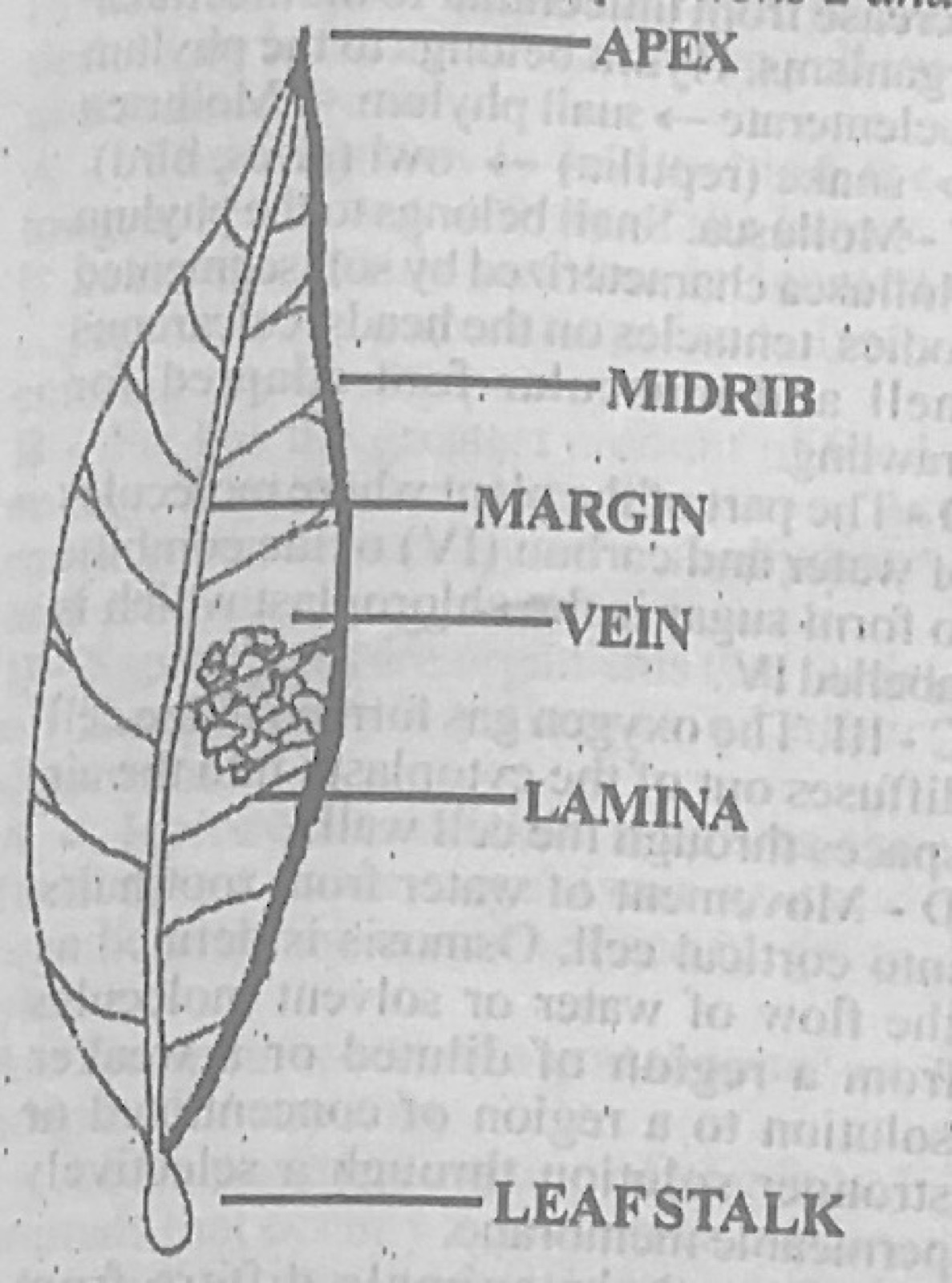
The diagram below is an illustration of a mango leaf drawn by a student in a Biology test. The student failed the test. The likely reason why the student failed the test was that the
A.labels were wrong and the guidelines were not touching the structures.
B.net venation shown were few, rough, not properly drawn and wrongly placed.
C.leaf was too tapered at the apex, the leaf stalk was too short and the shape of the leaf was wrong.
D.leaf venation should have been parallel and the midrib should be thicker.
Show the answer and explanation
Answer: A (labels were wrong and the guidelines were not touching the structures.)
Explanation
In the drawing, the labels point to the wrong parts (for example 'margin' and 'vein' do not touch the edge or a vein) and guidelines stop short of the structures. Correct labels and guidelines that touch the part are basic rules of biological drawing.
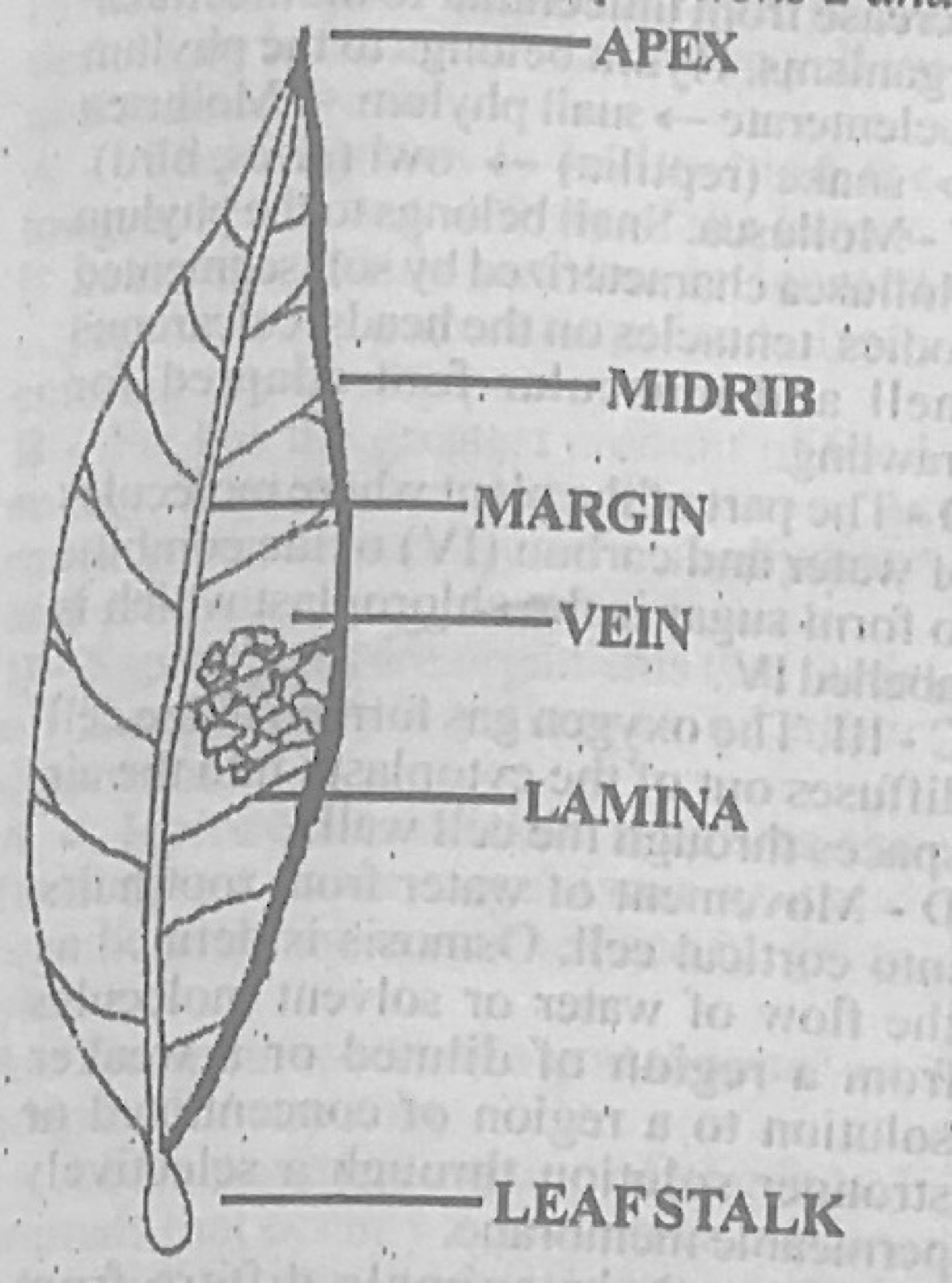
The diagram below is an illustration of a mango leaf drawn by a student in a Biology test. The student failed the test. Which other features of the diagram, if shown, would have earned the student more marks? The
A.colour and size.
B.title and magnification
C.habitat and agricultural qualities of leaf.
D.spelling of label and length of midrib.
Show the answer and explanation
Answer: B (title and magnification)
Explanation
Every biological drawing must have a title and a statement of magnification; the drawing has neither.
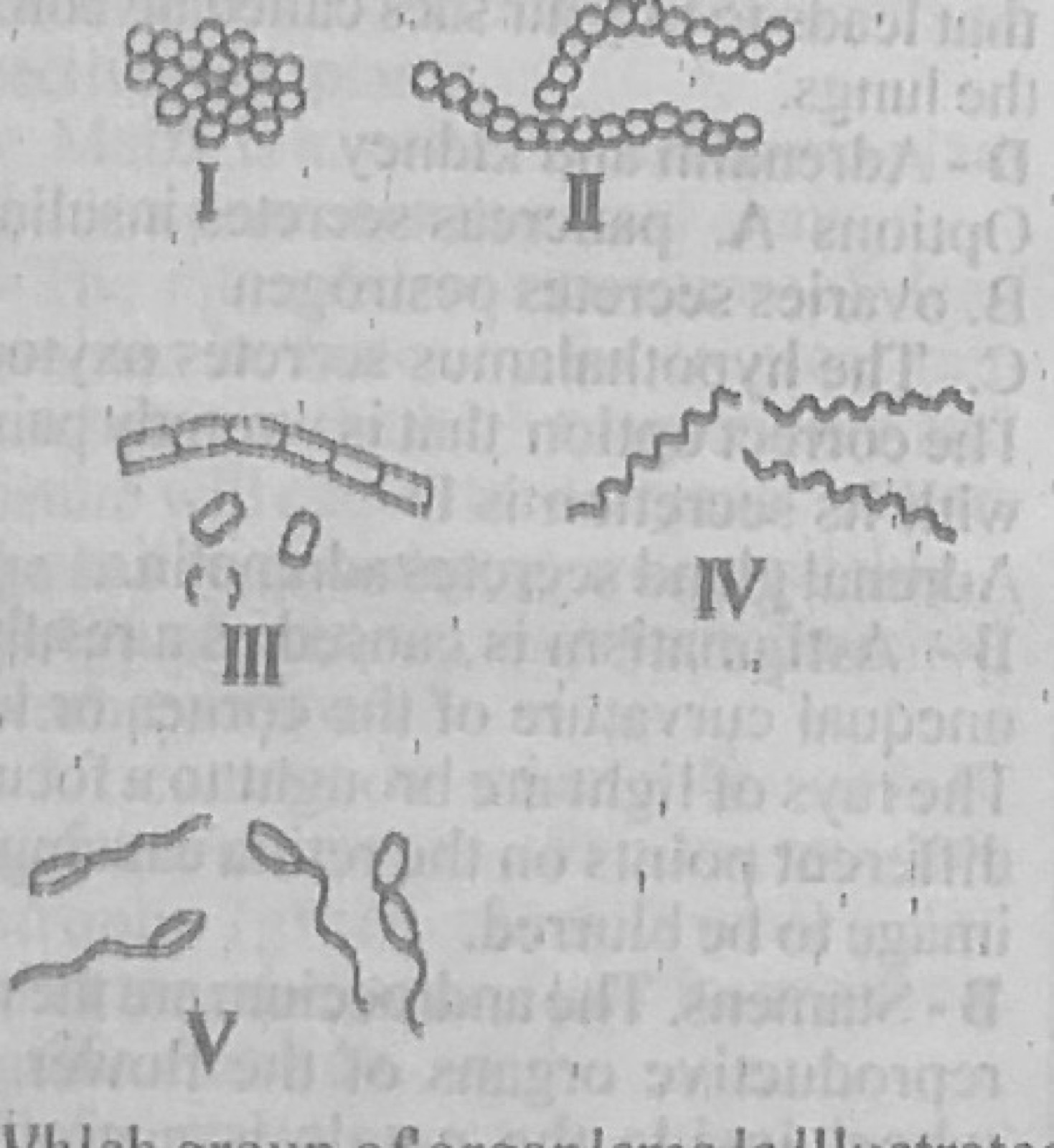
The diagrams below are illustrations of forms in which a particular group of organisms exist. In which of the illustrated forms does the organism that causes cholera exist?
A.II
B.III
C.IV
D.V
Show the answer and explanation
Answer: D (V)
Explanation
Cholera is caused by Vibrio cholerae, a comma-shaped (curved rod) bacterium with a flagellum, which is the form labelled V.
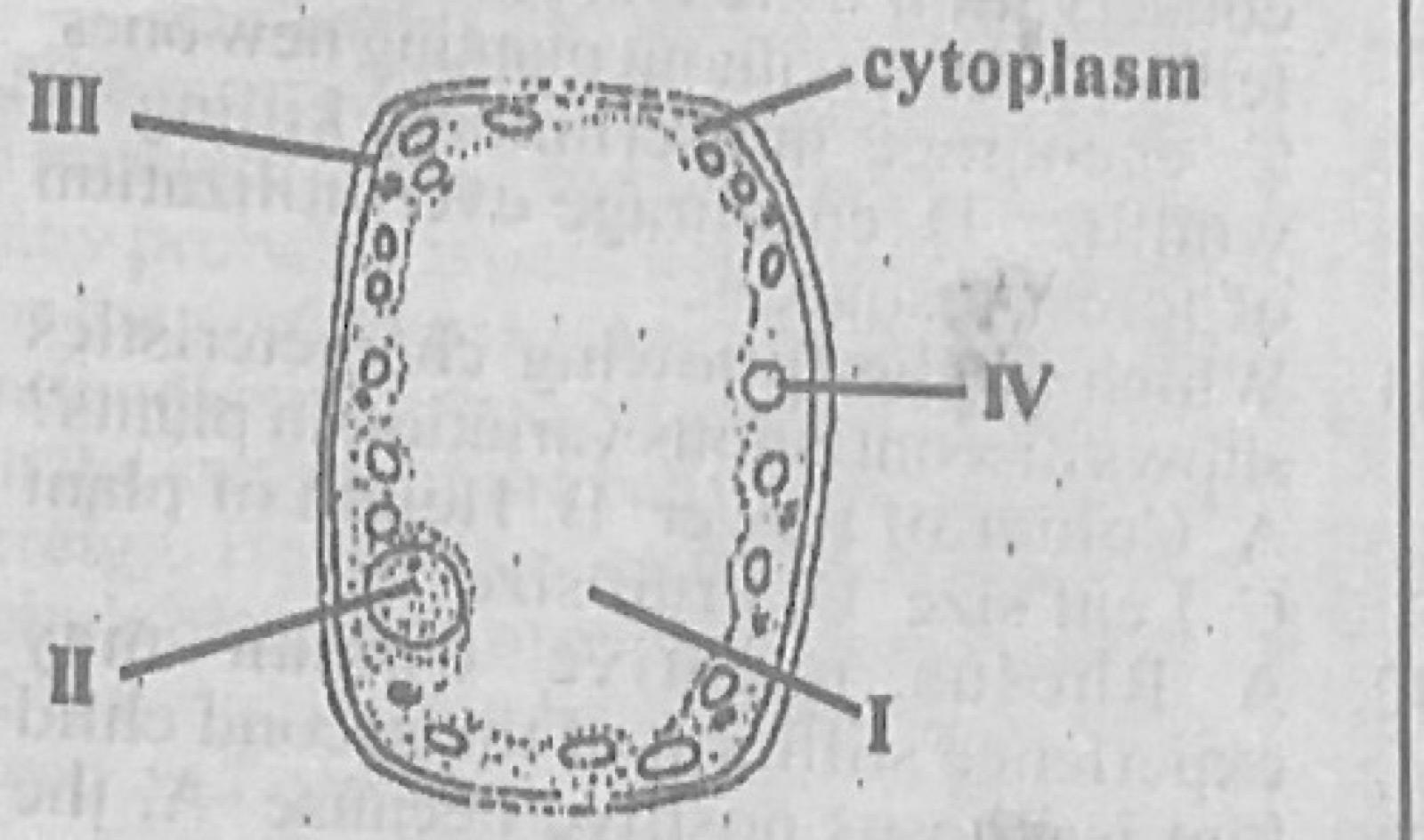
The diagram below is an illustration of a cell in which photosynthesis takes place. In which of the labelled parts would molecules of water and carbon (IV) oxide combine to form sugar?
A.I.
B.II.
C.III.
D.IV.
Show the answer and explanation
Answer: D (IV.)
Explanation
Sugar is made in the chloroplasts, the small oval bodies in the cytoplasm; one of them is labelled IV.
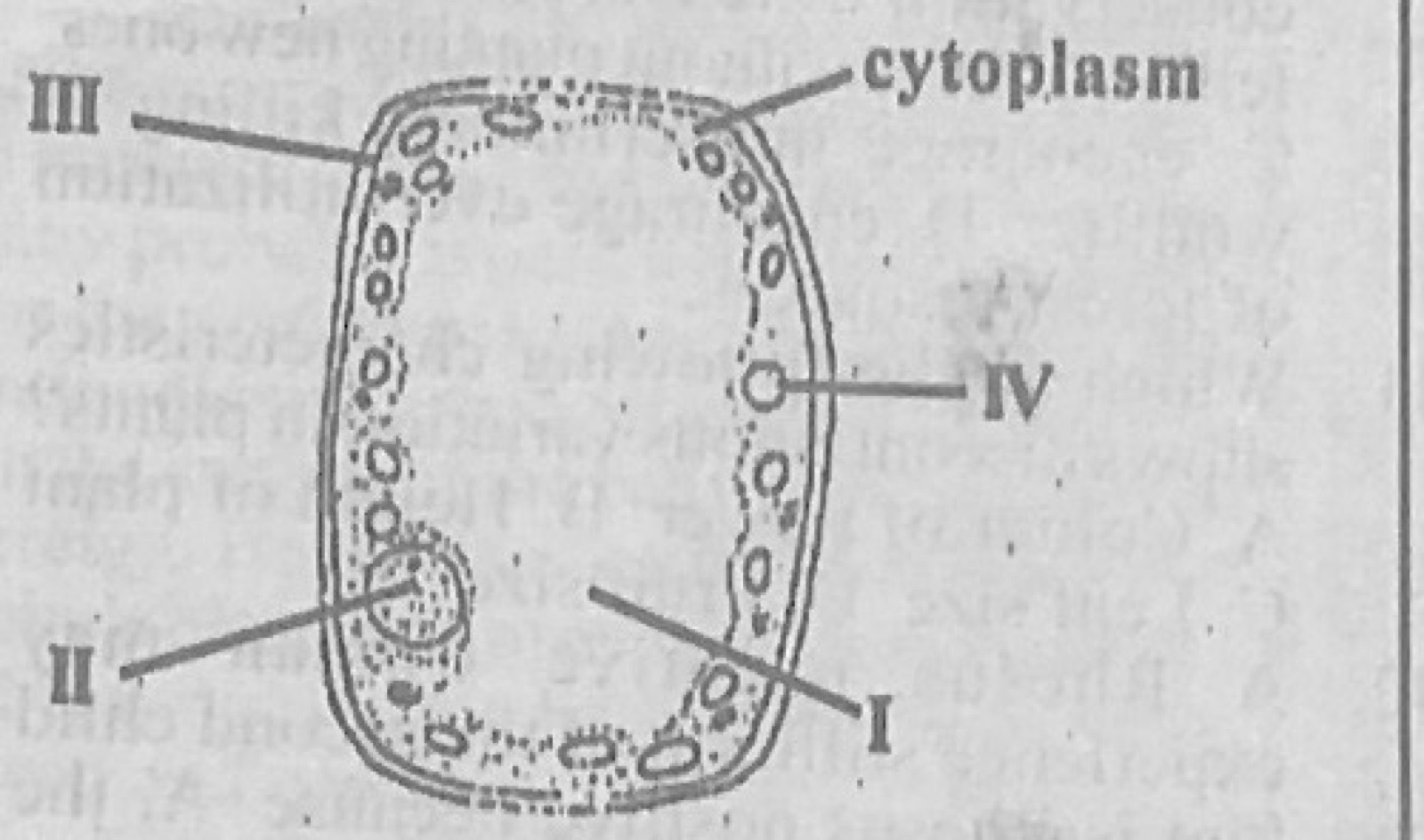
The diagram below is an illustration of a cell in which photosynthesis takes place. The oxygen gas formed in the cell diffuses out of the cytoplasm into the air spaces through the part labelled
A.I.
B.II.
C.III.
D.IV.
Show the answer and explanation
Answer: C (III.)
Explanation
Oxygen leaving the cell must pass through the cell membrane and cell wall at the edge of the cell, labelled III.
An example of a process that involves osmosis is the
A.movement of digested food from ileum into blood capillaries.
B.translocation of starch from leaves to all parts of a plant.
C.reabsorption of food nutrients from the kidney into blood capillaries.
D.movement of water from root hairs into cortical cell.
Show the answer and explanation
Answer: D (movement of water from root hairs into cortical cell.)
Explanation
Osmosis is the movement of water through a partially permeable membrane from a dilute to a more concentrated solution, as when water passes from root hairs into cortex cells. The other options move dissolved food, not water.
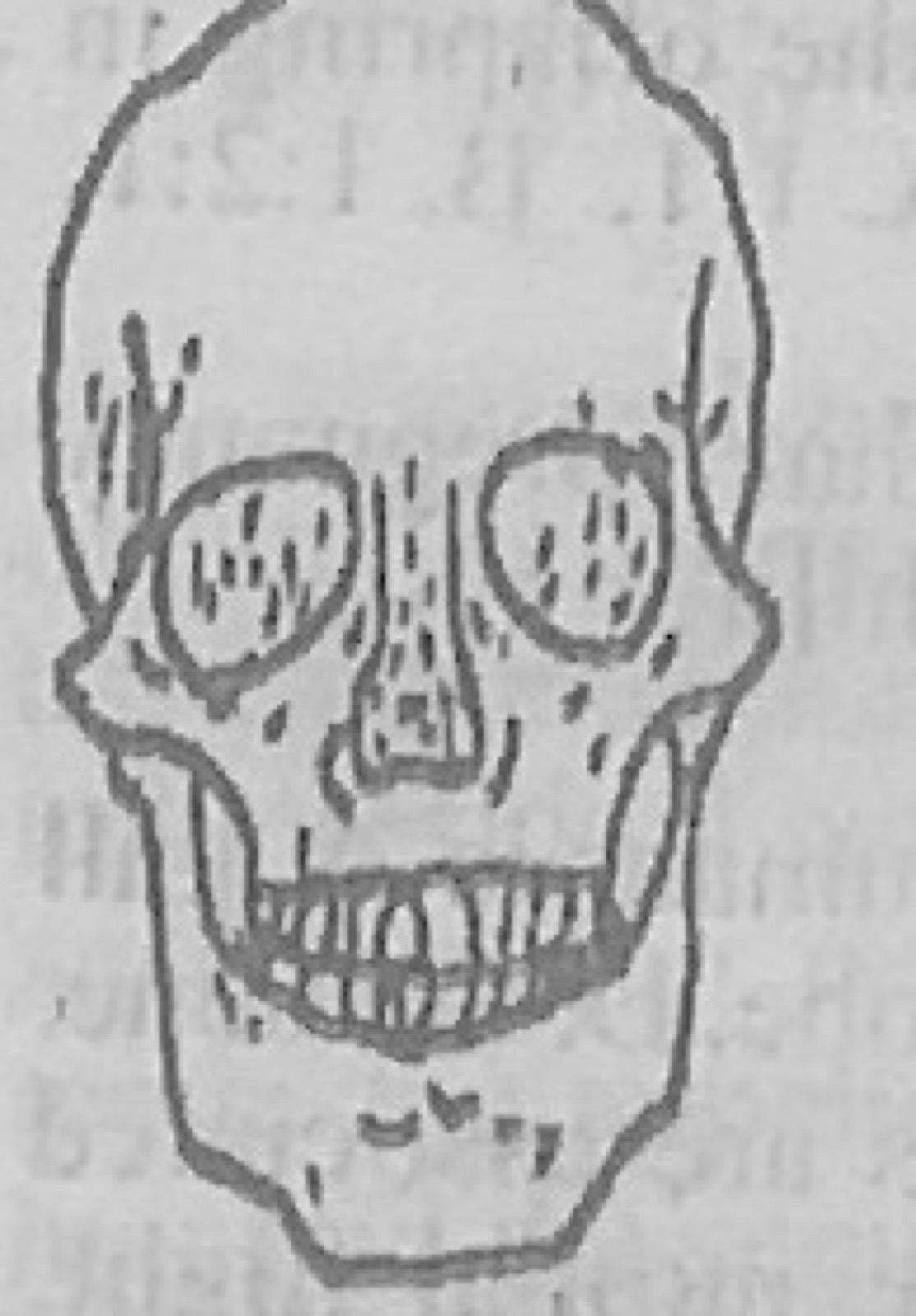
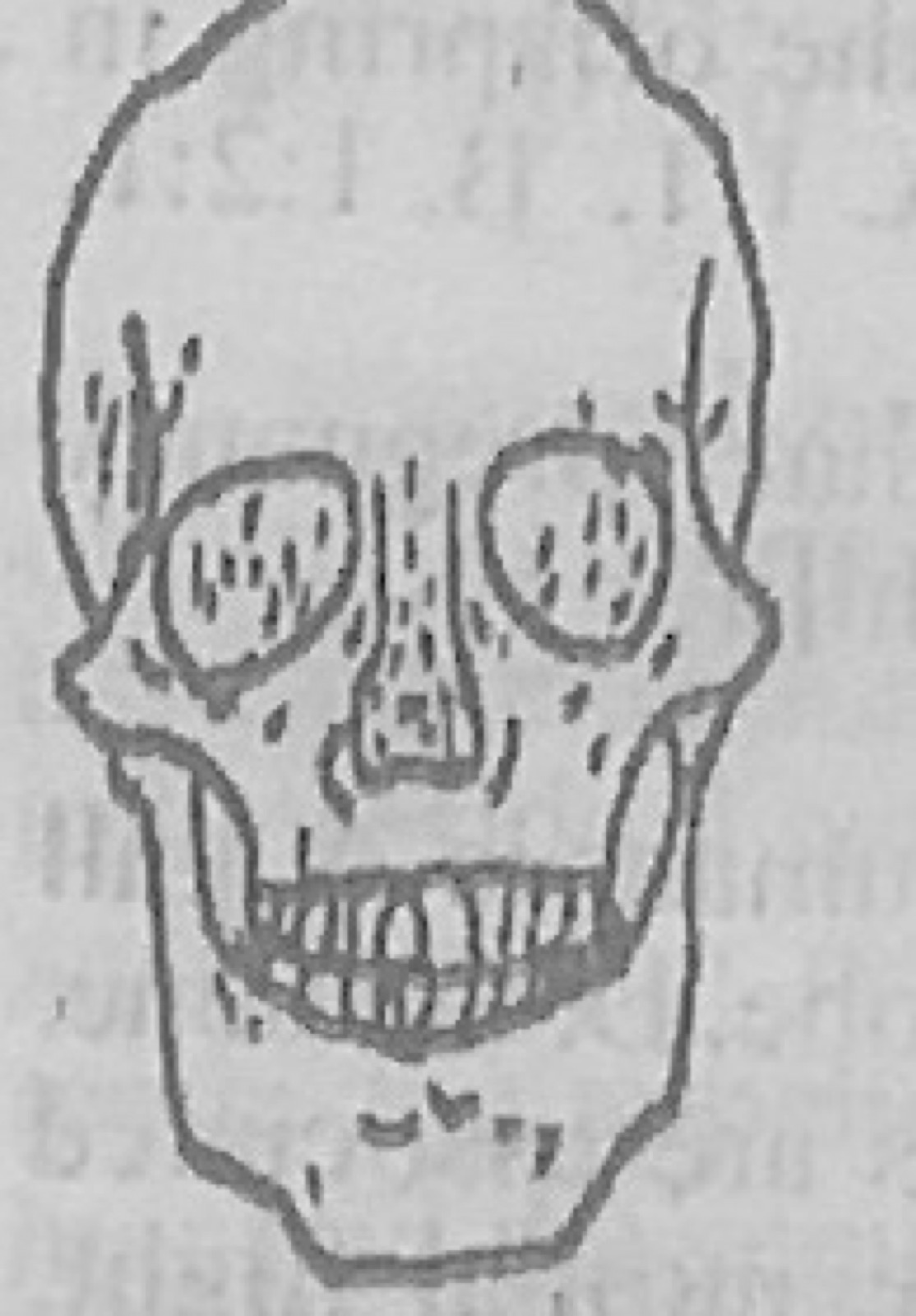
The diagram below is an illustration of a structure in the skeletal system of humans. An individual was involved in a car accident and the illustrated structure was badly injured. Which of the following structures would most likely be affected?
A.Lumbar, eye and teeth
B.Ear, brain and hinge joint
C.Eye, cerebellum and ear
D.Clavicle, tongue and pelvis
Show the answer and explanation
Answer: C (Eye, cerebellum and ear)
Explanation
The skull encloses the brain (including the cerebellum) and houses the eyes and ears, so these would be affected. Lumbar vertebrae, clavicle and pelvis are not in the skull.
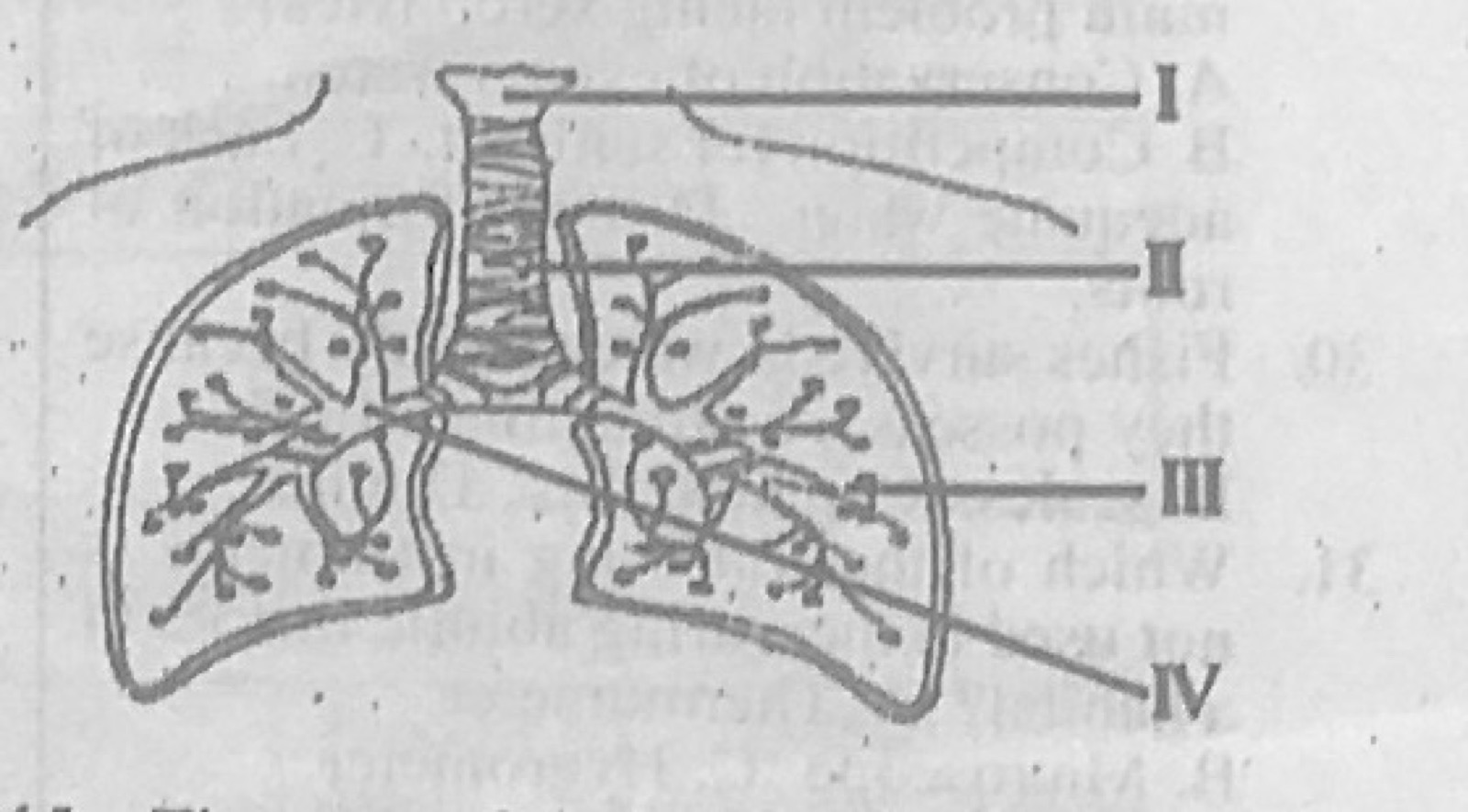
The diagram below is an illustration of some structures used for gaseous exchange in humans. The parts labeled I, II, III and IV respectively are
A.larynx, bronchus, bronchiole and trachea.
B.bronchus, bronchiole, trachea and larynx.
C.bronchiole, trachea, bronchus and larynx.
D.larynx, trachea, bronchiole and bronchus.
Show the answer and explanation
Answer: D (larynx, trachea, bronchiole and bronchus.)
Explanation
I is the larynx at the top, II the trachea with its rings of cartilage, III the small branches (bronchioles) inside the lung, and IV the main bronchus entering the lung.
Which of the following hormones is wrongly paired with its secretory organs?
A.Insulin and pancreas.
B.Oestrogen and ovary.
C.Oxytocin and hypothalamus.
D.Adrenalin and kidney.
Show the answer and explanation
Answer: D (Adrenalin and kidney.)
Explanation
Adrenalin is made by the adrenal glands, which sit on top of the kidneys; the kidney itself does not secrete it. (Oxytocin is made in the hypothalamus and released by the pituitary.)
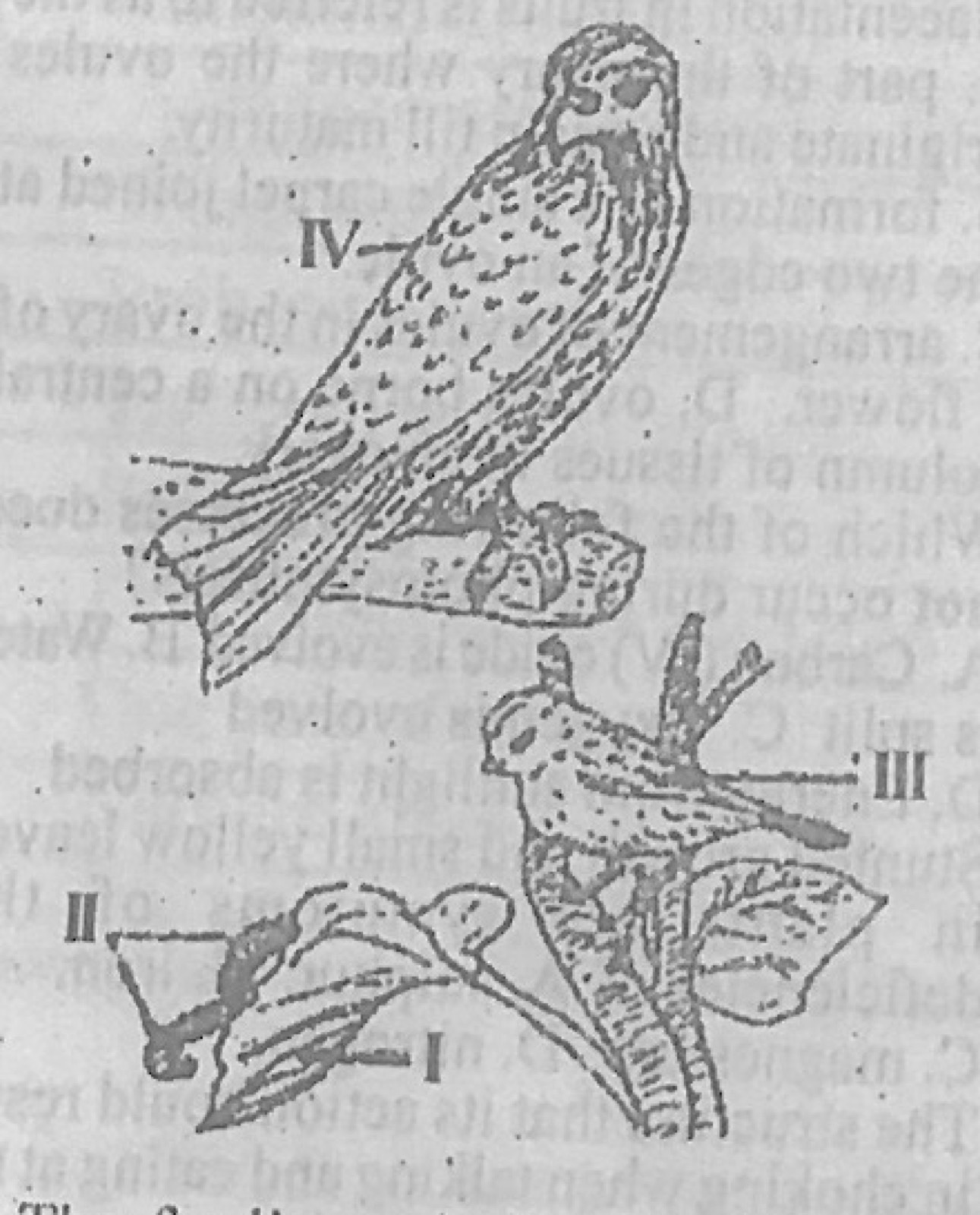
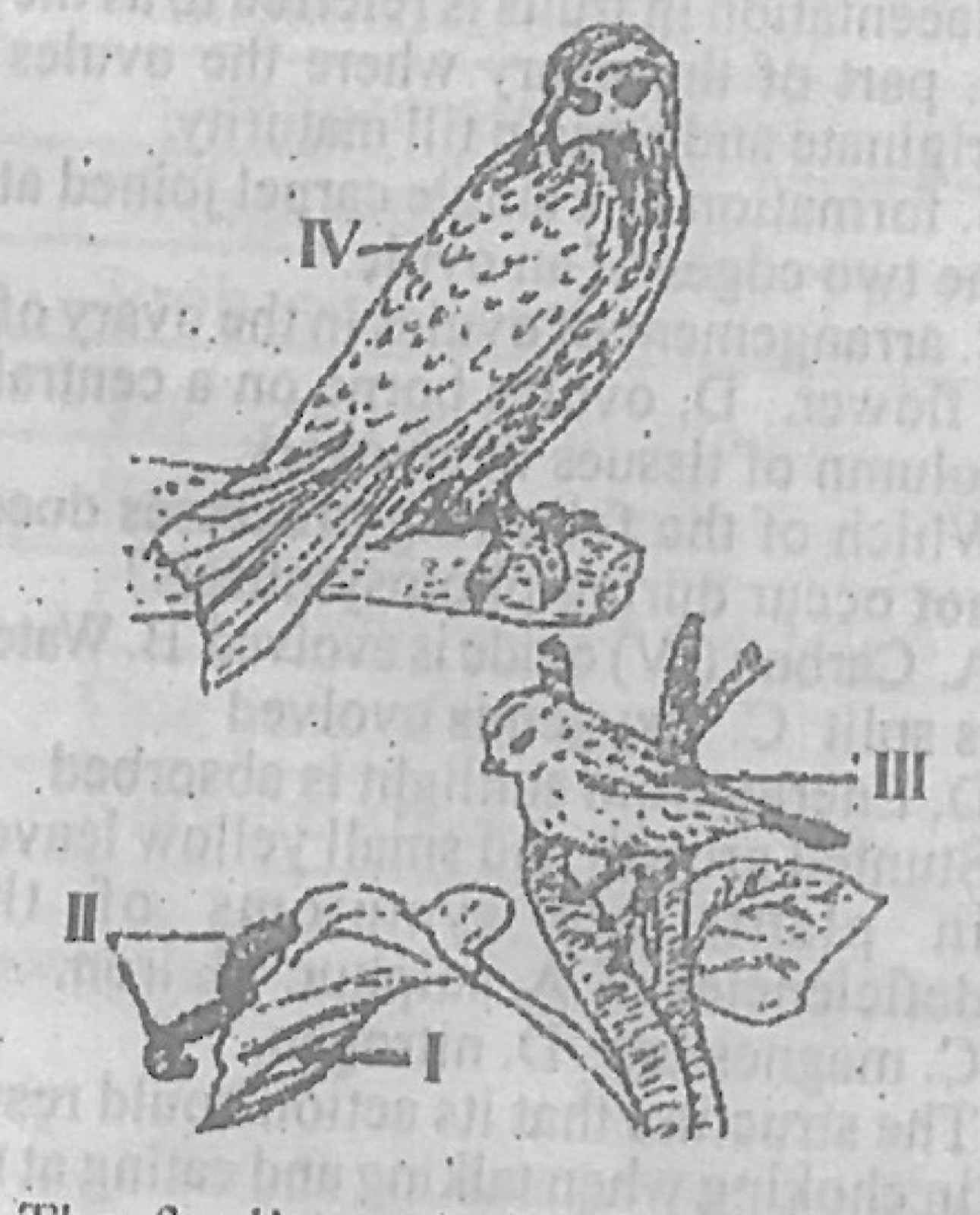
Use the information below: I - making shoes from crocodile skin; II - making tables with plastic; III - using elephant tusk for decoration; IV - using firewood for cooking. The act that should be encouraged for the conservation of wildlife and forests is
A.I.
B.II.
C.III.
D.IV.
Show the answer and explanation
Answer: B (II.)
Explanation
Making tables from plastic means fewer trees are cut down and no animal is killed; the other acts use crocodile skin, ivory or firewood.
Which of the following characteristics shows discontinuous variation in plants?
A.Colour of flower
B.Height of plant
C.Leaf size
D.Fruit size
Show the answer and explanation
Answer: A (Colour of flower)
Explanation
Flower colour falls into a few clear groups (e.g. red or white) with no in-between, which is discontinuous variation. Height and size vary continuously.
A Rhesus negative woman may experience stillbirth of the second child that is Rhesus positive because
A.the woman is susceptible to diseases during pregnancy.
B.the blood of the foetus might clump.
C.they have poor circulatory system.
D.the foetus is deprived of nourishment.
Show the answer and explanation
Answer: B (the blood of the foetus might clump.)
Explanation
After the first Rh-positive baby, the mother makes anti-Rh antibodies. In the next Rh-positive pregnancy these cross the placenta and make the baby's red cells clump and burst.
The illustration below is a genetic diagram: Gametes across the top: E, E. Gametes down the side: E, e. Row E: I, II Row e: III, IV What is the name of the genetic diagram?
A.Genetic cross
B.Punnett square
C.Inheritance diagram
D.Genetic square
Show the answer and explanation
Answer: B (Punnett square)
Explanation
A grid with the gametes of one parent along the top and of the other down the side is called a Punnett square.
The illustration below is a genetic diagram: Gametes across the top: E, E. Gametes down the side: E, e. Row E: I, II Row e: III, IV What do the labels I, II, III and IV respectively represent?
A.EE, EE, EE and EE
B.Ee, Ee, EE and Ee
C.EE, EE, Ee and Ee
D.EE, EE, Ee and ee.
Show the answer and explanation
Answer: C (EE, EE, Ee and Ee)
Explanation
Combine each row gamete with each column gamete: E + E gives EE for I and II; e + E gives Ee for III and IV.
The illustration below is a genetic diagram: Gametes across the top: E, E. Gametes down the side: E, e. Row E: I, II Row e: III, IV The genotypic ratio of the offspring in the genetic diagram is
A.1:1.
B.1:2:1.
C.1:3.
D.4:0.
Show the answer and explanation
Answer: A (1:1.)
Explanation
There are two EE and two Ee offspring, so the genotypic ratio is 2:2, which is 1:1.
Characteristics and Classification of Living Things
(a) What is classification of living things? (b) State four ways each by which the following groups of organisms are of economic importance in their habitats. (i) fungi; (ii) plants. (c) Complete the table below by stating five major phyla of the Kingdom Animalia and give one example of each. Table: Phyla of Kingdom Animalia | Example
Show the model answer
Model answer
(a) Grouping living things into categories (kingdom, phylum, class, order, family, genus, species) according to their similarities and differences in structure, so they are easy to identify and study. (b)(i) Fungi, any four: decompose dead matter and recycle nutrients; some cause diseases of plants and animals (e.g. ringworm, rusts); yeast is used in baking and brewing; mushrooms are eaten as food; some (e.g. Penicillium) give antibiotics; they spoil food, wood, cloth and paper. (b)(ii) Plants, any four: provide food for animals and man; give out oxygen in photosynthesis and remove carbon (IV) oxide; provide shade and shelter/habitats; prevent soil erosion; give timber, fibres and fuel; give drugs/medicines. (c) Any five phyla with a correct example: Porifera - sponge; Coelenterata (Cnidaria) - Hydra/jellyfish; Platyhelminthes - tapeworm/liver fluke/planaria; Nematoda - Ascaris/hookworm/guinea worm; Annelida - earthworm/leech; Mollusca - snail/octopus; Arthropoda - cockroach/spider/crab; Echinodermata - starfish/sea urchin; Chordata - fish/toad/man.
Explanation
In (c) each phylum must be matched with an example that really belongs to it.
(a) Complete the table below. Table columns: Element | Function in plants | Effect of deficiency in plants Rows: Iron; Molybdenum; Potassium; Copper; Nitrogen (b) Name three classes of organic foods which are essential constituents in the diet of a mammal. (c) State two roles each of the following structures of the digestive system in humans: (i) buccal cavity; (ii) duodenum; (iii) stomach. (d) Name the end product of adding dilute hydrochloric acid to sucrose.
Show the model answer
Model answer
(a) Iron - needed to make chlorophyll; part of respiratory enzymes. Deficiency: chlorosis (yellowing) of young leaves. Molybdenum - needed by enzymes that fix nitrogen and reduce nitrate (formation of amino acids). Deficiency: pale leaves, stunted growth. Potassium - needed for protein synthesis, enzyme activity and opening of stomata; flowering and fruiting. Deficiency: yellow/brown, scorched leaf margins; premature death of leaves. Copper - activates enzymes used in respiration and photosynthesis. Deficiency: wilting, spotted or dying leaf tips. Nitrogen - needed to make proteins, amino acids and chlorophyll. Deficiency: stunted growth, small yellow leaves. (b) Any three: carbohydrates; proteins; fats and oils (lipids); vitamins. (c)(i) Buccal cavity: teeth chew food into small pieces; saliva moistens food and its amylase (ptyalin) starts digesting starch to maltose; tongue rolls food into a bolus for swallowing; tastes food. (ii) Duodenum: receives bile, which emulsifies fats; receives pancreatic juice whose enzymes (amylase, trypsin, lipase) digest starch, proteins and fats; neutralises acid chyme from the stomach. (iii) Stomach: stores food for a while; churns food and mixes it with gastric juice; hydrochloric acid kills germs and gives acid medium; pepsin begins protein digestion; rennin curdles milk. (d) Glucose and fructose (the acid hydrolyses sucrose).
Explanation
Give each element both a function and a deficiency symptom.
Relationships I, II, III, IV and V exist among some organisms in an ecosystem. I: Organism A grows on dead organism B. II: Organism C feeds on the remnants of food left by organism D without affecting organism D negatively or positively. III: Organism E provides shelter for organism F while organism F transports organism E towards food. IV: Organism G kills organism B for food. V: Organism H feeds on organism J, causing organism J a disease. Use them to answer questions 3(a) to 3(e). (a) Name the type of relationship in: I, II, III, IV, V. (b) In relationship IV, what is the biological term for each of organisms B and G? (i) B; (ii) G. (c) Name one example each of organisms B to J. (d)(i) Name the relationship that is most beneficial to the ecosystem. (ii) Give one reason for the answer in 3(d)(i). (e)(i) Give two examples of organism A. (ii) Name the group to which organism A belongs.
Show the model answer
Model answer
(a) I saprophytism; II commensalism; III mutualism (symbiosis); IV predation; V parasitism. (b)(i) B - prey; (ii) G - predator. (c) B: antelope/goat/rabbit (any prey animal); C: remora fish (or cattle egret on leftovers); D: shark; E: sea anemone; F: hermit crab; G: lion/hawk/leopard; H: tapeworm/tick/Plasmodium/Ascaris; J: man/cattle/dog (host). (d)(i) Saprophytism (relationship I). (ii) Saprophytes decompose dead organisms and return mineral nutrients to the soil (nutrient recycling), and they clear away dead bodies. (e)(i) Any two: mushroom, Mucor, Rhizopus, bread mould, decay bacteria (e.g. Bacillus). (ii) Decomposers - fungi or bacteria (saprophytes).
Explanation
Examples in (c) must fit each relationship: E and F, for instance, must be a pair that really live in mutualism.
(a) Complete the following Punnett squares of a dihybrid cross between two rats. One has black fur (BB) and short tail (tt), the other has brown fur (bb) and long tail (TT). [A 4 by 4 grid: the corner is marked X, the gametes Bt run across the top and the gametes bT run down the side.] (b) How many of the offspring will have: (i) black fur and short tail; (ii) brown fur and long tail; (iii) black fur and long tail; (iv) brown fur and short tail. (c) If there were twenty (20) chromosomes in the leaf cell of a plant, how many chromosomes would be in each of the following cells of the plant? (i) pollen grain (ii) guard cell (iii) ovule (iv) root cell
Show the model answer
Model answer
(a) Parent BBtt gives only Bt gametes; parent bbTT gives only bT gametes. Every box of the square is BbTt. (b) All 16 offspring are BbTt: black fur is dominant over brown and long tail is dominant over short, so (i) 0; (ii) 0; (iii) 16 (all); (iv) 0. (c) Pollen grain and egg cells are made by meiosis, so they are haploid: (i) pollen grain - 10; (ii) guard cell - 20; (iii) ovule (egg cell) - 10; (iv) root cell - 20.
Explanation
Work out the gametes first; each homozygous parent can make only one kind of gamete.
Section B (a)(i) What are sense organs? (ii) Name three sense organs that respond to the stimulus of chemicals. (b) List three animals each that exhibit the following courtship behaviours. (i) territoriality (ii) pairing (c)(i) State one similarity between the eggs of toads and the eggs of birds. (ii) State three differences between the eggs of toads and the eggs of birds. (d) Complete the table below by listing four organisms involved in the nitrogen cycle and state one role each of the organisms. (e) Complete the table below by naming two types of heterotrophic modes of nutrition in animals and give two examples each of the organisms that carry out the modes of nutrition. Table columns: Two modes of heterotrophic nutrition | Two examples of organisms that carry out mode of nutrition
Show the model answer
Model answer
(a)(i) Organs containing groups of receptor cells that detect stimuli (changes) in the surroundings and send impulses to the nervous system. (ii) Tongue (taste buds); nose (olfactory cells); in insects, the antennae (chemoreceptors). Accept chemoreceptors in the carotid body. (b)(i) Territoriality, any three: agama lizard, male tilapia, dog, lion, robin/many birds, chimpanzee. (ii) Pairing, any three: termites, pigeon/domestic fowl/duck, toad, gibbon, human. (c)(i) Both contain yolk (food for the embryo) / both develop into an embryo / both have a vitelline membrane. (ii) Any three: toad eggs have a jelly coat, bird eggs a hard calcareous shell; toad eggs are small, bird eggs large; toad eggs laid in many numbers in strings, bird eggs laid singly; toad eggs fertilised externally in water, bird eggs internally; toad eggs lack an air space and chalaza, bird eggs have them; toad eggs are laid in water, bird eggs on land. (d) Any four: Rhizobium/Azotobacter - fix atmospheric nitrogen into nitrogen compounds; putrefying bacteria and fungi - break down dead bodies to ammonium compounds; Nitrosomonas - change ammonium compounds to nitrites; Nitrobacter - change nitrites to nitrates; Pseudomonas (denitrifying bacteria) - change nitrates back to nitrogen gas; green plants - absorb nitrates to make proteins; animals - eat plant protein and return nitrogen in excreta and dead bodies. (e) Holozoic - e.g. man, dog, goat, Amoeba; Parasitic - e.g. tapeworm, tick, louse; (also accept saprophytic - e.g. some protozoa; or symbiotic).
Explanation
Lightning and fertilisers are not organisms, so do not list them in (d).