B.middle bi-layer of protein with a lipid layer on either surface.
C.middle bi-layer of lipid with a protein layer on either surface.
D.protein layer with two inner lipid layers.
Show the answer and explanation
Answer: C (middle bi-layer of lipid with a protein layer on either surface.)
Explanation
The cell membrane is built on a double layer of phospholipid molecules. Proteins sit on and in this lipid bilayer, so the lipid is in the middle and protein is on either surface.
Which of the following cells is a specialized cell?
A.Amoeba
B.Plasmodium
C.Guard cell
D.Meristematic cell.
Show the answer and explanation
Answer: C (Guard cell)
Explanation
A guard cell has a special shape and job: it opens and closes the stoma. Meristematic cells are unspecialised dividing cells, and Amoeba and Plasmodium are whole single-celled organisms.
When a spirogyra filament is placed in a concentrated salt solution for 30 minutes, the cell would become
A.plasmolysed.
B.turgid.
C.shortened.
D.elongated.
Show the answer and explanation
Answer: A (plasmolysed.)
Explanation
The salt solution is more concentrated than the cell sap, so water leaves the cells by osmosis. The cytoplasm shrinks away from the cell wall: the cells are plasmolysed.
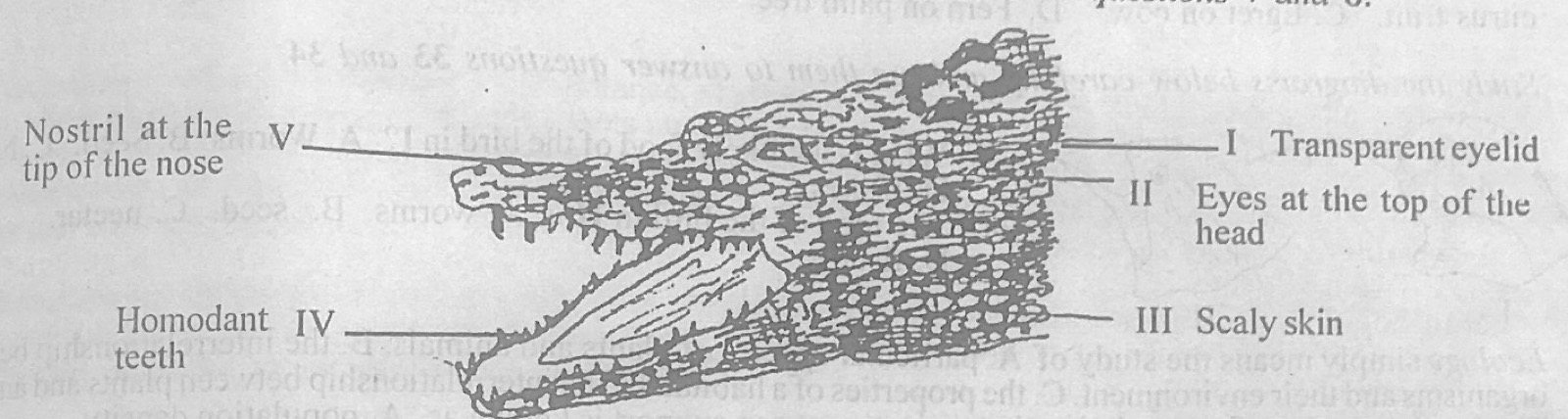
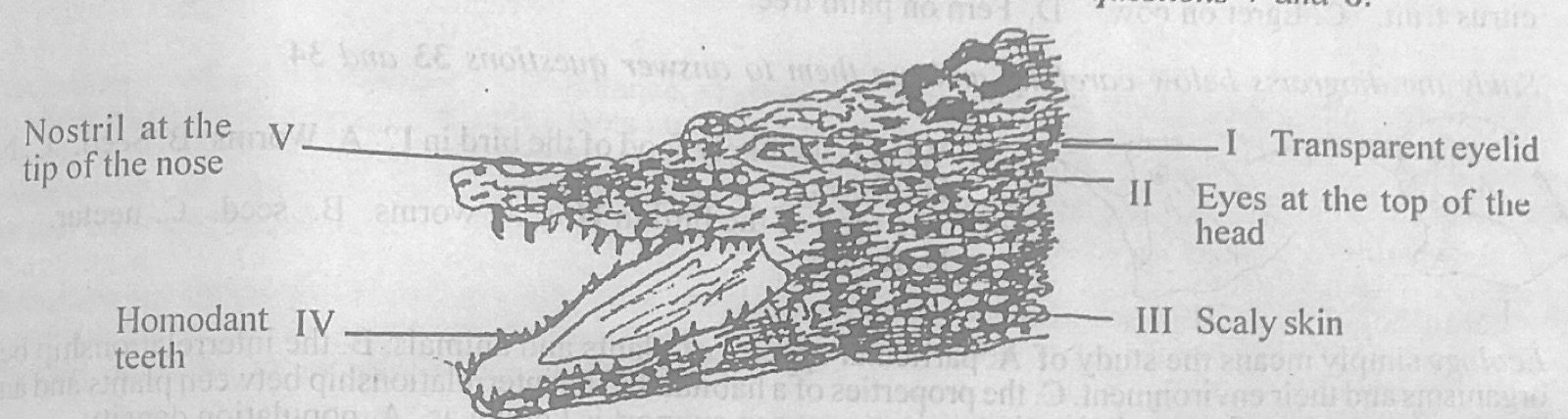
The diagram below is an illustration of a crocodile. Which of the labelled parts enable the animal to stay under water most of the time?
A.I, IV and V
B.I, II and V.
C.I, III and IV
D.III, IV and V
Show the answer and explanation
Answer: B (I, II and V.)
Explanation
The transparent eyelid (I) protects the eyes under water, eyes on top of the head (II) let it see above water while hidden, and a nostril at the tip of the nose (V) lets it breathe with only the snout out.
Which of the following features could be used to determine the growth of a seedling?
A.Number of flowers
B.Number of leaves
C.Length of flowers
D.Length of radicle.
Show the answer and explanation
Answer: D (Length of radicle.)
Explanation
Growth is a permanent increase in size, usually measured as length. A young seedling has no flowers, and the length of its radicle (young root) increases steadily as it grows.
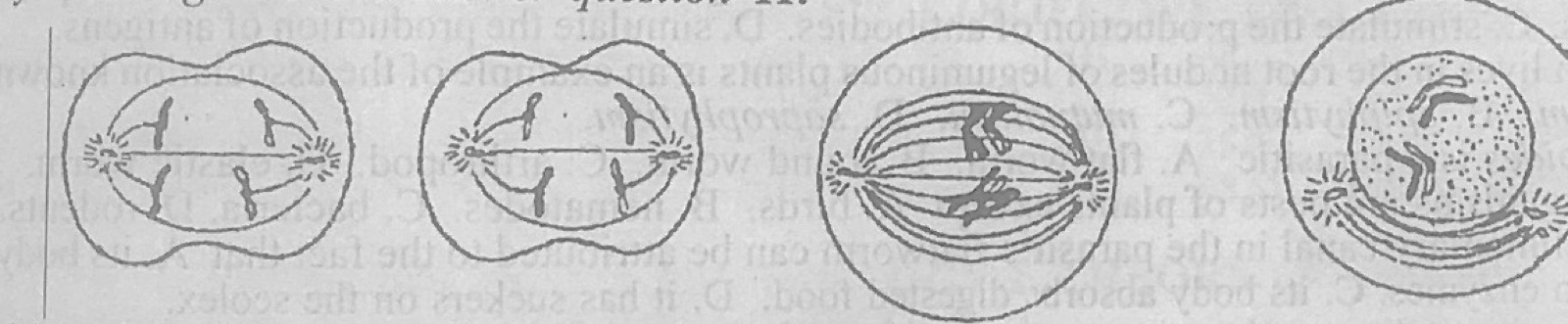
The following diagrams show the sequence of events in early cell division. In which of the following cells is this division likely to take place?
A.Sperm cell
B.Blood cell
C.Muscle cell
D.Uterine cell.
Show the answer and explanation
Answer: A (Sperm cell)
Explanation
The diagrams show homologous chromosomes pairing up and separating, which happens in meiosis. Meiosis takes place only when gametes such as sperm cells are formed.
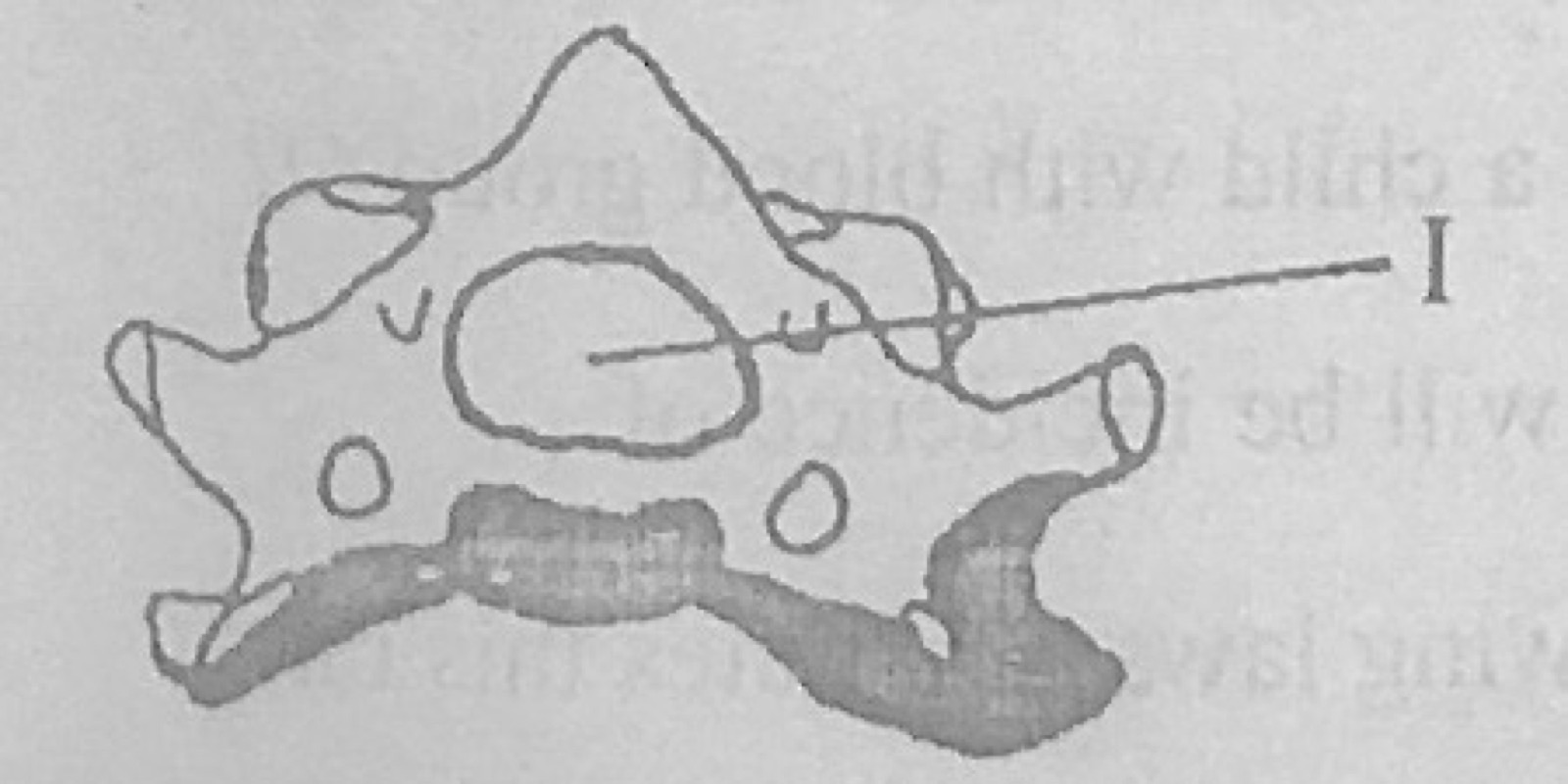
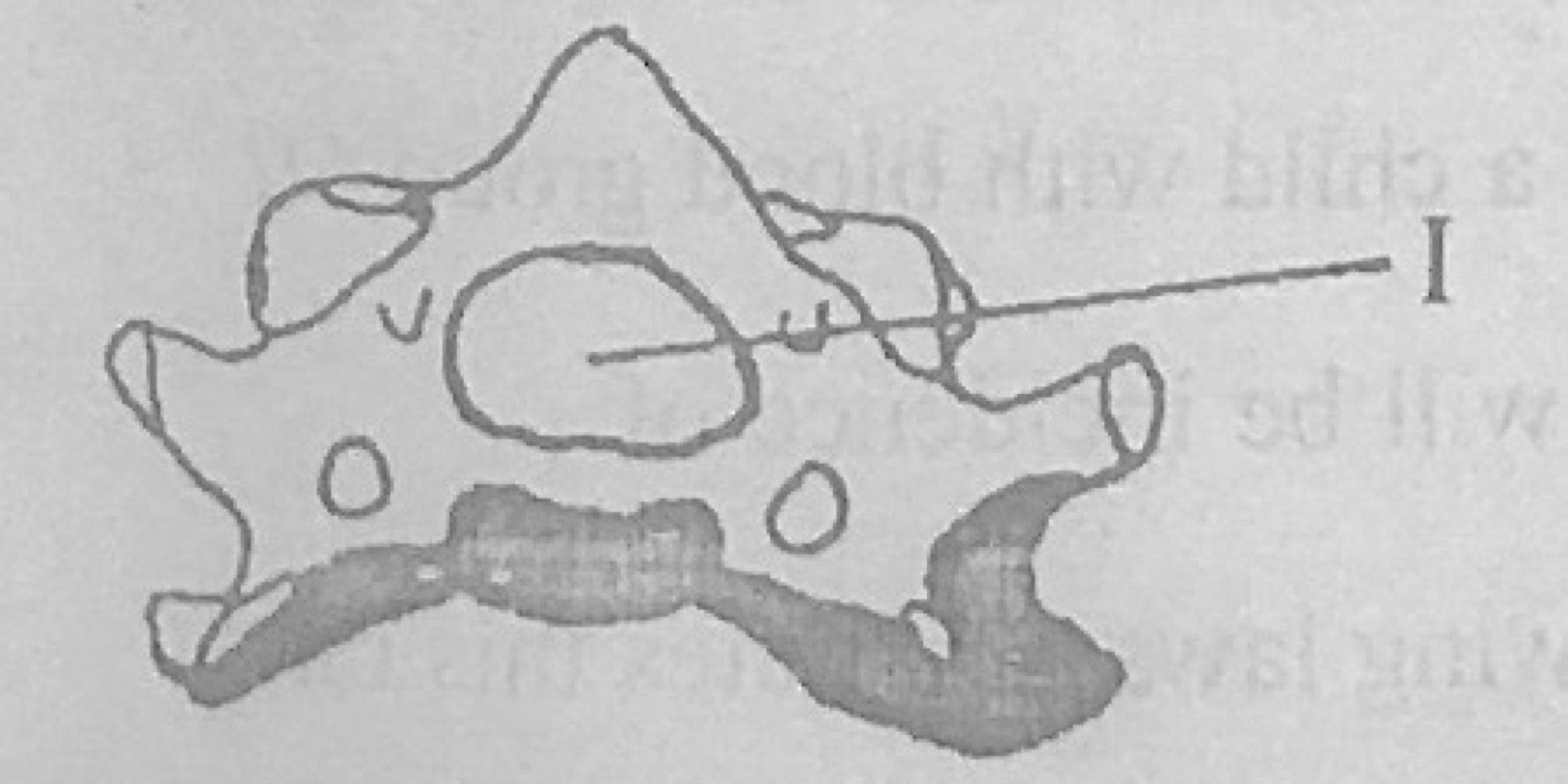
The diagram below illustrates a part of the mammalian skeleton. The part of the mammalian skeleton illustrated in the diagram is the
A.atlas vertebrae.
B.axis vertebrae.
C.cervical vertebrae.
D.thoracic vertebrae.
Show the answer and explanation
Answer: C (cervical vertebrae.)
Explanation
The vertebra has small holes on each side of the neural canal (vertebrarterial canals) and short transverse processes, which are features of a cervical (neck) vertebra.
Blood pressure is higher in the arteries as a result of
A.stress.
B.contraction and relaxation.
C.blockage in the arteries.
D.presence of valves.
Show the answer and explanation
Answer: B (contraction and relaxation.)
Explanation
Each contraction of the ventricles forces blood into the arteries under high pressure, and the arteries' elastic walls recoil as the heart relaxes. This is why arterial pressure is high.
A person had an accident that affected the skull but not the nose and later lost the sense of smell. The accident must have affected the
A.nose by extension.
B.olfactory lobes of the brain.
C.passage from the nose to brain.
D.part of the skull near the nose.
Show the answer and explanation
Answer: B (olfactory lobes of the brain.)
Explanation
Smell is sensed in the nose but interpreted in the olfactory lobes of the brain. If the nose is fine but smell is lost, the olfactory lobes must have been damaged.
Which of the following characteristic features is not associated with monocotyledonous plants?
A.Well differentiated sepals and petals
B.Presence of fibrous root system
C.Presence of narrow leaves
D.Floral parts are in multiples of three.
Show the answer and explanation
Answer: A (Well differentiated sepals and petals)
Explanation
In monocots the sepals and petals usually look alike (a perianth of tepals). Fibrous roots, narrow leaves and floral parts in threes are typical monocot features.
The main difference between a seed and a fruit is that a fruit
A.is large while a seed is small.
B.has two scars while a seed has one.
C.is pigmented while a seed is not.
D.can be dispersed by animals while a seed cannot.
Show the answer and explanation
Answer: B (has two scars while a seed has one.)
Explanation
A fruit develops from the ovary, so it has two scars: one from the stalk and one from the style. A seed develops from an ovule and has only one scar, the hilum.
A student used the following steps in testing for a non-reducing sugar: I. added Benedict's solution to the sugar solution; II. added dilute hydrochloric acid to the sugar solution and boiled it; III. added sodium hydroxide solution to the solution in II and boiled; IV. added Benedict's solution to the cooled solution in III. Why did the student add the dilute hydrochloric acid to the sugar solution in step II? To
A.oxidize the sugar solution.
B.hydrolyse the sugar solution.
C.dry the sugar solution.
D.increase the volume of the sugar solution.
Show the answer and explanation
Answer: B (hydrolyse the sugar solution.)
Explanation
Boiling with dilute acid hydrolyses (breaks down) a non-reducing sugar such as sucrose into reducing sugars (glucose and fructose), which can then react with Benedict's solution.
A student used the following steps in testing for a non-reducing sugar: I. added Benedict's solution to the sugar solution; II. added dilute hydrochloric acid to the sugar solution and boiled it; III. added sodium hydroxide solution to the solution in II and boiled; IV. added Benedict's solution to the cooled solution in III. What is the importance of step III in the testing process? To
A.neutralize the sugar solution.
B.soften the sugar solution.
C.change the colour of the sugar solution.
D.increase the acid content of the sugar solution.
Show the answer and explanation
Answer: A (neutralize the sugar solution.)
Explanation
Sodium hydroxide neutralises the acid added in step II. Benedict's solution works only in a neutral or slightly alkaline solution.
A student used the following steps in testing for a non-reducing sugar: I. added Benedict's solution to the sugar solution; II. added dilute hydrochloric acid to the sugar solution and boiled it; III. added sodium hydroxide solution to the solution in II and boiled; IV. added Benedict's solution to the cooled solution in III. The colour change to be observed in step IV is
A.blue-black.
B.brick red.
C.purple.
D.violet.
Show the answer and explanation
Answer: B (brick red.)
Explanation
After hydrolysis there are reducing sugars, so boiling with Benedict's solution gives a brick-red (orange-red) precipitate.
Which of the following components make up an ecosystem?
A.Decomposers, animals and non-living factors
B.Living and non-living factors
C.Plants and non-living factors
D.Plants, decomposers and non-living factors
Show the answer and explanation
Answer: B (Living and non-living factors)
Explanation
An ecosystem is all the living things (plants, animals, decomposers) in an area together with the non-living factors around them. Only option B covers everything.
Capillarity is the rising of water from below through the tiny pore spaces between soil particles. How easily water drains through soil is a different property, permeability.
An organism at the start of a food chain which provides the total input of energy into an ecosystem is the
A.sun
B.producer
C.consumer
D.decomposer.
Show the answer and explanation
Answer: B (producer)
Explanation
Every food chain starts with a producer (a green plant), which traps the sun's energy and passes it on. The sun is the energy source but not an organism.
Which of the following statements about human blood groups is not true?
A.A is dominant over B
B.O is recessive
C.B is dominant over O
D.A and B are co-dominant.
Show the answer and explanation
Answer: A (A is dominant over B)
Explanation
The alleles for A and B are co-dominant: a person with both has blood group AB. So 'A is dominant over B' is false, while O is recessive to both A and B.
Which of the following traits is not inheritable? Ability to
A.taste PTC.
B.roll the tongue.
C.move the ears.
D.roll the eyeball.
Show the answer and explanation
Answer: D (roll the eyeball.)
Explanation
Tasting PTC, tongue rolling and ear moving are inherited traits used in genetics studies. Everyone can roll the eyeball, so it is not an inherited variation.
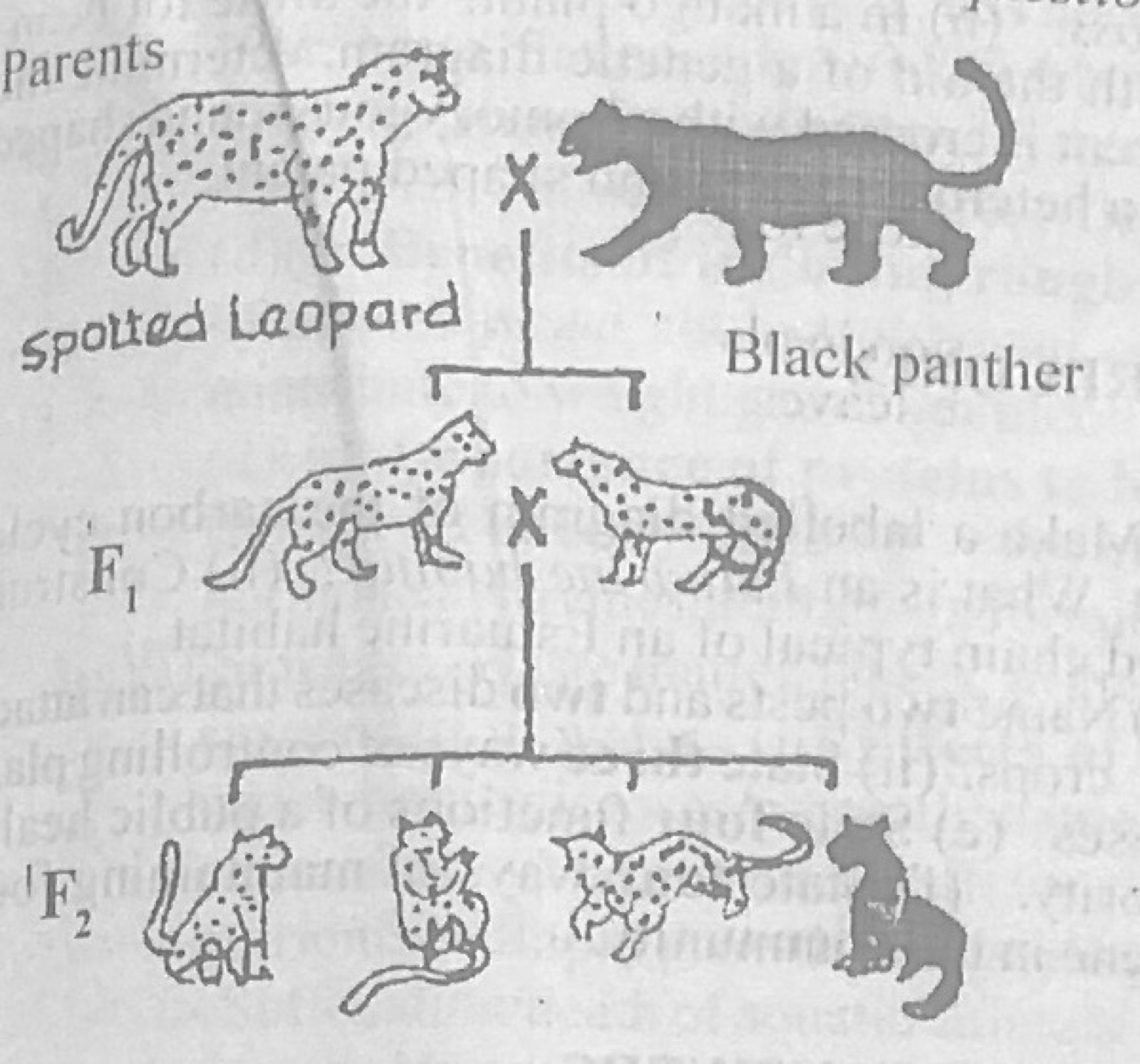
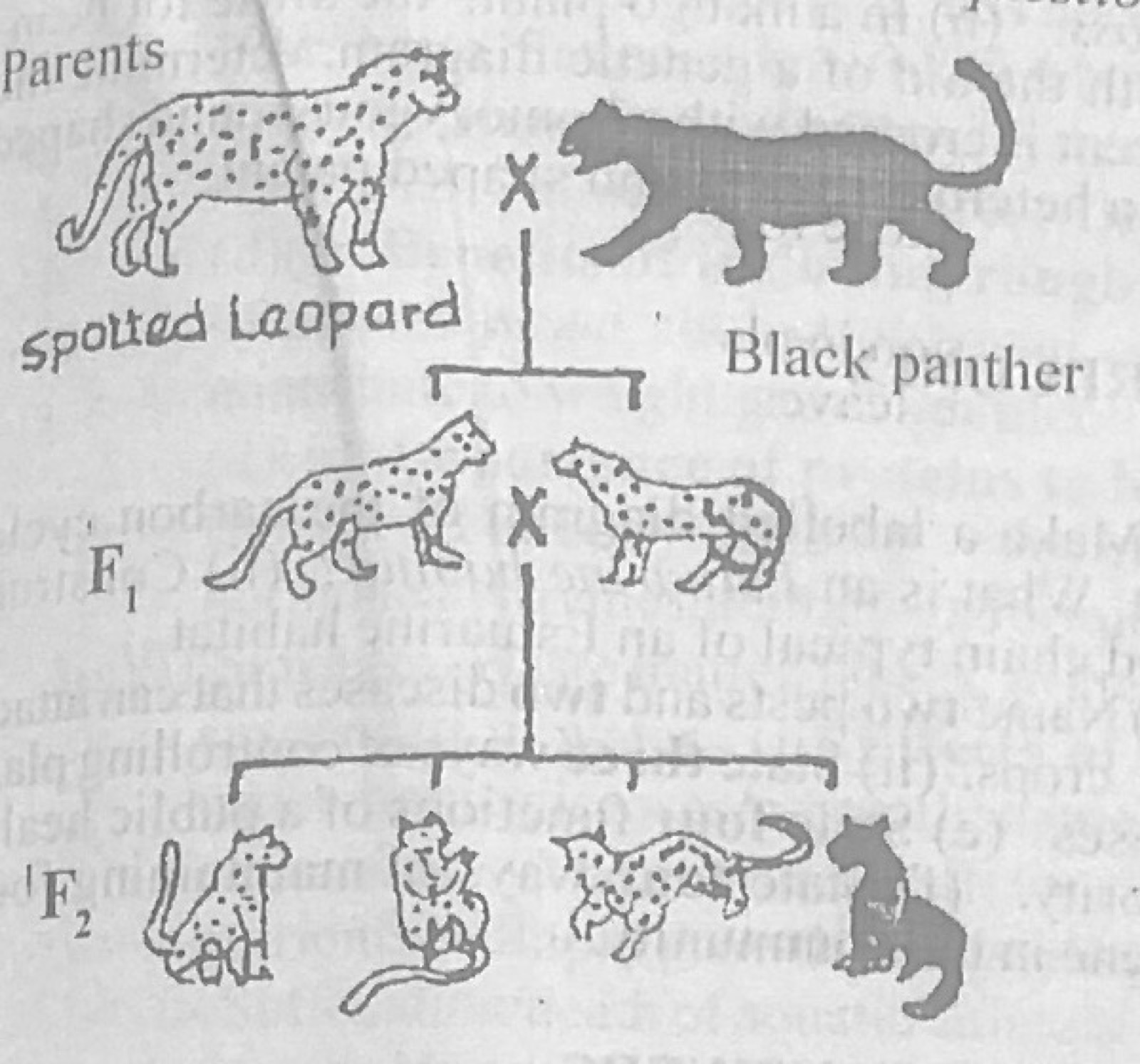
According to Mendel's first law of inheritance, segregation of genes occur when
A.tall plants are crossbred.
B.short plants are crossbred.
C.tall plants and short plants are crossbred.
D.plants are crossbred.
Show the answer and explanation
Answer: C (tall plants and short plants are crossbred.)
Explanation
Mendel's first law came from crossing pure tall with pure short pea plants: the pair of factors for height separate (segregate) into different gametes, so short plants reappear in the F2.
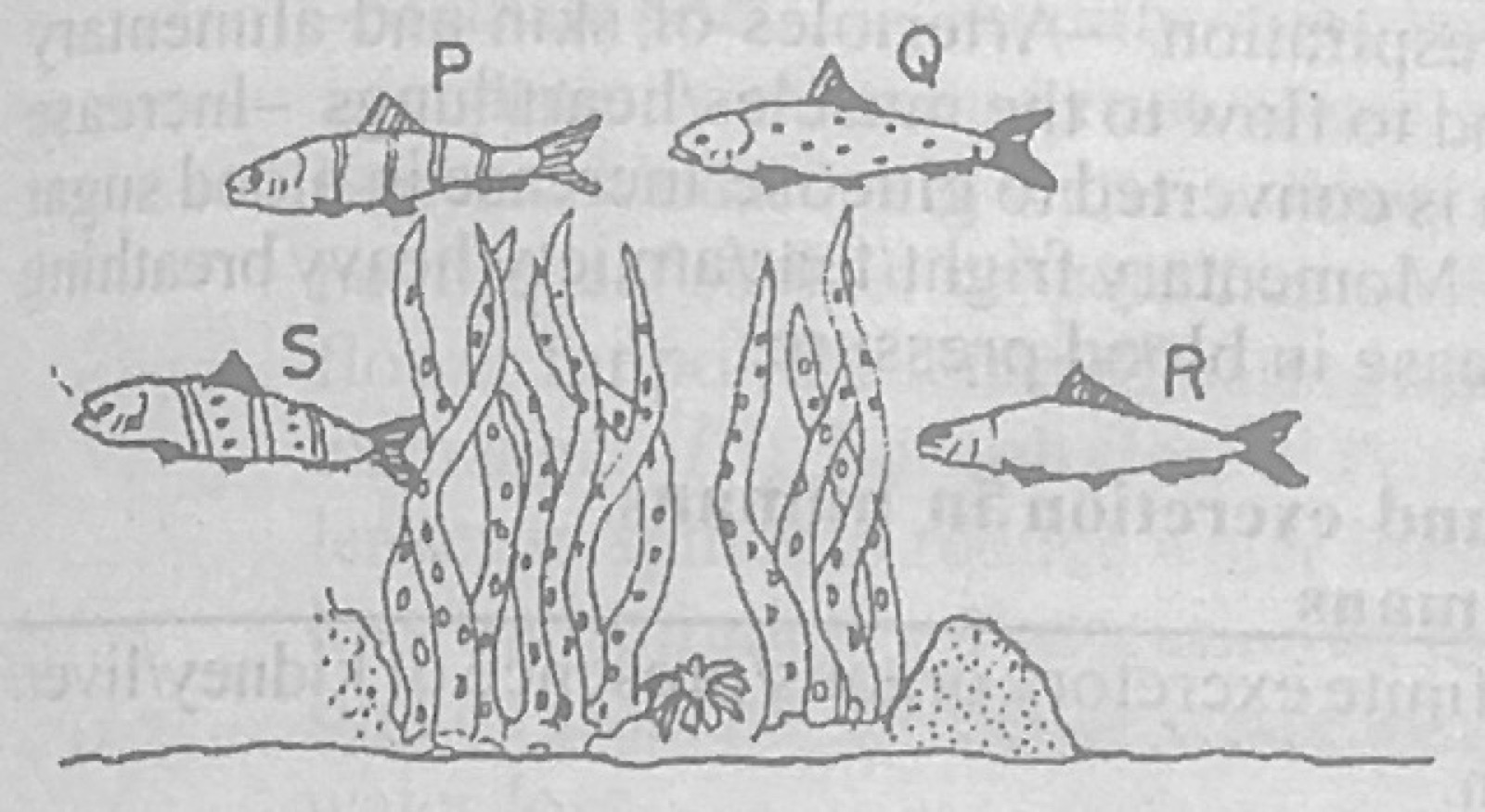
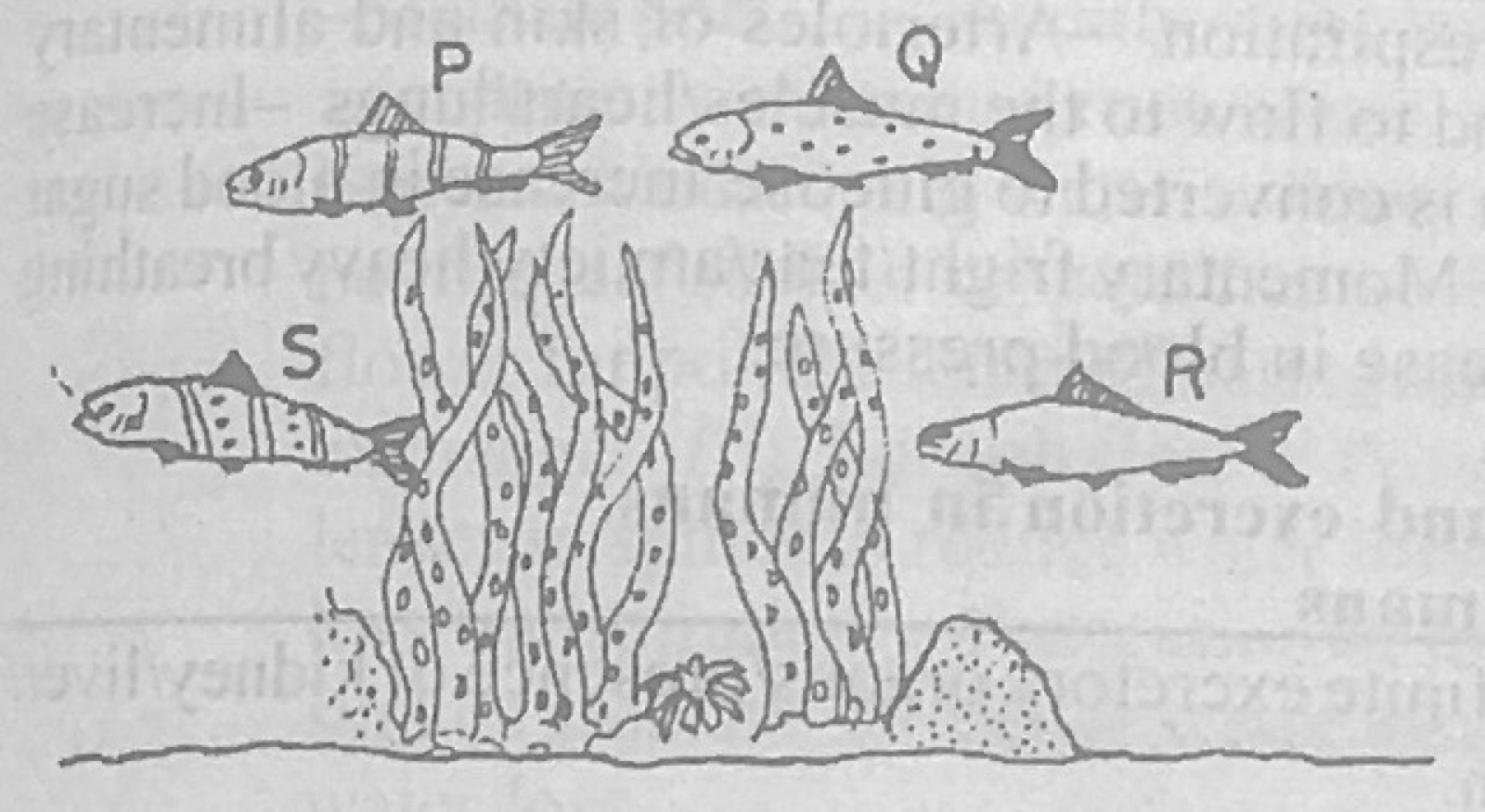
In explaining the term camouflage to a class, the diagram below showing four varieties, P, Q, R and S of the same species of fish living amongst water plants in a river was used. Which of the varieties is most likely to outlive the others?
A.P
B.Q
C.R
D.S.
Show the answer and explanation
Answer: B (Q)
Explanation
Q is covered in spots like the spotted water plants, so it blends in (camouflage) and predators find it hardest to see.
In explaining the term camouflage to a class, the diagram below showing four varieties, P, Q, R and S of the same species of fish living amongst water plants in a river was used. The variety selected in question 49 will outlive the others because the
A.variety is the most beautiful.
B.variety does not have markings.
C.markings of the variety are similar to those of the environment.
D.predator does not like eating the variety.
Show the answer and explanation
Answer: C (markings of the variety are similar to those of the environment.)
Explanation
Camouflage works because the animal's markings match its surroundings, so predators fail to notice it.
(a) Explain briefly sexual reproduction in Rhizopus. (b) A student suddenly stepped on a big snake, he cried for help and ran away. (i) Name the hormone produced in the body for the reaction. (ii) In which part of the human body is the hormone named in 1(a)(i) produced? (iii) State five changes that must have taken place as a result of the hormone named in 1(a)(i). (c)(i) In a tabular form, state three differences between excretion in flowering plants and excretion in humans. (ii) List two organelles found in a plant cell that are responsible for the excretion of metabolic wastes.
Show the model answer
Model answer
(a) Sexual reproduction is by conjugation between hyphae of two different mating strains (+ and −). The two hyphae touch and each grows a short side branch (progametangium) towards the other. A cross wall cuts off a gametangium at each tip, leaving a suspensor behind. The walls between the gametangia dissolve and their nuclei fuse to form a zygote. The zygote forms a thick, dark, resistant wall: the zygospore, which can survive bad conditions. In favourable (damp) conditions the zygospore germinates into a hypha bearing a sporangium. (b)(i) Adrenaline. (ii) Adrenal glands (adrenal medulla), above the kidneys. (iii) Any five: faster heartbeat; faster, deeper breathing; rise in blood pressure; liver changes glycogen to glucose, so blood sugar rises; more blood sent to skeletal muscles and less to skin and gut; pupils dilate; hair stands on end; muscles become tense; faster release of energy in respiration. (c)(i) Any three, in a table: plants have no special excretory organs / humans have kidneys, skin, lungs and liver; plants make small amounts of waste / humans make large amounts; plants excrete slowly / humans excrete fast; plants store many wastes (tannins, resins, gums, alkaloids) in their tissues / humans remove wastes from the body; plants reuse some products (CO2, O2, water) / humans cannot reuse urea; plant wastes include resins, gums, latex, tannins / human wastes include urea, sweat, salts. (ii) Any two: vacuole; mitochondrion; chloroplast.
Explanation
For (c)(i) set out a two-column table and keep each row on the same point of comparison.
(a) Explain how the leaf of a flowering plant is adapted for photosynthesis. (b) Describe briefly the mode of feeding in tapeworms. (c) Name one mineral element each needed for the proper functioning of (i) bones; (ii) red blood cells; (iii) thyroid gland. (d)(i) State three benefits of including roughage in the diet of humans. (ii) State three reasons why proteins are important to humans.
Show the model answer
Model answer
(a) Broad, flat lamina gives a large surface to trap light. Thin lamina lets light and gases reach all cells quickly. Palisade cells packed with chloroplasts lie just under the upper epidermis, at right angles to it. Spongy mesophyll has large air spaces for gaseous exchange. Many stomata (controlled by guard cells) let CO2 in and O2 out. Transparent epidermis lets light through. Network of veins: xylem brings water, phloem carries away sugar. Leaf arrangement (mosaic) reduces shading. (b) The tapeworm is a parasite in the host's intestine. It has no mouth or gut. It holds on with hooks and suckers on the scolex and absorbs already digested food through its whole body surface; its body is protected from the host's enzymes by a thick cuticle and anti-enzymes. (c)(i) Calcium (or phosphorus). (ii) Iron. (iii) Iodine. (d)(i) Any three: adds bulk to food; helps peristalsis; prevents constipation; helps remove waste; may reduce risk of bowel disease. (ii) Any three: growth; repair of worn-out tissues; making enzymes and hormones; making antibodies; source of energy when carbohydrate and fat run short; forming haemoglobin.
Explanation
Link each leaf feature to the job it does in photosynthesis.
(a)(i) What is sewage? (ii) State five effects of releasing untreated sewage into a stagnant water body. (b) Explain surface terracing as a soil conservation method. (c) Explain the term adoption. (d) Explain two ways each by which the following organisms adapt to their habitats: (i) hydrophytes; (ii) xerophytes.
Show the model answer
Model answer
(a)(i) Sewage is liquid and solid waste (faeces, urine, waste water) from homes, industries and farms carried in drains and sewers. (ii) Any five: oxygen in the water is used up by decomposing bacteria; fish and other aquatic animals die; bad smell; water becomes dirty and unfit to drink; spreads water-borne diseases such as cholera and typhoid; nutrients cause algal bloom (eutrophication); breeding of mosquitoes and other pests; toxic chemicals poison organisms. (b) Surface terracing: a slope is cut into a series of flat steps (terraces) across the slope. Water flows slowly from step to step instead of rushing down, so less soil is washed away and more water soaks in. (c) Adaptation (printed 'adoption'): a feature of structure, function or behaviour that helps an organism survive and reproduce in its habitat. (d)(i) Hydrophytes, any two: large air spaces (aerenchyma) for buoyancy and gas storage; thin or no cuticle; stomata on the upper surface of floating leaves; finely divided submerged leaves resist currents; poorly developed roots and xylem. (ii) Xerophytes, any two: thick waxy cuticle reduces water loss; sunken stomata or few stomata; leaves reduced to spines or rolled; deep or wide-spreading roots to find water; water-storage tissue in fleshy stems or leaves.
Explanation
For (d), give the feature and say how it helps the plant.
(a) Explain the following terms: (i) test cross; (ii) monohybrid cross. (b) In a mango plant, the allele for bean shaped seed is r and is recessive to round-shaped seed R. With the aid of a genetic diagram, determine the genotypes of the offspring if: (i) a homozygous bean-shaped parent is crossed with a homozygous round shaped parent; (ii) a heterozygous bean-shaped parent is crossed with a heterozygous round shaped parent.
Show the model answer
Model answer
(a)(i) A test cross is a cross between an organism showing the dominant trait (unknown genotype) and a homozygous recessive organism, to find out whether the first is homozygous or heterozygous. (ii) A monohybrid cross is a cross between parents that differ in one pair of contrasting characters (one gene), e.g. round × bean-shaped seed. (b)(i) Parents: rr × RR; gametes: r, r and R, R; offspring: Rr, Rr, Rr, Rr. All offspring are Rr (heterozygous, round-seeded). (ii) Bean-shaped is recessive, so a bean-shaped parent can only be rr; a heterozygous parent (Rr) is round. Treated as Rr × Rr: gametes R, r and R, r; offspring RR, Rr, Rr, rr, i.e. genotypes 1 RR : 2 Rr : 1 rr (3 round : 1 bean-shaped). (If treated as rr × Rr: offspring 1 Rr : 1 rr.) Each diagram must show parents, gametes, fusion (lines or a Punnett square) and offspring genotypes.
Explanation
Always show parent genotypes, gametes and offspring in a genetic diagram.
(a) Copy and complete the table below. Disease | oneeffect | oneremedy Kidney stone | | Nephritis | | Diuresis | | (b) Make a labelled diagram of the carbon cycle. (c)(i) What is an Estuarine habitat? (ii) Construct a food chain typical of an Estuarine habitat. (d)(i) Name two pests and two diseases that can attack plant crops. (ii) State three ways of controlling plant diseases. (e) State four functions of a public health authority. (f) State four ways of maintaining food hygiene in the community.
Show the model answer
Model answer
(a) Kidney stone – effect: severe pain in the back/abdomen, blocked urine flow or blood in urine; remedy: drink plenty of water, drugs to dissolve the stone, or surgery/laser removal. Nephritis – effect: kidneys fail to filter properly, protein/blood in urine, swelling (oedema), high blood pressure; remedy: antibiotics, low-salt and low-protein diet, dialysis or kidney transplant. Diuresis – effect: passing large amounts of urine, leading to dehydration and loss of salts; remedy: drink fluids and replace salts, treat the cause (e.g. control diabetes), antidiuretic drugs. (b) Diagram with arrows: CO2 in the air → photosynthesis by green plants → carbon compounds in plants → feeding → animals; respiration of plants and animals → CO2; death → decomposers (decay, respiration) → CO2; fossil fuels → burning (combustion) → CO2. Title and labels needed. (c)(i) An estuary is where a river meets the sea; the water is brackish (salinity changes with the tide) and the bottom is muddy. (ii) e.g. Phytoplankton → shrimps → tilapia/mudskipper → kingfisher (any correct chain of three or more estuarine organisms). (d)(i) Pests, any two: locusts, aphids, weevils, stem borers, rodents, birds, nematodes. Diseases, any two: maize rust, cassava mosaic, rice blast, cocoa black pod, groundnut rosette, maize smut. (ii) Any three: use resistant varieties; spray fungicides or other chemicals; crop rotation; remove and burn infected plants; plant clean, disease-free seeds; control insect vectors; good spacing and weeding. (e) Any four: provide safe water; proper disposal of refuse and sewage; inspect food, markets and abattoirs; vaccination and immunisation; control of disease vectors; health education; quarantine and isolation of infectious cases; inspect houses and premises. (f) Any four: wash hands before handling food; cover food from flies and dust; cook food well; wash fruits and vegetables; store food in clean containers or refrigerate; keep kitchens and utensils clean; food handlers should be medically checked; dispose of waste properly.
Explanation
Section C (candidates in Nigeria only). Keep each table answer short: one effect and one remedy per disease.