WAEC Biology 2014 past questions and answers

53 questions. Try each one, then open the answer to check yourself and read the explanation.

Question 1

Excretion

The excretory product in protozoans is

  1. A.amino acid.
  2. B.uric acid.
  3. C.ammonia.
  4. D.urea.
Show the answer and explanation

Answer: C (ammonia.)

Explanation

Protozoans live in water and get rid of nitrogen as ammonia, which diffuses out easily and is diluted by the water.

Open this question

Question 2

Characteristics and Classification of Living Things

Which of the following is a living organism?

  1. A.Muscle
  2. B.Nucleus
  3. C.Yeast
  4. D.Mitochondrion.
Show the answer and explanation

Answer: C (Yeast)

Explanation

Yeast is a complete single-celled fungus that can live on its own; the others are only parts of organisms.

Open this question

Question 3

Viruses, Monera, Protista and Fungi

Which of the following organisms is the most specialized?

  1. A.Paramecium
  2. B.Amoeba
  3. C.Spirogyra
  4. D.Rhizopus.
Show the answer and explanation

Answer: D (Rhizopus.)

Explanation

Rhizopus has different parts for different jobs: rhizoids for anchorage and feeding, stolons for spreading and sporangia for making spores.

Open this question

Question 4

Cell and Its Environment

Active transport can be defined as the movement of

  1. A.substances from a region of high concentration to a region of low concentration.
  2. B.substances from a region of low concentration to a region of high concentration across a living cell membrane.
  3. C.substances across a living cell membrane using energy from the cell.
  4. D.movement of molecules in a medium.
Show the answer and explanation

Answer: B (substances from a region of low concentration to a region of high concentration across a living cell membrane.)

Explanation

Active transport moves substances against the concentration gradient (low to high) across a living membrane, which needs energy from respiration.

Open this question

Question 5

Cell Structure and Organisation

Which of the following cell inclusions can destroy other cell organelles?

  1. A.Centriole
  2. B.Ribosome
  3. C.Lysosome
  4. D.Mitochondrion.
Show the answer and explanation

Answer: C (Lysosome)

Explanation

Lysosomes contain digestive enzymes that break down worn-out organelles.

Open this question

Question 6

Cell and Its Environment

In which of the following yam tissues will osmosis occur?

  1. A.Boiled and peeled
  2. B.Raw and peeled
  3. C.Boiled and unpeeled
  4. D.Roasted and peeled.
Show the answer and explanation

Answer: B (Raw and peeled)

Explanation

Osmosis needs living cells with working membranes; boiling or roasting kills the cells.

Open this question

Question 7

Characteristics and Classification of Living Things

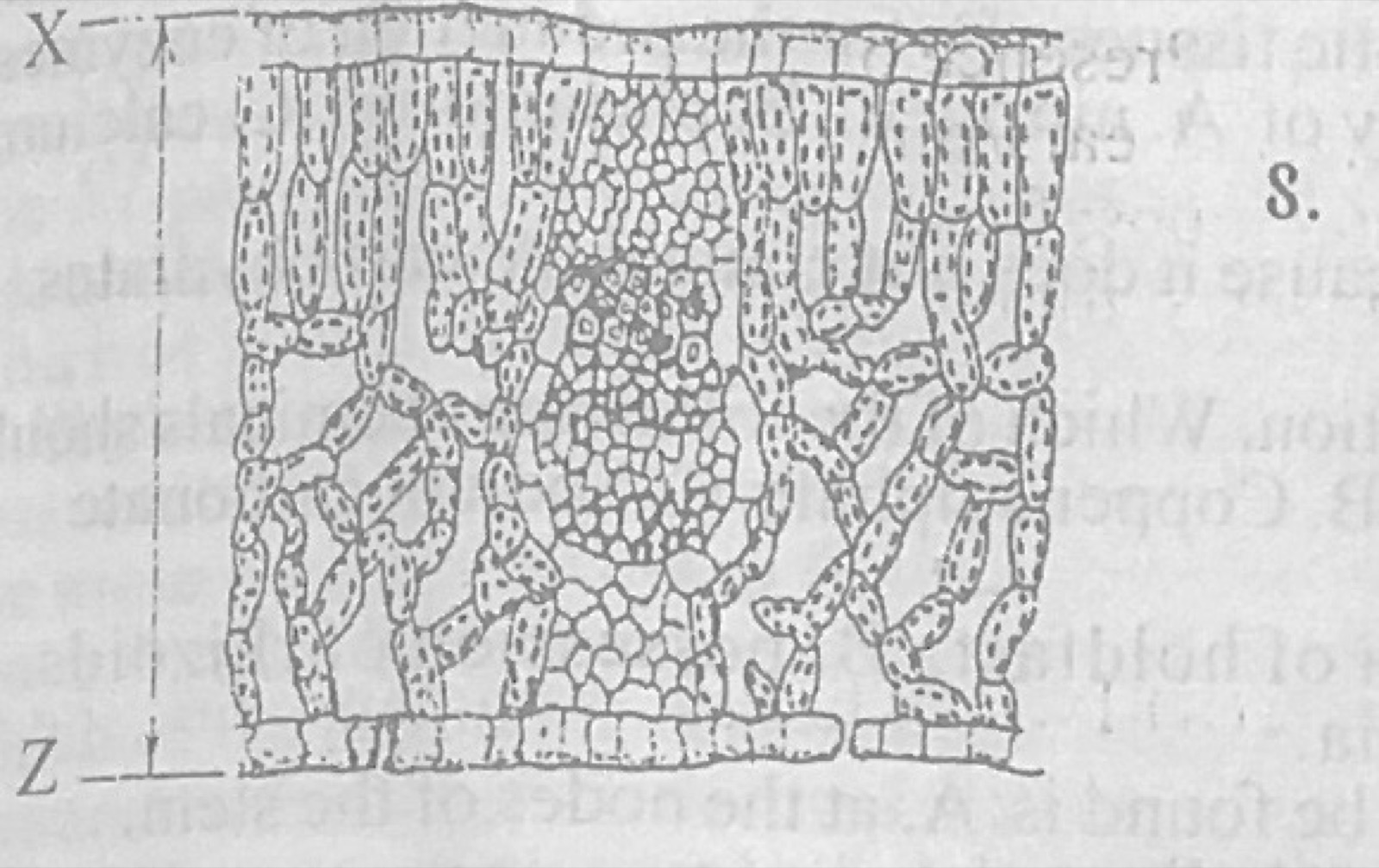
The line XZ in the diagram represents an actual distance of 10.0 cm and the length of the diagram is 5.0 cm. What is the magnification of the diagram?

Diagram for this question
  1. A.x 0.2
  2. B.x 0.5
  3. C.x 2.0
  4. D.x 50.0.
Show the answer and explanation

Answer: B (x 0.5)

Explanation

Magnification = length of drawing ÷ actual length = 5.0 cm ÷ 10.0 cm = ×0.5.

Open this question

Question 8

Cell Division

The following events occur during mitosis in a cell:
I. Chromatids separate;
II. Chromosomes become visible;
III. Chromosomes align at the equator;
IV. Cytoplasm divides (Cytokinesis).
The correct sequence of the events is

  1. A.III, II, IV, I.
  2. B.II, III, I, IV.
  3. C.II, I, III, IV.
  4. D.II, IV, I, III.
Show the answer and explanation

Answer: B (II, III, I, IV.)

Explanation

Prophase (chromosomes appear), metaphase (line up at the equator), anaphase (chromatids separate), then cytokinesis.

Open this question

Question 9

Reproduction in Plants

Which of the following statements about asexual reproduction is correct? It

  1. A.always involves one parent but the offspring is genetically different from the parent.
  2. B.may involve two parents but the offspring is always identical to one parent.
  3. C.always involves one parent and the offspring is genetically identical to the parent.
  4. D.involves two parents but the offspring is not genetically identical to any of the parents.
Show the answer and explanation

Answer: C (always involves one parent and the offspring is genetically identical to the parent.)

Explanation

Asexual reproduction needs only one parent and, being by mitosis, gives offspring identical to it.

Open this question

Question 10

Support and Movement

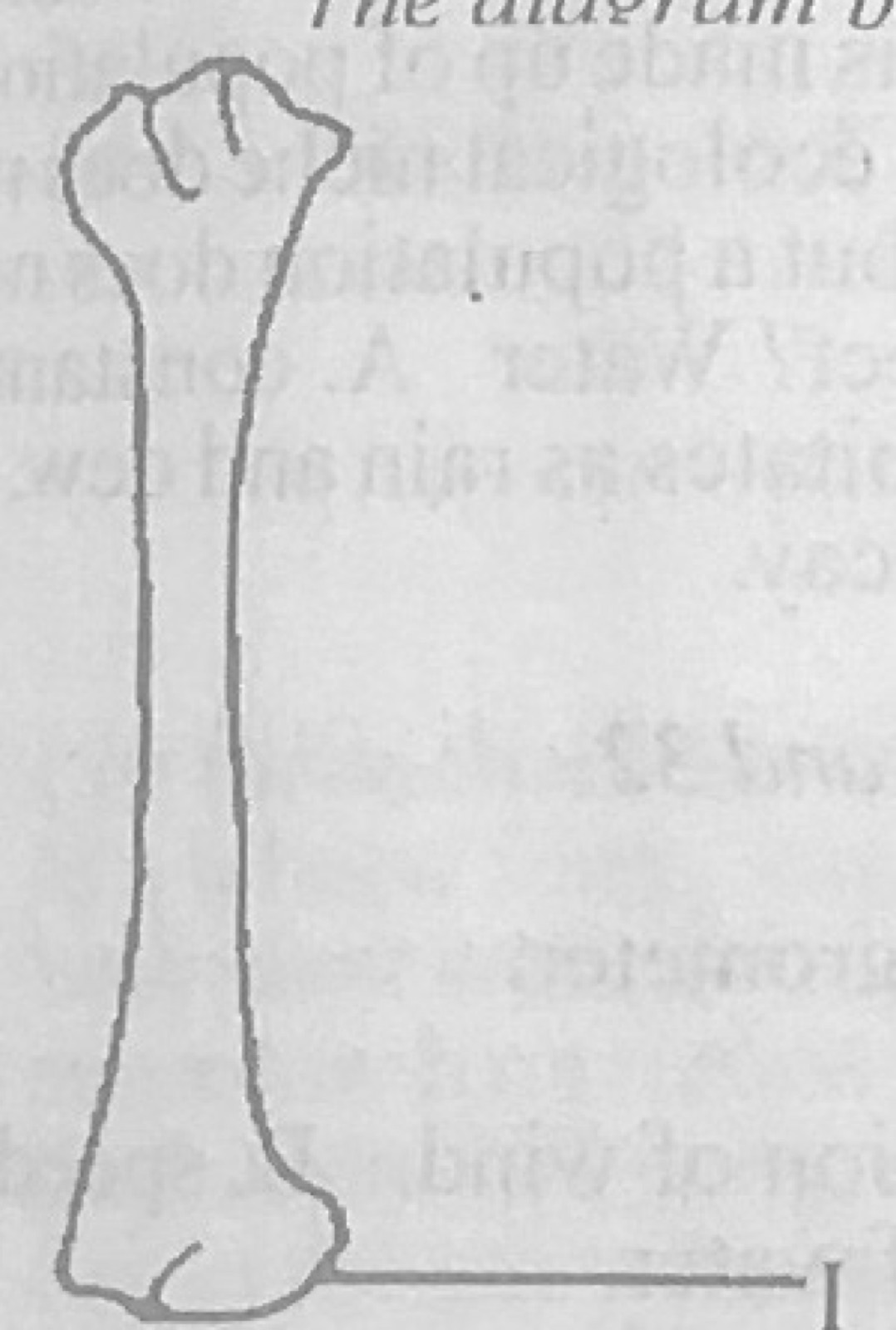
The diagram is an illustration of a mammalian bone.
The bone illustrated is the

Diagram for this question
  1. A.femur.
  2. B.humerus.
  3. C.radius.
  4. D.ulna.
Show the answer and explanation

Answer: A (femur.)

Explanation

The book identifies this long limb bone, with a rounded head at one end and condyles at the other, as the femur (thigh bone).

Open this question

Question 11

Support and Movement

The diagram is an illustration of a mammalian bone.
The function of the part labelled I is to

Diagram for this question
  1. A.fit into the glenoid cavity of the scapula.
  2. B.fit into the acetabulum of the pelvic girdle.
  3. C.support the lower arm.
  4. D.prevent the arm from bending backwards.
Show the answer and explanation

Answer: B (fit into the acetabulum of the pelvic girdle.)

Explanation

I is the rounded head of the femur, which fits into the acetabulum (socket) of the pelvic girdle to form the hip ball-and-socket joint.

Open this question

Question 12

Homeostasis

Which of the following processes is not a function of the mammalian skin?

  1. A.Regulation of body temperature
  2. B.Reception of external stimuli
  3. C.Excretion
  4. D.Gaseous exchange.
Show the answer and explanation

Answer: D (Gaseous exchange.)

Explanation

Mammalian skin is too thick and dry for gaseous exchange; that happens in the lungs. It does control temperature, sense stimuli and excrete sweat.

Open this question

Question 13

Nervous Coordination

The legs of an accident victim with a fractured vertebral column and injured spinal cord could not be raised because

  1. A.impulses from receptors in the legs cannot travel to the brain.
  2. B.impulses from the brain cannot travel to the legs.
  3. C.chemical substances will be released at synapses in the central nervous system.
  4. D.reflex actions cannot take place in the legs.
Show the answer and explanation

Answer: B (impulses from the brain cannot travel to the legs.)

Explanation

To move the legs, impulses must go from the brain down the spinal cord to the leg muscles; a break in the cord stops them, so the legs are paralysed.

Open this question

Question 14

Reproduction in Plants

Which of the following conditions in flowering plants enhance self-pollination?

  1. A.Cleistogamy
  2. B.Heterostyly
  3. C.Protandry
  4. D.Protogyny.
Show the answer and explanation

Answer: A (Cleistogamy)

Explanation

In cleistogamy the flower never opens, so it can only pollinate itself; the other conditions favour cross-pollination.

Open this question

Question 15

Nervous Coordination

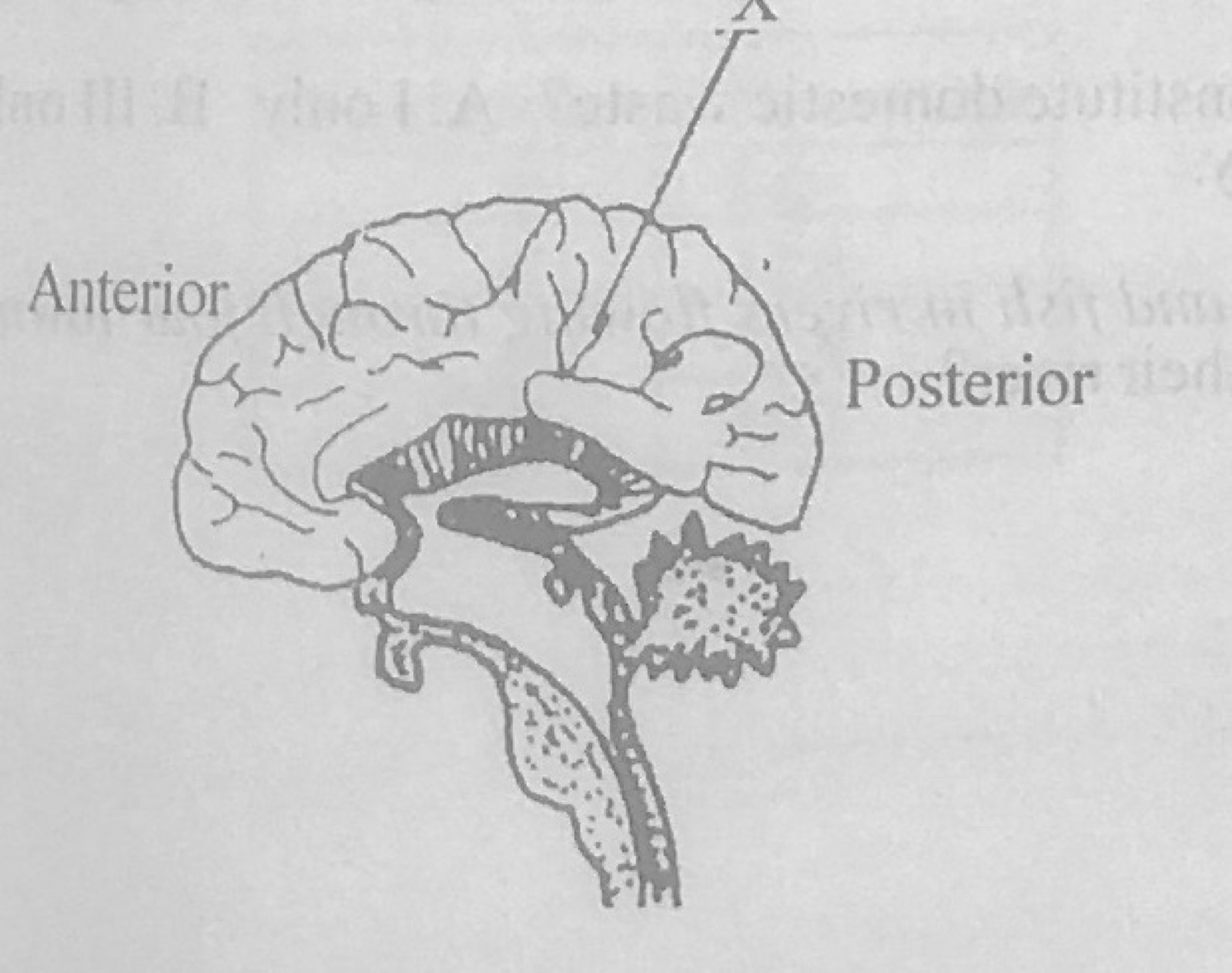
The diagram is an illustration of the left side of the human cerebrum.
The part labelled X controls

Diagram for this question
  1. A.general memory.
  2. B.speech.
  3. C.sight.
  4. D.respiratory functions.
Show the answer and explanation

Answer: A (general memory.)

Explanation

X points to the upper part of the cerebral hemisphere, the area the book links with memory and intelligence; sight is at the back and breathing is controlled by the medulla.

Open this question

Question 16

Sense Organs

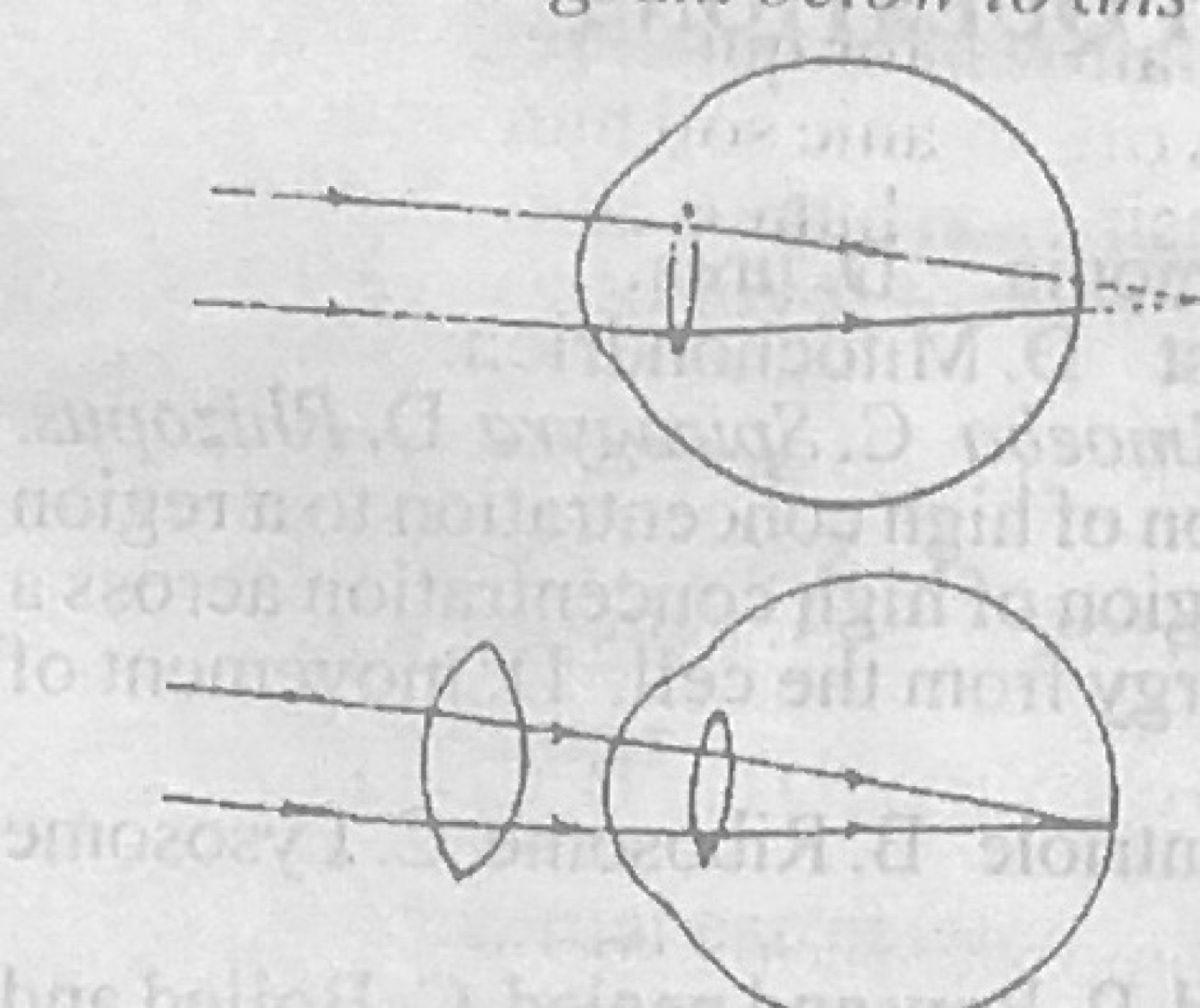
The diagram is an illustration of

Diagram for this question
  1. A.normal sight.
  2. B.short sightedness.
  3. C.correction of long sightedness.
  4. D.correction of short sightedness.
Show the answer and explanation

Answer: C (correction of long sightedness.)

Explanation

The upper eye focuses light behind the retina (long sight); the lower one shows a convex lens in front of the eye bringing the focus onto the retina.

Open this question

Question 17

Sense Organs

The inability to maintain proper balance of the body in humans may be due to a defect in the

  1. A.cochlea.
  2. B.Eustachian tube.
  3. C.semi-circular canals.
  4. D.oval window.
Show the answer and explanation

Answer: C (semi-circular canals.)

Explanation

The semicircular canals in the inner ear detect movement of the head and help keep balance.

Open this question

Question 19

Reproduction in Plants

An inferior ovary of a flower is situated

  1. A.below the floral parts.
  2. B.above the floral parts.
  3. C.at the same level with all the floral parts.
  4. D.at the centre of the floral parts.
Show the answer and explanation

Answer: A (below the floral parts.)

Explanation

An inferior ovary lies below the point where the sepals, petals and stamens are attached.

Open this question

Question 20

Transport in Plants

Older parts of plant roots do not normally absorb water because

  1. A.they lack xylem.
  2. B.they have small surface area.
  3. C.the phloem is dead.
  4. D.they lack root hairs.
Show the answer and explanation

Answer: D (they lack root hairs.)

Explanation

Water is absorbed mainly through root hairs near the tip; older parts have no root hairs and are covered with cork.

Open this question

Question 21

Growth and Development

The amount of starch in a germinating seed decreases because the starch is used up

  1. A.for respiration and building up of cells.
  2. B.to build cellulose cell wall.
  3. C.to develop meristematic tissues.
  4. D.for the production of enzymes.
Show the answer and explanation

Answer: A (for respiration and building up of cells.)

Explanation

Stored starch is turned to sugar, which is respired for energy and used to make new cells for the growing seedling.

Open this question

Question 22

Soil

The purpose of treating poor soil with lime is to increase the quantity of

  1. A.nitrogen.
  2. B.phosphorus.
  3. C.calcium.
  4. D.sulphur.
Show the answer and explanation

Answer: C (calcium.)

Explanation

Lime is calcium carbonate or calcium oxide; it adds calcium and reduces soil acidity.

Open this question

Question 23

Food Substances and Enzymes

A meal consisting of yam and a lot of vegetables is not balanced because it does not contain

  1. A.carbohydrates.
  2. B.proteins.
  3. C.vitamins.
  4. D.minerals.
Show the answer and explanation

Answer: B (proteins.)

Explanation

Yam supplies carbohydrate and vegetables supply vitamins and minerals, but there is no good source of protein.

Open this question

Question 25

Photosynthesis and Plant Nutrition

A characteristic feature of plant parasites is the

  1. A.possession of holdfast.
  2. B.possession of rhizoids.
  3. C.development of hanging roots.
  4. D.development of haustoria.
Show the answer and explanation

Answer: D (development of haustoria.)

Explanation

Haustoria are special suckers that parasitic plants push into the host's vascular tissue to absorb food and water.

Open this question

Question 26

Nutrient Cycling

The part of a leguminous plant where bacteria like Azotobacter can be found is

  1. A.at the nodes of the stem.
  2. B.at the internodes.
  3. C.in the root nodules.
  4. D.in the spongy mesophyll.
Show the answer and explanation

Answer: C (in the root nodules.)

Explanation

Nitrogen-fixing bacteria associated with legumes live in the root nodules (strictly, the nodule bacterium is Rhizobium; Azotobacter lives free in the soil).

Open this question

Question 27

Adaptation

The following adaptations are associated with the flight of birds except

  1. A.reduced body weight.
  2. B.streamlined shape.
  3. C.presence of powerful muscles.
  4. D.clawed digits.
Show the answer and explanation

Answer: D (clawed digits.)

Explanation

Light hollow bones, a streamlined body and strong flight muscles help flight; claws are for perching and grasping.

Open this question

Question 28

Habitats and Biomes

The following habitats can be found in West Africa except

  1. A.mangrove swamp.
  2. B.sahel savanna.
  3. C.savanna grassland.
  4. D.temperate grassland.
Show the answer and explanation

Answer: D (temperate grassland.)

Explanation

Temperate grasslands occur in cool regions such as North America and Asia, not in tropical West Africa.

Open this question

Question 29

Population Ecology

The difference between a community and population is

  1. A.a community is made up of organisms of the same species while a population is made up of organisms of different species.
  2. B.a community is made up of populations of living organisms while a population is made up of organisms of the same species.
  3. C.an ecological niche does not exist in the community but it does in a population.
  4. D.a community attracts competition but a population does not.
Show the answer and explanation

Answer: B (a community is made up of populations of living organisms while a population is made up of organisms of the same species.)

Explanation

A population is one species in an area; a community is all the populations of different species living there together.

Open this question

Question 30

Nutrient Cycling

Which of the following statements about the circulation of water in nature is not correct? Water

  1. A.constantly evaporates from seas, rivers, lakes and soil.
  2. B.vapour rises, cools, condenses and precipitates as rain and dew.
  3. C.removed from oceans is permanently lost.
  4. D.is lost in plants by transpiration and decay.
Show the answer and explanation

Answer: C (removed from oceans is permanently lost.)

Explanation

Water evaporated from oceans returns as rain; in the water cycle nothing is permanently lost.

Open this question

Question 31

Ecosystem and Ecological Factors

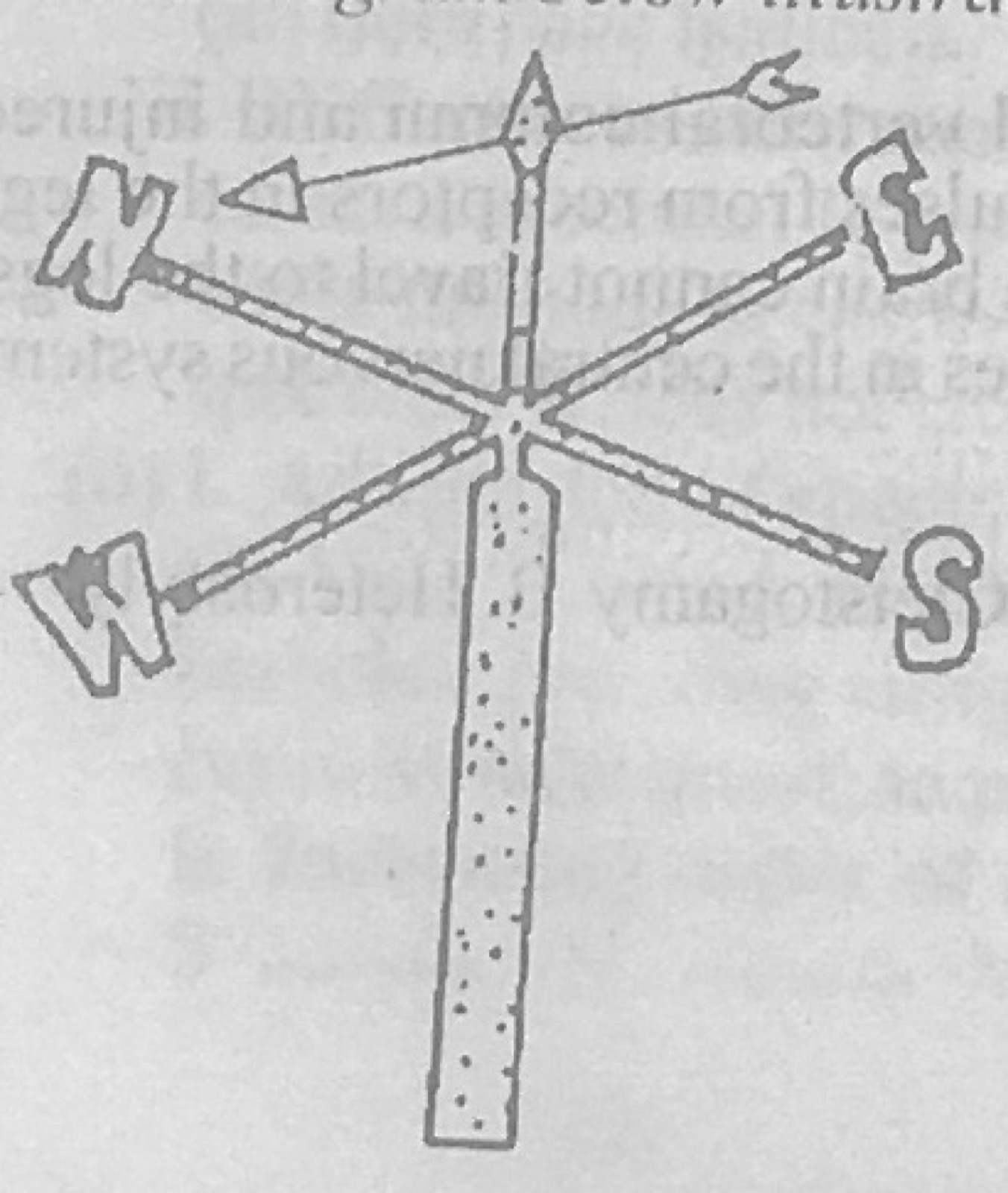
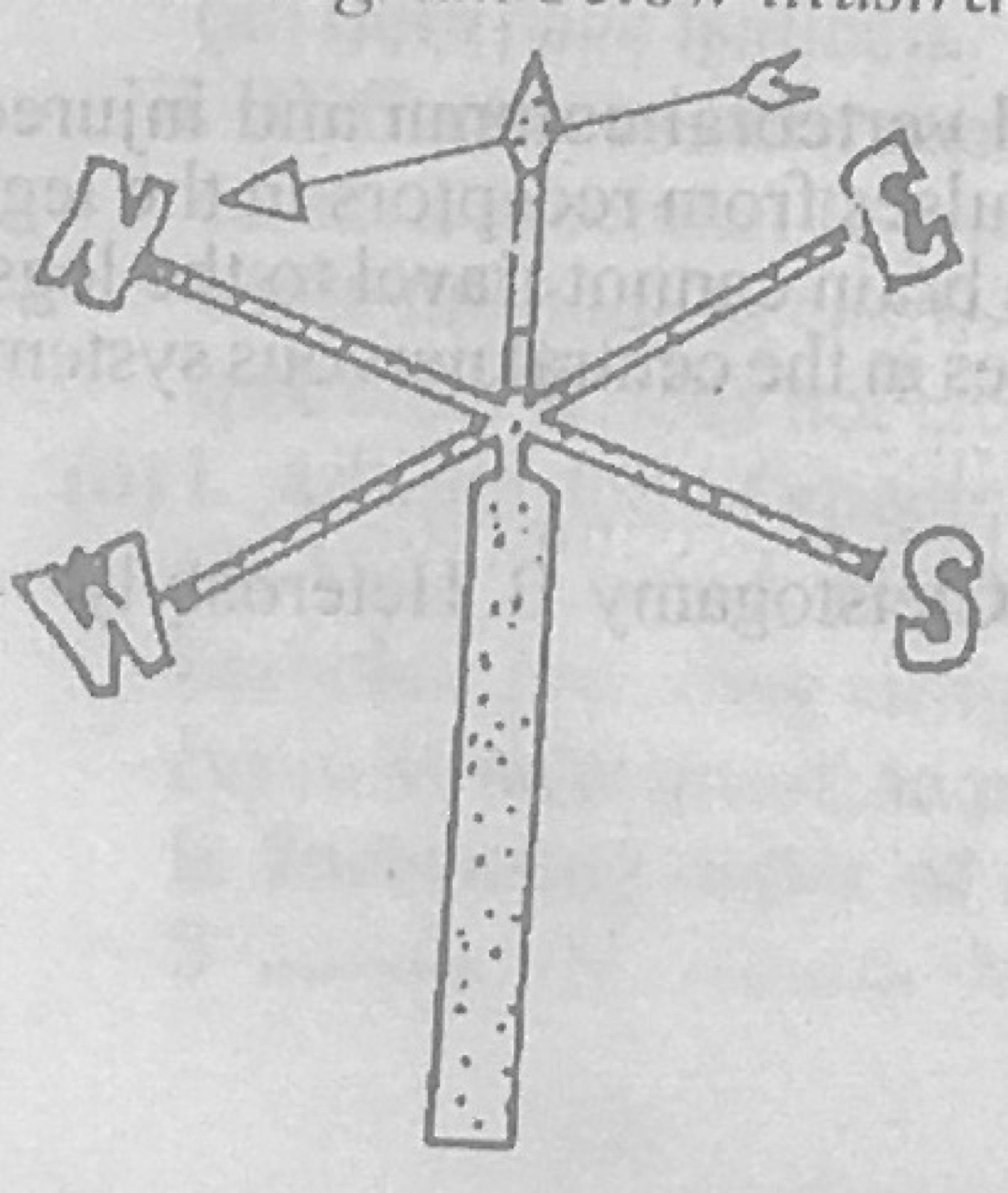
The diagram illustrates an ecological instrument.
The instrument is

Diagram for this question
  1. A.an anemometer.
  2. B.a hygrometer.
  3. C.a barometer.
  4. D.a wind vane.
Show the answer and explanation

Answer: D (a wind vane.)

Explanation

An arrow that turns on a pole above fixed N, S, E and W arms is a wind vane.

Open this question

Question 32

Ecosystem and Ecological Factors

The diagram illustrates an ecological instrument.
The instrument is used to measure the

Diagram for this question
  1. A.direction of wind.
  2. B.speed of wind.
  3. C.air pressure in a habitat.
  4. D.turbidity of water.
Show the answer and explanation

Answer: A (direction of wind.)

Explanation

A wind vane shows the direction the wind is blowing from; wind speed needs an anemometer.

Open this question

Question 33

Feeding Relationships and Energy Flow

The following organisms are consumers except

  1. A.earthworm.
  2. B.Spirogyra.
  3. C.bacteria.
  4. D.Rhizopus.
Show the answer and explanation

Answer: B (Spirogyra.)

Explanation

Spirogyra is a green alga that photosynthesises, so it is a producer.

Open this question

Question 34

Pollution

Use the substances listed below to answer this question.
I. Fertilizer II. Insecticides III. Sewage IV. Crude oil V. Sulphur dioxide.
The atmosphere can be polluted by

  1. A.I only
  2. B.III only
  3. C.IV only
  4. D.II and V only.
Show the answer and explanation

Answer: D (II and V only.)

Explanation

Insecticide sprays and sulphur dioxide (from burning fuels) are released into the air; the others mainly pollute land and water.

Open this question

Question 35

Pollution

Use the substances listed below to answer this question.
I. Fertilizer II. Insecticides III. Sewage IV. Crude oil V. Sulphur dioxide.
Which of the substances constitute domestic waste?

  1. A.I only
  2. B.III only
  3. C.IV only
  4. D.II and V only.
Show the answer and explanation

Answer: B (III only)

Explanation

Sewage comes from homes (toilets, kitchens, bathrooms), so it is domestic waste.

Open this question

Question 36

Pollution

The table below shows the oxygen level, number of green plants and fish in rivers flowing through four towns.
Town A: oxygen level high, green plants few, fish many.
Town B: oxygen level low, green plants many, fish many.
Town C: oxygen level high, green plants few, fish few.
Town D: oxygen level low, green plants many, fish few.
Which of the towns is likely to be discharging untreated sewage in their river?

  1. A.A.
  2. B.B.
  3. C.C.
  4. D.D.
Show the answer and explanation

Answer: D (D.)

Explanation

Sewage adds nutrients, so plants grow a lot; bacteria decomposing the sewage use up oxygen, so fish die. Low oxygen, many plants and few fish fit town D.

Open this question

Question 37

Conservation of Natural Resources

Which of the following natural resources is non-renewable?

  1. A.Water
  2. B.Coal
  3. C.Forest
  4. D.Air.
Show the answer and explanation

Answer: B (Coal)

Explanation

Coal took millions of years to form and cannot be replaced once used.

Open this question

Question 38

Conservation of Natural Resources

Which of the following statements is not a reason for banning bush burning? It

  1. A.allows for quick regrowth of grasses.
  2. B.kills soil microorganisms.
  3. C.leaves the soil bare of vegetation.
  4. D.burns off organic soil nutrients.
Show the answer and explanation

Answer: A (allows for quick regrowth of grasses.)

Explanation

Quick regrowth of grass is a supposed benefit of burning, not a reason to ban it; the other options are harms.

Open this question

Question 39

Soil

Which of the statements below explains why fertilizers are added to soils?

  1. A.Increasing the humus content of the soil
  2. B.Improving the water-retaining property of the soil
  3. C.Increasing the nutrient level of the soil
  4. D.Preventing soil erosion.
Show the answer and explanation

Answer: C (Increasing the nutrient level of the soil)

Explanation

Fertilizers add mineral nutrients such as nitrogen, phosphorus and potassium that crops need.

Open this question

Question 40

Variation

Characteristics that exhibit continuous variation are generally controlled by

  1. A.a single gene.
  2. B.recessive genes.
  3. C.epistatic interactions.
  4. D.multiple genes.
Show the answer and explanation

Answer: D (multiple genes.)

Explanation

Continuous traits like height are controlled by many genes (polygenes) acting together.

Open this question

Question 41

Variation

Differences in characteristics that exist among individuals of the same species is referred to as

  1. A.genetics.
  2. B.dominance.
  3. C.hybrid.
  4. D.variation.
Show the answer and explanation

Answer: D (variation.)

Explanation

Variation means the differences between members of the same species.

Open this question

Question 42

Variation

Which of the following traits is not a morphological variation in humans?

  1. A.Ability to taste PTC
  2. B.Colour
  3. C.Fingerprints
  4. D.Size.
Show the answer and explanation

Answer: A (Ability to taste PTC)

Explanation

Morphological variations are differences in outward form, such as size, colour and fingerprints. Being able to taste PTC depends on body chemistry, so it is physiological.

Open this question

Question 43

Chromosomes, DNA and Sex Linkage

Which of the following statements about chromosomes is correct?

  1. A.All the chromosomes of a species are the same in shape
  2. B.The number present in a species is constant
  3. C.They are neatly arranged in the cytoplasm
  4. D.They bear ribosomes on their outer membranes.
Show the answer and explanation

Answer: B (The number present in a species is constant)

Explanation

Each species has a fixed chromosome number (e.g. 46 in human body cells); chromosomes differ in shape and are in the nucleus.

Open this question

Question 44

Reproduction in Plants

A small stem from a hibiscus plant was placed in a nutrient medium, and it developed into a new plant. The new plant was reproduced

  1. A.asexually with a different genotype from the parent plant.
  2. B.sexually with a different genotype from the parent plant.
  3. C.asexually with the same genotype as the parent plant.
  4. D.sexually with the same genotype as the parent plant.
Show the answer and explanation

Answer: C (asexually with the same genotype as the parent plant.)

Explanation

Growing a plant from a stem piece is vegetative (asexual) propagation, so the new plant is genetically identical to the parent.

Open this question

Question 45

Mendelian Inheritance

The F1 generation of a cross between a red cock and white hen were all red because the gene for the

  1. A.white colour did not segregate.
  2. B.red colour was dominant.
  3. C.white colour was dominant.
  4. D.red colour was recessive.
Show the answer and explanation

Answer: B (red colour was dominant.)

Explanation

When all F1 offspring show one parent's trait, that trait is dominant.

Open this question

Question 46

Mendelian Inheritance

Which of the following diseases can be inherited?

  1. A.Pneumonia
  2. B.AIDS
  3. C.Sickle cell anaemia
  4. D.Goitre.
Show the answer and explanation

Answer: C (Sickle cell anaemia)

Explanation

Sickle cell anaemia is caused by an inherited gene; the others are caused by germs or diet.

Open this question

Question 47

Mendelian Inheritance

In dihybrid inheritance, Mendel considered

  1. A.a pair of contrasting characters.
  2. B.two pairs of contrasting characters.
  3. C.three pairs of contrasting characters.
  4. D.four pairs of contrasting characters.
Show the answer and explanation

Answer: B (two pairs of contrasting characters.)

Explanation

'Di' means two: a dihybrid cross follows two pairs of contrasting characters at once, e.g. seed shape and seed colour.

Open this question

Question 48

Behaviour

The main reason for nuptial flight in termites is to

  1. A.escape unfavourable conditions.
  2. B.search for food.
  3. C.form new colonies.
  4. D.communicate with one another.
Show the answer and explanation

Answer: C (form new colonies.)

Explanation

Winged reproductive termites fly out, mate, shed their wings and start new colonies.

Open this question

Question 49

Behaviour

Which of the following organisms is not a social insect?

  1. A.Termites
  2. B.Ants
  3. C.Grasshoppers
  4. D.Bees.
Show the answer and explanation

Answer: C (Grasshoppers)

Explanation

Termites, ants and bees live in organised colonies with castes; grasshoppers live alone.

Open this question

Question 50

Evolution

Lamarck's theory of evolution is based on the fact that

  1. A.organisms acquire genes from their parents.
  2. B.organisms pass on acquired characters to their offspring.
  3. C.characteristics of organisms are determined by the creator.
  4. D.characteristics of organisms are the sum of their parents' characters.
Show the answer and explanation

Answer: B (organisms pass on acquired characters to their offspring.)

Explanation

Lamarck said that features gained during an organism's life through use or disuse are passed on to its offspring.

Open this question

Theory question 101

Characteristics and Classification of Living Things

(a)(i) List three characteristics of living organisms. (ii) Explain briefly the characteristics listed in 1(a)(i) above.
(b) In a tabular form, state four differences between plants and animals.
(c)(i) Name one organism that exhibits both plant and animal features. (ii) State four animal features and two plant features possessed by the organism named in 1(c)(i) above.

Show the model answer
Model answer

(a)(i) Any three: nutrition; respiration; excretion; growth; reproduction; irritability (sensitivity); movement.
(ii) Each explained, e.g. Nutrition — obtaining or making food for energy and growth; Respiration — breaking down food to release energy; Excretion — removing waste products of metabolism; Growth — permanent increase in size/dry mass; Reproduction — producing new individuals of the same kind; Irritability — responding to changes (stimuli) in the environment; Movement — changing position of the body or its parts.
(b) Table (any four) — Plants: autotrophic (make food by photosynthesis) / Animals: heterotrophic; have chlorophyll / no chlorophyll; cellulose cell wall / no cell wall; usually fixed, move only parts / move whole body; growth at tips, indefinite / growth all over, definite; store starch / store glycogen; no special sense or excretory organs / have them; respond slowly / respond quickly.
(c)(i) Euglena (or Chlamydomonas).
(ii) Animal features (Euglena): moves with a flagellum; has a gullet; has a pellicle and no cellulose wall; has a contractile vacuole; has an eyespot; can feed heterotrophically in the dark. Plant features: has chloroplasts/chlorophyll; makes food by photosynthesis; stores paramylon (starch-like).

Explanation

In (b) set each plant feature against the matching animal feature.

Open this question

Theory question 102

Animal Nutrition

(a) Define the following terms: (i) elimination; (ii) excretion; (iii) secretion.
(b) Describe the digestion of boiled fish in the gut of humans.
(c) Make a diagram 8 cm – 10 cm long of a longitudinal section of a villus and label fully.

Show the model answer
Model answer

(a)(i) Elimination (egestion): removal of undigested food (faeces) from the alimentary canal through the anus.
(ii) Excretion: removal of waste products of metabolism (e.g. urea, CO2) from the body.
(iii) Secretion: release of useful substances (e.g. enzymes, hormones, mucus) made by cells or glands.
(b) Fish is mainly protein (and some fat). Mouth: chewed and moistened with saliva (no protein digestion). Stomach: HCl kills germs and gives acid pH; pepsin breaks proteins into polypeptides/peptones. Duodenum: bile emulsifies fats; pancreatic trypsin breaks proteins/polypeptides into peptides; lipase breaks fats into fatty acids and glycerol. Ileum: erepsin (peptidase) breaks peptides into amino acids; intestinal lipase completes fat digestion. Amino acids are absorbed into blood capillaries of the villi; fatty acids and glycerol into the lacteals.
(c) Diagram of correct size with title, labels: epithelium (single layer of cells); microvilli; blood capillaries; arteriole and venule; lacteal (lymph vessel); goblet cells; connective tissue.

Explanation

Follow the protein from mouth to ileum, naming the enzyme and product at each stage.

Open this question

Theory question 103

Ecosystem and Ecological Factors

(a) Explain briefly the following ecological terms: (i) biosphere; (ii) habitat.
(b) Describe the mode of nutrition in a named carnivorous plant.
(c) State three reasons why the dispersal of fruits and seeds are important.
(d) State six methods of conserving soil.

Show the model answer
Model answer

(a)(i) Biosphere: the zone of the earth (land, water and lower atmosphere) where living things are found.
(ii) Habitat: the particular place where an organism or a population lives, e.g. a pond or forest floor.
(b) e.g. Sundew (Drosera) or pitcher plant / bladderwort: it grows in nitrogen-poor soil; it makes carbohydrates by photosynthesis; insects are attracted by colour, scent or nectar; they are trapped (sticky glandular hairs fold over them in sundew; slippery walls into a fluid-filled pitcher); glands secrete protein-digesting enzymes; the digested products (amino acids, nitrogen compounds) are absorbed to supply nitrogen.
(c) Any three: prevents overcrowding of seedlings; reduces competition for light, water and nutrients with the parent and each other; allows colonisation of new areas; increases survival of the species; reduces spread of disease.
(d) Any six: crop rotation; cover cropping; mulching; contour ploughing/terracing; planting windbreaks/afforestation; avoiding bush burning; avoiding overgrazing; adding manure/fertilisers; strip cropping; bush fallowing.

Explanation

In (b) name the plant and say why it traps insects (to get nitrogen).

Open this question

Theory question 104

Variation

A survey to determine blood groups was carried out on 250 people living in a community. The results are represented in the table below.
Blood group A: 8.0%; Blood group B: 14.0%; Blood group AB: 32.8%; Blood group O: 45.2%.
(a)(i) Explain the term co-dominance. (ii) Calculate the number of individuals with co-dominant blood group.
(iii) What is the total number of individuals in the table that are able to donate blood to an accident victim with blood group B?
(b) A man whose blood group is heterozygous A is married to a woman whose blood group is AB. With the aid of a genetic diagram, suggest the possible blood groups of their children.

Show the model answer
Model answer

(a)(i) Co-dominance is when both alleles in a heterozygote are fully expressed in the phenotype, neither being dominant over the other, e.g. blood group AB.
(ii) Co-dominant group is AB: 32.8/100 × 250 = 82 individuals.
(iii) A group B person can receive from groups B and O: (14.0 + 45.2)/100 × 250 = 59.2% × 250 = 148 individuals.
(b) Man IAIO × woman IAIB; gametes IA, IO and IA, IB; offspring IAIA, IAIB, IAIO, IBIO; blood groups: A (IAIA and IAIO), AB and B, in the ratio 2 A : 1 AB : 1 B.

Explanation

Convert each percentage to a number of people by multiplying by 250 and dividing by 100.

Open this question

Theory question 106

Behaviour

(For candidates in Nigeria only)
(a) State five reasons why animals move from place to place.
(b) State one function each of the following structures found in plants: (i) epidermis; (ii) phloem; (iii) sclerenchyma.
(c) Give two examples each of the following types of organisms: (i) parasitic plants; (ii) saprophytes.
(d) State two adaptive features of plants which inhabit salt water swamp.
(e) State two factors each which result in: (i) increase; (ii) decrease, in population density.
(f) Mention four ways in which modern agricultural activities may threaten the survival of species.
(g) State three reasons why mitosis is important to living organisms.
(h) State three causes of food spoilage.

Show the model answer
Model answer

(a) Any five: search for food; search for water; find mates; escape predators/danger; find shelter; avoid unfavourable conditions (heat, cold, drought); find breeding sites; avoid overcrowding/competition.
(b)(i) Epidermis: protects inner tissues / reduces water loss / gas exchange through stomata. (ii) Phloem: transports manufactured food (translocation). (iii) Sclerenchyma: gives mechanical support and strength.
(c)(i) Dodder (Cuscuta), mistletoe (Loranthus), Striga. (ii) Mushroom, Rhizopus/Mucor (bread mould), bacteria of decay.
(d) Any two: breathing roots (pneumatophores) for air; stilt/prop roots for support in soft mud; salt glands/succulent leaves to deal with salt; viviparous seeds (germinate on the parent); thick cuticle.
(e)(i) Increase: high birth rate (natality); immigration; abundant food; absence of predators/disease. (ii) Decrease: high death rate; emigration; food shortage; predation; disease; natural disasters.
(f) Any four: clearing forests (habitat destruction); use of pesticides and herbicides that kill non-target species; bush burning; monoculture reducing variety; fertiliser run-off polluting water; draining of wetlands; overgrazing.
(g) Any three: growth of the organism; repair and replacement of worn-out or damaged cells; asexual reproduction; keeps the chromosome number constant in body cells (identical daughter cells).
(h) Any three: microorganisms (bacteria, fungi); enzymes within the food; insects and rodents; moisture; warm temperature; exposure to air (oxidation).

Explanation

Many short parts: give exactly the number of points asked for each.
Open this question