WAEC Biology 2013 past questions and answers

63 questions. Try each one, then open the answer to check yourself and read the explanation.

Question 1

Characteristics and Classification of Living Things

In which of the following levels of classification are the members most similar?

  1. A.Order.
  2. B.Genus.
  3. C.Species.
  4. D.Phylum.
Show the answer and explanation

Answer: C (Species.)

Explanation

The lower the level, the more alike the members; species is the lowest of these levels.

Open this question

Question 2

Viruses, Monera, Protista and Fungi

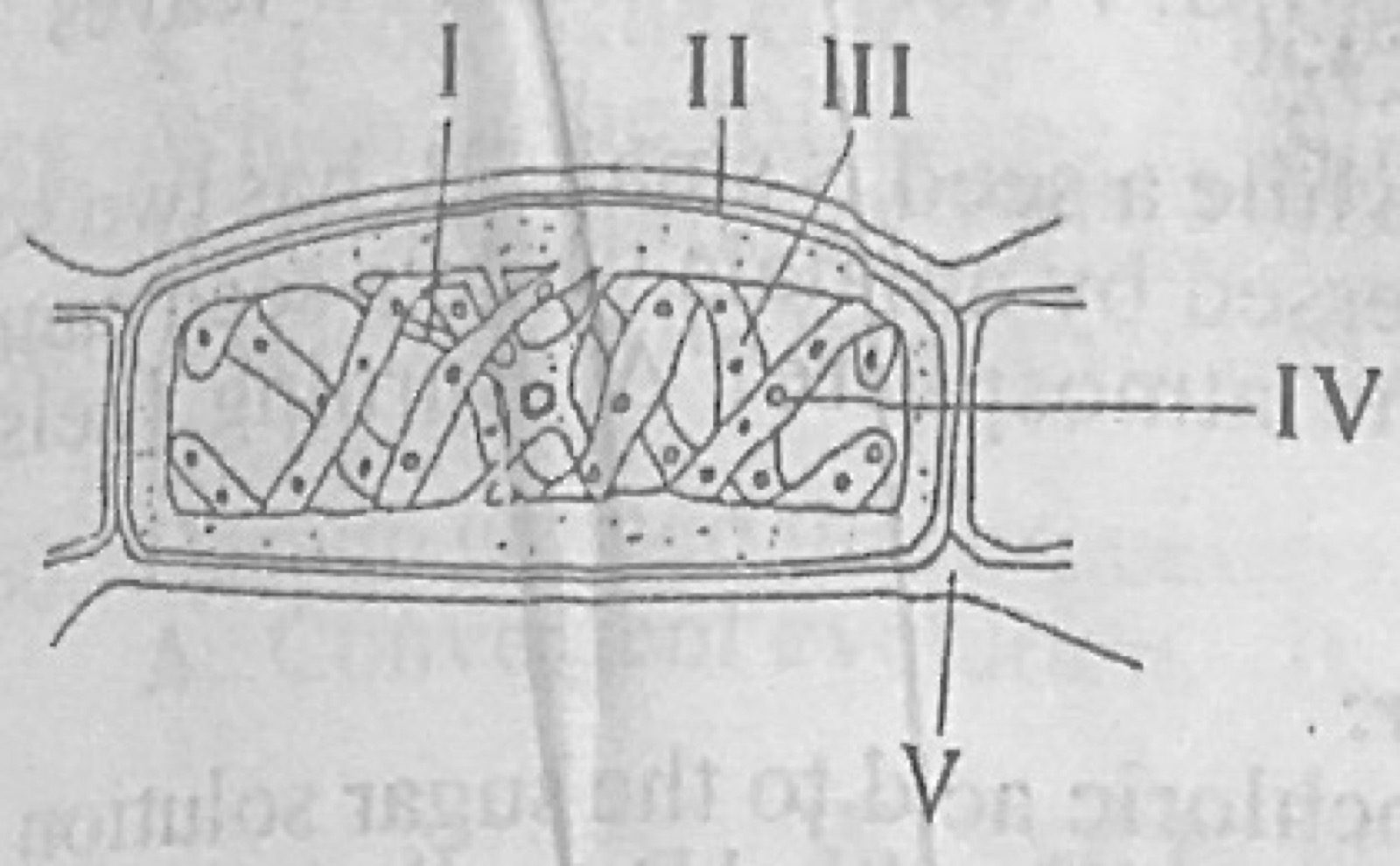
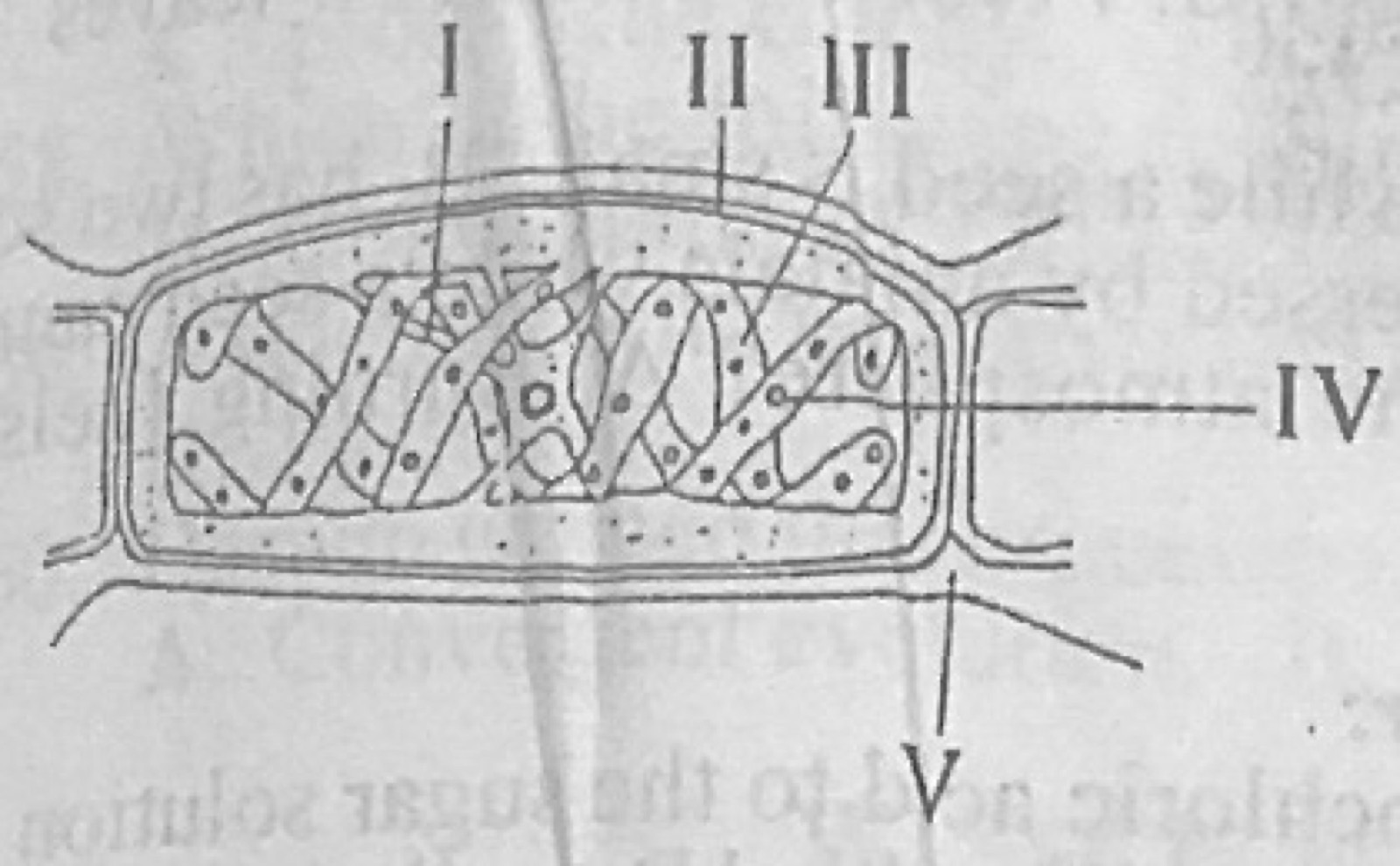
Use the diagram (part of Spirogyra) to answer this question.
The diagram represents a

Diagram for this question
  1. A.cell.
  2. B.filament.
  3. C.colony.
  4. D.part of living organism.
Show the answer and explanation

Answer: B (filament.)

Explanation

Spirogyra cells are joined end to end in a thread called a filament; the diagram shows a cell in the filament with its neighbours.

Open this question

Question 3

Viruses, Monera, Protista and Fungi

Use the diagram (part of Spirogyra) to answer this question.
Pyrenoid is present in the structure labelled

Diagram for this question
  1. A.IV.
  2. B.III.
  3. C.II.
  4. D.I.
Show the answer and explanation

Answer: B (III.)

Explanation

In Spirogyra the pyrenoids are small round bodies that store starch along the spiral, ribbon-shaped chloroplast.

Open this question

Question 4

Viruses, Monera, Protista and Fungi

Spirogyra is regarded as a multicellular plant because

  1. A.the cylindrical cells are linked end to end.
  2. B.its cells are linked together by cytoplasmic strands.
  3. C.its cells are large.
  4. D.it is an algae containing a large vacuole.
Show the answer and explanation

Answer: B (its cells are linked together by cytoplasmic strands.)

Explanation

Its cells are connected to one another, so they work together as one organism rather than as separate single cells.

Open this question

Question 7

Animal Kingdom

An animal which possesses scales, nares and a backbone is likely to be a

  1. A.toad.
  2. B.lizard.
  3. C.rat.
  4. D.bat.
Show the answer and explanation

Answer: B (lizard.)

Explanation

Scales on the skin plus a backbone point to a reptile such as the lizard; toads have bare skin and rats and bats have fur.

Open this question

Question 8

Cell and Its Environment

The opening of the guard cells of the epidermis in plants is by the process of

  1. A.osmosis.
  2. B.diffusion.
  3. C.active transport.
  4. D.transpiration.
Show the answer and explanation

Answer: A (osmosis.)

Explanation

Water enters the guard cells by osmosis, they become turgid and curve apart, opening the stoma.

Open this question

Question 9

Plant Responses and Hormones

What happens to a plant if the shoot tip is cut off and replaced by an agar block containing auxin? It will

  1. A.stop growing.
  2. B.grow rapidly.
  3. C.continue to grow normally.
  4. D.die completely.
Show the answer and explanation

Answer: C (continue to grow normally.)

Explanation

The shoot tip makes auxin, which causes cells below it to elongate. Auxin from the agar block replaces it, so growth continues as normal.

Open this question

Question 10

Respiration

Anaerobic respiration results in the production of

  1. A.more energy than aerobic respiration.
  2. B.no energy.
  3. C.an equal amount of energy to aerobic respiration.
  4. D.less energy than aerobic respiration.
Show the answer and explanation

Answer: D (less energy than aerobic respiration.)

Explanation

Without oxygen glucose is only partly broken down, giving 2 ATP instead of about 38.

Open this question

Question 11

Support and Movement

Which of the following is not a skeletal tissue?

  1. A.Plasma.
  2. B.Chitin.
  3. C.Cartilage.
  4. D.Bone.
Show the answer and explanation

Answer: A (Plasma.)

Explanation

Plasma is the liquid part of blood; chitin, cartilage and bone form skeletons.

Open this question

Question 12

Transport in Animals

Which of the following statements is not correct about the mammalian heart?

  1. A.Oxygenated blood enters the left auricle from the pulmonary vein.
  2. B.The walls of the ventricle are thicker than those of the auricle.
  3. C.Blood passes from the right ventricle to the left auricle through the aorta.
  4. D.The tricuspid valve prevents the back flow of blood into the right auricle.
Show the answer and explanation

Answer: C (Blood passes from the right ventricle to the left auricle through the aorta.)

Explanation

The right ventricle pumps blood to the lungs through the pulmonary artery; the aorta leaves the left ventricle.

Open this question

Question 13

Respiration

Which of the following organs are used for gaseous exchange in a mature toad?

  1. A.Gills, lungs and eardrum.
  2. B.Lungs, mouth and eardrum.
  3. C.Mouth, skin and gills.
  4. D.Skin, lungs and mouth.
Show the answer and explanation

Answer: D (Skin, lungs and mouth.)

Explanation

An adult toad has no gills; it exchanges gases through its moist skin, the lining of its mouth and its lungs.

Open this question

Question 14

Respiration

Which of the following structures is used for respiration in insects?

  1. A.Lungs
  2. B.Thorax
  3. C.Cuticle
  4. D.Spiracles
Show the answer and explanation

Answer: D (Spiracles)

Explanation

Air enters an insect's tracheal system through small openings along its body called spiracles.

Open this question

Question 15

Respiration

Which of the following statements about the diaphragm of a mammal is not correct? It

  1. A.separates the thorax and the abdomen.
  2. B.is a thick layer of muscle.
  3. C.is made of epithelial cells.
  4. D.is part of the human respiratory apparatus.
Show the answer and explanation

Answer: C (is made of epithelial cells.)

Explanation

The diaphragm is a sheet of muscle (with tendon), not epithelium; it separates the thorax from the abdomen and helps breathing.

Open this question

Question 16

Excretion

A substance present in the glomerular filtrate in the mammalian kidney is

  1. A.glucose.
  2. B.fibrinogen.
  3. C.albumen.
  4. D.blood platelets.
Show the answer and explanation

Answer: A (glucose.)

Explanation

Small molecules like glucose pass into the filtrate; large proteins (fibrinogen, albumin) and cells stay in the blood.

Open this question

Question 17

Excretion

In humans, excretion of hypertonic urine is associated with the

  1. A.distal convoluted tubule.
  2. B.loop of Henle.
  3. C.bowman's capsule.
  4. D.proximal convoluted tubule.
Show the answer and explanation

Answer: B (loop of Henle.)

Explanation

The loop of Henle pumps salt into the medulla, making the tissue around the collecting ducts very salty. Water is then drawn out of the urine, so the urine passed is hypertonic.

Open this question

Question 18

Homeostasis

The maintenance of a stable internal environment within the body of a mammal is known as

  1. A.osmosis.
  2. B.plasmolysis.
  3. C.homeostasis.
  4. D.excretion.
Show the answer and explanation

Answer: C (homeostasis.)

Explanation

Homeostasis is keeping conditions inside the body, such as temperature and water content, steady.

Open this question

Question 19

Excretion

Which part of the nephron is associated with ultra-filtration?

  1. A.Distal convoluted tubule.
  2. B.Proximal convoluted tubule.
  3. C.Collecting duct.
  4. D.Bowman's capsule.
Show the answer and explanation

Answer: D (Bowman's capsule.)

Explanation

Blood is filtered under pressure from the glomerulus into the Bowman's capsule.

Open this question

Question 20

Excretion

Which of the following conditions would result in a decrease in the production of antidiuretic hormone?

  1. A.Abnormally high blood sugar level.
  2. B.Drinking large quantities of water.
  3. C.Increase in osmotic pressure of blood.
  4. D.Period of strenuous exercise.
Show the answer and explanation

Answer: B (Drinking large quantities of water.)

Explanation

ADH makes the kidney keep water. After drinking a lot of water the blood is dilute, so ADH output falls and a large volume of dilute urine is passed.

Open this question

Question 21

Reproduction in Plants

Which of the following structures is not essential in a wind pollinated flower?

  1. A.Anther.
  2. B.Ovary.
  3. C.Stigma.
  4. D.Petal.
Show the answer and explanation

Answer: D (Petal.)

Explanation

Petals attract insects; a wind-pollinated flower does not need them and they are often small or absent.

Open this question

Question 22

Reproduction in Plants

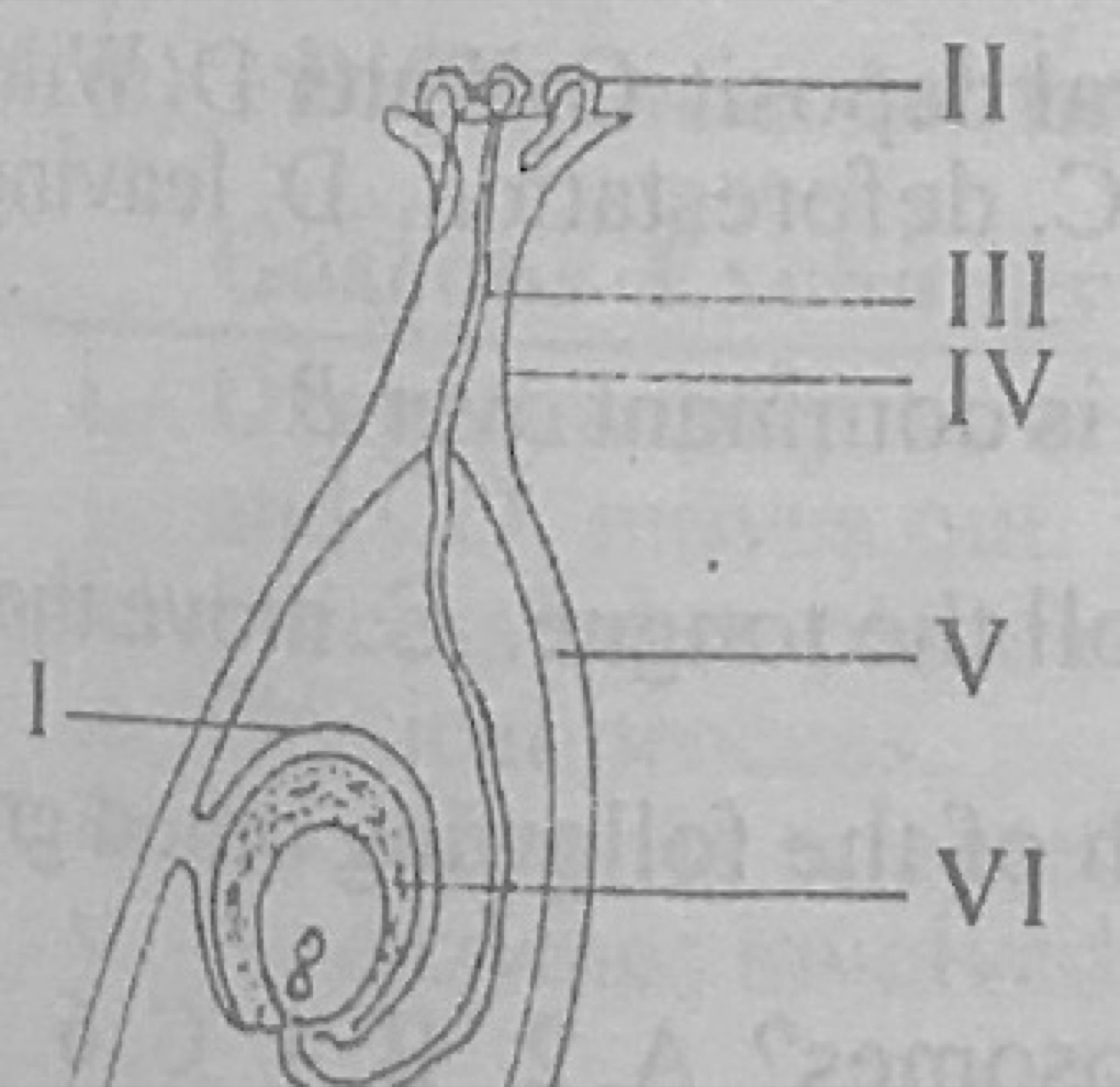
Study the diagram (a pollinated carpel).
Which part of the flower produces the structure labelled III?

Diagram for this question
  1. A.Carpel.
  2. B.Pollen.
  3. C.Stigma.
  4. D.Anther.
Show the answer and explanation

Answer: B (Pollen.)

Explanation

After a pollen grain lands on the stigma, it germinates and grows a pollen tube down through the style to the ovule.

Open this question

Question 23

Reproduction in Plants

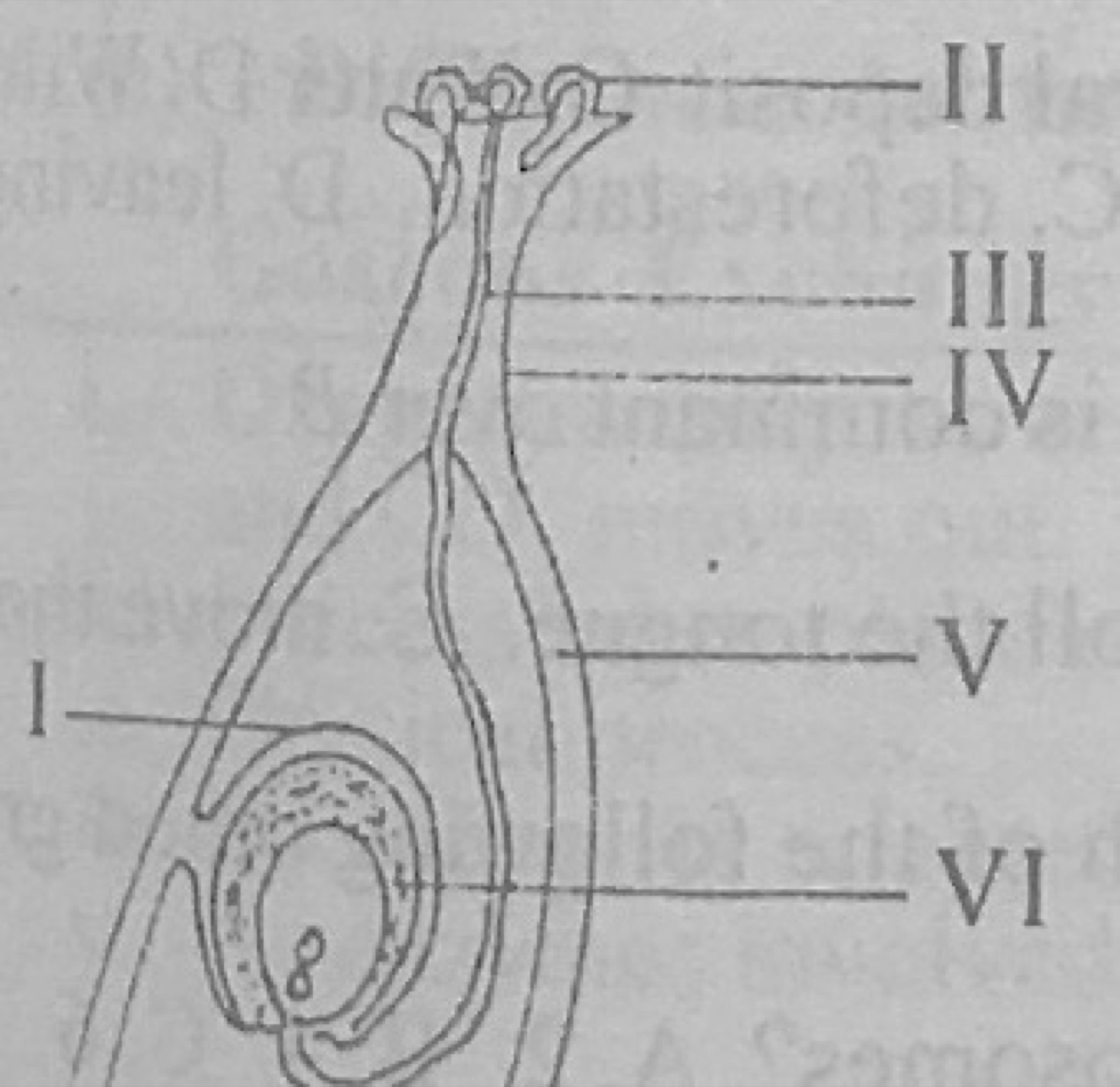
Study the diagram (a pollinated carpel).
The parts labelled III and IV respectively are called

Diagram for this question
  1. A.Pollen tube and style.
  2. B.Pollen grain and pollen tube.
  3. C.Anther and filament.
  4. D.Stigma and style.
Show the answer and explanation

Answer: A (Pollen tube and style.)

Explanation

III is the tube running down the middle (pollen tube) and IV is the stalk tissue around it (style).

Open this question

Question 24

Reproduction in Plants

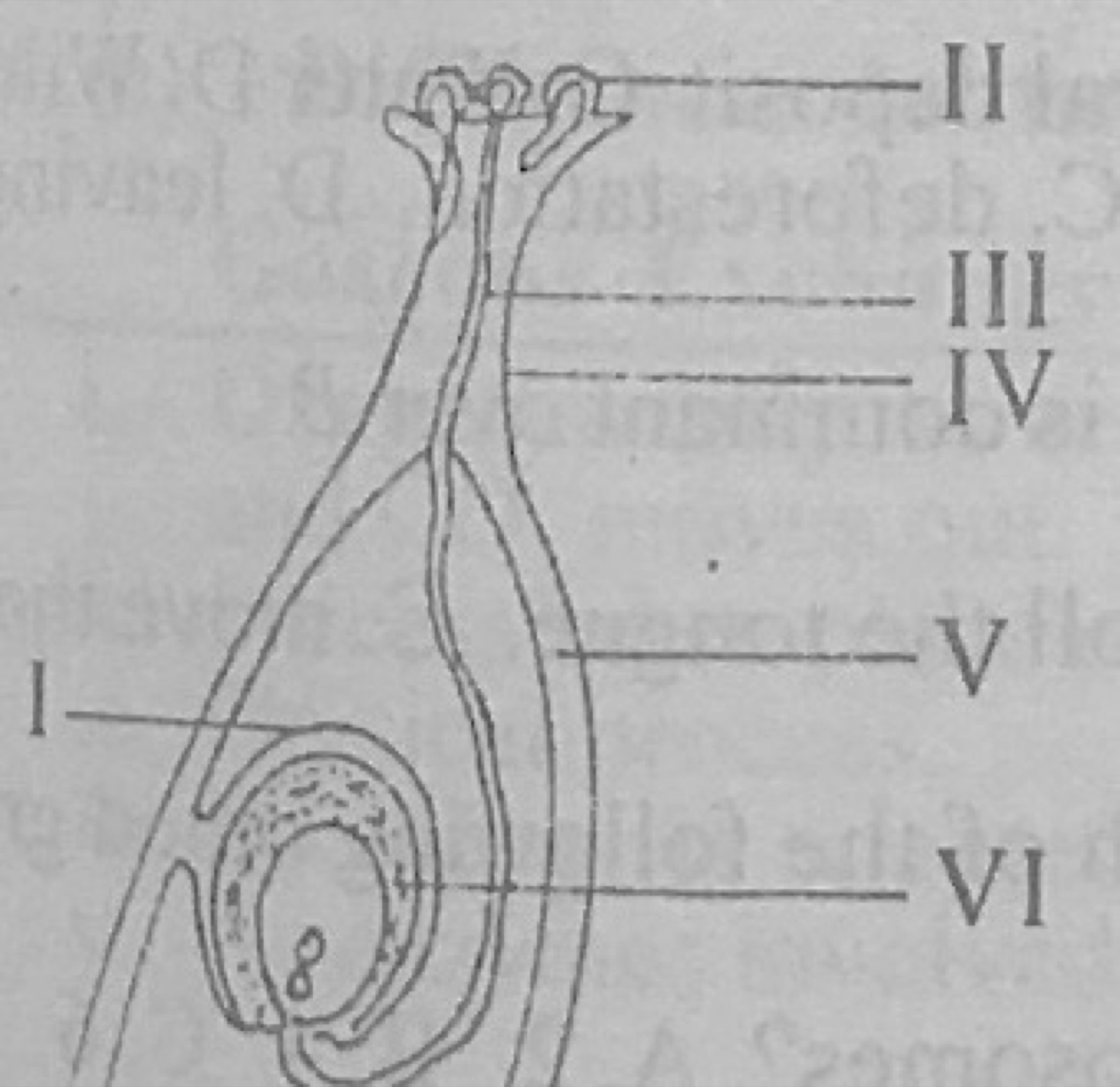
Study the diagram (a pollinated carpel).
Which of the labelled parts would become a component of the seed after fertilization?

Diagram for this question
  1. A.I.
  2. B.II.
  3. C.IV.
  4. D.V.
Show the answer and explanation

Answer: A (I.)

Explanation

I points to the integument around the ovule, which becomes the seed coat (testa); stigma, style and ovary wall do not become part of the seed.

Open this question

Question 25

Characteristics and Classification of Living Things

The resolution of a microscope refers to its power to

  1. A.increase an object's apparent size.
  2. B.distinguish clearly between two objects.
  3. C.scan the surface of an object.
  4. D.focus on an object.
Show the answer and explanation

Answer: B (distinguish clearly between two objects.)

Explanation

Magnification makes things look bigger; resolution decides how much detail you see, i.e. whether two close objects appear separate.

Open this question

Question 26

Photosynthesis and Plant Nutrition

The process by which plants manufacture food from carbon dioxide and water using energy from the sun is called

  1. A.chemosynthesis.
  2. B.Photosynthesis.
  3. C.Anabolism.
  4. D.Catabolism.
Show the answer and explanation

Answer: B (Photosynthesis.)

Explanation

Photosynthesis uses light energy to make glucose from carbon dioxide and water.

Open this question

Question 27

Transport in Plants

Conduction of water and mineral salts through the xylem vessels is enhanced because the xylem cells are

  1. A.thickened with lignin.
  2. B.long, narrow tubes placed end to end.
  3. C.close to the endodermis.
  4. D.centrally placed in the roots.
Show the answer and explanation

Answer: B (long, narrow tubes placed end to end.)

Explanation

Xylem vessels are long, narrow, hollow tubes joined end to end with no cross walls, so water flows up easily.

Open this question

Question 28

Transport in Plants

Which of the following factors is likely to increase the rate of transpiration in plants?

  1. A.A reduction in the number of stomata per unit surface area.
  2. B.Increase in humidity around the leaves of plants.
  3. C.An increase in the surface area to volume ratio.
  4. D.Removal of leaves from plant.
Show the answer and explanation

Answer: C (An increase in the surface area to volume ratio.)

Explanation

A larger exposed surface relative to volume means more surface from which water can evaporate.

Open this question

Question 29

Respiration

The name of the enzyme that catalyses the conversion of glucose to glucose-6-phosphate at the beginning of glycolysis is

  1. A.phospho-fructokinase.
  2. B.glucose isomerase.
  3. C.hexokinase.
  4. D.glucose-6-kinase.
Show the answer and explanation

Answer: C (hexokinase.)

Explanation

Hexokinase adds a phosphate from ATP to glucose, forming glucose-6-phosphate.

Open this question

Question 30

Food Substances and Enzymes

The correct arrangement of food classes of the same quantity in the order of magnitude of energy value to animals in descending order is

  1. A.Carbohydrates, fats and oils, water, protein.
  2. B.Fats and oils, carbohydrates, protein, water.
  3. C.Water, fats and oils, carbohydrates, protein.
  4. D.Protein, fats and oils, water and carbohydrates.
Show the answer and explanation

Answer: B (Fats and oils, carbohydrates, protein, water.)

Explanation

Fats give about twice as much energy per gram as carbohydrates and proteins; water gives none.

Open this question

Question 31

Food Substances and Enzymes

Which of the following substances is not complex carbohydrate?

  1. A.Glycogen.
  2. B.Cellulose.
  3. C.Starch.
  4. D.Glucose.
Show the answer and explanation

Answer: D (Glucose.)

Explanation

Glucose is a simple sugar (monosaccharide); glycogen, cellulose and starch are polysaccharides.

Open this question

Question 32

Ecological Associations

Which of the following associations is an example of epiphytism?

  1. A.Lice in the human hair.
  2. B.Mistletoe on citrus fruit.
  3. C.Egret on cow.
  4. D.Fern on palm tree.
Show the answer and explanation

Answer: D (Fern on palm tree.)

Explanation

An epiphyte grows on another plant only for support, making its own food; a fern on a palm tree does this. Mistletoe is a parasite.

Open this question

Question 33

Adaptation

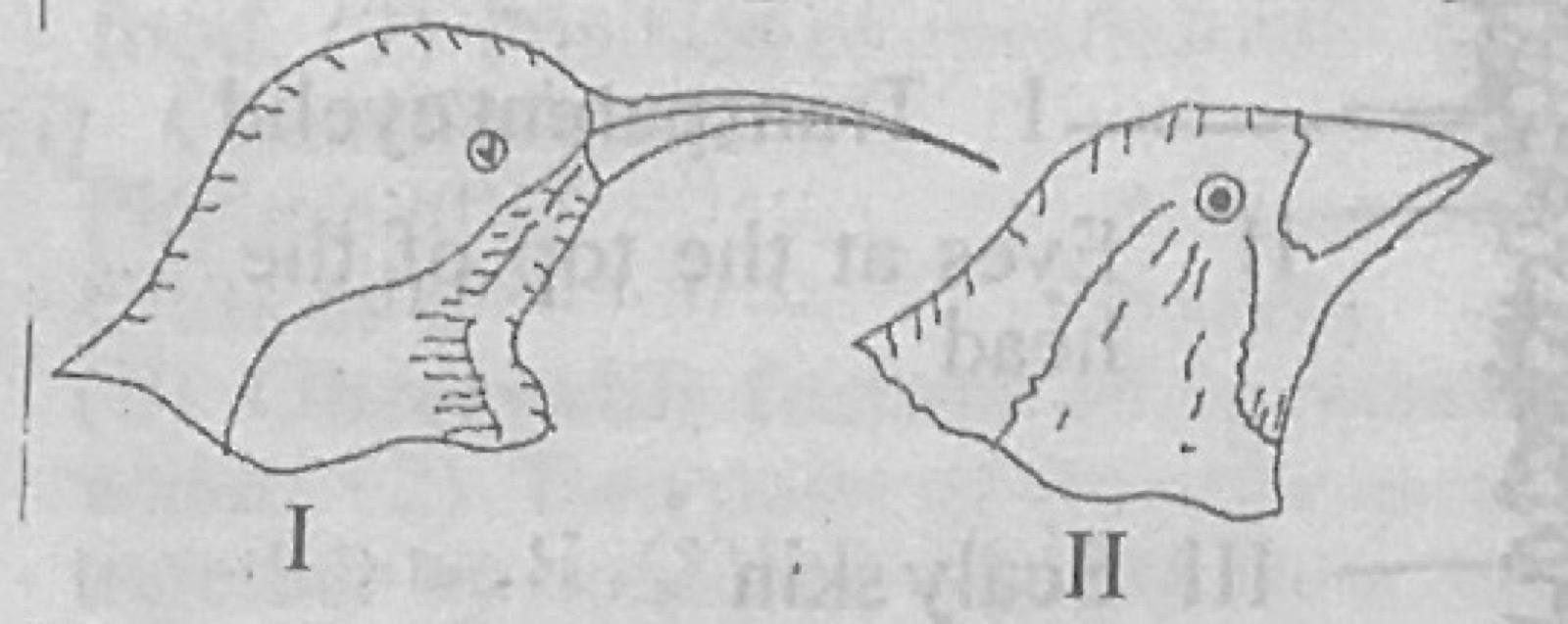
Study the diagrams of two birds' heads, I and II.
What is the likely food of the bird in I?

Diagram for this question
  1. A.Worms
  2. B.Seed.
  3. C.Nectar.
  4. D.Fishes.
Show the answer and explanation

Answer: C (Nectar.)

Explanation

Bird I has a long, thin, curved beak for reaching into flowers to suck nectar, like a sunbird.

Open this question

Question 34

Adaptation

Study the diagrams of two birds' heads, I and II.
The food of the bird in II is

Diagram for this question
  1. A.worms.
  2. B.seed.
  3. C.nectar.
  4. D.fishes.
Show the answer and explanation

Answer: B (seed.)

Explanation

Bird II has a short, thick, strong beak for cracking seeds.

Open this question

Question 36

Population Ecology

The maximum size of a population that a given area can support is known as

  1. A.population density.
  2. B.carrying capacity.
  3. C.population growth.
  4. D.maximum population.
Show the answer and explanation

Answer: B (carrying capacity.)

Explanation

Carrying capacity is the largest population the food, water and space of an area can support for a long time.

Open this question

Question 37

Feeding Relationships and Energy Flow

The producers in a food chain in an aquatic environment are

  1. A.birds.
  2. B.phytoplankton.
  3. C.zooplankton.
  4. D.fishes.
Show the answer and explanation

Answer: B (phytoplankton.)

Explanation

Phytoplankton are tiny floating plants and algae that photosynthesise; they start aquatic food chains.

Open this question

Question 38

Adaptation

The frog is considered a better swimmer than the toad because it

  1. A.has more pronounced webbed digits.
  2. B.has much longer and stronger hind limbs.
  3. C.lives in water most of the time.
  4. D.is more streamlined than the toad.
Show the answer and explanation

Answer: A (has more pronounced webbed digits.)

Explanation

The frog's hind feet are more fully webbed, giving a larger paddle to push against the water.

Open this question

Question 39

Nutrient Cycling

The bacteria that reduce nitrates in the soil into gaseous nitrogen are referred to as

  1. A.nitrifying bacteria.
  2. B.denitrifying bacteria.
  3. C.putrefying bacteria.
  4. D.saprophytic bacteria.
Show the answer and explanation

Answer: B (denitrifying bacteria.)

Explanation

Denitrifying bacteria (common in waterlogged soil) break nitrates down to nitrogen gas, which escapes to the air.

Open this question

Question 40

Feeding Relationships and Energy Flow

A pyramid of numbers is constructed by

  1. A.comparing living and non-living things.
  2. B.measuring productivity
  3. C.conducting census.
  4. D.labelling the living organisms.
Show the answer and explanation

Answer: C (conducting census.)

Explanation

You count (take a census of) the organisms at each trophic level and draw bars in proportion.

Open this question

Question 41

Microorganisms and Health

The main reason for immunizing children is to

  1. A.destroy pathogens in their bodies.
  2. B.increase the production of white blood cells.
  3. C.stimulate the production of antibodies.
  4. D.simulate the production of antigens.
Show the answer and explanation

Answer: C (stimulate the production of antibodies.)

Explanation

A vaccine makes the body produce antibodies and memory cells, so it can fight the real germ quickly later.

Open this question

Question 42

Ecological Associations

Rhizobium which lives in the root nodules of leguminous plants is an example of the association known as

  1. A.commensalism.
  2. B.epiphytism.
  3. C.mutualism.
  4. D.saprophytism.
Show the answer and explanation

Answer: C (mutualism.)

Explanation

Both benefit: the bacteria get food and shelter, and the plant gets fixed nitrogen.

Open this question

Question 43

Animal Kingdom

Ascaris lumbricoides is a parasitic

  1. A.flat worm.
  2. B.round worm.
  3. C.arthropod.
  4. D.elastic worm.
Show the answer and explanation

Answer: B (round worm.)

Explanation

Ascaris is a nematode, the human intestinal roundworm.

Open this question

Question 44

Microorganisms and Health

The following organisms are pests of plants except

  1. A.birds.
  2. B.nematodes.
  3. C.bacteria.
  4. D.rodents.
Show the answer and explanation

Answer: C (bacteria.)

Explanation

Pests are animals that damage crops (birds, nematodes, rodents); bacteria cause plant diseases and are called pathogens.

Open this question

Question 45

Animal Nutrition

The absence of alimentary canal in the parasitic flatworm can be attributed to the fact that

  1. A.its body does not feed.
  2. B.it has no enzymes.
  3. C.its body absorbs digested food.
  4. D.it has suckers on the scolex.
Show the answer and explanation

Answer: C (its body absorbs digested food.)

Explanation

A tapeworm lives in already-digested food in the host's gut and absorbs it through its body surface, so it needs no gut.

Open this question

Question 46

Conservation of Natural Resources

Which of the following statements is not a reason for conserving wildlife?

  1. A.Attraction of tourists into the country.
  2. B.Serving as a source of food.
  3. C.Serving as a source of income.
  4. D.Increasing the amount of rainfall.
Show the answer and explanation

Answer: D (Increasing the amount of rainfall.)

Explanation

Wild animals bring tourists, food and income, but they do not increase rainfall.

Open this question

Question 47

Conservation of Natural Resources

Which of the following human activities would help prevent endangered species from extinction?

  1. A.Uncontrolled killing of species.
  2. B.Regular clearing of the forest vegetation.
  3. C.Temporary maintenance of species in zoological gardens.
  4. D.Regular irrigation of their natural habitats.
Show the answer and explanation

Answer: C (Temporary maintenance of species in zoological gardens.)

Explanation

Keeping and breeding endangered animals in zoos protects them until numbers recover.

Open this question

Question 48

Chromosomes, DNA and Sex Linkage

In genetics, linkages refer to the linking of genes of the

  1. A.same chromosomes.
  2. B.different chromosomes.
  3. C.same nucleus.
  4. D.different nuclei.
Show the answer and explanation

Answer: A (same chromosomes.)

Explanation

Genes that lie close together on the same chromosome are usually passed on together; this is called linkage.

Open this question

Question 49

Mendelian Inheritance

A man's blood group is AB. What is the probability of the man giving birth to a child with blood group O?

  1. A.0%.
  2. B.25%.
  3. C.50%.
  4. D.100%.
Show the answer and explanation

Answer: A (0%.)

Explanation

A group O child needs an O allele from each parent; an AB father has no O allele, so the chance is 0%.

Open this question

Question 50

Mendelian Inheritance

When a man who is Rh-positive marries a woman who is Rh-negative, there will be incidence of

  1. A.still births.
  2. B.sicklers.
  3. C.albinos.
  4. D.living children.
Show the answer and explanation

Answer: A (still births.)

Explanation

If the baby is Rh-positive, the mother can make anti-Rh antibodies that destroy the red cells of later babies, which can cause stillbirth.

Open this question

Question 51

Mendelian Inheritance

The genotype ratio of the offspring of a hybrid is 1 : 2 : 1, which of the following laws illustrates this ratio?

  1. A.Use and disuse.
  2. B.Dominance.
  3. C.Segregation.
  4. D.Linkage.
Show the answer and explanation

Answer: C (Segregation.)

Explanation

Mendel's law of segregation says the two alleles separate into different gametes, giving 1 AA : 2 Aa : 1 aa when hybrids are crossed.

Open this question

Question 52

Chromosomes, DNA and Sex Linkage

A gene that is only located on X-chromosome is said to be

  1. A.expressed in females only.
  2. B.defective.
  3. C.sex-linked.
  4. D.expressed in males only.
Show the answer and explanation

Answer: C (sex-linked.)

Explanation

Genes carried on the sex (X) chromosome are called sex-linked genes.

Open this question

Question 53

Mendelian Inheritance

If a boy has blood type O and his mother has blood type A, what is the genotype of his father?

  1. A.BB
  2. B.AA
  3. C.AO
  4. D.AB
Show the answer and explanation

Answer: C (AO)

Explanation

The boy is OO, so the father must carry an O allele; of the choices only AO has one.

Open this question

Question 54

Chromosomes, DNA and Sex Linkage

A man who suffers from haemophilia marries a woman who is a carrier, what percentage of their children are likely to be haemophilic?

  1. A.25%.
  2. B.50%.
  3. C.75%.
  4. D.100%.
Show the answer and explanation

Answer: B (50%.)

Explanation

XhY × XHXh gives XHXh, XhXh, XHY and XhY; two of the four (50%) are haemophilic.

Open this question

Question 55

Mendelian Inheritance

Which of the following traits may be considered in marriage counselling?

  1. A.Height.
  2. B.Fingerprints.
  3. C.Rhesus factor.
  4. D.Colour of skin.
Show the answer and explanation

Answer: C (Rhesus factor.)

Explanation

The Rhesus factor matters for the health of future babies, so it is checked before marriage (with genotype and blood group).

Open this question

Question 56

Cell Division

Which of the following structures is only formed during cell division in animal cells?

  1. A.Cell membrane.
  2. B.Cytoplasm.
  3. C.Centrosome.
  4. D.Ribosome.
Show the answer and explanation

Answer: C (Centrosome.)

Explanation

The centrosome (with its centrioles) organises the spindle during animal cell division; the other structures are present all the time.

Open this question

Question 57

Behaviour

The function of the drone in a colony of bees is to

  1. A.clean the cells.
  2. B.mate with the queen.
  3. C.protect the colony.
  4. D.lay eggs.
Show the answer and explanation

Answer: B (mate with the queen.)

Explanation

Drones are the male bees; their only job is to mate with the queen.

Open this question

Question 58

Adaptation

Which of the following features is used by chameleons to escape predation?

  1. A.Fearsome appearance.
  2. B.Coiling tail.
  3. C.Offensive smell.
  4. D.Adaptive colouration.
Show the answer and explanation

Answer: D (Adaptive colouration.)

Explanation

A chameleon changes colour to match its surroundings, so predators do not notice it.

Open this question

Question 59

Evolution

A scientist who was involved in the development of evolution theory is

  1. A.Lamarck.
  2. B.Mendel.
  3. C.Morgan.
  4. D.Pasteur.
Show the answer and explanation

Answer: A (Lamarck.)

Explanation

Lamarck proposed an early theory of evolution (use and disuse); Mendel and Morgan worked on genetics and Pasteur on microbes.

Open this question

Question 60

Evolution

Darwin noticed that organisms in similar habitats across the world looked alike. This illustrates

  1. A.Convergent evolution.
  2. B.Adaptive radiation.
  3. C.Co-evolution.
  4. D.descent with modification.
Show the answer and explanation

Answer: A (Convergent evolution.)

Explanation

Unrelated organisms facing similar conditions evolve similar features; this is convergent evolution.

Open this question

Theory question 101

Respiration

(a)(i) What is respiration? (ii) In a tabular form, state four differences between gaseous exchange and aerobic respiration.
(b)(i) Explain the term residual air. (ii) What is the importance of residual air to mammals?
(c) State four characteristic features associated with respiratory structures.
(d)(i) What is oxygen debt? (ii) Outline three activities that can result in oxygen debt.

Show the model answer
Model answer

(a)(i) Respiration is the breakdown (oxidation) of food, mainly glucose, in living cells to release energy as ATP, with or without oxygen.
(ii) Table — Gaseous exchange: physical process / Aerobic respiration: chemical process; takes place at respiratory surfaces (outside cells) / inside cells (mitochondria); no energy released / energy released; no enzymes needed / enzymes needed; O2 taken in and CO2 given out / O2 used to oxidise glucose and CO2 and water produced.
(b)(i) Residual air is the volume of air (about 1.5 litres) that remains in the lungs even after the deepest possible breathing out.
(ii) It keeps the alveoli from collapsing; allows gaseous exchange to continue between breaths; mixes with fresh air.
(c) Any four: large surface area; thin walls (short diffusion distance); moist surface; rich blood supply (capillaries); well ventilated.
(d)(i) Oxygen debt is the extra oxygen needed after vigorous exercise to oxidise the lactic acid built up in muscles during anaerobic respiration.
(ii) Any three: sprinting/running a race; lifting heavy weights; climbing stairs or hills quickly; swimming fast; prolonged strenuous work or games.

Explanation

Use a ruled table with matching rows in (a)(ii).

Open this question

Theory question 102

Photosynthesis and Plant Nutrition

(a) What is photosynthesis?
(b) List: (i) four external factors; (ii) two internal factors; that affect the rate of photosynthesis.
(c)(i) List the major products of the light dependent stage of photosynthesis. (ii) State the importance of each of the products listed in 2(c)(i) above.
(d)(i) Explain why there are no green plants at the lower depths of some lakes. (ii) State why decomposers are important to flowering plants.

Show the model answer
Model answer

(a) Photosynthesis is the process by which green plants make glucose from carbon dioxide and water using light energy trapped by chlorophyll, releasing oxygen.
(b)(i) External (any four): light intensity; carbon dioxide concentration; temperature; water supply; mineral salts (e.g. Mg). (ii) Internal (any two): amount of chlorophyll; number/structure of stomata; enzymes; leaf structure/thickness; accumulation of end products.
(c)(i) ATP; NADPH2 (reduced NADP/hydrogen); oxygen.
(ii) ATP supplies energy for the dark (light-independent) stage; NADPH2 supplies hydrogen to reduce CO2 to carbohydrate; oxygen is released for respiration (by-product).
(d)(i) Light does not reach the deep water, so plants there cannot photosynthesise and cannot survive.
(ii) Decomposers break down dead matter and release mineral salts (e.g. nitrates) into the soil, which plants absorb for growth.

Explanation

Light-stage products power the dark stage.

Open this question

Theory question 103

Population Ecology

(a)(i) What is ecological succession? (ii) Describe the process of ecological succession on a bare plot of land.
(b) Explain the following terms: (i) biosphere; (ii) population; (iii) community; (iv) ecosystem.
(c) Name one instruments each used for measuring: (i) relative humidity; (ii) wind speed;

Show the model answer
Model answer

(a)(i) Ecological succession is the gradual, orderly change in the species making up a community over time, until a stable climax community is reached.
(ii) Pioneer organisms such as lichens, algae and mosses colonise the bare ground; they break down rock and add humus, forming thin soil; grasses and herbs then grow, followed by small animals (insects, worms); shrubs replace them and shade out the grasses; larger animals (lizards, rats, birds) arrive; finally trees grow and a stable climax community (e.g. forest) is reached.
(b)(i) Biosphere: the part of the earth (land, water, air) where life exists.
(ii) Population: all the organisms of one species living in an area at a given time.
(iii) Community: all the populations of different species living and interacting in one area.
(iv) Ecosystem: a community of organisms together with its non-living environment, interacting as a unit.
(c)(i) Hygrometer (wet-and-dry bulb thermometer); (ii) anemometer.

Explanation

Name the stages of succession in order, from pioneers to climax.

Open this question

Theory question 104

Conservation of Natural Resources

(a)(i) What is conservation? (ii) State six factors responsible for the decline of the abundance and variety of wildlife.
(b) Outline six ways in which the government can improve the situation in 4(a)(ii) above.
(c)(i) What is Eutrophication? (ii) State two causes of eutrophication.

Show the model answer
Model answer

(a)(i) Conservation is the protection, preservation and wise management of natural resources so they last and remain available for the future.
(ii) Any six: uncontrolled hunting/poaching; deforestation and destruction of habitats; bush burning; pollution of land and water; urbanisation and road building; overgrazing; drought and desertification; introduction of alien species; diseases.
(b) Any six: establish game reserves and national parks; pass and enforce laws against poaching; ban or control bush burning; afforestation; licensing and closed seasons for hunting; public education on wildlife; zoos and captive breeding; control of pollution; employ game wardens.
(c)(i) Eutrophication is the over-enrichment of a water body with nutrients (nitrates, phosphates), causing rapid growth of algae (algal bloom); when they die, decomposers use up the oxygen and fish and other organisms die.
(ii) Any two: run-off of fertilisers from farms; discharge of sewage; detergents (phosphates) in waste water; animal wastes.

Explanation

For (c) describe the chain: nutrients → algal bloom → decay → oxygen loss.

Open this question

Theory question 107

Nutrient Cycling

(For candidates in Nigeria only)
(a) Describe the carbon cycle.
(b) State the functions of: (i) nitrogen fixing bacteria; (ii) nitrifying bacteria; (iii) denitrifying bacteria; in nature.

Show the model answer
Model answer

(a) Carbon dioxide in the air is taken in by green plants and made into carbohydrates by photosynthesis; animals obtain carbon compounds by eating plants or other animals; plants and animals release CO2 back to the air by respiration; when they die, decomposers (bacteria and fungi) break them down, releasing CO2; some remains form fossil fuels (coal, oil), which release CO2 when burnt; volcanic eruption also releases CO2; carbon dioxide dissolves in water and forms carbonates (limestone).
(b)(i) Nitrogen-fixing bacteria (Rhizobium, Azotobacter) convert atmospheric nitrogen into nitrogen compounds that plants can use.
(ii) Nitrifying bacteria convert ammonium compounds to nitrites (Nitrosomonas) and nitrites to nitrates (Nitrobacter), which plants absorb.
(iii) Denitrifying bacteria (e.g. Pseudomonas) convert nitrates back to free nitrogen gas, returning it to the atmosphere.

Explanation

A labelled cycle diagram can support the description in (a).

Open this question

Theory question 108

Excretion

(For candidates in Nigeria only)
(a)(i) What is excretion? (ii) List the excretory organs in humans and name one waste product excreted by each organ.
(b) How does the mammalian kidney function as an excretory organ?
(c) Name the excretory organs in: (i) insects; (ii) earthworms.

Show the model answer
Model answer

(a)(i) Excretion is the removal from the body of waste products of metabolism (e.g. urea, CO2, excess water and salts) that would be harmful if they built up.
(ii) Kidney — urea/urine; skin — sweat (water and salts); lungs — carbon dioxide and water vapour; liver — bile pigments.
(b) Blood enters the kidney through the renal artery; in the glomerulus it is filtered under high pressure (ultrafiltration) into the Bowman's capsule, giving a filtrate of water, glucose, salts and urea; in the tubules, useful substances (all glucose, amino acids, much water and salts) are selectively reabsorbed into the blood; more water is reabsorbed in the loop of Henle, distal tubule and collecting duct (controlled by ADH); the remaining fluid (urine: water, urea, salts) passes down the ureter to the bladder; purified blood leaves through the renal vein.
(c)(i) Malpighian tubules; (ii) nephridia.

Explanation

Describe the kidney's work in three steps: filtration, reabsorption, then urine leaving.
Open this question