WAEC Biology 2004 past questions and answers

65 questions. Try each one, then open the answer to check yourself and read the explanation.

Question 1

Characteristics and Classification of Living Things

Which of the following characteristics is not possessed by most plants? Ability to

  1. A.move away from stimuli
  2. B.respire
  3. C.reproduce
  4. D.adapt to environment
Show the answer and explanation

Answer: A (move away from stimuli)

Explanation

Most plants are fixed in one place and cannot move their whole body away from a stimulus; they only grow towards or away from it. All plants respire, reproduce and adapt.

Open this question

Question 2

Animal Kingdom

Hydra is able to perform all the following functions except

  1. A.feeding
  2. B.movement
  3. C.photosynthesis
  4. D.egestion
Show the answer and explanation

Answer: C (photosynthesis)

Explanation

Hydra is an animal with no chlorophyll, so it cannot photosynthesise. It feeds, moves and egests through its mouth.

Open this question

Question 3

Viruses, Monera, Protista and Fungi

Euglena can be classified as an animal because of the possession of

  1. A.nucleus
  2. B.cytoplasm
  3. C.cell wall
  4. D.pellicle
Show the answer and explanation

Answer: D (pellicle)

Explanation

Euglena has a flexible protein pellicle instead of a cellulose cell wall, an animal-like feature. Nucleus and cytoplasm are found in all cells.

Open this question

Question 4

Cell Structure and Organisation

Which two structures are present in a palisade cell but not in a liver cell?

  1. A.cell wall and cytoplasm
  2. B.cell wall and chloroplast
  3. C.cell membrane and cytoplasm
  4. D.cell membrane and chloroplast
Show the answer and explanation

Answer: B (cell wall and chloroplast)

Explanation

A palisade cell is a plant cell with a cellulose cell wall and chloroplasts. Both cells have a cell membrane and cytoplasm.

Open this question

Question 5

Cell Structure and Organisation

The nucleus controls the activities of the cell because it

  1. A.synthesizes hormones
  2. B.is like a brain in the cell
  3. C.uses DNA to synthesize enzymes which are used in cell metabolism
  4. D.sends out nervous impulses to ensure the functioning of the cytoplasm.
Show the answer and explanation

Answer: C (uses DNA to synthesize enzymes which are used in cell metabolism)

Explanation

The DNA in the nucleus carries the instructions for making enzymes, and enzymes control every chemical reaction in the cell.

Open this question

Question 6

Cell and Its Environment

The process by which a drop of ink spreads uniformly in a beaker of water is called

  1. A.absorption
  2. B.osmosis
  3. C.plasmolysis
  4. D.diffusion
Show the answer and explanation

Answer: D (diffusion)

Explanation

Ink particles move from where they are concentrated to where they are fewer until evenly spread: this is diffusion. Osmosis is movement of water across a membrane.

Open this question

Question 7

Excretion

When a person's urine contains a high concentration of urea, it could be the result of

  1. A.a drop in body temperature
  2. B.having diabetes melitus
  3. C.eating a meal rich in protein
  4. D.drinking a large amount of water.
Show the answer and explanation

Answer: C (eating a meal rich in protein)

Explanation

Excess amino acids from protein are broken down in the liver (deamination) to form urea, so a protein-rich meal raises urea in the urine.

Open this question

Question 8

Reproduction in Animals

How many conjugants are involved in sexual reproduction of paramecium?

  1. A.1
  2. B.2
  3. C.4
  4. D.8
Show the answer and explanation

Answer: B (2)

Explanation

In conjugation two Paramecia line up side by side and exchange nuclear material, so two conjugants take part.

Open this question

Question 10

Support and Movement

The axial skeleton is made up of the following

  1. A.skull, vertebral column, rib cage and sternum
  2. B.limbs and limb girdles
  3. C.lumbar and thoracic vertebrae
  4. D.vertebral column and lumbar vertebrae
Show the answer and explanation

Answer: A (skull, vertebral column, rib cage and sternum)

Explanation

The axial skeleton is the central axis of the body: skull, vertebral column, ribs and sternum. Limbs and girdles form the appendicular skeleton.

Open this question

Question 11

Support and Movement

The xylem elements perform the function of transport but they also help to support plants because they

  1. A.are internally located
  2. B.are tubular
  3. C.have rigid thick walls
  4. D.constantly absorb water
Show the answer and explanation

Answer: C (have rigid thick walls)

Explanation

Xylem vessels have thick walls strengthened with lignin, which makes them rigid and able to hold the plant up.

Open this question

Question 12

Food Substances and Enzymes

Excessive bleeding from an injury may be due to lack of vitamin

  1. A.A
  2. B.B
  3. C.D
  4. D.K
Show the answer and explanation

Answer: D (K)

Explanation

Vitamin K is needed to make clotting factors in the liver; without it blood clots slowly and bleeding continues.

Open this question

Question 13

Transport in Animals

The hepatic portal vein is often heavily loaded with food-nutrients because it carries blood

  1. A.directly from the heart
  2. B.from the liver to the heart
  3. C.from the small intestine to the liver
  4. D.from the liver to join the posterior vena cava.
Show the answer and explanation

Answer: C (from the small intestine to the liver)

Explanation

Digested food is absorbed into capillaries of the small intestine, which join to form the hepatic portal vein leading to the liver.

Open this question

Question 14

Respiration

The products of respiration are

  1. A.nitrogen and water
  2. B.nitrogen and carbon dioxide
  3. C.water and oxygen
  4. D.carbon dioxide and water
Show the answer and explanation

Answer: D (carbon dioxide and water)

Explanation

Aerobic respiration breaks down glucose with oxygen to give energy, carbon dioxide and water.

Open this question

Question 15

Transport in Plants

Green plants lose water to the atmosphere through the process of

  1. A.respiration
  2. B.photosynthesis
  3. C.transpiration
  4. D.translocation
Show the answer and explanation

Answer: C (transpiration)

Explanation

Transpiration is the loss of water vapour from plants, mainly through the stomata of leaves.

Open this question

Question 16

Homeostasis

The body temperature of a mammal has to be maintained at a fairly constant level because

  1. A.excessive heat is continually lost by the body to the environment.
  2. B.their body temperature is always higher than that of the environment
  3. C.evaporation of sweat cools the body
  4. D.metabolic activities function best at certain temperature
Show the answer and explanation

Answer: D (metabolic activities function best at certain temperature)

Explanation

Body reactions are controlled by enzymes, which work best at an optimum temperature, so keeping the temperature steady keeps metabolism efficient.

Open this question

Question 17

Excretion

A urine sample of a patient, tested with Benedict/Fehling solution, gave an orange coloured precipitate, indicating the presence of

  1. A.glucose
  2. B.sucrose
  3. C.lactose
  4. D.maltose
Show the answer and explanation

Answer: A (glucose)

Explanation

An orange/brick-red precipitate shows a reducing sugar. The sugar found in urine, e.g. in diabetes, is glucose.

Open this question

Question 18

Hormonal Coordination

Which hormonal deficiency is likely to cause an accumulation of reducing sugar in the urine?

  1. A.thyroxine
  2. B.insulin
  3. C.secretin
  4. D.testosterone
Show the answer and explanation

Answer: B (insulin)

Explanation

Insulin lowers blood glucose. Without enough insulin (diabetes mellitus) blood sugar rises and glucose spills into the urine.

Open this question

Question 19

Nervous Coordination

Which of the following structures occupies the neural canal of the vertebral column?

  1. A.cerebellum
  2. B.hypothalamus
  3. C.medulla oblongata
  4. D.spinal cord
Show the answer and explanation

Answer: D (spinal cord)

Explanation

The spinal cord runs through the neural canal of the vertebrae, which protect it. The other structures are in the skull.

Open this question

Question 20

Nervous Coordination

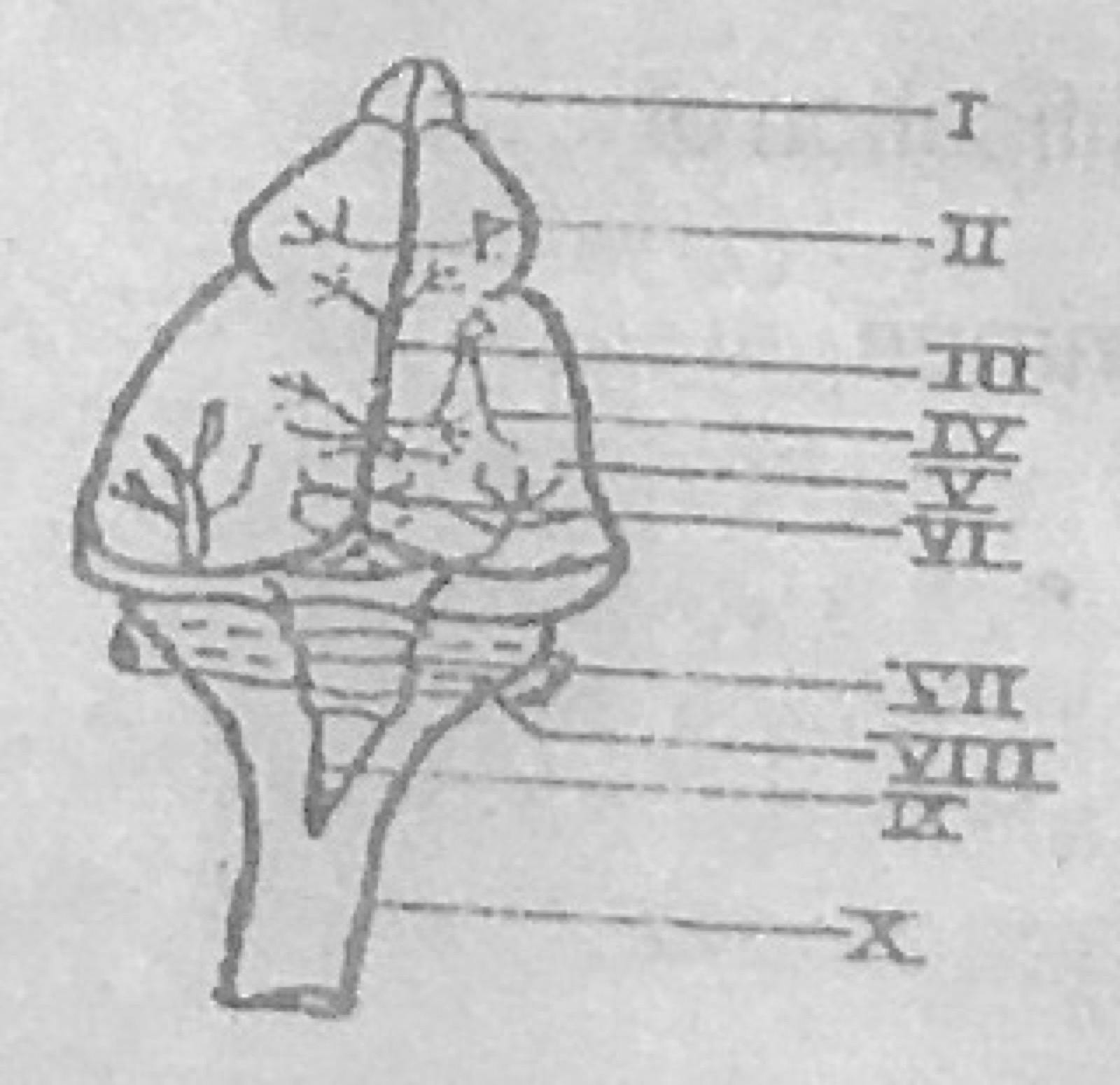
The diagram below is the dorsal view of a mammalian brain.
The structure labelled I in the diagram above is the

Diagram for this question
  1. A.cerebellum
  2. B.cerebrum
  3. C.olfactory lobe
  4. D.medulla oblongata
Show the answer and explanation

Answer: C (olfactory lobe)

Explanation

Part I is at the very front of the brain, in front of the cerebral hemispheres; this is the olfactory lobe, concerned with smell.

Open this question

Question 21

Nervous Coordination

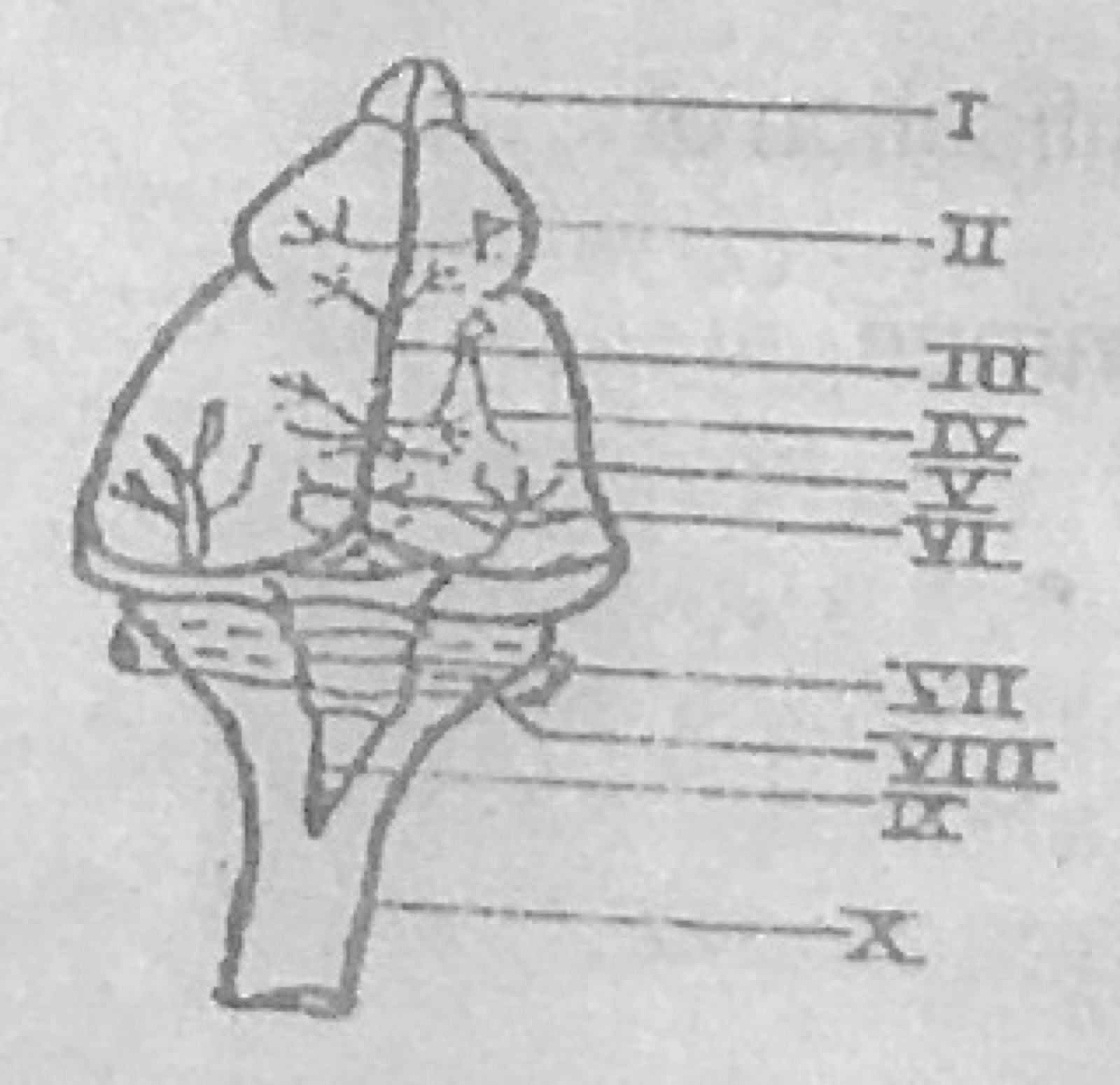
The diagram below is the dorsal view of a mammalian brain.
The structure labelled VIII in the diagram is responsible for

Diagram for this question
  1. A.vision
  2. B.involuntary actions
  3. C.speech
  4. D.voluntary action
Show the answer and explanation

Answer: B (involuntary actions)

Explanation

Part VIII is the medulla oblongata at the back of the brain, which controls involuntary actions such as breathing and heartbeat.

Open this question

Question 22

Sense Organs

Which of the following occurs when a person looks at a distant, dim object and then looks at a much closer, bright object? In each eye, the pupil becomes

  1. A.larger, while the lens becomes thicker
  2. B.larger, while the lens becomes thinner
  3. C.smaller, while the lens becomes thicker
  4. D.smaller, while the lens becomes thinner
Show the answer and explanation

Answer: C (smaller, while the lens becomes thicker)

Explanation

In bright light the iris narrows the pupil. For a near object the ciliary muscles contract, the suspensory ligaments slacken and the lens becomes thicker.

Open this question

Question 23

Reproduction in Animals

The following insects undergo incomplete metamorphosis except

  1. A.termite
  2. B.cockroach
  3. C.butterfly
  4. D.locust
Show the answer and explanation

Answer: C (butterfly)

Explanation

A butterfly goes through egg, larva (caterpillar), pupa and adult, which is complete metamorphosis. Termites, cockroaches and locusts have nymphs instead.

Open this question

Question 24

Reproduction in Plants

The process by which fruits develop without fertilization is called

  1. A.parthenocarpy
  2. B.pathology
  3. C.hermaphroditism
  4. D.layering
Show the answer and explanation

Answer: A (parthenocarpy)

Explanation

Parthenocarpy is fruit formation without fertilization, giving seedless fruits such as some bananas and pineapples.

Open this question

Question 25

Photosynthesis and Plant Nutrition

Which of the following groups contains only macro-nutrients?

  1. A.phosphorus, nitrogen and molybdenum
  2. B.manganese, copper and zinc
  3. C.boron, sulphur and iron
  4. D.calcium, magnesium and potassium
Show the answer and explanation

Answer: D (calcium, magnesium and potassium)

Explanation

Calcium, magnesium and potassium are all needed in large amounts. Molybdenum, manganese, copper, zinc, boron and iron are micro-nutrients.

Open this question

Question 26

Photosynthesis and Plant Nutrition

A solution which contains all the required elements in their correct proportions is known as a

  1. A.culture nutrient
  2. B.growth medium
  3. C.complete culture solution
  4. D.nutrient solution
Show the answer and explanation

Answer: C (complete culture solution)

Explanation

In water-culture experiments, the solution with every needed element in the right amounts is the complete culture solution; others leave one element out.

Open this question

Question 27

Photosynthesis and Plant Nutrition

The deficiency of manganese in plants results in

  1. A.death of shoot
  2. B.leaves turning yellow
  3. C.stunted growth
  4. D.poor root development
Show the answer and explanation

Answer: B (leaves turning yellow)

Explanation

Manganese is needed for chlorophyll formation, so its lack causes yellowing of the leaves (chlorosis).

Open this question

Question 28

Transport in Plants

Which of the following is not true about a potted plant left in the laboratory for one week without watering?

  1. A.the cells of the plant will be turgid
  2. B.there will be wilting of the plant
  3. C.the leaves are likely to turn yellow
  4. D.plant will not take in enough nutrients
Show the answer and explanation

Answer: A (the cells of the plant will be turgid)

Explanation

With no water the plant keeps losing water by transpiration, its cells become flaccid and it wilts. Its cells cannot be turgid.

Open this question

Question 29

Food Substances and Enzymes

The deficiency of vitamin D and calcium ions in the diet of a human causes

  1. A.anaemia
  2. B.night-blindness
  3. C.kwashiokor
  4. D.rickets
Show the answer and explanation

Answer: D (rickets)

Explanation

Vitamin D and calcium are needed to make strong bones; their lack causes rickets, with soft bent bones.

Open this question

Question 30

Animal Nutrition

An organism is considered a heterotroph when it

  1. A.feeds on inorganic food
  2. B.feeds on already manufactured food
  3. C.fixes atmospheric nitrogen
  4. D.respires anaerobically
Show the answer and explanation

Answer: B (feeds on already manufactured food)

Explanation

A heterotroph cannot make its own food and depends on food already made by other organisms.

Open this question

Question 31

Animal Nutrition

The break-down of food into simple, soluble and absorbable end-products is termed

  1. A.absorption
  2. B.ingestion
  3. C.nutrition
  4. D.digestion
Show the answer and explanation

Answer: D (digestion)

Explanation

Digestion breaks large insoluble food molecules into small soluble ones that can be absorbed.

Open this question

Question 32

Animal Nutrition

Which of the following teeth are well-developed to form the carnassial teeth of carnivorous mammals? The

  1. A.first lower premolar and third upper molar
  2. B.first lower molar and third upper premolar
  3. C.second lower premolar and first lower molar
  4. D.first lower molar and last upper premolar
Show the answer and explanation

Answer: D (first lower molar and last upper premolar)

Explanation

In carnivores such as the dog, the carnassial teeth are the last upper premolar and the first lower molar. Their sharp ridges slide past each other like scissors to slice flesh.

Open this question

Question 33

Ecosystem and Ecological Factors

Biosphere is best described as

  1. A.all parts of the earth where life exists
  2. B.the non-living parts of an ecosystem
  3. C.all components of an ecosystem
  4. D.all the members of a single species in a habitat
Show the answer and explanation

Answer: A (all parts of the earth where life exists)

Explanation

The biosphere is the whole part of the earth (land, water and air) where living things are found.

Open this question

Question 34

Ecosystem and Ecological Factors

Which of the following is not essential in the studying of the ecological factors that directly affect plants?

  1. A.wind
  2. B.temperature
  3. C.herbivores
  4. D.carnivores
Show the answer and explanation

Answer: D (carnivores)

Explanation

Wind, temperature and herbivores act on plants directly. Carnivores feed on animals, so they affect plants only indirectly.

Open this question

Question 35

Soil

Conservation of soil fertility employs crop rotation because

  1. A.crops are allowed to grow at their own rates
  2. B.it encourages the healthy growth of plants
  3. C.it allows utilization of soil nutrients at different levels
  4. D.different crops grow at the same time.
Show the answer and explanation

Answer: C (it allows utilization of soil nutrients at different levels)

Explanation

Different crops have roots at different depths and need different nutrients, so rotating them uses soil nutrients at different levels and does not exhaust one layer.

Open this question

Question 36

Feeding Relationships and Energy Flow

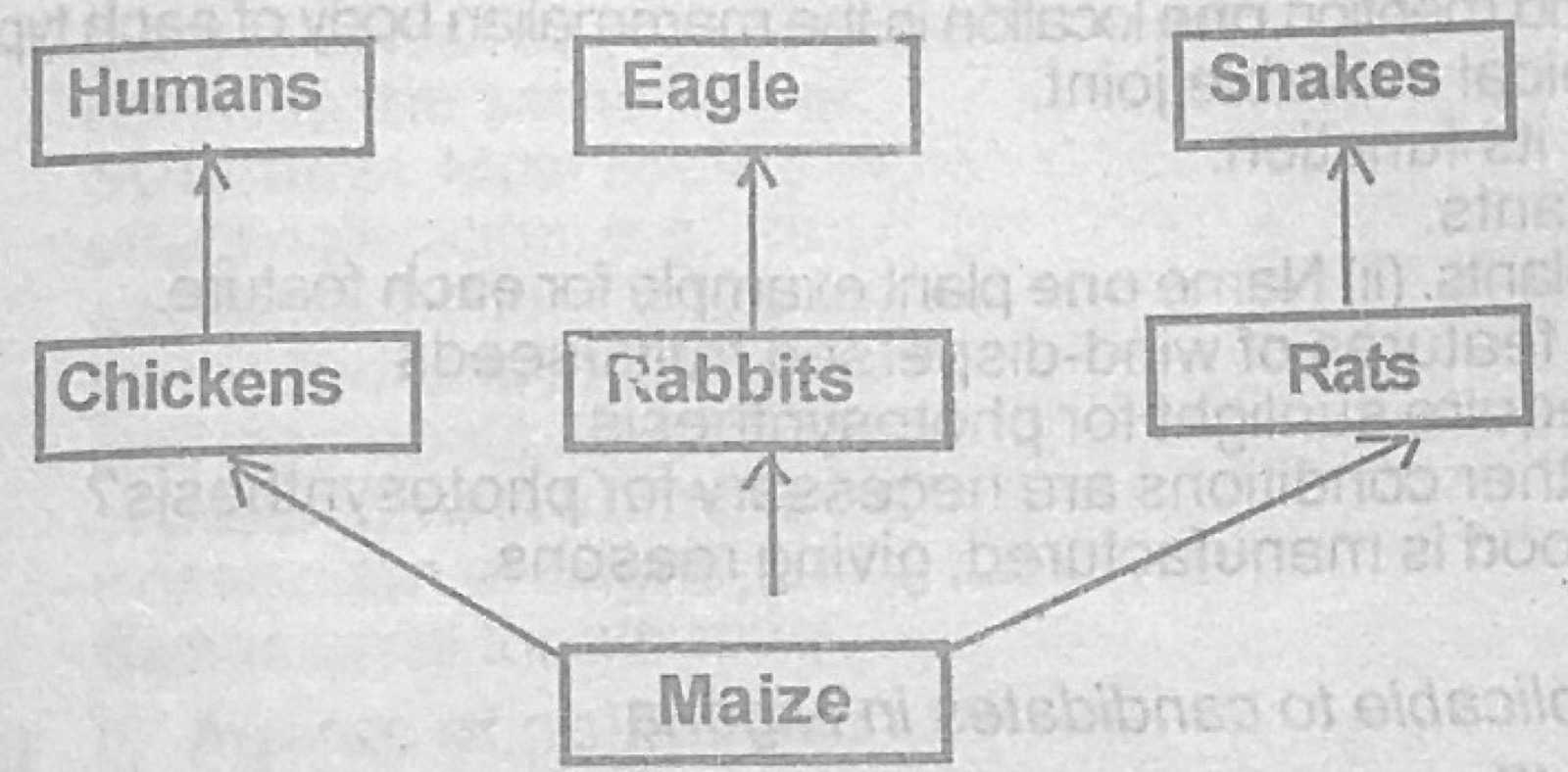
Study the diagram below showing three food chains.
Which of the following are consumers in these food chains?

Diagram for this question
  1. A.maize and rabbits
  2. B.chicken, rats and maize
  3. C.eagle, maize and snakes
  4. D.humans, eagle and snakes.
Show the answer and explanation

Answer: D (humans, eagle and snakes.)

Explanation

Maize is the producer in all three chains. Every option except D includes maize, while humans, eagle and snakes are all consumers.

Open this question

Question 37

Feeding Relationships and Energy Flow

An importance of food web is that living organisms

  1. A.use web to collect food
  2. B.can live on their own
  3. C.have to form a web
  4. D.depend on one another for their existence
Show the answer and explanation

Answer: D (depend on one another for their existence)

Explanation

A food web shows how organisms are linked by feeding, so it shows that they depend on one another to survive.

Open this question

Question 38

Feeding Relationships and Energy Flow

The continuity of an ecosystem depends on constant flow of energy and circulation of matter. However, the amount of energy passed on from decomposers to producers should be

  1. A.great
  2. B.small
  3. C.reversible
  4. D.zero
Show the answer and explanation

Answer: D (zero)

Explanation

Matter is recycled, but energy is not: producers get their energy only from sunlight. Decomposers pass nutrients back to plants, not energy.

Open this question

Question 39

Ecological Associations

Which of the following features enables the tapeworm to live successfully in the small intestine of human?

  1. A.Hooks and suckers for strong attachment
  2. B.A long neck for forming young proglottis
  3. C.The absence of segmentation and appendages
  4. D.Possession of flame cells for excretion.
Show the answer and explanation

Answer: A (Hooks and suckers for strong attachment)

Explanation

The tapeworm's scolex has hooks and suckers that hold it firmly to the gut wall so it is not swept away by moving food.

Open this question

Question 40

Ecological Associations

Which of the following defines symbiosis?

  1. A.parasites feed on dead organisms
  2. B.both organisms benefit mutually by living together
  3. C.Saprophytes feed on living organisms
  4. D.organisms serve as host to parasite
Show the answer and explanation

Answer: B (both organisms benefit mutually by living together)

Explanation

Symbiosis (mutualism) is a close association in which both partners benefit, such as Rhizobium in legume roots.

Open this question

Question 41

Adaptation

Plants found in the aquatic habitat are generally referred to as

  1. A.epiphytes
  2. B.halophytes
  3. C.xerophytes
  4. D.hydrophytes
Show the answer and explanation

Answer: D (hydrophytes)

Explanation

Hydrophytes are water plants. Xerophytes live in dry places, halophytes in salty places and epiphytes on other plants.

Open this question

Question 42

Pollution

When a farmer sprays crops with a pesticide, the pesticide becomes

  1. A.poisonous to all plants
  2. B.is broken down by soil algae
  3. C.easily washed down into lakes and rivers
  4. D.absorbed by bodies of mammals.
Show the answer and explanation

Answer: C (easily washed down into lakes and rivers)

Explanation

Rain carries sprayed pesticides off the farm into streams, lakes and rivers, where they pollute the water and harm aquatic life.

Open this question

Question 43

Population Ecology

Which of the following methods is best for the determination of population density of Tridax in an open field?

  1. A.transect
  2. B.quadrat
  3. C.sweep-net
  4. D.pit-fall
Show the answer and explanation

Answer: B (quadrat)

Explanation

A quadrat is placed at random several times and the plants inside counted, which gives the number per unit area of a plant like Tridax.

Open this question

Question 44

Population Ecology

If a piece of abandoned farmland went through a series of floral and faunal changes and became established with a permanent plant and animal population, it could be said to have undergone

  1. A.transformation
  2. B.succession
  3. C.competition
  4. D.evolution
Show the answer and explanation

Answer: B (succession)

Explanation

Ecological succession is the series of community changes in an area that ends in a stable (climax) community.

Open this question

Question 45

Microorganisms and Health

The drugs which inhibit the growth of disease-causing organisms and thus used in the treatment of infections are referred to as

  1. A.antibodies
  2. B.antibiotics
  3. C.antitoxins
  4. D.septics
Show the answer and explanation

Answer: B (antibiotics)

Explanation

Antibiotics, such as penicillin, are drugs that kill or stop the growth of bacteria. Antibodies and antitoxins are made by the body.

Open this question

Question 46

Nutrient Cycling

An abandoned refuse dump may be a good site for an intending vegetable farmer because

  1. A.very little manual work would be done by the farmer
  2. B.microbial activity had released nutrients into the soil
  3. C.the roots of vegetable seedlings easily get enough light
  4. D.refuse dumps possess plenty of gas which scares away rodents.
Show the answer and explanation

Answer: B (microbial activity had released nutrients into the soil)

Explanation

Micro-organisms decompose the organic refuse, releasing mineral nutrients that make the soil fertile.

Open this question

Question 47

Conservation of Natural Resources

The following are natural resources except

  1. A.rubber
  2. B.soil
  3. C.water
  4. D.cellophane
Show the answer and explanation

Answer: D (cellophane)

Explanation

Cellophane is a manufactured material. Rubber, soil and water occur in nature.

Open this question

Question 48

Conservation of Natural Resources

Which of the following practices does not contribute to intensive depletion of forest resources in West Africa?

  1. A.use of powerful tools for felling trees
  2. B.regrowing of forest trees
  3. C.clearance of forests for cash crops
  4. D.use of fire for hunting in forests
Show the answer and explanation

Answer: B (regrowing of forest trees)

Explanation

Replanting forest trees restores the forest. The other practices destroy it.

Open this question

Question 49

Conservation of Natural Resources

Tropical rain forests can be conserved by the following practices except

  1. A.agroforestry
  2. B.deforestation
  3. C.shifting cultivation
  4. D.crop rotation
Show the answer and explanation

Answer: B (deforestation)

Explanation

Deforestation is the removal of forest, the opposite of conservation.

Open this question

Question 50

Chromosomes, DNA and Sex Linkage

Which of these physiological variations is sex-linked?

  1. A.albinism
  2. B.blood groups
  3. C.sickle-cell anaemia
  4. D.haemophilic condition
Show the answer and explanation

Answer: D (haemophilic condition)

Explanation

The gene for haemophilia is carried on the X chromosome, so it is sex-linked and mostly affects males.

Open this question

Question 51

Variation

The ability of some individuals to taste phenylthiocarbamide (PTC) is a

  1. A.morphological adaptation
  2. B.morphological variation
  3. C.physiological adaptation
  4. D.physiological variation
Show the answer and explanation

Answer: D (physiological variation)

Explanation

Tasting PTC cannot be seen on the body; it is a difference in how the body works, so it is a physiological variation.

Open this question

Question 52

Chromosomes, DNA and Sex Linkage

In man, sex is determined by the inheritance of

  1. A.a pair of homologous chromosomes
  2. B.an extra chromosome in the cells of a female
  3. C.a dominant gene for maleness present in man
  4. D.two similar X chromosomes in the female and X and Y chromosomes in the male.
Show the answer and explanation

Answer: D (two similar X chromosomes in the female and X and Y chromosomes in the male.)

Explanation

Females are XX and males are XY; the sex chromosome in the sperm decides the child's sex.

Open this question

Question 53

Mendelian Inheritance

What will be the genotypic ratio when two heterozygous red pea plants are crossed?

  1. A.1:0
  2. B.1:2:1
  3. C.2:1
  4. D.3:1
Show the answer and explanation

Answer: B (1:2:1)

Explanation

Rr × Rr gives RR, Rr, Rr and rr, a genotypic ratio of 1 : 2 : 1 (the phenotypic ratio is 3 : 1).

Open this question

Question 54

Variation

Which of the following traits in humans can be affected by environmental factors?

  1. A.skin colour
  2. B.eye colour
  3. C.baldness
  4. D.tongue-rolling
Show the answer and explanation

Answer: A (skin colour)

Explanation

Skin colour can change with the environment, e.g. it darkens with exposure to sunlight. Eye colour and tongue-rolling are fixed by genes.

Open this question

Question 55

Mendelian Inheritance

Heterozygous tall plants were crossed with pure-breeding dwarf plants of the same species. What were the approximate percentages of the offspring?

  1. A.100% tall 0% dwarf
  2. B.75% tall 25% dwarf
  3. C.50% tall 50% dwarf
  4. D.25% tall 75% dwarf
Show the answer and explanation

Answer: C (50% tall 50% dwarf)

Explanation

Tt × tt gives Tt and tt in equal numbers, so half the offspring are tall and half dwarf.

Open this question

Question 56

Mendelian Inheritance

In the F1 generation of Mendel's experiment obtained by crossing pea plants of long stems with those of short stems, what was his observation?

  1. A.some were short while others were long
  2. B.all were long
  3. C.half of them were long while half were short
  4. D.three-quarters were long while one-quarter were short.
Show the answer and explanation

Answer: B (all were long)

Explanation

Crossing pure tall (TT) with pure short (tt) gives only Tt offspring, and since tall is dominant they are all long-stemmed.

Open this question

Question 57

Cell Division

Which of the following statements is correct about the chromosomes in the gametes? At the end of the second meiotic division.

  1. A.each gamete contains only paternal hereditary information
  2. B.chromosomes contain a random mixture of paternal and maternal chromosomes.
  3. C.chromosomes in the four gamete cells are diploid in number
  4. D.chromosomes contain only maternal hereditary information.
Show the answer and explanation

Answer: B (chromosomes contain a random mixture of paternal and maternal chromosomes.)

Explanation

During meiosis the pairs of chromosomes separate at random, so each haploid gamete gets a random mixture of chromosomes from the father and mother.

Open this question

Question 58

Behaviour

Which of the following organisms exhibit division of labour?

  1. A.houseflies
  2. B.butterflies
  3. C.cockroaches
  4. D.termites
Show the answer and explanation

Answer: D (termites)

Explanation

In a termite colony the queen lays eggs, workers find food and build, and soldiers defend: this is division of labour.

Open this question

Question 59

Evolution

Which of the following is not included in the theory of natural selection?

  1. A.struggle for existence
  2. B.offspring show variation
  3. C.inheritance of adaptive structures
  4. D.disappearance of functionless organs.
Show the answer and explanation

Answer: D (disappearance of functionless organs.)

Explanation

Loss of organs through disuse is Lamarck's idea (use and disuse). Darwin's theory is based on variation, struggle for existence and inheritance of useful features.

Open this question

Question 60

Evolution

The theory of evolution by natural selection was first put forward by

  1. A.Aristotle
  2. B.Darwin
  3. C.Linnaeus
  4. D.Boyle
Show the answer and explanation

Answer: B (Darwin)

Explanation

Charles Darwin (with Alfred Wallace) proposed natural selection; his book 'On the Origin of Species' appeared in 1859.

Open this question

Theory question 101

Habitats and Biomes

(a) What is a habitat? (b) Describe the energy flow in a freshwater habitat. (c) List
(i) three biotic factors; (ii) five abiotic factors which affect plants in freshwater habitat.

Show the model answer
Model answer

(a) A habitat is the natural place or area where an organism or a community of organisms lives.
(b) The sun is the source of energy; green plants and algae (phytoplankton, water weeds) trap light energy in photosynthesis and store it as food; zooplankton, tadpoles and small fish (primary consumers) eat the plants and get some of this energy; larger fish and water birds (secondary/tertiary consumers) eat them; at each step much energy is lost as heat in respiration, so less passes on; when organisms die, decomposers (bacteria, fungi) break them down, using the remaining energy; energy flows in one direction and is not recycled.
(c)(i) Any three: herbivores (grazing animals); parasites; decomposers/micro-organisms; competition with other plants; predators of pollinators/consumers; human activities.
(ii) Any five: light intensity; temperature; dissolved oxygen; dissolved carbon dioxide; pH; turbidity; water currents; salinity/mineral salts (nutrients); depth of water.

Explanation

Energy flow must start with the sun and producers and show loss of energy at each level.

Open this question

Theory question 102

Support and Movement

(a) (i) What is a joint? (ii) List three types of movable joints and mention one location in the mammalian body of each type.
(b) (i) Make a labelled diagram, 8 - 10 cm long, of a typical movable joint.
(ii) Explain how the structure of the joint adapts it to its function.

Show the model answer
Model answer

(a)(i) A joint is a place where two or more bones meet (articulate).
(ii) Any three: ball and socket joint – shoulder or hip; hinge joint – elbow or knee; gliding (sliding) joint – wrist, ankle or between vertebrae; pivot joint – between the atlas and axis in the neck.
(b)(i) Diagram of a synovial joint labelled: bone (e.g. humerus/femur), articular (hyaline) cartilage, synovial membrane, synovial fluid, synovial cavity, capsule (capsular ligament), ligaments, (tendon/muscle).
(ii) Smooth articular cartilage covers the bone ends, reducing friction and absorbing shock; synovial fluid lubricates the joint and nourishes the cartilage; the synovial membrane secretes the fluid; tough, slightly elastic ligaments hold the bones together but allow movement; the capsule encloses the joint and keeps the fluid in; tendons attach muscles to the bones so their contraction moves the joint; the shapes of the bone ends decide the direction of movement.

Explanation

Link each structure in (b)(ii) to what it does for movement.

Open this question

Theory question 103

Reproduction in Plants

(a) Distinguish between pollination and fertilization in plants.
(b) (i) State five features which ensure cross pollination in plants. (ii) Name one plant example for each feature.
(c) (i) Name three agents of pollination (ii) State three features of wind-dispersed fruits/seeds.

Show the model answer
Model answer

(a) Pollination is the transfer of pollen grains from the anther to the stigma; fertilization is the fusion of a male nucleus (gamete) from the pollen tube with the egg cell in the ovule to form a zygote. Pollination comes first; fertilization takes place inside the ovary.
(b) Any five with examples: dioecism – male and female flowers on separate plants (pawpaw); protandry – anthers ripen before the stigma (Hibiscus, sunflower); protogyny – stigma ripens before the anthers (Bryophyllum, grasses such as maize); self-sterility/self-incompatibility – pollen cannot fertilise the same flower (tobacco, Crotalaria); monoecism – separate male and female flowers on the same plant (maize); heterostyly – styles and stamens of different lengths (primrose); flower structure that keeps anthers and stigma apart (Hibiscus with stigma above anthers).
(c)(i) Insects; wind; water; birds; bats/other animals; man (any three).
(ii) Any three: light in weight; small in size; have wing-like outgrowths (e.g. Terminalia, Combretum); have hairs or parachutes (e.g. Tridax, cotton); produced in large numbers; dry fruits that may split open (capsules).

Explanation

In (b) give the feature and a matching example for each.

Open this question

Theory question 104

Photosynthesis and Plant Nutrition

(a) Describe an experiment to show that green plants require sunlight for photosynthesis. (Details of test for starch not required) (b) What other conditions are necessary for photosynthesis?
(c) Name the part of a dicotyledonous leaf where most food is manufactured, giving reasons.
(d) What happens to the manufactured food?

Show the model answer
Model answer

(a) Destarch a potted plant by keeping it in the dark for 24–48 hours; cover part of one leaf on both sides with black paper or foil (or a stencil); place the plant in bright sunlight for some hours; remove the leaf and test it for starch with iodine; the uncovered part turns blue-black (starch present) while the covered part stays brown (no starch); conclusion: light is needed for photosynthesis. (A destarched plant left uncovered in light can act as the control.)
(b) Carbon dioxide; water; chlorophyll; suitable temperature (enzymes).
(c) The palisade mesophyll (layer). Reasons: its cells contain the most chloroplasts; they are just below the upper epidermis and receive the most light; they are long, closely packed and arranged at right angles to the surface to trap light; nearby air spaces in the spongy layer supply carbon dioxide.
(d) Glucose formed is changed into starch and stored temporarily in the leaf; it is converted to soluble sugar (sucrose) and translocated in the phloem to other parts; it is used in respiration to release energy; it is used to make cellulose, proteins, fats and oils; excess is stored in storage organs (seeds, fruits, tubers, roots).

Explanation

Describe the destarching step and include a control and conclusion in the experiment.

Open this question

Theory question 107

Mendelian Inheritance

(a) Explain briefly the following terms:
(i) Phenotype; (ii) hybrid; (iii) dominant character
(b) Two varieties of maize, one with yellow (Y) grains and the other with purple (y) grains were crossed and all their offsprings had yellow grains. When the offsprings were crossed with the parent variety with purple grains, half of the resulting offsprings had yellow grains, while the other half had purple grains. Using labelled diagrams only;
(i) Deduce the genotype of the grains of the first filial generation,
(ii) Show the results of the cross between the first filial generation and the parent purple variety.
(c) Mention two ways in which the application of genetics is beneficial to agriculture.

Show the model answer
Model answer

(a)(i) Phenotype: the visible or measurable characteristics of an organism (e.g. tall, yellow), produced by its genotype and the environment.
(ii) Hybrid: an offspring of two parents that differ in one or more characters (genetically unlike), e.g. Yy.
(iii) Dominant character: a character that shows in the offspring even when only one allele for it is present, masking the other (recessive) character.
(b)(i) Parents: YY (yellow) × yy (purple); gametes: Y and y; F1: all Yy – yellow grains. So the F1 genotype is Yy.
(ii) F1 × purple parent: Yy × yy; gametes: Y, y and y, y; offspring: Yy, Yy, yy, yy; phenotypes: 2 yellow : 2 purple, i.e. 1 : 1 (50% yellow, 50% purple). (Diagrams must label parents, gametes and offspring.)
(c) Any two: breeding high-yielding crops and animals; producing disease- and pest-resistant varieties; producing early-maturing varieties; producing drought-tolerant crops; improving quality, e.g. more protein or oil; producing hybrids with hybrid vigour.

Explanation

Set out each cross in full: parents, gametes, offspring genotypes and phenotypes.

Open this question

Theory question 108

Adaptation

(a) Describe six protective adaptations used by animals against predation and give one example in each case.
(b) (i) What is pollution? (ii) State six human activities which cause pollution.

Show the model answer
Model answer

(a) Any six with examples: camouflage/cryptic colouration – body colour matches the surroundings (chameleon, grasshopper, stick insect); warning colouration – bright colours warn that the animal is poisonous or distasteful (some caterpillars, monarch butterfly); mimicry – a harmless animal looks like a harmful one (hoverfly resembling a wasp); poisonous stings or bites (bees, wasps, scorpions, snakes); protective shell or hard covering (snail, tortoise, pangolin scales); spines or quills (porcupine, hedgehog); playing dead/feigning death (some beetles, opossum); unpleasant smell or secretion (millipede, skunk); speed – running, swimming or flying away (antelope); flash colouration (some grasshoppers and moths); living in groups/herds (antelopes, fish shoals); electric shock (electric fish); ink ejection (squid, octopus).
(b)(i) Pollution is the release of harmful substances or energy (pollutants) into the environment (air, water, land) in amounts that harm living things.
(ii) Any six: burning fuels in vehicles and factories (smoke, exhaust fumes); bush burning; dumping refuse and sewage in water or on land; oil spillage from oil exploration; use of pesticides and fertilizers; mining and quarrying; noise from loud music, generators and machines; discharge of industrial wastes into rivers; smoking cigarettes; use of non-biodegradable materials such as plastics.

Explanation

For (a), name each adaptation, say how it protects the animal and give an example.
Open this question