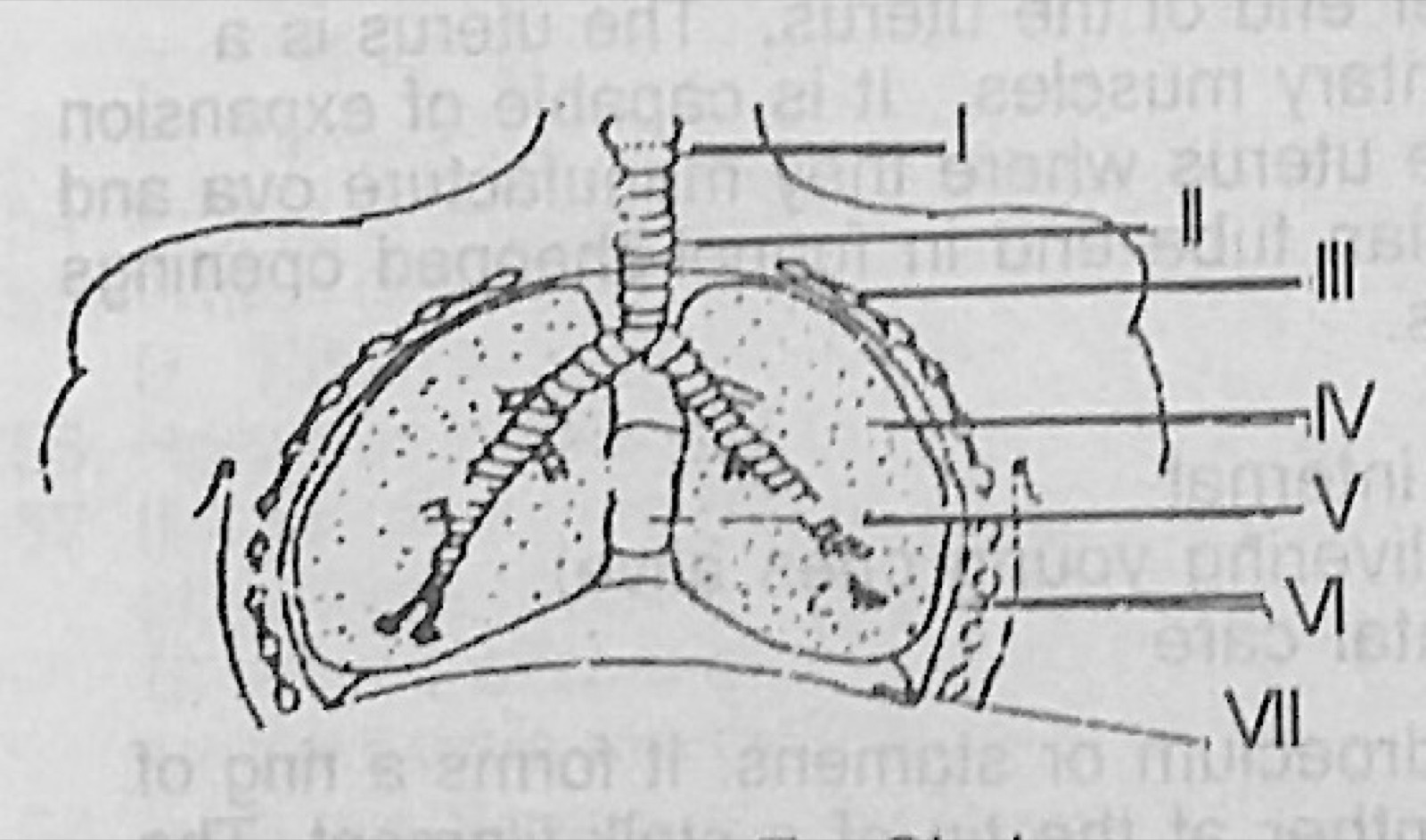
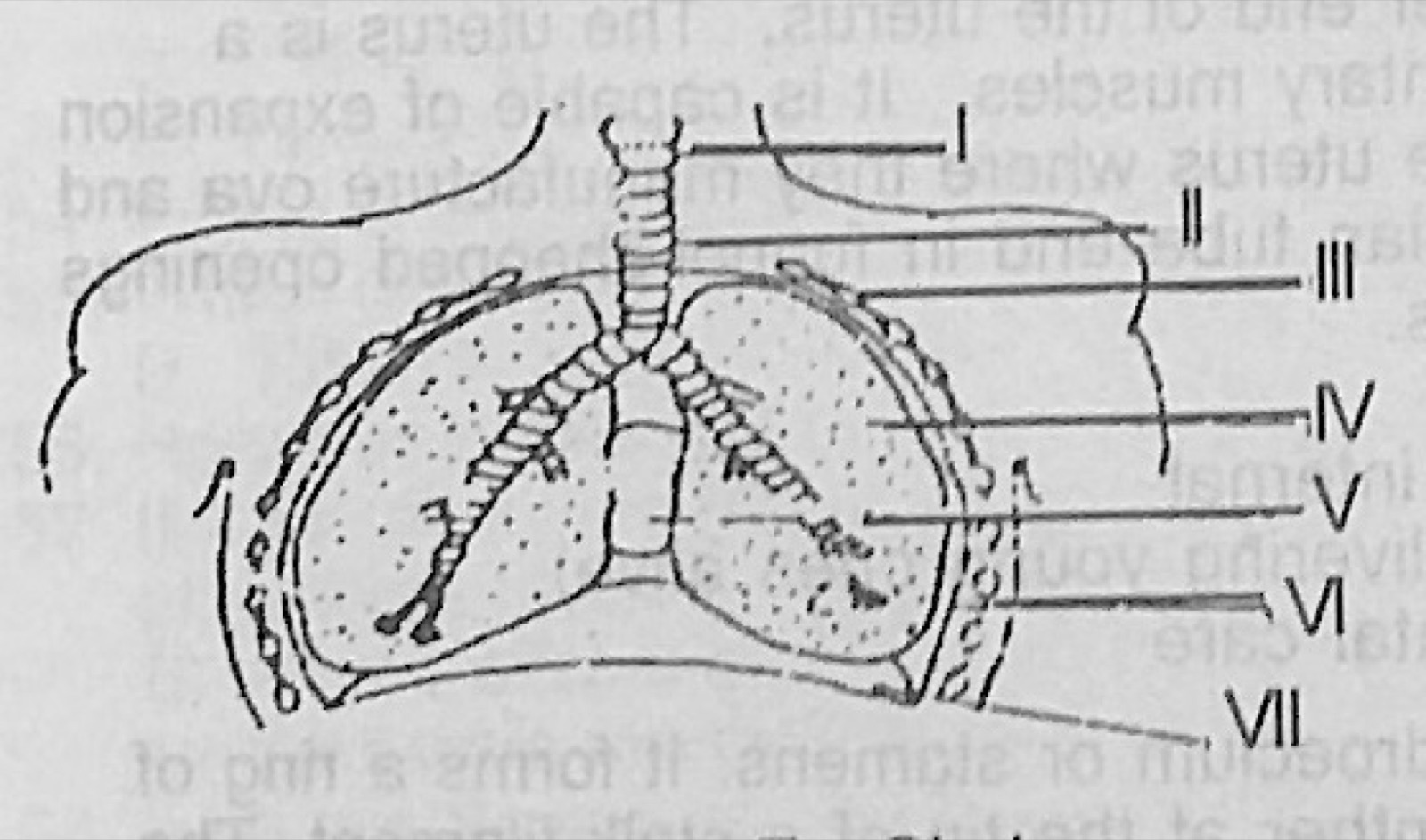
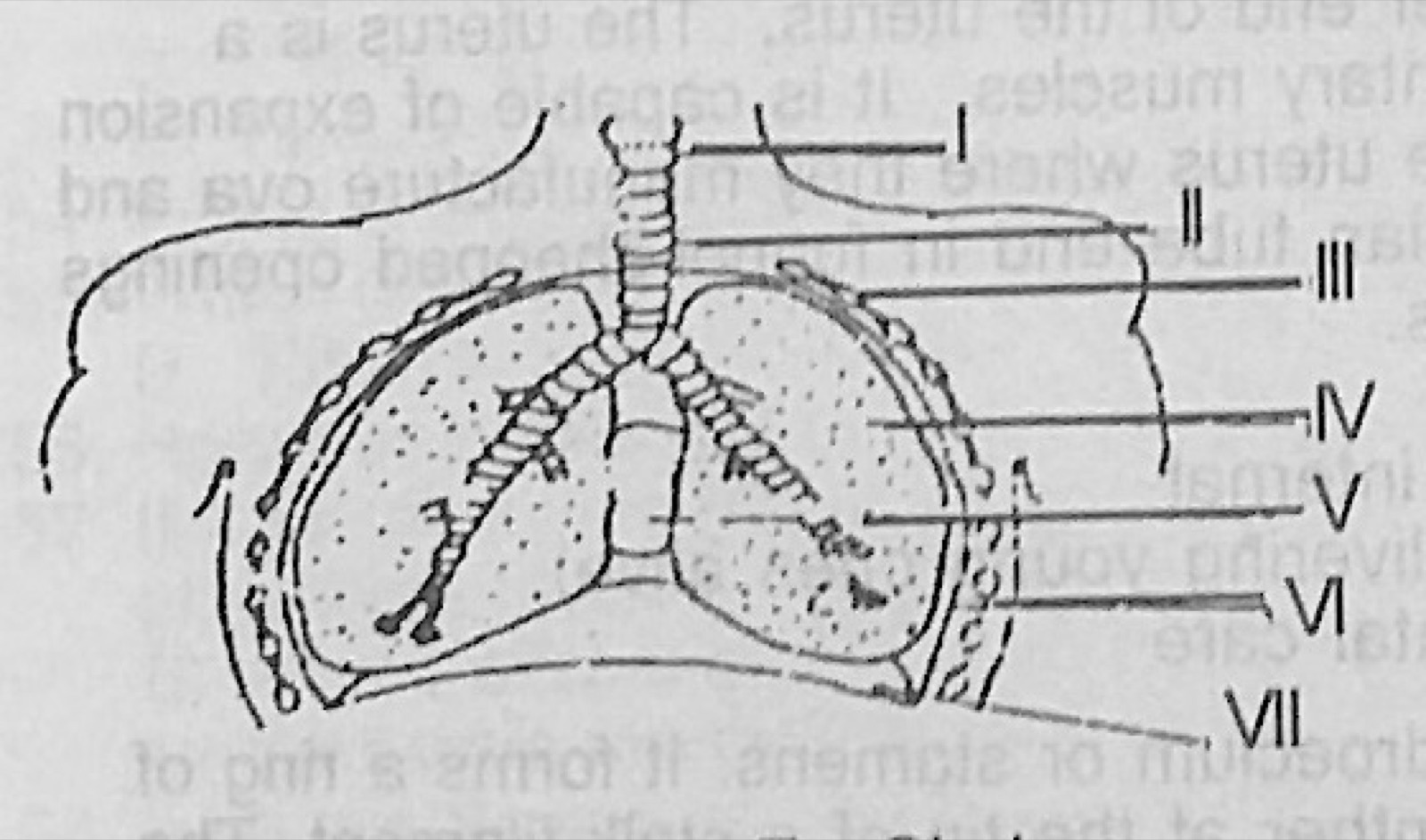
Use the diagram of the human thorax (parts labelled I to VII) to answer this question. Exchange of gases takes place in the air sacs contained in the part labelled
A.I
B.II
C.IV
D.V
E.VI
Show the answer and explanation
Answer: C (IV)
Explanation
The air sacs (alveoli) are inside the lungs, labelled IV.
When an axon is at rest, the concentration of ions on either side of the membrane are different. Which of the following is correct about the concentrations of ions on either side of the membrane?
A.There is an excess of potassium ions inside the axon and an excess of sodium ions outside
B.The inside of the axon becomes positively charged while the outside is negatively charged
C.There is an excess of sodium ions on the inner side of the axon
D.Chloride and potassium ions begin to move across the membrane
E.Calcium ions accumulate on the inner side of the axon
Show the answer and explanation
Answer: A (There is an excess of potassium ions inside the axon and an excess of sodium ions outside)
Explanation
At rest the sodium pump keeps more K⁺ inside and more Na⁺ outside the axon.
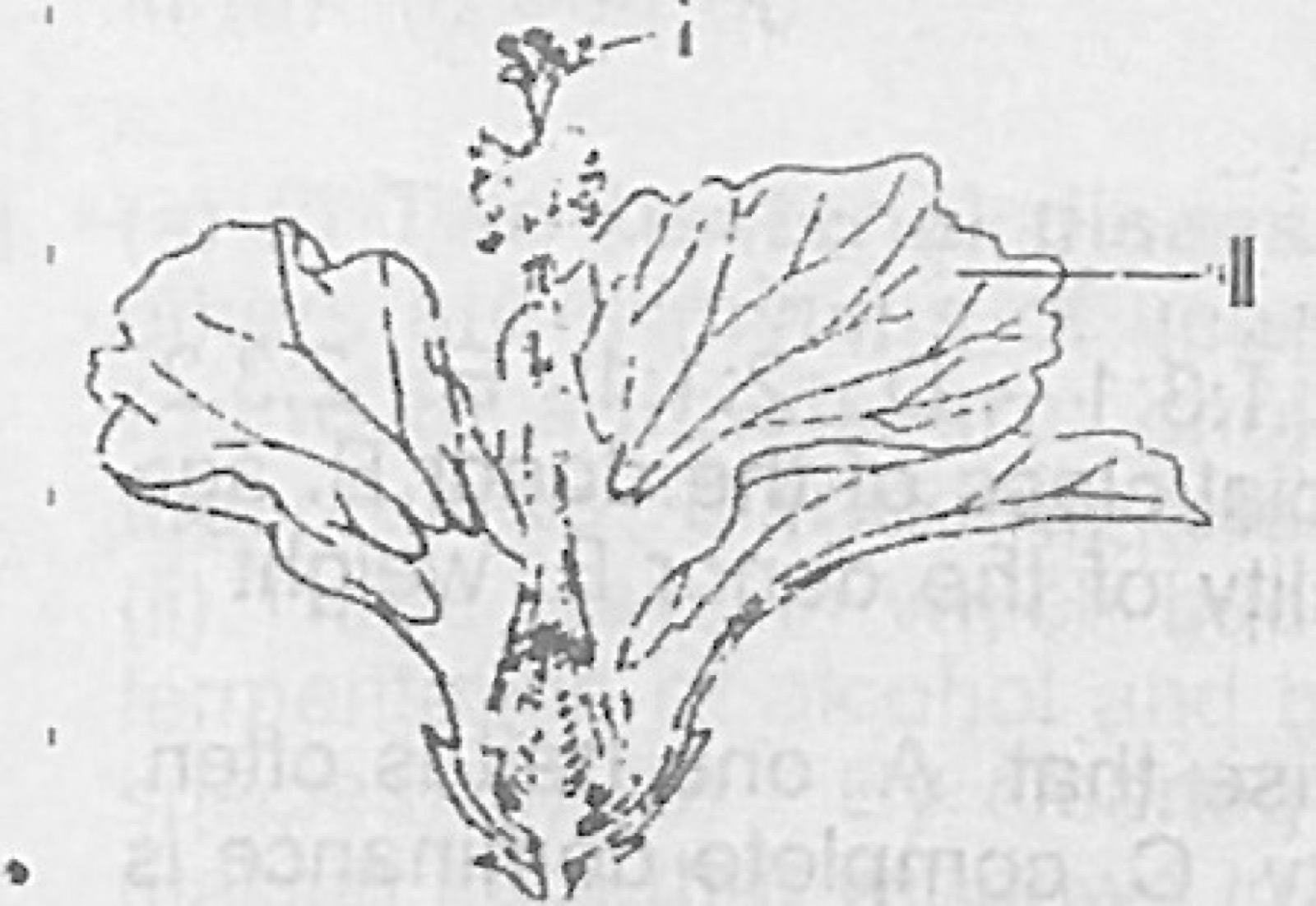
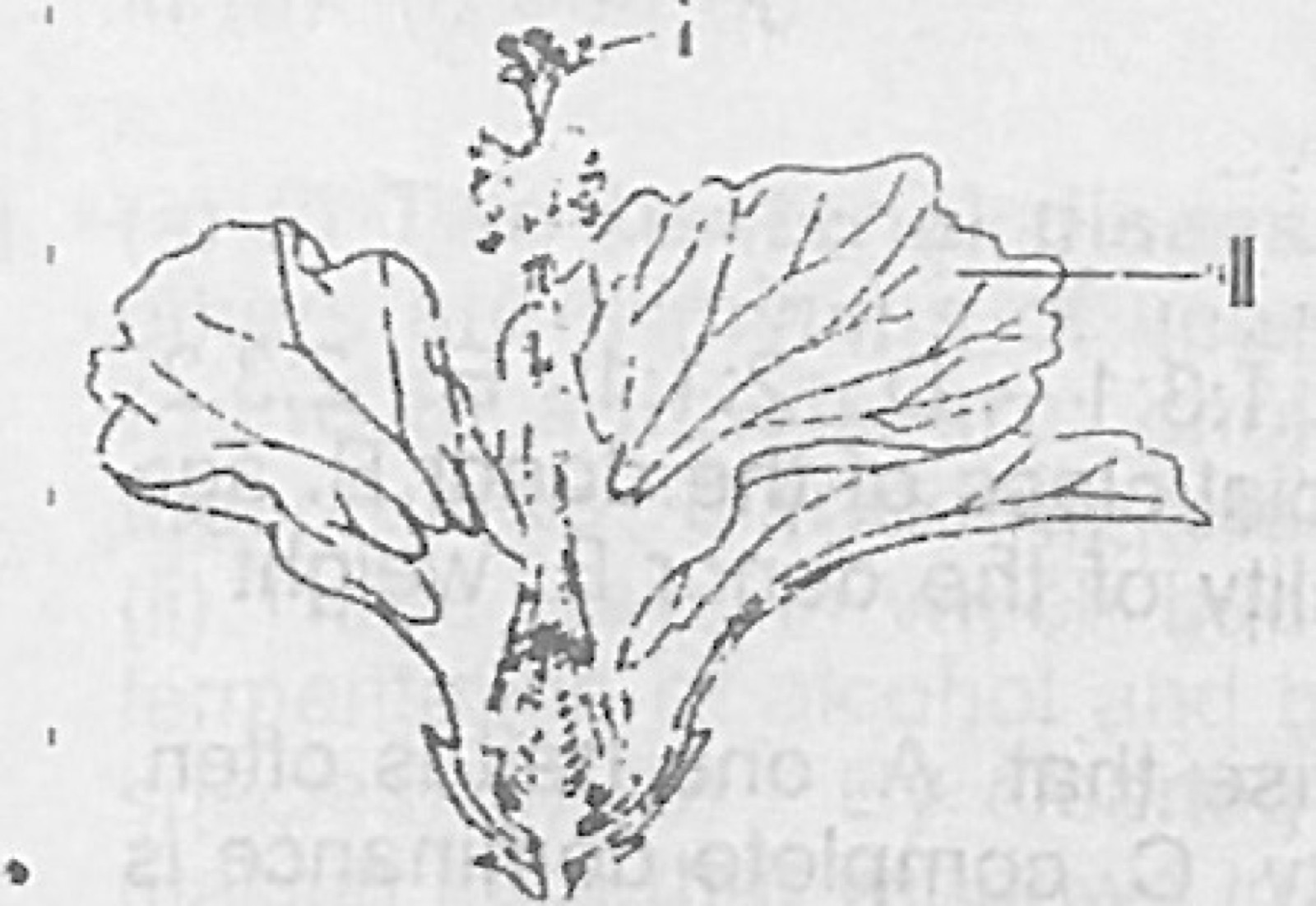
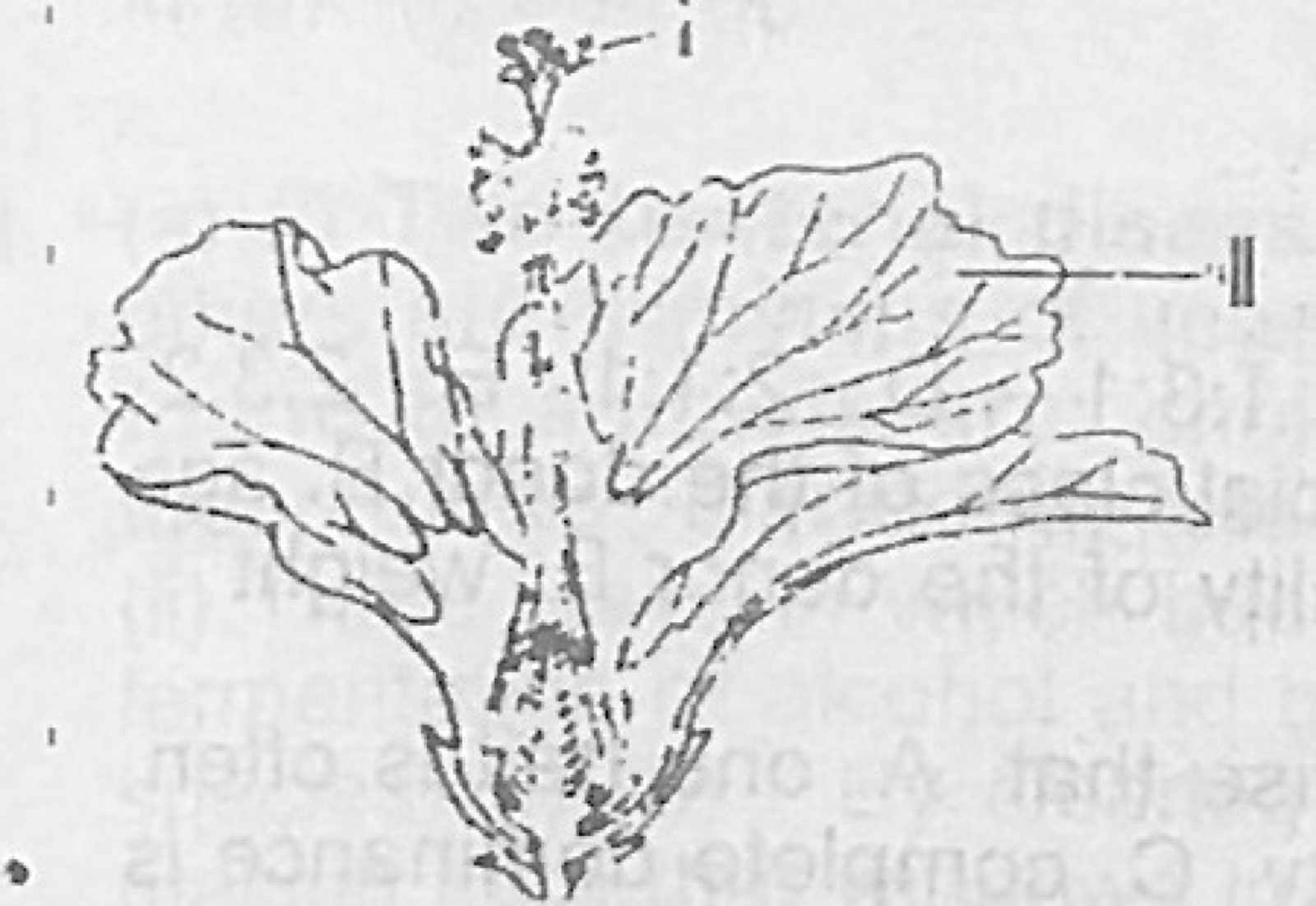
Use the diagram of a flower (parts labelled I and II) to answer this question. How would you describe the position of the ovary in relation to the receptacle?
A.Superior
B.Inferior
C.Semi-inferior
D.Gamosepalous
E.Polysepalous
Show the answer and explanation
Answer: A (Superior)
Explanation
In this flower (hibiscus type) the ovary sits on top of the receptacle above the other parts, so it is superior.
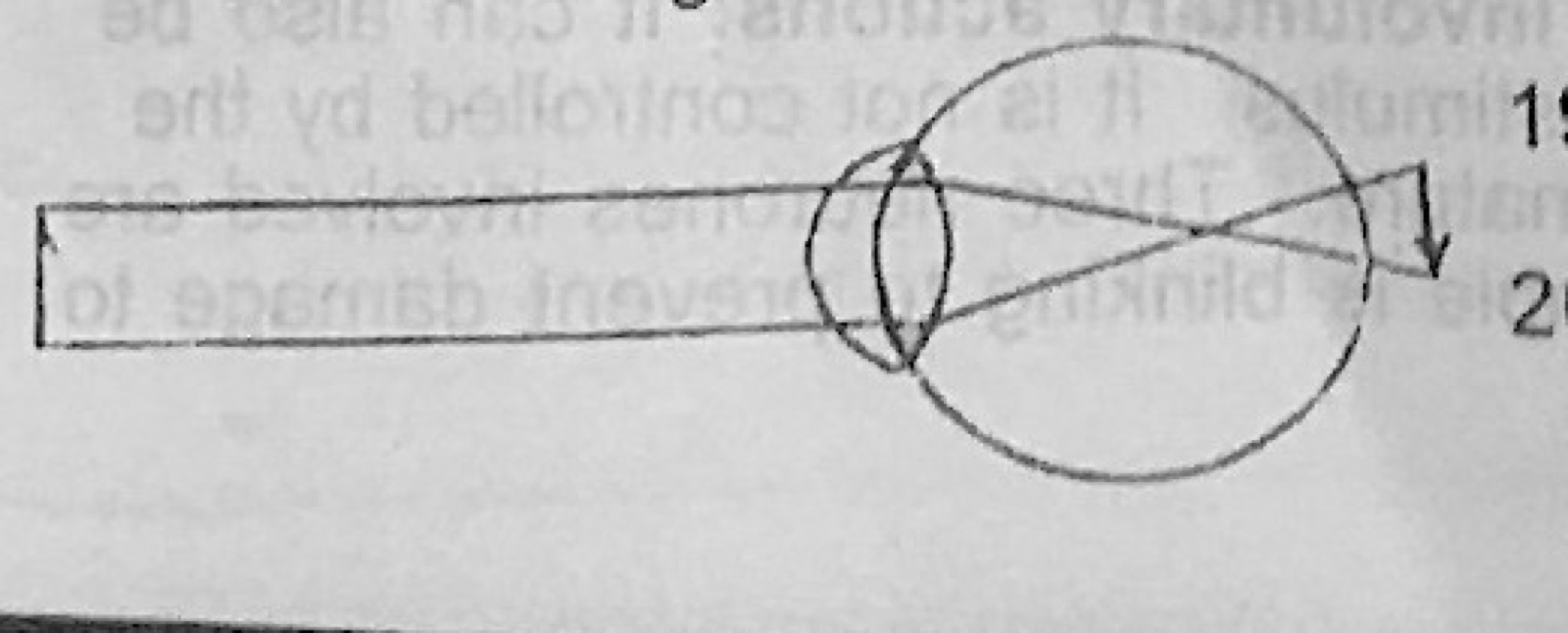
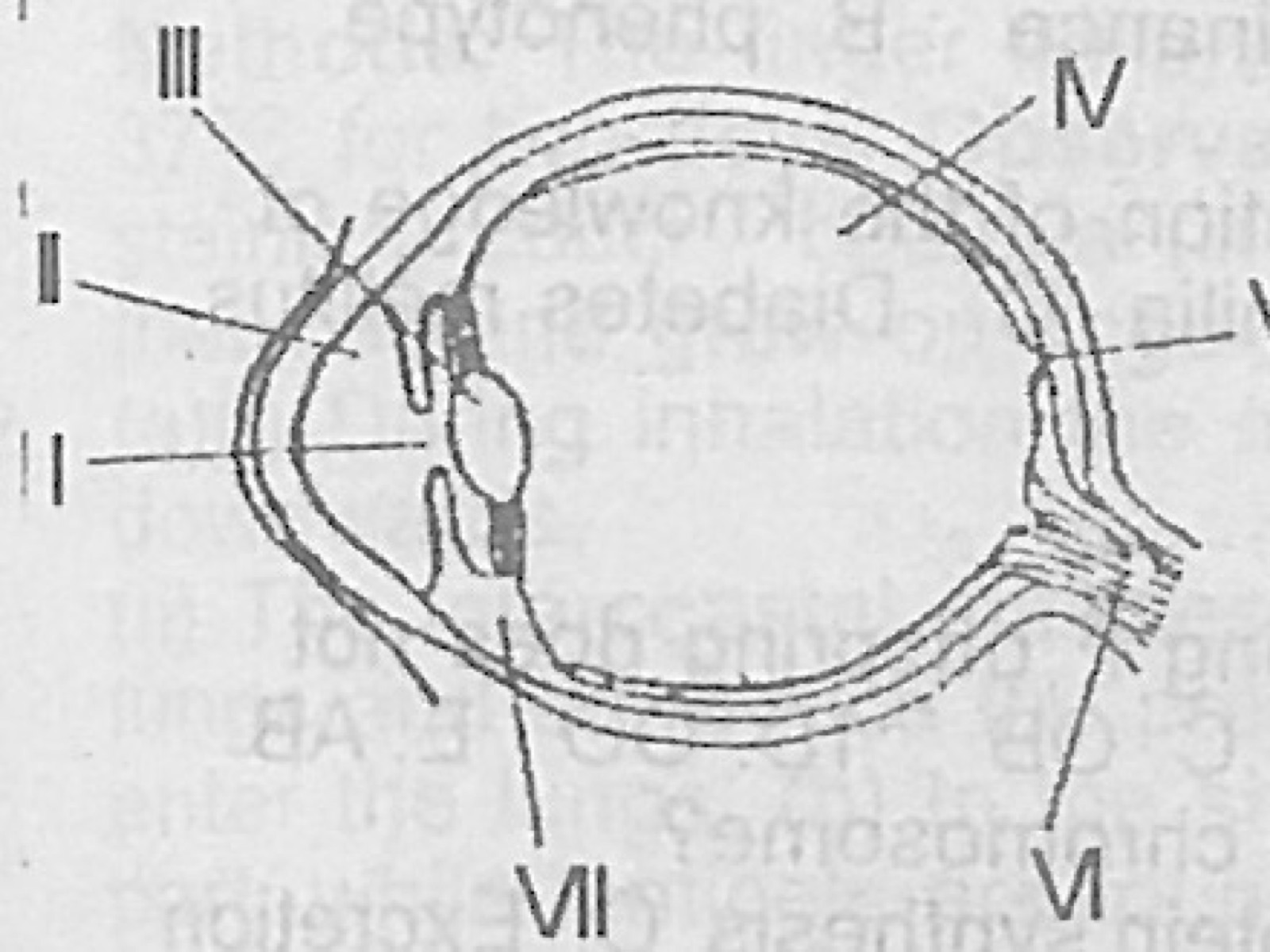
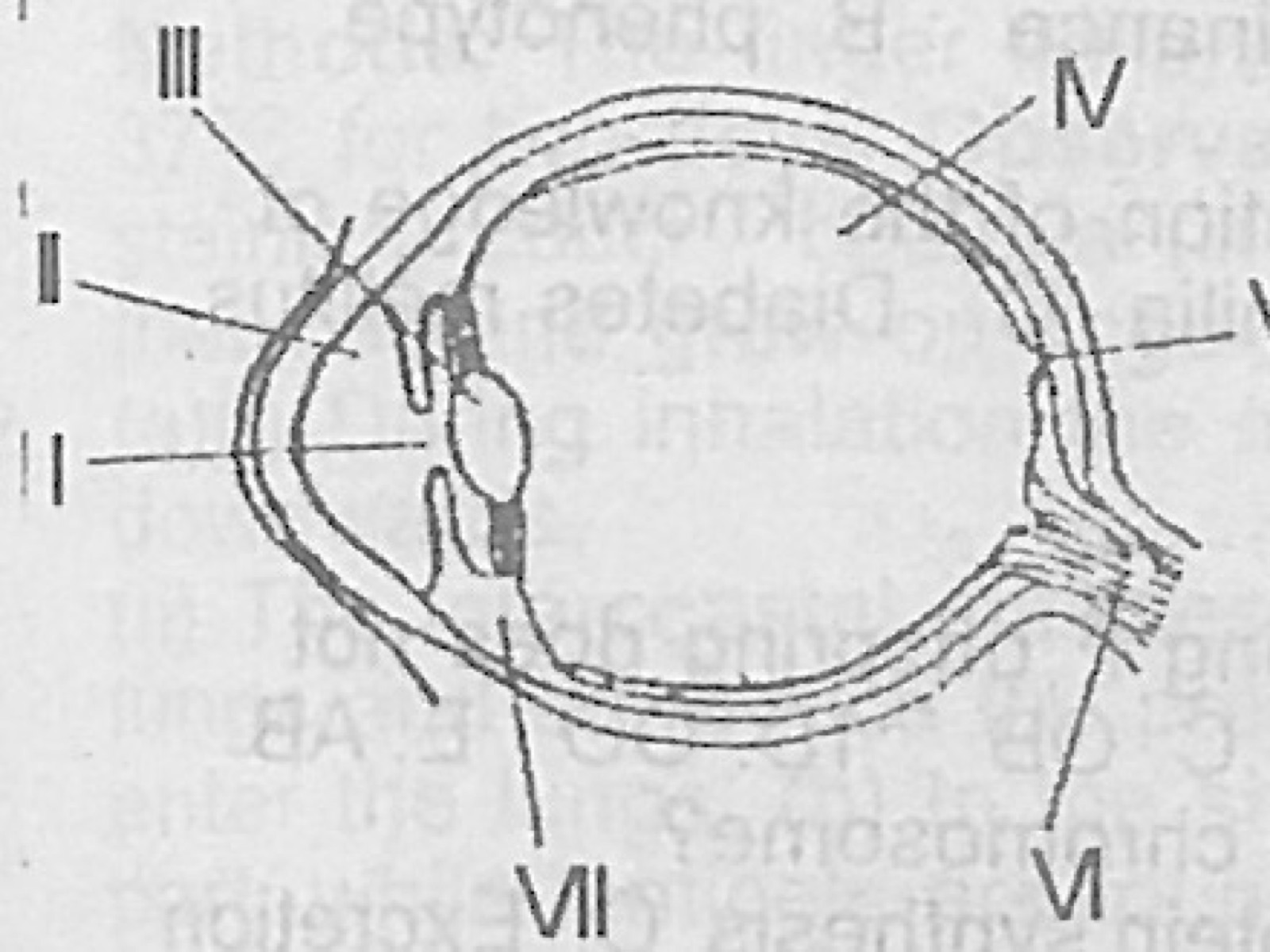
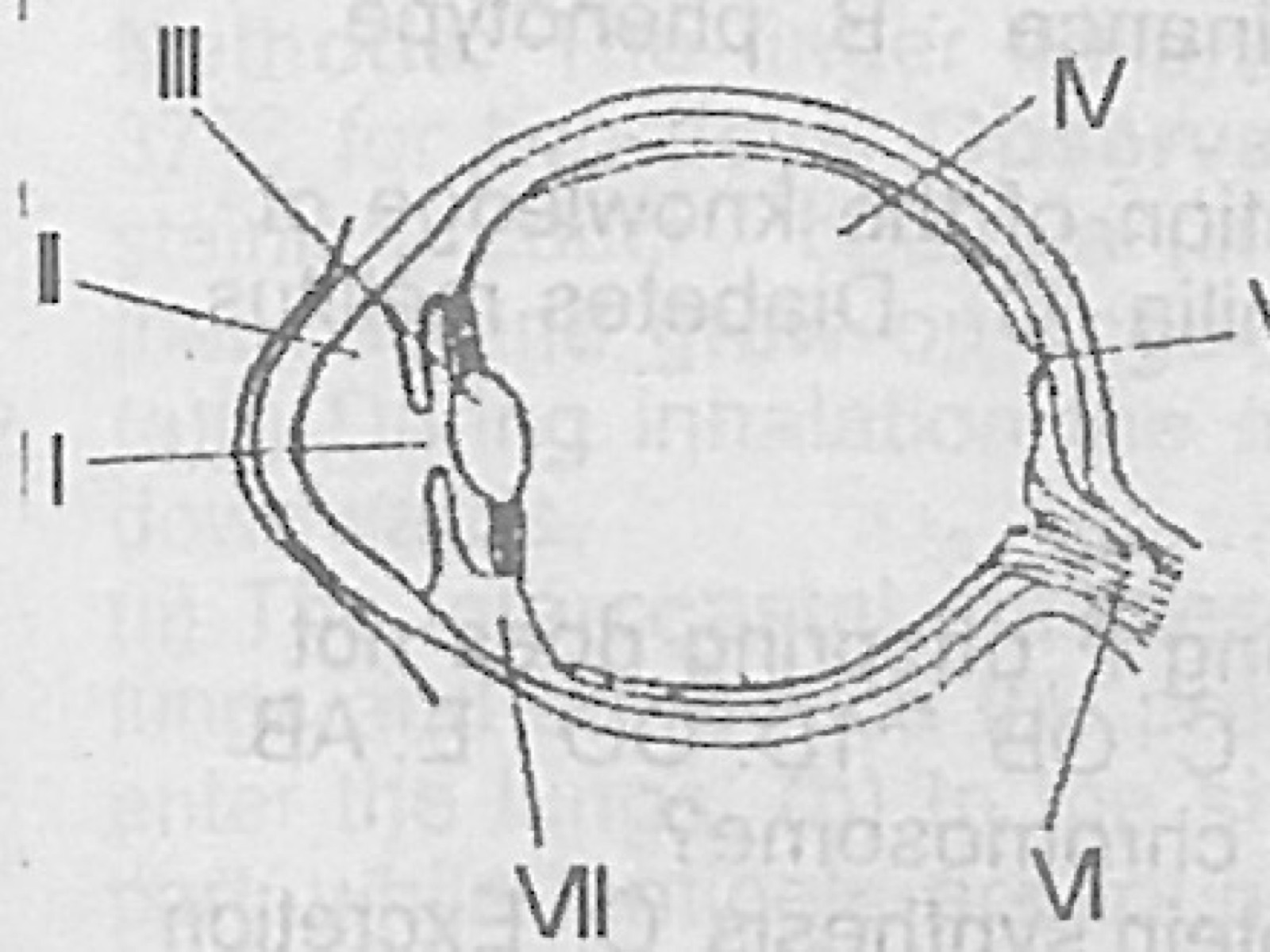
Use the diagram of the eye (parts labelled I to VII) to answer this question. Which of the following structures are adjusted in focusing the image of a distant or near object on the retina?
A.I and II
B.II and III
C.III and VII
D.IV and V
E.V and VII
Show the answer and explanation
Answer: C (III and VII)
Explanation
Focusing (accommodation) is done by the ciliary body and suspensory ligaments changing the shape of the lens.
The table below indicates the result of an experiment during which grains of different colours in two maize cobs were counted Maize Cob I: White 30, Pink 60, Red 30 Maize Cob II: White 50, Pink 99, Red 49 Which of the following ratios agrees with the result?
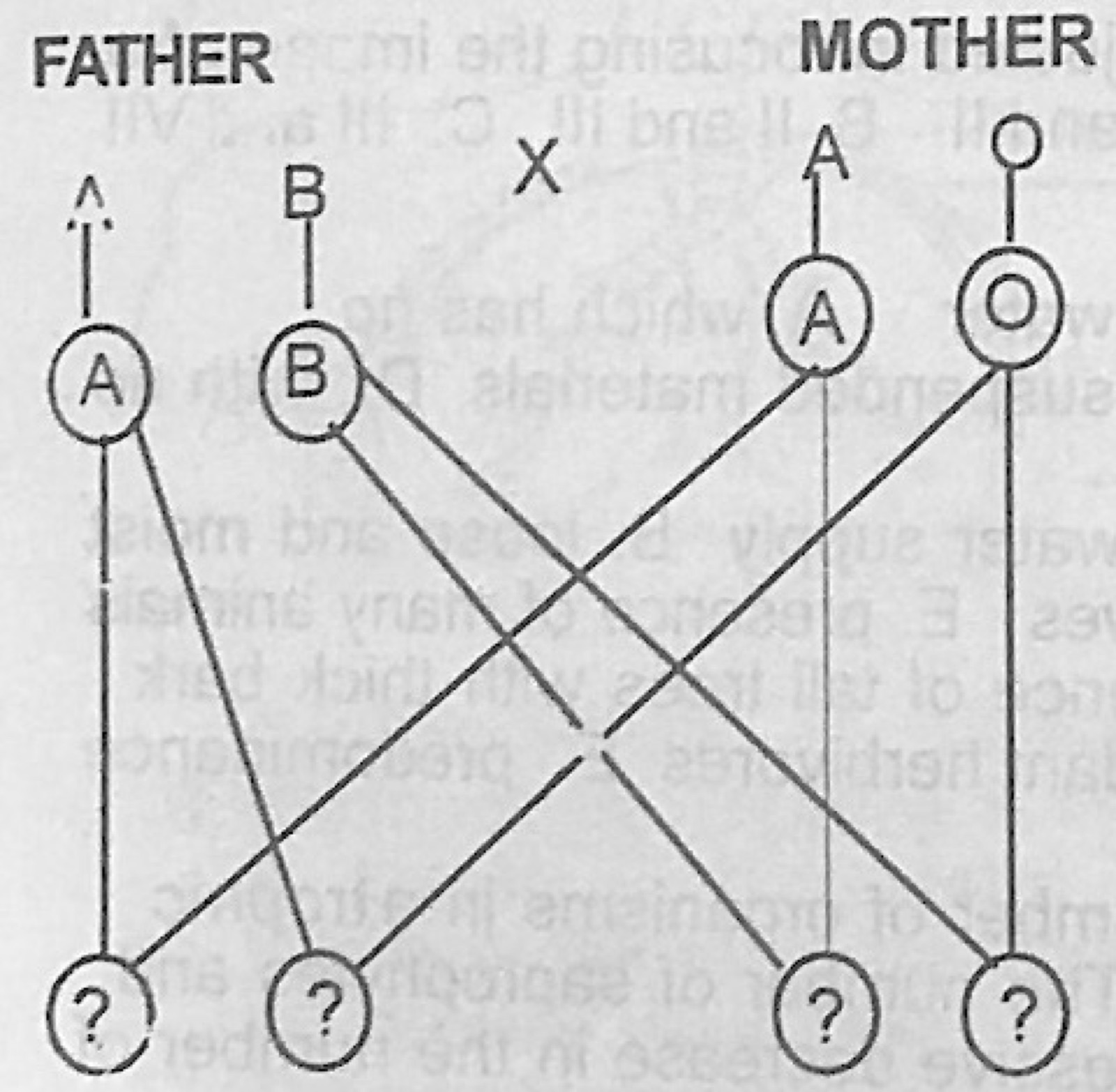
Study the genetic cross below showing the inheritance of blood groups. From the cross above which of the following F offspring does not belong to the father?
A.AA
B.AO
C.OB
D.OO
E.AB
Show the answer and explanation
Answer: D (OO)
Explanation
Father (A, B) × mother (A, O) gives AA, AO, AB and BO; every child gets A or B from the father, so OO is impossible.
(a) (i) List two diseases each of plants and animals caused by bacteria (ii) State three ways in which bacteria are useful. (b) State three methods by which mosquitoes can be controlled and state the reason for each method. (c) Describe an experiment to demonstrate the presence of bacteria under the finger nails
Show the model answer
Model answer
(a)(i) Plants (two): soft rot of vegetables (e.g. carrot, yam), bacterial blight of cassava, bacterial wilt of tomato, crown gall, black arm of cotton Animals (two): tuberculosis, cholera, typhoid, tetanus, gonorrhoea, anthrax, pneumonia (ii) Any three: nitrogen fixation and nitrification (soil fertility); decay of dead matter/recycling nutrients; sewage treatment; making foods (yoghurt, cheese, vinegar); making antibiotics/vaccines; digestion of cellulose in ruminants; tanning and retting (b) Any three with reasons: drain stagnant water/clear bushes and cans – removes breeding sites; spray oil/kerosene on water – suffocates larvae; introduce larva-eating fish (Tilapia/Gambusia) – biological control; spray insecticides – kills adults; use nets/screens – prevents bites (c) Prepare sterile nutrient agar in petri dishes; scrape dirt from under the finger nails with a sterile pin/loop and streak it on one plate; leave a second plate unopened as control; seal and incubate (warm place, about 37 °C) for 2–3 days Result: colonies of bacteria appear on the inoculated plate but not on the control; so bacteria are present under finger nails
Explanation
Always describe a control plate in a microbiology experiment.
(a) Describe the process of inhalation in man (b) Describe briefly the process of gaseous exchange in the shoot system of flowering plants (c) Describe an experiment to demonstrate the effect of distilled water on mammalian red blood cell.
Show the model answer
Model answer
(a) External intercostal muscles contract, ribs move upwards and outwards; diaphragm muscles contract and the diaphragm flattens (moves down); volume of thoracic cavity increases, pressure inside falls below atmospheric pressure; air rushes in through nose, trachea and bronchi into the lungs (b) Gases diffuse through stomata in leaves (and lenticels in woody stems) into intercellular air spaces; they dissolve in the moist cell walls and diffuse into/out of cells; in daylight CO₂ enters and O₂ leaves (photosynthesis greater than respiration); at night O₂ enters and CO₂ leaves (c) Put a drop of blood in distilled water and a drop in 0.9% salt (isotonic) solution as control; observe under a microscope after a few minutes In distilled water the red cells swell and burst (haemolysis) because water enters by osmosis – the liquid turns clear red; in salt solution the cells stay normal
(a) Give a brief description of the characteristics of the Northern Guinean Savanna (b) Describe how you can estimate the density of a plant species using a quadrat.
Show the model answer
Model answer
(a) Rainfall about 1000–1500 mm with a long dry season (5–6 months); tall grasses (e.g. elephant grass, spear grass) in tufts; scattered trees of medium height with thick, fire-resistant bark and twisted trunks (e.g. shea butter, locust bean); many trees shed leaves in the dry season; frequent bush fires; deep roots and underground stems; many grazing animals (b) Choose and mark out the study area; throw a quadrat (e.g. 1 m²) at random several times (e.g. 10); count the number of the chosen species in each throw; find the mean number per quadrat; density = mean number per quadrat ÷ quadrat area (number per m²); multiply by the total area to estimate the total number
Explanation
Throw the quadrat at random several times and use the average.
(a) List four characters which can be transmitted from parent to offspring in man (b) State two differences between mitosis and meiosis (c) Explain briefly the importance of meiosis and fertilization in the reproduction of organisms (d) In a monohybrid cross between a pure breeding plant that produces blue flowers and a pure breeding plant that produces white flower, the F1 generation produced only blue flowers. By means of labelled cross diagrams, state the type of flowers you would expect if the F1 generation is (i) self-pollinated (ii) cross-pollinated with a pure breeding plant that produces white flowers. Give reasons for your answers in (d) (i) and (ii)
Show the model answer
Model answer
(a) Any four: skin colour, height, eye colour, blood group, tongue rolling, sickle cell trait, albinism, hair colour/texture, colour blindness (b) Any two: mitosis gives two daughter cells, meiosis four; mitosis keeps the diploid number, meiosis halves it (haploid); mitosis in body cells, meiosis in reproductive organs; no crossing over in mitosis, crossing over in meiosis; daughter cells of mitosis identical, of meiosis different (c) Meiosis halves the chromosome number in gametes so that fertilisation restores the diploid number, keeping it constant from generation to generation; both bring about new combinations of genes, causing variation (d) Let B = blue (dominant), b = white; parents BB × bb, F₁ all Bb (blue) (i) Bb × Bb → BB, Bb, Bb, bb: 3 blue : 1 white – each parent gives B or b and the dominant blue shows whenever B is present (ii) Bb × bb → Bb, Bb, bb, bb: 1 blue : 1 white – the white parent gives only b, so half the offspring are bb (white)
Explanation
Show parents, gametes and offspring in each cross diagram, with a key to the symbols.