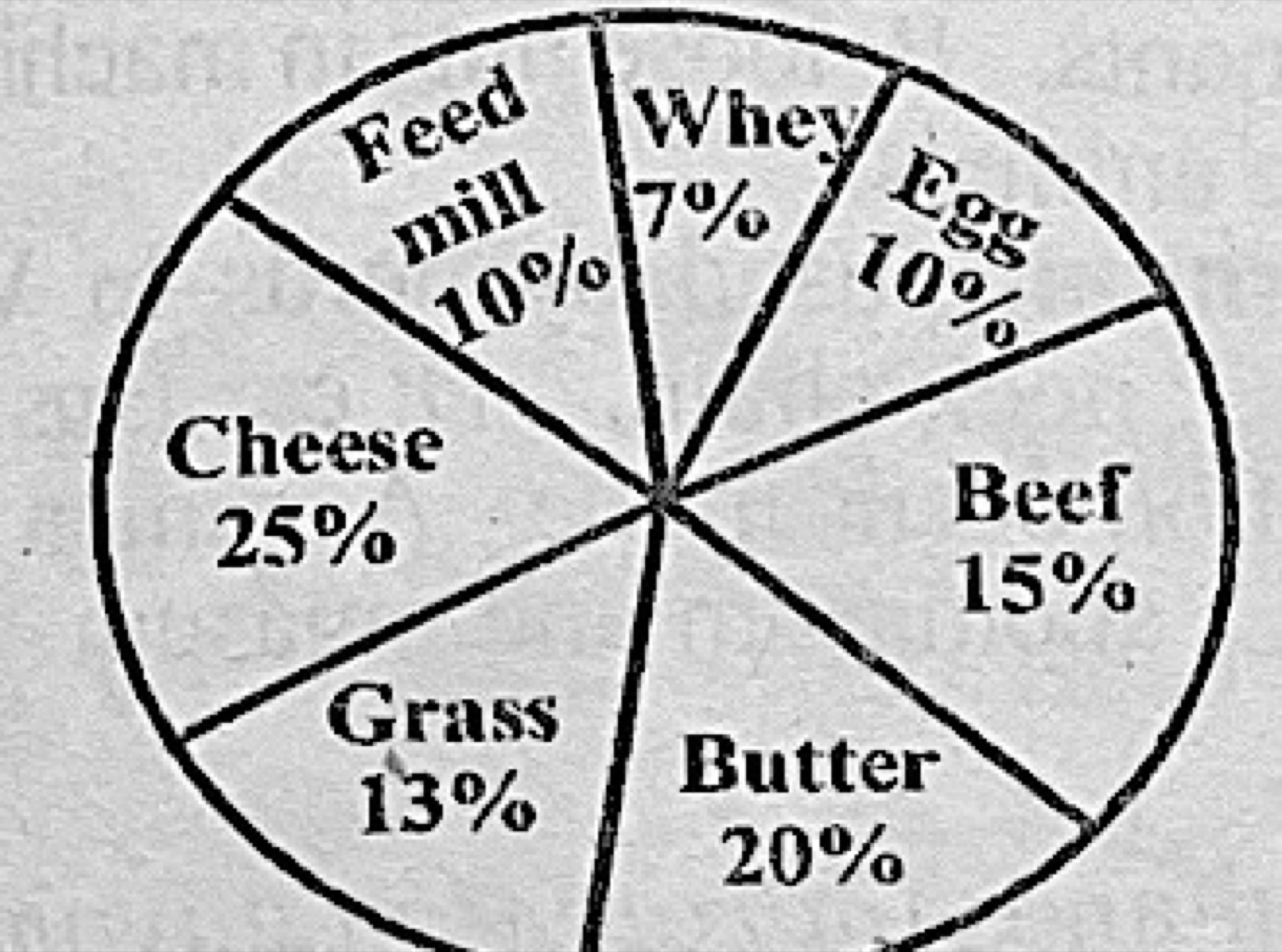
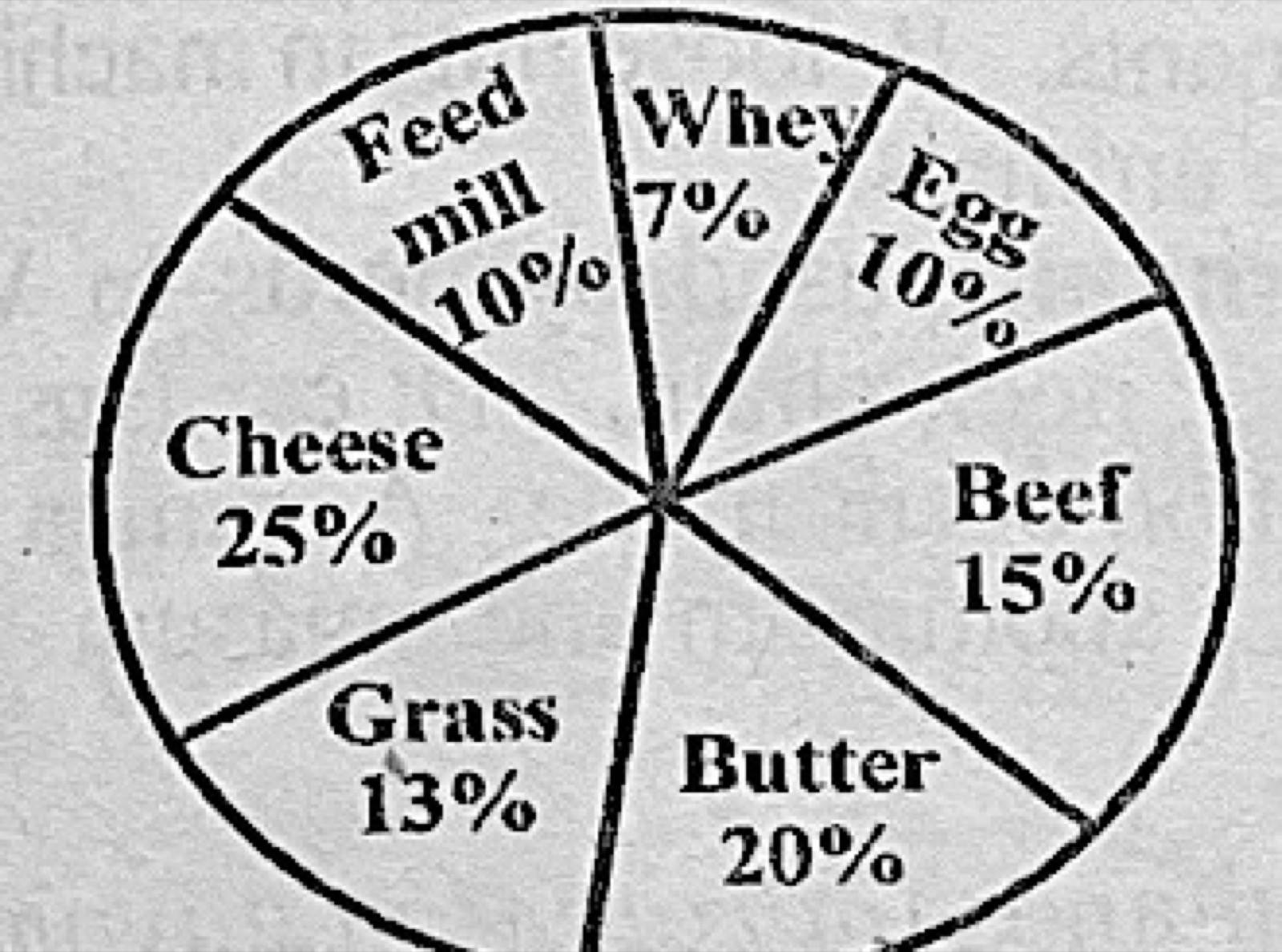
The pie chart below illustrates the record of sales of a livestock farmer. If the total income of the farmer is ₦11,544,200.00, calculate the income for dairy products.
A.₦ 1,962,514.00
B.₦4,040,470.00
C.₦ 5,194,890.00
D.₦ 6,002,984.00
Show the answer and explanation
Answer: D (₦ 6,002,984.00)
Explanation
52% of ₦11,544,200 = 0.52 × 11,544,200 = ₦6,002,984.
Use this information to answer the question. Guinea grass was planted on a 40 m × 100 m land with a spacing of 0.5 m × 0.75 m. Determine the population of the Guinea grass.
A.1,500
B.5,333
C.8,000
D.10,666
Show the answer and explanation
Answer: D (10,666)
Explanation
Area = 40 × 100 = 4,000 m²; space per plant = 0.5 × 0.75 = 0.375 m²; 4,000 ÷ 0.375 ≈ 10,666 plants.
Use this information to answer the question. Guinea grass was planted on a 40 m × 100 m land with a spacing of 0.5 m × 0.75 m. If the percentage germination of Guinea grass is 80%, determine the plant population.
(a)(i) Draw and label four parts of a land snail. (ii) State four features of a good housing unit for rearing snails. (iii) Name three predators of land snail. (b) Mention three insect pests of sheep. (c) State four ways in which the productivity of farm animals could be enhanced.
Show the model answer
Model answer
(a)(i) A neat drawing of a land snail with any four labels: shell; whorl/spire; foot; head; tentacles (long, with eyes; short); mouth; mantle; pneumostome (breathing pore) (ii) Any four: shaded and cool; damp/humid environment; soft, loamy, well-drained soil; escape-proof walls/netting; protected from predators; well ventilated; easy to clean; separate pens for adults and young (iii) Any three: rats/rodents; snakes; frogs/toads; lizards; birds (crows, hawks); ants; beetles; millipedes; humans (b) Any three: lice; keds; blowflies (wool maggots); nasal botfly; biting flies; tsetse fly; mosquitoes (c) Any four: use improved breeds/crossbreeding/AI; balanced feeding; good disease and parasite control; good housing and sanitation; adequate water; culling unproductive animals; good record keeping; quarantine new stock
Explanation
Your drawing should be large with clear label lines.
(a)(i) State three advantages of introduction in animal improvement programme. (ii) State three disadvantages of selection in animal improvement programme. (b) List four methods of artificial selection. (c) Give four physical features of animals which could be selected for breeding. (d) Mention six features of a good laying chicken.
Show the model answer
Model answer
(a)(i) Any three: quickly brings in animals with desirable traits; increases genetic variety; raises productivity; can be crossed with local breeds for hybrid vigour; adds disease resistance (ii) Any three: slow/time consuming; may remove some good traits; needs accurate records; requires skill and is costly; does not introduce new traits (b) Any four: mass (individual) selection; pedigree selection; progeny testing; family selection; sib selection; tandem selection; independent culling (c) Any four: good body size and conformation; strong legs and feet; good udder/teats (correct number); sound teeth/jaw; good coat or plumage; no physical defects; well-developed reproductive organs (d) Any six: large, red, moist, warm comb and wattles; bright, alert eyes; moist, large, oval vent; wide pelvic bones (three fingers apart); soft, deep, pliable abdomen; pale shanks and beak (yellow pigment used up); active and alert; good appetite; late moulting
(a) State five methods of preventing diseases in farm animals. (b) Mention five factors which could predispose livestock to diseases. (c)(i) Give three effects of ticks on farm animals. (ii) State three ways of controlling ticks on farm animals. (d) List four symptoms of coccidiosis in poultry.
Show the model answer
Model answer
(a) Any five: vaccination; good sanitation and hygiene; quarantine of new animals; isolation of sick animals; balanced feeding; avoiding overcrowding; regular deworming and dipping; using resistant breeds; footbaths; proper disposal of carcasses (b) Any five: poor nutrition/malnutrition; overcrowding; poor housing and ventilation; poor sanitation; stress (transport, weather); age (very young or old); injuries/wounds; parasites; lack of vaccination; bringing in new animals without quarantine (c)(i) Any three: suck blood causing anaemia; transmit diseases (babesiosis, heartwater, anaplasmosis); damage hides/skins; cause irritation, wounds and weight loss; reduce milk yield; tick paralysis (ii) Any three: dipping; spraying or pour-on acaricides; hand picking; rotational grazing/pasture spelling; burning infested pasture; keeping tick-resistant breeds (d) Any four: bloody or watery diarrhoea; ruffled feathers; drooping wings; loss of appetite; weight loss; pale comb; dullness/huddling; drop in egg production; sudden death
(a) Explain the term malnutrition in farm animals. (b) State five effects of malnutrition in sheep. (c) State five ways in which malnutrition could be prevented in rabbits. (d) Mention two sources of each of the following nutrients in poultry feed: (i) Carbohydrates; (ii) Protein; (iii) Fats and oils; (iv) Calcium.
Show the model answer
Model answer
(a) Malnutrition is a condition in which an animal's feed lacks one or more nutrients, or contains them in wrong proportions, leading to poor health and performance (b) Any five: slow growth/stunting; loss of weight; low wool yield and poor wool quality; low fertility and fewer lambs; low milk yield; weak lambs/high mortality; deficiency diseases; low resistance to disease (c) Any five: feed a balanced ration (pellets plus forage); provide clean water at all times; give mineral and vitamin supplements; feed according to age and stage (pregnant, lactating does); allow coprophagy; avoid mouldy feed; deworm regularly; avoid overcrowding (d)(i) Carbohydrates: maize; sorghum; millet; cassava; wheat offal; rice bran (ii) Protein: fish meal; soya bean meal; groundnut cake; blood meal; meat and bone meal (iii) Fats and oils: palm oil; groundnut oil; soya oil; full-fat soya; fish oil (iv) Calcium: oyster shell; bone meal; limestone; eggshell; dicalcium phosphate
(a) Name three internal organs found in each of the following regions of a farm animal: (i) Thoracic region; (ii) Abdominal region. (b)(i) List four records that could be kept by a poultry farmer. (ii) State four reasons for keeping records in poultry production. (c)(i) State three damages that could be caused by rats in a deep litter house. (ii) Mention three ways of controlling rats on animal farm.
Show the model answer
Model answer
(a)(i) Thoracic, any three: heart; lungs; trachea; oesophagus; thymus; diaphragm (boundary) (ii) Abdominal, any three: stomach; liver; intestines; kidneys; spleen; pancreas; bladder; caecum (b)(i) Any four: stock/inventory record; feed record; egg production record; health/vaccination record; mortality record; sales and expenditure records; labour record (ii) Any four: shows profit or loss; helps planning and decision making; helps identify and cull poor layers; useful for obtaining loans; helps disease control; helps to detect theft/losses; for tax assessment (c)(i) Any three: eat and waste feed; eat eggs and kill chicks; spread diseases (e.g. salmonellosis); damage equipment, walls and bags; contaminate feed with droppings (ii) Any three: rat-proof buildings/wire mesh; traps; poison baits (rodenticides); keeping cats; good sanitation and clearing bushes; proper feed storage
(a) State three changes that take place after the chopped forage has been compressed and covered in silage preparation. (b) Give two reasons each for carrying out each of the following practices in pasture management; (i) weeding; (ii) controlled burning; (iii) Irrigation; (iv) Fertilizer application; (v) Liming. (c) State two functions of phosphorus in animal nutrition. (d) Complete the table below by ticking (√) the appropriate column to indicate the effect of low temperature on farm animals. Parameter | Increase | Decrease | Normal (i) Water intake | | | (ii) Grazing time | | | (iii) Milk yield | | | (iv) Feed intake | | | (v) Egg production | | |
Show the model answer
Model answer
(a) Any three: the plant cells use up the trapped oxygen (respiration) and heat is produced; anaerobic bacteria ferment the sugars; lactic acid (and some acetic acid) is formed; the pH falls to about 4, which stops further bacterial and fungal action and preserves the forage; colour changes to yellowish-green with a pleasant sour smell (b)(i) Weeding: removes competition for nutrients, water and light; removes poisonous or unpalatable plants; reduces pests (ii) Controlled burning: removes old, dry, fibrous growth to encourage fresh shoots; kills ticks and other pests; controls bushes and weeds (iii) Irrigation: supplies water in the dry season; keeps forage growing all year; raises yield (iv) Fertilizer application: supplies nutrients; increases yield and quality/protein of forage; faster regrowth (v) Liming: reduces soil acidity; supplies calcium; helps legume nodulation and nutrient uptake (c) Any two: bone and teeth formation (with calcium); eggshell formation; energy metabolism (ATP); part of nucleic acids and cell membranes; acid–base balance; milk production; fertility (d) Water intake: decrease; Grazing time: increase; Milk yield: decrease; Feed intake: increase; Egg production: decrease
Explanation
In cold weather animals eat more to keep warm but drink less and produce less.