WAEC Animal Husbandry 2021 past questions and answers

45 questions. Try each one, then open the answer to check yourself and read the explanation.

Question 1

Digestive System of Farm Animals

An example of a non-ruminant farm animal is

  1. A.cattle.
  2. B.goat.
  3. C.rabbit.
  4. D.sheep.
Show the answer and explanation

Answer: C (rabbit.)

Explanation

The rabbit has a simple stomach; cattle, goats and sheep are ruminants.

Open this question

Question 2

Anatomy and Physiology of Farm Animals

A tube-like structure that carries air to the lungs of farm animals is

  1. A.bronchiole.
  2. B.diaphragm.
  3. C.oesophagus.
  4. D.trachea.
Show the answer and explanation

Answer: D (trachea.)

Explanation

The trachea (windpipe) carries air from the throat to the lungs.

Open this question

Question 3

Digestive System of Farm Animals

In ruminants, gastric juice is produced in the

  1. A.abomasum.
  2. B.omasum.
  3. C.reticulum.
  4. D.rumen.
Show the answer and explanation

Answer: A (abomasum.)

Explanation

The abomasum is the glandular 'true stomach' that secretes gastric juice.

Open this question

Question 4

Reproduction in Farm Animals

The practice of feeding a special diet to ewe before mating is called

  1. A.flushing.
  2. B.supplementation.
  3. C.steaming-up.
  4. D.creep feeding.
Show the answer and explanation

Answer: A (flushing.)

Explanation

Flushing is extra feeding before mating to increase ovulation.

Open this question

Question 5

Reproduction in Farm Animals

The male hormone produced by farm animals is called

  1. A.oestrogen.
  2. B.oxytocin.
  3. C.progesterone.
  4. D.testosterone.
Show the answer and explanation

Answer: D (testosterone.)

Explanation

Testosterone is made by the testes.

Open this question

Question 6

Reproduction in Farm Animals

The average gestation period for cattle is

  1. A.114 days.
  2. B.150 days.
  3. C.282 days.
  4. D.340 days.
Show the answer and explanation

Answer: C (282 days.)

Explanation

A cow is pregnant for about 282 days (about 9 months).

Open this question

Question 8

Animal Improvement and Breeding

A farmer whose objective is to produce animals of the same age will practice

  1. A.selection.
  2. B.inbreeding.
  3. C.cross breeding.
  4. D.artificial insemination.
Show the answer and explanation

Answer: D (artificial insemination.)

Explanation

With AI many females can be inseminated on the same day, so the young are born at about the same time.

Open this question

Question 9

Pasture and Forage

Which of the following management practices would increase the carrying capacity of pasture?

  1. A.Draining the pasture
  2. B.Fertilizing the pasture
  3. C.Pest and disease control
  4. D.Reducing the size of pasture
Show the answer and explanation

Answer: B (Fertilizing the pasture)

Explanation

Fertilizer makes the pasture produce more forage, so more animals can be fed on it.

Open this question

Question 10

Animal Diseases

A distention of stomach in ruminants due to accumulation of gas as a result of consumption of lush pasture is known as

  1. A.bloat.
  2. B.ketosis.
  3. C.rickets.
  4. D.scurvy.
Show the answer and explanation

Answer: A (bloat.)

Explanation

Bloat is swelling of the rumen with trapped gas.

Open this question

Question 11

Poultry Production

Fumigation of a poultry house is done for the following reasons except to

  1. A.prevent ectoparasites.
  2. B.prevent endoparasites.
  3. C.repel pest infestation,
  4. D.reduce disease transmission.
Show the answer and explanation

Answer: B (prevent endoparasites.)

Explanation

Fumigation kills germs and pests in the house; it does not reach worms living inside the birds.

Open this question

Question 12

Animal Improvement and Breeding

Indiscriminate breeding could be prevented in farm animals through

  1. A.pen mating.
  2. B.flock mating.
  3. C.hand mating.
  4. D.pasture mating.
Show the answer and explanation

Answer: C (hand mating.)

Explanation

In hand mating the farmer chooses which male mates which female.

Open this question

Question 13

Animal Improvement and Breeding

If 50 cows were artificially inseminated and 37 cows conceived, determine the percentage conception rate.

  1. A.26%
  2. B.35%
  3. C.74%
  4. D.87%
Show the answer and explanation

Answer: C (74%)

Explanation

Conception rate = 37/50 × 100 = 74%.

Open this question

Question 14

Animal Diseases

A disease caused by Eimeria spp. is

  1. A.aspergillosis.
  2. B.coccidiosis.
  3. C.bird flu.
  4. D.fowl typhoid.
Show the answer and explanation

Answer: B (coccidiosis.)

Explanation

Eimeria protozoa cause coccidiosis.

Open this question

Question 15

Reproduction in Farm Animals

Which of the following signs of oestrus in ewe are correct? I. Swollen vulva II. Frequent urination III. Mounting of other ewes.

  1. A.I and II only
  2. B.I and III only
  3. C.II and III only
  4. D.I, II and III.
Show the answer and explanation

Answer: A (I and II only)

Explanation

A ewe on heat has a swollen vulva and urinates often; unlike cows, ewes seldom mount one another.

Open this question

Question 16

Animal Diseases

The organism that causes trypanosomiasis is transmitted by

  1. A.flea.
  2. B.mosquito.
  3. C.tick.
  4. D.tsetsefly.
Show the answer and explanation

Answer: D (tsetsefly.)

Explanation

Tsetse flies carry trypanosomes.

Open this question

Question 17

Digestive System of Farm Animals

The tiny numerous finger-like projections on the walls of small intestines of farm animals which help nutrient absorption is the

  1. A.duodenum.
  2. B.ileum.
  3. C.jejenum.
  4. D.villi.
Show the answer and explanation

Answer: D (villi.)

Explanation

Villi are the finger-like folds that increase the surface area for absorption.

Open this question

Question 18

Livestock Management Practices

Determine the number of pigs that could be stocked in a pig sty with dimensions of 14.0 m by 6.0 m, if the required floor space per pig is 2 m2.

  1. A.10
  2. B.42
  3. C.84
  4. D.168
Show the answer and explanation

Answer: B (42)

Explanation

Area = 14.0 × 6.0 = 84 m²; 84 ÷ 2 = 42 pigs.

Open this question

Question 19

Anatomy and Physiology of Farm Animals

In which of the following physiological processes is haemoglobin essential?

  1. A.Transport of oxygen
  2. B.Removal of nitrogen
  3. C.Regulation of blood pH
  4. D.Absorption of water and salt
Show the answer and explanation

Answer: A (Transport of oxygen)

Explanation

Haemoglobin in red blood cells carries oxygen.

Open this question

Question 20

Pasture and Forage

Which of the following management practices could decrease the production of herbage on a grazing land?

  1. A.Irrigation
  2. B.Overstocking
  3. C.Paddocking
  4. D.Reseeding
Show the answer and explanation

Answer: B (Overstocking)

Explanation

Too many animals overgraze and destroy the pasture.

Open this question

Question 21

Parasites of Farm Animals

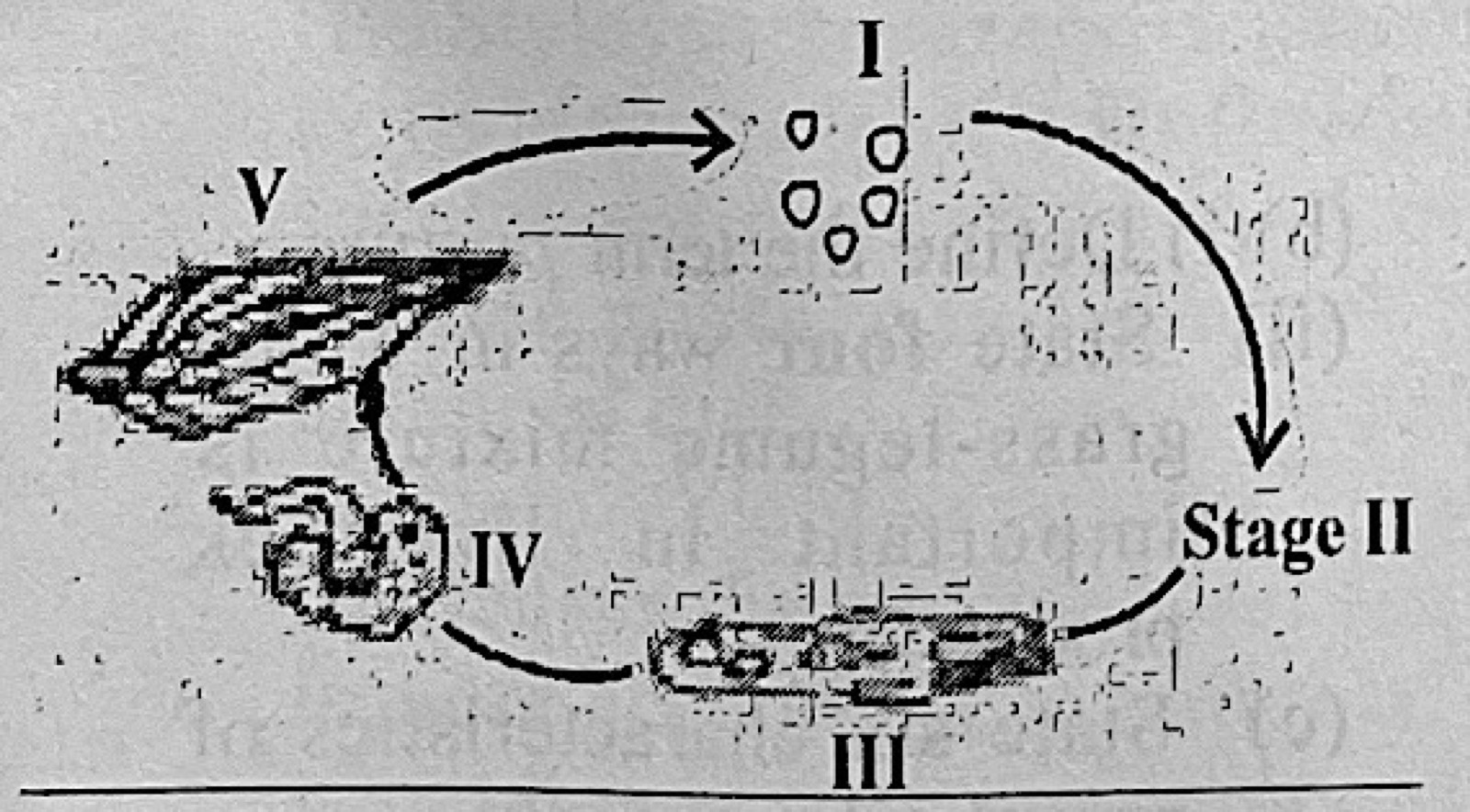
The diagram below illustrates the life cycle of an endoparasite of a livestock.
The diagram illustrates the developmental stages of

Diagram for this question
  1. A.liver fluke.
  2. B.tapeworm.
  3. C.roundworm.
  4. D.hookworm.
Show the answer and explanation

Answer: A (liver fluke.)

Explanation

The cycle shows eggs, a stage that enters a snail and cysts on grass eaten by the grazing animal: the liver fluke.

Open this question

Question 22

Parasites of Farm Animals

The diagram below illustrates the life cycle of an endoparasite of a livestock.
The secondary host of the parasite is

Diagram for this question
  1. A.pig.
  2. B.human.
  3. C.water snail.
  4. D.domestic fowl.
Show the answer and explanation

Answer: C (water snail.)

Explanation

The water snail is the secondary (intermediate) host of the liver fluke.

Open this question

Question 23

Parasites of Farm Animals

The diagram below illustrates the life cycle of an endoparasite of a livestock.
The stage of the life cycle labelled II which enters the secondary host is called

Diagram for this question
  1. A.bladderworm.
  2. B.miracidium.
  3. C.sporocyst.
  4. D.redia.
Show the answer and explanation

Answer: B (miracidium.)

Explanation

The miracidium hatches from the egg in water and swims to enter the snail.

Open this question

Question 24

Animal Improvement and Breeding

Genetic defects in livestock are caused by

  1. A.accidents.
  2. B.malnutrition.
  3. C.mutation.
  4. D.pathogens.
Show the answer and explanation

Answer: C (mutation.)

Explanation

Genetic defects come from changes in genes (mutations).

Open this question

Question 25

Farm Animals and Their Importance

Which of the following operations should be carried out to prevent honey bees from being excited during the harvesting of honey?

  1. A.Use of smoke around the hive
  2. B.Fumigation of the surrounding
  3. C.Use of appropriate overall suit
  4. D.Removal of the hive to a new location
Show the answer and explanation

Answer: A (Use of smoke around the hive)

Explanation

Smoke calms bees and makes them less likely to sting.

Open this question

Question 26

Animal Diseases

If a calf dies suddenly with blood oozing from the natural openings, the calf must have died of

  1. A.anthrax.
  2. B.brucellosis.
  3. C.rinderpest.
  4. D.tuberculosis.
Show the answer and explanation

Answer: A (anthrax.)

Explanation

Sudden death with dark, unclotted blood from the nose, mouth and anus is typical of anthrax.

Open this question

Question 27

Animal Diseases

Iron injection is administered to piglets within the first week of farrowing to

  1. A.harden them.
  2. B.help them grow fast.
  3. C.prevent tail biting.
  4. D.prevent them from being anaemic.
Show the answer and explanation

Answer: D (prevent them from being anaemic.)

Explanation

Sow's milk is low in iron, so piglets are injected to prevent anaemia.

Open this question

Question 28

Animal Nutrition

The first step in formulating diet for a cattle is to

  1. A.choose the feed ingredient to be used in the ration.
  2. B.determine the nutrient requirement of the cattle.
  3. C.determine the chemical composition of the feed ingredients.
  4. D.calculate the amount of each feed to be used in the ration.
Show the answer and explanation

Answer: B (determine the nutrient requirement of the cattle.)

Explanation

You must first know what nutrients the animal needs; only then can ingredients be chosen and amounts worked out.

Open this question

Question 29

Animal Improvement and Breeding

Which of the following breeding practices would lead to reduced hybrid vigour?

  1. A.Outbreeding
  2. B.Inbreeding
  3. C.Cross breeding
  4. D.Line breeding
Show the answer and explanation

Answer: B (Inbreeding)

Explanation

Inbreeding increases similar genes and loses the hybrid vigour that comes from crossing.

Open this question

Question 30

Animal Nutrition

Hay and silage are both classified as

  1. A.additives.
  2. B.concentrates.
  3. C.proteins.
  4. D.roughages.
Show the answer and explanation

Answer: D (roughages.)

Explanation

Hay and silage are conserved forage, high in fibre: roughages.

Open this question

Question 31

Digestive System of Farm Animals

The process by which digested nutrients enter the blood stream through the intestinal wall of farm animals is known as

  1. A.absorption.
  2. B.assimilation.
  3. C.mastication.
  4. D.regurgitation.
Show the answer and explanation

Answer: A (absorption.)

Explanation

Absorption is the passage of digested food into the blood.

Open this question

Question 32

Pasture and Forage

Which of the following measures could be used to maintain productivity of pasture?

  1. A.Mulching
  2. B.Crop rotation
  3. C.Optimum stocking rate
  4. D.Spraying with herbicides
Show the answer and explanation

Answer: C (Optimum stocking rate)

Explanation

Keeping the right number of animals per area prevents overgrazing and keeps the pasture productive.

Open this question

Question 33

Anatomy and Physiology of Farm Animals

The diagram below illustrates an organ of a farm animal.
The part labelled III is the

Diagram for this question
  1. A.small duct.
  2. B.large duct.
  3. C.gland cistern.
  4. D.teat cistern.
Show the answer and explanation

Answer: C (gland cistern.)

Explanation

III is the large space at the base of the udder quarter where milk collects: the gland cistern.

Open this question

Question 34

Anatomy and Physiology of Farm Animals

The diagram below illustrates an organ of a farm animal.
The synthesis of milk occurs in the part labelled

Diagram for this question
  1. A.I.
  2. B.II.
  3. C.III.
  4. D.IV.
Show the answer and explanation

Answer: A (I.)

Explanation

Milk is made in the alveoli, the clusters of secretory cells labelled I; the ducts (II) only carry it.

Open this question

Question 35

Pasture and Forage

Grass-legume mixture in pasture production is used to

  1. A.supply additives to animals.
  2. B.control disease outbreak.
  3. C.reduce energy level of forage.
  4. D.improve nutrient level of forage.
Show the answer and explanation

Answer: D (improve nutrient level of forage.)

Explanation

Legumes add protein to the grass, giving a more nutritious forage.

Open this question

Question 36

Processing and Marketing of Animal Products

The meat of a calf which is less than six months old and fed exclusively on milk is called

  1. A.beef.
  2. B.chevon.
  3. C.mutton.
  4. D.veal.
Show the answer and explanation

Answer: D (veal.)

Explanation

Veal is the meat of a young milk-fed calf.

Open this question

Question 37

Reproduction in Farm Animals

Formation of the egg shell membrane occurs in the

  1. A.infundibulum.
  2. B.isthmus.
  3. C.magnum.
  4. D.uterus.
Show the answer and explanation

Answer: B (isthmus.)

Explanation

The isthmus adds the two shell membranes; the shell itself is formed in the uterus.

Open this question

Question 38

Reproduction in Farm Animals

Which of the following disorders could be associated with difficult parturition?

  1. A.Bloat
  2. B.Dystocia
  3. C.Diarrhoea
  4. D.Oedema
Show the answer and explanation

Answer: B (Dystocia)

Explanation

Dystocia means difficult birth.

Open this question

Question 39

Animal Nutrition

The extent to which a farm animal readily consumes a feed is referred to as

  1. A.acceptability
  2. B.digestibility
  3. C.salivation.
  4. D.utilization.
Show the answer and explanation

Answer: A (acceptability)

Explanation

How readily an animal eats a feed is its acceptability (palatability); digestibility is how much of it is digested.

Open this question

Question 40

Farm Animals and Their Importance

Which of the following animals is usually classified as a non-traditional farm animal?

  1. A.Cattle
  2. B.Goat
  3. C.Pig
  4. D.Snail
Show the answer and explanation

Answer: D (Snail)

Explanation

Snails are 'mini-livestock', not one of the traditional farm animals.

Open this question

Theory question 101

Poultry Production

(a) State six activities that could be carried out in the brooding of chicks. (b) Explain each of the following management practices in poultry production: (i) deworming; (ii) culling; (iii) debeaking (iv) delousing. (c) State four signs of ill health in poultry. (d) Mention two organs in the circulatory system of farm animals.

Show the model answer
Model answer

(a) Any six: clean and disinfect the brooder house before arrival; spread dry litter (wood shavings); provide and regulate heat (about 32–35 °C at first, reduced weekly); watch chick behaviour to adjust heat; provide clean water and feed at all times; give glucose/vitamins on arrival; vaccinate (e.g. Newcastle, Gumboro); ensure ventilation and light; remove dead or weak chicks; widen the brooder space as chicks grow; keep records
(b)(i) Deworming: giving drugs (in water, feed or by mouth) to rid birds of internal worms
(ii) Culling: removing unproductive, sick, weak or unwanted birds from the flock by selling or killing them
(iii) Debeaking: cutting off part of the upper (and lower) beak with a hot blade to prevent cannibalism, feather pecking and egg eating
(iv) Delousing: removing lice from birds by dusting, spraying or dipping in insecticide
(c) Any four: dullness and ruffled feathers; loss of appetite; drop in egg production; diarrhoea or abnormal droppings; pale comb and wattle; discharge from eyes or nostrils; difficult breathing/coughing; isolation; twisted neck
(d) Any two: heart; arteries; veins; capillaries; blood

Explanation

One short sentence to explain each practice.

Open this question

Theory question 102

Pasture and Forage

(a) Complete the table below on forage crops.
Botanical name | Common name | Type of forage
Pennisetum purpureum | (i) | Grass
Calopogonium mucunoides | (ii) | (iii)
(iv) | Stylo | (v)
Panicum maxinium | (vi) | (vii)
Mucuna utilis | (viii) | Legume
(b)(i) Define the term pasture. (ii) State four ways in which grass-legume mixture is important in livestock production. (c) State six characteristics of rangelands.

Show the model answer
Model answer

(a) (i) elephant grass/Napier grass; (ii) calopo; (iii) legume; (iv) Stylosanthes spp. (e.g. S. guianensis, S. gracilis); (v) legume; (vi) Guinea grass; (vii) grass; (viii) velvet bean
(b)(i) Pasture: an area of land on which grasses and/or legumes grow (naturally or planted) for animals to graze
(ii) Any four: gives a more balanced diet (protein from legumes, energy from grasses); legumes fix nitrogen and improve soil fertility; higher total yield; more palatable forage; better ground cover against erosion and weeds; grasses support the legumes; extends the grazing season
(c) Any six: large expanse of natural land; made of natural grasses, legumes and shrubs; low nutritive value, especially in the dry season; low carrying capacity; prone to bush fires; not fertilized or managed; seasonal growth; harbours pests and diseases; can withstand trampling; used for extensive grazing

Explanation

Write the botanical names in italics.

Open this question

Theory question 103

Animal Nutrition

(a) Mention five ways of preventing malnutrition in farm animals. (b) Discuss rickets in farm animals stating two points each under the following headings: (i) causes; (ii) symptoms; (iii) control measures; (iv) animals which could be affected. (c) Explain the term additive as used in animal nutrition. (d) State five reasons why additives are included in animal feed.

Show the model answer
Model answer

(a) Any five: feed a balanced ration; feed according to age and purpose; give enough feed/avoid overcrowding at the trough; give clean water; give mineral licks and vitamin supplements; deworm regularly; supplement in the dry season; store feed properly
(b)(i) Causes, any two: deficiency of vitamin D; deficiency of calcium; deficiency of phosphorus; wrong calcium–phosphorus ratio; lack of sunlight
(ii) Symptoms, any two: soft, bent or bowed legs; swollen joints; lameness/stiff gait; retarded growth; soft beak in chicks
(iii) Control, any two: add bone meal/oyster shell/limestone to feed; give vitamin D supplements; allow animals sunlight; balance calcium and phosphorus in the ration
(iv) Any two: young chicks/poultry; pigs; calves; lambs and kids
(c) An additive is a non-nutritive substance added in small amounts to feed to improve its use, the animal's growth or health
(d) Any five: promote growth; improve feed conversion; prevent or control diseases (antibiotics, coccidiostats); deworm; improve palatability/flavour; preserve feed (antioxidants, mould inhibitors); bind pellets; improve colour of yolk/carcass

Explanation

Two points under each heading in (b).

Open this question

Theory question 104

Farm Animals and Their Importance

(a) State four ways in which livestock is important. (b)(i) Mention six organs associated with the digestive system in rabbit. (ii) State two functions of the alimentary canal in livestock. (c)(i) State four functions of the liver in farm animals. (ii) Mention two parasites which could be found in the liver of cattle. (d) State two differences between the digestive systems of a goat and a rabbit.

Show the model answer
Model answer

(a) Any four: food (meat, milk, eggs); income and employment; raw materials (hides, wool); manure; draught power/transport; foreign exchange; social and religious uses
(b)(i) Any six: mouth/teeth; oesophagus; stomach; small intestine; caecum; colon; rectum; anus; liver; pancreas; gall bladder
(ii) Any two: ingestion of food; digestion of food; absorption of nutrients; egestion of undigested waste
(c)(i) Any four: secretes bile; stores glycogen and controls blood sugar; deamination of excess amino acids/forms urea; detoxifies poisons and drugs; stores vitamins (A, D) and iron; makes blood proteins; breaks down old red blood cells; produces heat
(ii) Any two: liver fluke (Fasciola); hydatid cyst (tapeworm larva); roundworm larvae
(d) Any two (goat vs rabbit): four-chambered stomach vs simple stomach; chews the cud vs practises coprophagy; fibre digested in rumen vs fibre digested in large caecum; no upper incisors (dental pad) vs has upper incisors

Explanation

Compare the same feature for both animals in (d).

Open this question

Theory question 105

Processing and Marketing of Animal Products

(a) Explain each of the following terms as used in slaughtering of farm animals: (i) scalding; (ii) singeing; (iii) evisceration. (b) Name four agents involved in marketing of farm animals and animal products. (c) State five marketing functions that could be performed to facilitate the sale of chicken and eggs. (d) Name three stages in the life cycle of a roundworm. (e) Mention two methods of animal improvement.

Show the model answer
Model answer

(a)(i) Scalding: dipping the carcass in hot water (about 60–80 °C) to loosen feathers or hair for easy removal
(ii) Singeing: burning off the remaining fine hair or feathers on the carcass with a flame
(iii) Evisceration: removing the internal organs (guts) from the carcass
(b) Any four: producer; assembler/middleman; wholesaler; retailer; processor; transporter; cooperative society; consumer
(c) Any five: assembling; grading and sorting; processing/dressing; packaging (egg crates); storage/refrigeration; transportation; advertising/promotion; pricing; financing; selling/distribution
(d) Any three: egg; larva (first, second, third stage); adult
(e) Any two: selection; introduction; breeding (inbreeding, crossbreeding, outbreeding); artificial insemination

Explanation

Define each slaughter term in one sentence.

Open this question

Theory question 106

Poultry Production

(a)(i) Explain the term brooding as used in animal husbandry. (ii) State four routine activities which are carried out in a brooder house. (b) State four effects of parasites in livestock production. (c) Mention four ways of controlling liver fluke in sheep production. (d)(i) Define the term artificial insemination as used in animal production. (ii) State four advantages of artificial insemination in cattle production.

Show the model answer
Model answer

(a)(i) Brooding: the care and management of young chicks from day-old to about 6–8 weeks, providing artificial heat, feed, water and protection
(ii) Any four: feeding; watering; regulating temperature; cleaning feeders and drinkers; changing litter; vaccination and medication; removing dead chicks; record keeping
(b) Any four: cause loss of weight and poor growth; reduce milk, meat and egg production; cause anaemia; damage hides, skins and organs; transmit diseases; may cause death; increase cost of treatment
(c) Any four: drain swampy pastures; kill snails with molluscicides (e.g. copper sulphate); keep ducks to eat snails; avoid grazing on wet, swampy land; deworm sheep with flukicides; rotational grazing; fence off snail habitats
(d)(i) Artificial insemination: placing semen collected from a male into the reproductive tract of a female on heat by hand, without mating
(ii) Any four: one superior bull can serve many cows; reduces cost of keeping bulls; prevents spread of venereal diseases; semen can be stored and transported long distances; allows use of semen from dead or injured bulls; avoids injury to small cows from heavy bulls
Explanation

Give precise definitions in (a)(i) and (d)(i).

Open this question