Question 1
Processing and Marketing of Animal ProductsThe carbohydrate present in milk is called
- A.fructose.
- B.galactose.
- C.glucose.
- D.lactose.
Show the answer and explanation
Answer: D (lactose.)
Explanation
Lactose is milk sugar.
44 questions. Try each one, then open the answer to check yourself and read the explanation.
The carbohydrate present in milk is called
Answer: D (lactose.)
Lactose is milk sugar.
Micro-organisms which cause disease in farm animals are called
Answer: B (pathogens.)
Disease-causing micro-organisms are pathogens.
Which of the following materials is not used in the process of artificial insemination?
Answer: A (Burdizzo)
A burdizzo is a clamp used for bloodless castration; diluents, glycine and liquid nitrogen are used to extend, protect and store semen.
Study the diagram below.
The tool illustrated is used mainly to harvest
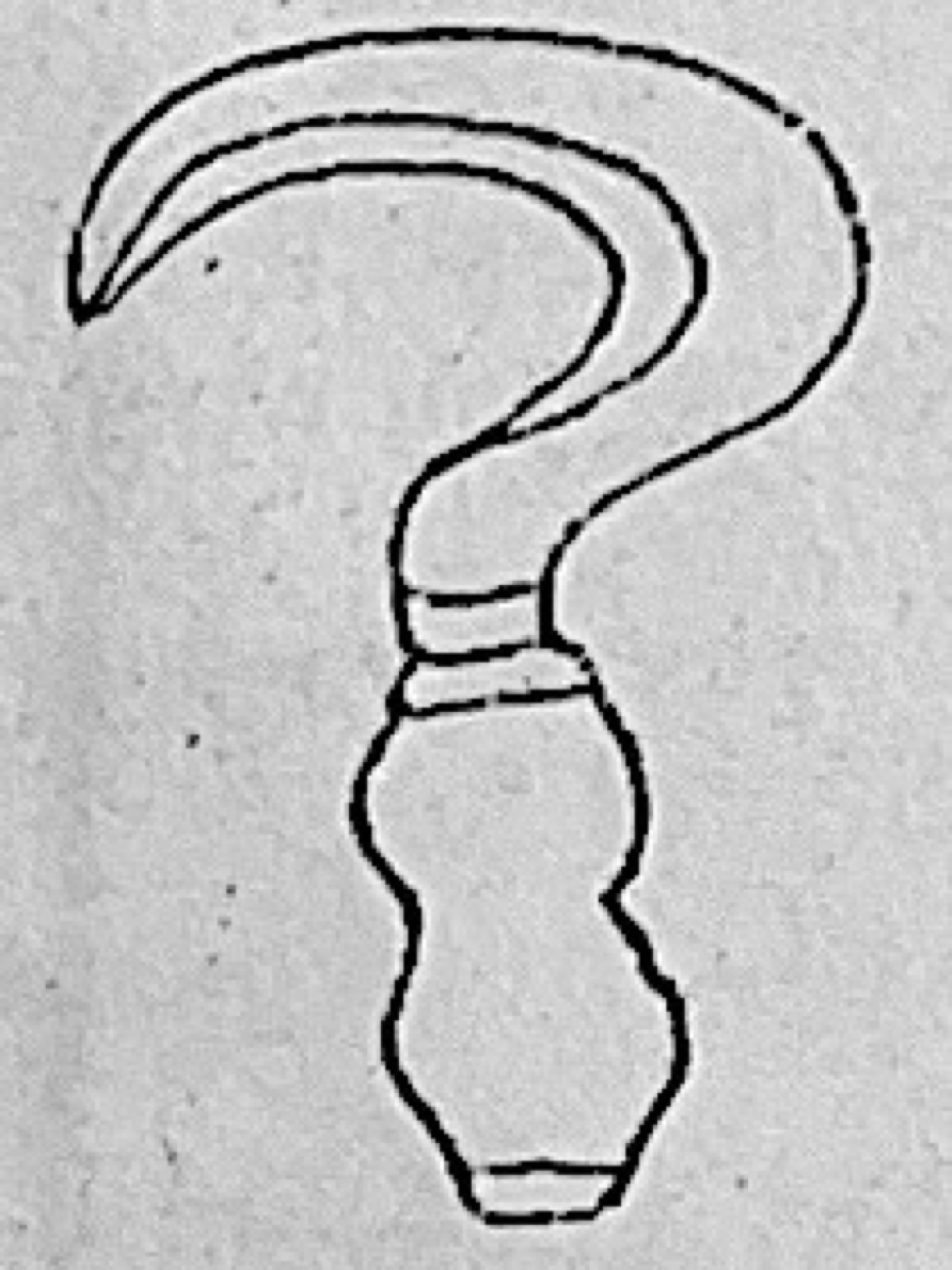
Answer: A (forage.)
The curved blade is a sickle, used mainly to cut grass and forage.
A castrated male cattle is called a
Answer: B (bullock.)
A castrated bull is a bullock; a barrow is a castrated boar and a capon a castrated cockerel.
One of the disadvantages of artificial insemination is that
Answer: C (it requires high technical know-how.)
AI needs trained staff and special equipment; the other options are advantages.
A function of carbohydrate in animal nutrition is
Answer: C (supply of energy.)
Carbohydrates are the main source of energy; building and repairing tissues is the job of protein.
Which of the following diseases is caused by a pathogen?
Answer: C (Mastitis)
Mastitis is caused by bacteria entering the udder; the others are digestive or nutritional disorders.
Study the diagram below.
The parts labelled I, II and III are known respectively as
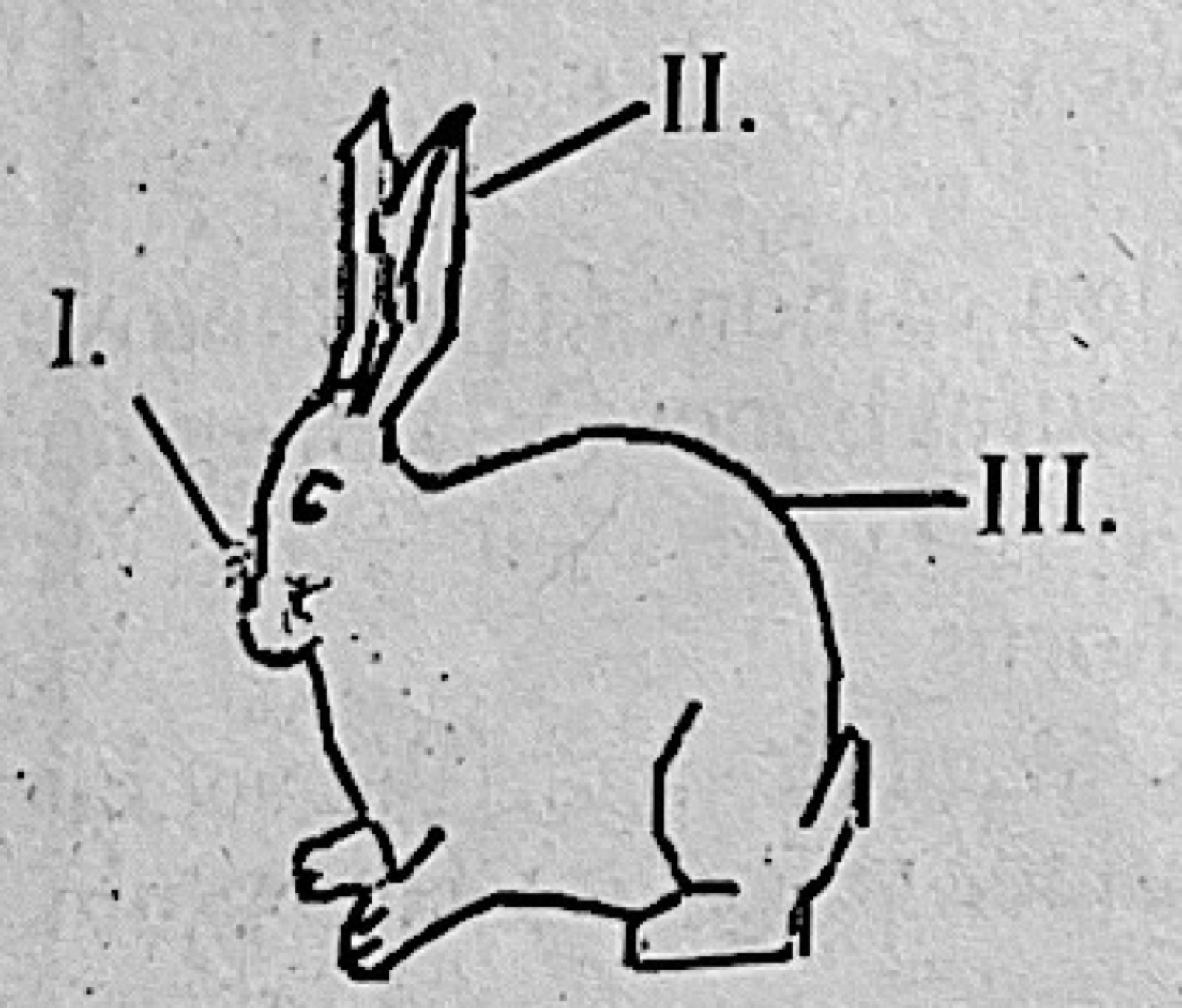
Answer: D (whiskers, ear and rump.)
I points to the whiskers on the face, II to the ear and III to the rump at the back.
A substance present in cotton seed which is toxic to swine is
Answer: C (gossypol.)
Cotton seed contains gossypol, which is poisonous to pigs and poultry.
If an animal from Kenya is reared in Nigeria, the animal is said to have been
Answer: B (introduced.)
Bringing an animal from another country or region is introduction.
Which of the following methods enables a lame bull to reproduce?
Answer: A (Artificial insemination)
Semen can be collected from the lame bull and used for AI, so it does not need to mount the cow.
Which of the following forage crops is used to replenish nutrients in a rangeland?
Answer: D (Calopogonium mucunoides)
Calopogonium is a legume that fixes nitrogen, enriching the soil.
A perennial grass with cane-like stems and dull green or purple leaf blade is
Answer: A (Pennisetum purpureum.)
Elephant grass (Pennisetum purpureum) is tall with cane-like stems.
Which of the following practices inhibits the productivity of pasture?
Answer: B (Overgrazing)
Overgrazing removes the plants faster than they can regrow and exposes the soil.
Which of the following factors does not influence the distribution of pasture?
Answer: A (Type of animal)
Where pastures grow depends on climate, soil and topography, not on the kind of animal.
One of the symptoms of Contagious Bovine Pleuro-pneumonia is
Answer: C (difficult breathing.)
CBPP attacks the lungs and pleura, causing difficult, painful breathing and coughing.
Which of the following forage crops helps to conserve soil moisture?
Answer: B (Centrosema pubescens)
Centrosema is a creeping legume that covers the ground, reducing evaporation.
The diagram below shows stages in the life cycle of a parasite.
Which of the following organisms serve as hosts to the parasite at the stages labelled I and II respectively?
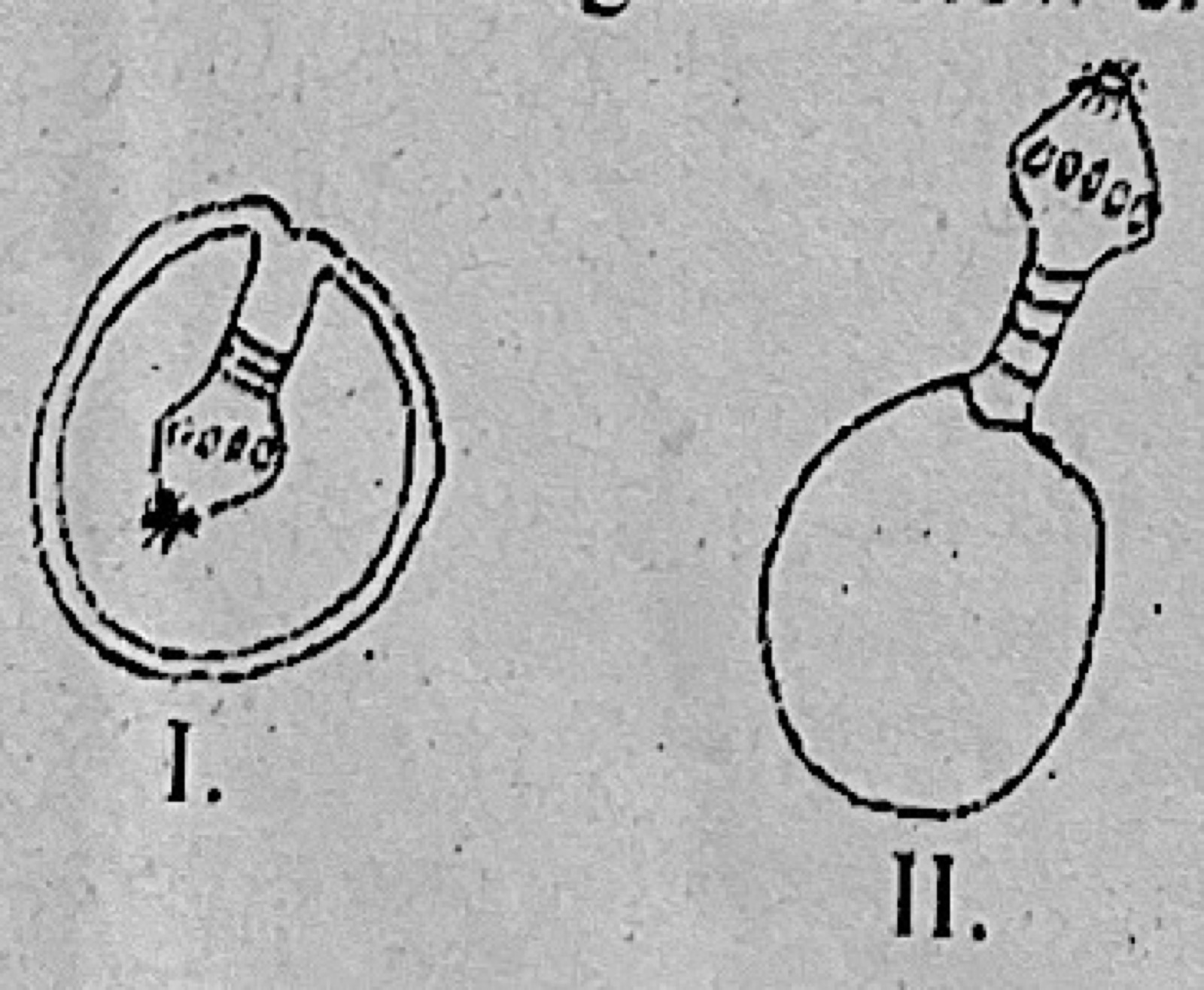
Answer: D (Pig, Human)
I is the bladder worm (cysticercus) in the pig's muscle; II is the scolex turned out, ready to attach in the human gut.
Which of the following processes are associated with digestion in cattle? I. Ingestion II. Coprophagy III. Regurgitation
Answer: B (I and III only)
Cattle take in feed (ingestion) and bring it back up to chew the cud (regurgitation); coprophagy (eating own droppings) is done by rabbits.
One of the best ways of controlling tapeworm is to
Answer: C (properly cook meat before eating.)
Thorough cooking kills the bladder worms in the meat, breaking the life cycle.
Which of the following symptoms is associated with pathogenic diseases in poultry?
Answer: A (Diarrhoea)
Diarrhoea is a common sign of infections such as coccidiosis and Newcastle disease; the others are vices or nutritional problems.
One of the ways of identifying a sick bird in a flock is when
Answer: D (the bird isolates itself from others.)
Sick birds are dull and stand apart from the flock.
Progeny selection in farm animals is based on the performance of
Answer: C (offspring.)
Progeny means offspring; parents are judged by how their offspring perform.
Which of the following problems is associated with animal husbandry in West Africa? I. High pest infestation II. Poor land tenure system III. Over population of farmers
Answer: A (I and II only)
Pests and diseases and the land tenure system hold back livestock farming; there is no overpopulation of farmers.
Study the diagram below.
A major advantage of removing the part labelled II is that it
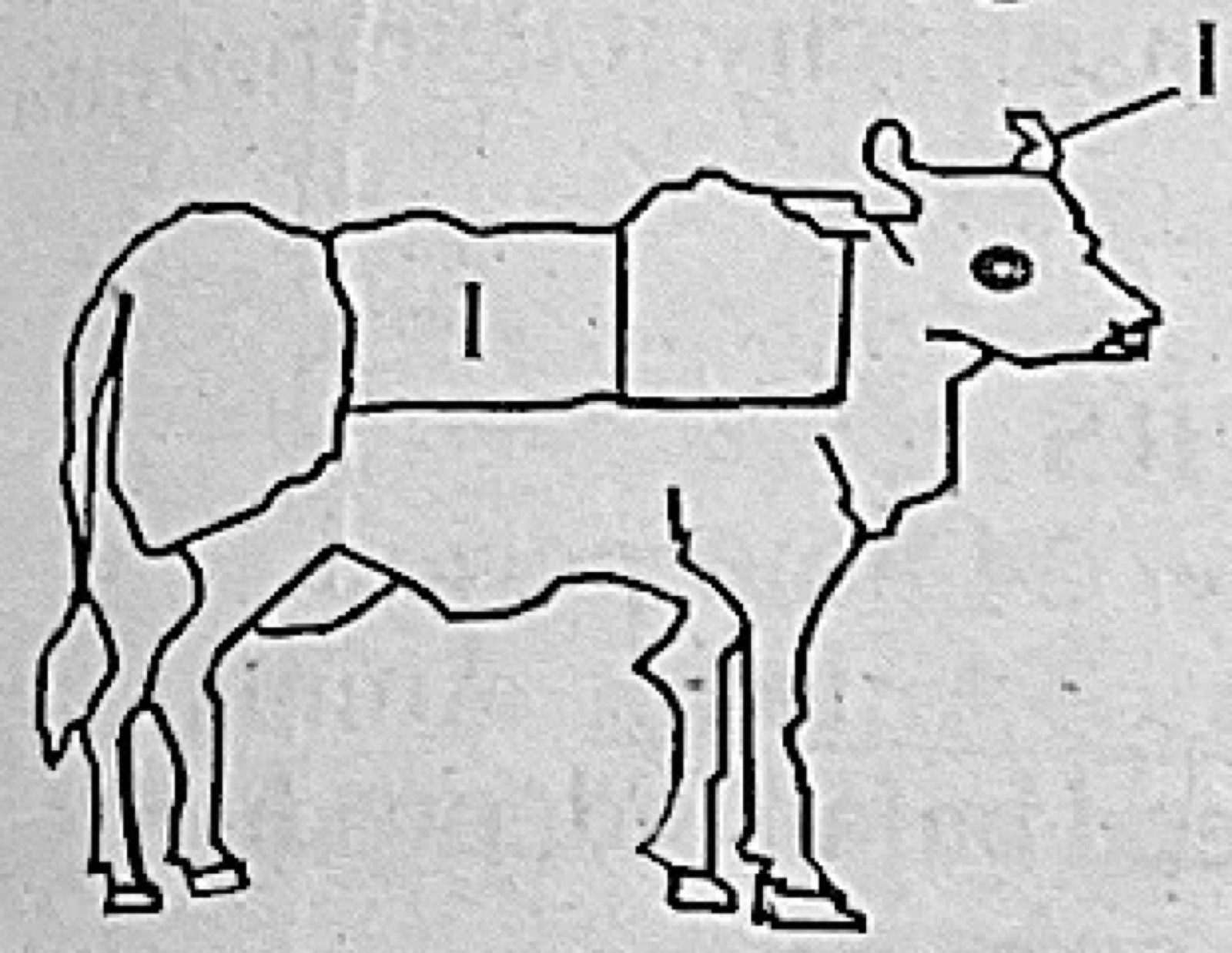
Answer: A (economizes the space of keeping the animal.)
II is the horn; dehorned animals take less space at the trough and in transport and cannot injure each other.
To increase the chances of multiple birth, a farmer should
Answer: C (flush farm animals.)
Flushing (extra feed before mating) makes the female release more eggs.
A sow was serviced on 7th July, 2012 and it conceived on the same day. What was the expected farrowing date of the sow?
Answer: C (31st October, 2012)
A sow's gestation is about 114–116 days (3 months, 3 weeks, 3 days); counting from 7th July gives about the end of October.
To control the spread of diseases on a farm, the farmer needs to
Answer: A (isolate sick animals.)
Separating sick animals stops them passing the disease to healthy ones; vaccines are given to healthy animals.
Which of the following activities are routine management practices in animal husbandry? I. Feeding II. Slaughtering III. Vaccination
Answer: B (I and III only)
Feeding and vaccination are routine; slaughtering happens only at the end of production.
The diagram below illustrates a portion of the digestive system of a fowl.
The part which functions as temporary storage for food is labelled as
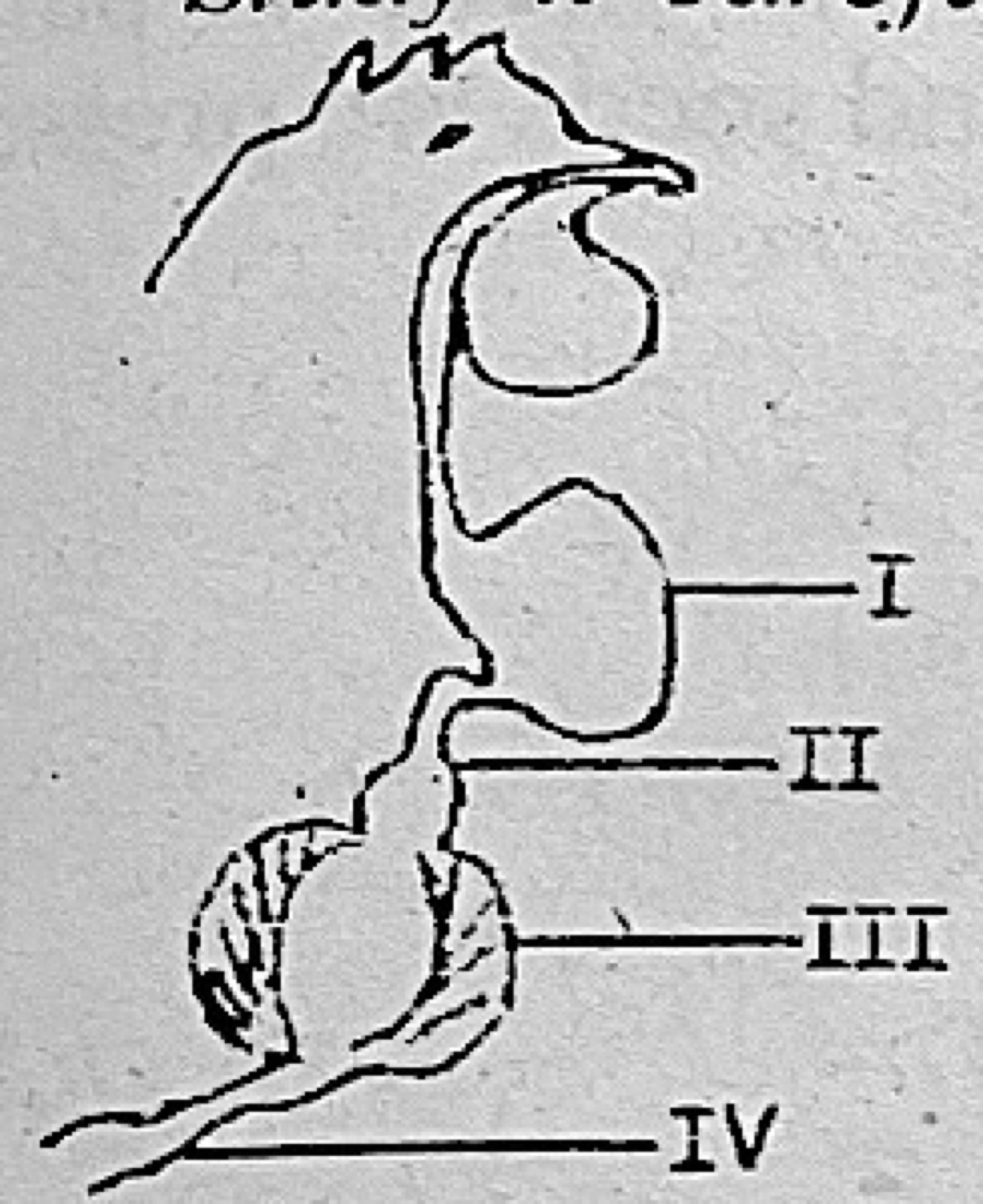
Answer: A (I.)
I is the crop, a pouch where food is stored and softened.
The diagram below illustrates a portion of the digestive system of a fowl.
The part labelled III is used for
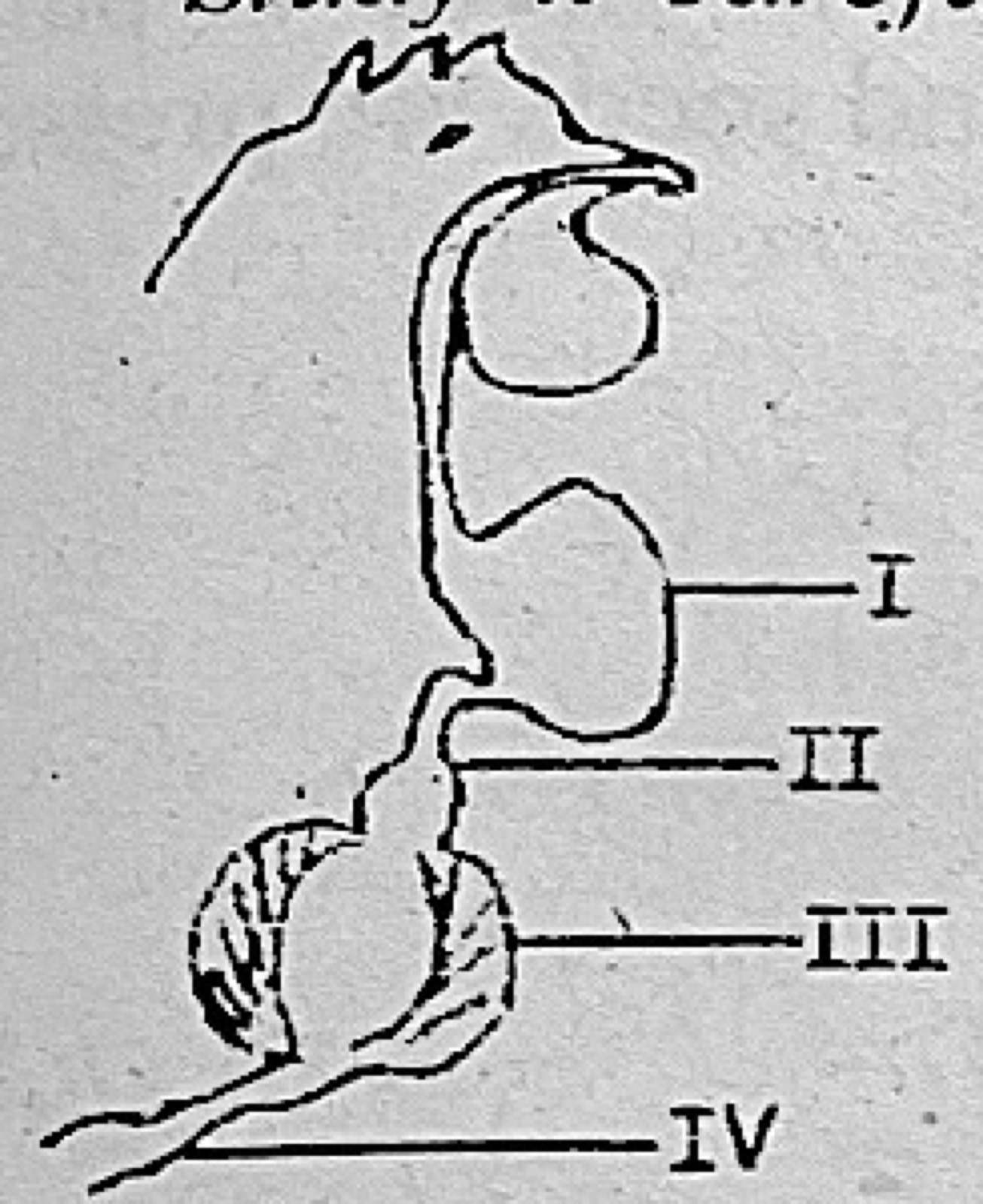
Answer: B (grinding food particles.)
III is the gizzard, a muscular organ that grinds food with grit.
The diagram below illustrates a portion of the digestive system of a fowl.
Digestive enzymes are secreted in the parts labelled
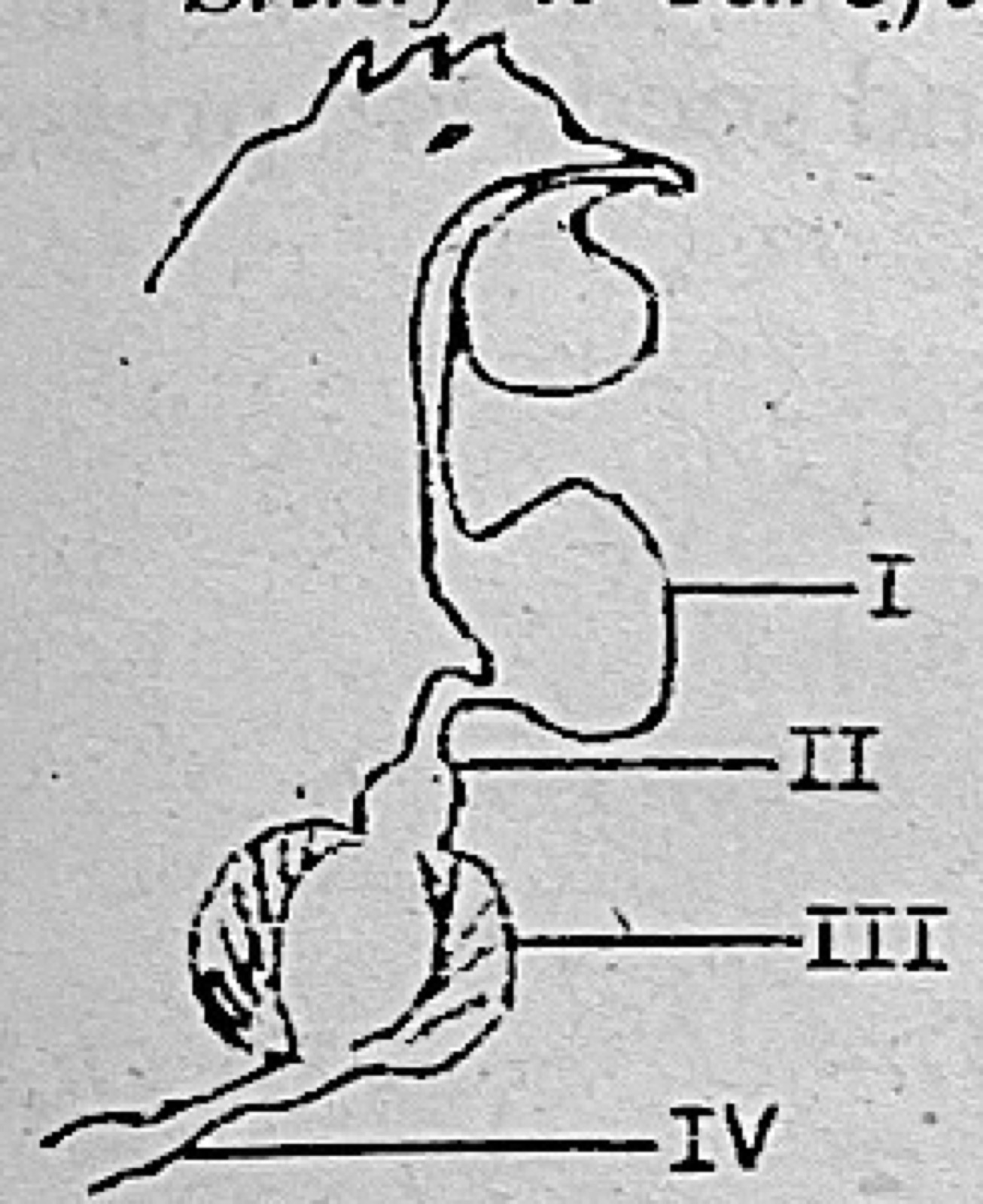
Answer: C (II and IV only.)
Enzymes are secreted by the proventriculus (II) and the intestine (IV); the crop (I) and gizzard (III) only store and grind.
During artificial insemination, the long rubber tube used in introducing semen into the vagina of the female is called
Answer: A (catheter.)
The semen is passed through a thin tube called an insemination catheter (pipette).
The alimentary canals of fowl and pig end respectively as
Answer: D (cloaca and rectum.)
Birds have a cloaca; the pig's gut ends with the rectum and anus.
Malnutrition in animals could result in
Answer: D (ketosis.)
Ketosis is a nutritional (metabolic) disorder from energy shortage; the others are bacterial diseases.
In rabbit production, nesting is a sign that the animal is approaching
Answer: D (parturition.)
The doe pulls fur and makes a nest a few days before kindling (giving birth).
Which of the following agents usually sells animal products in large quantities?
Answer: D (Wholesaler)
A wholesaler buys and sells in bulk to retailers.
(a) Explain the term ration as used in animal production. (b) Explain how each of the following factors influence feed formulation for farm animals: (i) physiological status of animal; (ii) age of animal; (iii) purpose of production; (iv) availability of feed ingredients. (c) Describe the process of preparing palm kernel cake. (d) Give two differences between broiler starter marsh and broiler finisher marsh.
(a) Ration: the total quantity of feed given to an animal in 24 hours
(b)(i) Physiological status: pregnant, lactating, sick or recovering animals need more or special nutrients, so feeds are formulated for their condition
(ii) Age: young growing animals need feed higher in protein and easier to digest; older animals mainly need maintenance feed
(iii) Purpose of production: layers need more calcium, broilers more energy and protein, dairy animals more protein for milk, work animals more energy
(iv) Availability of ingredients: decides which ingredients are used, how much feed can be made and its cost
(c) Palm kernels are collected (after cracking the nuts) and dried; kernels are roasted/heated; crushed or ground; the ground kernels are pressed (or solvent extracted) to remove the oil; the residue left is the palm kernel cake, which is dried and bagged
(d) Any two: starter is fed from day-old to about 4 weeks, finisher from about 4 weeks to market; starter is higher in protein (about 22–24%), finisher lower (about 19–20%) and higher in energy; starter has finer particles than finisher
In (d) compare the same feature for both feeds.
(a) State three ways in which each of the following factors hinders livestock production in West Africa: (i) breeding; (ii) nutrition; (iii) healthcare; (iv) government policy; (v) finance. (b) Mention five factors that affect productivity of pastures.
(a)(i) Breeding: poor local breeds with low yield; few improved breeds available; exotic breeds do not adapt well; lack of breeding skills and facilities such as AI
(ii) Nutrition: poor quality natural pastures; forage scarce in the dry season; high cost of concentrates; competition between man and animals for grains
(iii) Healthcare: high incidence of diseases and parasites; few veterinary services; high cost of drugs and vaccines; poor sanitation
(iv) Government policy: low funding of the livestock sector; unstable or poorly implemented policies; high taxes on inputs; uncontrolled importation of animal products
(v) Finance: difficulty getting loans; high interest rates; lack of collateral; insufficient capital
(b) Any five: climate (rainfall, temperature, sunlight); soil fertility; species of grasses and legumes used; grazing management/stocking rate; weeds; pests and diseases; fire/burning; topography
Three separate points under each factor.
(a) Name four parts of the reproductive system of each of the following farm animals: (i) bull; (ii) hen. (b) Give one function of each of the parts named in 3(a). (c) Describe the process of digestion of cassava tuber in the mouth of a pig.
(a)(i) Bull, any four: testes; scrotum; epididymis; vas deferens; seminal vesicle; prostate gland; Cowper's gland; urethra; penis
(ii) Hen, any four: ovary; infundibulum (funnel); magnum; isthmus; uterus (shell gland); vagina; cloaca
(b) Testis: produces sperm and testosterone; scrotum: holds testes and keeps them cooler than the body; epididymis: stores and matures sperm; vas deferens: carries sperm to the urethra; seminal vesicle/prostate/Cowper's gland: produce seminal fluid; urethra: passes semen and urine; penis: deposits semen in the female
Ovary: produces yolks (ova) and hormones; infundibulum: picks up the yolk and is where fertilization occurs; magnum: adds the albumen; isthmus: adds shell membranes; uterus/shell gland: forms the shell; vagina: holds the egg and pushes it out; cloaca: egg passes out through it
(c) The cassava is taken in and chewed by the teeth into smaller pieces (mechanical digestion); it is mixed with saliva which moistens and lubricates it; salivary amylase (ptyalin) begins to break the starch into maltose; the chewed food is rolled into a bolus by the tongue and swallowed into the oesophagus
Match each function in (b) to the part you named in (a).
(a)(i) List five external parts of a cock. (ii) Name three viral diseases that could affect poultry. (b) State five signs that could be observed in a sick farm animal. (c) Explain each of the following terms as used in livestock production: (i) drenching; (ii) dipping. (d) Name three body systems in farm animals.
(a)(i) Any five: comb; beak; wattle; eye; ear lobe; hackle (neck feathers); wing; breast; saddle; tail/sickle feathers; shank; spur; toes/claws
(ii) Any three: Newcastle disease; fowl pox; Gumboro (infectious bursal disease); Marek's disease; avian influenza; infectious bronchitis
(b) Any five: dullness and isolation from others; loss of appetite; rough/dull coat or ruffled feathers; abnormal temperature; abnormal dung (diarrhoea, blood); discharge from eyes or nose; coughing/difficult breathing; loss of weight; drop in production; lameness
(c)(i) Drenching: giving liquid medicine (e.g. dewormer) to an animal by mouth
(ii) Dipping: immersing animals in a tank of chemical solution (acaricide) to kill external parasites such as ticks and lice
(d) Any three: digestive; respiratory; circulatory; reproductive; excretory; nervous; skeletal; muscular; endocrine
Short lists; one-line definitions in (c).
(a) State five differences between the digestive systems of a goat and a chicken. (b) Explain each of the following terms as used in animal production: (i) rumination; (ii) coprophagy. (c) Give one reason for carrying out each of the following practices in livestock production: (i) creep feeding; (ii) steaming-up; (iii) flushing. (d)(i) State four ways in which rangelands are important. (ii) List four practices that could be carried out to improve pastures.
(a) Any five (goat vs chicken): has teeth and dental pad vs beak, no teeth; no crop vs crop; four-chambered stomach vs proventriculus and gizzard; chews the cud vs does not ruminate; microbial digestion of fibre in rumen vs little fibre digestion; one caecum vs two caeca; ends in anus vs ends in cloaca; long intestine vs relatively short intestine
(b)(i) Rumination: bringing partly digested food (cud) from the rumen back to the mouth to be chewed again and re-swallowed
(ii) Coprophagy: eating of its own soft faeces (as in rabbits) to re-digest them and obtain B vitamins and protein made by gut microbes
(c)(i) Creep feeding: giving extra feed to suckling young so they grow faster and get used to solid feed before weaning
(ii) Steaming-up: extra feeding of a pregnant female near the end of pregnancy for good foetal growth, good birth weight and milk production
(iii) Flushing: extra feeding of females before mating to make them ovulate more eggs and increase litter size
(d)(i) Any four: source of cheap feed for livestock; habitat for wildlife; protects soil from erosion; source of fuelwood, medicinal plants and thatch; recreation/tourism
(ii) Any four: reseeding; fertilizer application; rotational grazing; weed control; controlled burning; irrigation; liming
Answer every part; one reason for each practice in (c).
(a) Name five agents involved in the marketing of animal products. (b)(i) Define the term pasteurization as used in milk processing. (ii) State two ways in which pasteurization of milk is important. (iii) List four milk products. (c) State four factors that affect the yield of milk in cows. (d)(i) Give one reason why it is important to starve an animal before slaughtering. (ii) List two pre-slaughtering activities.
(a) Any five: producer/farmer; middlemen/assemblers; wholesalers; retailers; processors; transporters; cooperative societies; commodity boards; consumers
(b)(i) Pasteurization: heating milk to a set temperature (e.g. 63 °C for 30 minutes or 72 °C for 15 seconds) and cooling it quickly, to kill harmful micro-organisms without spoiling the milk
(ii) Any two: kills disease organisms (e.g. tuberculosis, brucellosis bacteria); makes milk keep longer; makes milk safe to drink
(iii) Any four: butter; cheese; yoghurt; ice cream; powdered milk; evaporated/condensed milk; cream; whey
(c) Any four: breed; age/lactation number; stage of lactation; feeding/nutrition; health (e.g. mastitis); water supply; climate/heat stress; milking frequency and method; season of calving
(d)(i) Starving empties the gut, making evisceration cleaner and reducing contamination of the meat (also gives better bleeding)
(ii) Any two: ante-mortem (veterinary) inspection; resting the animal; washing the animal; weighing; giving plenty of water
Give a precise definition of pasteurization with the purpose.