WAEC Agricultural Science 2025 past questions and answers

45 questions. Try each one, then open the answer to check yourself and read the explanation.

Question 2

Agricultural Development

Seasonality of agricultural produce could be eliminated through

  1. A.practising irrigation.
  2. B.better extension services.
  3. C.employing cultural cultivation practices.
  4. D.exportation during scarce periods.
Show the answer and explanation

Answer: A (practising irrigation.)

Explanation

Irrigation lets crops be grown all year round, not only in the rainy season.

Open this question

Question 3

Agricultural Development

Agricultural research is important in crop production because it

  1. A.promotes the use of local varieties of crops.
  2. B.develops crops that have short maturity period.
  3. C.develops crops that are susceptible to local diseases.
  4. D.produces crops with reduced resistance to pests.
Show the answer and explanation

Answer: B (develops crops that have short maturity period.)

Explanation

Research breeds early-maturing, high-yielding varieties.

Open this question

Question 4

Agricultural Ecology

A hygrometer is used in agriculture for measuring

  1. A.wind speed.
  2. B.daylength.
  3. C.atmospheric pressure.
  4. D.relative humidity.
Show the answer and explanation

Answer: D (relative humidity.)

Explanation

A hygrometer measures relative humidity.

Open this question

Question 8

Farm Machinery and Mechanisation

Which of the following statements is not a reason for maintaining farm machines? To

  1. A.reduce the salvage value.
  2. B.prolong the useful life.
  3. C.prevent avoidable accidents.
  4. D.keep them in good working condition.
Show the answer and explanation

Answer: A (reduce the salvage value.)

Explanation

Maintenance raises, not reduces, a machine's value.

Open this question

Question 9

Rocks and Soil Formation

An example of a rock characterised by strata is

  1. A.gabbro.
  2. B.limestone.
  3. C.granite.
  4. D.basalt.
Show the answer and explanation

Answer: B (limestone.)

Explanation

Limestone is sedimentary, laid down in layers (strata).

Open this question

Question 10

Soil Properties

The water which is available for plant root absorption is

  1. A.precipitation water.
  2. B.gravitational water.
  3. C.capillary water.
  4. D.hygroscopic water.
Show the answer and explanation

Answer: C (capillary water.)

Explanation

Plants take up capillary water held in small soil pores.

Open this question

Question 11

Soil Properties

A student obtained the following results in a certain soil experiment: mass of empty dish = 10 g; mass of dish + fresh soil = 70 g; mass of dish + dried soil = 55 g.
The mass of fresh soil is

  1. A.15 g.
  2. B.25 g.
  3. C.45 g.
  4. D.60 g.
Show the answer and explanation

Answer: D (60 g.)

Explanation

70 − 10 = 60 g.

Open this question

Question 14

Rocks and Soil Formation

In a soil profile, granular structure is usually found in

  1. A.horizon A.
  2. B.horizon B.
  3. C.horizon C.
  4. D.horizon D.
Show the answer and explanation

Answer: A (horizon A.)

Explanation

The topsoil (A), rich in humus, has a granular (crumb) structure.

Open this question

Question 15

Soil Properties

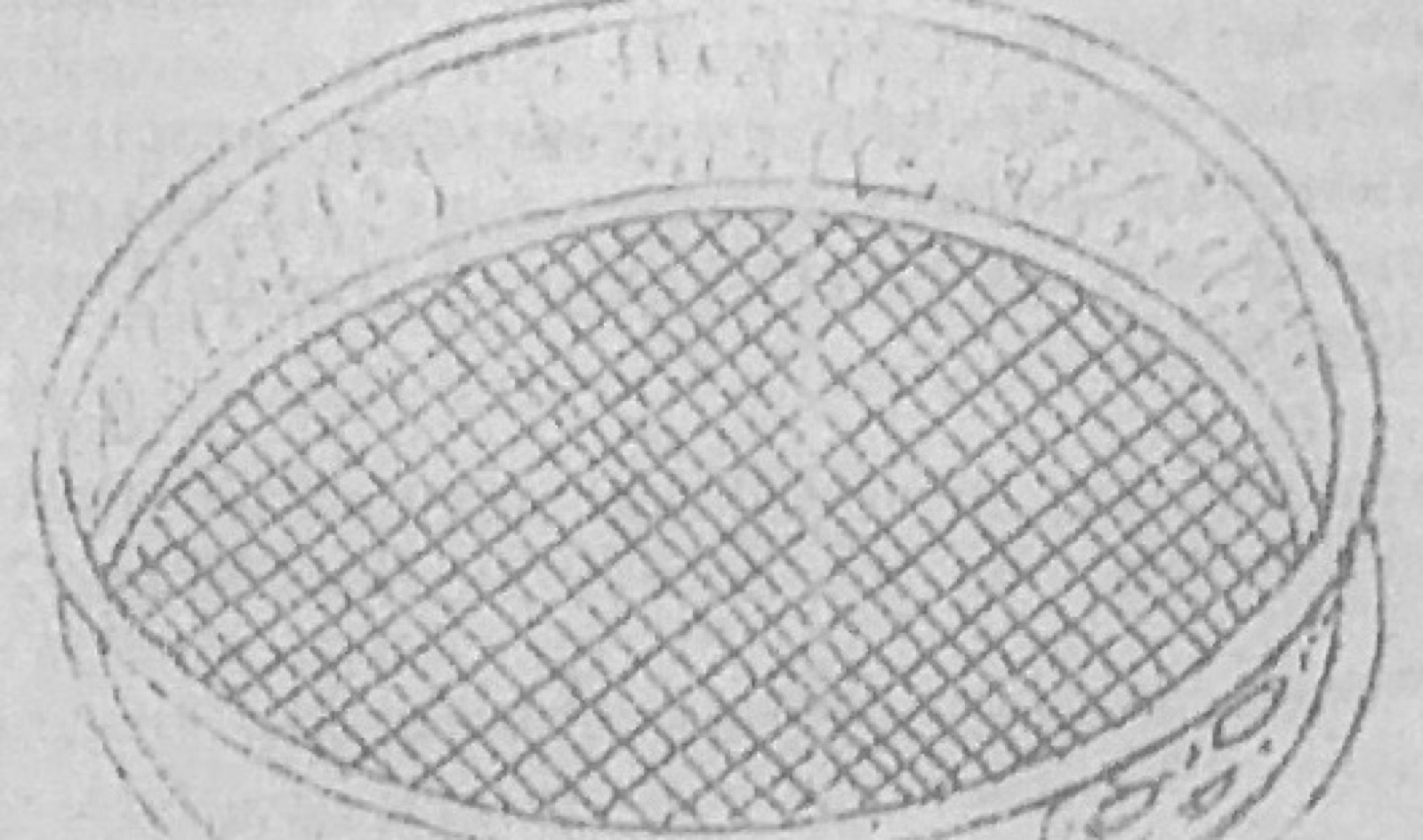
The diagram below illustrates a tool used in soil analysis.
The illustrated tool is used for determining soil

Diagram for this question
  1. A.capillarity.
  2. B.texture.
  3. C.structure.
  4. D.porosity.
Show the answer and explanation

Answer: B (texture.)

Explanation

Sieves separate particles by size, which shows texture.

Open this question

Question 17

Soil Fertility and Plant Nutrition

A farmer observed purple colouration on cowpea leaves in the field. This deficiency symptom could be corrected by applying

  1. A.calcium carbonate.
  2. B.ammonium sulphate.
  3. C.single superphosphate.
  4. D.muriate of potash.
Show the answer and explanation

Answer: C (single superphosphate.)

Explanation

Purple leaves show phosphorus deficiency; superphosphate supplies phosphorus.

Open this question

Question 19

Agricultural Ecology

Agricultural pollution could be prevented by

  1. A.applying inorganic fertilizers to soils.
  2. B.spraying herbicides to control weeds.
  3. C.siting poultry farms near rivers.
  4. D.practising organic farming.
Show the answer and explanation

Answer: D (practising organic farming.)

Explanation

Organic farming avoids chemical fertilizers and pesticides.

Open this question

Question 20

Plant Forms and Crop Classification

Yam stores food in its

  1. A.root.
  2. B.stem.
  3. C.sett.
  4. D.leaf.
Show the answer and explanation

Answer: B (stem.)

Explanation

The yam tuber is a swollen underground stem.

Open this question

Question 21

Processing and Storage of Farm Produce

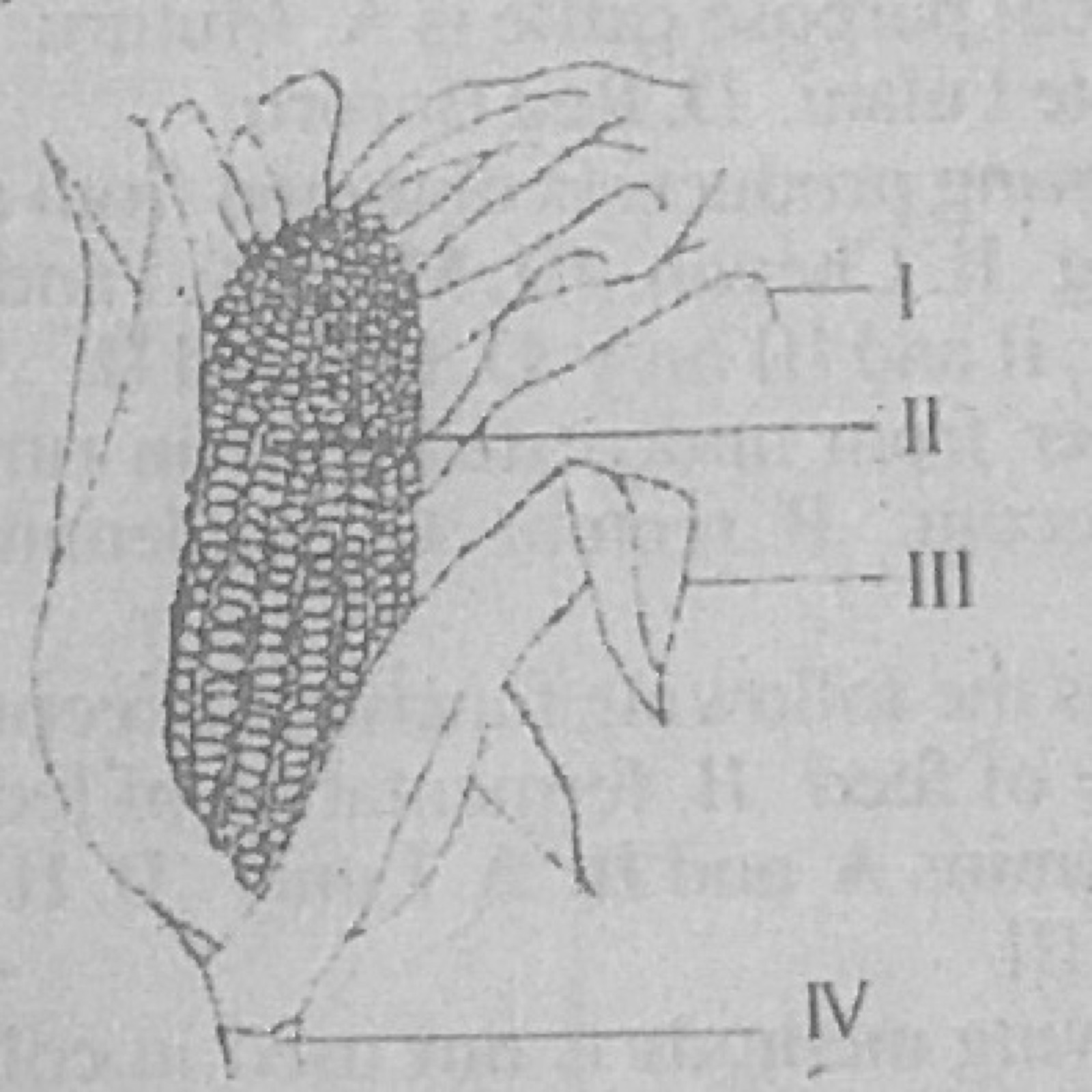
The diagram below illustrates a crop.
A farm operation usually performed on the part labelled II is

Diagram for this question
  1. A.detasseling.
  2. B.shelling.
  3. C.dehusking.
  4. D.polishing.
Show the answer and explanation

Answer: B (shelling.)

Explanation

II is the cob with grains; grains are removed from the cob by shelling.

Open this question

Question 22

Plant Forms and Crop Classification

The diagram below illustrates a crop.
The part labelled III is

Diagram for this question
  1. A.peduncle.
  2. B.tassel.
  3. C.silk.
  4. D.husk.
Show the answer and explanation

Answer: D (husk.)

Explanation

III is the leafy sheath around the cob, the husk.

Open this question

Question 23

Processing and Storage of Farm Produce

The diagram below illustrates a crop.
The moisture content of the illustrated crop should be reduced before harvesting in order to reduce contamination due to

Diagram for this question
  1. A.nematodes.
  2. B.viruses.
  3. C.fungi.
  4. D.bacteria.
Show the answer and explanation

Answer: C (fungi.)

Explanation

Damp maize grows moulds (fungi) that make aflatoxins.

Open this question

Question 24

Crop Diseases

Blackarm disease of crops affects

  1. A.cotton.
  2. B.citrus.
  3. C.yam.
  4. D.plantain.
Show the answer and explanation

Answer: A (cotton.)

Explanation

Blackarm is a bacterial disease of cotton.

Open this question

Question 25

Processing and Storage of Farm Produce

An effect of polishing rice grains is that it

  1. A.reduces the hardness of grains.
  2. B.increases the quantity of grains.
  3. C.reduces the nutritive value of grains.
  4. D.increases the germination rate of grains.
Show the answer and explanation

Answer: C (reduces the nutritive value of grains.)

Explanation

Polishing removes the bran and its vitamins.

Open this question

Question 26

Crop Propagation

The budding of sweet orange scion on sour orange stock is to prevent

  1. A.gummosis.
  2. B.canker.
  3. C.citrus scab.
  4. D.powdery mildew.
Show the answer and explanation

Answer: A (gummosis.)

Explanation

Sour orange rootstock resists gummosis (foot rot).

Open this question

Question 27

Farming Systems

Plantation agriculture is commonly practised in the production of
I. fruits
II. vegetables
III. beverages

  1. A.I and II only.
  2. B.I and III only.
  3. C.II and III only.
  4. D.I, II and III.
Show the answer and explanation

Answer: B (I and III only.)

Explanation

Plantations grow tree crops such as fruits, cocoa and coffee.

Open this question

Question 28

Farm Surveying and Planning

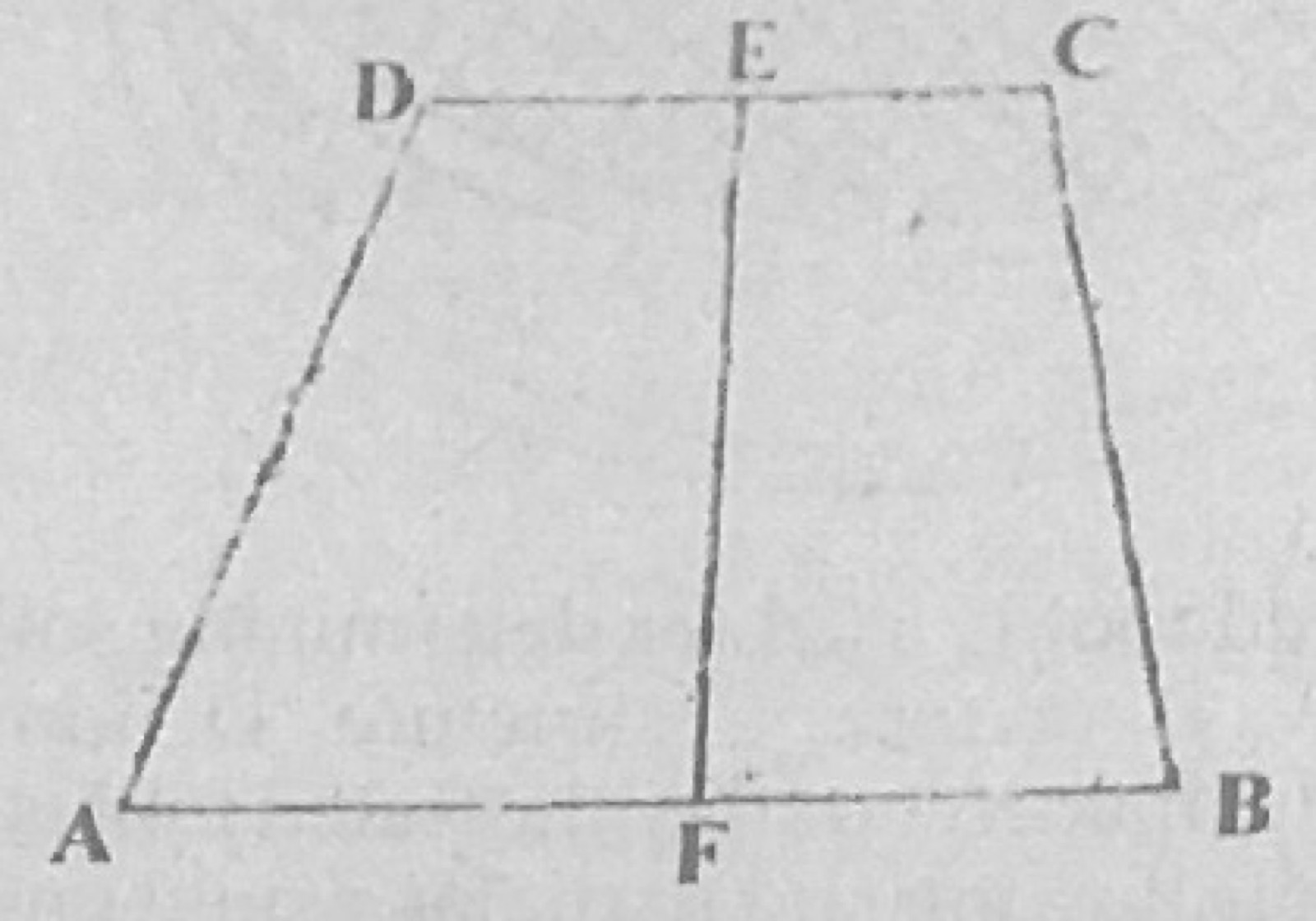
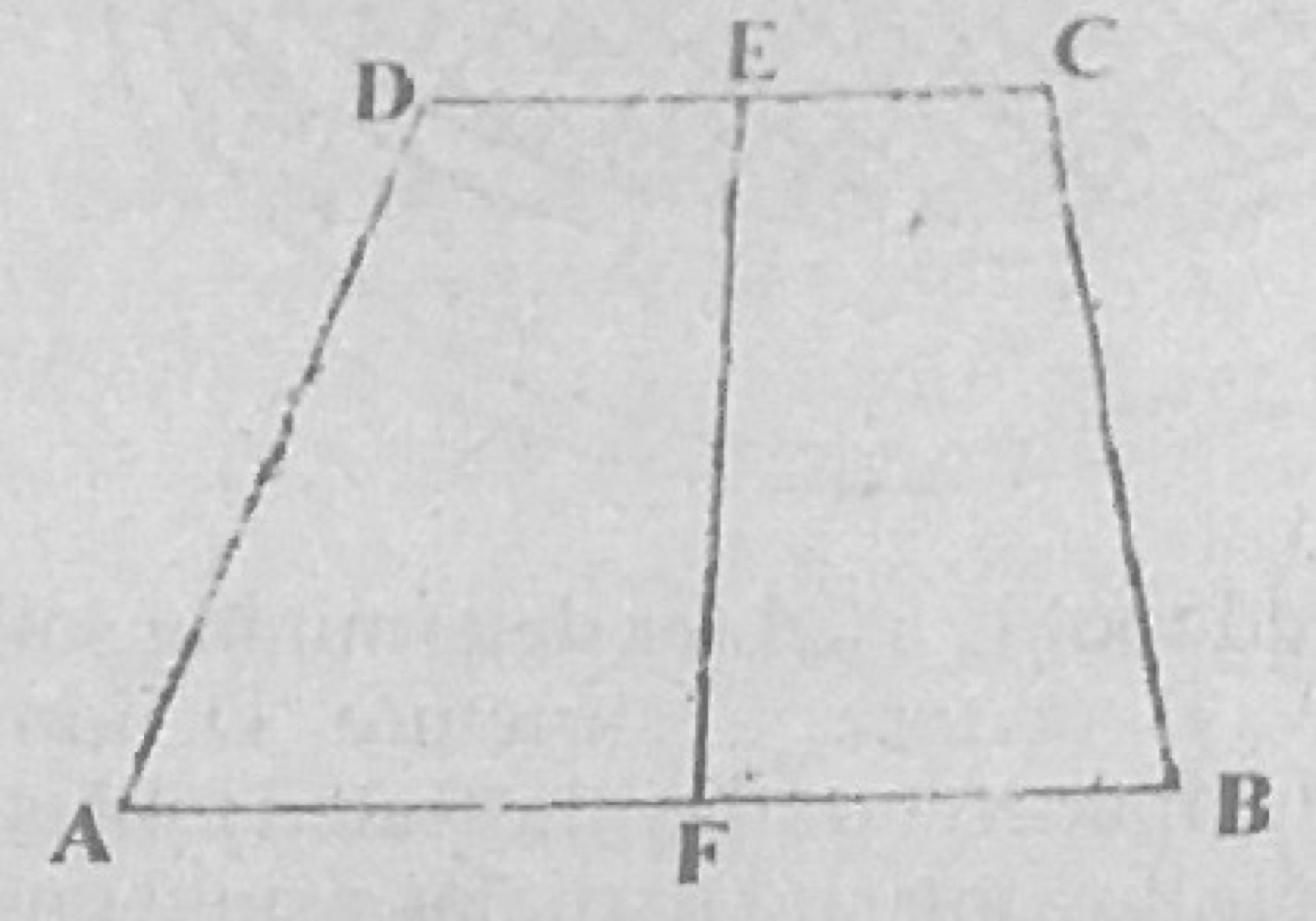
A farmland was surveyed and mapped as shown in the diagram below.
If AB is 15 m, DC is 10 m and EF is 8m, calculate the area of the farmland

Diagram for this question
  1. A.80 m2
  2. B.100 m2
  3. C.120 m2
  4. D.200 m2
Show the answer and explanation

Answer: B (100 m2)

Explanation

Trapezium area = ½ × (15 + 10) × 8 = 100 m².

Open this question

Question 29

Land Preparation and Cultural Practices

A farmland was surveyed and mapped as shown in the diagram below (AB = 15 m, DC = 10 m, EF = 8 m).
If cowpea was planted on the farmland at a spacing of 25 cm by 90 cm at two seeds per hole, determine the expected plant population of cowpea plants.

Diagram for this question
  1. A.355 plants.
  2. B.444 plants
  3. C.667 plants
  4. D.888 plants.
Show the answer and explanation

Answer: D (888 plants.)

Explanation

Holes = 100 ÷ (0.25 × 0.9) ≈ 444; × 2 seeds = 888 plants.

Open this question

Question 30

Crop Propagation

Dormancy in seeds could be broken by

  1. A.soil treatment.
  2. B.refrigeration.
  3. C.heat treatment.
  4. D.sterilization.
Show the answer and explanation

Answer: C (heat treatment.)

Explanation

Heat treatment (as in oil palm seeds) breaks dormancy.

Open this question

Question 31

Forestry and Wildlife

A nitrogen-fixing forest tree that could be used in alley cropping is

  1. A.Tectona grandis.
  2. B.Leucaena leucocephala.
  3. C.Terminalia superba.
  4. D.Treculia africana.
Show the answer and explanation

Answer: B (Leucaena leucocephala.)

Explanation

Leucaena is a leguminous tree used in alley cropping.

Open this question

Question 32

Ornamental Plants

Allamanda is an ornamental

  1. A.tree.
  2. B.grass.
  3. C.shrub.
  4. D.seed.
Show the answer and explanation

Answer: C (shrub.)

Explanation

Allamanda is a flowering shrub.

Open this question

Question 33

Crop Diseases

Which of the following diseases of crops could be controlled by the application of fungicides?

  1. A.Cassava mosaic
  2. B.Swollen shoot of cocoa
  3. C.Cotton leaf curl
  4. D.Sigatoka disease of banana
Show the answer and explanation

Answer: D (Sigatoka disease of banana)

Explanation

Sigatoka is fungal; the others are viral.

Open this question

Question 34

Weeds and Weed Control

Talinum triangulare is mainly dispersed by

  1. A.animals.
  2. B.running water.
  3. C.wind.
  4. D.explosive mechanism.
Show the answer and explanation

Answer: D (explosive mechanism.)

Explanation

Waterleaf capsules burst and throw out the seeds.

Open this question

Question 35

Classification of Farm Animals

An example of a dual purpose cattle is

  1. A.Muturu.
  2. B.Keteku.
  3. C.White Fulani.
  4. D.Red Bororo.
Show the answer and explanation

Answer: C (White Fulani.)

Explanation

White Fulani is kept for both milk and meat.

Open this question

Question 36

Livestock Management

Which of the following products is obtained from a living farm animal?
I. Egg
II. Chevon
III. Milk

  1. A.I and II only
  2. B.I and III only
  3. C.II and III only
  4. D.I, II and III
Show the answer and explanation

Answer: B (I and III only)

Explanation

Chevon is goat meat, obtained only after slaughter.

Open this question

Question 37

Animal Anatomy and Physiology

Absorption of water from undigested feed in ruminants occurs in the

  1. A.caecum.
  2. B.rectum.
  3. C.duodenum.
  4. D.colon.
Show the answer and explanation

Answer: D (colon.)

Explanation

The colon (large intestine) absorbs water from undigested material.

Open this question

Question 38

Animal Anatomy and Physiology

The rumen performs the following functions except
I. temporary storage of feed
II. fermentation of feed
III. synthesis of vitamins A and D

  1. A.I only
  2. B.II only
  3. C.III only
  4. D.I and III
Show the answer and explanation

Answer: C (III only)

Explanation

Rumen microbes make B vitamins and vitamin K, not A and D.

Open this question

Question 39

Animal Reproduction

Which of the following methods is not used in collecting semen from farm animals?

  1. A.Use of artificial vagina
  2. B.Massage
  3. C.Use of catheter
  4. D.Electro-ejaculation
Show the answer and explanation

Answer: C (Use of catheter)

Explanation

A catheter is used to inseminate, not to collect semen.

Open this question

Question 40

Animal Health

Heat stress in farm animals could result in

  1. A.increased feed intake.
  2. B.reduced water intake.
  3. C.increased litter size.
  4. D.reduced milk production.
Show the answer and explanation

Answer: D (reduced milk production.)

Explanation

Hot animals eat less and produce less milk.

Open this question

Question 41

Poultry Production

If the recommended floor space for chickens is 0.36 m2 per adult chicken. Determine the number of chickens that could be reared in a deep litter house measuring 9 m by 20 m.

  1. A.65
  2. B.81
  3. C.180
  4. D.500
Show the answer and explanation

Answer: D (500)

Explanation

9 × 20 = 180 m²; 180 ÷ 0.36 = 500.

Open this question

Question 42

Poultry Production

A building with open sides is preferable in a poultry house because it

  1. A.protects birds from strong winds.
  2. B.keeps the birds warm.
  3. C.promotes adequate ventilation.
  4. D.facilitates easy cleaning.
Show the answer and explanation

Answer: C (promotes adequate ventilation.)

Explanation

Open sides let fresh air move through the house.

Open this question

Question 43

Livestock Management

Wool could be obtained from a

  1. A.boar.
  2. B.buck.
  3. C.ram.
  4. D.cock.
Show the answer and explanation

Answer: C (ram.)

Explanation

Rams (sheep) grow wool.

Open this question

Question 44

Animal Health

Which of the following poultry diseases could be treated with drugs containing sulphur?
I. Coccidiosis
II. Ringworm
III. Fowl pox

  1. A.I and II only
  2. B.I and III only
  3. C.II and III only
  4. D.I, II and III
Show the answer and explanation

Answer: A (I and II only)

Explanation

Sulpha drugs treat coccidiosis, and sulphur preparations are used on ringworm; fowl pox is viral.

Open this question

Question 45

Livestock Management

The most important function of bees to humans is to

  1. A.produce beeswax.
  2. B.provide raw materials.
  3. C.serve as agent of pollination.
  4. D.be used for research.
Show the answer and explanation

Answer: C (serve as agent of pollination.)

Explanation

Pollination by bees raises crop yields greatly.

Open this question

Question 48

Farm Management and Records

A farmer's total cost of producing 500 trays of eggs was N350,000.00. Before sales, the farmer's family consumed 1% of the total output.
How many trays of eggs were sold by the farmer?

  1. A.400.
  2. B.490.
  3. C.495.
  4. D.500.
Show the answer and explanation

Answer: C (495.)

Explanation

1% of 500 = 5 trays eaten; 500 − 5 = 495 sold.

Open this question

Question 50

Marketing of Agricultural Produce

Which of the following marketing functions help farmers fix better prices for their produce?
I. Advertisement
II. Processing
III. Grading

  1. A.I and II only
  2. B.I and III only
  3. C.II and III only
  4. D.I, II and III
Show the answer and explanation

Answer: C (II and III only)

Explanation

Processing adds value and grading sorts produce into quality classes that fetch higher prices.

Open this question

Theory question 101

Agricultural Development

(a) State six causes of food shortage in West Africa.
(b) Name four governmental organizations that are involved in the improvement of agricultural production in West Africa.
(c)(i) Mention three field operations that could be powered by the tractor on the farm. (ii) Give five reasons why it is difficult for farmers to acquire tractors in West Africa.

Show the model answer
Model answer

(a) Any six: pests and diseases; poor or irregular rainfall/drought; dependence on rain-fed farming; poor rural roads and amenities; inadequate farm inputs; desert encroachment, erosion and environmental degradation; climate change; war and insecurity; floods and other natural disasters; rural-urban migration; poor storage and processing; high population growth; poor government policies.
(b) Any four: River Basin Development Authorities; Agricultural Development Programmes (ADPs); agricultural/development banks (e.g. Bank of Agriculture); national agricultural research institutes; National Agricultural Insurance Corporation; national land development authorities; ministries of agriculture.
(c)(i) Any three: ploughing; harrowing; ridging; planting; fertilizer application; spraying; mowing; harvesting; transporting inputs and produce.
(ii) Any five: high purchase price; high cost of maintenance and fuel; lack of capital/credit; scarcity of spare parts; lack of technical know-how/operators; small, fragmented holdings; poor government support.

Explanation

Six separate causes in (a).

Open this question

Theory question 102

Soil Fertility and Plant Nutrition

(a) Explain four ways in which nutrients are depleted from the soil.
(b) Give three: (i) advantages of applying green manure to soils. (ii) disadvantages of applying green manure to soils
(c) Give four reasons why deforestation should be discouraged in West Africa.

Show the model answer
Model answer

(a) Any four, explained: leaching – rain water washes soluble nutrients down beyond the roots; crop removal – harvested crops and grazed plants carry nutrients away; burning – bush burning destroys organic matter and nitrogen goes off as gas; erosion – fertile topsoil is washed or blown away; continuous cropping without replacement; oxidation/denitrification losses of nitrogen.
(b)(i) Any three: adds organic matter and nutrients (especially nitrogen from legumes); improves soil structure, aeration and water holding; increases soil organisms; reduces erosion; cheap.
(ii) Any three: labour intensive; land is out of use while the green manure grows; slow release of nutrients; bulky; may encourage pests or weeds; depends on rainfall.
(c) Any four: prevents soil erosion and loss of fertility; checks desert encroachment; protects wildlife and biodiversity; reduces global warming/climate change; keeps rainfall and water supply steady; prevents flooding; preserves timber and other forest products for the future.

Explanation

Explain how each loss happens.

Open this question

Theory question 103

Crop Diseases

(a) Complete the table below: for maize smut and damping off of tomato, give the causal organism, one symptom and one preventive/control measure.
(b) State four ways in which each of the following factors affect crop production in West Africa (i) wind; (ii) light.
(c) Mention four human activities that promote deforestation.

Show the model answer
Model answer

(a) Maize smut: fungus (Ustilago maydis); large galls on ears, tassels or stems that burst to release black powdery spores; resistant varieties, seed dressing, remove and burn infected plants, crop rotation.
Damping off of tomato: fungus (Pythium spp., also Rhizoctonia); seedling stems rot and become thin at soil level, seedlings collapse and die; sterilise nursery soil, avoid over-watering, good drainage, correct spacing, fungicides.
(b)(i) Wind (any four): increases transpiration and evaporation; helps pollination; disperses seeds and weed seeds; spreads pests and diseases; strong winds cause lodging and breakage; causes soil erosion.
(ii) Light (any four): supplies energy for photosynthesis; affects growth rate; daylength decides flowering of many crops (photoperiodism); affects ripening of fruits; causes phototropism; breaks dormancy of some seeds.
(c) Any four: logging/timber felling; mining and oil exploration; road construction; urbanisation and industrialisation; farming/shifting cultivation; estate and housing development; bush burning; fuelwood collection.

Explanation

One organism, symptom and control for each disease.

Open this question

Theory question 104

Crop Husbandry

(a) Discuss the cultivation of cotton under the following headings: (i) planting material; (ii) spacing; (iii) varieties; (iv) harvesting; (v) two pests; (vi) uses.
(b) State five advantages of introducing a new variety of banana into an area.
(c) Mention four routine management practices that should be carried out by a farmer when rearing layers in the battery cage

Show the model answer
Model answer

(a)(i) Seeds (delinted).
(ii) About 90 cm × 30–45 cm (or 60 cm × 100 cm).
(iii) Any: Gossypium hirsutum; G. barbadense; G. arboreum; G. herbaceum (or named local varieties such as Samaru 26J).
(iv) Bolls are picked by hand as they open (or by mechanical cotton pickers), in dry weather.
(v) Any two: cotton stainer; bollworms; aphids; whitefly; jassids/leafhoppers; spider mites; thrips.
(vi) Lint for textiles; seed oil for cooking, margarine and soap; seed cake for livestock feed; hulls for fertilizer and paper; medical cotton wool.
(b) Any five: higher yield; better fruit quality and nutrition; resistance to diseases and pests; introduces new genetic variety; better adapted varieties; increases farmers' income; may open new markets.
(c) Any four: feeding; watering; vaccination and deworming; debeaking; cleaning and sanitation; lighting; egg collection; culling unproductive birds; isolating sick birds; record keeping.

Explanation

Give two named pests for cotton.

Open this question

Theory question 105

Pasture and Forage Crops

(a) Give three reasons for carrying out each of the following practices in pasture management. (i) fencing; (ii) adequate stocking.
(b) Explain each of the following management practices in animal production (i) culling; (ii) dehorning; (iii) castration.
(c) Outline the steps involved in the propagation of oil palm in the nursery.

Show the model answer
Model answer

(a)(i) Fencing (any three): restricts movement of animals; keeps out thieves, predators and intruders; divides pasture into paddocks for rotational grazing; prevents overgrazing; prevents spread of diseases and parasites from outside animals.
(ii) Adequate stocking (any three): matches the number of animals to the carrying capacity; prevents overgrazing and soil compaction; ensures enough feed for each animal; allows pasture to regrow; reduces disease and parasite spread.
(b)(i) Culling: removing weak, sick, old, unproductive or bad-tempered animals from the flock/herd.
(ii) Dehorning: removing or preventing growth of horns (with a hot iron, caustic soda or saw) to make animals easier to handle and prevent injury.
(iii) Castration: removing or destroying the testicles of males not wanted for breeding, so they are docile and fatten well.
(c) Select good, viable seeds (e.g. Tenera); heat-treat in a germinator at about 39–40 °C for about 80 days to break dormancy; soak in water for some days, then dry; germinate and plant the sprouted seeds in polythene bags in the pre-nursery; transfer to the main nursery; water, weed, fertilise and control pests; harden off and transplant to the field at about 12 months.

Explanation

Put the nursery steps in order.

Open this question

Theory question 106

Farm Management and Records

(a) Explain each of the following terms as used in farm management (i) farm inventory; (ii) depreciation; (iii) liability; (iv) salvage value.
(b)(i) State the law of supply. (ii) Mention three factors that affect the supply of farm produce.
(c) Give five effects of weeds on farm animals.

Show the model answer
Model answer

(a)(i) Farm inventory: a complete list of all the assets of a farm (land, buildings, machinery, livestock, stores) with their values at a given date.
(ii) Depreciation: the fall in value of a farm asset through use, wear and tear or age over time.
(iii) Liability: a debt the farm owes to outside parties, e.g. loans, overdrafts and unpaid bills.
(iv) Salvage value: the value of an asset at the end of its useful life (its scrap or resale value).
(b)(i) The higher the price of a commodity, the greater the quantity supplied, and the lower the price, the smaller the quantity supplied, other things being equal.
(ii) Any three: price of the produce; cost of inputs/production; technology; weather/climate; pests and diseases; prices of other products; government policy (taxes, subsidies); number of producers.
(c) Any five: some weeds are poisonous; reduce the amount and quality of pasture; harbour pests and parasites (e.g. ticks); thorny weeds injure animals; taint milk and meat; seeds and burrs damage wool and hides; some cause bloat or digestive problems.
Explanation

Two lines for each term in (a).

Open this question