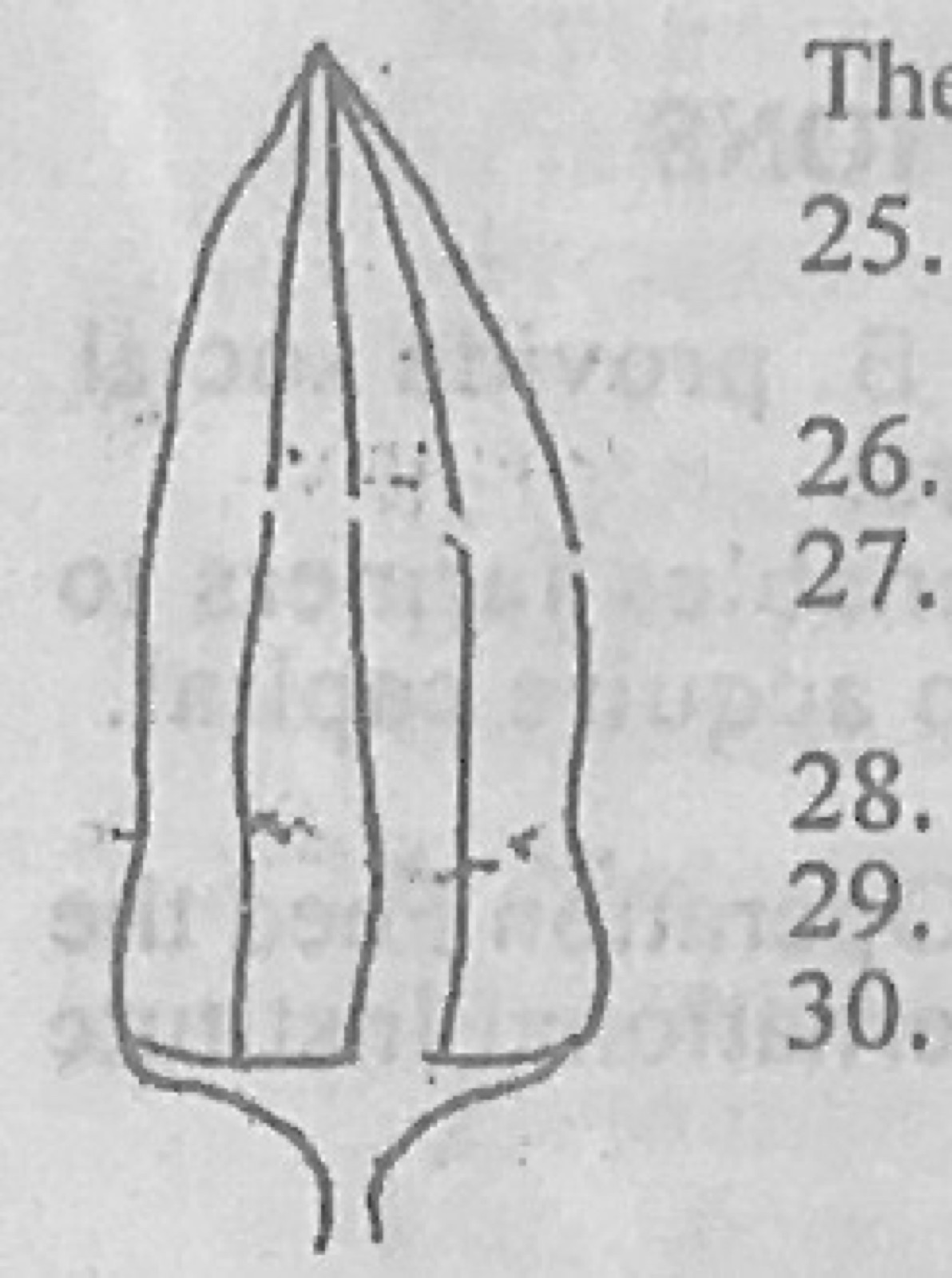
In an experiment on soil porosity, the following results were obtained: Volume of dry soil = 52cm3. Volume of water = 48cm3. Volume of soil and water = 78cm3 Determine the volume of airspace in the soil sample.
A.22cm3
B.26cm3
C.30cm3
D.100cm3
Show the answer and explanation
Answer: A (22cm3)
Explanation
Air space = (52 + 48) − 78 = 22 cm³, the water that went into the pores.
In an experiment on soil porosity, the following results were obtained: Volume of dry soil = 52cm3. Volume of water = 48cm3. Volume of soil and water = 78cm3 Calculate the porosity of the soil sample.
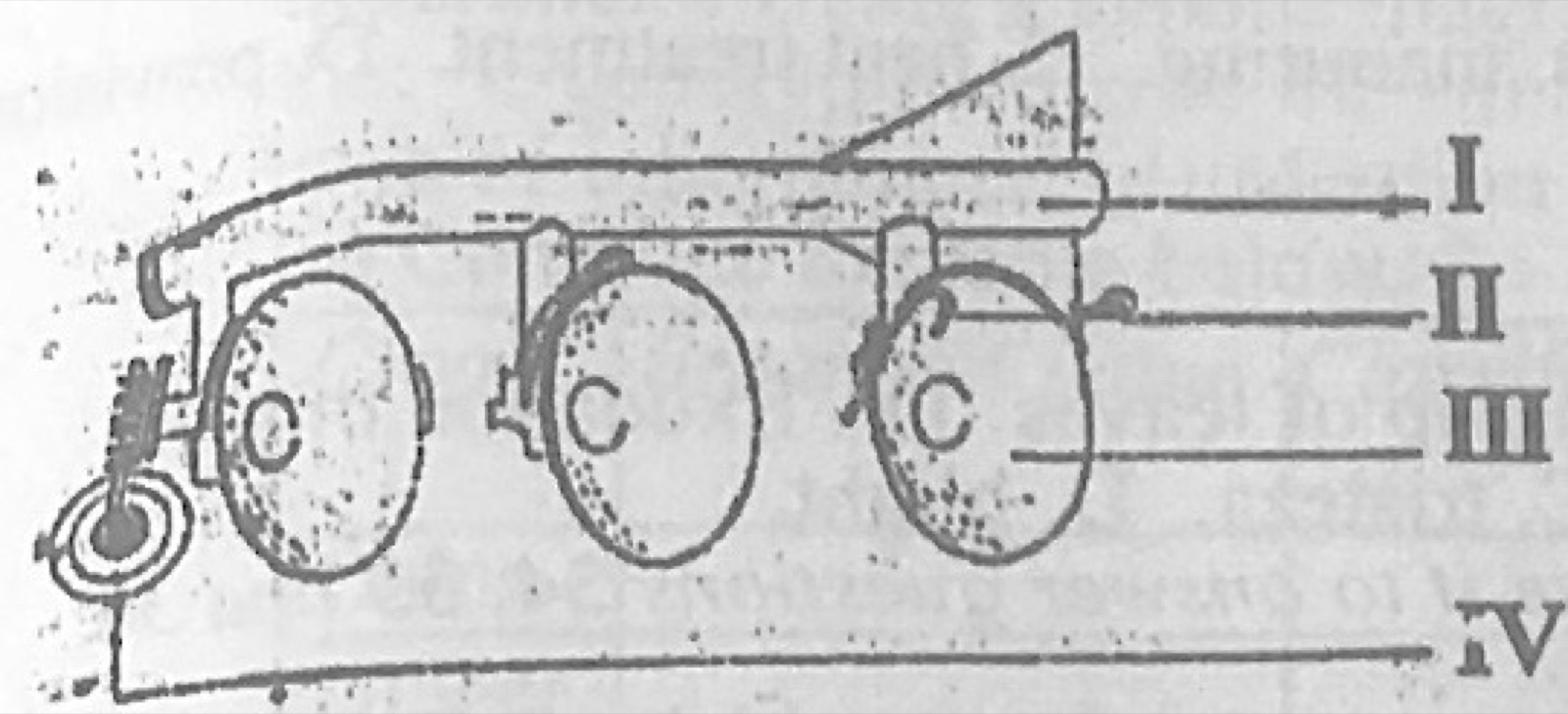
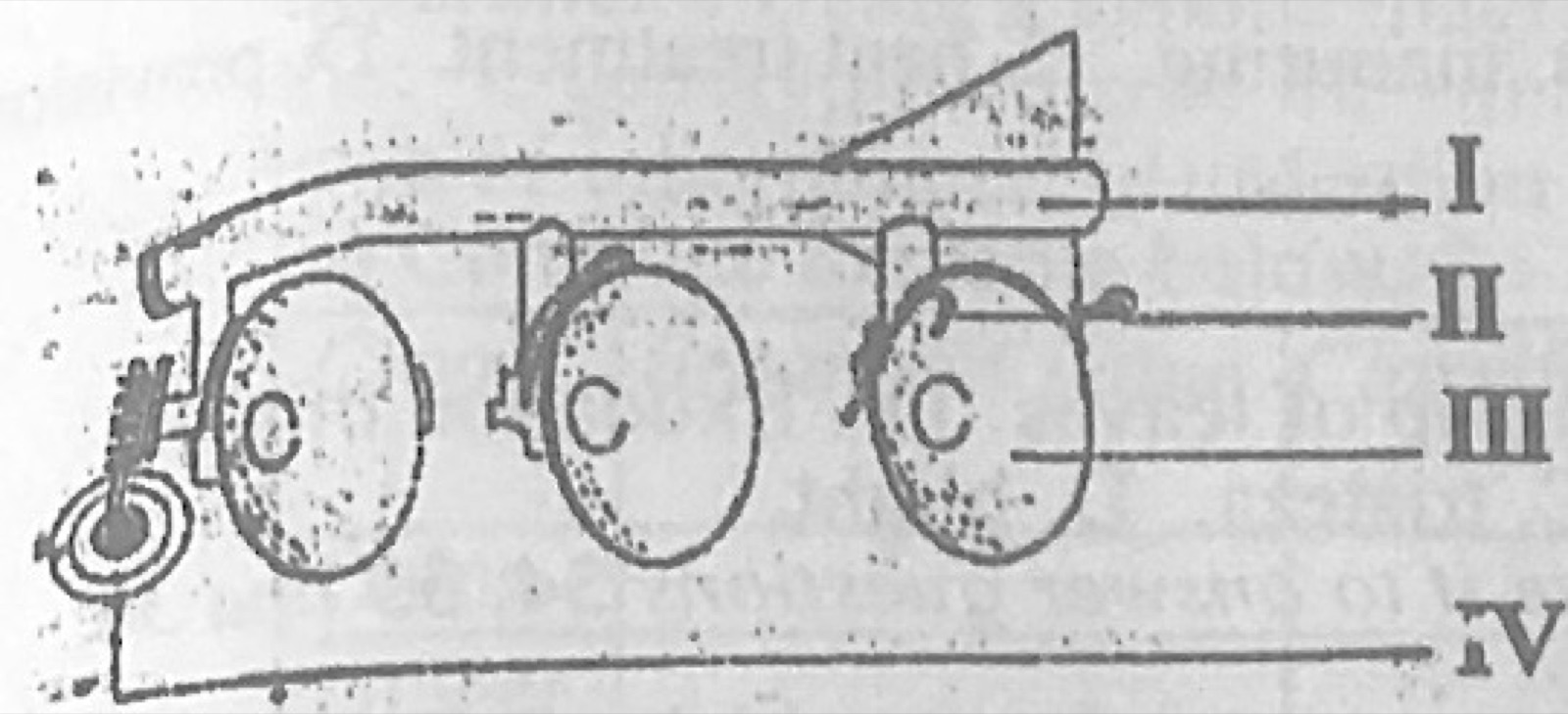
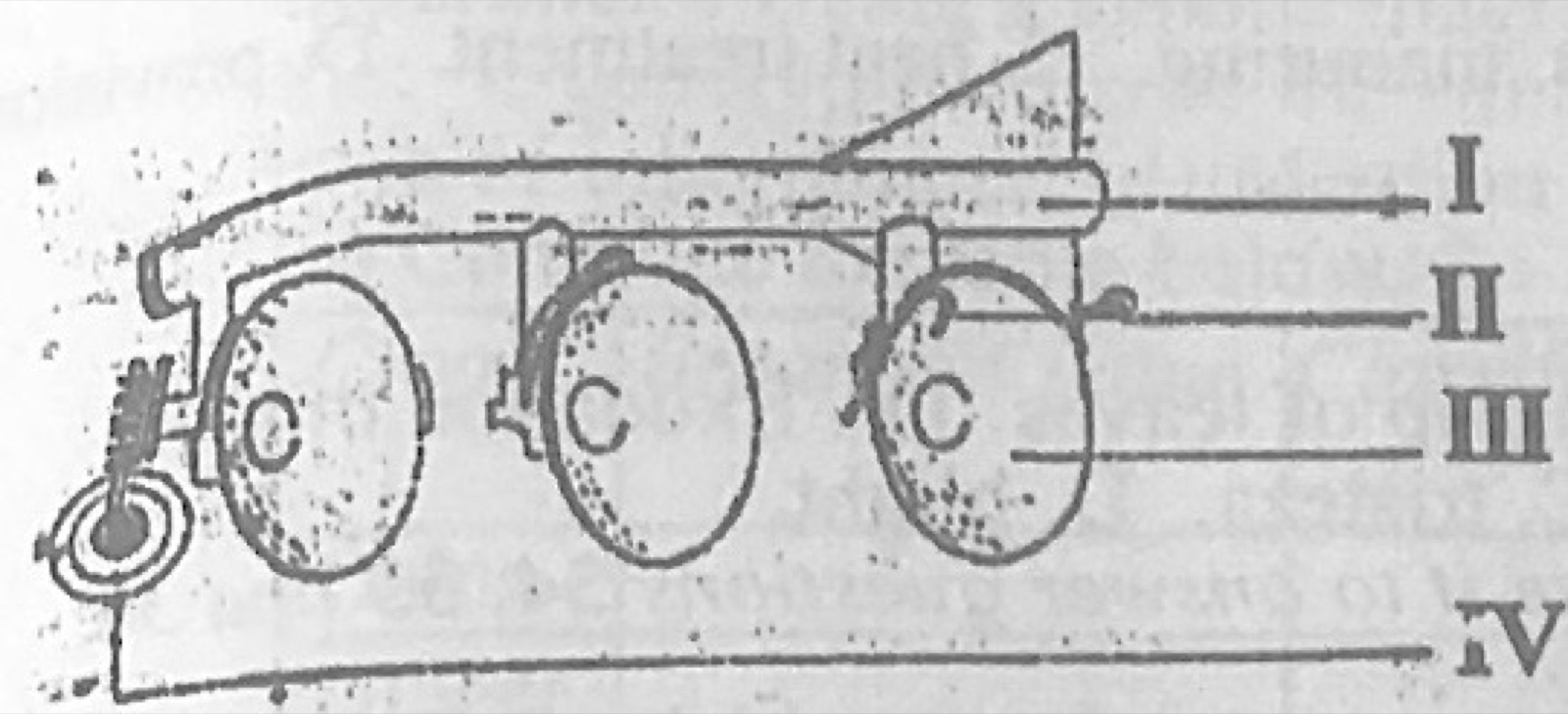
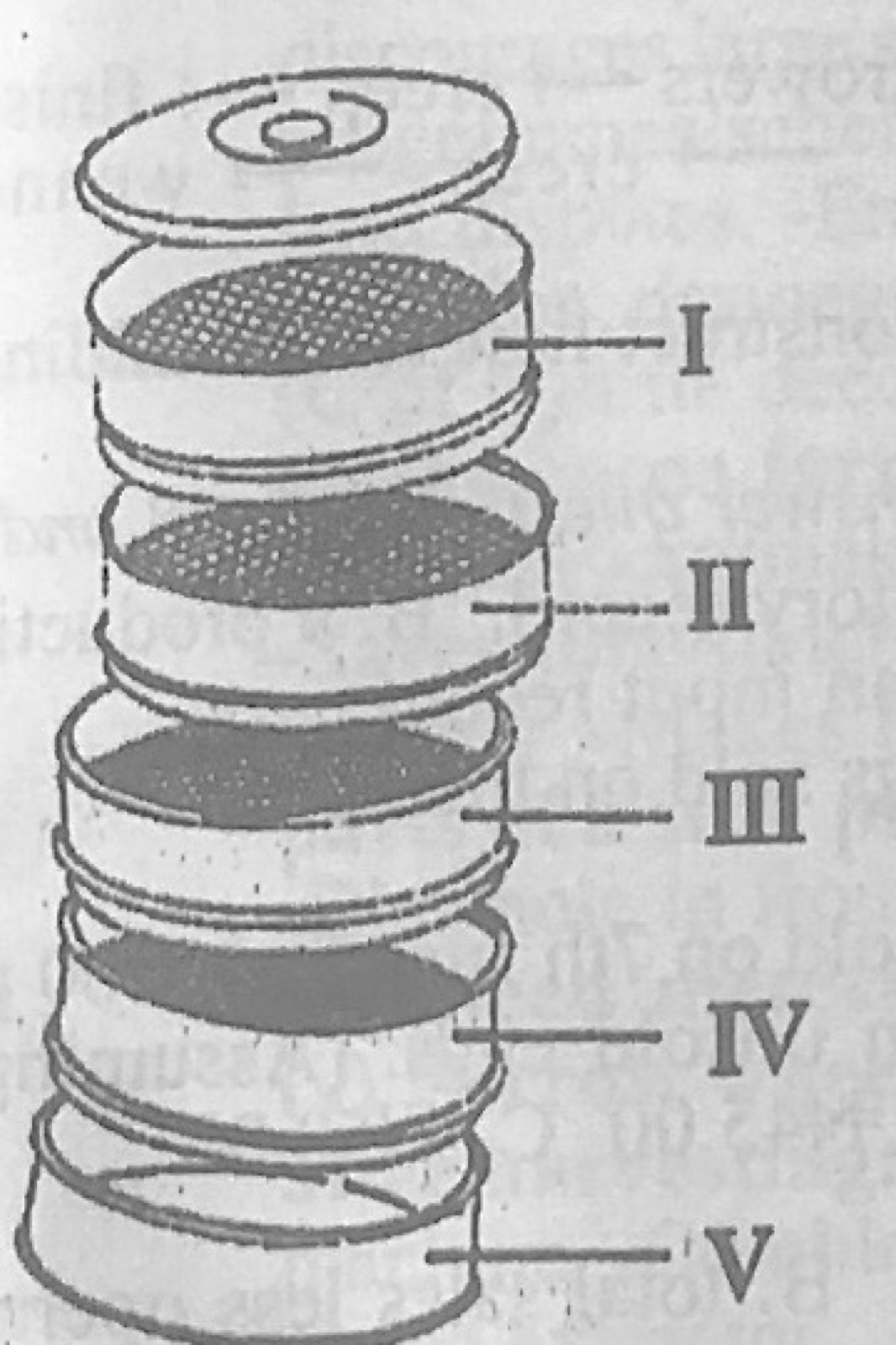
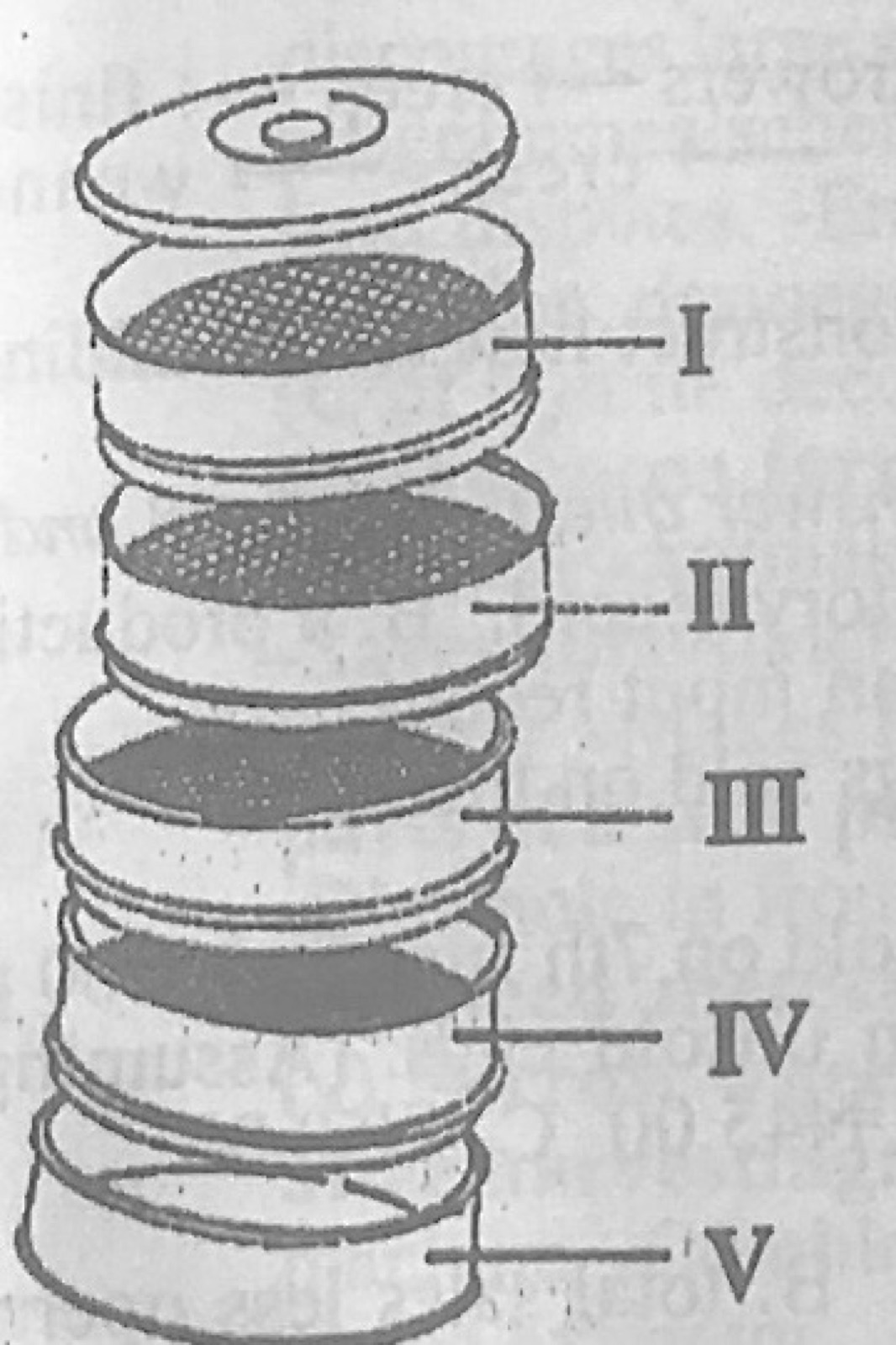
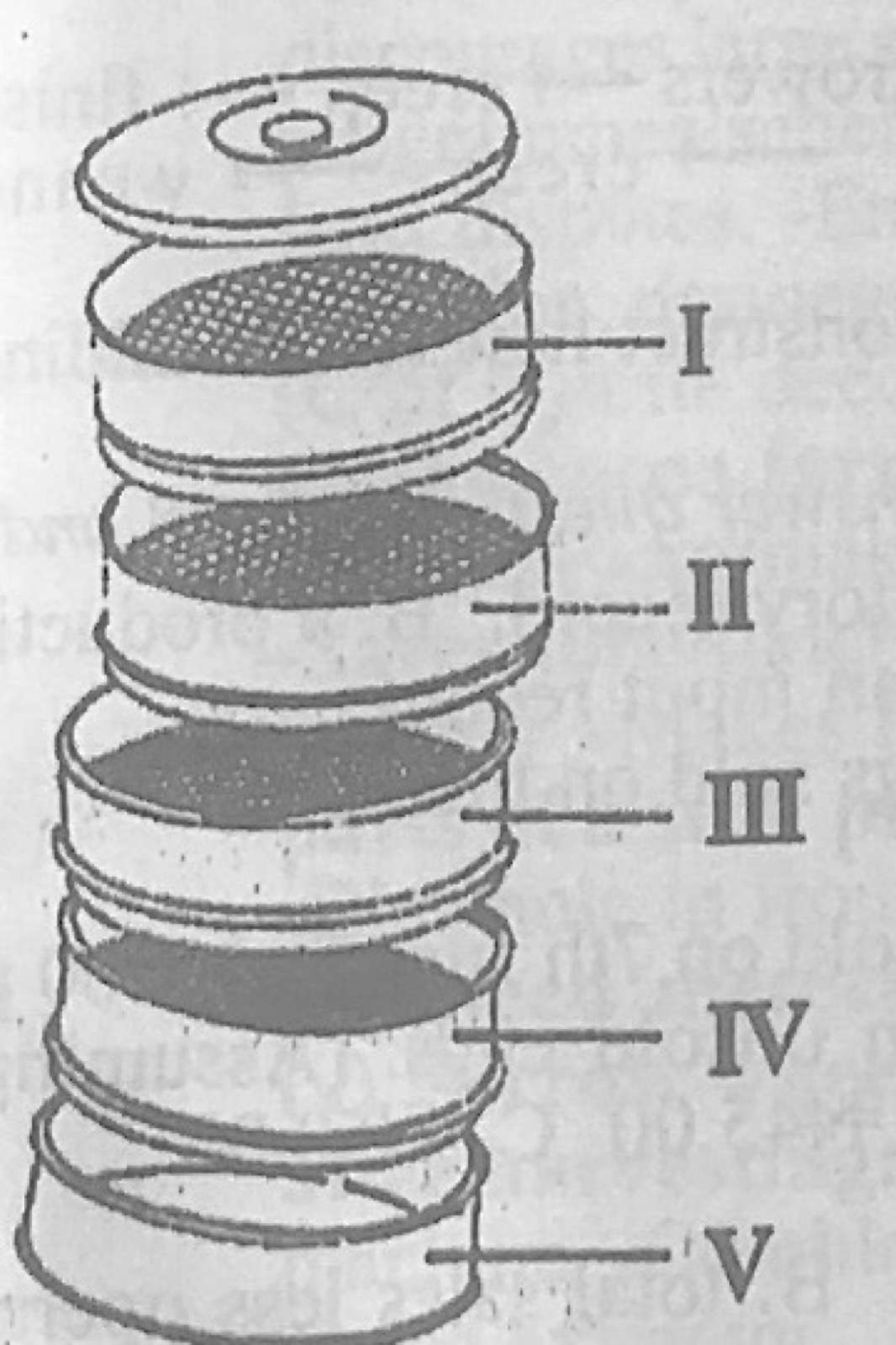
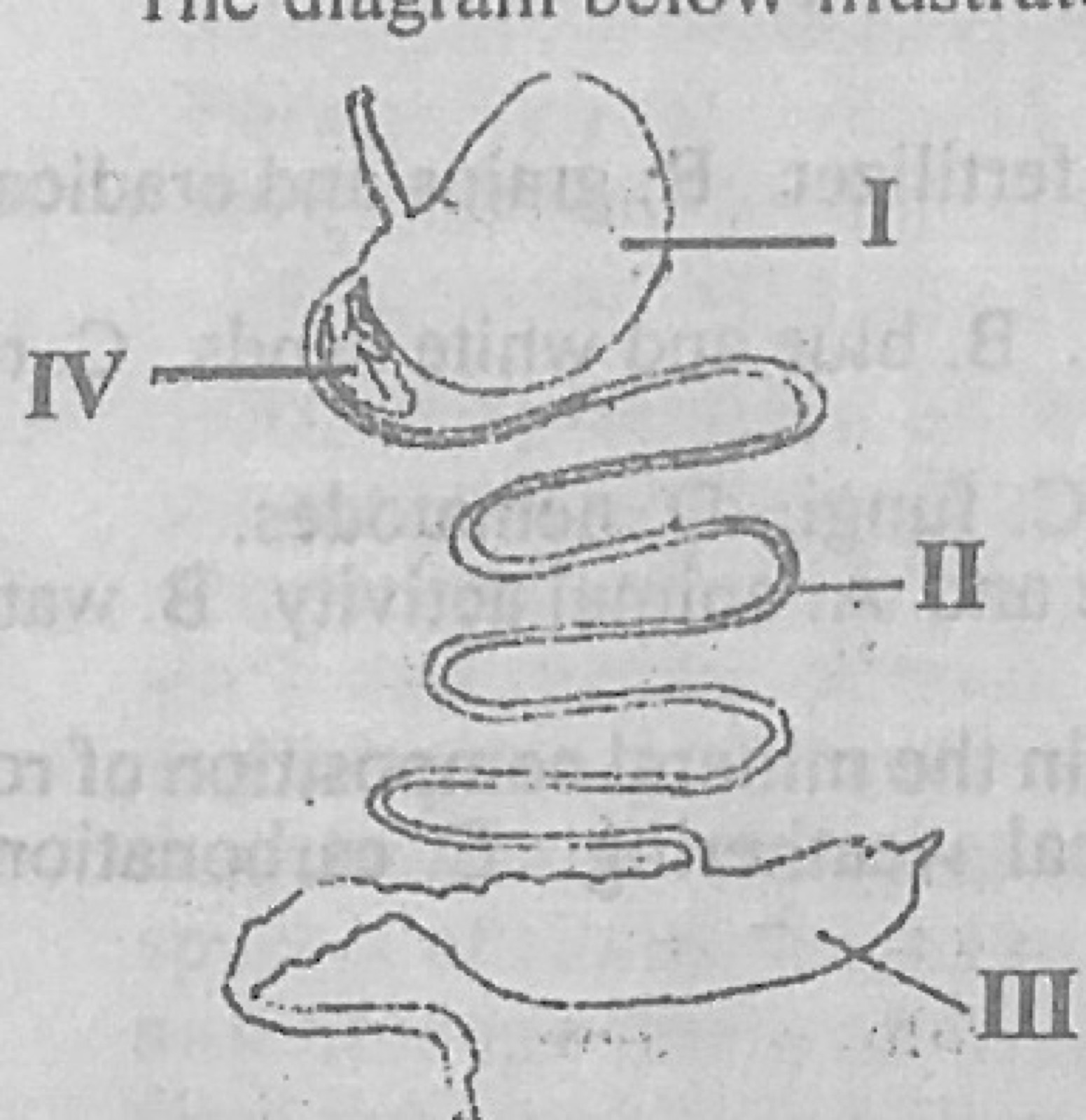
The diagram below illustrates a tool used to analyse a soil sample in an experiment. The diameter of the soil particle that would be retained in the part labelled II is
Use the information below. I. Yellowing of leaves II. Raised brown spots on the leaves III. Drying up of leaves IV. Exudation of gum The disease of citrus described above is
Which of the following statements about silage are true? It I. has laxative effect II. is acidic in reaction III. has a strong aroma when well prepared
A.I and II only
B.I and III only
C.II and III only
D.I, II and III
Show the answer and explanation
Answer: D (I, II and III)
Explanation
Silage is acidic, mildly laxative and has a pleasant strong smell.
The table below illustrates a farm record for Goodness Farms in the year 1970. 4th June: 362 hens, 176 eggs collected, 96 eggs sold 5th June: 360 hens, 199 eggs collected, 108 eggs sold 6th June: 360 hens, 177 eggs collected, 48 eggs sold The table illustrates
A.an inventory record.
B.a production record.
C.a labour record.
D.an input record.
Show the answer and explanation
Answer: B (a production record.)
Explanation
It records eggs produced, so it is a production record.
The table below illustrates a farm record for Goodness Farms in the year 1970. 4th June: 362 hens, 176 eggs collected, 96 eggs sold 5th June: 360 hens, 199 eggs collected, 108 eggs sold 6th June: 360 hens, 177 eggs collected, 48 eggs sold Calculate the total amount of eggs sold on the farm.
The table below illustrates a farm record for Goodness Farms in the year 1970. 4th June: 362 hens, 176 eggs collected, 96 eggs sold 5th June: 360 hens, 199 eggs collected, 108 eggs sold 6th June: 360 hens, 177 eggs collected, 48 eggs sold If all the unsold eggs were later sold on 7th June at N5.00 per crate, calculate the income from unsold eggs. (Assuming a crate = 30 eggs)
(a) State five reasons why government should enact laws to regulate the use of land for agriculture. (b) A cocoa farmer has just acquired 10 hectares of farmland and is considering the type of farm power to use for tillage operations. (i) Advise the farmer on the most appropriate type of farm power to use. (ii) State four reasons for the answer in 1(b)(i). (c) Mention one function each of the following parts of a seed planter: (i) seed tube; (ii) furrow opener; (iii) hopper; (iv) seed metering device; (v) furrow wheel. (d) List three machines used in processing crops after harvesting.
Show the model answer
Model answer
(a) Any five: ensure proper use of farmland; prevent fragmentation; protect farmers from eviction/land grabbing; reduce land disputes; make land available for government schemes; encourage commercial/large-scale farming; give security of tenure (C of O); allow land improvement (irrigation, drainage). (b)(i) Mechanical (tractor) power. (ii) Any four: saves labour; reduces drudgery; faster and timely operations; cheaper per hectare on a large farm; makes cultivating large areas possible; more efficient. (c)(i) Seed tube: carries seeds from the metering device down to the furrow. (ii) Furrow opener: opens the soil/furrow for the seeds. (iii) Hopper: holds the seeds. (iv) Seed metering device: controls the rate and number of seeds released. (v) Furrow wheel: presses soil over the seeds (and drives the metering device). (d) Any three: thresher; sheller; rice huller/mill; hammer mill/grinder; cassava grater; palm oil press; decorticator; grain dryer.
(a) Explain each of the following cropping systems: (i) monocropping; (ii) mixed cropping; (iii) mixed farming; (iv) crop rotation. (b) A crop farmer observed that the leaves of the orange plants on the farm turned purple with most of the immature fruits dropping. (i) Identify the nutrient deficient in the orange plants. (ii) List four inorganic fertilizers that could correct the nutrient deficiency observed in the orange plants. (c) Name five materials that could be used to attract bees to a new beehive.
Show the model answer
Model answer
(a)(i) Monocropping: growing only one crop on a piece of land at a time. (ii) Mixed cropping: growing two or more crops together on the same land at the same time. (iii) Mixed farming: growing crops and rearing animals on the same farm at the same time. (iv) Crop rotation: growing different crops on the same land one after another in a planned sequence from year to year. (b)(i) Phosphorus. (ii) Any four: single superphosphate; triple superphosphate; NPK compound fertilizer (e.g. 15:15:15); rock phosphate; ammonium phosphate (MAP/DAP). (c) Any five: beeswax; honey; sugar syrup; palm wine; propolis; lemon grass/scented leaves; old honeycomb.
(a) Explain four causes of damage to maize during storage. (b) Two heterozygous tall plants, Tt, were crossed in an experiment. Using a genetic diagram, (i) show the possible offspring that could result from the cross. (ii) determine the: I. genotypic ratio of the offspring. II. phenotypic ratio of the offspring. (c) State Mendel's first and second laws of inheritance. (d) Mention two forage grasses.
Show the model answer
Model answer
(a) Any four: insects (weevils, moths) bore into and eat grains; rodents eat and contaminate grain; moulds/fungi rot grain when it is damp; high moisture causes heating and sprouting; birds; poor store hygiene/leaking roofs. (b)(i) Parents Tt × Tt; gametes T, t and T, t; offspring TT, Tt, Tt, tt. (ii) I. Genotypic ratio 1 TT : 2 Tt : 1 tt. II. Phenotypic ratio 3 tall : 1 short. (c) First law (segregation): the two factors (alleles) for a character separate during gamete formation so each gamete gets only one. Second law (independent assortment): factors for different characters are passed on independently of each other. (d) Any two: Panicum maximum (guinea grass); Pennisetum purpureum (elephant grass); Andropogon gayanus (gamba grass); Cynodon dactylon; Brachiaria spp.
(a) Complete the table below: for Onion, Ginger and Jute give the botanical name, classification based on use and method of propagation. (b) A poultry farmer plans to rear broilers in a deep litter house measuring 36 m long and 10 m wide. If a floor space of 0.36 m2 per adult chicken is recommended for broiler production, calculate the number of broilers that the farmer can rear. (c) State five advantages of introducing legumes in a pasture.
Show the model answer
Model answer
(a) Onion: Allium cepa; vegetable/spice; bulbs or seeds. Ginger: Zingiber officinale; spice; rhizomes. Jute: Corchorus olitorius (or C. capsularis); fibre crop; seeds. (b) Floor area = 36 × 10 = 360 m²; number = 360 ÷ 0.36 = 1,000 broilers. (c) Any five: fix nitrogen and improve soil fertility; raise the protein content of the pasture; improve palatability; increase dry matter yield; provide ground cover against erosion; stay green longer into the dry season; reduce need for nitrogen fertilizer.
(a) Explain each of the following terms as used in animal nutrition: (i) balanced diet; (ii) maintenance ration; (iii) production ration; (iv) malnutrition. (b) State six effects of malnutrition on farm animals. (c) Mention four nursery practices in the production of tomato.
Show the model answer
Model answer
(a)(i) Balanced diet: feed containing all the nutrients (carbohydrate, protein, fat, vitamins, minerals, water) in the right proportions and quantity for the animal's needs. (ii) Maintenance ration: feed just enough to keep the animal alive and its weight steady, without production. (iii) Production ration: extra feed above maintenance for growth, milk, eggs, work or reproduction. (iv) Malnutrition: a condition caused by lack, excess or imbalance of nutrients in the diet. (b) Any six: stunted/slow growth; weight loss; low production of milk, eggs, meat; poor fertility/reproduction; deficiency diseases (rickets, anaemia, milk fever); weakness and low resistance to diseases; death; poor quality products. (c) Any four: preparing and sterilising the nursery soil; sowing seeds in drills; mulching; watering; shading; thinning/pricking out; pest and disease control; hardening off before transplanting.
The table below illustrates a basic economic principle in agriculture. Quantity of fertilizer used (bag) — Tomato yield (kg): 0 — 2; 2 — 6; 4 — 9; 6 — 11; 8 — 10; 10 — 5; 12 — 4 (a)(i) On the graph sheet provided, plot a graph showing the relationship between fertilizer used and tomato yield. Use a scale of 2 cm to 2 units on the x axis and 2 cm to 2 units on the y axis. (ii) Describe the relationship between the fertilizer used and tomato yield. (iii) Suggest the most appropriate quantity of fertilizer to be applied on the tomato farm. (b) State three effects of subsidy withdrawal on agricultural production. (c) List four print media that could be used to disseminate information about a new variety of maize to farmers. (d) Name two insect pests each of the following crops: (i) maize; (ii) orange.
Show the model answer
Model answer
(a)(i) Fertilizer (bags) on the x axis and yield (kg) on the y axis, both 2 cm to 2 units; plot (0,2), (2,6), (4,9), (6,11), (8,10), (10,5), (12,4) and join with a smooth curve rising to a peak at 6 bags then falling. (ii) Yield rises as fertilizer increases up to 6 bags (11 kg), then falls with more fertilizer: the law of diminishing returns. (iii) 6 bags. (b) Any three: higher cost of inputs; farmers use less fertilizer, seeds and chemicals; lower output and food shortage; higher food prices; some farmers abandon farming; less mechanisation. (c) Any four: newspapers; magazines; bulletins/newsletters; leaflets/handbills; posters; journals; pamphlets. (d)(i) Maize (any two): stem borer; armyworm; grasshoppers; maize weevil (storage); earworm. (ii) Orange (any two): fruit fly; aphids; scale insects; citrus butterfly/orange dog; mealybugs.