Home › Past questions › Unilorin Post-UTME › Literature in English › 2022 Model questions 25 questions. Try each one, then open the answer to check yourself and read the explanation.
Sign up free to answer these questions on a CBT screen with a timer, then see your score and every answer explained.
Start practising free
Question 1 Figures of Speech An indirect representation is ________
A. metonymy B. irony C. synecdoche D. simile Show the answer and explanation Answer: A (metonymy )
Explanation Metonymy represents something indirectly through a thing closely associated with it, e.g. 'the crown' for the king.
Open this question
Question 2 Drama: General A theatre of irrationality and extreme laughter is known as ________.
A. absurdism B. farce C. burlesque D. melodrama Show the answer and explanation Answer: B (farce )
Explanation A farce is a comedy built on absurd, improbable situations meant to provoke wild laughter.
Open this question
Question 3 Prose: General The longest form of fiction is ________.
A. autobiography B. faction C. prose D. novel Show the answer and explanation Answer: D (novel )
Explanation The novel is the longest form of prose fiction, longer than the novella and the short story. An autobiography is non-fiction.
Open this question
Question 4 Literary Terms and Devices Which of the following is not an element of satire?
A. humour B. irony C. sarcasm D. overstatement Show the answer and explanation Answer: D (overstatement )
Explanation The book lists humour, irony and sarcasm as the tools satire uses to expose and correct society's faults.
Open this question
Question 6 Prose: General The narrative technique in which the inner thoughts of the character are brought to the fore is known as ________.
A. dramatic irony B. interior monologue C. monologue D. dramatic monologue Show the answer and explanation Answer: B (interior monologue )
Explanation Interior monologue lets the reader hear a character's private thoughts directly, like Santiago thinking alone at sea in The Old Man and the Sea.
Open this question
Question 7 Prose: General Novel that educates about character's development and growth is known as
A. epistolary B. picaresque C. bildungsroman D. roman a clef Show the answer and explanation Answer: C (bildungsroman )
Explanation A bildungsroman follows a character's growth from childhood to maturity.
Open this question
Question 8 Figures of Speech A rhetorical device of alluding to something and denying that it will be mentioned is known as ________
A. epistrophe B. parastasis C. epizeuxis D. apophasis Show the answer and explanation Answer: D (apophasis )
Explanation Apophasis raises a point by saying you will not mention it, e.g. 'I won't mention his many debts.'
Open this question
Question 9 Drama: General The resolution of conflict in a play is ________.
A. denouement B. apostrophe C. catastrophe D. epitasis Show the answer and explanation Answer: A (denouement )
Explanation The denouement is the final unravelling, where the conflicts of the plot are resolved.
Open this question
Question 10 Drama: General Catharsis is an element of ________.
A. comedy B. tragedy C. burlesque D. farce Show the answer and explanation Answer: B (tragedy )
Explanation Aristotle described catharsis, the release of pity and fear in the audience, as the effect of tragedy.
Open this question
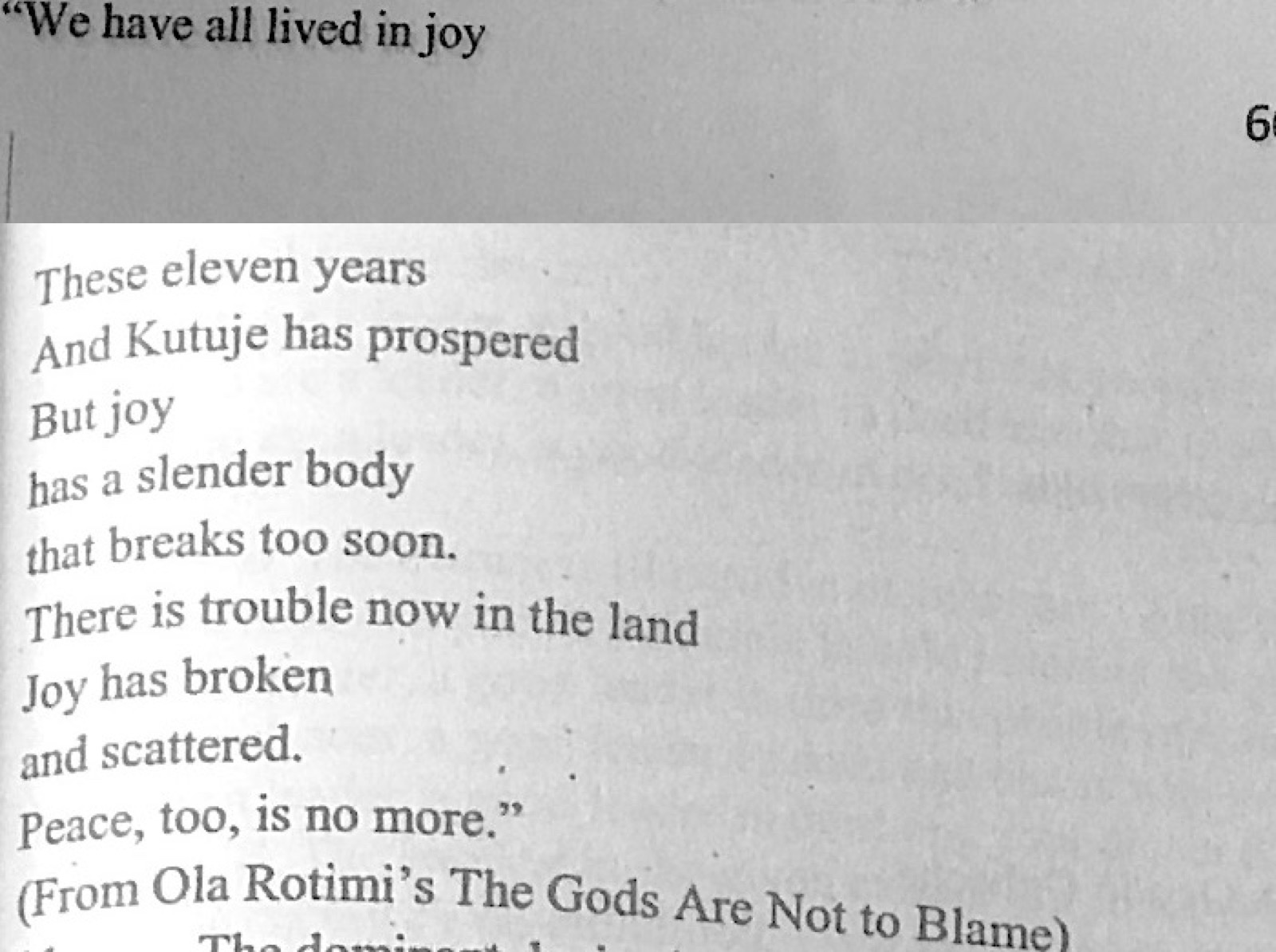
Question 11 Set Text: The Gods Are Not to Blame Extract from Ola Rotimi's The Gods Are Not to Blame The dominant device in the extract is ________
A. metaphor B. simile C. personification D. irony Show the answer and explanation Answer: C (personification )
Explanation Joy is given a 'slender body' that breaks, and joy and peace are treated like living things, so personification dominates.
Open this question
Question 12 Set Text: The Gods Are Not to Blame It can be deduced from the extract that joy is
A. tenacious B. tentative C. transient D. equivocal Show the answer and explanation Answer: C (transient )
Explanation Joy 'breaks too soon', meaning it does not last: it is transient.
Open this question
Question 14 Literary Appreciation: Poetry The last line of the extract indicates the use of ________.
A. metaphor B. allusion C. foreshadowing D. emphasis Show the answer and explanation Answer: B (allusion )
Explanation 'The day of reckoning' refers indirectly to the biblical Day of Judgement, so it is an allusion.
Open this question
Question 15 Literary Terms and Devices The expression "Our leaders love us and therefore kill us" is
A. adulatory B. desultory C. caustic D. ironical Show the answer and explanation Answer: D (ironical )
Explanation Saying leaders kill people because they love them is the opposite of what we expect, so the statement is ironical.
Open this question
Question 16 Literary Appreciation: Prose and Drama "You are a leader, a good leader in deed..." The tone of the extract is
A. cynical B. sarcastic C. abrasive D. pessimistic Show the answer and explanation Answer: B (sarcastic )
Explanation The speaker keeps calling the person 'a good leader' while listing his failures, mocking him through irony: a sarcastic tone.
Open this question
Question 17 Literary Appreciation: Prose and Drama The expression is illustrative of ________
A. parallelism B. anaphora C. alliteration D. epistrophe Show the answer and explanation Answer: B (anaphora )
Explanation Each line begins with the same words, 'You are a leader, a good leader in deed', which is anaphora.
Open this question
Question 18 Literary Terms and Devices "D-d-during my ch-ch-childhood, I wwwas fond of swallowing c-c-c-cobbles. Now when I hic…cups they rrrush to my throat, and c-c-can't speak"
A. a child B. a stutterer C. angry D. garrulous Show the answer and explanation Answer: B (a stutterer )
Explanation The repeated sounds (d-d-during, c-c-c-cobbles) show the speaker stammers, so he is a stutterer.
Open this question
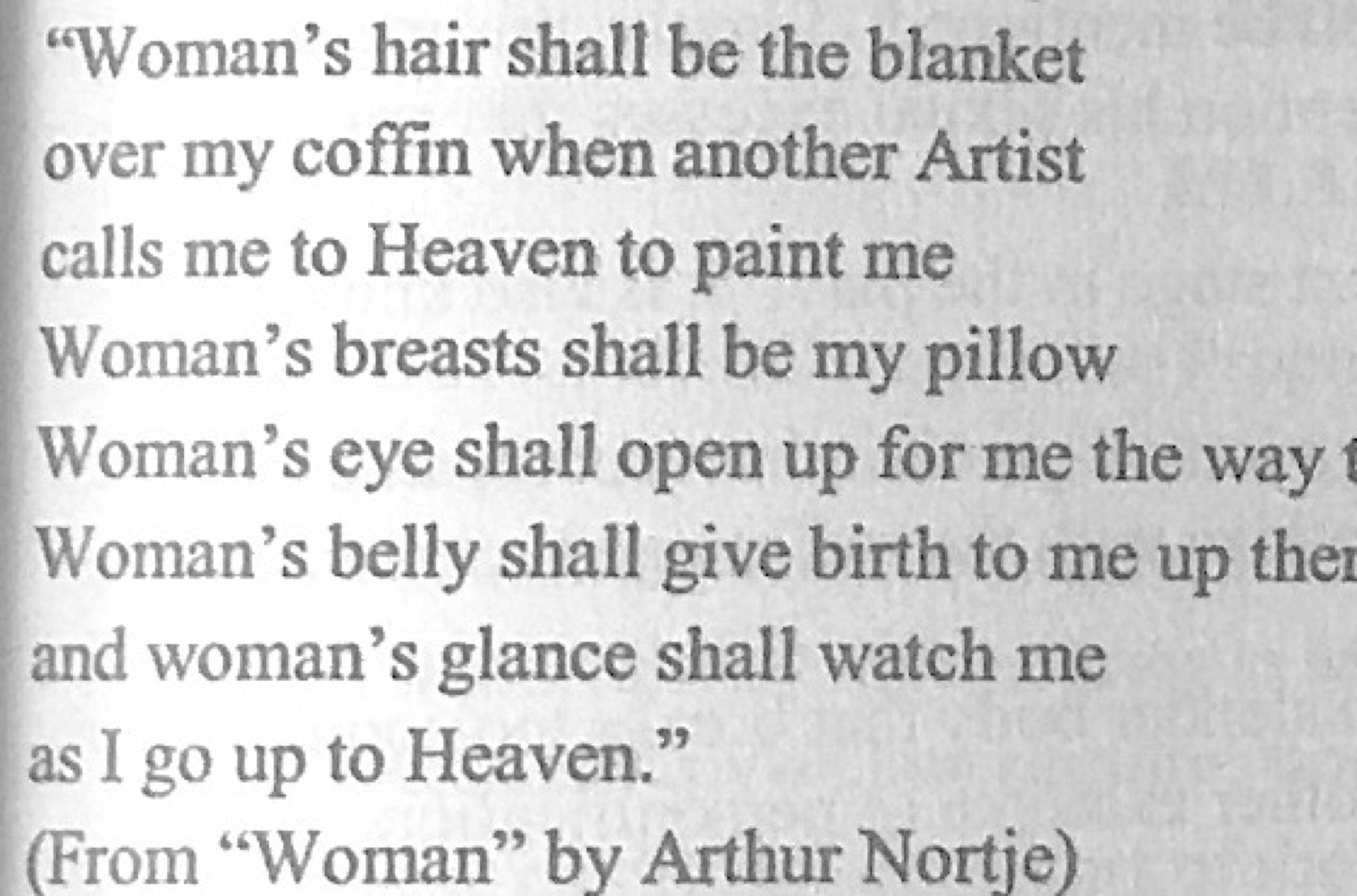
Question 19 Literary Appreciation: Poetry Extract from "Woman" by Arthur Nortje The language of the poem is characteristic of a/an ________
A. epic B. panegyric C. ode D. elegy Show the answer and explanation Answer: C (ode )
Explanation The poem praises and celebrates Woman in an exalted way, which is the language of an ode.
Open this question
Question 20 Literary Appreciation: Poetry The reiteration of the word "woman" ________ the theme of the poem.
A. emphasises B. idealises C. forestalls D. eliminates Show the answer and explanation Answer: A (emphasises )
Explanation Repeating 'woman' at the start of line after line keeps attention on the poem's subject, emphasising its theme.
Open this question
Question 21 Other Set Texts: African Prose Questions 21 to 23 are based on Faceless by Amma Darko. The plot of the novel is
A. linear B. chronological C. cyclical D. episodic Show the answer and explanation Answer: D (episodic )
Explanation According to the book, events in Faceless are not told in strict time order but in loosely linked episodes, so the plot is episodic.
Open this question
Question 22 Other Set Texts: African Prose In Amma Darko's Faceless , the octogenarian whose father shook hands with Gordon Guggisberg during the colonial era is
A. Maami Broni B. Naa Yomo C. Uncle Onko D. Odarley Show the answer and explanation Answer: B (Naa Yomo )
Explanation Naa Yomo, the oldest character, proudly recalls that her father shook hands with Governor Guggisberg.
Open this question
Question 23 Other Set Texts: African Prose Which of the following is not a theme in Amma Darko's Faceless ?
A. fear B. tribal conflict C. parental irresponsibility D. sexual abuse Show the answer and explanation Answer: B (tribal conflict )
Explanation Faceless deals with street children, parental irresponsibility, sexual abuse and fear; tribal conflict is not a theme.
Open this question
Question 26 Other Set Texts: African Prose The language of Bayo Adebowale's Lonely Days could be described as
A. dramatic B. elevated C. poetic D. embedded Show the answer and explanation Answer: C (poetic )
Explanation Lonely Days is full of chants, proverbs and cultural imagery, so its language is poetic.
Open this question
Question 27 Other Set Texts: African Drama Questions 27 to 29 are based on Harvest of Corruption by Frank Ogodo Ogbeche. Which of the following does not describe the import of Madman in the play?
A. chaotic B. symbolic C. ironical D. satirical Show the answer and explanation Answer: A (chaotic )
Explanation The Madman's role is symbolic, ironical and satirical: his words expose society's corruption. 'Chaotic' does not describe his purpose.
Open this question
Question 28 Other Set Texts: African Drama In Harvest of Corruption , which character is a foil to Ogeyi in the play?
A. Ochuole B. Aloho C. Chief Haladu Ade Amaka D. ACP Yakubu Show the answer and explanation Answer: B (Aloho )
Explanation Aloho, who chooses corruption, contrasts with the upright Ogeyi and so highlights Ogeyi's moral strength.
Open this question
Question 29 Other Set Texts: African Drama In Harvest of Corruption , the catastrophe in the play is ________.
A. when the chief is arrested B. when the culprits are prosecuted at the end of the play C. when Aloho dies D. When Ogeyi reports the Chief to the police Show the answer and explanation Answer: B (when the culprits are prosecuted at the end of the play )
Explanation The catastrophe is the final resolution; here it comes when the corrupt characters are tried at the end of the play.
Open this question Sign up free for every Unilorin Post-UTME Literature in English year, practice by topic and timed mocks.
Start practising free JAMB, UTME, WAEC, WASSCE, NECO, NABTEB and GCE are names of their respective examining bodies. Passwella is an independent practice platform and is not affiliated with or endorsed by any of them.