27 questions. Try each one, then open the answer to check yourself and read the explanation.
Question 1
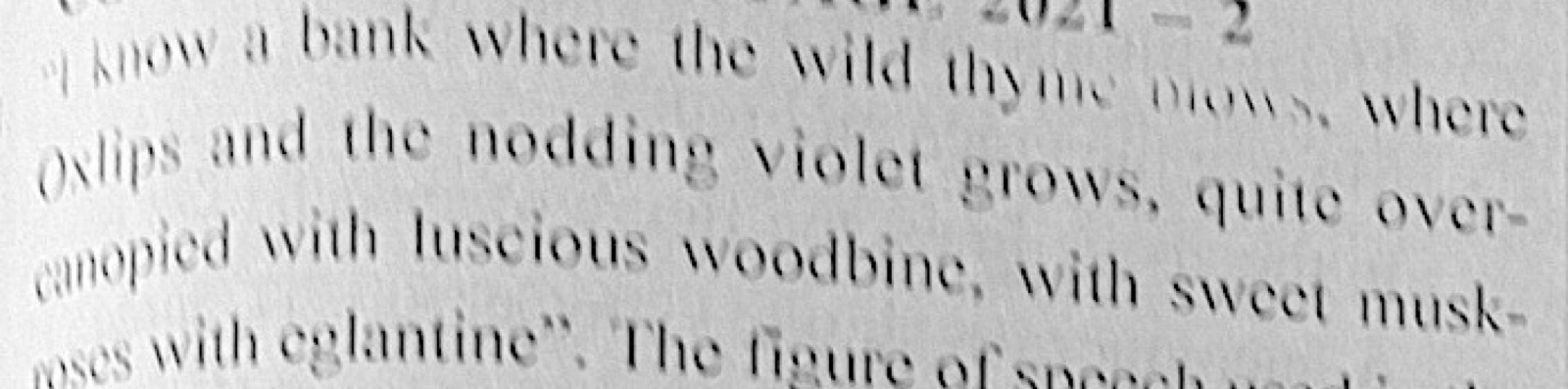
Set Text: A Midsummer Night's DreamWilliam Shakespeare: A Midsummer Night's Dream (extract for question 1)
The figure of speech used in the above extract from William Shakespeare's Midsummer Night's Dream is
- A.Syllepsis
- B.Contrast
- C.Imagery
- D.Oxymoron
Show the answer and explanation
Answer: C (Imagery)
ExplanationOberon paints a vivid word-picture of the flowery bank (thyme, oxlips, violets, woodbine, musk-roses, eglantine): imagery.
Question 2
Set Text: A Midsummer Night's DreamThe above lines were spoken by
- A.Hermia
- B.Egeus
- C.Lysander
- D.Helena
Show the answer and explanation
Answer: C (Lysander)
ExplanationLysander comforts Hermia with these words after Egeus and Theseus forbid their love (Act 1 Scene 1).
Question 3
Set Text: A Midsummer Night's DreamWhat's the conflict of the fairies in A Midsummer Night's Dream?
- A.Money
- B.An Indian boy
- C.Gold
- D.Summer holiday
Show the answer and explanation
Answer: B (An Indian boy)
ExplanationOberon and Titania quarrel because she will not give him the little Indian boy she is bringing up.
Question 4
Set Text: A Midsummer Night's DreamIn A Midsummer Night's Dream, Hermia and Lysander eloped through
- A.the tunnel
- B.the rail
- C.the water
- D.the forest
Show the answer and explanation
Answer: D (the forest)
ExplanationThe two lovers plan to escape Athens by meeting in the wood outside the city.
Question 5
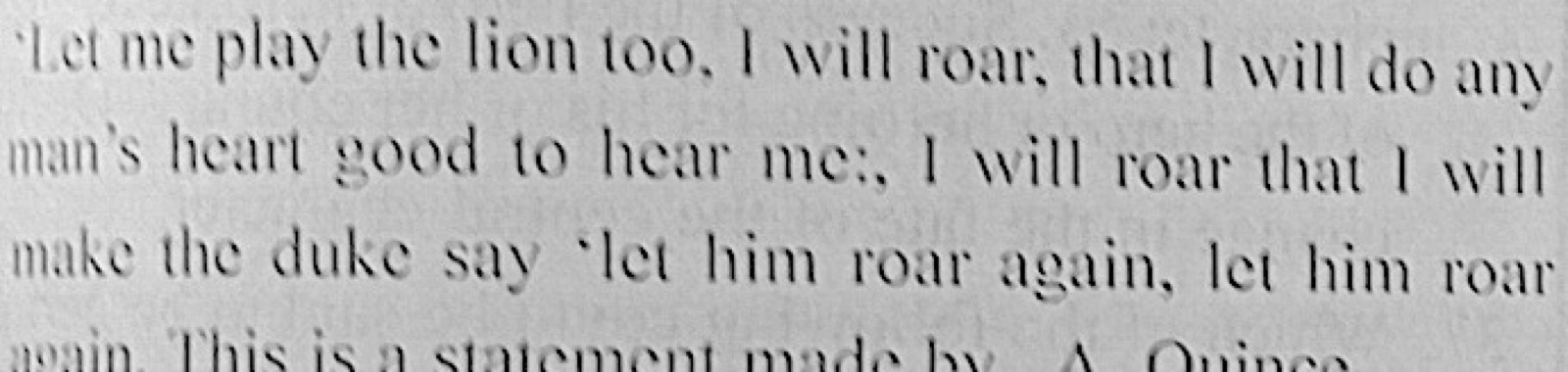
Set Text: A Midsummer Night's DreamWilliam Shakespeare: A Midsummer Night's Dream (extract for question 5)
This is a statement made by
- A.Quince
- B.Snout
- C.Bottom
- D.Snug
Show the answer and explanation
Answer: C (Bottom)
ExplanationBottom wants to play every part, including the lion, and boasts that he will roar so well the duke will ask for more.
Question 6
Set Text: The Lion and the JewelMost information in The Lion and the Jewel by Wole Soyinka is conveyed using third person narrative technique otherwise known as
- A.Epistolary narrative method
- B.Autobiographical narrative method
- C.Flashback narrative method
- D.Omniscient narrative method
Show the answer and explanation
Answer: D (Omniscient narrative method)
ExplanationA third-person point of view that can show everything and everyone is called the omniscient method.
Question 8
Set Text: The Lion and the JewelThe hero of The Lion and the Jewel is
- A.The Surveyor
- B.Sadiku
- C.Lakunle
- D.Baroka
Show the answer and explanation
Answer: D (Baroka)
ExplanationBaroka is the central, winning figure: through his cunning he gets Sidi and his traditional values triumph.
Question 9
Set Text: The Lion and the JewelSoyinka's main concern in The Lion and the Jewel is to
- A.expose the corrupt Baale
- B.marry tradition and modernity
- C.expose Sidi in the play
- D.pretend that the Baale is impotent
Show the answer and explanation
Answer: B (marry tradition and modernity)
ExplanationThe play weighs tradition against modernity and suggests that the best way forward joins the strengths of both.
Question 10
Set Text: The Lion and the JewelWhat is the weakness of Baroka in Wole Soyinka's The Lion and the Jewel?
- A.He is a thief
- B.He is a fraudster
- C.He is trickish
- D.He is smart
Show the answer and explanation
Answer: C (He is trickish)
ExplanationBaroka gets what he wants through tricks, such as the false story of his impotence used to trap Sidi.
Question 12
Other Set Texts: Non-African ProseWhere did the narrator of Ralph Ellison's Invisible man go to from his southern town?
- A.London
- B.Southern America
- C.Golden Day Bar
- D.New York
Show the answer and explanation
Answer: D (New York)
ExplanationAfter being expelled from college the narrator travels north to New York, where most of the novel happens.
Question 13
Other Set Texts: Non-African ProseThe major lesson the narrator experiences in Invisible Man is
- A.education is needed only by the poor
- B.wealth guarantees happiness
- C.it is not good to be born poor
- D.overcoming deceptions and illusions to reach the truth
Show the answer and explanation
Answer: D (overcoming deceptions and illusions to reach the truth)
ExplanationThe narrator is deceived again and again until he sees through the illusions others impose on him and discovers who he really is.
Question 14
Other Set Texts: Non-African ProseIn Invisible Man, why did Mary Rambo take the narrator to her room?
- A.To sleep with him
- B.To clean her room
- C.To see the furniture in her room
- D.To recuperate when he fainted on his way from the hospital
Show the answer and explanation
Answer: D (To recuperate when he fainted on his way from the hospital)
ExplanationMary finds the narrator collapsing in the street after he leaves the factory hospital and takes him home to recover.
Question 15
Other Set Texts: Non-African ProseWhat makes the narrator an invisible man?
- A.Because he lives with the white
- B.Because people refuse to see him for who he really is
- C.Because he disappears when people are approaching him
- D.Because he is only seen by his people
Show the answer and explanation
Answer: B (Because people refuse to see him for who he really is)
ExplanationHe is 'invisible' because people see only their own ideas of him as a black man, not the real person.
Question 16
Other Set Texts: Non-African ProseWhat is inscribed above the entrance of Wuthering Height?
- A.Hindley Earnshaw, 1729
- B.1623
- C.Abandon all hope, ye who enter here
- D.Hareton Earnshaw, 1500
Show the answer and explanation
Answer: D (Hareton Earnshaw, 1500)
ExplanationLockwood notices the carved name 'Hareton Earnshaw' and the date 1500 over the door of Wuthering Heights.
Question 17
Other Set Texts: Non-African ProseIn Wuthering Heights, what kind of country side surrounds Wuthering Heights and Thrushcross Grange?
- A.Moorland
- B.Forest
- C.Savannah
- D.Grassy Plains
Show the answer and explanation
Answer: A (Moorland)
ExplanationBoth houses stand on the wild Yorkshire moors.
Question 18
Other Set Texts: Non-African ProseIn what region of England was Emily Bronte raised?
- A.Sussex
- B.Yorkshire
- C.Gloucestershire
- D.Warwickshire
Show the answer and explanation
Answer: B (Yorkshire)
ExplanationEmily Bronte grew up at Haworth in Yorkshire, the moorland setting of her novel.
Question 19
Other Set Texts: Non-African ProseOver the course of Wuthering Heights, which character claims to see Catherine's ghost?
- A.Heathcliff, Hareton, Young Catherine and Joseph
- B.Edgar Linton and Heathcliff
- C.Joseph and Nelly Dean
- D.Lockwood and Heathcliff
Show the answer and explanation
Answer: D (Lockwood and Heathcliff)
ExplanationLockwood dreams of Catherine's ghost at the window, and Heathcliff says he is haunted by her spirit.
Question 20
Other Set Texts: Non-African DramaAugust Wilson: Fences (extract for question 20)
This statement in August Wilson's Fences refers to
- A.Bono
- B.Troy
- C.Rose
- D.Cory Maxson
Show the answer and explanation
Answer: A (Bono)
ExplanationTroy says this to his friend Bono, who has been watching him walk past Alberta's house.
Question 21
Other Set Texts: Non-African DramaWho is Troy talking to here?
- A.Rose
- B.Mr. Rand
- C.Jim Bono
- D.Bonnie
Show the answer and explanation
Answer: C (Jim Bono)
ExplanationTroy is telling his friend Jim Bono ('Look here, Bono...') how he met and courted Rose.
Question 22
Other Set Texts: Non-African DramaWho was Cliff referring to here in Look Back in Anger?
- A.Alison and her friend
- B.Alison's mother and father
- C.Allison and her sister
- D.Allison and Jimmy
Show the answer and explanation
Answer: D (Allison and Jimmy)
ExplanationCliff, who lives with the couple, is tired of watching Jimmy and Alison hurt each other.
Question 23
Other Set Texts: Non-African DramaIn Look Back in Anger, why did Jimmy travel to London?
- A.To see a friend
- B.Eloped with another woman
- C.To see Hugh Tanner's mother who is down with stroke
- D.To see his dying niece
Show the answer and explanation
Answer: C (To see Hugh Tanner's mother who is down with stroke)
ExplanationJimmy goes to London to be with Hugh's mother (Mrs Tanner), who has had a stroke and is dying.
Question 24
Other Set Texts: African ProseWhy did Nii Tackie abandon Massa's corpse at the hospital?
- A.He has economic vulnerabilities
- B.He is wicked
- C.He's married to another woman
- D.He hates to see her corpse
Show the answer and explanation
Answer: A (He has economic vulnerabilities)
ExplanationNii Tackie is too poor to pay the hospital and funeral costs, so he leaves the body behind.
Question 25
Other Set Texts: African ProseWhy did Nii decide to go back to Nigeria?
- A.To sell his family property
- B.To marry a new wife
- C.To rejig his life and reunite with his sister
- D.To start a new career path
Show the answer and explanation
Answer: C (To rejig his life and reunite with his sister)
ExplanationNii returns to rebuild his life and to reunite with his sister.
Question 28
Other Set Texts: African DramaWho succeeds Gbanya after his demise in John Kargbo's Let Me Die Alone?
- A.Lamboi
- B.Yoko
- C.Musa
- D.Ndapi
Show the answer and explanation
Answer: B (Yoko)
ExplanationAfter Gbanya's death his wife Yoko becomes the ruler, as he wished.
Question 29
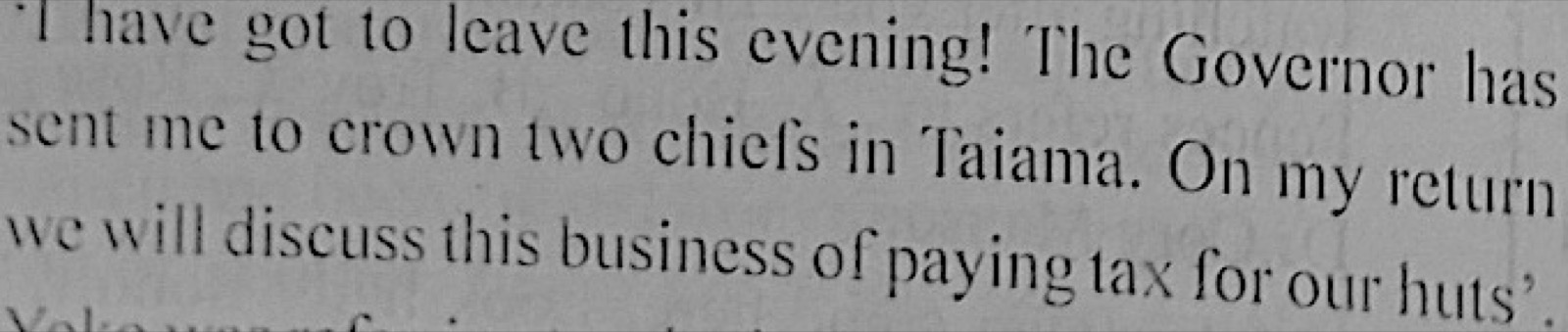
Other Set Texts: African DramaJohn Kolosa Kargbo: Let Me Die Alone (extract)
Yoko was referring to who is the above lines?
- A.Ndapi, Musa and Lamboi
- B.Lamboi, Lavalie and Musa
- C.Musa, Lamboi and Fanneh
- D.Lamboi, Fanneh and Jilo
Show the answer and explanation
Answer: A (Ndapi, Musa and Lamboi)
ExplanationYoko speaks to the chiefs Ndapi, Musa and Lamboi, putting off their quarrel over the hut tax until she returns from Taiama.
Question 30
Other Set Texts: African DramaThe protagonist of John Kargbo's Let me Die Alone is
- A.Gbanya
- B.Musa
- C.The Governor
- D.Yoko
Show the answer and explanation
Answer: D (Yoko)
ExplanationThe play centres on Mammy Yoko, her rise to power and her lonely end.
Question 40
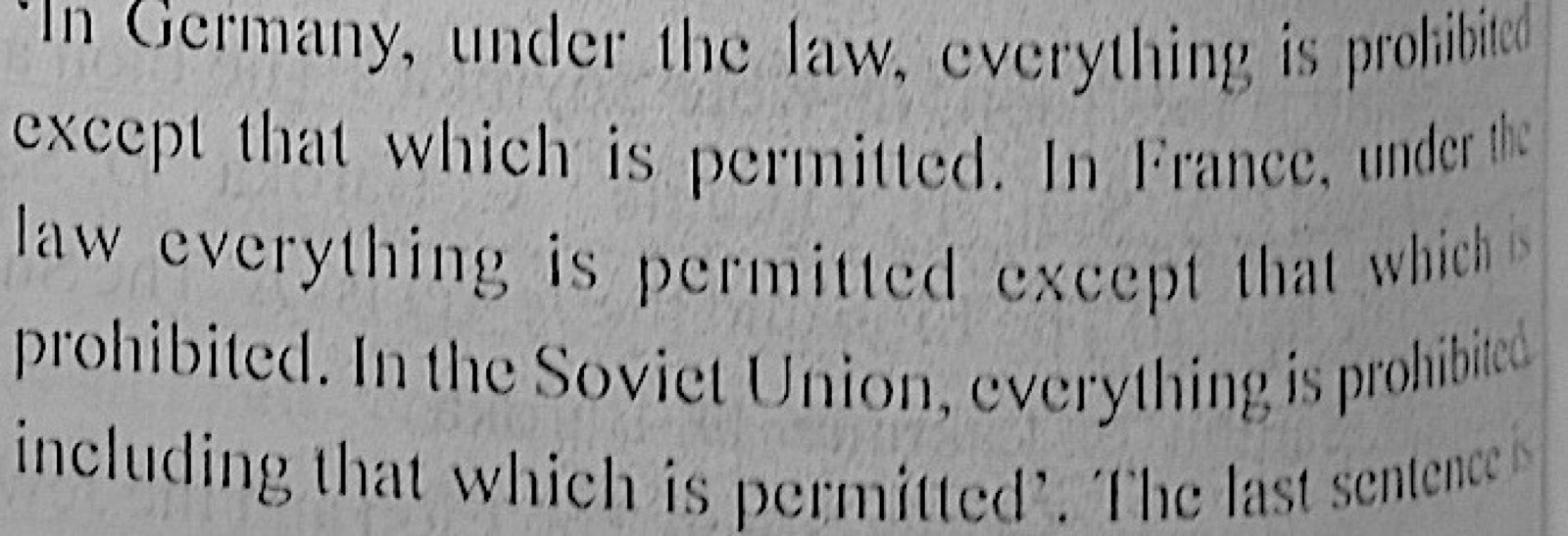
Literary Appreciation: Prose and DramaExtract for question 40
The last sentence is an example of
- A.innuendo
- B.paradox
- C.euphemism
- D.allusion
Show the answer and explanation
Answer: B (paradox)
Explanation'Everything is prohibited, including that which is permitted' contradicts itself yet makes a sharp point about total control: a paradox.