Home › Past questions › JAMB › Literature in English › 2016 26 questions. Try each one, then open the answer to check yourself and read the explanation.
Sign up free to answer these questions on a CBT screen with a timer, then see your score and every answer explained.
Start practising free
Question 1 Set Text: She Stoops to Conquer In Oliver Goldsmith's She Stoops to Conquer, Constance reveals that she knows Marlow's reputation since Marlow is friends with
A. Mr. Hastings B. Neville C. Mr. Hardcastle D. Mrs. Hardcastle. Show the answer and explanation Answer: A (Mr. Hastings )
Explanation Constance Neville knows about Marlow through her lover Hastings, who is Marlow's close friend.
Open this question
Question 2 Set Text: She Stoops to Conquer In Oliver Goldsmith's She Stoops to Conquer, In Hardcastle's house, Hardcastle and several "awkward servants" enter, the former instructing them on how to appear
A. disgusting B. sophisticated C. friendly D. fuming. Show the answer and explanation Answer: B (sophisticated )
Explanation Hardcastle drills his clumsy farm servants to look and behave like polished, well-trained household staff for his guests.
Open this question
Question 3 Set Text: She Stoops to Conquer In Oliver Goldsmith's She Stoops to Conquer, Marlow and Hastings are in an argument over when to see
A. Kate B. Constance C. Tony D. Mrs. Hardcastle. Show the answer and explanation Answer: A (Kate )
Explanation Marlow is painfully shy with respectable women and keeps putting off the meeting with Kate that his father has arranged.
Open this question
Question 4 Set Text: She Stoops to Conquer One of the themes in She Stoops to Conquer is based on
A. appearance and reality B. destruction C. abuse of power and position D. frustration. Show the answer and explanation Answer: A (appearance and reality )
Explanation Marlow mistakes the house for an inn and Kate for a barmaid: the comedy rests on the gap between appearance and reality.
Open this question
Question 5 Set Text: She Stoops to Conquer In Oliver Goldsmith's She Stoops to Conquer, When Jeremy, one of the servants enters drunkenly and makes a fool of himself, Marlow refuses to discipline him but instead mocks
A. Hardcastle's request B. Hastings' request C. Tony's request D. Kate's request. Show the answer and explanation Answer: A (Hardcastle's request )
Explanation Thinking he is in an inn, Marlow scorns Hardcastle's demand that he control his drunken servant.
Open this question
Question 16 Other Set Texts: African Drama Questions 16 - 20 are based on Dele Charley's The Blood of a Stranger. One of the themes is found in the text
A. greed and ambition B. class and class bias C. appearance and reality D. mockery. Show the answer and explanation Answer: A (greed and ambition )
Explanation The stranger's greed for diamonds and Maligu's and Soko's ambition drive the play's events.
Open this question
Question 17 Other Set Texts: African Drama The setting of the blood of a stranger is a village called
A. Biang B. Mando C. Mampama D. Konko. Show the answer and explanation Answer: B (Mando )
Explanation The play is set in the village of Mando, ruled by King Santigi.
Open this question
Question 18 Other Set Texts: African Drama In Dele Charley's The Blood of a Stranger, Maligu persuades and blackmails Soko to partake in his dubious
A. activities B. plan C. talk D. character. Show the answer and explanation Answer: B (plan )
Explanation Maligu draws Soko into his dishonest plan with the white stranger.
Open this question
Question 19 Other Set Texts: African Drama In Dele Charley's The Blood of a Stranger, the coming together of the people signifies
A. oneness of purpose in their deeds and actions. B. the beginning of value depreciation in the land C. secret transaction with the white man D. trouble than surface reality. Show the answer and explanation Answer: A (oneness of purpose in their deeds and actions. )
Explanation When the villagers unite against the stranger and the traitors, it shows they share one purpose.
Open this question
Question 20 Other Set Texts: African Drama In Dele Charley's The Blood of a Stranger, in the theme of greed and ambition, the key characters are
A. King Santigo and Soko B. whitehead, Maligu and Soko C. Wara, Soko and whitehead D. Maligu, Wara and Soko. Show the answer and explanation Answer: B (whitehead, Maligu and Soko )
Explanation The greedy white man (Whitehead) and the ambitious Maligu and Soko are the ones driven by greed.
Open this question
Question 21 Other Set Texts: African Prose Question 21 is based on Bayo Adebowale's Lonely Days. Yaremi is in a dilemma, not knowing whether she is to shed tears of
A. gratitude or tears of sorrow B. ingratitude or tears of joy C. gratitude or tears of joy D. happiness. Show the answer and explanation Answer: A (gratitude or tears of sorrow )
Explanation Yaremi is torn between gratitude (for help and kindness shown to her) and sorrow (for her loss and loneliness).
Open this question
Question 22 Other Set Texts: African Prose Question 22 is based on Bayo Adebowale's Lonely Days. Woye learns the benefits of hardwork and diligence from
A. Ajumobi B. Yaremi C. Wura D. Oba of Kufi village. Show the answer and explanation Answer: B (Yaremi )
Explanation Yaremi, who brings up her grandson Woye, teaches him the value of hard work.
Open this question
Question 23 Other Set Texts: Non-African Prose Question 23 is based on Richard Wright's Native Son. The physical setting of Native Son is
A. Chicago B. Atlanta C. Miami D. Houston. Show the answer and explanation Answer: A (Chicago )
Explanation The novel is set in the South Side of Chicago in the 1930s.
Open this question
Question 24 Other Set Texts: Non-African Prose Question 24 is based on Richard Wright's Native Son. At the Regal, Bigger looks at the posters while Jack buys the
A. posters feature B. tickets C. clocks D. chauffeur. Show the answer and explanation Answer: B (tickets )
Explanation At the Regal cinema Jack goes to buy the tickets while Bigger looks at the film posters.
Open this question
Question 25 Other Set Texts: Non-African Prose Bigger arrives at the Dalton's house and wastes no time in his efforts to ascertain the situation with
A. Mary's disappearance B. Mary's corpse C. Mary's situation D. Mary's happiness. Show the answer and explanation Answer: B (Mary's corpse )
Explanation After killing Mary and burning her body in the furnace, Bigger hurries back to the Daltons' to check whether anything about the corpse has been discovered.
Open this question
Question 26 Other Set Texts: African Prose Question 26 is based on Amma Darko's Faceless. In terms of physical location, Faceless is set in
A. Rumumasi B. Agbogbloshie C. Accra D. Kenya. Show the answer and explanation Answer: C (Accra )
Explanation The novel is set in Accra, Ghana, around the Agbogbloshie market and the city's streets.
Open this question
Question 27 Other Set Texts: African Prose Question 27 is based on Amma Darko's Faceless. With a little coercion, a touch of blackmail, and a bit of deceit, poison is made to meet
A. Kabria and Sylv Po B. Mute and Kabria C. Fofo and Baby T. D. Onko and Baby T. Show the answer and explanation Answer: A (Kabria and Sylv Po )
Explanation Kabria of MUTE and the radio presenter Sylv Po use pressure and trickery to get a meeting with Poison, the street boss.
Open this question
Question 28 Other Set Texts: Non-African Drama Question 28 is based on Lorraine Hansberry's A Raisin in the Sun. Walter says that he wants to partner up with his friends.
A. Willy Harris and Bobo B. Ruth and Beneatha Younger C. Joseph Asagai and Willy Harris D. George Murchison and walter Lee Younger. Show the answer and explanation Answer: A (Willy Harris and Bobo )
Explanation Walter plans to open a liquor store with his friends Willy Harris and Bobo.
Open this question
Question 29 Other Set Texts: Non-African Drama In Lorraine Hansberry's A Raisin in the Sun, George says there's no point to such political
A. tricks B. mumbo-jumbo C. jazz D. urban ghettos. Show the answer and explanation Answer: B (mumbo-jumbo )
Explanation George Murchison dismisses Beneatha's interest in African heritage and politics as pointless mumbo-jumbo.
Open this question
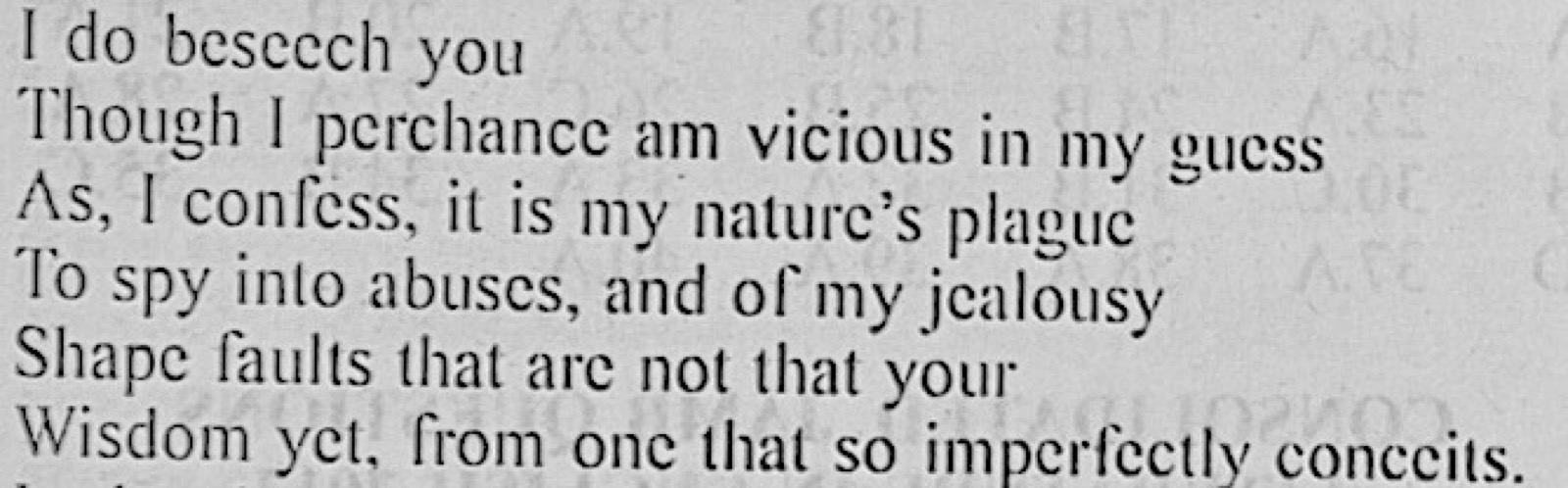
Question 30 Set Text: Othello William Shakespeare: Othello (extract) In the above excerpt, who is the speaker?
A. Othello B. Desdemona C. Lago D. Emilia. Show the answer and explanation Answer: C (Lago )
Explanation Iago pretends to be reluctant to voice his suspicions, admitting his 'nature's plague' is to spy into abuses, so that Othello will press him.
Open this question
Question 31 African Poetry Kofi Awoonor's The Anvil and the Hammer Caught between the anvil and the hammer . The underlined expressions above are examples of
A. personification B. metaphor C. satire D. antonymy. Show the answer and explanation Answer: B (metaphor )
Explanation The anvil and the hammer stand for the two forces (African tradition and Western culture) that pound the poet: a metaphor.
Open this question
Question 32 African Poetry In Birago Diop's Vanity, the poem addresses the need for Africans not to neglect their
A. past or roots B. present and future C. nature and principles D. culture and norms. Show the answer and explanation Answer: A (past or roots )
Explanation Diop warns that Africans who abandon their ancestors and roots will cry in vain, unheard.
Open this question
Question 33 African Poetry In Gabriel Okara's Piano and Drums, the major theme revolves around
A. conflict of culture B. modernity C. love D. dispute in the community. Show the answer and explanation Answer: A (conflict of culture )
Explanation The drums (African tradition) and the piano (Western culture) leave the speaker 'lost in the morning mist': a conflict of cultures.
Open this question
Question 36 Non-African Poetry Questions 36 - 40 are based on A Pageant of longer poems. Alfred Tennyson's Crossing the bar The poem comprises sixteen (16) lines which are divided into
A. two stanzas B. three stanzas C. six stanzas D. four stanzas. Show the answer and explanation Answer: D (four stanzas. )
Explanation Crossing the Bar has four stanzas of four lines each, sixteen lines in all.
Open this question
Question 37 Non-African Poetry George Herbert's The pulley The poem is an artistic or poetic narration of the relationship which exists between
A. God and man B. man and environment C. man and nature D. man and relationship Show the answer and explanation Answer: A (God and man )
Explanation In The Pulley, God gives man every blessing except rest, so that restlessness will pull man back to God.
Open this question
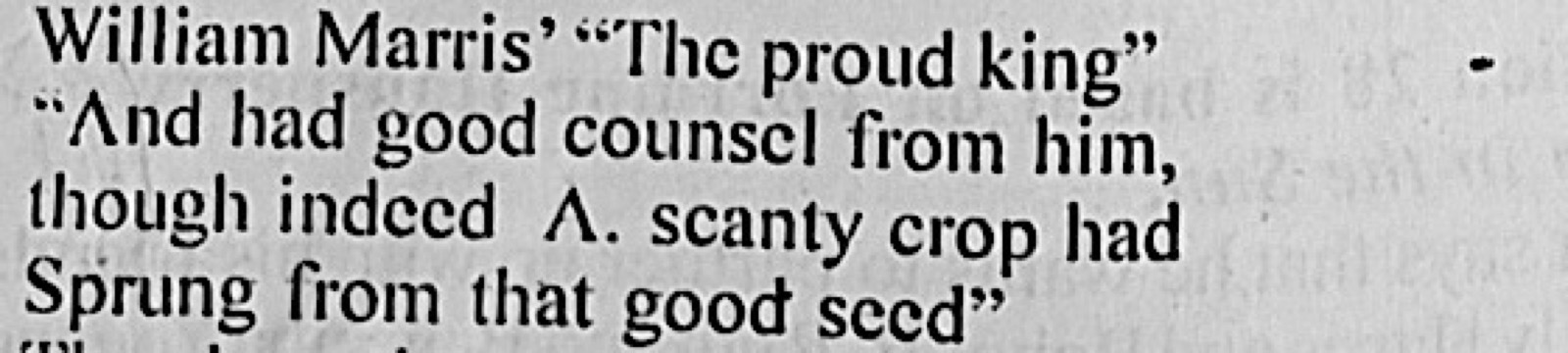
Question 40 Non-African Poetry William Marris: The Proud King (extract) The above is an example of
A. metaphor B. personification C. irony D. euphemism. Show the answer and explanation Answer: A (metaphor )
Explanation Good advice is spoken of as 'seed' and its results as a 'crop', an implied comparison: a metaphor.
Open this question Sign up free for every JAMB Literature in English year, practice by topic and timed mocks.
Start practising free