Home › Past questions › JAMB › Literature in English › 2015 31 questions. Try each one, then open the answer to check yourself and read the explanation.
Sign up free to answer these questions on a CBT screen with a timer, then see your score and every answer explained.
Start practising free
Question 1 Other Set Texts: African Prose In Bayo Adebowale's Lonely Days, Lonely Days recounts the life of Yaremi as a
A. mother B. widow C. Ajumobi's wife D. woman. Show the answer and explanation Answer: B (widow )
Explanation The novel follows Yaremi after the death of her husband Ajumobi, showing the loneliness and pressures she faces as a widow.
Open this question
Question 2 Other Set Texts: African Prose In Bayo Adebowale's Lonely Days, Yaremi lives in ________ with her husband, the blacksmith who is commonly referred to as the "Iron Man"
A. Kufi B. Apon C. Olode D. Ibadan. Show the answer and explanation Answer: A (Kufi )
Explanation The novel is set in the village of Kufi, where Yaremi lived with Ajumobi, the blacksmith called the 'Iron Man'.
Open this question
Question 3 Other Set Texts: African Prose In Bayo Adebowale's Lonely Days, Woye learns the benefits of hardwork and diligence from ________
A. Ajumobi B. Wura C. Yaremi D. Segi. Show the answer and explanation Answer: C (Yaremi )
Explanation Woye is Yaremi's grandson; she brings him up and teaches him the value of hard work.
Open this question
Question 4 Other Set Texts: African Prose In Bayo Adebowale's Lonely Days, Yaremi shows Woye how to protect the chicks from hawks by using a ________ to scare them away
A. scare crow B. stones C. arrow D. catapult. Show the answer and explanation Answer: A (scare crow )
Explanation Yaremi teaches Woye to set up a scarecrow so that hawks keep away from the chicks.
Open this question
Question 5 Other Set Texts: African Prose In Bayo Adebowale's Lonely Days, Death in the opinion of Kufi people is connected to the deeds or misdeeds of certain persons who may be enemies of the
A. living individual B. dying individual C. mourners D. celebrant. Show the answer and explanation Answer: B (dying individual )
Explanation The villagers believe a death is caused by the evil deeds of the dead person's enemies, so they look for those who wished the dying person harm.
Open this question
Question 7 Prose: General A novel which depicts the adventures of the main character who is usually something of a rogue is
A. picaresque B. comedy C. fable D. prose. Show the answer and explanation Answer: A (picaresque )
Explanation A picaresque novel follows the episodic adventures of a likeable rogue (picaro).
Open this question
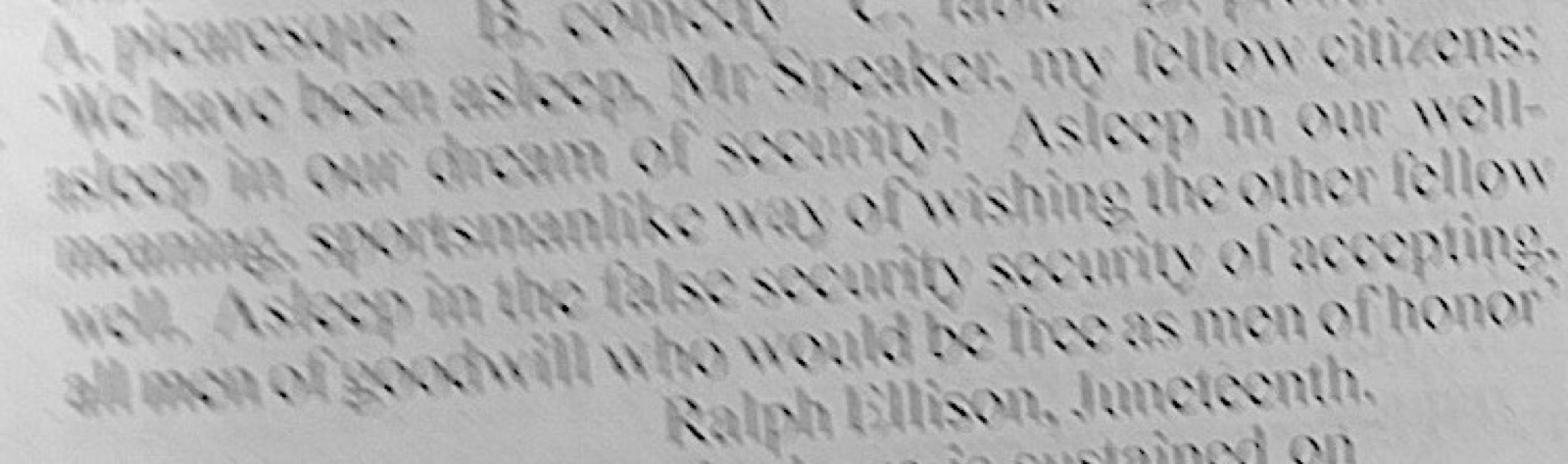
Question 8 Literary Appreciation: Prose and Drama Ralph Ellison: Juneteenth (extract) The force of the speech above is sustained on
A. repetition B. delivery C. oratory D. musicality. Show the answer and explanation Answer: A (repetition )
Explanation The speech keeps hammering the words 'asleep' and 'security'; this repetition is what drives its force.
Open this question
Question 11 Other Set Texts: African Drama Questions 11 - 15 are based on Harvest of Corruption, Frank Ogbeche. The text is centred on the corrupt acts of public servants and Madam Hoha in a country called
A. Jacassa B. Pannya C. Akpara D. Gambia. Show the answer and explanation Answer: A (Jacassa )
Explanation The play is set in the fictional country of Jacassa.
Open this question
Question 12 Other Set Texts: African Drama In Frank Ogbeche's Harvest of Corruption, Chief Haladu has a protruding stomach such that his friends fondly call him
A. picture of corruption B. the pregnant chief C. father of corruption D. Harvest reaper. Show the answer and explanation Answer: B (the pregnant chief )
Explanation Because of his big belly, Chief Haladu Ade Amadu's friends jokingly call him 'the pregnant chief'.
Open this question
Question 15 Other Set Texts: African Drama In Frank Ogbeche's Harvest of Corruption, Akpara hotel at Darkin is owned by
A. Madam Hoa B. Madam Hoha C. ACP Yakubu D. Chief Odili. Show the answer and explanation Answer: B (Madam Hoha )
Explanation Madam Hoha, the corrupt businesswoman, owns the Akpara hotel.
Open this question
Question 16 Set Text: She Stoops to Conquer Question 16 is based on Oliver Goldsmith's She Stoops to Conquer. The landlord brings news that two gentlemen have arrived, these gentlemen are
A. Tony and Marlow B. Hardcasle and Tony C. Marlow and Hasting D. Marlow and Constance. Show the answer and explanation Answer: C (Marlow and Hasting )
Explanation At the Three Pigeons the landlord announces Marlow and Hastings, who have lost their way to Mr Hardcastle's house.
Open this question
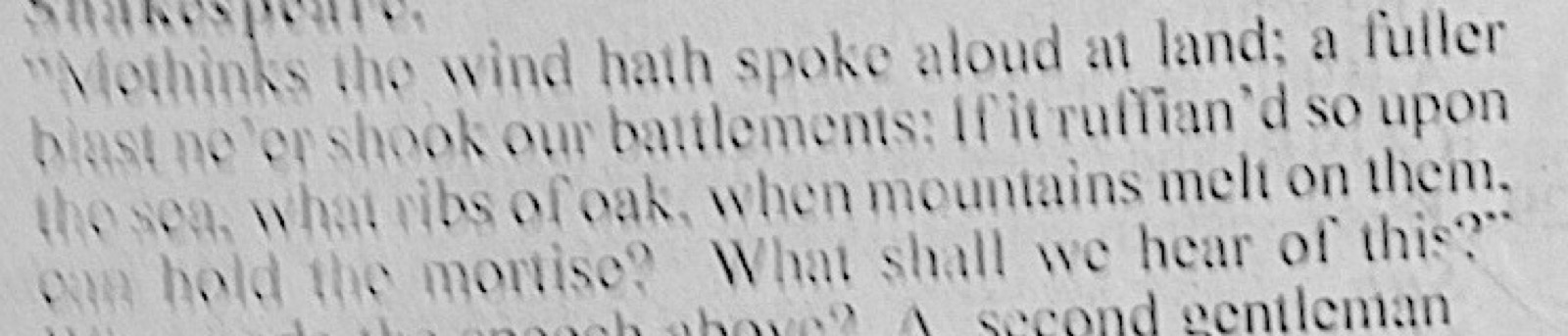
Question 17 Set Text: Othello William Shakespeare: Othello (extract for question 17) Who made the speech above?
A. second gentleman B. Montano C. First gentleman D. Third gentleman. Show the answer and explanation Answer: B (Montano )
Explanation Montano, governor of Cyprus, speaks of the storm that has battered the sea at the opening of Act 2.
Open this question
Question 18 Set Text: Othello Othello made this speech in
A. Hall in the castle B. A sea-port in Cyprus C. A room in the castle D. A street in Venice. Show the answer and explanation Answer: B (A sea-port in Cyprus )
Explanation Othello says this on landing in Cyprus after the storm (Act 2 Scene 1, at the sea-port), as he greets Desdemona and the islanders.
Open this question
Question 19 Set Text: Othello Who were referred as masters?
A. Cassio and clown B. Emilia and Lago C. First musician D. Desdemona Show the answer and explanation Answer: C (First musician )
Explanation Cassio hires musicians to play under Othello's window; 'masters' is his polite address to them, led by the First Musician.
Open this question
Question 20 Set Text: Othello How many characters were involved in the above exracts?
A. Desdesmona, Emilia, Cassio B. Othello, Lago, Bianca C. Emilia, Othello, Bianca D. Roderigo, Desdemona, Cassio. Show the answer and explanation Answer: A (Desdesmona, Emilia, Cassio )
Explanation Desdemona promises to help Cassio, Emilia adds that the matter grieves her husband, and Cassio thanks them: the speakers are Desdemona, Emilia and Cassio.
Open this question
Question 21 Set Text: Othello The speaker is
A. Duke B. Othello C. Roderigo D. Lago. Show the answer and explanation Answer: B (Othello )
Explanation Othello, ordered to Cyprus, asks the Duke to let his 'ancient' (ensign) Iago bring Desdemona after him.
Open this question
Question 22 Other Set Texts: Non-African Prose This question is based on Richard Wright's Native Son. The protagonist of Native Son is
A. Mr. Dalton B. Mary C. Bigger Thomas D. Mrs. Thomas. Show the answer and explanation Answer: C (Bigger Thomas )
Explanation The novel follows Bigger Thomas, a young black man in Chicago.
Open this question
Question 23 Other Set Texts: African Prose This question is based on Amma Darko's Faceless. The novel depicts the attitude of
A. greedy politicians B. peer group pressure C. negligent parents D. stubborn children. Show the answer and explanation Answer: C (negligent parents )
Explanation Fofo and Baby T end up on the streets of Accra largely because their mother Maa Tsuru and the fathers neglect them.
Open this question
Question 24 Other Set Texts: African Prose This question is based on Amma Darko's Faceless. Fofo has chosen to sleep in front of a provision store at the Agbogbloshie market in order to avoid the risk of her losing her newly
A. boyfriend B. job C. apartment D. home. Show the answer and explanation Answer: B (job )
Explanation The key says Fofo sleeps there to protect the new job she has found at the market.
Open this question
Question 25 Other Set Texts: African Drama This question is based on Dele Charley's The Blood of a Stranger. The blood of a stranger is about the fraudulent activities of
A. Pedro da cinta B. a white colonialist exploiter C. Sirerra Leone D. cultural heritage. Show the answer and explanation Answer: B (a white colonialist exploiter )
Explanation The play shows a white stranger who cheats the people of Mando to take their diamonds: a colonial exploiter.
Open this question
Question 26 Other Set Texts: African Drama This question is based on Dele Charley's The Blood of a Stranger. Maligu is the chief adviser to
A. King Santigi Mando B. Soko C. Mando town D. whiteman. Show the answer and explanation Answer: A (King Santigi Mando )
Explanation Maligu advises King Santigi of Mando.
Open this question
Question 27 Other Set Texts: Non-African Drama This question is based on Hansberry's A Raisin in the Sun. A Raisin in the sun can be considered a turning point in American art because it addresses so many important issues during the ________ in the United States
A. 1940s B. 1950s C. 1930s D. 1920s. Show the answer and explanation Answer: B (1950s )
Explanation The play (1959) deals with racial segregation, housing and black aspirations in the 1950s, just before the civil rights era.
Open this question
Question 28 Other Set Texts: Non-African Drama This question is based on Hansberry's A Raisin in the Sun. The setting time of A Raisin in the sun is between
A. 1940 and 1941 B. 1945 and 1959 C. 1920 and 1930 D. 1935 and 1939. Show the answer and explanation Answer: B (1945 and 1959 )
Explanation The play is set on Chicago's South Side in the years after the Second World War, up to the 1950s.
Open this question
Question 29 Other Set Texts: Non-African Drama This question is based on Hansberry's A Raisin in the Sun. Mama properly lays Travi's bed for him, Ruth interprets this as
A. overpampering him B. loving him C. supporting him D. disliking him. Show the answer and explanation Answer: A (overpampering him )
Explanation Ruth complains that Mama spoils Travis by doing his bed for him instead of letting him learn to do it.
Open this question
Question 30 Set Text: She Stoops to Conquer This question is based on Oliver Goldsmith's She Stoop to Conquer. A suitor was proposed for Miss Hardcastle by her
A. father B. mother C. parents D. uncle. Show the answer and explanation Answer: A (father )
Explanation Mr Hardcastle arranges for young Marlow, his friend's son, to come and court Kate.
Open this question
Question 33 African Poetry Gbemisola Adeoti: Ambush (line for question 33) Gbemisola Adeoti's Ambush, "All Peters with petered out desires" The line expresses
A. alliteration B. repetition C. metaphor D. pun. Show the answer and explanation Answer: D (pun. )
Explanation The line plays on the name 'Peter' and the verb 'peter out' (fade away): a pun.
Open this question
Question 34 Non-African Poetry This question is based on A Pageant of longer Poems by E.W. Parker Longman group, English Romantic Verse; ed by Wright, Penguin books, The Golden Treasury of Longer Poem. Alfred Tennyson's Crossing the Bar The Poem is a Meditation on
A. life B. death C. happiness D. destruction. Show the answer and explanation Answer: B (death )
Explanation Tennyson uses the image of a ship putting out to sea across the sandbar as a calm meditation on his own death.
Open this question
Question 35 Non-African Poetry Alfred Tennyson: Crossing the Bar (line for question 35) In Alfred Tennyson's Crossing the Bar: 'And after that the dark!' The 'dark' is a symbol of
A. death B. destruction C. reunion D. peace. Show the answer and explanation Answer: A (death )
Explanation Evening bell and 'the dark' follow twilight, the end of the day: they stand for death.
Open this question
Question 36 Non-African Poetry Questions 36 - 38 are based on William Blake's The School Boy. 'The School Boy' depicts
A. romantic B. perfection C. irony D. metaphysical. Show the answer and explanation Answer: A (romantic )
Explanation Blake's poem prefers the free joys of nature to the dull classroom, a typically Romantic idea.
Open this question
Question 37 Non-African Poetry The setting of William Blake's 'The School Boy' is in
A. Russia B. Italy C. England D. Germany. Show the answer and explanation Answer: C (England )
Explanation Blake was an English poet and the poem's summer countryside is rural England.
Open this question
Question 38 Non-African Poetry One of the themes in William Blake's 'The School Boy' focuses on
A. quest for wealth B. the beauty and splendour of nature C. the immortality of art D. futility of life. Show the answer and explanation Answer: B (the beauty and splendour of nature )
Explanation The boy loves the summer morning, the birds and the fields; the poem celebrates the beauty of nature against the gloom of school.
Open this question Sign up free for every JAMB Literature in English year, practice by topic and timed mocks.
Start practising free