Home › Past questions › JAMB › Literature in English › 2009 42 questions. Try each one, then open the answer to check yourself and read the explanation.
Sign up free to answer these questions on a CBT screen with a timer, then see your score and every answer explained.
Start practising free
Question 2 Set Text: Sons and Daughters In J.C. De Graft's Sons and Daughters, James Ofosu's desire is to see Maanan trained as
A. a choreographer B. an attorney C. an accountant D. a surgeon. Show the answer and explanation Answer: B (an attorney )
Explanation James wants his children in 'respectable' professions; he wants Maanan to become a lawyer, though she wants to dance.
Open this question
Question 3 Set Text: Sons and Daughters In J.C. De Graft's Sons and Daughters, the plot of the play is
A. linear B. cyclical C. complicated D. episodic. Show the answer and explanation Answer: A (linear )
Explanation The events follow one another in simple time order from beginning to end, so the plot is linear.
Open this question
Question 4 Set Text: Sons and Daughters In J.C. De Graft's Sons and Daughters, what causes the strained relationship between James and Lawyer B?
A. Betrayal of trust. B. Standard of education. C. Working experience. D. Family differences. Show the answer and explanation Answer: A (Betrayal of trust. )
Explanation Lawyer B, James's friend and Maanan's supposed helper, tries to seduce her, betraying James's trust.
Open this question
Question 6 Set Text: Romeo and Juliet In William Shakespeare's Romeo and Juliet, when Friar Lawrence asks if the bride is ready, he wants to know if
A. Juliet is prepared B. Roseline is prepared C. the corpse is ready D. the bride is dressed. Show the answer and explanation Answer: A (Juliet is prepared )
Explanation On the morning of the planned wedding to Paris, the Friar asks whether Juliet is ready to go to church.
Open this question
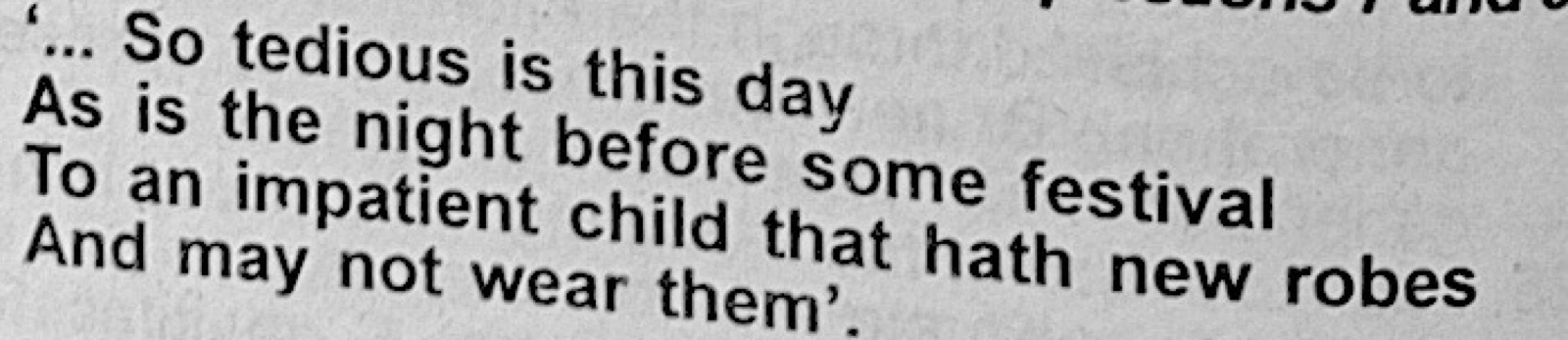
Question 7 Set Text: Romeo and Juliet William Shakespeare: Romeo and Juliet (extract) In William Shakespeare's Romeo and Juliet, what makes Juliet's night so tedious is the
A. murder of Tybalt by Romeo B. arranged marriage between her and Paris C. eagerness to be married to Romeo D. unconsummated marriage with Romeo. Show the answer and explanation Answer: D (unconsummated marriage with Romeo. )
Explanation Juliet has secretly married Romeo that day and waits impatiently for night when he will come to her, like a child who has new clothes but may not wear them yet.
Open this question
Question 8 Set Text: Romeo and Juliet The literary device used in the excerpt is
A. euphemism B. simile C. sarcasm D. bathos. Show the answer and explanation Answer: B (simile )
Explanation The day is compared to the night before a festival using 'as': a simile.
Open this question
Question 9 Set Text: Romeo and Juliet In William Shakespeare's Romeo and Juliet, the atmosphere of tragedy in the play is created through the use of
A. dreams and foreboding B. fights and quarrels C. wars and hatred D. ideas and dramatization. Show the answer and explanation Answer: A (dreams and foreboding )
Explanation From the prologue's 'star-crossed lovers' to Romeo's sense that some consequence 'yet hanging in the stars' awaits him, dreams and forebodings warn of the tragic end.
Open this question
Question 10 Set Text: Romeo and Juliet Shakespeare depicts love and idealism through the
A. party at the Capulets' B. lovers' tomb at the end C. brawl between Romeo and Tybalt D. balcony scene in the second Act. Show the answer and explanation Answer: D (balcony scene in the second Act. )
Explanation In the balcony scene the lovers declare their pure, idealistic love and decide to marry.
Open this question
Question 11 Other Set Texts: Non-African Prose In George Orwell's Nineteen Eighty-Four, the party approves the separation of couples only
A. on condition of infidelity B. where there are no children C. in situation of irreconcilable differences D. on the death of one of the couples. Show the answer and explanation Answer: B (where there are no children )
Explanation Divorce is not allowed in Oceania, but separation is permitted when a couple has no children.
Open this question
Question 12 Other Set Texts: Non-African Prose In George Orwell's Nineteen Eighty-Four, one of the themes of the novel is
A. colonialism B. repression C. senility D. destruction. Show the answer and explanation Answer: B (repression )
Explanation The Party controls every thought and act of its members, so repression is a central theme.
Open this question
Question 13 Other Set Texts: Non-African Prose In George Orwell's Nineteen Eighty-Four, Newspeak, the official language of Oceania, is devised to
A. meet the ideological needs of Ingsoc B. help devoted party men and women C. provide a medium of expression for world view only D. assist by cutting the choice of words for party members. Show the answer and explanation Answer: A (meet the ideological needs of Ingsoc )
Explanation Newspeak is designed to serve Ingsoc by making disloyal thoughts impossible to express.
Open this question
Question 14 Other Set Texts: Non-African Prose In George Orwell's Nineteen Eighty-Four, the main concern of Winston in the novel is to
A. take power for himself B. acquire wealth C. overthrow the party D. bring social change. Show the answer and explanation Answer: C (overthrow the party )
Explanation Winston hates Big Brother and joins what he thinks is the Brotherhood in order to bring the Party down.
Open this question
Question 15 Other Set Texts: African Prose Ferdinand Oyono: The Old Man and the Medal (extract) In Ferdinand Oyono's The Old Man and the Medal, the word uncircumcised in the statement above by Nti refers to
A. Nua and Mvondo B. the whites C. the people of Doum D. the white farmers. Show the answer and explanation Answer: B (the whites )
Explanation The villagers call the Europeans 'the uncircumcised'; Nti is angry at what the whites have done to Meka.
Open this question
Question 16 Other Set Texts: African Prose In Ferdinand Oyono's The Old Man and the Medal, the only two sons of Meka die fighting for
A. independence B. the colonialists C. the church D. their people. Show the answer and explanation Answer: B (the colonialists )
Explanation Meka's two sons were killed fighting for France in the war, one of the sacrifices for which he is given a medal.
Open this question
Question 17 Other Set Texts: African Prose In Ferdinand Oyono's The Old Man and the Medal, Africanness is achieved in both
A. setting and characterization B. narration and style C. diction and syntax D. pun and style. Show the answer and explanation Answer: A (setting and characterization )
Explanation The African village setting and the African characters, with their customs and outlook, give the novel its African identity.
Open this question
Question 19 Other Set Texts: African Prose In Buchi Emecheta's The Joys of Motherhood, in the society of Nwokocha Agbadi, a man's social power rating is determined by his
A. oratorical power B. physical prowess C. gentle mien D. altruistic actions. Show the answer and explanation Answer: B (physical prowess )
Explanation Agbadi's world respects men for strength and courage, shown in hunting, fighting and wrestling.
Open this question
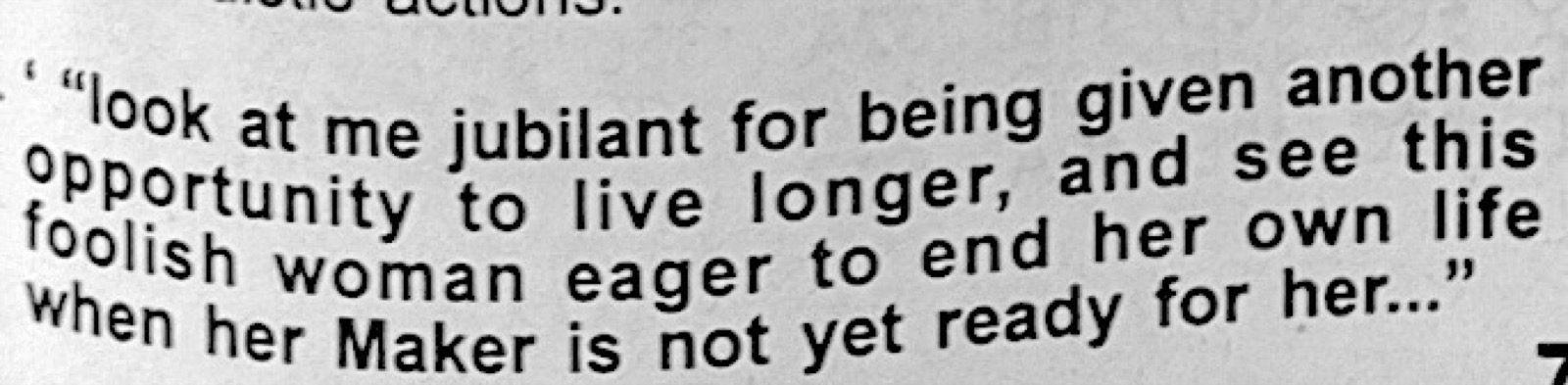
Question 20 Other Set Texts: African Prose Buchi Emecheta: The Joys of Motherhood (extract) The opportunity referred to in the extract above is
A. the misunderstanding between Nnaife and his wife B. narrowly escaping being knocked down C. the driver's encounter with Nnu Ego D. ominous visit of Agunwa. Show the answer and explanation Answer: B (narrowly escaping being knocked down )
Explanation The speaker is glad to have escaped death narrowly and contrasts himself with Nnu Ego, who wants to throw away her life.
Open this question
Question 21 African Poetry Thorn in Adeoti's Naked Soles symbolizes
A. victory B. bleakness C. destruction D. suffering. Show the answer and explanation Answer: D (suffering. )
Explanation A thorn pierces bare (naked) soles and causes pain, so it stands for suffering.
Open this question
Question 23 African Poetry The phrase the sunset in Kunene's A Heritage of Liberation refers to
A. critical need B. old age C. patience D. caution. Show the answer and explanation Answer: B (old age )
Explanation Sunset, the end of the day, stands for the end of life: old age.
Open this question
Question 25 African Poetry The end of Give Me The Minstrel's Seat seems to suggest that one needs the
A. support of others B. complete command of one's wives C. support of one's kinsmen D. aid of poets. Show the answer and explanation Answer: A (support of others )
Explanation The poem ends by showing that a person cannot stand alone but depends on the support of others.
Open this question
Question 26 African Poetry According to Give Me The Minstrel's Seat , a woman is
A. a necessary evil B. only fulfilled when married C. naturally jealous D. a harbinger of good luck. Show the answer and explanation Answer: D (a harbinger of good luck. )
Explanation The poem presents the woman as a bringer of good fortune to the home.
Open this question
Question 27 Non-African Poetry In Marvel's To His Coy Mistress , the poet-persona tries to
A. build up the climax of expectation of women B. discuss how a woman labours hard C. meet the people's expectation in a religious adventure D. discuss the nature of man and the value of time. Show the answer and explanation Answer: D (discuss the nature of man and the value of time. )
Explanation The speaker argues that life is short and time flies, so the lady should love him now: the poem is about human mortality and the value of time.
Open this question
Question 28 Non-African Poetry In Lawrence's Bat , the poet's attitude to bat is one of
A. fear B. sarcasm C. contempt D. flattering. Show the answer and explanation Answer: C (contempt )
Explanation The speaker finds the bats ugly and repulsive and wants nothing to do with them: his attitude is contempt.
Open this question
Question 29 Non-African Poetry The first stanza of Eliot's The Journey of the Magi depicts the
A. hazards of the journey B. increment of fortune for the pilgrims C. blind acceptance of faith D. journey as an influential factor. Show the answer and explanation Answer: A (hazards of the journey )
Explanation The first stanza lists the cold, the bad roads, the sore camels and hostile towns: the hardships of the journey.
Open this question
Question 30 Non-African Poetry In Cope's Sonnet VII , poets are presented as
A. recluses B. travellers C. sociologists D. researchers. Show the answer and explanation Answer: D (researchers. )
Explanation In the poem poets are shown studying and searching into life like researchers.
Open this question
Question 31 Poetry: General A poetic device in which an idea in a line runs into another is called
A. rhyme scheme B. enjambment C. end rhyme D. pathos. Show the answer and explanation Answer: B (enjambment )
Explanation Enjambment is when a sentence runs on from one line of verse to the next without a pause.
Open this question
Question 32 Poetry: General The use of sound pattern to suggest meaning in poetry is
A. rhythm B. mimics C. lyric D. metonymy. Show the answer and explanation Answer: A (rhythm )
Explanation Rhythm, the pattern of sounds and beats, can echo and reinforce what a poem says.
Open this question
Question 33 Literary Terms and Devices A conscious imitation of a literary work by another with the aim of ridicule is
A. mimesis B. performance C. mockery D. parody. Show the answer and explanation Answer: D (parody. )
Explanation A parody imitates another work in order to make fun of it.
Open this question
Question 34 Drama: General The use of gestures to communicate in drama is known as
A. burlesque B. soliloquy C. mime D. melodrama. Show the answer and explanation Answer: C (mime )
Explanation Mime is acting through gesture and movement without words.
Open this question
Question 35 Literary Terms and Devices A short and witty remark is
A. a limerick B. a tercet C. an epigram D. a litotes. Show the answer and explanation Answer: C (an epigram )
Explanation An epigram is a brief, clever saying.
Open this question
Question 36 Figures of Speech An expression that signifies a whole through its significant parts is
A. synaesthesia B. synecdoche C. metonymy D. allegory. Show the answer and explanation Answer: B (synecdoche )
Explanation Synecdoche uses a part to stand for the whole, as in 'all hands on deck'.
Open this question
Question 37 Figures of Speech A structural arrangement of units of composition by which one element of equal importance with another is similarly placed is called
A. repetition B. paradox C. refrain D. parallelism. Show the answer and explanation Answer: D (parallelism. )
Explanation Parallelism places ideas of equal weight in matching grammatical form, e.g. 'I came, I saw, I conquered'.
Open this question
Question 38 Drama: General The pride that contributes to the fall of a tragic character in a play is known as
A. harmatia B. catharsis C. hubris D. epistasis. Show the answer and explanation Answer: C (hubris )
Explanation Hubris is the excessive pride that brings about the hero's downfall.
Open this question
Question 39 Poetry: General A metrical foot of two stressed or long syllables is called
A. a spondee B. a trochee C. an anapest D. an iamb. Show the answer and explanation Answer: A (a spondee )
Explanation A spondee has two stressed syllables (DUM-DUM); a trochee is stressed then unstressed.
Open this question
Question 40 Poetry: General A group of three lyric stanzas in classical Greek poetry is referred to as
A. triplet B. triolet C. trilogy D. triad. Show the answer and explanation Answer: D (triad. )
Explanation In a Greek ode the strophe, antistrophe and epode together form a triad.
Open this question
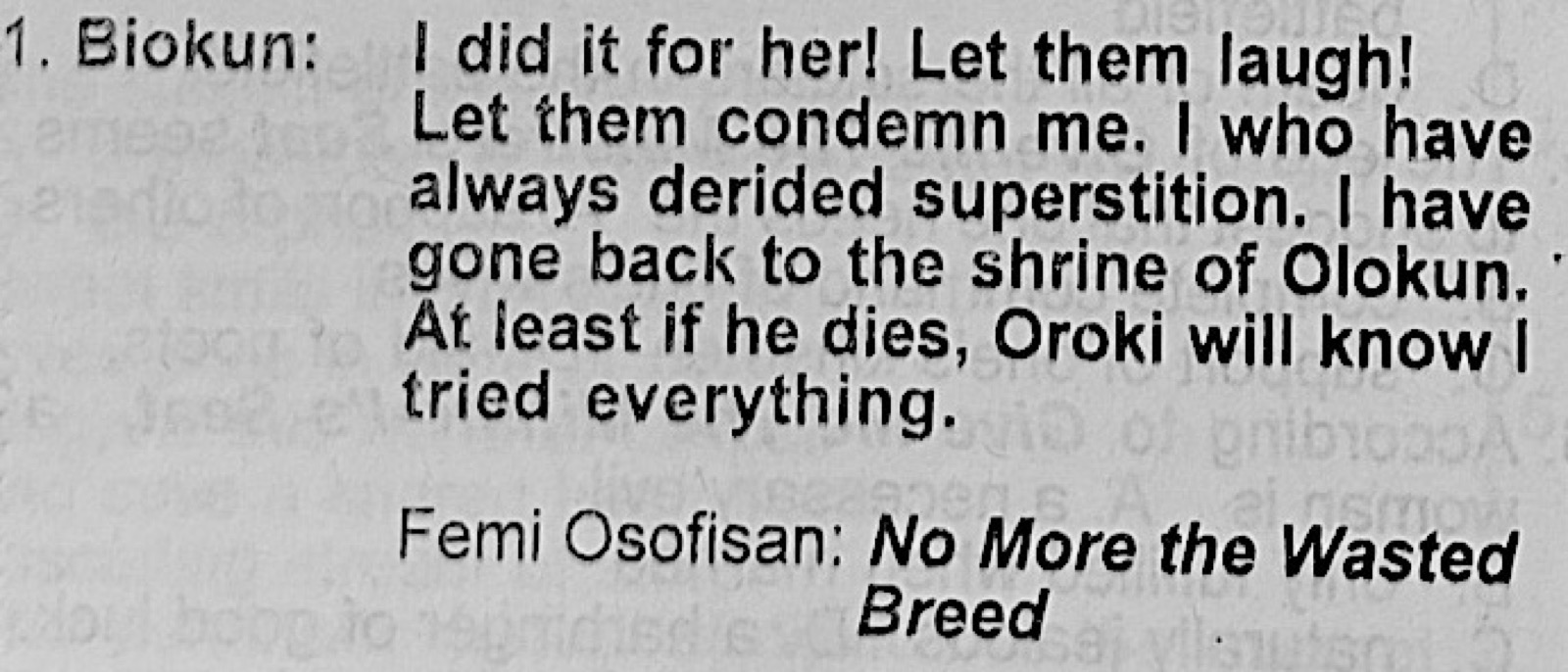
Question 41 Literary Appreciation: Prose and Drama Femi Osofisan: No More the Wasted Breed (extract) Biokun's mood in this passage is one of
A. desperation B. frustration C. anger D. anxiety. Show the answer and explanation Answer: A (desperation )
Explanation Biokun, who always mocked superstition, has gone to the shrine of Olokun to save Oroki: he will try anything, which shows desperation.
Open this question
Question 42 Literary Appreciation: Poetry The imagery used in the second line of the extract above is
A. olfactory B. visual C. tactile D. auditory. Show the answer and explanation Answer: C (tactile )
Explanation 'Touching other roots' appeals to the sense of touch: tactile imagery.
Open this question
Question 44 Literary Appreciation: Poetry The lines above are an indictment of
A. adultery B. gluttony C. flirtation D. infertility. Show the answer and explanation Answer: C (flirtation )
Explanation The insects drink from one flower and fly on to fresh ones: the poem attacks those who move from lover to lover, i.e. flirtation.
Open this question
Question 45 Literary Appreciation: Poetry The sound device used in the extract above is
A. rhyme B. alliteration C. emphasis D. assonance. Show the answer and explanation Answer: A (rhyme )
Explanation The lines end in matching sounds: strong / along, tell / spell. The main sound device is rhyme.
Open this question
Question 46 Figures of Speech A reference beyond the immediate purview of what is being presented is known as
A. allusion B. diversion C. inversion D. imagery. Show the answer and explanation Answer: A (allusion )
Explanation An allusion is a passing reference to something outside the text, such as a person, event or another work.
Open this question
Question 48 Literary Appreciation: Poetry Ossie Enekwe: Mass for the Dead (extract) The subject matter of the extract above is
A. wastage B. war C. love D. hatred. Show the answer and explanation Answer: B (war )
Explanation Marching soldiers with heavy kits and skull-and-bones badges, and tattered pants hanging from the sky, describe war.
Open this question
Question 49 Literary Appreciation: Prose and Drama The narrative point of view used in the extract above can best be described as
A. omniscient B. subjective C. panoramic D. scenic. Show the answer and explanation Answer: A (omniscient )
Explanation The narrator stands outside the story yet tells us Tonderai's private thoughts and feelings: an all-knowing (omniscient) narrator.
Open this question Sign up free for every JAMB Literature in English year, practice by topic and timed mocks.
Start practising free