Home › Past questions › JAMB › Literature in English › 2000 48 questions. Try each one, then open the answer to check yourself and read the explanation.
Sign up free to answer these questions on a CBT screen with a timer, then see your score and every answer explained.
Start practising free
Question 1 Other Set Texts: African Drama Femi Osofisan's Morountodun : Titubi's experience at the peasants' camp is narrated through a dramatic technique called
A. reflection B. projection C. dramatic irony D. flashback Show the answer and explanation Answer: D (flashback )
Explanation Titubi's time in the peasants' camp is acted out as scenes from the past while she tells her story, which is the flashback technique.
Open this question
Question 2 Other Set Texts: African Drama Femi Osofisan's Morountodun : The language of the play is
A. ambiguous B. condemnatory C. apolitical D. metaphoric Show the answer and explanation Answer: B (condemnatory )
Explanation The play uses its language to attack the injustice done to the peasants by the rich and the state, so its language is condemnatory.
Open this question
Question 3 Other Set Texts: African Drama Femi Osofisan, Morountodun (extract) Femi Osofisan's Morountodun : The images depicted are those of
A. poverty and opulence B. opulence and brutality C. suffering and depression D. suffering and brutality Show the answer and explanation Answer: D (suffering and brutality )
Explanation Lack of electricity, drinking stream water and children in jail show suffering, while police raids that burn houses show brutality.
Open this question
Question 4 Other Set Texts: African Drama Femi Osofisan's Morountodun : The speech is made by
A. Titubi role-playing Moremi B. Niniola role-playing Titubi C. Mama Kayode role-playing Baba D. Molade role-playing Marshal Show the answer and explanation Answer: A (Titubi role-playing Moremi )
Explanation The book's key gives Titubi, speaking in her role as the legendary Moremi, as the speaker of this complaint about the peasants' plight.
Open this question
Question 5 Set Text: Twelfth Night William Shakespeare's Twelfth Night : The dialogue above takes place
A. in the captain's ship B. in Illyria C. by the sea-coast of Illyria D. by the sea-coast after Illyria Show the answer and explanation Answer: C (by the sea-coast of Illyria )
Explanation This is Act 1 Scene 2: Viola, just saved from the shipwreck, talks with the Captain on the sea-coast of Illyria.
Open this question
Question 6 Set Text: Twelfth Night William Shakespeare's Twelfth Night : The author successfully conveys his message through
A. interior monologue B. comedy of manners C. satirical performances D. comedy of errors Show the answer and explanation Answer: D (comedy of errors )
Explanation The play's humour and meaning come from mistaken identities (Viola disguised as Cesario, confused with Sebastian), which is a comedy of errors.
Open this question
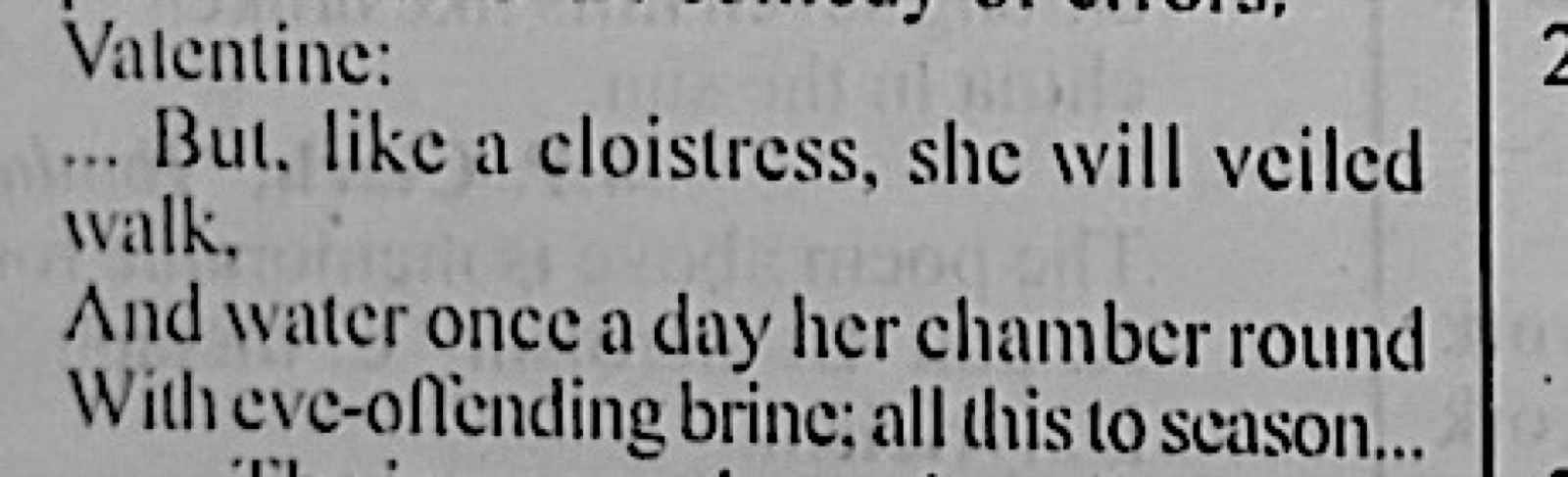
Question 7 Set Text: Twelfth Night William Shakespeare, Twelfth Night (Valentine's speech) William Shakespeare's Twelfth Night : The imagery above describes
A. Viola's deep sorrow for her drowned brother B. Olivia's deep sorrow over the loss of her brother's love C. Viola's grief over a love she cannot show D. Olivia's intense grief over the death of her brother Show the answer and explanation Answer: D (Olivia's intense grief over the death of her brother )
Explanation Valentine reports that Olivia will stay veiled like a nun and weep daily for seven years to mourn her dead brother.
Open this question
Question 8 Set Text: Twelfth Night William Shakespeare's Twelfth Night : The play is about love,
A. longing and ambition B. pretence and hatred C. loss and death D. commitment and marriage Show the answer and explanation Answer: D (commitment and marriage )
Explanation The confusions of love in the play end in commitment and three marriages (Orsino and Viola, Olivia and Sebastian, Toby and Maria).
Open this question
Question 9 Set Text: Twelfth Night William Shakespeare's Twelfth Night : Two major elements of the diction in the play are the
A. scenes and roles of characters B. political and educational background of players C. gender and class of the speakers D. status and emotion of the speakers Show the answer and explanation Answer: C (gender and class of the speakers )
Explanation How characters speak depends on their class (nobles in verse, servants and revellers in prose) and on gender, made central by Viola's disguise as a man.
Open this question
Question 10 Other Set Texts: African Prose Camara Laye's The African Child : The success of the novel lies in the author's
A. realistic portrayal of Laye's courtship with Marie B. effective use of sociological and fictional materials C. recreation of an African childhood in Conakry D. use of traditional elements for colour Show the answer and explanation Answer: D (use of traditional elements for colour )
Explanation The novel's charm comes from its rich picture of Malinke traditions such as the totem snake, gold-smelting, harvest and initiation rites.
Open this question
Question 11 Other Set Texts: African Prose Camara Laye's The African Child : The most important objects in the hut are the
A. prayer-rugs B. implements used in the workshop C. tool-boxes of Camara's father D. pots containing the magic charms Show the answer and explanation Answer: D (pots containing the magic charms )
Explanation Laye describes his father's hut and says the most important things in it were the pots holding the magic potions and charms.
Open this question
Question 12 Other Set Texts: African Prose Camara Laye's The African Child : The friendship between Laye and Marie lasted because
A. they were schoolmates B. they had mutual respect for each other C. his uncle approved of her D. Marie was a beautiful girl Show the answer and explanation Answer: B (they had mutual respect for each other )
Explanation Laye and Marie's quiet, chaste friendship rested on deep respect for each other rather than on looks or family approval.
Open this question
Question 14 Other Set Texts: African Prose Buchi Emecheta's Second Class Citizen : For her act of child neglect, Adah's mother was forced by the police to
A. taste raw and black pepper B. sleep in solitary cell C. drink a bowl of garri D. pay a fine of ten shillings Show the answer and explanation Answer: C (drink a bowl of garri )
Explanation When little Adah went to school on her own, the police held her mother responsible for neglecting her; the key gives the punishment as drinking a bowl of garri.
Open this question
Question 15 Other Set Texts: African Prose Buchi Emecheta's Second Class Citizen : Adah's sojourn in London reveals that
A. marriage is an equal partnership between spouses B. her marriage improves C. Francis is a hardworking man D. the plight of the black woman does not change Show the answer and explanation Answer: D (the plight of the black woman does not change )
Explanation In London Adah still suffers from her husband's oppression and from racism, so moving abroad does not change the black woman's plight.
Open this question
Question 16 Other Set Texts: Non-African Prose Ernest Hemingway's The Old Man and the Sea : The old man's experience is a lesson in
A. endurance and hardwork B. happiness and reliance C. indolence and regret D. achievement and celebration Show the answer and explanation Answer: A (endurance and hardwork )
Explanation Santiago fishes for 84 days without a catch and then fights the marlin and the sharks for days, a lesson in endurance and hard work.
Open this question
Question 17 Other Set Texts: Non-African Prose Ernest Hemingway's The Old Man and the Sea : 'The old man was dreaming about the lions' suggests that he is
A. going to hunt lions B. still determined and hopeful C. afraid of future struggle D. about to enter new jungles Show the answer and explanation Answer: B (still determined and hopeful )
Explanation The lions on the African beach stand for youth and strength; dreaming of them shows Santiago's spirit is still strong and hopeful.
Open this question
Question 18 Other Set Texts: Non-African Prose Ernest Hemingway's The Old Man and the Sea : The novel is set in the
A. white peaks of the Canary Islands B. fishing coast of Havana C. fishing coast of Cienfuegos D. fishing village of Casablanca Show the answer and explanation Answer: B (fishing coast of Havana )
Explanation Santiago lives in a small fishing village near Havana in Cuba and fishes in the Gulf Stream off that coast.
Open this question
Question 20 Other Set Texts: Non-African Prose Ernest Hemingway's The Old Man and the Sea : The skeleton of the fish is brought by the shore to
A. draw sympathy for the old man B. show the old man's fruitless effort C. show that the skeleton itself is useful D. mock the misadventure of the old man Show the answer and explanation Answer: B (show the old man's fruitless effort )
Explanation Only the bare skeleton reaches the shore: the sharks ate the flesh, so it stands for the old man's great but fruitless effort.
Open this question
Question 21 Other Set Texts: Non-African Prose Ernest Hemingway's The Old Man and the Sea : The author's thematic concern is
A. the boy's assistance to the old man B. life in a fishing community C. the achievements of the old man D. the ability to rise above defeat Show the answer and explanation Answer: D (the ability to rise above defeat )
Explanation Santiago says 'a man can be destroyed but not defeated': he loses the fish but keeps his dignity and spirit.
Open this question
Question 22 African Poetry 'Hurrah for Thunder' by Christopher Okigbo could be regarded as a call to
A. beware of the animals in the jungle B. beware of the effects of thunder C. condemn the destructive qualities of elephants D. be conscious and vigilant of man's abuse of power Show the answer and explanation Answer: D (be conscious and vigilant of man's abuse of power )
Explanation The fallen elephant and the thunder stand for powerful leaders; the poem warns people to watch how men use and abuse power.
Open this question
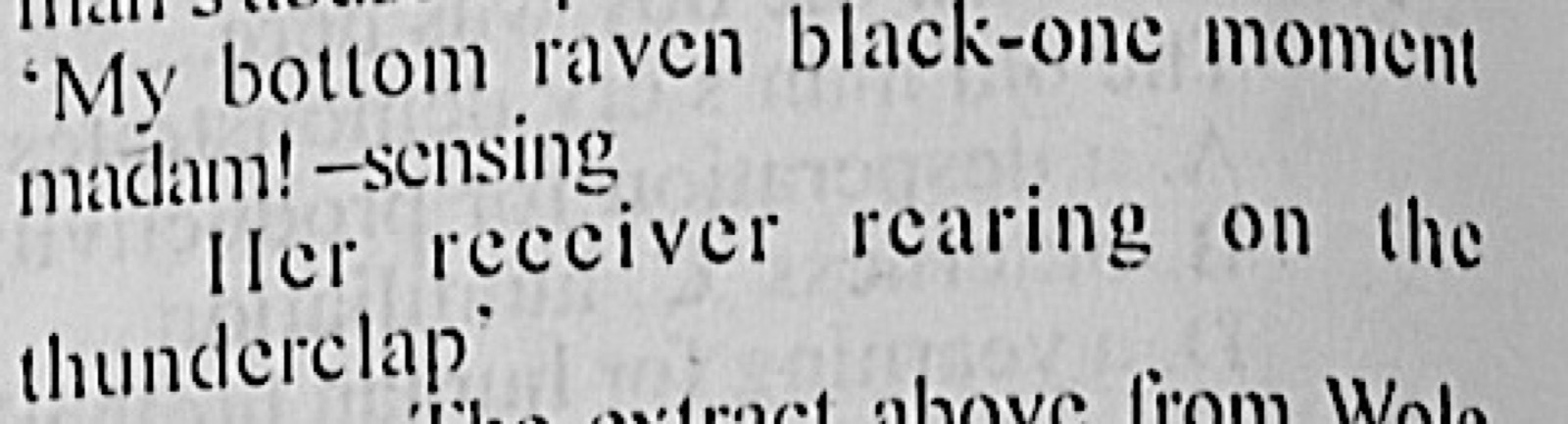
Question 23 African Poetry Wole Soyinka, Telephone Conversation (extract) The extract above from Wole Soyinka's 'Telephone Conversation' shows the friction between
A. madam and receiver B. tenant and telephone C. landlady and tenant D. receiver and thunderclap Show the answer and explanation Answer: C (landlady and tenant )
Explanation The poem is a phone call between an African man looking for a room and a white landlady who is shocked to learn he is black.
Open this question
Question 24 African Poetry In Wole Soyinka's Telephone Conversation , the dominant literary technique deployed is
A. alliteration B. onomatopoeia C. oxymoron D. simile Show the answer and explanation Answer: A (alliteration )
Explanation Soyinka keeps repeating initial consonant sounds (for example 'Button B. Button A.' and the run of 'red booth, red pillar-box') to give the poem its sharp, mocking sound.
Open this question
Question 25 African Poetry David Rubadiri's 'Stanley meets Mutesa' symbolically describes the meeting between
A. a black king and a white man B. Stanley and Mutesa C. the West and Africa D. Europe and a black king Show the answer and explanation Answer: C (the West and Africa )
Explanation Stanley stands for the European explorers and Mutesa for African rulers, so their meeting symbolises the first contact of the West with Africa.
Open this question
Question 26 African Poetry The pervasive mood of the speaker in Mtshali's 'Nightfall in Soweto' is that of
A. elation and joy B. terror and insecurity C. darkness and threat D. celebration and freedom Show the answer and explanation Answer: B (terror and insecurity )
Explanation The speaker fears the night in Soweto when thugs and police attack; he feels terror and has no safety even at home.
Open this question
Question 27 African Poetry The stanza form of Mapanje's 'When this Carnival Finally Closes' is
A. a sonnet B. an irregular verse C. an address D. a free verse Show the answer and explanation Answer: D (a free verse )
Explanation The poem has no fixed metre or rhyme scheme, so it is written in free verse.
Open this question
Question 28 African Poetry The dominant images in Niyi Osundare's 'They Too are the Earth' are
A. disease, illness and death B. aristocracy, affluence and wealth C. poverty, suffering and the downtrodden D. greed, aristocracy and the ambitious Show the answer and explanation Answer: C (poverty, suffering and the downtrodden )
Explanation Osundare writes about the poor and forgotten people who build society yet live in want, so the images are of poverty and suffering.
Open this question
Question 29 African Poetry Tanure Ojaide, The Owl Wakes Us (extract) In these lines from Ojaide's The Owl Wakes Us , the mood is that of a
A. terrifying dream B. seemingly endless night C. vicious cycle of oppression D. persona's experience Show the answer and explanation Answer: C (vicious cycle of oppression )
Explanation Waking 'from one nightmare to another' shows that one bad time simply follows another: a never-ending cycle of oppression.
Open this question
Question 30 Non-African Poetry In Browning's 'My Last Duchess' , the poet-persona's attitude to the Duchess is that of
A. anger B. love C. sadness D. scorn Show the answer and explanation Answer: D (scorn )
Explanation The Duke looks down on his late wife for smiling at everyone and for valuing his gift no higher than a bough of cherries: his tone is scornful.
Open this question
Question 31 Non-African Poetry In 'Ode on a Grecian Urn' , John Keats is concerned with
A. the impermanence of the Grecian Urn B. human and eternal love C. the youthfulness of lovers D. everlasting beauty of art Show the answer and explanation Answer: D (everlasting beauty of art )
Explanation Keats contrasts passing human life with the urn's frozen scenes, which stay beautiful forever: art's beauty is everlasting.
Open this question
Question 32 Drama: General The term for the moral flaw or weakness that leads to the downfall of a major character in drama is
A. chaos B. hamartia C. denouement D. reversal Show the answer and explanation Answer: B (hamartia )
Explanation Hamartia is Aristotle's word for the tragic flaw or error that brings about the hero's fall.
Open this question
Question 33 Drama: General The figure of speech in which a character makes a statement that has or would have deep and serious implication in the play is
A. aside B. euphemism C. dramatic irony D. textual contrast Show the answer and explanation Answer: C (dramatic irony )
Explanation In dramatic irony a character's words carry a deeper, often serious meaning for the rest of the play that the character is unaware of.
Open this question
Question 34 Prose: General A character who does not develop or experience change in the course of his or her existence in a novel is a
A. round character B. flat character C. rounded character D. major character Show the answer and explanation Answer: B (flat character )
Explanation A flat character stays the same throughout the story; a round character changes and develops.
Open this question
Question 35 Poetry: General A panegyric poem is composed to
A. elaborate B. abuse C. condemn D. praise Show the answer and explanation Answer: D (praise )
Explanation A panegyric is a speech or poem written in high praise of someone.
Open this question
Question 36 Prose: General The narrator in a prose work who is also a character is
A. objective narrator B. omniscient narrator C. subjective narrator D. participatory narrator Show the answer and explanation Answer: D (participatory narrator )
Explanation When the storyteller is one of the characters, usually speaking as 'I', he or she is a participant or participatory narrator.
Open this question
Question 37 Poetry: General A primary ballad is associated with
A. educated people B. urban folk C. the nomads D. rural folk Show the answer and explanation Answer: D (rural folk )
Explanation Primary (folk) ballads were made up and passed on by word of mouth among ordinary country people.
Open this question
Question 38 Literary Terms and Devices A trilogy is the
A. sequence of three plays written by the same author B. set of three one-act drama written by related authors C. collection of three poems of equal length D. series of related stories divided into three equal parts Show the answer and explanation Answer: A (sequence of three plays written by the same author )
Explanation A trilogy is a group of three related works, such as three plays, by the same author.
Open this question
Question 39 Prose: General A novel which focuses on the adventures of a rogue who does not change much in the course of the story is
A. romanesque B. grotesque C. picaresque D. burlesque Show the answer and explanation Answer: C (picaresque )
Explanation A picaresque novel follows the episodic adventures of a likeable rogue (picaro) who changes little.
Open this question
Question 40 Literary Terms and Devices The term given to a type of incident or device which recurs frequently in Literature is
A. motif B. ritual C. myth D. concept Show the answer and explanation Answer: A (motif )
Explanation A motif is an idea, image or type of incident that keeps recurring in literature.
Open this question
Question 41 Figures of Speech Using the name of one thing for something else with which it is closely associated is an instance of
A. parody B. paradox C. parallelism D. metonymy Show the answer and explanation Answer: D (metonymy )
Explanation Metonymy names something by a thing linked to it, e.g. 'the Crown' for the monarch.
Open this question
Question 42 Poetry: General Mock-heroic poetry elevates
A. the beauty in human relationships as exemplified in Homer B. trivial subject-matter by using the style of the classical epic C. the stripping off of appearances in a witty manner D. the important tales of heroes of the past era Show the answer and explanation Answer: B (trivial subject-matter by using the style of the classical epic )
Explanation Mock-heroic poetry, like Pope's The Rape of the Lock , treats a trivial subject in the grand style of epic, for comic effect.
Open this question
Question 43 Poetry: General Lineation refers to
A. tracing family descent of people in verse B. the unit in the rhythmic structure of verse C. the arrangement of lines in verse form D. the grouping together of a number of units of rhythm Show the answer and explanation Answer: C (the arrangement of lines in verse form )
Explanation Lineation is how a poem is divided into lines: where each line begins and ends.
Open this question
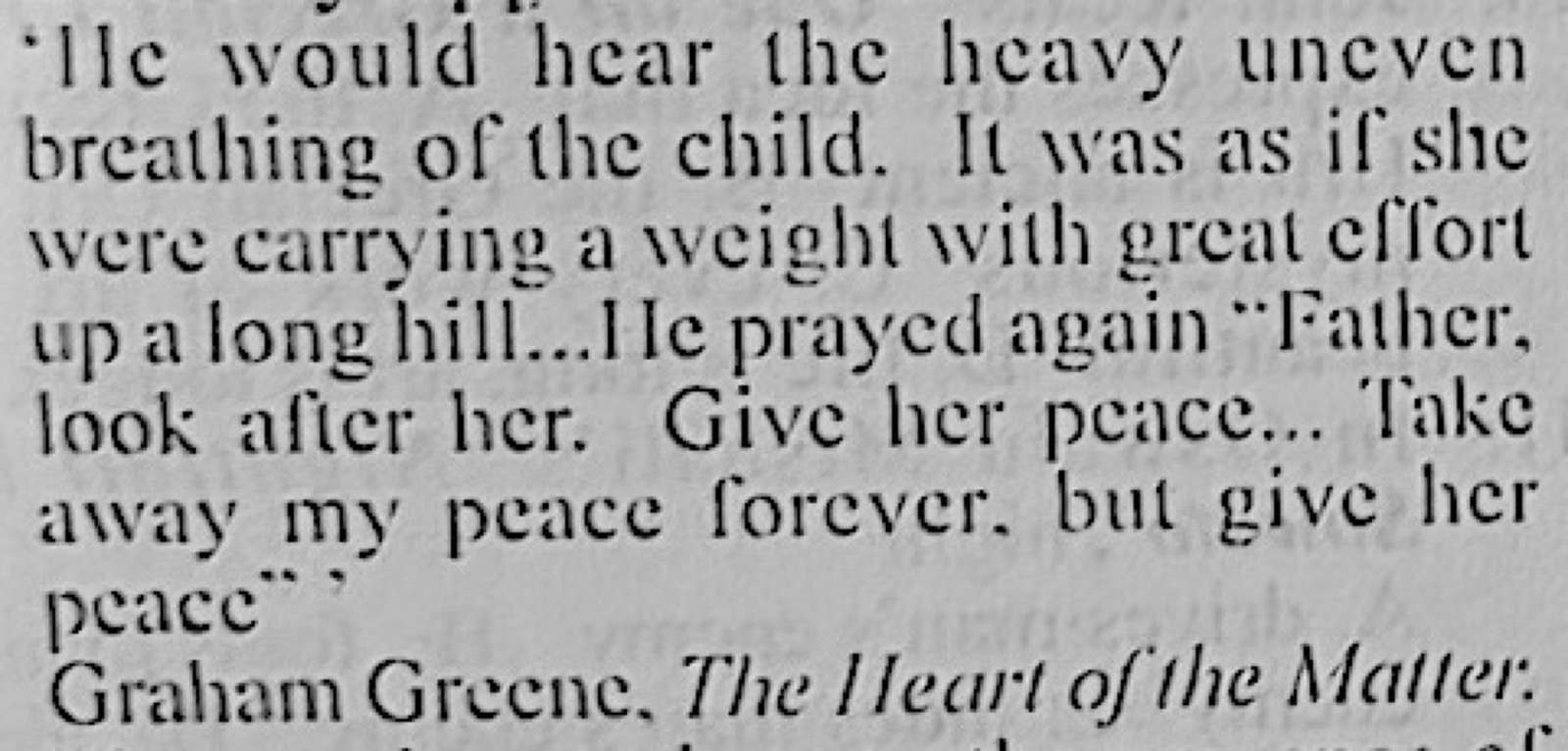
Question 44 Literary Appreciation: Prose and Drama Graham Greene, The Heart of the Matter (extract) Graham Greene, The Heart of the Matter : The man's reactions to the presence of the dying child show that he is
A. tolerant B. compassionate C. prayerful D. loving Show the answer and explanation Answer: B (compassionate )
Explanation He feels the child's suffering so deeply that he offers his own peace to God in exchange for hers, which shows compassion.
Open this question
Question 45 Other Set Texts: Non-African Drama Arthur Miller, Death of a Salesman : Linda's words above express a feeling of
A. darkness and horror B. fear and sadness C. fear and anxiety D. suspicion and shock Show the answer and explanation Answer: C (fear and anxiety )
Explanation Linda calls 'with some trepidation' and asks anxiously what happened, showing fear and worry about Willy.
Open this question
Question 46 Other Set Texts: Non-African Drama Arthur Miller, Death of a Salesman : Willy's first words show that his coming back is
A. ill-timed B. too early C. not expected D. normal Show the answer and explanation Answer: C (not expected )
Explanation Willy has to reassure Linda ('It's all right. I came back'), which shows she did not expect him home.
Open this question
Question 47 Other Set Texts: African Prose Chinua Achebe, Arrow of God : The lines above illustrate the use of
A. traditional parable B. deep metaphor C. extended proverb D. local colour Show the answer and explanation Answer: A (traditional parable )
Explanation The key takes this saying about Umuaro custom, used to explain why Ezeulu sends his son, as a traditional parable drawn from village wisdom.
Open this question
Question 48 Literary Appreciation: Poetry Kofi Anyidoho, 'Blood Harvest' : The stanza above succinctly presents the
A. problem of war B. problem of hunger C. folly of soldiers D. repercussion of violence Show the answer and explanation Answer: D (repercussion of violence )
Explanation Those who live by guns and death will see their own children's blood spilt: violence comes back on those who cause it.
Open this question
Question 49 Literary Appreciation: Poetry Dennis Brutus, 'A Troubadour I Traverse' : In the lines above, the poet-persona expresses
A. defiance B. resignation C. fear D. sorrow Show the answer and explanation Answer: A (defiance )
Explanation Though cast off by his land, the persona carries on like a knight-errant, ready for pressure and the captor's hand: a defiant stance.
Open this question
Question 50 Literary Appreciation: Poetry David Diop, 'Africa' : In the lines above, Diop uses
A. personification B. onomatopoeia C. simile D. metaphor Show the answer and explanation Answer: A (personification )
Explanation The poet speaks to Africa as a person whose blood flows in his veins and irrigates the fields, giving the continent human qualities.
Open this question Sign up free for every JAMB Literature in English year, practice by topic and timed mocks.
Start practising free