Home › Past questions › JAMB › Literature in English › 1998 39 questions. Try each one, then open the answer to check yourself and read the explanation.
Sign up free to answer these questions on a CBT screen with a timer, then see your score and every answer explained.
Start practising free
Question 1 Other Set Texts: African Drama Brother Chume as a member of Jero's congregation is
A. an informed disciple B. a messenger to Brother Jero C. a loyalist and a good husband D. a disgruntled and gullible follower. Show the answer and explanation Answer: D (a disgruntled and gullible follower. )
Explanation Chume is unhappy (he wants to beat his wife) and easily fooled by Jero's false prophecies.
Open this question
Question 2 Other Set Texts: African Drama Amope is dissatisfied with her husband's status as a
A. bicycle owner B. chief clerk C. chief messenger D. deputy to Jero. Show the answer and explanation Answer: C (chief messenger )
Explanation Amope nags Chume because he is only a chief messenger and not a more important man.
Open this question
Question 4 Other Set Texts: African Drama Brother Jero displays an act of ingratitude to his master by
A. enticing the French Jehovah witnesses B. dispossessing him of his piece of land C. conniving with the Cherubims and Seraphims D. organizing a deceitful dancing competition. Show the answer and explanation Answer: B (dispossessing him of his piece of land )
Explanation Jero tricked his old master out of his piece of the beach, so the old prophet cursed him.
Open this question
Question 5 Other Set Texts: African Drama The play is
A. a melodrama B. a tragedy C. an epic D. a farce. Show the answer and explanation Answer: D (a farce. )
Explanation The play makes us laugh with tricks, chases and absurd situations: it is a farce.
Open this question
Question 6 Other Set Texts: African Drama In the play, Soyinka's sympathies lie with the
A. exploited B. rich C. imprisoned D. accused. Show the answer and explanation Answer: A (exploited )
Explanation Soyinka mocks Jero and shows sympathy for the simple people he cheats, like Chume.
Open this question
Question 8 Set Text: She Stoops to Conquer The play is built on
A. mistaken identities B. sentiments and realities C. comedy of errors D. contrasts of characters and ideas. Show the answer and explanation Answer: A (mistaken identities )
Explanation Marlow takes Hardcastle's house for an inn and Kate for a barmaid: the plot runs on mistaken identity.
Open this question
Question 10 Set Text: She Stoops to Conquer 'If my dear Hastings be but constant, I make no doubt to be too hard for her at last.' The lines above in the play are delivered by
A. Kate B. Tony C. Marlow D. Constance. Show the answer and explanation Answer: D (Constance. )
Explanation Constance Neville hopes that, if Hastings stays true, she will outwit her aunt Mrs Hardcastle and get her jewels.
Open this question
Question 11 African Poetry In 'Hurrah For Thunder', the poet uses the image of the jungle to comment on his country's lack of
A. civilization B. cleanliness C. order D. leadership. Show the answer and explanation Answer: D (leadership. )
Explanation Okigbo's jungle and the fallen "elephant" point to the failure of Nigeria's leaders.
Open this question
Question 12 African Poetry Who are they that 'live that the earth may die' in Niyi Osundare's "They Too Are The Earth"?
A. The beggars sprawled out in gutters B. The millions who hew wood C. People who fritter the forest and harry the hills D. Those who hurl water. Show the answer and explanation Answer: C (People who fritter the forest and harry the hills )
Explanation Those who waste the forests and tear at the hills live off the earth while destroying it.
Open this question
Question 13 African Poetry "They too are the earth Under snakeskin shoes and Mercedez tyres'. Niyi Osundare uses the lines above to describe the
A. material for the shoes of the poor B. repulsive snakeskin-like bodies of the poor C. hope of the oppressed for a better life D. oppression of the dispossessed. Show the answer and explanation Answer: D (oppression of the dispossessed. )
Explanation The poor are trodden under the shoes and cars of the rich, like the ground itself.
Open this question
Question 15 African Poetry Dzogbesa Lisa in Kofi Awoonor's 'Songs of Sorrow' can be equated to
A. salvation B. despondence C. poverty D. fate. Show the answer and explanation Answer: D (fate. )
Explanation Dzogbesa Lisa is the god of destiny who "has treated me thus": fate.
Open this question
Question 16 African Poetry To say that Wole Soyinka's 'Telephone Conversation' is dramatic is to imply that
A. the poem is acted on a stage B. it has conversation and action C. the poet mimes his part D. it is narrated in scenes. Show the answer and explanation Answer: B (it has conversation and action )
Explanation The poem is a dialogue between two people with things happening, like a scene in a play.
Open this question
Question 17 African Poetry In Okara's 'The Call of the River Nun', the river Nun compels the poet to think about
A. his life B. trees mirrored in water C. happy days D. God's mysteriousness. Show the answer and explanation Answer: A (his life )
Explanation The river's flow to the sea makes the poet reflect on the course of his own life.
Open this question
Question 18 African Poetry 'O incomprehensible God! Shall my pilot be' These lines in Okara's 'The Call of the River Nun' reveal a religious undertone which also expresses the
A. mystery of existence B. omnipotence of God C. duality of life D. inevitability of death. Show the answer and explanation Answer: D (inevitability of death. )
Explanation The poet will need God as his pilot when he makes the final journey, death, which no one escapes.
Open this question
Question 19 African Poetry In Mtshali's 'The Washerwoman's Prayer', the condition of the woman is portrayed through
A. irony B. juxtaposition C. comparison D. metaphor. Show the answer and explanation Answer: A (irony )
Explanation The woman toils and suffers yet keeps praying patiently: the poet presents her faith with irony.
Open this question
Question 20 Non-African Poetry What is the poet-persona's feeling for the reaper in Wordsworth's 'The Solitary Reaper'?
A. Pity B. Admiration C. Hatred D. Delight. Show the answer and explanation Answer: B (Admiration )
Explanation The poet is moved by the girl's beautiful song and carries it in his heart.
Open this question
Question 21 Non-African Poetry Browning's 'My Last Duchess' is
A. an epic B. a sonnet C. an elegy D. a lyric. Show the answer and explanation Answer: D (a lyric. )
Explanation It is a short poem spoken by one person (the Duke), a dramatic monologue, which belongs with the lyric rather than the long epic.
Open this question
Question 22 Non-African Poetry 'I cannot rest from travel; I will drink life to the lees.' The lines above from Tennyson's 'Ulysses' reveal the persona as
A. adventurous B. drunken C. lively D. restive. Show the answer and explanation Answer: A (adventurous )
Explanation Ulysses wants to keep travelling and live life to the full: he is adventurous.
Open this question
Question 24 Other Set Texts: African Prose Li's initial aspiration in the novel is to
A. escape from village life to the city B. marry a handsome man C. join her husband in the city D. remain in the peaceful village. Show the answer and explanation Answer: A (escape from village life to the city )
Explanation Li dreams of leaving the strict village for an exciting life in the city.
Open this question
Question 27 Other Set Texts: African Prose By allowing Sule to return to the village in spite of his earlier vow, the author suggests the existence of
A. a destiny that awaits mankind B. a bond between man and his roots C. homesickness in city dwellers D. kind feelings in all villagers. Show the answer and explanation Answer: B (a bond between man and his roots )
Explanation Sule comes home despite swearing not to, showing the pull of one's roots.
Open this question
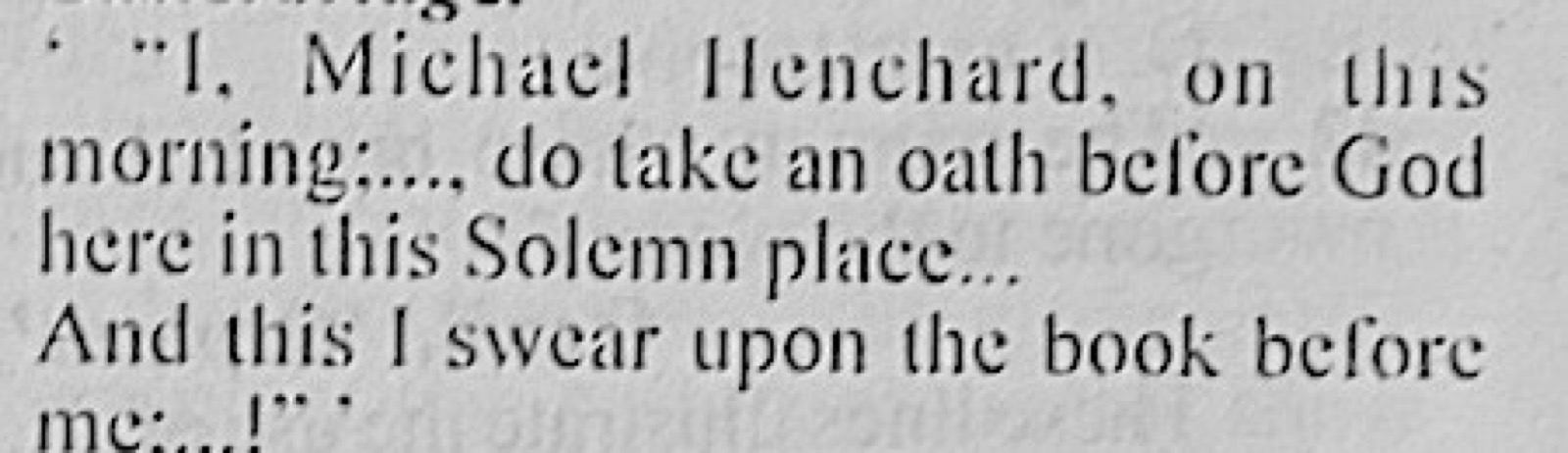
Question 28 Other Set Texts: Non-African Prose From The Mayor of Casterbridge (Thomas Hardy) The oath above is taken when
A. Henchard gets married to Susan B. Henchard collects five guineas as the prize for Susan C. Henchard swears to stop taking strong liquors D. Newson returns Susan to Henchard. Show the answer and explanation Answer: C (Henchard swears to stop taking strong liquors )
Explanation After selling his wife while drunk, Henchard swears in a church not to drink for twenty-one years.
Open this question
Question 29 Other Set Texts: Non-African Prose The statement, 'Time the magician, had wrought much here' is made when
A. Susan Newson sees Henchard at Casterbridge B. Elizabeth-Jane discovers her true father C. Farfrae gets married to Elizabeth-Jane D. Farfrae becomes the Mayor of Casterbridge. Show the answer and explanation Answer: A (Susan Newson sees Henchard at Casterbridge )
Explanation Susan finds the drunken hay-trusser has become the Mayor: time has changed him greatly.
Open this question
Question 30 Other Set Texts: Non-African Prose Mrs. Newson refuses to reward the furmity seller for disclosing the whereabout of Henchard because she
A. has little money on her B. considers the trade in furmity unscrupulous C. thinks it is not respectable to talk to the old woman D. has learned what she wanted from the old woman. Show the answer and explanation Answer: B (considers the trade in furmity unscrupulous )
Explanation Susan would have given the furmity woman something from her small means, but she remembers that it was this woman's rum-laced furmity that made Henchard drunk enough to sell her. She thinks the old woman's trade is unscrupulous, so she only thanks her.
Open this question
Question 32 Other Set Texts: Non-African Prose By allowing Henchard to get drunk and sell off his wife, Hardy makes the point that
A. life is valueless B. drinking is disastrous C. Henchard is unpredictable D. cruelty is part of life. Show the answer and explanation Answer: B (drinking is disastrous )
Explanation Drink leads Henchard to sell his wife, the act that later ruins him.
Open this question
Question 34 Drama: General The three main unities in drama are those of
A. action, time and place B. time, space and action C. place, time and space D. space, action and time. Show the answer and explanation Answer: A (action, time and place )
Explanation Aristotle's unities are of action, time and place.
Open this question
Question 35 Poetry: General Poems that are not written in meter or regular line length are called
A. short verses B. rhythmic verses C. free verses D. irregular verses. Show the answer and explanation Answer: C (free verses )
Explanation Poetry without regular metre or line length is free verse.
Open this question
Question 36 Poetry: General An elegy is a poem that mourns for the
A. deceased B. bereaved C. accused D. king. Show the answer and explanation Answer: A (deceased )
Explanation An elegy laments someone who has died.
Open this question
Question 37 Figures of Speech When two statements or comparisons are apparently contradictory, we have an example of
A. irony B. paradox C. contrast D. parallelism. Show the answer and explanation Answer: B (paradox )
Explanation An apparent contradiction is a paradox.
Open this question
Question 38 Non-African Poetry 'If Winter comes, can Spring be far behind?' Shelly, 'Ode to the West Wind'. The literary device used here is
A. an apostrophe B. an allegory C. a poetic license D. a rhetoric. Show the answer and explanation Answer: D (a rhetoric. )
Explanation The question needs no answer; it is a rhetorical question.
Open this question
Question 39 Drama: General A melodramatic play is based on
A. a melodious manipulation of events B. ingredients that mellow down events C. sensational plot and characters D. the playwright's didactic overtones. Show the answer and explanation Answer: C (sensational plot and characters )
Explanation Melodrama piles on thrilling, exaggerated events and clear-cut heroes and villains.
Open this question
Question 40 Poetry: General Romantic poetry emphasizes
A. the beauty of nature B. intimate relationships C. the love in human nature D. the romance in human aspirations. Show the answer and explanation Answer: A (the beauty of nature )
Explanation Romantic poets like Wordsworth and Keats celebrate nature.
Open this question
Question 41 Drama: General In drama, a conspicuous weakness in the character of the protagonist contributing to his downfall is referred to as
A. an anagnorisis B. a tragic flaw C. a catharsis D. a catastrophe. Show the answer and explanation Answer: B (a tragic flaw )
Explanation That is the tragic flaw (hamartia).
Open this question
Question 42 African Poetry 'The woman whose breasts I sucked is gone to the worms'. Oculi, 'Orphan'. These lines illustrate the use of
A. sadism B. sophism C. satire D. euphemism. Show the answer and explanation Answer: D (euphemism. )
Explanation "Gone to the worms" is a softer way of saying his mother is dead and buried.
Open this question
Question 43 African Poetry Mtshali, 'Men in Chains' The figures of speech employed in the lines above are
A. metaphor and onomatopoeia B. simile and metonymy C. metaphor and simile D. personification and onomatopoeia. Show the answer and explanation Answer: C (metaphor and simile )
Explanation "Clean as a potato" is a simile; the sun called a red eye and the clouds a handkerchief are metaphors.
Open this question
Question 45 Literary Appreciation: Poetry In the lines above, Shakespeare is thinking of the
A. passing of time and shortness of life B. swift passing of waves from shore to shore C. passing of time from hours to minutes and seconds D. movement of pebbles to the shore. Show the answer and explanation Answer: A (passing of time and shortness of life )
Explanation Our minutes rush to their end as waves rush to the shore: life is short.
Open this question
Question 46 Literary Appreciation: Prose and Drama The passage above is an example of
A. hyperbolism B. juxtaposition C. understatement D. didactism. Show the answer and explanation Answer: C (understatement )
Explanation "Only seven thousand died" makes a huge loss sound small: understatement.
Open this question
Question 47 Literary Appreciation: Prose and Drama The writer suggests in the passage above that El-Hadji is
A. a prince B. a food lover C. being entertained D. being manipulated. Show the answer and explanation Answer: D (being manipulated. )
Explanation The "careful process of conditioning the man" shows the family is working on him.
Open this question
Question 49 Literary Appreciation: Prose and Drama The writer of the passage above arrests the interest of the reader by employing
A. a suspenseful opening B. an appropriate setting C. short clear sentences D. images of violence. Show the answer and explanation Answer: A (a suspenseful opening )
Explanation "They came for him that Sunday" makes us want to know who came and why.
Open this question
Question 50 African Poetry The tone of the lines above is
A. satiric B. sarcastic C. indicting D. self-pitying. Show the answer and explanation Answer: A (satiric )
Explanation The poet mocks the so-called "messiahs" who hound and gun down the people.
Open this question Sign up free for every JAMB Literature in English year, practice by topic and timed mocks.
Start practising free