Home › Past questions › JAMB › Literature in English › 1990 45 questions. Try each one, then open the answer to check yourself and read the explanation.
Sign up free to answer these questions on a CBT screen with a timer, then see your score and every answer explained.
Start practising free
Question 1 Set Text: The Lion and the Jewel Lakunle is presented as a
A. fine specimen of an educated young man B. truly progressive and enlightened youth C. strong defender of the people's tradition D. caricature of a modern educated man. Show the answer and explanation Answer: D (caricature of a modern educated man. )
Explanation Lakunle's half-digested "modern" ideas and big words make him a comic exaggeration of the educated man.
Open this question
Question 2 Set Text: The Lion and the Jewel '...I am the twinkle of a Jewel But he is the hind-quarters of a lion!...' These lines suggest that
A. Sidi is superior to the Bale B. Sidi is weaker than the Bale C. Sidi is cleverer than the Bale D. the Bale is violent. Show the answer and explanation Answer: A (Sidi is superior to the Bale )
Explanation Proud of her photographs, Sidi boasts that she shines like a jewel while Baroka is only the back end of a lion.
Open this question
Question 3 Set Text: The Lion and the Jewel The central theme of the play is the
A. ills of modern days B. clash between tradition and modernity C. problem of courtship D. conflict between the old and the young Show the answer and explanation Answer: B (clash between tradition and modernity )
Explanation The contest of Lakunle (modern ways) and Baroka (tradition) for Sidi shows the clash of old and new.
Open this question
Question 4 Set Text: The Lion and the Jewel From The Lion and the Jewel (Wole Soyinka) It can be inferred from the above lines that
A. there has been no harvest in the village B. the Bale's servants are lazy C. no children have been born recently D. the Bale's servants are revolting. Show the answer and explanation Answer: C (no children have been born recently )
Explanation No new cots woven means no new babies are expected: a hint about the Bale's supposed impotence.
Open this question
Question 6 Other Set Texts: Non-African Drama Since the phrase 'two women' in the above extract refers to Petkoff's own daughter and wife, his grinning is a case of
A. sarcasm B. ridicule C. irony D. suspense. Show the answer and explanation Answer: C (irony )
Explanation Petkoff laughs at the story without knowing the two women were his own wife and daughter: dramatic irony.
Open this question
Question 7 Other Set Texts: Non-African Drama In what particular way did Raina demonstrate that she had fallen in love with Captain Bluntschli by the end of their first meeting?
A. By giving him chocolate creams which he preferred to bullets B. By introducing him to her mother C. By giving him her portrait with an inscription D. By saving his life from the Serbian soldiers. Show the answer and explanation Answer: C (By giving him her portrait with an inscription )
Explanation Raina slips her photograph, inscribed "to my chocolate-cream soldier", into the coat she lends him.
Open this question
Question 8 Other Set Texts: Non-African Drama From Arms and the Man (George Bernard Shaw) This account of an important battle in the play carries a tone of
A. admiration B. mockery C. bitterness D. alarm. Show the answer and explanation Answer: B (mockery )
Explanation Bluntschli laughs at Sergius's cavalry charge, comparing him to an opera singer and Don Quixote.
Open this question
Question 10 Other Set Texts: Non-African Drama 'That is a photograph of the gentleman – the patriot and hero– to whom I am betrothed'. The gentleman referred to in this passage is
A. Bluntschli B. Sergius C. Petkoff D. Don Quixote. Show the answer and explanation Answer: B (Sergius )
Explanation Raina is engaged to Major Sergius, the "hero" of Slivnitza.
Open this question
Question 11 African Poetry '... Tide and market come and go And so shall your mother.' The above lines from J.P. Clark's 'Streamside Exchange' depict the
A. variation of season B. changing periods of marketing C. constancy of nature D. importance of living. Show the answer and explanation Answer: C (constancy of nature )
Explanation Tide and market follow fixed, unchanging cycles, and the mother too must follow nature's set course: the lines show the constancy of nature.
Open this question
Question 12 African Poetry Gabriel Okara presents the Back in relation to the child-Front in his poem 'The Fisherman's Invocation' as a source of
A. inspiration B. destruction C. anxiety D. uncertainty. Show the answer and explanation Answer: A (inspiration )
Explanation The Back (Africa's past) gives birth to and feeds the Front (its future).
Open this question
Question 13 African Poetry 'When our Dead come with their Dead When they have spoken to us with their clumsy voices...' These lines from Birago Diop's poem, 'Vanity', refer to
A. the way in which the dead communicate with us B. the clash of cultures in modern civilization C. the elders' lack of sophistication D. our inability to understand our ancestors. Show the answer and explanation Answer: D (our inability to understand our ancestors. )
Explanation The poem says we did not understand our dead when they spoke to us.
Open this question
Question 14 African Poetry The words 'naked' and 'barefoot' as used in Christopher Okigbo's 'The Passage', suggest
A. affluence B. primitivity C. penury D. reverence. Show the answer and explanation Answer: D (reverence. )
Explanation The prodigal stands naked and barefoot before Idoto as a humble worshipper.
Open this question
Question 15 African Poetry Theo Luzuka's 'The Motoka' is cast in the mould of
A. a dirge B. a gossip C. an epistle D. a ditty. Show the answer and explanation Answer: B (a gossip )
Explanation The speaker chatters about the minister's car and scandals ("Plus I hear..."), like village gossip.
Open this question
Question 16 African Poetry '... Their eyes recede from tomorrow, No sense of mission sustains them.' These lines from Odia Ofeimun's 'The Prodigals' express
A. a longing for the past B. a lack of progress C. the weight of tradition D. an impatient attitude. Show the answer and explanation Answer: B (a lack of progress )
Explanation People who turn away from the future and have no purpose cannot move forward.
Open this question
Question 17 African Poetry As suggested in Agostinho Neto's 'Night', the problems of the blackman today derive mostly from
A. the persistence of a superstitious life style that creates only mystery and terror in an otherwise enlightened world B. a fate that made his skin colour identical to that of night C. the lack of a clear sense of direction coupled with years of oppression that weakened his will D. too much haste to catch up with the rest of the world as a result of which the basic structures of development are not being properly laid down. Show the answer and explanation Answer: C (the lack of a clear sense of direction coupled with years of oppression that weakened his will )
Explanation The speaker wanders the dark streets without direction, worn down by long oppression.
Open this question
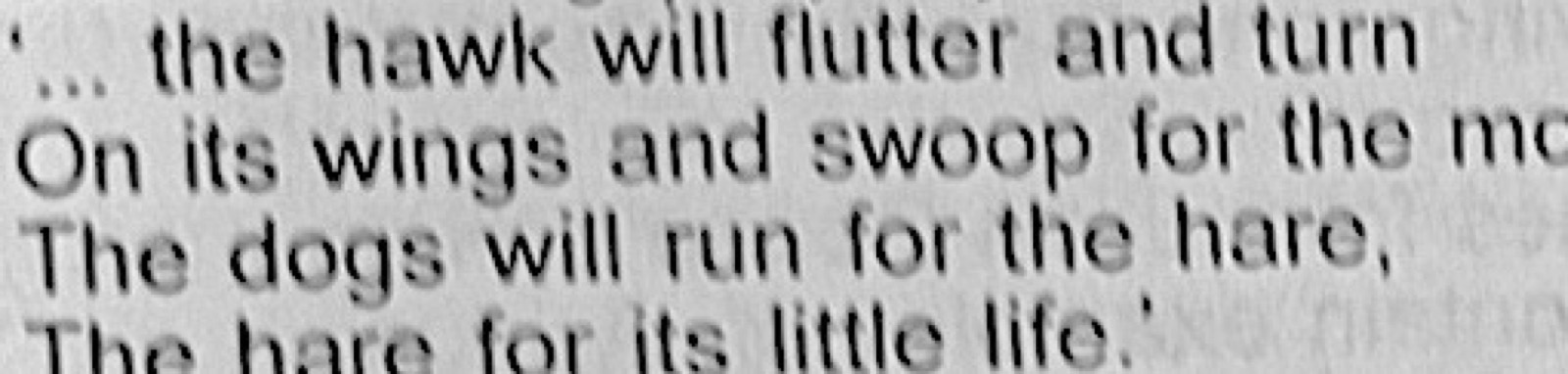
Question 18 African Poetry From Kwesi Brew's 'The Dry Season' These lines from Kwesi Brew's 'The Dry Season' mean that
A. there is chaos B. this is a hunting season C. the hare will be killed D. the hawk and the dogs are strong. Show the answer and explanation Answer: B (this is a hunting season )
Explanation In the dry season the hawk hunts the mouse and dogs chase the hare: it is the time of hunting.
Open this question
Question 19 African Poetry These lines from Kwesi Brew's 'The Executioner's Dream' suggest that
A. even nature rejoices at human sacrifice B. nature is indifferent to man's predicament C. there is harmony in nature D. there is a lot of activity in the undergrowth. Show the answer and explanation Answer: B (nature is indifferent to man's predicament )
Explanation Lilies dance and crickets chirp gaily while a man is put to death: nature does not care.
Open this question
Question 20 African Poetry 'The Fulani Creation Story' shows that
A. the world came about by a series of chance happenings B. the world was created in three days C. a logic of cause-and-effect underlies all creation D. death came into the world when man set himself up as God's rival. Show the answer and explanation Answer: C (a logic of cause-and-effect underlies all creation )
Explanation In the story each thing Doondari creates becomes proud and is overcome by the next (stone by iron, iron by fire, and so on until death is overcome), so creation follows a chain of cause and effect.
Open this question
Question 21 Other Set Texts: African Prose From Arrow of God (Chinua Achebe) In view of the speaker's aim, this statement is
A. ambiguous B. hyperbolic C. ironic D. an understatement Show the answer and explanation Answer: C (ironic )
Explanation The speaker mocks the other's "madness" while seeming to agree with it.
Open this question
Question 22 Other Set Texts: African Prose Which of the following BEST describes Ezeulu's mood when he was locked up in Okperi by the white administrator?
A. Indifference B. Despair C. Apathy D. Nobility of mind. Show the answer and explanation Answer: D (Nobility of mind. )
Explanation Ezeulu stays calm and proud in detention and refuses to become the white man's chief.
Open this question
Question 23 Other Set Texts: African Prose From Arrow of God (Chinua Achebe) The 'misfortune' referred to in this extract was the
A. misunderstanding between Akueke and her husband B. outrage which Oduche committed against the sacred python C. sending away of Ezeulu's sons to worship the whiteman's God D. ominous visit of Ezeulu's in-laws to his compound. Show the answer and explanation Answer: B (outrage which Oduche committed against the sacred python )
Explanation After Oduche shut the python in a box, people came to speak their minds to Ezeulu, showing who his friends were.
Open this question
Question 24 Other Set Texts: African Prose The immediate cause of the war between Umuaro and Okperi was the
A. land dispute B. murder of Akukalia C. intervention of Captain Winterbottom D. siting of the colonial administrative headquarters at Okperi. Show the answer and explanation Answer: B (murder of Akukalia )
Explanation The quarrel over land had gone on for years; war broke out when Umuaro's messenger Akukalia was killed in Okperi.
Open this question
Question 25 Other Set Texts: African Prose From Arrow of God (Chinua Achebe) In this passage, Ezeulu is pointing out to his son the wisdom in
A. moderation B. bravery C. cowardice D. sitting on the fence. Show the answer and explanation Answer: A (moderation )
Explanation Ezeulu warns Obika that bravery must be balanced by caution: a man must know when to give way.
Open this question
Question 26 Other Set Texts: African Prose What is the source of Aissatou's success in life?
A. Vengeance B. Feminine courage C. Social connections D. Luck. Show the answer and explanation Answer: B (Feminine courage )
Explanation Aissatou bravely leaves Mawdo when he takes a second wife, studies and builds a new career.
Open this question
Question 27 Other Set Texts: African Prose Aunty Nabou's subtle influence over young Nabou was developed and effected through
A. formal education B. family ties C. oral education D. maternal authority. Show the answer and explanation Answer: C (oral education )
Explanation Aunty Nabou shapes the girl with traditional stories and teaching told by word of mouth.
Open this question
Question 28 Other Set Texts: African Prose From So Long a Letter (Mariama Ba) The friendship referred to in these lines is that between
A. Binetou and Modou Fall B. Ramatoulaye and Daouda Dieng C. Modou Fall and Mawdo Ba D. Aissatou and Ramatoulaye. Show the answer and explanation Answer: D (Aissatou and Ramatoulaye. )
Explanation The whole novel is a letter between the two lifelong friends, Ramatoulaye and Aissatou.
Open this question
Question 30 Other Set Texts: African Prose The letter form used in the novel is particularly effective because it
A. is dramatic in impact B. dispenses with dialogue C. is an intimate form of expression D. is tragic in content. Show the answer and explanation Answer: C (is an intimate form of expression )
Explanation A private letter to a close friend lets Ramatoulaye share her deepest feelings.
Open this question
Question 31 Literary Terms and Devices The basic idea of any given work of art is its
A. imagery B. style C. theme D. tone. Show the answer and explanation Answer: C (theme )
Explanation The theme is the central idea of a work.
Open this question
Question 32 Literary Terms and Devices The epilogue in a literary composition is
A. at the beginning B. in the middle C. at the end D. just before the end. Show the answer and explanation Answer: C (at the end )
Explanation An epilogue comes after the main work.
Open this question
Question 33 Literary Terms and Devices When a character in a literary work exists primarily to enhance, through contrast, the portrayal of the personal traits of another character, that first character is a
A. protagonist B. antagonist C. mirror character D. foil. Show the answer and explanation Answer: D (foil. )
Explanation A foil shows up another character's qualities by contrast.
Open this question
Question 34 Figures of Speech A statement whose meaning is contrary to that openly expressed is an example of
A. metaphor B. oxymoron C. irony D. personification. Show the answer and explanation Answer: C (irony )
Explanation Saying one thing while meaning the opposite is irony.
Open this question
Question 35 Prose: General Which of the following is central to narrative fiction?
A. Sequence of events B. Dialogue C. Objectivity D. Subjectivity. Show the answer and explanation Answer: A (Sequence of events )
Explanation A narrative is a story, i.e. a sequence of events.
Open this question
Question 36 Literary Terms and Devices Which of the following could be applicable to all genres?
A. Symbolism B. Rhythm C. Action D. Narration. Show the answer and explanation Answer: A (Symbolism )
Explanation Symbols are used in poetry, prose and drama alike.
Open this question
Question 37 Figures of Speech In literary criticism, a casual reference to a figure or an event is regarded as an
A. alliteration B. allegory C. allusion D. ambiguity. Show the answer and explanation Answer: C (allusion )
Explanation A brief reference to a known person, story or event is an allusion.
Open this question
Question 38 Figures of Speech A paradox is
A. applied to a word or combination of words whose sound resembles the sense B. a statement which seems self-contradictory or absurd, yet turns out to have a valid meaning C. an episode of pantomime introduced through gesture and bodily movement in a play D. an elaborately conceived poem expressing an urban poet's nostalgia for life in the country. Show the answer and explanation Answer: B (a statement which seems self-contradictory or absurd, yet turns out to have a valid meaning )
Explanation That is the definition of a paradox.
Open this question
Question 39 Literary Terms and Devices A necessary quality of every work of literature is that it
A. shows a creative use of language B. has to be publishable in order to gain wide acceptance C. teaches a moral lesson D. uses characters or actors. Show the answer and explanation Answer: A (shows a creative use of language )
Explanation What every literary work shares is imaginative use of language.
Open this question
Question 40 Prose: General A picaresque novel is a
A. work of fiction set in a utopian past recalling the splendour of rural life B. psychological novel with penetrating analyses of human emotions C. futuristic novel set in outer space D. work of fiction tracing the adventures of a scoundrel of low birth. Show the answer and explanation Answer: D (work of fiction tracing the adventures of a scoundrel of low birth. )
Explanation A picaresque novel follows the adventures of a lovable rogue (a "picaro").
Open this question
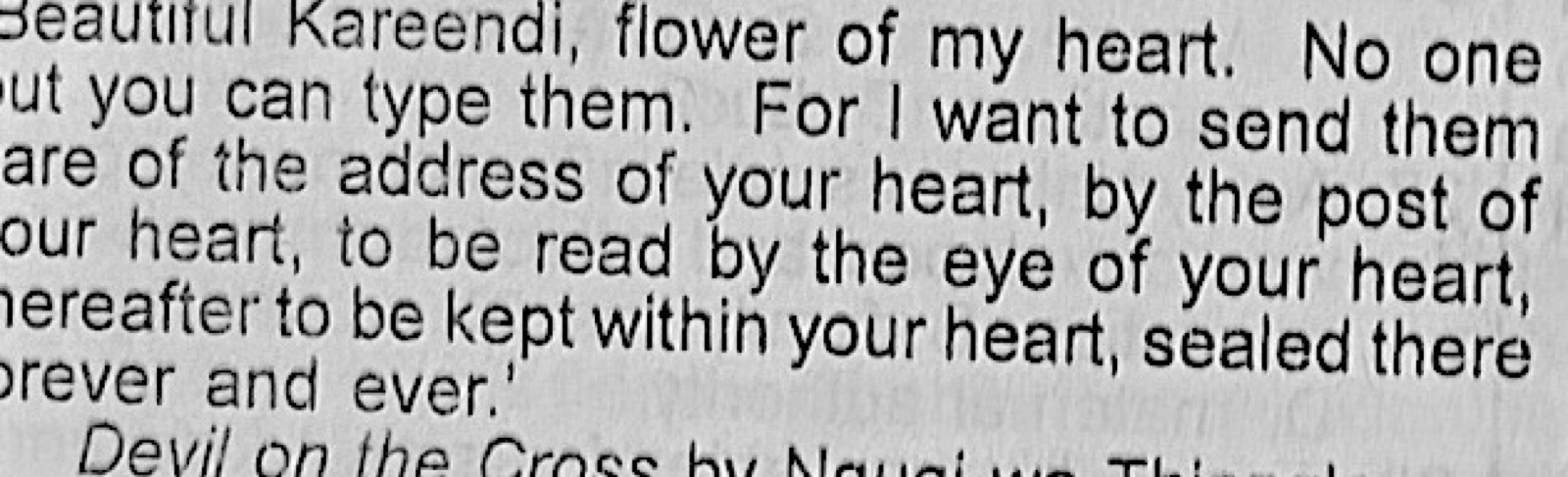
Question 41 Literary Appreciation: Prose and Drama Devil on the Cross by Ngugi wa Thiong'o The aesthetic appeal of this seduction emanates from the predominant use of
A. simile B. metaphor C. metonymy D. synecdoche. Show the answer and explanation Answer: B (metaphor )
Explanation The heart is given an "address", a "post" and an "eye": metaphors without "like" or "as".
Open this question
Question 43 Non-African Poetry The literary device consciously used in the above extract is
A. metaphysical conceit B. paradox C. oxymoron D. meiosis. Show the answer and explanation Answer: B (paradox )
Explanation "I die, yet depart not; I am bound, yet soar free" seems self-contradictory but makes sense spiritually.
Open this question
Question 44 Literary Appreciation: Prose and Drama According to the passage, the 'Other Woman' by definition is
A. beautiful and vivacious B. dishonest and deceitful C. careless and dowdy D. manipulative and predatory. Show the answer and explanation Answer: D (manipulative and predatory. )
Explanation The usual "Other Woman" is a web-spinner, "expert at the entrapment of husbands".
Open this question
Question 45 Other Set Texts: Non-African Prose The uniqueness of Mr. Wopsle's speech is expressed in this passage through
A. a metaphor B. an irony C. a hyperbole D. a flashback. Show the answer and explanation Answer: B (an irony )
Explanation Pip calls the elocution "decidedly fine", then explains it was slow, dreary and unnatural: he means the opposite.
Open this question
Question 46 Other Set Texts: Non-African Prose It can be inferred that the lawyer mentioned above is a
A. brave man B. law-enforcement agent allowed to carry pistols C. coward D. gallant man who always protects ladies. Show the answer and explanation Answer: C (coward )
Explanation He boasts only after the robbers have gone, having handed over his money without a fight.
Open this question
Question 47 Non-African Poetry These lines from John Donne's 'Hymn to God the Father' contain examples of
A. pun B. personification C. hyperbole D. quibble. Show the answer and explanation Answer: A (pun )
Explanation "Sun" plays on "Son" (Christ), and "done" plays on the poet's name Donne.
Open this question
Question 49 Literary Appreciation: Prose and Drama The picture of America presented in this passage is that of a place
A. of unknown and uncertain qualities B. choked with red tape C. as inviting as heaven itself D. off-putting on account of the heat. Show the answer and explanation Answer: A (of unknown and uncertain qualities )
Explanation Like heaven, one cannot know whether one will like America once there.
Open this question
Question 50 Literary Appreciation: Prose and Drama The character referred to in this passage
A. is excited by the news in the paper B. is lonely and unhappy C. has spent a long time over his food D. is pleased with himself after a good meal. Show the answer and explanation Answer: D (is pleased with himself after a good meal. )
Explanation He smiles happily simply because of a good digestion after his breakfast.
Open this question Sign up free for every JAMB Literature in English year, practice by topic and timed mocks.
Start practising free