JAMB Biology 2002 past questions and answers

49 questions. Try each one, then open the answer to check yourself and read the explanation.

Question 1

Cell Structure and Organisation

An Amoeba and an unlaid chicken egg are

  1. A.animal tissues
  2. B.organelles
  3. C.single cells
  4. D.organisms
Show the answer and explanation

Answer: C (single cells)

Explanation

An Amoeba is a one-celled organism, and the unfertilised egg (the yolk with its germinal disc) is one very large cell. So both are single cells.

Open this question

Question 2

Reproduction in Plants

In corms, food is usually stored in the

  1. A.leaves
  2. B.stems
  3. C.roots
  4. D.buds
Show the answer and explanation

Answer: B (stems)

Explanation

A corm is a short, swollen underground stem, as in cocoyam. The food is stored in this stem.

Open this question

Question 3

Viruses, Monera, Protista and Fungi

The animals that move by means of flagella include

  1. A.Chlamydomonas and Euglena
  2. B.Planaria and Amoeba
  3. C.Amoeba and Hydra
  4. D.Paramecium and planaria
Show the answer and explanation

Answer: A (Chlamydomonas and Euglena)

Explanation

Chlamydomonas and Euglena both swim with whip-like flagella. Amoeba uses pseudopodia, Paramecium uses cilia, and Planaria and Hydra are many-celled animals.

Open this question

Question 4

Cell Structure and Organisation

The structures found only in the plant cells are

  1. A.cell membrane and cytoplasm
  2. B.chromatin and nucleolus
  3. C.cell wall and chloroplast
  4. D.cell membrane and lysosome
Show the answer and explanation

Answer: C (cell wall and chloroplast)

Explanation

Animal cells have a cell membrane, cytoplasm and nucleus too, but only plant cells have a cellulose cell wall and chloroplasts.

Open this question

Question 5

Reproduction in Plants

A flower that has both stamens and pistil is said to be

  1. A.staminate
  2. B.pistillate
  3. C.perfect
  4. D.imperfect
Show the answer and explanation

Answer: C (perfect)

Explanation

A perfect (bisexual) flower has both male parts (stamens) and female parts (pistil). Staminate or pistillate flowers have only one of them.

Open this question

Question 6

Microorganisms and Health

When oil is poured into the breeding site of mosquitoes, it

  1. A.deprives the larvae of water
  2. B.kills the adults
  3. C.suffocates the pupae
  4. D.slows down egg development
Show the answer and explanation

Answer: C (suffocates the pupae)

Explanation

Mosquito larvae and pupae breathe air through tubes at the water surface. A film of oil blocks these tubes, so the pupae (and larvae) suffocate.

Open this question

Question 7

Evolution

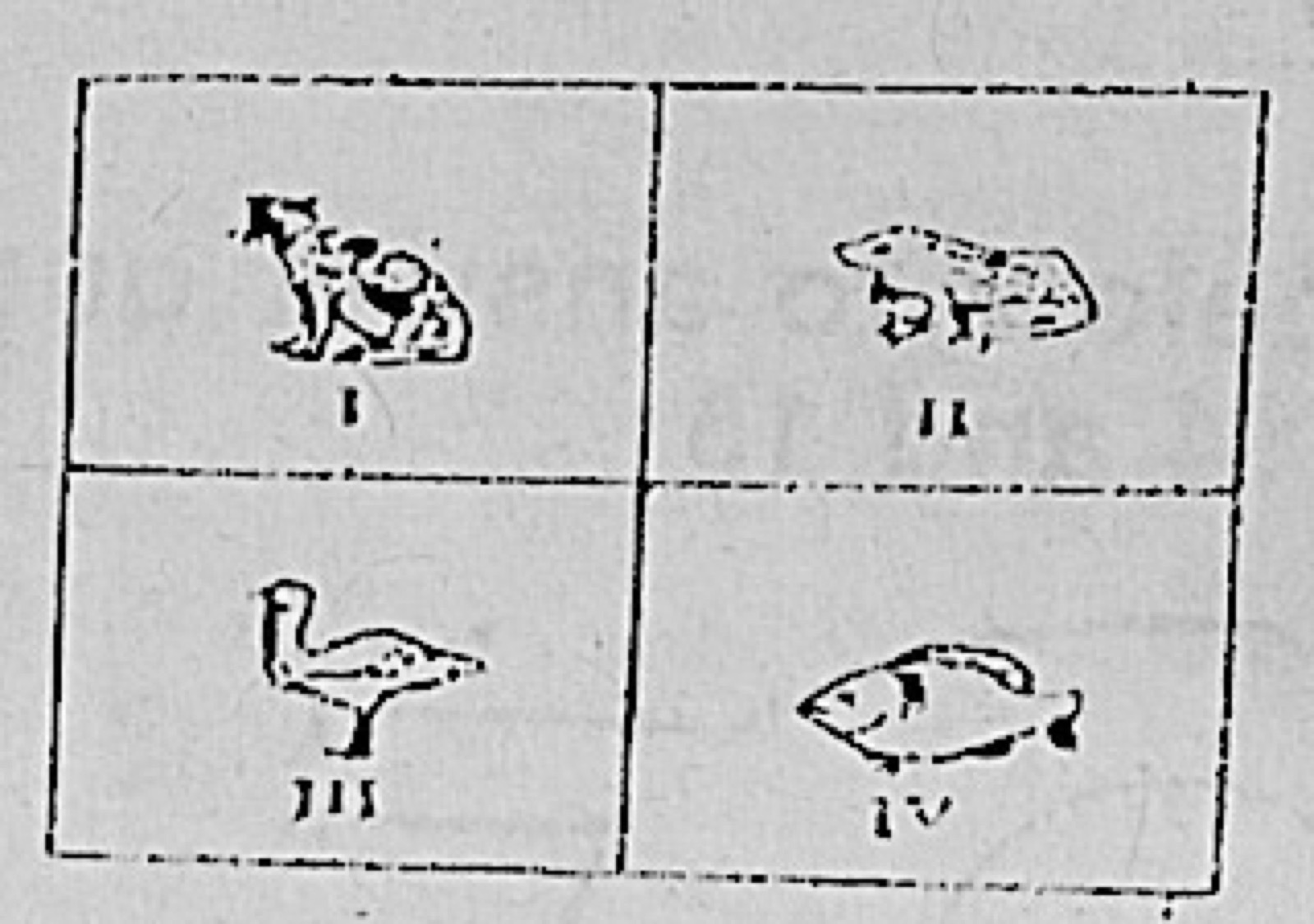
Use the diagram to answer: The correct evolutionary sequence of the organisms represented is

Diagram for this question
  1. A.I III II IV
  2. B.II III IV I
  3. C.III II I IV
  4. D.IV II III I
Show the answer and explanation

Answer: D (IV II III I)

Explanation

The pictures show a mammal (I), a frog (II), a bird (III) and a fish (IV). Fishes came first, then amphibians, then birds, then mammals: IV, II, III, I.

Open this question

Question 9

Feeding Relationships and Energy Flow

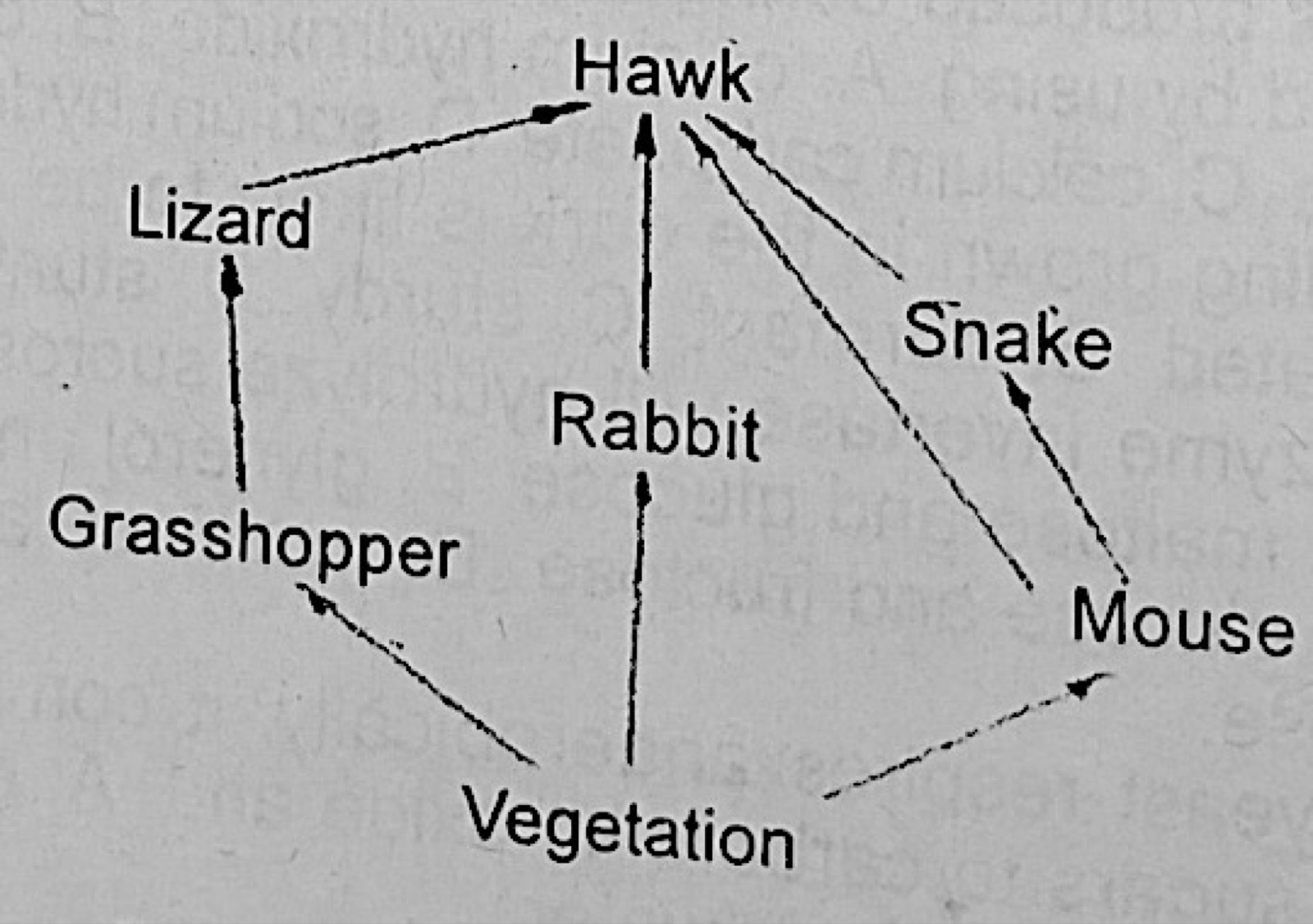
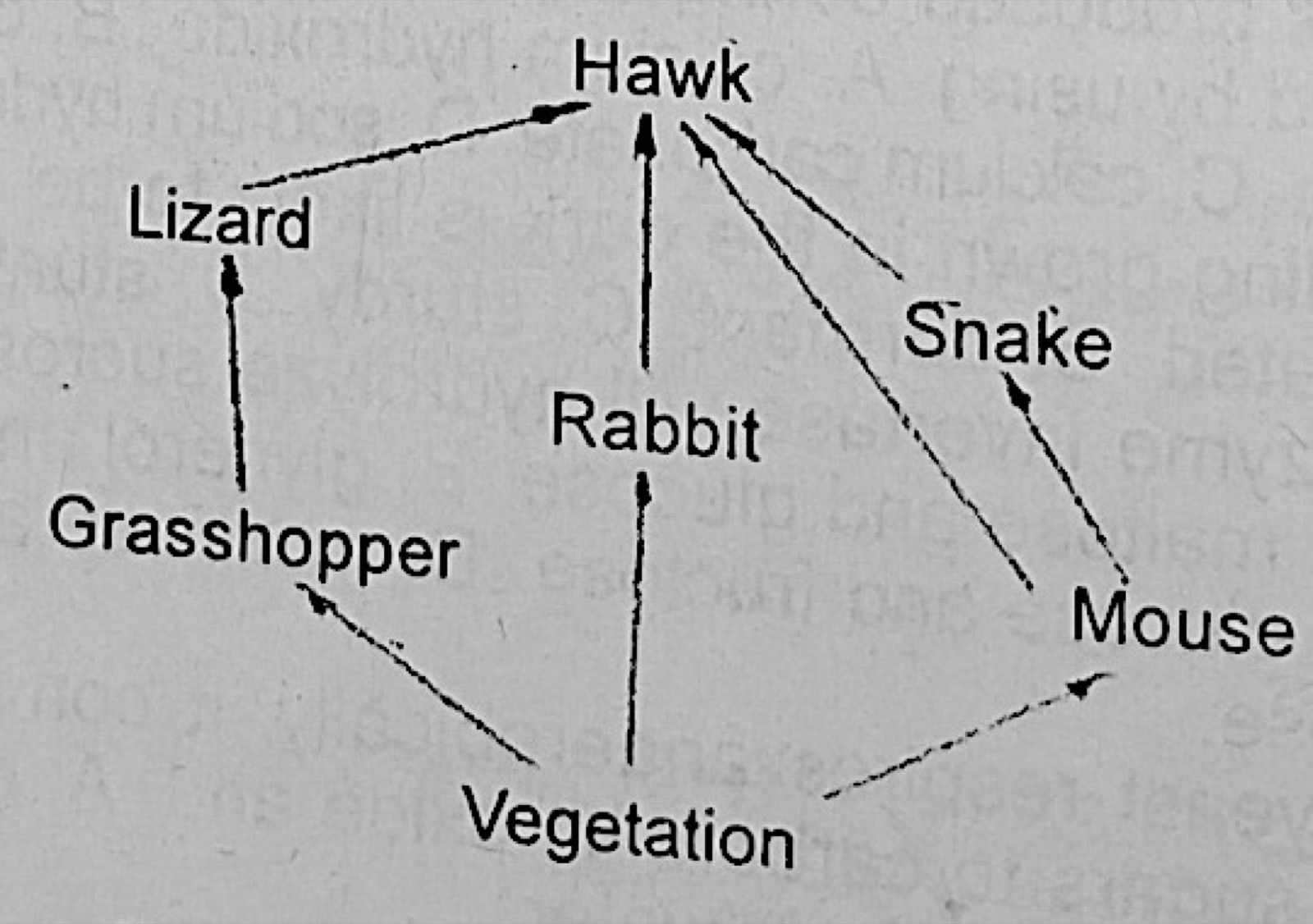
Use the food web diagram to answer: In the diagram, the hawk is

Diagram for this question
  1. A.an omnivore
  2. B.a primary consumer
  3. C.a tertiary consumer
  4. D.a scavenger
Show the answer and explanation

Answer: C (a tertiary consumer)

Explanation

The hawk eats the snake and the lizard, which themselves eat other animals (mouse, grasshopper). Being third in line after the plant eaters makes it a tertiary consumer.

Open this question

Question 10

Feeding Relationships and Energy Flow

Use the food web diagram to answer: Examples of competitors are

Diagram for this question
  1. A.lizard and mouse
  2. B.snake and lizard
  3. C.grasshopper and mouse
  4. D.rabbit and snake
Show the answer and explanation

Answer: C (grasshopper and mouse)

Explanation

Competitors need the same resource. The grasshopper and the mouse both feed on the vegetation.

Open this question

Question 11

Adaptation

One of the adaptations to life on trees by a monkey is its possession of digits which are

  1. A.extensible
  2. B.big
  3. C.opposable
  4. D.long
Show the answer and explanation

Answer: C (opposable)

Explanation

An opposable thumb (or toe) can press against the other digits. This lets the monkey grasp branches firmly while climbing.

Open this question

Question 12

Population Ecology

The community of plants in which the same species occur from year to year is the

  1. A.annual species
  2. B.pioneer vegetation
  3. C.perennial species
  4. D.climax vegetation
Show the answer and explanation

Answer: D (climax vegetation)

Explanation

A climax community is the final, stable stage of succession. Its species stay the same from year to year unless something disturbs it.

Open this question

Question 13

Microorganisms and Health

The most common means of transmitting the Acquired Immune Deficiency Syndrome (AIDS) is

  1. A.from mother to child
  2. B.through blood transfusion
  3. C.through sexual intercourse
  4. D.through the sharing of needles
Show the answer and explanation

Answer: C (through sexual intercourse)

Explanation

HIV, which causes AIDS, can spread in all these ways, but most infections come from unprotected sexual intercourse.

Open this question

Question 14

Reproduction in Plants

Plants tend to prevent overcrowding by means of efficient

  1. A.water uptake
  2. B.seed germination
  3. C.pollination
  4. D.seed dispersal
Show the answer and explanation

Answer: D (seed dispersal)

Explanation

Seed dispersal carries seeds away from the parent plant. This stops the young plants from crowding and competing with the parent and each other.

Open this question

Question 15

Ecosystem and Ecological Factors

The physical and climatic factors of a region primarily determine the

  1. A.kinds of animal inhabiting the area
  2. B.types of plants found in the area
  3. C.nature of the soil in that region
  4. D.community of organisms in the region
Show the answer and explanation

Answer: D (community of organisms in the region)

Explanation

Rainfall, temperature, light and soil decide which plants can grow, and the plants in turn decide which animals can live there. So these factors shape the whole community of organisms.

Open this question

Question 16

Feeding Relationships and Energy Flow

A step in the movement of energy through an ecosystem is a description that best fits the term

  1. A.food chain
  2. B.trophic level
  3. C.pyramid of numbers
  4. D.food web
Show the answer and explanation

Answer: B (trophic level)

Explanation

Each feeding level (producer, primary consumer, secondary consumer, and so on) is a trophic level. Energy passes from one level to the next, step by step.

Open this question

Question 17

Population Ecology

In a field experiment, the frequency of water leaf was observed to be 48 after 20 tosses of a 2m2 quadrat. What is the density of the plant in the field?

  1. A.1.2per m2
  2. B.2.4 per m2
  3. C.4.8 per m2
  4. D.9.6 per m2
Show the answer and explanation

Answer: A (1.2per m2)

Explanation

Total area sampled = 20 × 2 m² = 40 m². Density = 48 plants ÷ 40 m² = 1.2 per m².

Open this question

Question 18

Adaptation

The supporting tissue in xylem is most poorly developed in

  1. A.mangrove swamp plants
  2. B.grassland plants
  3. C.submerged water plants
  4. D.desert plants
Show the answer and explanation

Answer: C (submerged water plants)

Explanation

Water holds up submerged plants, so they need very little woody supporting tissue. Their xylem is poorly developed.

Open this question

Question 19

Soil

The addition of lime to clayey soil serves to

  1. A.aid water retention
  2. B.close up the texture
  3. C.prevent water-logging
  4. D.improve capillary action
Show the answer and explanation

Answer: C (prevent water-logging)

Explanation

Lime makes the fine clay particles stick together into larger crumbs. The soil gets bigger air spaces, drains better and does not become water-logged.

Open this question

Question 20

Pollution

The excessive use of agro-chemicals could lead to the pollution of

  1. A.the lithosphere
  2. B.the atmosphere
  3. C.fresh water
  4. D.space
Show the answer and explanation

Answer: C (fresh water)

Explanation

Rain washes fertilisers and pesticides from farms into streams, rivers and lakes. This pollutes fresh water and can cause algal blooms and fish deaths.

Open this question

Question 21

Population Ecology

In a population study using the transect method, a student is likely to record the highest number of species in

  1. A.a tropical rain forest
  2. B.a guinea savanna
  3. C.a sahel savanna
  4. D.an estuarine swamp
Show the answer and explanation

Answer: A (a tropical rain forest)

Explanation

The tropical rain forest has plenty of rain and warmth all year. It has more different species than any other Nigerian habitat.

Open this question

Question 22

Evolution

In his theory of evolution, Darwin implied that

  1. A.the struggle for existence among living organisms is sporadic
  2. B.the most successful organisms are those that best adapt to their environment
  3. C.organs of the body which are not regularly used by an organism will disappear
  4. D.any traits acquired by an organism during its lifetime can be passed on to its offspring
Show the answer and explanation

Answer: B (the most successful organisms are those that best adapt to their environment)

Explanation

Darwin's natural selection says the organisms best suited to their environment survive and reproduce most. Use and disuse and passing on acquired traits are Lamarck's ideas.

Open this question

Question 23

Animal Nutrition

The carnassial teeth of a carnivorous animal consist of the

  1. A.last upper premolar and the first lower molar
  2. B.last upper molar and the last lower molar
  3. C.first upper premolar and the lower molar
  4. D.first upper molar and the first lower molar
Show the answer and explanation

Answer: A (last upper premolar and the first lower molar)

Explanation

In carnivores such as dogs, the last upper premolar and the first lower molar are large and blade-like. They slide past each other like scissors to cut flesh.

Open this question

Question 24

Behaviour

A feature of the caste systems of bees and termites is that

  1. A.the workers are sterile
  2. B.the kings are bigger than the queens
  3. C.only the workers perform duties
  4. D.nuptial flight is performed by all members
Show the answer and explanation

Answer: A (the workers are sterile)

Explanation

In both bees and termites the workers cannot reproduce. Only the queen (and the drones or king) breed.

Open this question

Question 25

Evolution

The structure that is common in the embryos of mammals, amphibians, birds, fishes and reptiles and which is an evidence of their common ancestry is the

  1. A.eye
  2. B.chorion
  3. C.allantois
  4. D.gill-slits
Show the answer and explanation

Answer: D (gill-slits)

Explanation

All vertebrate embryos develop gill slits (pharyngeal clefts) at an early stage. This shared feature points to a common fish-like ancestor.

Open this question

Question 26

Adaptation

Animals aestivate when the environment in which they live becomes

  1. A.hot and dry
  2. B.cold and wet
  3. C.warm and humid
  4. D.windy and snowy
Show the answer and explanation

Answer: A (hot and dry)

Explanation

Aestivation is a dormant state during hot, dry periods, as in lungfish and snails. Hibernation is the winter (cold) version.

Open this question

Question 27

Adaptation

Birds which are large with long straight pointed beaks, long necks and long legs are likely to be

  1. A.insect eaters
  2. B.fish catchers
  3. C.nectar feeders
  4. D.fruit eaters
Show the answer and explanation

Answer: B (fish catchers)

Explanation

Long legs let the bird wade in water, and a long neck with a straight, pointed beak lets it spear fish, as herons and egrets do.

Open this question

Question 28

Animal Nutrition

Examples of organisms in which extracellular digestion occurs are

  1. A.fungus, loranthus and housefly
  2. B.rhizopus, sponges and earthworm
  3. C.roundworm, tapeworm and hydra
  4. D.rhizopus, housefly and hydra
Show the answer and explanation

Answer: D (rhizopus, housefly and hydra)

Explanation

Extracellular digestion happens outside the cells. Rhizopus and the housefly release enzymes onto their food, and Hydra digests prey in its body cavity. A tapeworm does not digest at all, and sponges digest inside their cells.

Open this question

Question 29

Transport in Animals

The mammalian erythrocytes differ from the leucocytes at maturity because the erythrocytes are

  1. A.discoid and nucleated
  2. B.discoid and enucleated
  3. C.amoeboid and nucleated
  4. D.amoeboid and enucleated
Show the answer and explanation

Answer: B (discoid and enucleated)

Explanation

Mature red blood cells are disc-shaped (biconcave) and have no nucleus, which leaves more room for haemoglobin. White blood cells keep their nucleus and can change shape like an amoeba.

Open this question

Question 30

Support and Movement

The presence of endoskeleton is characteristic of

  1. A.invertebrata
  2. B.vertebrata
  3. C.insecta
  4. D.coelenterata
Show the answer and explanation

Answer: B (vertebrata)

Explanation

Vertebrates have an internal skeleton of bone or cartilage. Insects have an exoskeleton, and coelenterates have no hard skeleton.

Open this question

Question 31

Photosynthesis and Plant Nutrition

The capture and digestion of insects by a pitcher plant is a special form of nutrition termed

  1. A.autotrophic
  2. B.heterotrophic
  3. C.chemosynthetic
  4. D.saprophytic
Show the answer and explanation

Answer: B (heterotrophic)

Explanation

The pitcher plant makes food by photosynthesis, but it also traps and digests insects to get nitrogen. Feeding on other organisms is heterotrophic nutrition.

Open this question

Question 32

Photosynthesis and Plant Nutrition

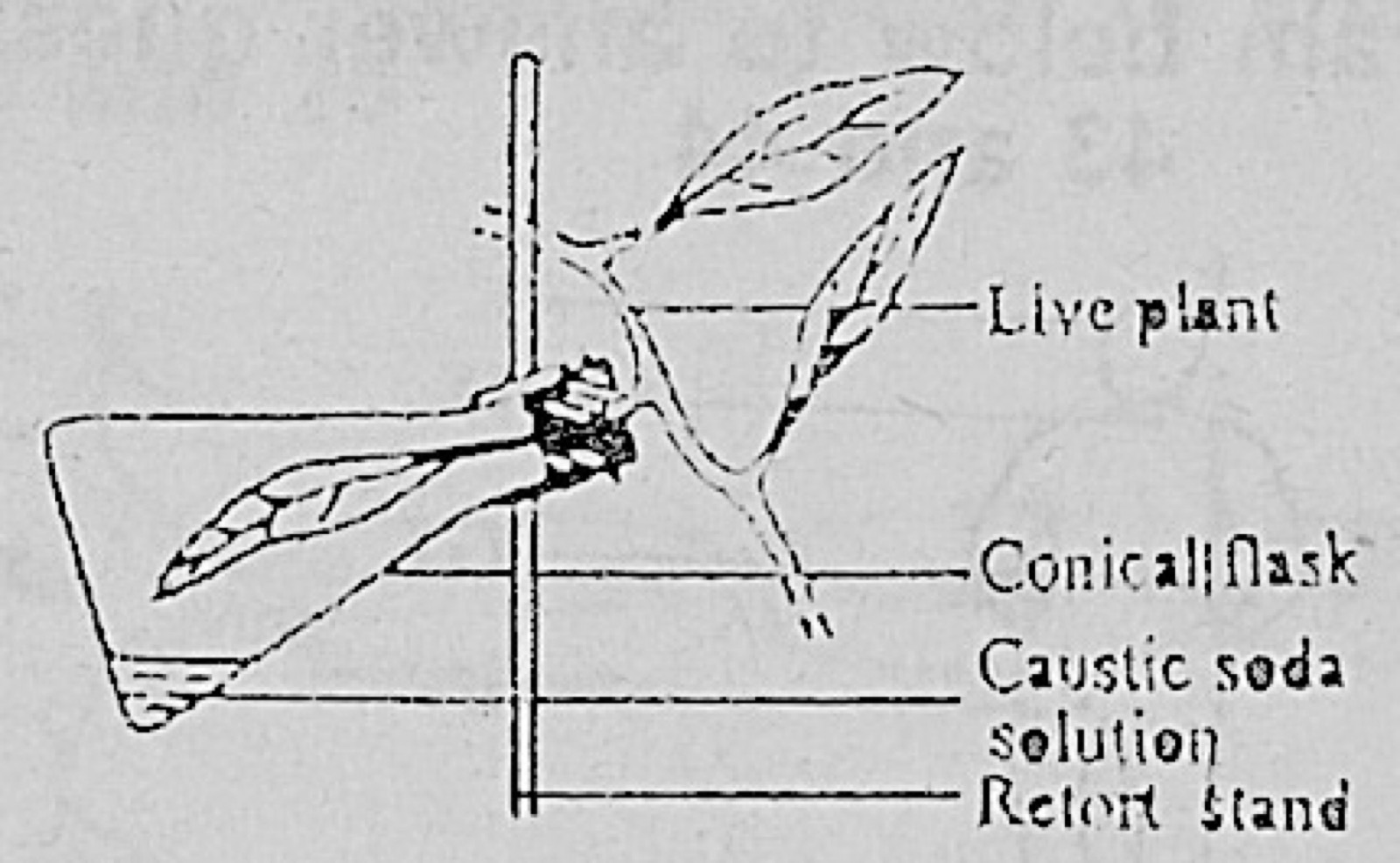
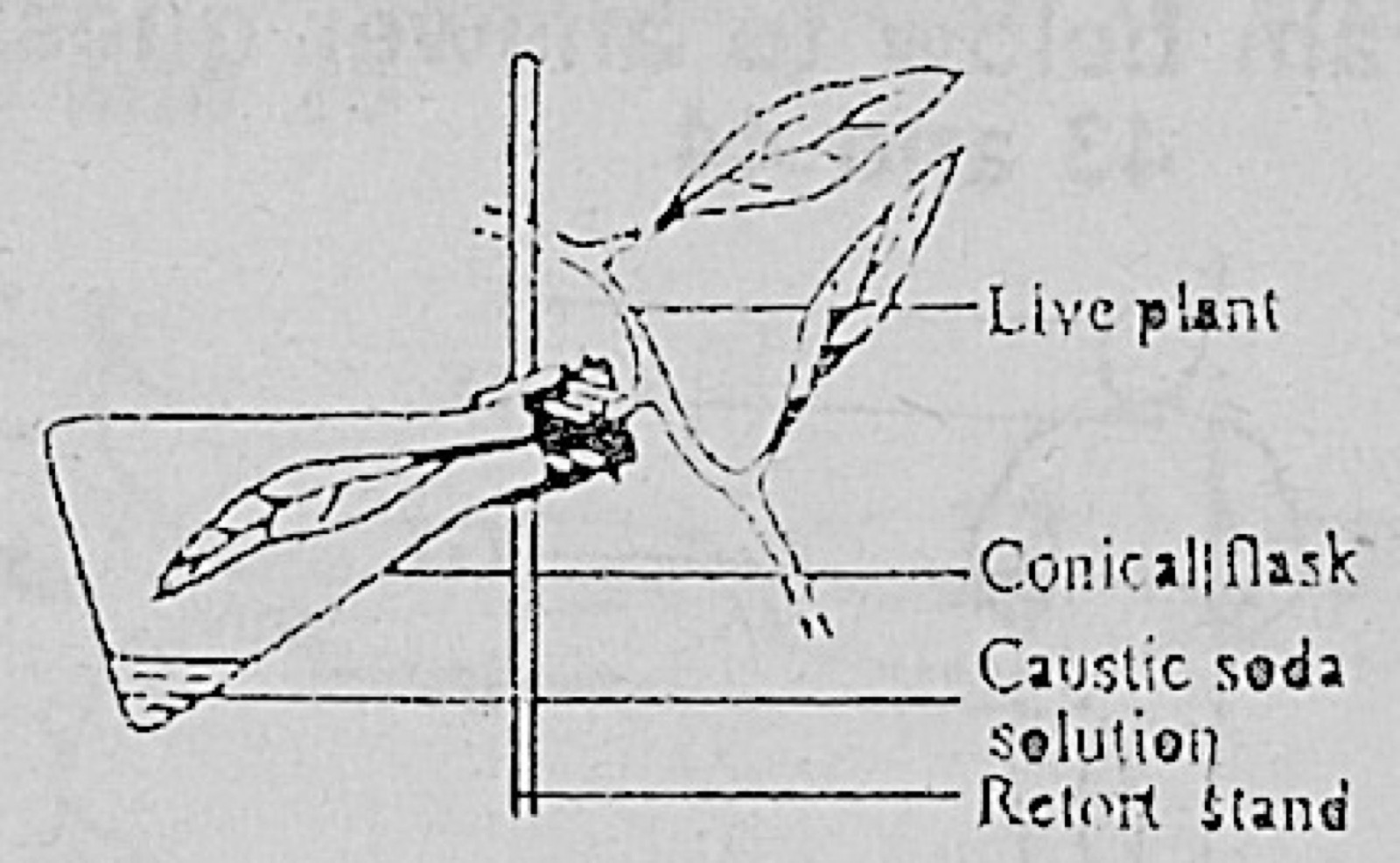
Use the diagram of the experiment to answer: Which of the following statements is correct about the experiment?

Diagram for this question
  1. A.The flask must be of the conical type
  2. B.Caustic soda can be replaced with distilled water
  3. C.The enclosed leaf will lose its green colour
  4. D.The leaves outside the flask serve as control.
Show the answer and explanation

Answer: D (The leaves outside the flask serve as control.)

Explanation

The leaf in the flask gets no carbon(IV) oxide because caustic soda absorbs it. The leaves outside the flask get normal air, so they are the comparison (control).

Open this question

Question 33

Photosynthesis and Plant Nutrition

Use the diagram of the experiment to answer: The experimental set-up can be used to demonstrate that

Diagram for this question
  1. A.light is necessary for photosynthesis
  2. B.oxygen is necessary for photosynthesis
  3. C.photosynthesis occurs in the leaves of plants
  4. D.carbon(IV) oxide is necessary for photosynthesis.
Show the answer and explanation

Answer: D (carbon(IV) oxide is necessary for photosynthesis.)

Explanation

Caustic soda (sodium hydroxide) absorbs carbon(IV) oxide from the air in the flask. The leaf inside does not make starch, which shows carbon(IV) oxide is needed for photosynthesis.

Open this question

Question 34

Cell and Its Environment

When a marine fish was taken from the ocean and put in a tank of fresh water, it died after a short period because

  1. A.the tank was too small compared to the large ocean
  2. B.the body cells of the fish swelled and burst as a result of the hypotonic fresh water
  3. C.the body cells of the fish shrank as their sap was hypertonic to the fresh water
  4. D.there was no food in the tank, so the fish starved.
Show the answer and explanation

Answer: B (the body cells of the fish swelled and burst as a result of the hypotonic fresh water)

Explanation

Fresh water is hypotonic (more dilute) compared with the fish's body fluids. Water enters the cells by osmosis until they swell and burst.

Open this question

Question 35

Transport in Animals

Which of the following pairs of organs is located in the anterior half of the mammalian body cavity?

  1. A.kidneys and lungs
  2. B.Heart and ovary
  3. C.Lungs and heart
  4. D.Kidneys and heart.
Show the answer and explanation

Answer: C (Lungs and heart)

Explanation

The chest (thorax) forms the front part of the body cavity, and it holds the heart and lungs. The kidneys and ovaries are in the abdomen.

Open this question

Question 36

Animal Nutrition

The mode of nutrition exhibited by a tapeworm is

  1. A.symbiotic
  2. B.saprophytic
  3. C.parasitic
  4. D.holozoic
Show the answer and explanation

Answer: C (parasitic)

Explanation

A tapeworm lives in the intestine of its host and absorbs the host's digested food, harming the host. That is parasitic nutrition.

Open this question

Question 37

Animal Nutrition

The organ located within the duodenal loop in the mammal is the

  1. A.spleen
  2. B.pancreas
  3. C.liver
  4. D.gall bladder.
Show the answer and explanation

Answer: B (pancreas)

Explanation

The duodenum curves into a U-shaped loop, and the pancreas lies inside this loop. Its duct opens into the duodenum.

Open this question

Question 38

Reproduction in Plants

In which of the following groups of fruits is the pericarp inseparable from the seed coat?

  1. A.Nut
  2. B.Follicle
  3. C.Cypsela
  4. D.Caryopsis.
Show the answer and explanation

Answer: D (Caryopsis.)

Explanation

A caryopsis, such as a maize or rice grain, is a one-seeded fruit in which the fruit wall is fused to the seed coat.

Open this question

Question 39

Food Substances and Enzymes

A person that is obese must avoid meals containing

  1. A.carrots and oranges
  2. B.margarine and butter
  3. C.beef and beans
  4. D.rice and yam.
Show the answer and explanation

Answer: B (margarine and butter)

Explanation

Margarine and butter are almost pure fat, the most energy-rich food. An obese person should cut down on fatty foods.

Open this question

Question 40

Respiration

Tissue respiration is important for the

  1. A.absorption of oxygen into the alveoli
  2. B.release of carbon(IV) oxide into the lungs
  3. C.release of energy for the body use
  4. D.exhalation of carbon(IV)oxide from the lungs.
Show the answer and explanation

Answer: C (release of energy for the body use)

Explanation

Tissue (cellular) respiration breaks down food in the cells to release energy for life processes. The other options describe breathing and gas exchange.

Open this question

Question 41

Transport in Plants

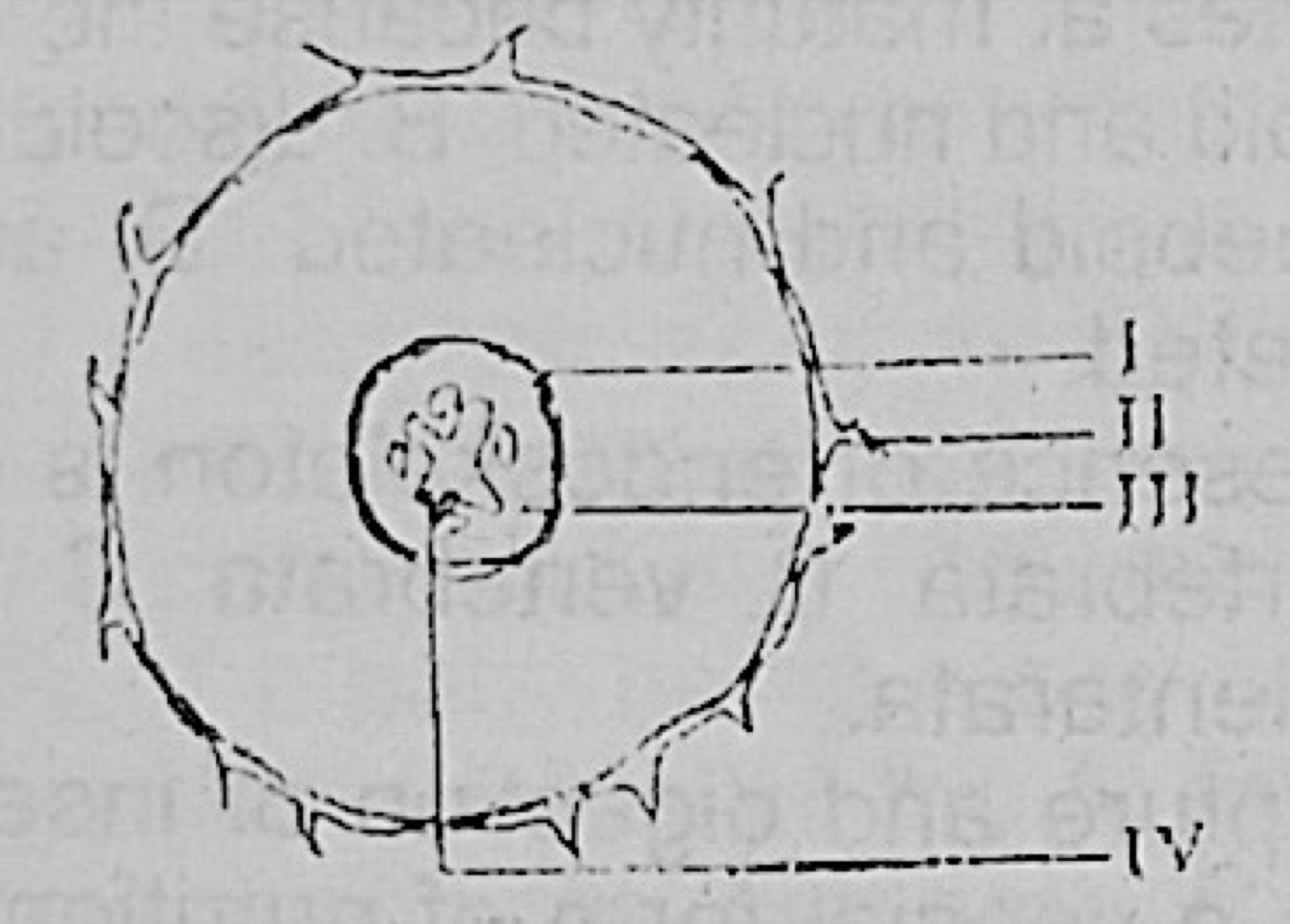
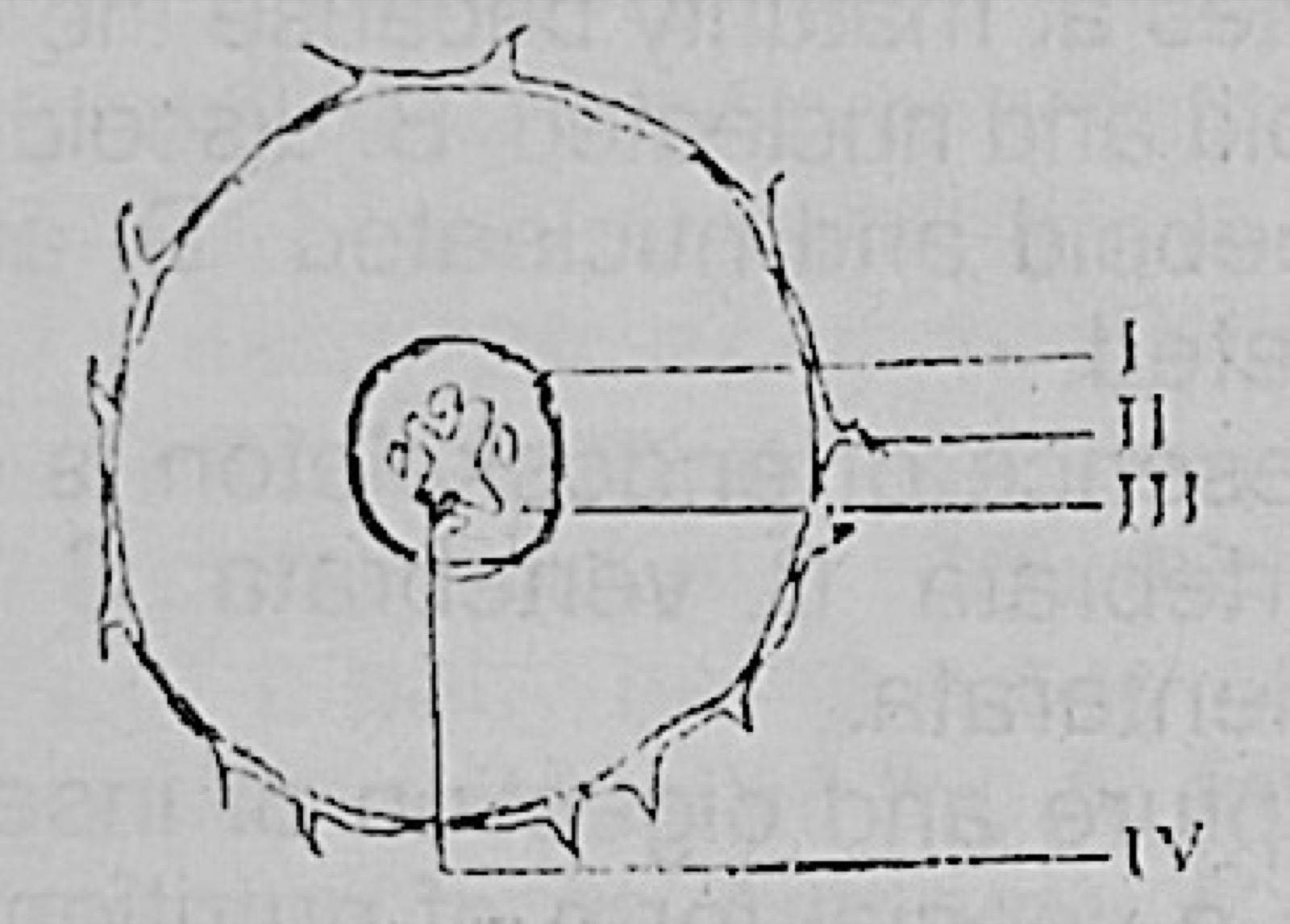
Use the diagram of the root to answer: The function of absorption is performed by the structure labelled

Diagram for this question
  1. A.I
  2. B.II
  3. C.III
  4. D.IV
Show the answer and explanation

Answer: B (II)

Explanation

II points to the outer layer with root hairs. Root hairs absorb water and mineral salts from the soil.

Open this question

Question 42

Structure of Flowering Plants

Use the diagram of the root to answer: The structure labelled I represents the

Diagram for this question
  1. A.phloem
  2. B.xylem
  3. C.cortex
  4. D.pericycle.
Show the answer and explanation

Answer: D (pericycle.)

Explanation

I points to the outer edge of the central vascular cylinder (stele). That outermost layer of the stele is the pericycle.

Open this question

Question 43

Hormonal Coordination

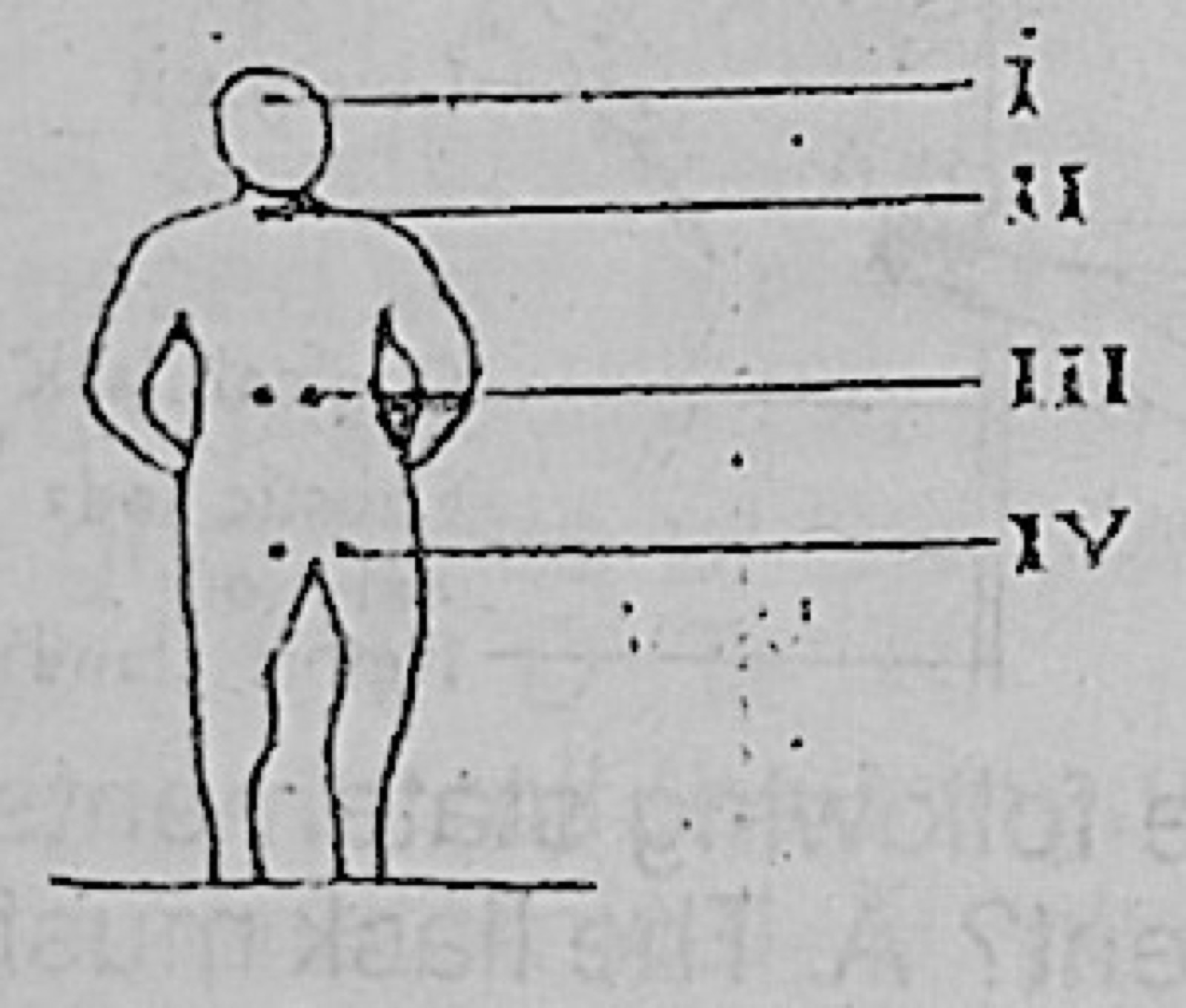
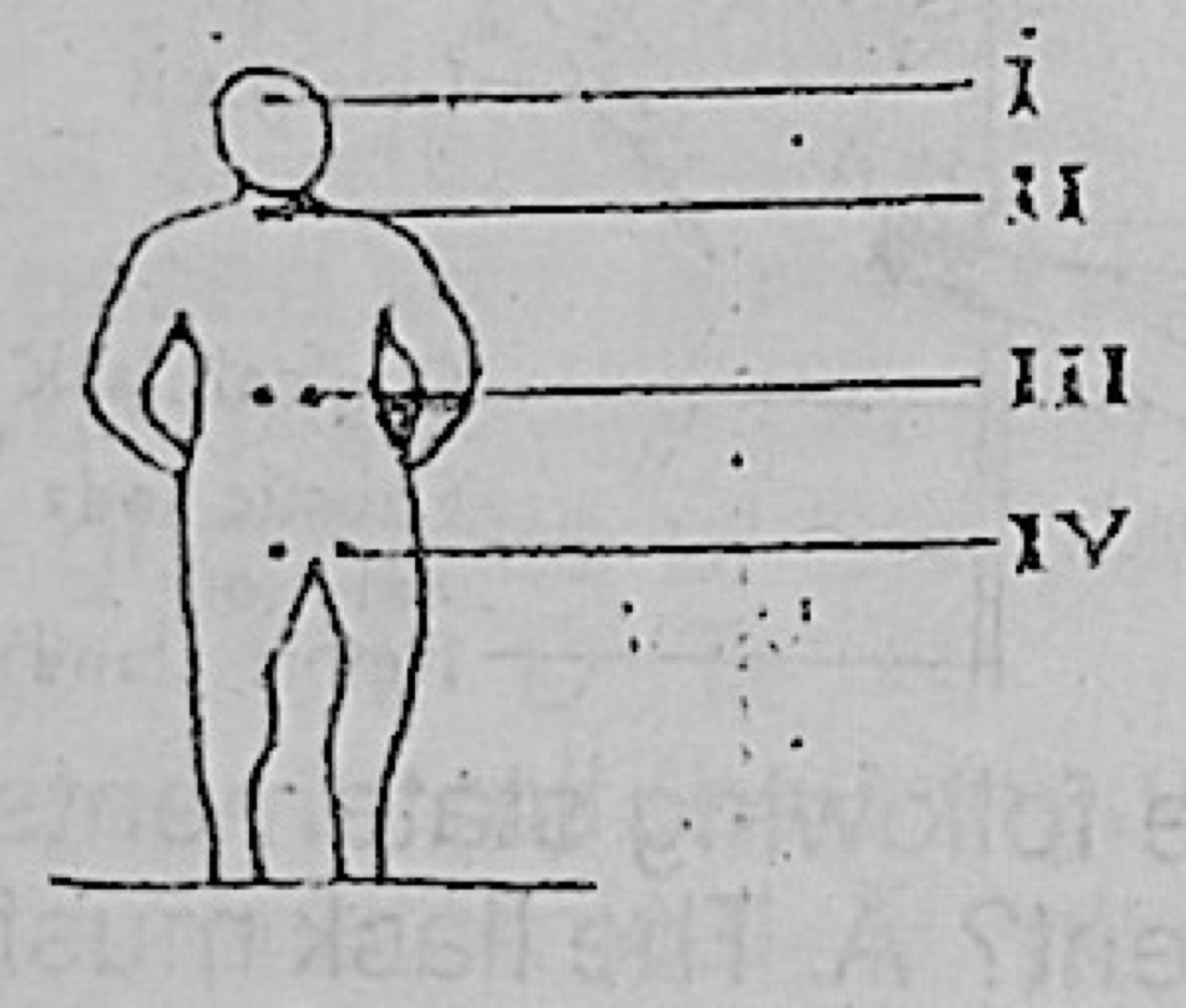
Use the diagram to answer: The gland usually found in the position labelled I is the

Diagram for this question
  1. A.adrenal
  2. B.thyroid
  3. C.pancreatic
  4. D.pituitary.
Show the answer and explanation

Answer: D (pituitary.)

Explanation

Position I is in the head. The pituitary gland sits at the base of the brain.

Open this question

Question 44

Hormonal Coordination

Use the diagram to answer: The hormone secreted at IV serves to

Diagram for this question
  1. A.facilitate the development of facial hairs
  2. B.raise the level of calcium ions in the blood
  3. C.lower blood glucose level
  4. D.make the body react to emergencies.
Show the answer and explanation

Answer: A (facilitate the development of facial hairs)

Explanation

Position IV is the lower abdomen, where the gonads (testes) are. Testosterone from the testes causes male features such as facial hair.

Open this question

Question 45

Mendelian Inheritance

To select and retain the desirable trait of large body size which a farmer has observed in his herd, the farmer needs to

  1. A.feed the animals in the herd with more food
  2. B.cross-breed his animals with a different herd
  3. C.inbreed the animals in his herd
  4. D.prevent diseases in his herd.
Show the answer and explanation

Answer: C (inbreed the animals in his herd)

Explanation

Breeding animals that already have the trait with each other (inbreeding) keeps and fixes that trait in the herd. Crossing with another herd would mix in other genes.

Open this question

Question 46

Variation

In a population of living things, the parameters of size, height, weight and colour are examples of

  1. A.discontinuous variations
  2. B.continuous variations
  3. C.physiological variations
  4. D.non-heritable variations.
Show the answer and explanation

Answer: B (continuous variations)

Explanation

Traits like height and weight vary gradually over a range, with many in-between values. This is continuous variation.

Open this question

Question 47

Chromosomes, DNA and Sex Linkage

If XN is the dominant allele for normal vision and Xn the recessive allele for colour-blindness, a boy with the genotype YXn will

  1. A.have normal vision
  2. B.be colour-blind
  3. C.be totally blind
  4. D.be a carrier of colour-blindness.
Show the answer and explanation

Answer: B (be colour-blind)

Explanation

A boy has only one X chromosome, so there is no second allele to mask the recessive one. With Xn he is colour-blind.

Open this question

Question 48

Chromosomes, DNA and Sex Linkage

The first four children of a couple were all girls. The probability that the fifth will also be a girl is

  1. A.1/5
  2. B.1/4
  3. C.1/3
  4. D.1/2.
Show the answer and explanation

Answer: D (1/2.)

Explanation

Each child's sex depends only on whether an X or a Y sperm fertilises the egg. Earlier births make no difference, so the chance is always 1/2.

Open this question

Question 49

Mendelian Inheritance

Genetic counselling is important when a marriage is planned between a

  1. A.Rh− woman and Rh+ man
  2. B.Rh− woman and Rh− man
  3. C.Rh+ woman and Rh+ man
  4. D.RH+ woman and RH− man.
Show the answer and explanation

Answer: A (Rh− woman and Rh+ man)

Explanation

If an Rh-negative mother carries an Rh-positive baby, her body can make antibodies that attack the red blood cells of a later Rh-positive baby. So this couple needs counselling.
Open this question

Question 50

Mendelian Inheritance

What proportion of the offspring of a cross between two heterozygous parents will exhibit the recessive condition phenotypically

  1. A.1/4
  2. B.1/2
  3. C.3/4
  4. D.4/4.
Show the answer and explanation

Answer: A (1/4)

Explanation

Aa × Aa gives AA, Aa, Aa and aa. Only aa (1 in 4) shows the recessive trait.

Open this question