Home › Past questions › JAMB › Biology › 2001 49 questions. Try each one, then open the answer to check yourself and read the explanation.
Sign up free to answer these questions on a CBT screen with a timer, then see your score and every answer explained.
Start practising free
Question 1 Ecological Associations An association between the root nodule of a leguminous plant and Rhizobium sp , is known as
A. commensalism B. mycorrhiza C. parasitism D. symbiosis. Show the answer and explanation Answer: D (symbiosis. )
Explanation Rhizobium fixes nitrogen for the legume and gets food and shelter in return; both benefit, so it is symbiosis.
Open this question
Question 2 Animal Kingdom Amphibians are normally found
A. on dry land and in water B. in water and on moist land C. on moist land D. in water. Show the answer and explanation Answer: B (in water and on moist land )
Explanation Amphibians breed in water and, as adults, live on moist land where their skin will not dry out.
Open this question
Question 3 Reproduction in Animals Viviparity occurs mainly in the
A. mammals B. reptiles C. aves D. amphibians. Show the answer and explanation Answer: A (mammals )
Explanation Viviparous animals give birth to live young that developed inside the mother, as most mammals do.
Open this question
Question 4 Animal Kingdom The jointed structure in insects that bears organs which are sensitive to touch, smell and vibration is the
A. maxilla B. labium C. antenna D. abdomen. Show the answer and explanation Answer: C (antenna )
Explanation The jointed antennae carry sense organs for touch, smell and vibration.
Open this question
Question 5 Evolution Which of the following groups is the most advanced?
A. Pteridophytes B. Bryophytes C. Thallophytes D. Gymnosperms. Show the answer and explanation Answer: D (Gymnosperms. )
Explanation Gymnosperms produce seeds, so they are more advanced than ferns, mosses and thallophytes.
Open this question
Question 6 Plant Kingdom Most monocots are easily recognized by their
A. short leaves with petioles B. long and sword -like leaves C. long and palm-like leaves D. short leaves with many veinlets. Show the answer and explanation Answer: B (long and sword -like leaves )
Explanation Typical monocots like grasses and maize have long, narrow, strap- or sword-shaped leaves without petioles.
Open this question
Question 7 Animal Kingdom Water fleas, wood lice and barnacles belong to the group
A. arachnida B. crustacea C. insecta D. chilopoda. Show the answer and explanation Answer: B (crustacea )
Explanation Water fleas, wood lice and barnacles all have two pairs of antennae and a hard carapace, which places them in the Crustacea.
Open this question
Question 8 Animal Nutrition The mode of feeding in Amoeba and Hydra is
A. heterotrophic B. holophytic C. autotrophic D. symbiotic. Show the answer and explanation Answer: A (heterotrophic )
Explanation Amoeba and Hydra cannot make their own food; they capture and eat other organisms, so they are heterotrophic.
Open this question
Question 9 Viruses, Monera, Protista and Fungi Which of the following organisms does not exist as a single free living cell?
A. Paramecium B. Volvox C. Amoeba D. Chlamydomonas .Show the answer and explanation Answer: B (Volvox
Explanation Volvox lives as a hollow colony of many cells; the others are single-celled organisms.
Open this question
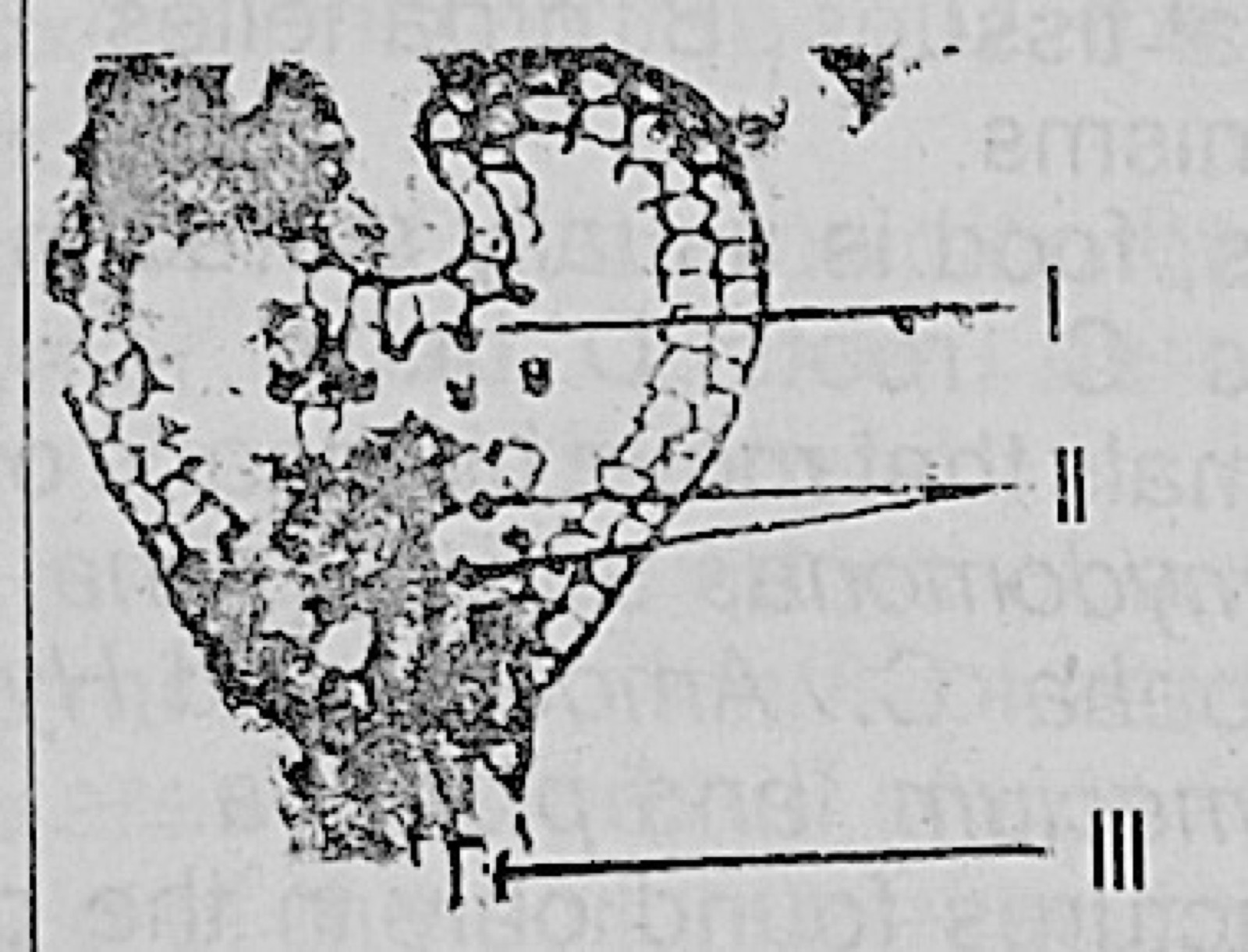
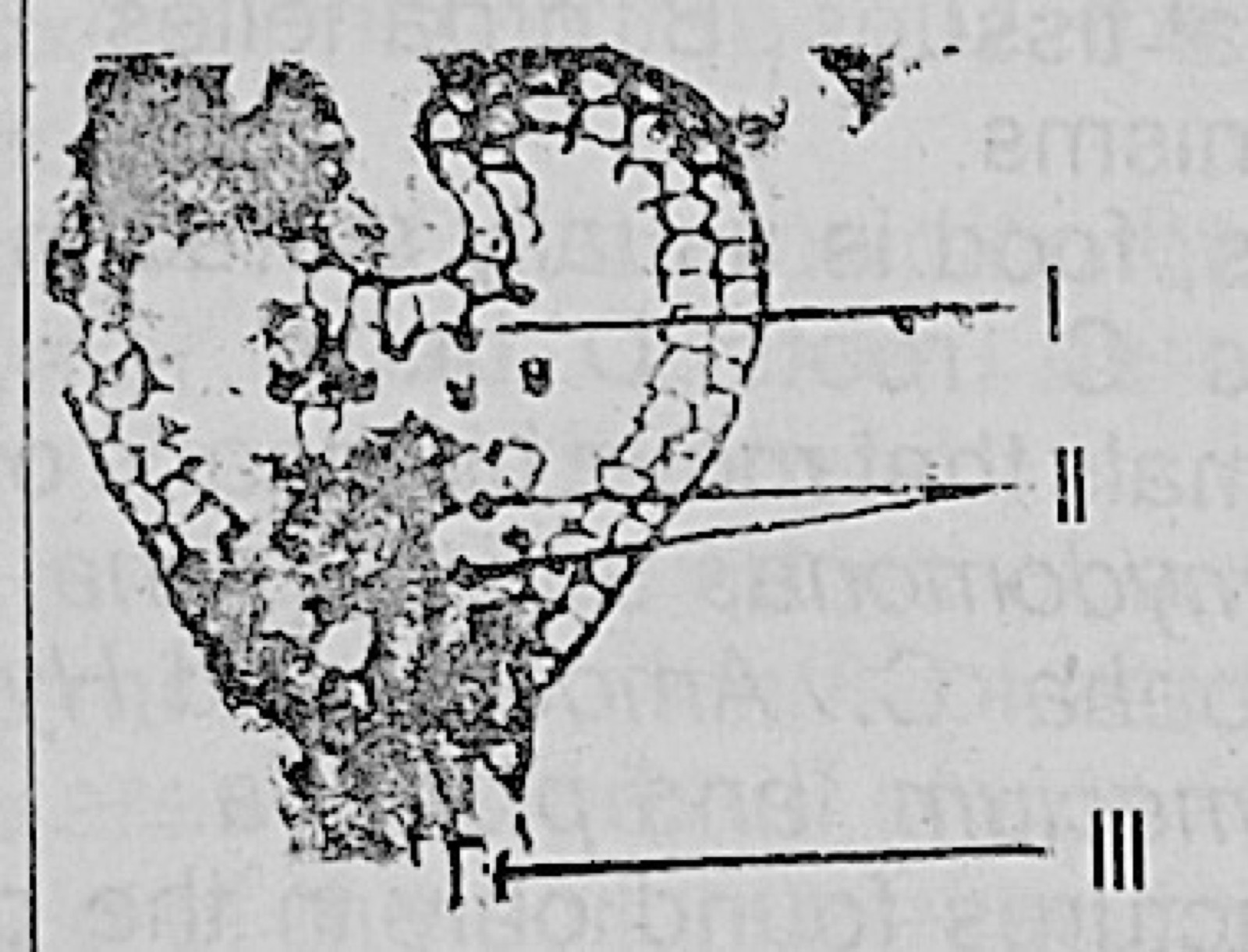
Question 10 Plant Kingdom Use the diagram to answer questions 10 and 11. The structures labelled II and III respectively are
A. female organs and rhizoid B. male organs and rhizoid C. sporophyte and sori D. annulus and stalk of sporangium. Show the answer and explanation Answer: B (male organs and rhizoid )
Explanation The diagram is a fern prothallus: the male organs (antheridia, II) lie among the rhizoids (III) on the lower part.
Open this question
Question 11 Plant Kingdom Use the diagram to answer questions 10 and 11. In ferns, the structure above is equivalent to the
A. zygote of a moss B. gametophyte generation of a moss C. sporophyte generation of a moss D. sporangium of a moss. Show the answer and explanation Answer: B (gametophyte generation of a moss )
Explanation The prothallus carries the sex organs, so it is the gametophyte, like the leafy moss plant.
Open this question
Question 12 Nervous Coordination The centre for learning and memory in the human brain is the
A. medulla oblongata B. cerebellum C. cerebrum D. olfactory lobe. Show the answer and explanation Answer: C (cerebrum )
Explanation The cerebrum controls intelligence, learning, memory and voluntary actions.
Open this question
Question 13 Excretion Urea formation occurs in the
A. heart B. liver C. lung D. kidney. Show the answer and explanation Answer: B (liver )
Explanation The liver deaminates excess amino acids and turns the ammonia into urea; the kidneys only remove it.
Open this question
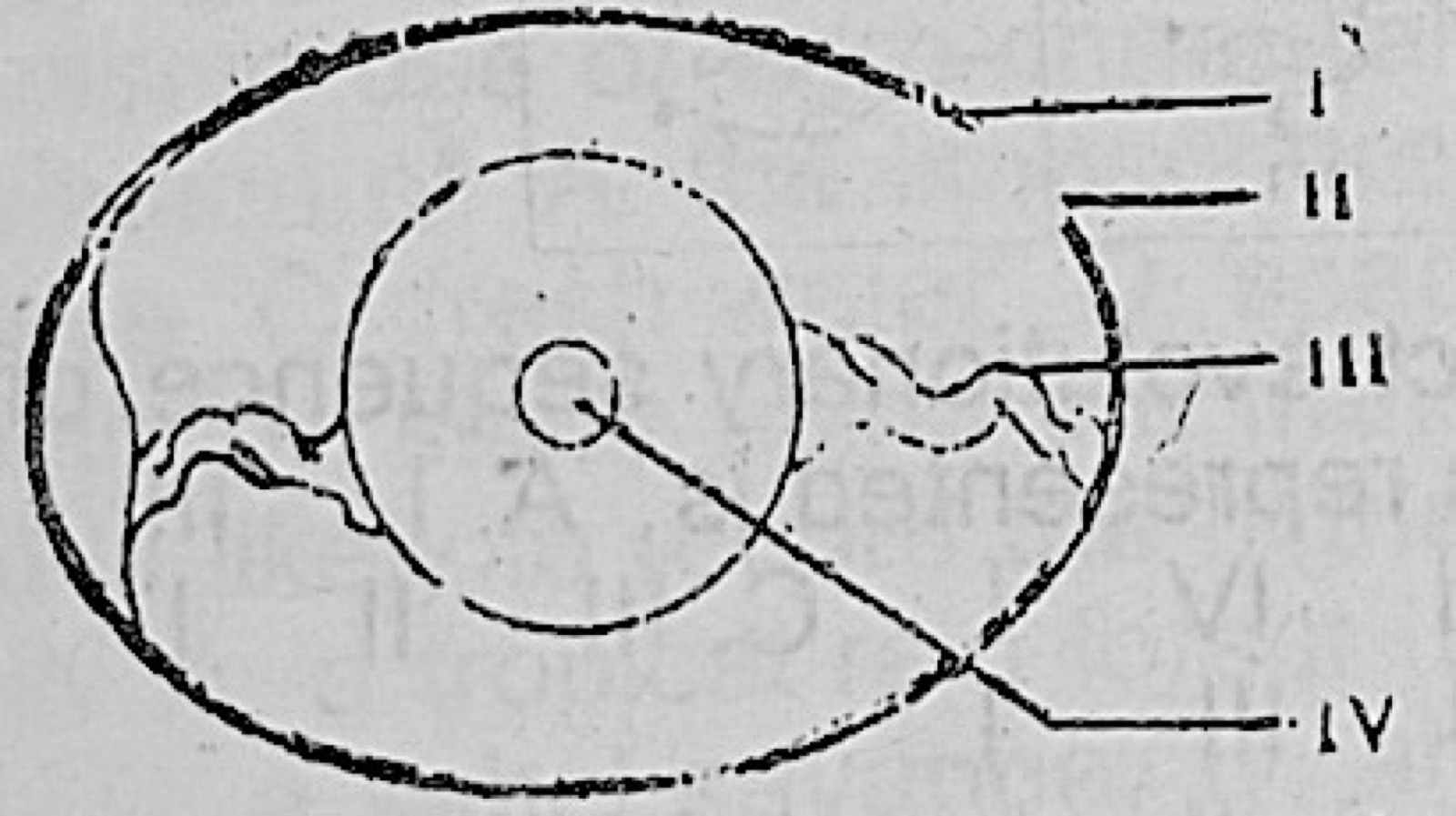
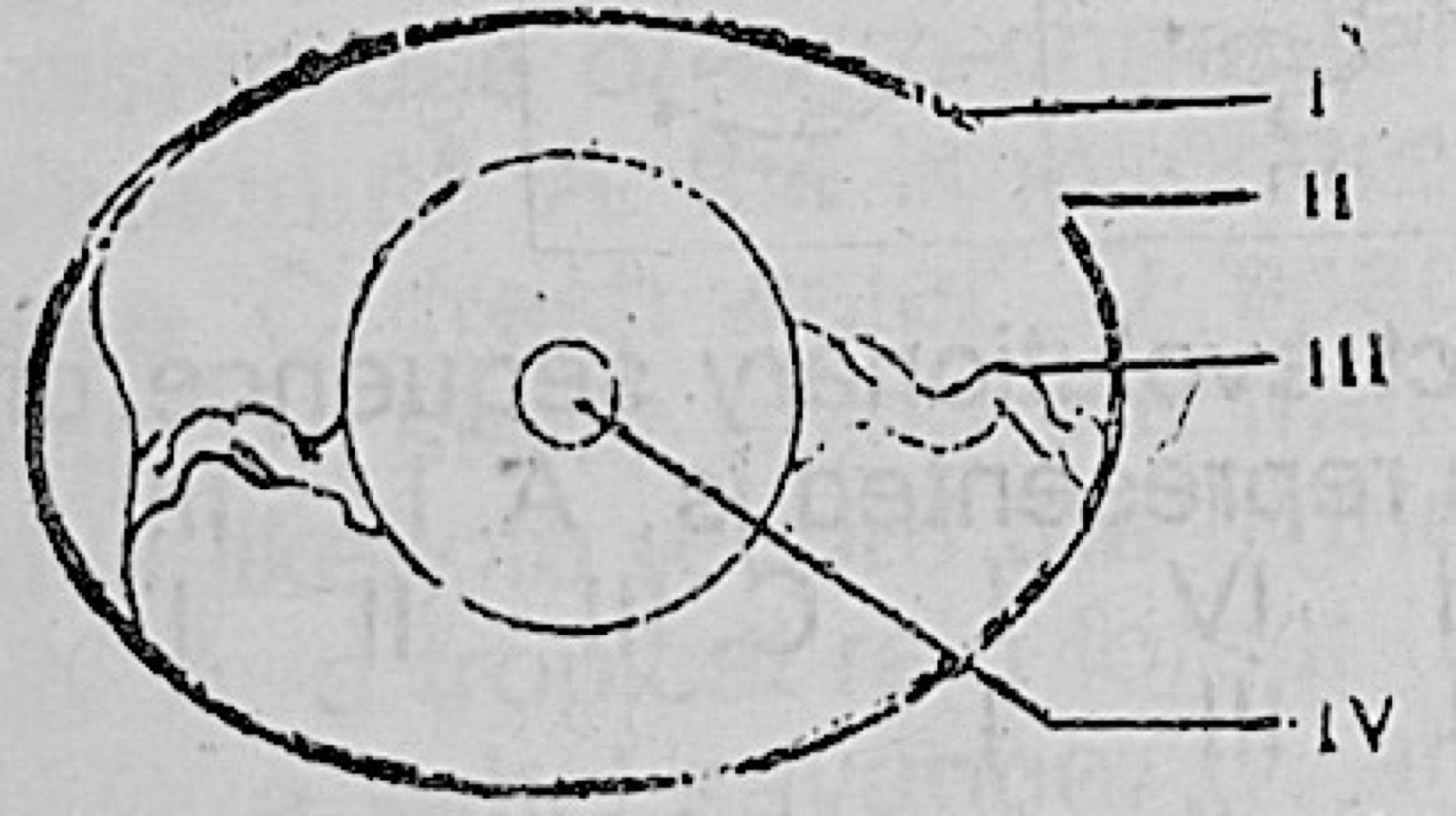
Question 14 Reproduction in Animals Use the diagram to answer questions 14 and 15. The structure that holds the yolk in position is labelled
A. II B. I C. IV D. III. Show the answer and explanation Answer: D (III. )
Explanation III is the chalaza, a twisted cord of albumen that holds the yolk in the middle of the egg.
Open this question
Question 15 Reproduction in Animals Use the diagram to answer questions 14 and 15. The part labelled IV is the
A. albumen B. germinal disc C. yolk D. air space. Show the answer and explanation Answer: B (germinal disc )
Explanation IV points to the small spot on the yolk, the germinal disc, from which the chick develops.
Open this question
Question 16 Respiration The gas produced during tissue respiration can be identified by using
A. calcium hydroxide B. copper sulphate C. calcium carbonate D. sodium hydroxide. Show the answer and explanation Answer: A (calcium hydroxide )
Explanation Carbon (IV) oxide turns lime water (calcium hydroxide solution) milky.
Open this question
Question 17 Growth and Development A seedling grown in the dark is likely to be
A. etiolated B. dormant C. sturdy D. stunted. Show the answer and explanation Answer: A (etiolated )
Explanation Without light a seedling grows tall, thin and pale (yellow), which is called etiolation.
Open this question
Question 18 Food Substances and Enzymes The enzyme invertase will hydrolyze sucrose to give
A. maltose and glucose B. glycerol and fatty acid C. glucose and fructose D. mannose and galactose. Show the answer and explanation Answer: C (glucose and fructose )
Explanation Sucrose is made of one glucose and one fructose unit, which invertase (sucrase) splits apart.
Open this question
Question 19 Respiration When yeast respires anaerobically, it converts simple sugars to carbon(IV) oxide and
A. oxygen B. acid C. alcohol D. water. Show the answer and explanation Answer: C (alcohol )
Explanation Fermentation by yeast turns glucose into ethanol (alcohol) and carbon (IV) oxide.
Open this question
Question 20 Transport in Animals The transportation of oxygen and carbon (IV) oxide in mammals is carried out by
A. leucocytes B. thrombocytes C. phagocytes D. erythrocytes. Show the answer and explanation Answer: D (erythrocytes. )
Explanation Red blood cells (erythrocytes) contain haemoglobin, which carries oxygen and some carbon (IV) oxide.
Open this question
Question 21 Structure of Flowering Plants The veins of the leaf are formed by the
A. vascular bundles B. cambium cells C. palisade tissue D. spongy mesophyll. Show the answer and explanation Answer: A (vascular bundles )
Explanation Leaf veins are vascular bundles of xylem and phloem that carry water and food.
Open this question
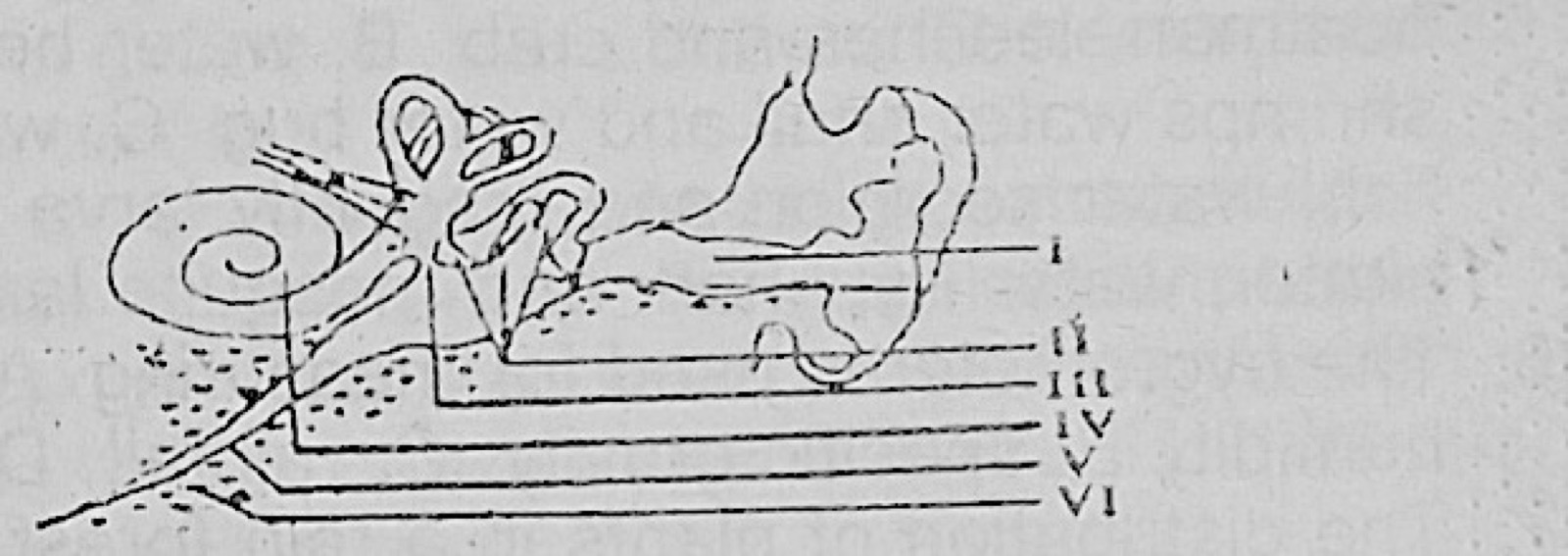
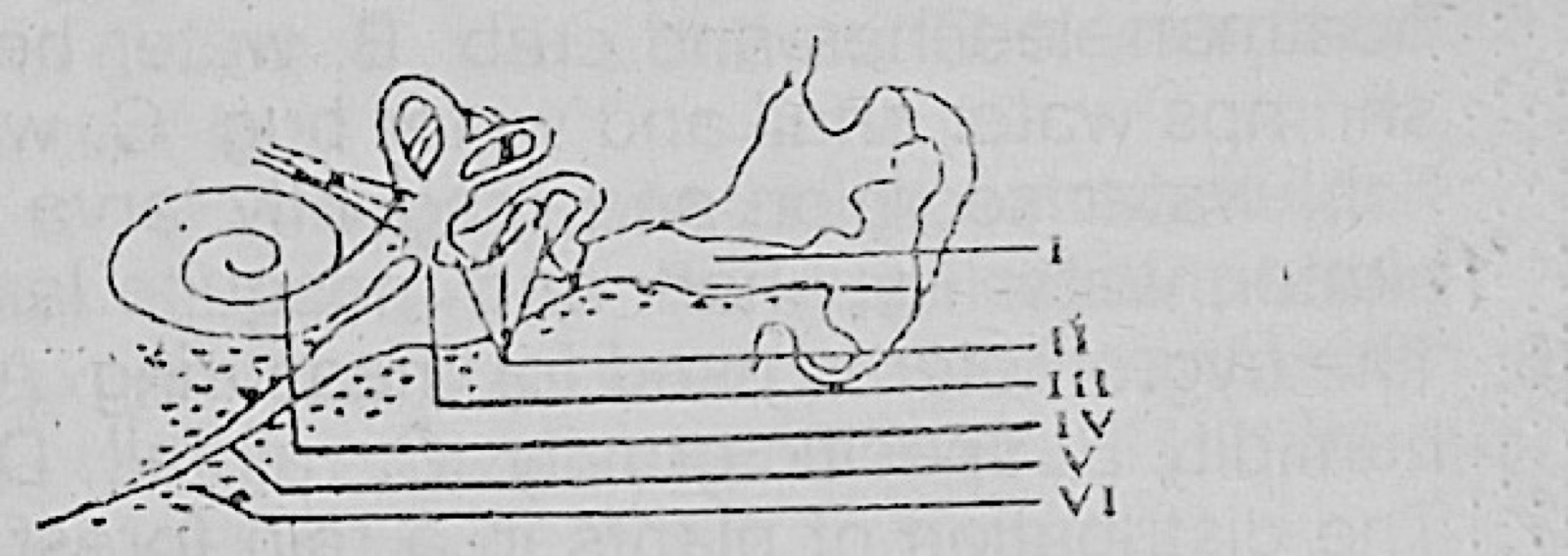
Question 22 Sense Organs Use the diagram to answer questions 22 and 23. The parts which function together to bring about hearing are labelled
A. IV, V and VI B. I, II, IV and VI C. I, II, III and IV D. I, II and IV. Show the answer and explanation Answer: C (I, II, III and IV )
Explanation Sound passes along the ear canal (I), is carried by the ossicles (II, III) and is detected in the cochlea (IV).
Open this question
Question 23 Sense Organs Use the diagram to answer questions 22 and 23. The part labelled II is the
A. fenestra ovalis B. middle ear canal C. internal auditory meatus D. ear ossicles. Show the answer and explanation Answer: D (ear ossicles. )
Explanation II points to the small bones of the middle ear, the ear ossicles, which pass vibrations to the inner ear.
Open this question
Question 24 Food Substances and Enzymes When specimen X - is mixed with few drops of Iodine solution, the appearance of a blue-black colour confirms that X is
A. galactose B. starch C. sucrose D. glucose. Show the answer and explanation Answer: B (starch )
Explanation Iodine turns blue-black with starch.
Open this question
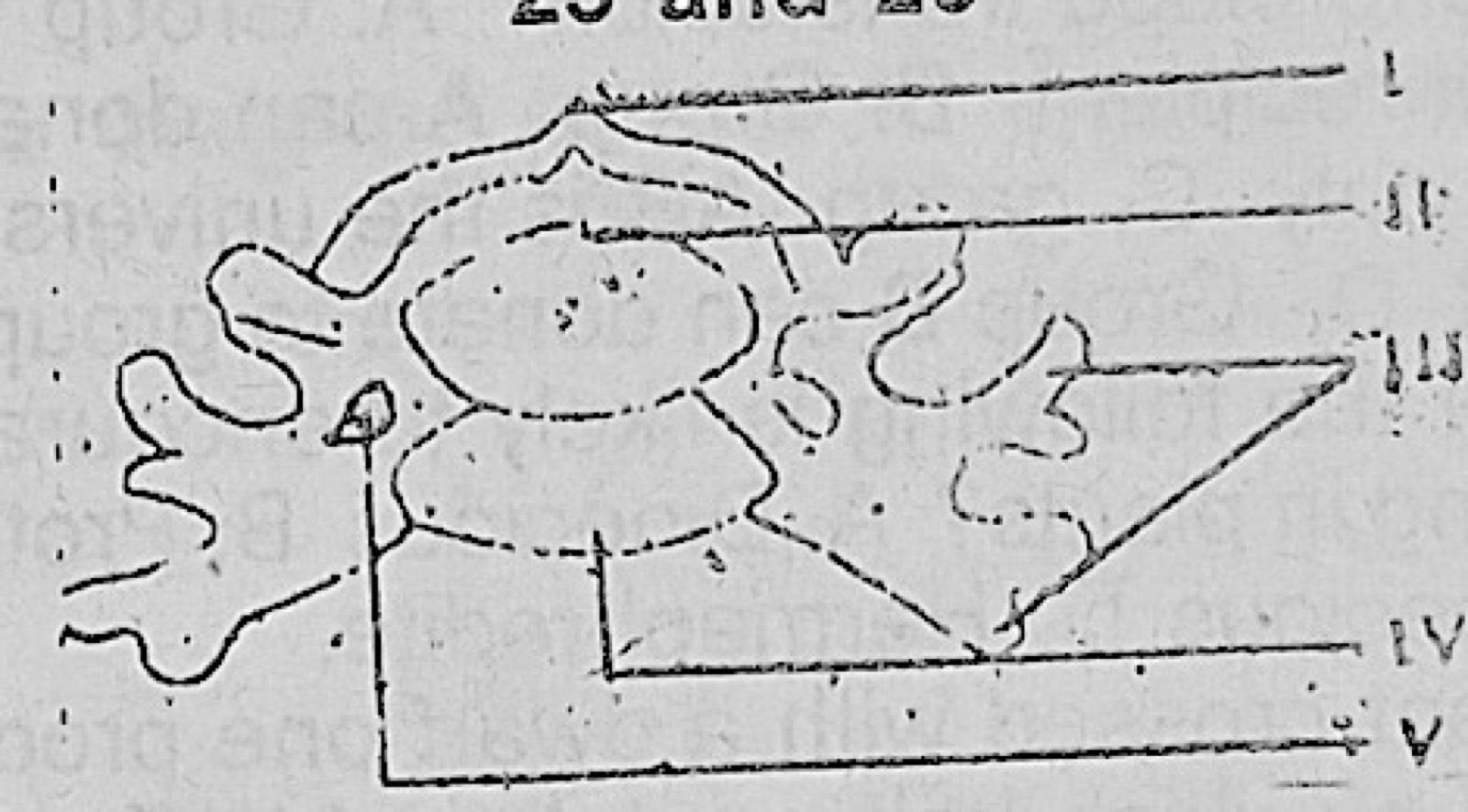
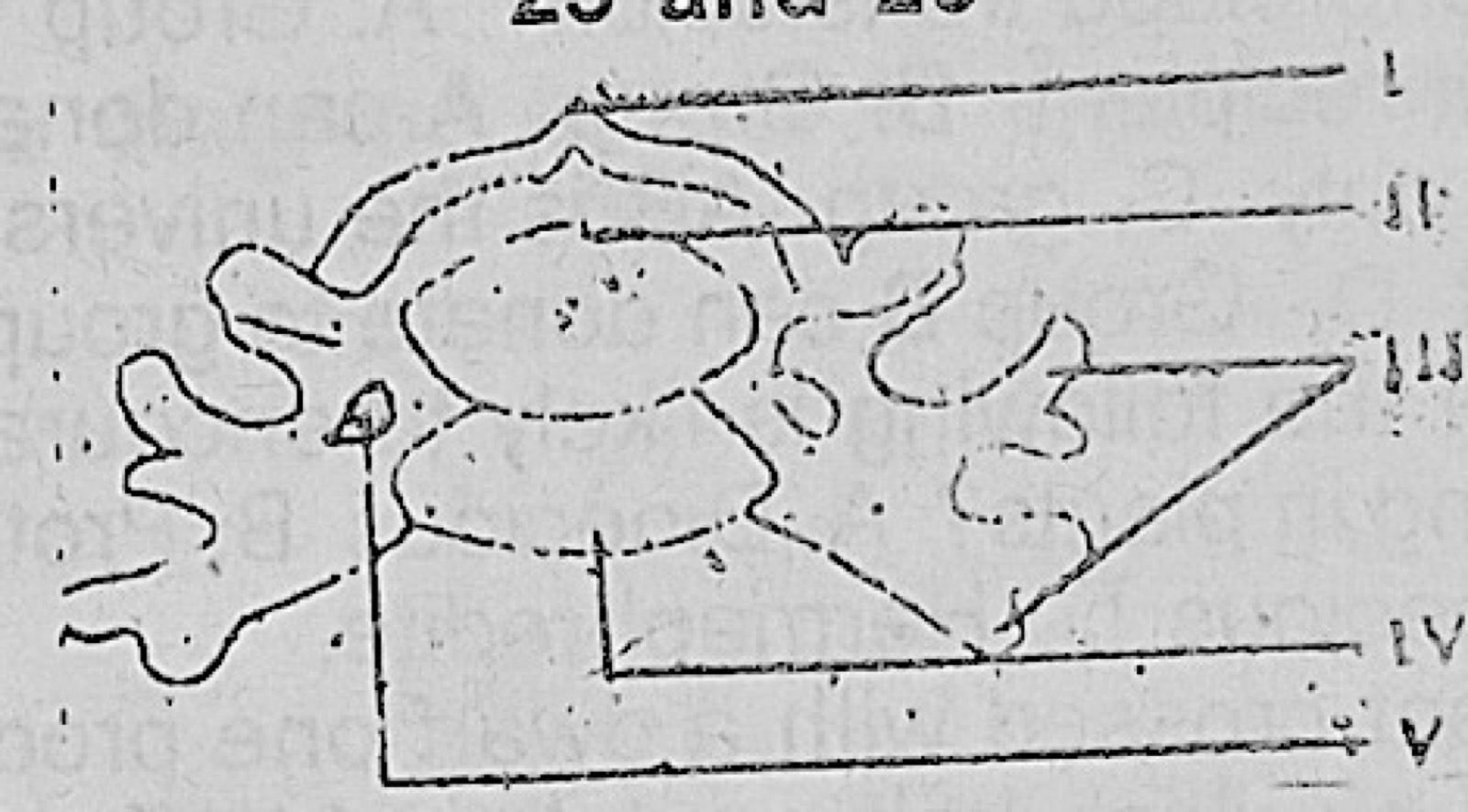
Question 25 Support and Movement Use the diagram to answer questions 25 and 26. The structure above respresnts a
A. caudal vertebra B. lumbar vertebra C. thoracic vertebra D. cervical vertebra. Show the answer and explanation Answer: D (cervical vertebra. )
Explanation The vertebra has broad, flattened transverse processes with small holes (vertebrarterial canals), which are features of a cervical vertebra.
Open this question
Question 26 Support and Movement Use the diagram to answer questions 25 and 26. Blood vessels usually pass through the structure labelled
A. III B. II C. V D. IV. Show the answer and explanation Answer: C (V )
Explanation V is the vertebrarterial canal in the transverse process, through which the vertebral artery and vein pass.
Open this question
Question 27 Transport in Plants Salts and water are absorbed in the roots and transported to the leaves by
A. diffusion through the xylem tissues B. osmosis through the phloem tissues C. diffusion through the phloem tissues D. osmosis through the xylem tissues. Show the answer and explanation Answer: D (osmosis through the xylem tissues. )
Explanation Water enters the root by osmosis and moves up to the leaves in the xylem; phloem carries food, not water and salts.
Open this question
Question 28 Population Ecology The number of plant species obtained from a population study of a garden is as follows: Guinea grass (15), Ipomea spp (5), Sida spp (7) and Imperata spp (23). What is the percentage of occurrence of Imperata spp ?
A. 35% B. 16% C. 46% D. 23%. Show the answer and explanation Answer: C (46% )
Explanation Total = 15 + 5 + 7 + 23 = 50 plants. Imperata = 23/50 × 100 = 46%.
Open this question
Question 29 Nutrient Cycling Carbon (IV) oxide content of the atmosphere is least affected by
A. cutting down and clearing of forests B. forest fires C. burning of fossil fuels D. plant and animal respiration. Show the answer and explanation Answer: D (plant and animal respiration. )
Explanation Respiration is part of the balanced carbon cycle, since photosynthesis takes the carbon (IV) oxide back. Deforestation, fires and burning fuels all raise the level.
Open this question
Question 30 Population Ecology The factor that least affects food shortages in sub-saharan Africa is
A. flooding B. pests C. mixed-cropping D. drought. Show the answer and explanation Answer: C (mixed-cropping )
Explanation Floods, pests and drought destroy crops, while mixed cropping is a farming practice that actually reduces the risk of crop failure.
Open this question
Question 31 Habitats and Biomes The epiphytic habitat can best be described as
A. arboreal B. estaurine C. aquatic D. terrestrial. Show the answer and explanation Answer: A (arboreal )
Explanation Epiphytes grow on the branches of trees, which is an arboreal habitat.
Open this question
Question 32 Feeding Relationships and Energy Flow The highest percentage of energy in an ecosystem occurs at the level of the
A. secondary consumers B. decomposers C. producers D. primary consumers. Show the answer and explanation Answer: C (producers )
Explanation Producers capture energy from sunlight, and energy is lost at each step after them, so they hold the most.
Open this question
Question 33 Ecosystem and Ecological Factors The greatest influence on a stable ecosystem in nature is exerted by
A. man B. pollution C. animals D. rainfall. Show the answer and explanation Answer: A (man )
Explanation Human activities such as farming, building, logging and polluting change ecosystems more than any other factor.
Open this question
Question 34 Ecosystem and Ecological Factors The physical space occupied by an organism together with its functional role in the community can be described as
A. environment B. biome C. niche D. habitat. Show the answer and explanation Answer: C (niche )
Explanation A niche is where an organism lives plus the role it plays in the community; habitat is only the place.
Open this question
Question 35 Habitats and Biomes A freshwater pond may contain
A. tadpole, water boatman, leeches and crab B. water beetle, shrimps water snail and water bug C. water lily, fish, water scorpion and dragonfly larva D. pon skater, water lily, shark and mosquito larva. Show the answer and explanation Answer: C (water lily, fish, water scorpion and dragonfly larva )
Explanation Water lily, fish, water scorpion and dragonfly larvae are all common in freshwater ponds; sharks, crabs and shrimps are mainly marine.
Open this question
Question 36 Ecosystem and Ecological Factors The hygrometer is used for measuring
A. relative humidity B. specific gravity C. rainfall D. salinity Show the answer and explanation Answer: A (relative humidity )
Explanation A hygrometer measures the relative humidity of the air.
Open this question
Question 37 Habitats and Biomes The distribution of plants in a rain forest is governed mainly by
A. vegetation B. soil types C. amount of sunlight D. rainfall pattern. Show the answer and explanation Answer: C (amount of sunlight )
Explanation Within a rain forest, plants are arranged in layers according to how much sunlight reaches each level, from tall emergents to shade plants on the floor.
Open this question
Question 38 Mendelian Inheritance Both recessive and dominant characters are found
A. on different chromosomes in the cell B. at the same locus of a homologous chromosome C. at different loci of a homologous chromosome D. on the same chromatid in a chromosome. Show the answer and explanation Answer: B (at the same locus of a homologous chromosome )
Explanation Dominant and recessive alleles of a gene occupy the same position (locus) on a pair of homologous chromosomes.
Open this question
Question 39 Chromosomes, DNA and Sex Linkage The probability of a baby being a boy or a girl depends on the contribution of the
A. father's sex cell B. father's somatic chromosome C. mother's sex cell D. mother's X-chromosome. Show the answer and explanation Answer: A (father's sex cell )
Explanation Every egg carries an X; the sperm carries either X (girl) or Y (boy), so the father's sex cell decides.
Open this question
Question 40 Transport in Animals Which of the following statements is true of blood groups and blood transfusion?
A. Group O is the universal recipient B. Group A can donate to group A only C. group AB is the universal recipient D. Group B can donate to group B only. Show the answer and explanation Answer: C (group AB is the universal recipient )
Explanation Group AB blood has no anti-A or anti-B antibodies, so it can receive blood of any group.
Open this question
Question 42 Mendelian Inheritance A tall plant crossed with a dwarf one produces offspring of which half are tall and half are dwarf. What are the genotypes of the parents?
A. TT, TT B. Tt, tt C. TT, tt D. Tt, Tt. Show the answer and explanation Answer: B (Tt, tt )
Explanation Tt × tt gives Tt and tt in equal numbers, so half are tall and half dwarf.
Open this question
Question 43 Variation In man, the ability to roll the tongue is a variation classified as
A. anatomical B. physiological C. structural D. morphological. Show the answer and explanation Answer: B (physiological )
Explanation Tongue rolling is something the body can or cannot do, not a visible shape, so it is a physiological variation.
Open this question
Question 44 Evolution Darwin is considered the first scientist who correctly explained the theory of
A. special creation B. spontaneous generation C. use and disuse D. organic evolution. Show the answer and explanation Answer: D (organic evolution. )
Explanation Darwin explained organic evolution through natural selection; use and disuse was Lamarck's idea.
Open this question
Question 45 Adaptation The stem of a typical aquatic plant usually has many
A. air cavities B. intercellular spaces C. water cavities D. water-conducting cells. Show the answer and explanation Answer: A (air cavities )
Explanation Air cavities (aerenchyma) keep aquatic plants afloat and store air for respiration.
Open this question
Question 46 Behaviour The role of the male adult honey bee is to
A. clean the hive B. ventilate the hive C. mate with the queen D. care for the young. Show the answer and explanation Answer: C (mate with the queen )
Explanation Male bees (drones) do no work in the hive; their only job is to mate with the queen.
Open this question
Question 47 Adaptation The ability of an organism to live successfully in an environment is known as
A. resistence B. competition C. succession D. adaptation. Show the answer and explanation Answer: D (adaptation. )
Explanation Adaptation is having features that let an organism survive and reproduce in its environment.
Open this question
Question 48 Adaptation The most important adaptation of xerophytes is the ability of the protoplasm to
A. resist being damaged by loss of water B. store sugar and minerals in the vacuoles C. absorb water and swell D. shrink from the cell wall. Show the answer and explanation Answer: A (resist being damaged by loss of water )
Explanation Xerophyte protoplasm can lose a lot of water without being damaged, letting the plant survive long droughts.
Open this question
Question 49 Adaptation A green snake in green grass is able to escape notice from predators because of its
A. disruptive colouration B. countershading C. warning colouration D. cryptic colouration. Show the answer and explanation Answer: D (cryptic colouration. )
Explanation The snake's colour matches the grass so it blends in and is hard to see, which is cryptic colouration (camouflage).
Open this question
Question 50 Ecological Associations For heterotrophic organisms, competition is least caused by the inadequacy of
A. mates B. space C. light D. nutrients. Show the answer and explanation Answer: C (light )
Explanation Heterotrophs do not need light to make food, so they rarely compete for it; they compete for food, space and mates.
Open this question Sign up free for every JAMB Biology year, practice by topic and timed mocks.
Start practising free