Home › Past questions › JAMB › Biology › 1997 47 questions. Try each one, then open the answer to check yourself and read the explanation.
Sign up free to answer these questions on a CBT screen with a timer, then see your score and every answer explained.
Start practising free
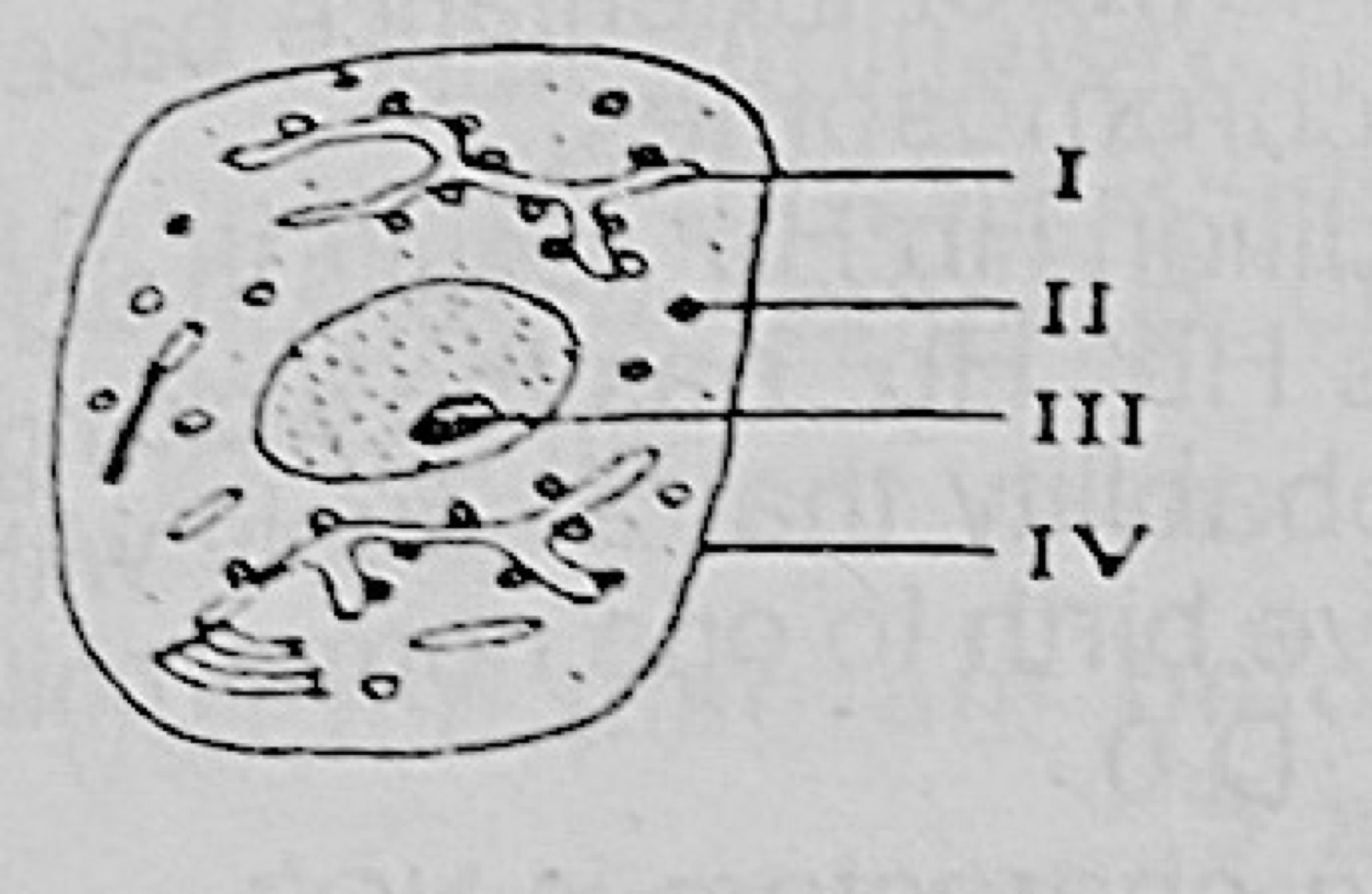
Question 1 Cell Structure and Organisation Use the diagram to answer questions 1 and 2. The structure labelled I is the
A. Golgi body B. mitochondrion C. endoplasmic reticulum D. vacuole Show the answer and explanation Answer: C (endoplasmic reticulum )
Explanation Part I points to the network of membranes running through the cytoplasm, which is the endoplasmic reticulum.
Open this question
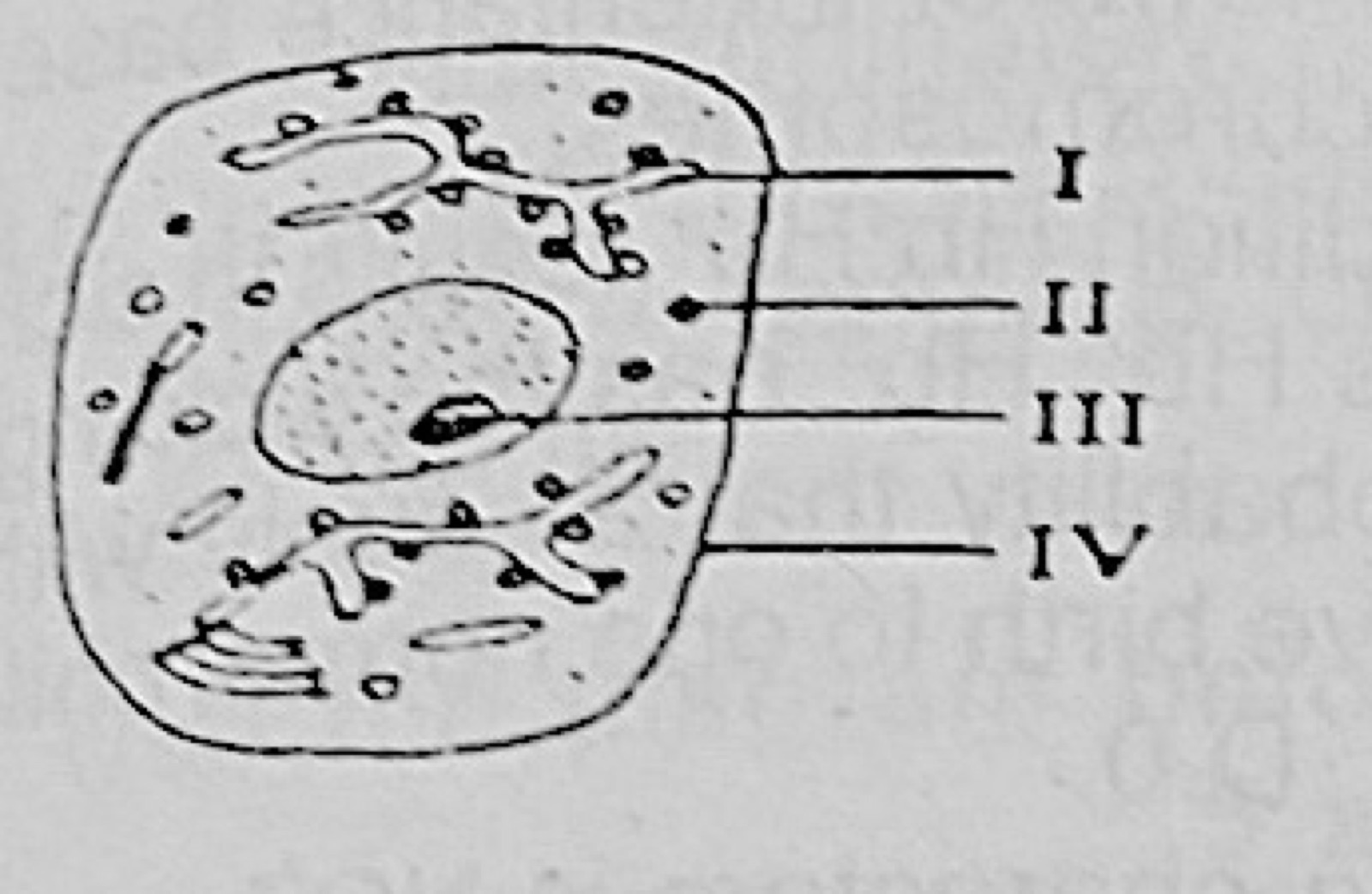
Question 2 Cell Structure and Organisation Use the diagram to answer questions 1 and 2. Protein is synthesized in the part labelled
A. I B. II C. III D. IV Show the answer and explanation Answer: A (I )
Explanation Proteins are made on ribosomes, many of which sit on the rough endoplasmic reticulum (part I).
Open this question
Question 3 Structure of Flowering Plants Which of the following is the youngest plant tissue?
A. Meristem B. Phloem C. Epidermis D. Xylem Show the answer and explanation Answer: A (Meristem )
Explanation Meristem is made of newly formed, actively dividing cells; all other tissues develop from it.
Open this question
Question 4 Viruses, Monera, Protista and Fungi Viruses differ from all forms of life because they
A. have a thick cell wall B. feed on waste products of other organisms C. cause infectious diseases D. reqiure other living cells to multiply. Show the answer and explanation Answer: D (reqiure other living cells to multiply. )
Explanation Viruses cannot reproduce on their own; they can only multiply inside living host cells.
Open this question
Question 5 Animal Kingdom The cnidoblast cells found in hydra are used for
A. reproduction B. offence and defence C. locomotion and nutrition D. food collection Show the answer and explanation Answer: B (offence and defence )
Explanation Cnidoblasts contain stinging threads (nematocysts) that paralyse prey and drive off enemies, so they serve offence and defence.
Open this question
Question 6 Animal Kingdom Annelids differ from nematodes in that they
A. exhibit bilateral symmetry B. are triploblastic C. are metamerically segmented D. possess complete digestive system. Show the answer and explanation Answer: C (are metamerically segmented )
Explanation Both groups are bilateral, triploblastic and have a complete gut, but only annelids have a body divided into repeated segments (metameric segmentation).
Open this question
Question 7 Reproduction in Plants Which of the following perform similar functions?
A. Ascospores and ascocarp B. Antherozoids and rhizoids C. Sorus and indusium D. Strobili and inflorescence. Show the answer and explanation Answer: D (Strobili and inflorescence. )
Explanation A strobilus (cone) carries spore-bearing structures and an inflorescence carries flowers, so both do the same job of bearing reproductive organs.
Open this question
Question 8 Plant Kingdom In ferns, the sporophyte
A. develops from a haploid zygote B. reproduces sexually to produce spores C. is haploid and dependent on the gametophyte D. is diploid and independent of the gametophyte. Show the answer and explanation Answer: D (is diploid and independent of the gametophyte. )
Explanation The fern plant we see is the sporophyte: it is diploid and, once established, lives independently of the small gametophyte (prothallus).
Open this question
Question 9 Reproduction in Animals The group of insects that undergoes complete metamorphosis is
A. houseflies, beetles and cockroaches B. cockroaches, grasshoppers and bees C. houseflies, beetles and butterflies D. aphids, grasshoppers and butterflies. Show the answer and explanation Answer: C (houseflies, beetles and butterflies )
Explanation Houseflies, beetles and butterflies all pass through egg, larva, pupa and adult; cockroaches, grasshoppers and aphids have incomplete metamorphosis.
Open this question
Question 10 Excretion The nitrogenous substance that is excreted by birds in order to conserve water is
A. ammonia B. urea C. uric acid D. nitric acid. Show the answer and explanation Answer: C (uric acid )
Explanation Uric acid is almost insoluble, so birds can excrete it as a paste with very little water.
Open this question
Question 11 Transport in Animals In mammals, the exchange of nutrients and metabolic products occurs in the
A. lymph B. lungs C. heart D. liver. Show the answer and explanation Answer: A (lymph )
Explanation Cells exchange nutrients and wastes with the blood through the tissue fluid (lymph) that bathes them.
Open this question
Question 12 Animal Nutrition The part of the stomach nearer the gullet is called the
A. epiglottis B. cardiac sphincter C. duodenum D. pyloric sphincter. Show the answer and explanation Answer: B (cardiac sphincter )
Explanation The cardiac sphincter guards the entrance of the stomach from the gullet; the pyloric sphincter is at the exit to the duodenum.
Open this question
Question 13 Photosynthesis and Plant Nutrition Trace elements are required by plants mainly for the
A. formation of pigments and enzymes B. production of energy and hormones C. manufacture of carbohydrates D. manufacture of proteins. Show the answer and explanation Answer: A (formation of pigments and enzymes )
Explanation Trace elements such as iron, copper, zinc and manganese are needed in tiny amounts, mainly as parts of pigments and enzymes.
Open this question
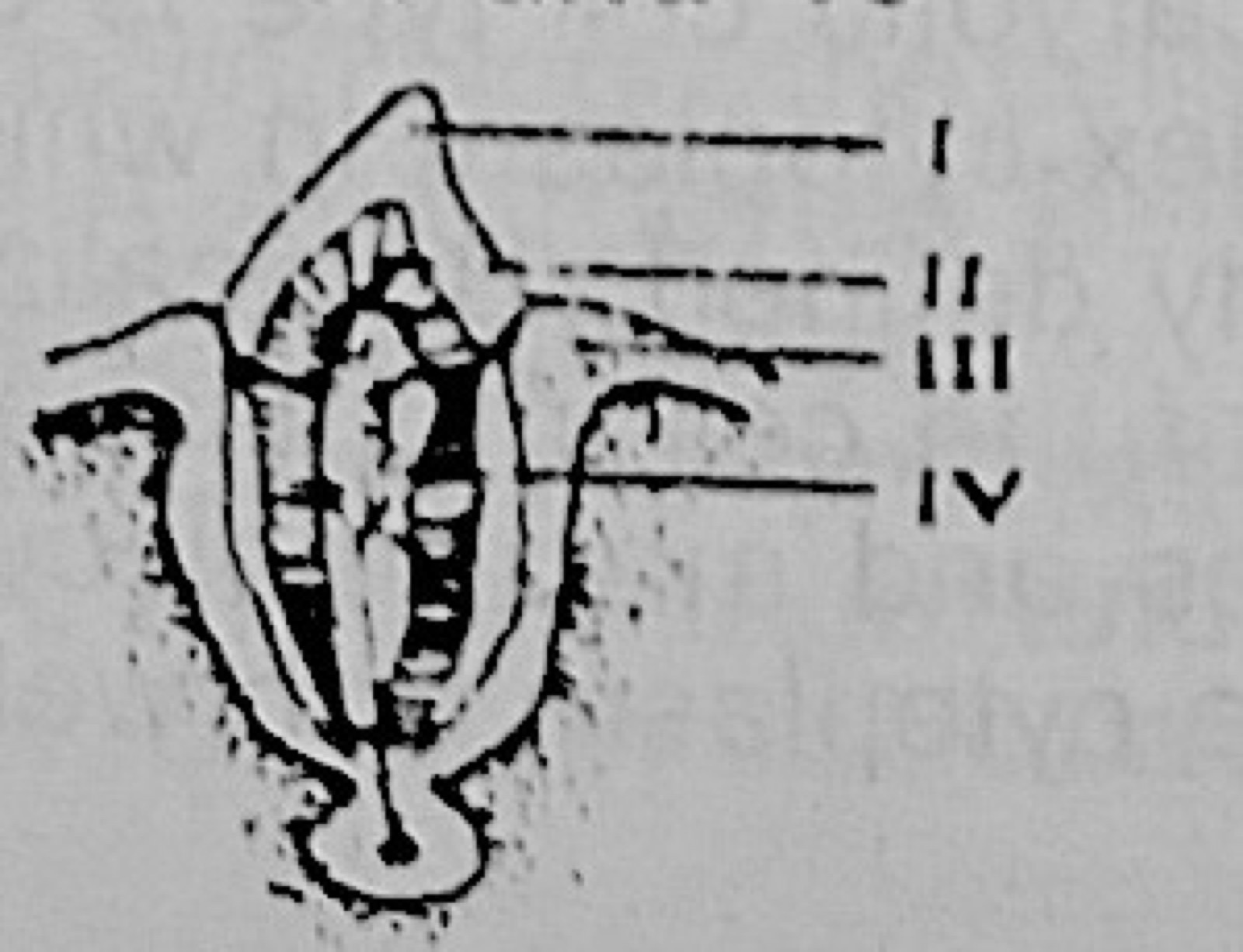
Question 15 Animal Nutrition Use the diagram to answer questions 14 and 15. The parts labelled I and II constitute the
A. crown B. neck C. root D. gum. Show the answer and explanation Answer: A (crown )
Explanation Parts I and II are at the top of the tooth, above the gum, which is the crown.
Open this question
Question 16 Food Substances and Enzymes A food substance was treated with a few drops of Sudan III solution and a red coloration was obtained. The food contained
A. protein B. starch C. fat D. mineral salt. Show the answer and explanation Answer: C (fat )
Explanation Sudan III stains fats and oils red, so a red colour shows fat is present.
Open this question
Question 17 Transport in Plants Oozing out of water from the leaves of plants in a humid environment is known as
A. transpiration B. osmosis C. pinocytosis D. guttation Show the answer and explanation Answer: D (guttation )
Explanation Guttation is the loss of liquid water droplets through hydathodes at leaf edges, common when the air is humid.
Open this question
Question 18 Transport in Animals The element that is essential for the coagulation of blood is
A. potassium B. calcium C. phosphorus D. iron. Show the answer and explanation Answer: B (calcium )
Explanation Calcium ions are needed for the conversion of prothrombin to thrombin during clotting.
Open this question
Question 19 Respiration Anaerobic respiration differs from aerobic respiration by the production of
A. less amount of energy and water B. greater amount of energy and alcohol C. less amount of energy and alcohol D. greater amount of energy and water. Show the answer and explanation Answer: C (less amount of energy and alcohol )
Explanation Anaerobic respiration (e.g. in yeast) releases much less energy than aerobic respiration and produces alcohol instead of water.
Open this question
Question 20 Cell and Its Environment Stomatal pores open when there is
A. an increase in the sugar content of guard cellls B. a decrease in the osmotic concentration of guard cells C. a decrease in the sugar content of mesophyll cells D. an increase in the sugar content of mesophyll cells. Show the answer and explanation Answer: A (an increase in the sugar content of guard cellls )
Explanation More sugar in the guard cells draws in water by osmosis; they swell, curve apart and the pore opens.
Open this question
Question 21 Excretion The process of deamination is essential for the
A. digestion of protein B. secretion of bile C. formation of urea D. formation of antibody Show the answer and explanation Answer: C (formation of urea )
Explanation In deamination the liver removes the amino group from excess amino acids and turns it into urea.
Open this question
Question 22 Support and Movement A band of connective tissue linking two bones in a joint is known as
A. tendon B. cartilage C. synovial membrane D. ligament. Show the answer and explanation Answer: D (ligament. )
Explanation Ligaments join bone to bone; tendons join muscle to bone.
Open this question
Question 23 Support and Movement The appendicular skeleton is composed of the pectoral girdle
A. pelvic girdle, fore and hind limbs B. pelvic girdle and fore limbs C. lumbar vertebrae and pelvic girdle D. lumbar vertebrae, fore and hind limbs. Show the answer and explanation Answer: A (pelvic girdle, fore and hind limbs )
Explanation The appendicular skeleton is the girdles and the limbs attached to them; vertebrae belong to the axial skeleton.
Open this question
Question 24 Structure of Flowering Plants The companion cells are part of the
A. pericycle B. phloem C. pith D. xylem. Show the answer and explanation Answer: B (phloem )
Explanation Companion cells lie beside the sieve tubes in phloem and keep them working.
Open this question
Question 25 Reproduction in Animals In which of the following groups of vertebrates would the largest amount of yolk be found in the egg?
A. Mammals B. Fishes C. Amphibians D. Reptiles. Show the answer and explanation Answer: D (Reptiles. )
Explanation Reptile eggs develop on land with no larval stage, so they carry a large yolk store; mammal embryos are fed through the placenta.
Open this question
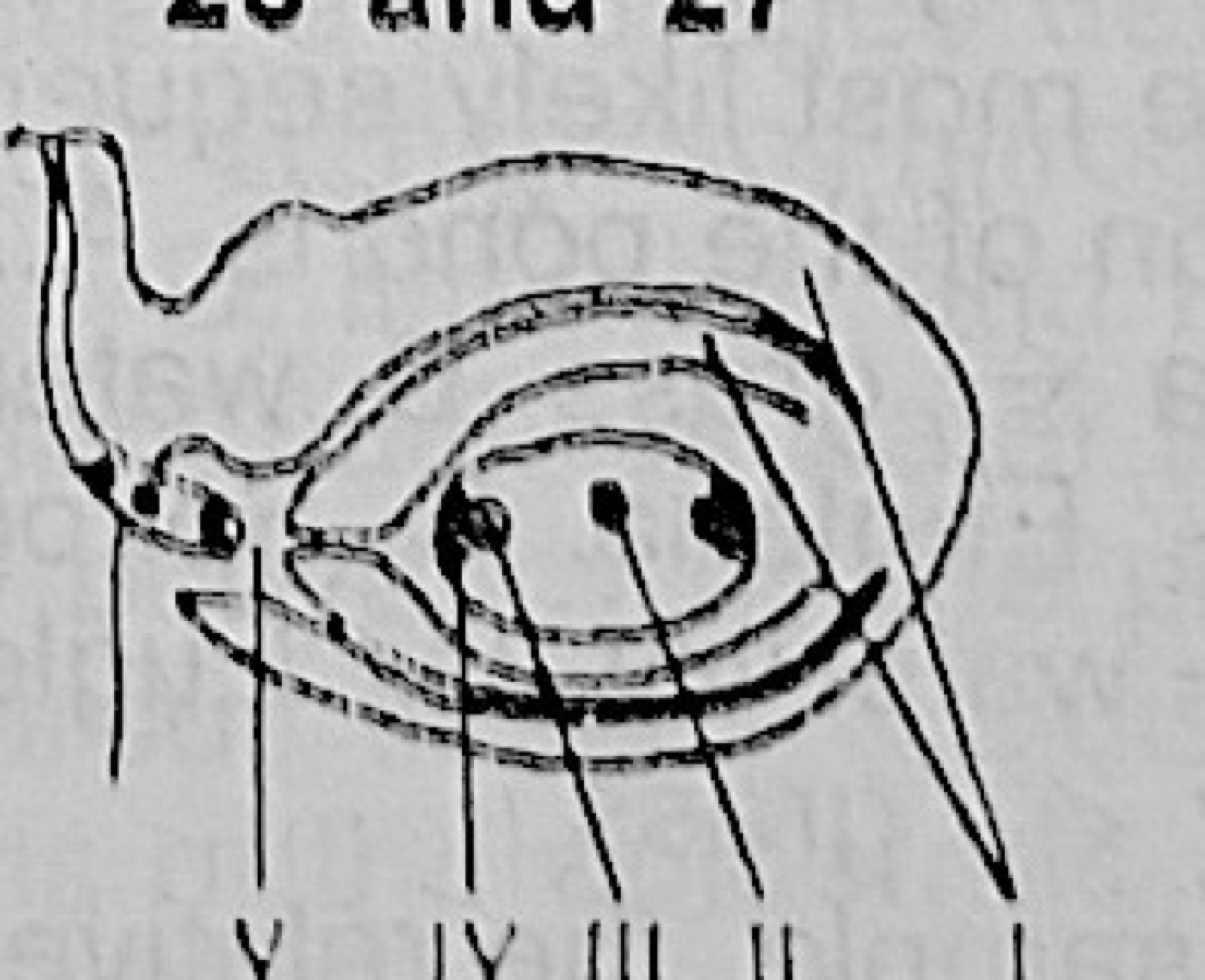
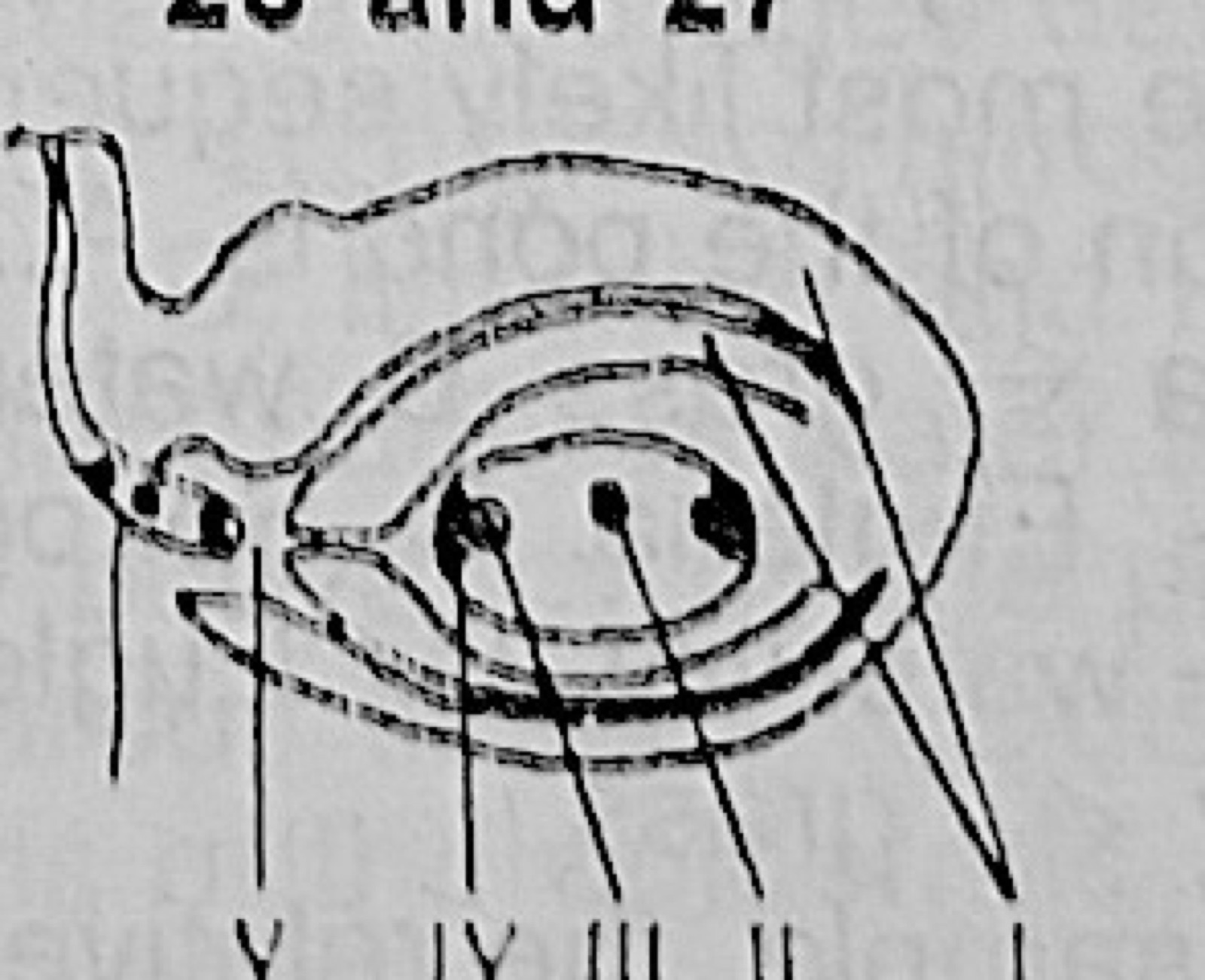
Question 26 Reproduction in Plants Use the diagram to answer questions 26 and 27. The function of the part labelled V is for the passage of
A. pollen tube and pollen nucleus B. air, water and pollen nucleus C. air, antipodal cells and ovum D. synergids and egg cell. Show the answer and explanation Answer: A (pollen tube and pollen nucleus )
Explanation V is the micropyle, the opening through which the pollen tube carrying the male nuclei enters the ovule.
Open this question
Question 27 Reproduction in Animals Use the diagram to answer questions 26 and 27. The female gamete is represented by
A. I B. II C. III D. IV. Show the answer and explanation Answer: D (IV. )
Explanation The female gamete is the egg cell. It lies in the embryo sac at the micropyle end, the end where the pollen tube enters, so it is the cell labelled IV.
Open this question
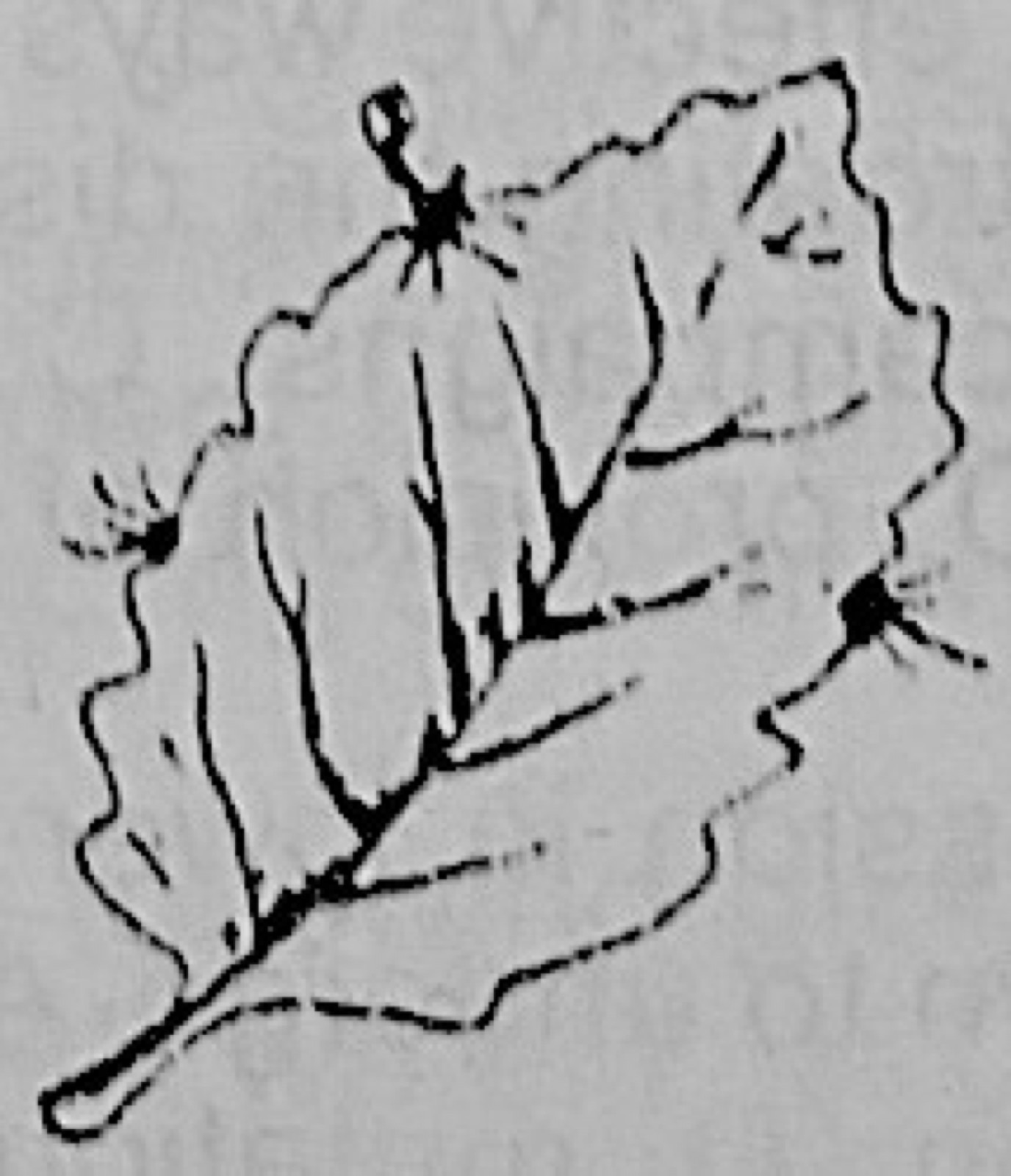
Question 28 Reproduction in Plants The type of vegetative reproduction illustrated in the diagram above is
A. grafting B. adventitious bud C. sucker D. aerial layering. Show the answer and explanation Answer: B (adventitious bud )
Explanation The leaf (as in Bryophyllum) has buds growing from its edges that form new plants, which is propagation by adventitious buds.
Open this question
Question 29 Reproduction in Plants Coconut and oil palm fruits can be grouped as
A. berry B. legume C. capsule D. drupe. Show the answer and explanation Answer: D (drupe. )
Explanation Both have a hard stony endocarp around the seed, which makes them drupes.
Open this question
Question 30 Plant Responses and Hormones The substance that is responsible for apical dominance in plants is known as
A. gibberellin B. tannin C. auxin D. kinin. Show the answer and explanation Answer: C (auxin )
Explanation Auxin made in the shoot tip suppresses the growth of side buds, which is apical dominance.
Open this question
Question 31 Nervous Coordination The part of the brain that regulates most biological cycles in humans is
A. olfactory lobe B. optic lobe C. medulla oblongata D. pineal body. Show the answer and explanation Answer: D (pineal body. )
Explanation The pineal body releases melatonin in response to light and dark, setting the body's biological rhythms such as the sleep cycle.
Open this question
Question 32 Sense Organs The ability of the eye to focus on both near and distant objects is termed
A. image formation B. refraction C. hypermetropia D. accommodation. Show the answer and explanation Answer: D (accommodation. )
Explanation Accommodation is the change in lens shape that lets the eye focus at different distances.
Open this question
Question 33 Ecosystem and Ecological Factors The speed of wind can be measured with an instrument called
A. hygrometer B. secchi disc C. anemometer D. wind vane. Show the answer and explanation Answer: C (anemometer )
Explanation An anemometer measures wind speed; a wind vane only shows its direction.
Open this question
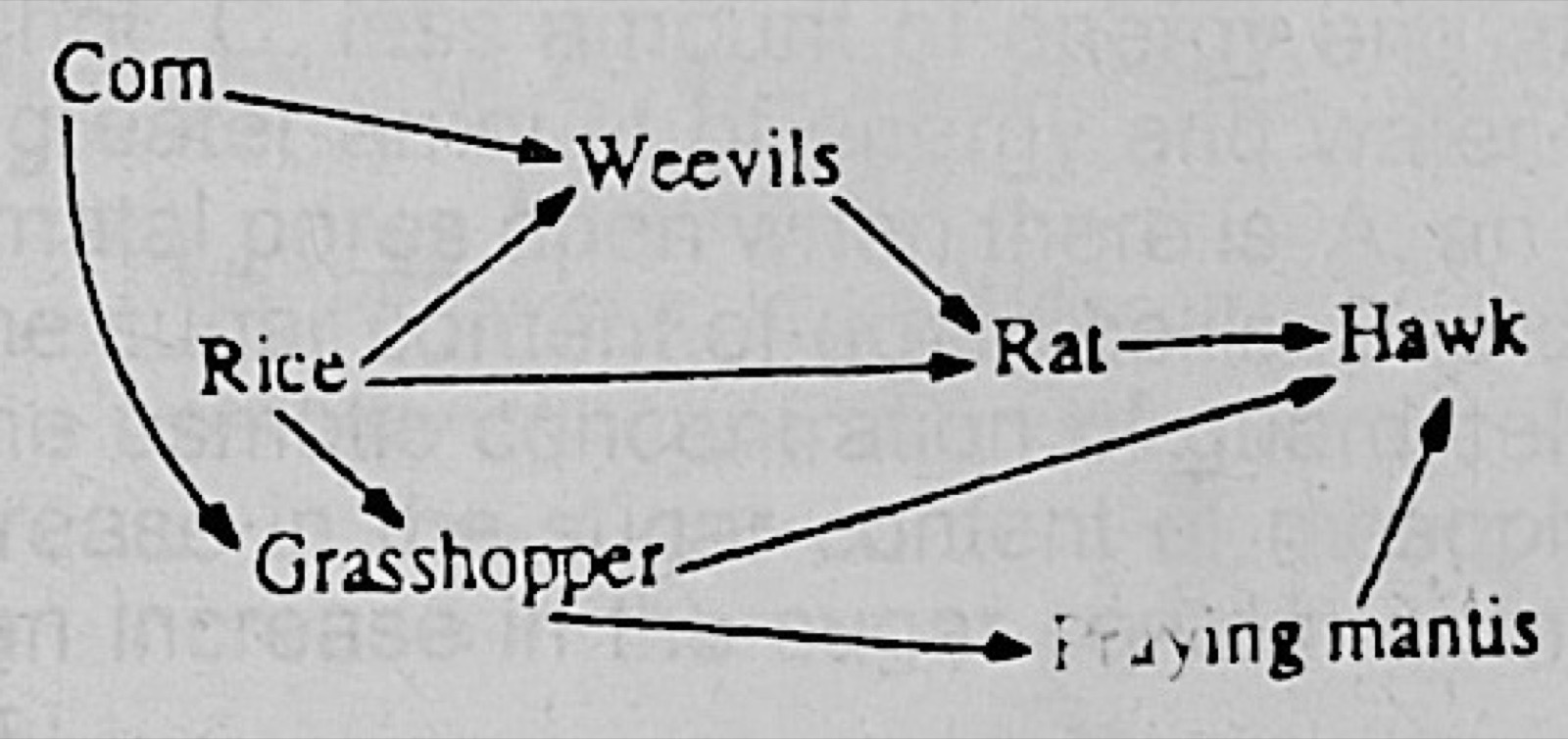
Question 34 Feeding Relationships and Energy Flow Which organism in the food -web illustrated above is an omnivore?
A. Weevils B. Rat C. Hawk D. Praying mantis. Show the answer and explanation Answer: B (Rat )
Explanation The rat feeds on both a plant (rice) and an animal (weevils), so it is an omnivore.
Open this question
Question 35 Ecological Associations Toads and lizards in an ecosystem depend on a limited quantity of food. This is an example of
A. parasitism B. intraspecific competition C. predation D. interspecific competition. Show the answer and explanation Answer: D (interspecific competition. )
Explanation Toads and lizards are different species, so competition between them for the same food is interspecific.
Open this question
Question 36 Adaptation Adaptive features of plants to desert conditions include
A. thick barks, succulent stems and sunken stomata B. thin barks, succulent stems and sunken stomata C. thin barks, air floats on stems and sunken stomata D. air spaces in tissues, adventitious roots and thick barks. Show the answer and explanation Answer: A (thick barks, succulent stems and sunken stomata )
Explanation Thick bark reduces water loss, succulent stems store water and sunken stomata cut transpiration.
Open this question
Question 37 Habitats and Biomes The Southern Guinea Savanna differs from the Northern Guinea Savanna in that it has
A. lower rainfall and shorter grasses B. less grasses and scattered trees C. more rainfall and taller grasses D. less arboreal and burrowing animals. Show the answer and explanation Answer: C (more rainfall and taller grasses )
Explanation The southern belt is nearer the forest, so it receives more rain and supports taller grasses.
Open this question
Question 38 Population Ecology After a heavy rainfall and the formation of a large pond, the most likely sequence of changes in the vegetation of the pond is
A. Euglena ← water lily ← Spirogyra ← grass B. water lily ← Spirogyra ← grass ← Euglena C. Spirogyra ← Euglena ← grass ← water lily D. Euglena ← Spirogyra ← water lily ← grass. Show the answer and explanation Answer: D (Euglena ← Spirogyra ← water lily ← grass. )
Explanation Simple microscopic algae colonise first, then filamentous algae, then rooted floating plants like water lily, and finally land plants such as grass as the pond silts up.
Open this question
Question 39 Soil In a soil sample, the relative amounts of the different soil particles can best be determined by the process of
A. filtration B. centrifugation C. precipitation D. sedimentation. Show the answer and explanation Answer: D (sedimentation. )
Explanation Shaking soil in water and letting it settle separates gravel, sand, silt and clay into layers whose thickness can be compared.
Open this question
Question 40 Pollution Which is the most important pollutant of marine environment in Nigeria?
A. Insecticides B. Sewage C. Oil D. Inorganic fertilizers. Show the answer and explanation Answer: C (Oil )
Explanation Nigeria's oil industry is offshore and in the Niger Delta, so oil spills are the biggest pollution threat to its marine environment.
Open this question
Question 41 Microorganisms and Health One of the most effective ways of controlling guinea worm is by
A. treating the disease B. public enlightenment campaigns C. accelerating rural development D. provision of portable drinking water. Show the answer and explanation Answer: D (provision of portable drinking water. )
Explanation Guinea worm is caught by drinking water containing infected water fleas, so safe (potable) drinking water stops its spread.
Open this question
Question 42 Cell Division During binary fission in lower organisms, the nucleus is known to undergo
A. mitosis B. meiosis C. fragmentation D. mutation. Show the answer and explanation Answer: A (mitosis )
Explanation Binary fission produces two identical daughter cells, so the nucleus divides by mitosis.
Open this question
Question 43 Mendelian Inheritance One reason for the success of Mendel's work is that the
A. was the first to carry out research work on modern genetics B. introduced quantitative and qualitative elements into his work C. selected two characteristics only at a time for study D. drew up his laws of inheritance based on his knowledge of chromosomes. Show the answer and explanation Answer: B (introduced quantitative and qualitative elements into his work )
Explanation Mendel counted his pea offspring and analysed the ratios mathematically, adding quantitative analysis to describing traits.
Open this question
Question 44 Mendelian Inheritance The homozygous condition HbS HbS results in sickle cell anaemia whereas HbA HbS has the sickling trait. What is the probability that a couple with the sickling trait will give birth to one normal child?
A. 1/2 B. 1/4 C. 1/8 D. 0. Show the answer and explanation Answer: B (1/4 )
Explanation HbA HbS × HbA HbS gives AA : AS : SS in the ratio 1 : 2 : 1, so the chance of a normal (AA) child is 1/4.
Open this question
Question 46 Adaptation Water loss is regulated in plants and animals by both the
A. scales and the skin B. scales and thehair C. thick leaves and the feathers D. leathery cuticle and the feathers. Show the answer and explanation Answer: D (leathery cuticle and the feathers. )
Explanation A thick, leathery cuticle cuts water loss from plant surfaces, and feathers cover a bird's skin and reduce evaporation.
Open this question
Question 47 Adaptation What combination of characters should a prey develop to survive in the environment of its predator?
A. Camouflage, well developed limbs and effective vision B. Showy colour, big body and well developed limbs C. Camouflage, big body and effective vision D. Showy colour, well. developed muscles and an acute sense of smell Show the answer and explanation Answer: A (Camouflage, well developed limbs and effective vision )
Explanation Camouflage hides the prey, good vision spots the predator early and strong limbs help it escape.
Open this question
Question 48 Behaviour The three classes in a termitarium are
A. soldiers, queen and workers B. workers, soldiers and reproductives C. soldiers, workers and kings D. kings, queen and soldiers. Show the answer and explanation Answer: B (workers, soldiers and reproductives )
Explanation A termite colony has three castes: workers, soldiers and reproductives (the king and queen).
Open this question
Question 50 Evolution Long neck in giraffe is used to illustrate the theory of
A. use and disuse B. origin of species C. origin of life D. natural selection. Show the answer and explanation Answer: A (use and disuse )
Explanation Lamarck explained the giraffe's long neck by stretching to reach leaves, his theory of use and disuse.
Open this question Sign up free for every JAMB Biology year, practice by topic and timed mocks.
Start practising free