In encouraging farmers to produce more of a particular crop, the Nigerian government has helped farmers in marketing that crop through the establishment of
A.rural schools of agriculture
B.markets for the sale of crops
C.marketing boards
D.rural extension offices
E.universities of agriculture.
Show the answer and explanation
Answer: C (marketing boards)
Explanation
Marketing boards bought crops such as cocoa and groundnut at fixed prices, encouraging production.
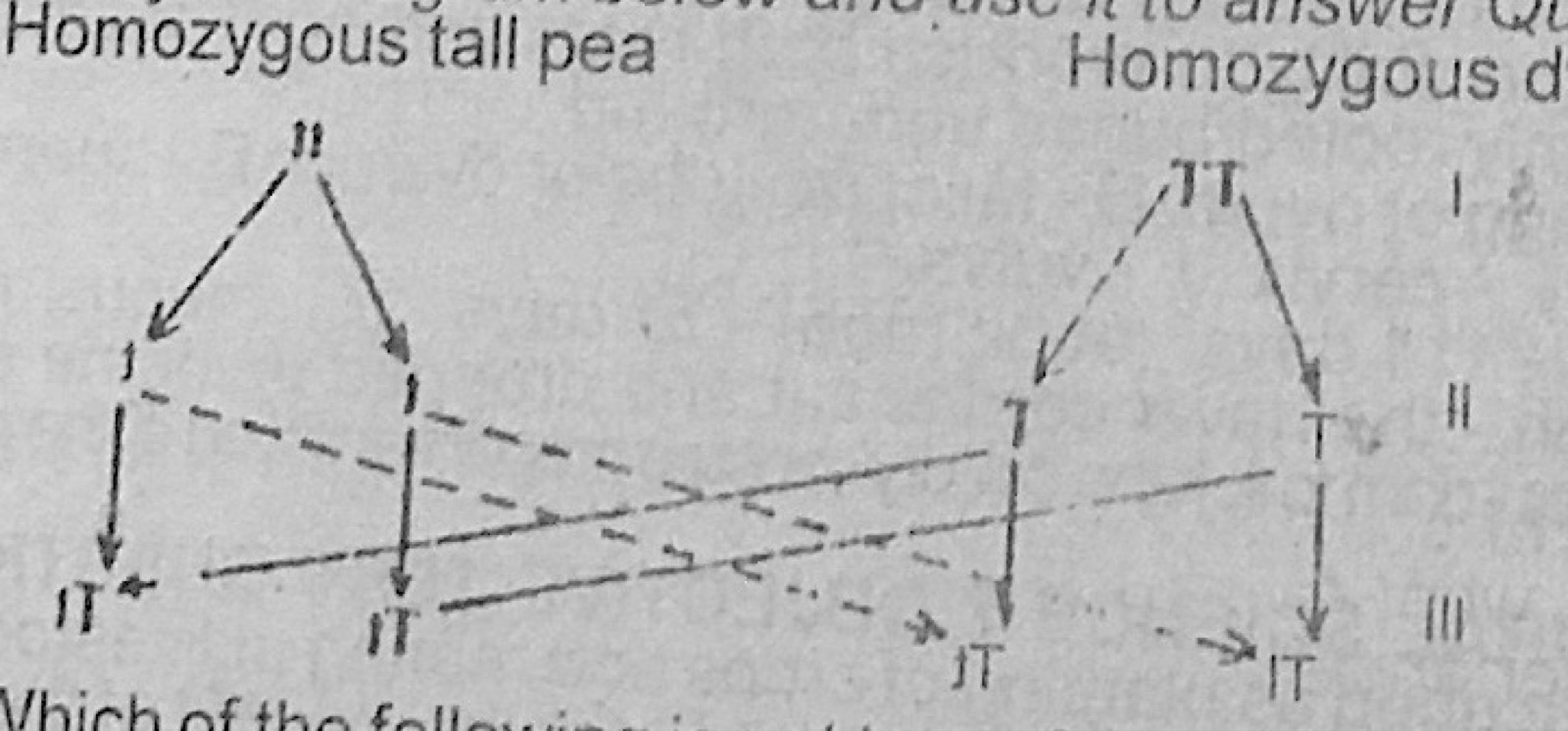
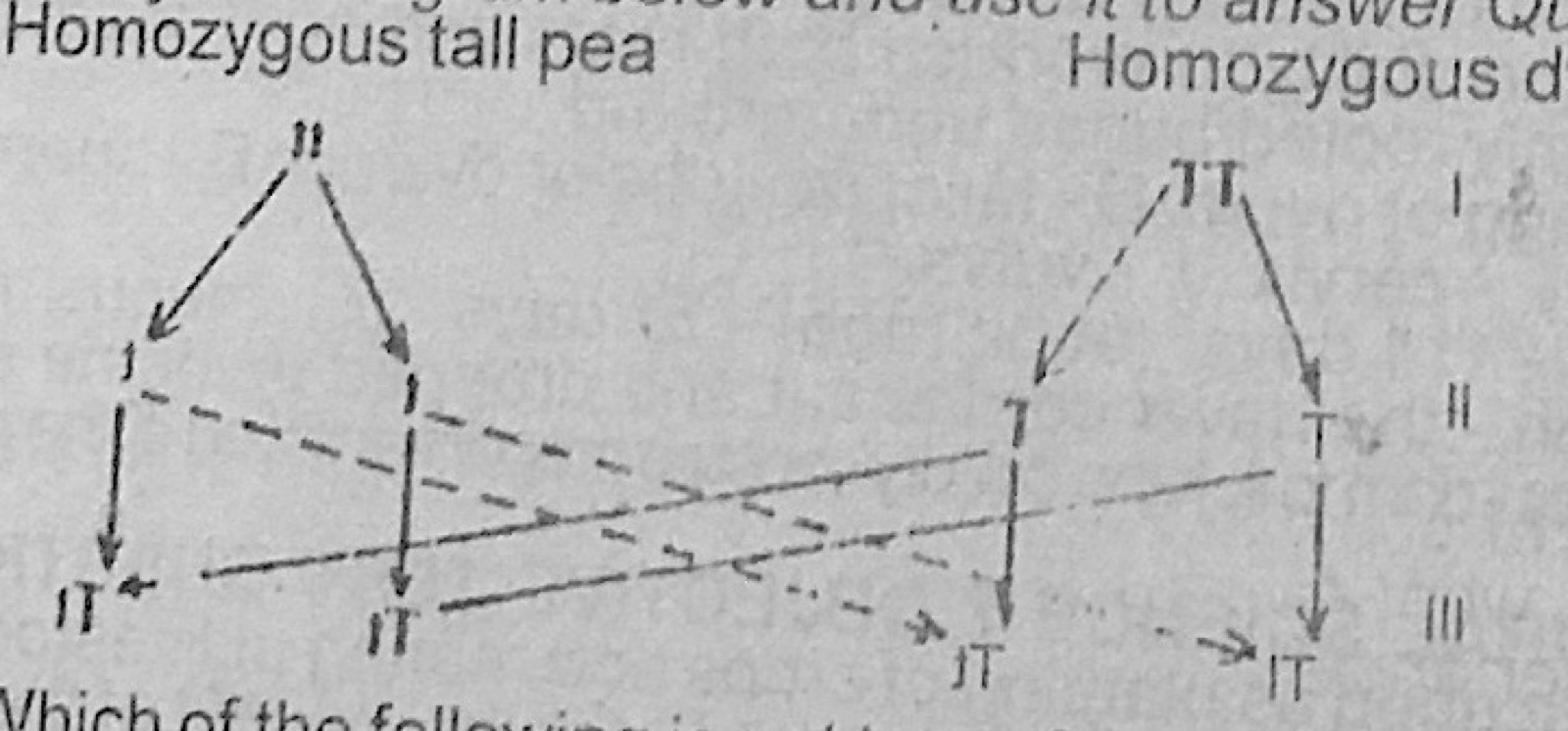
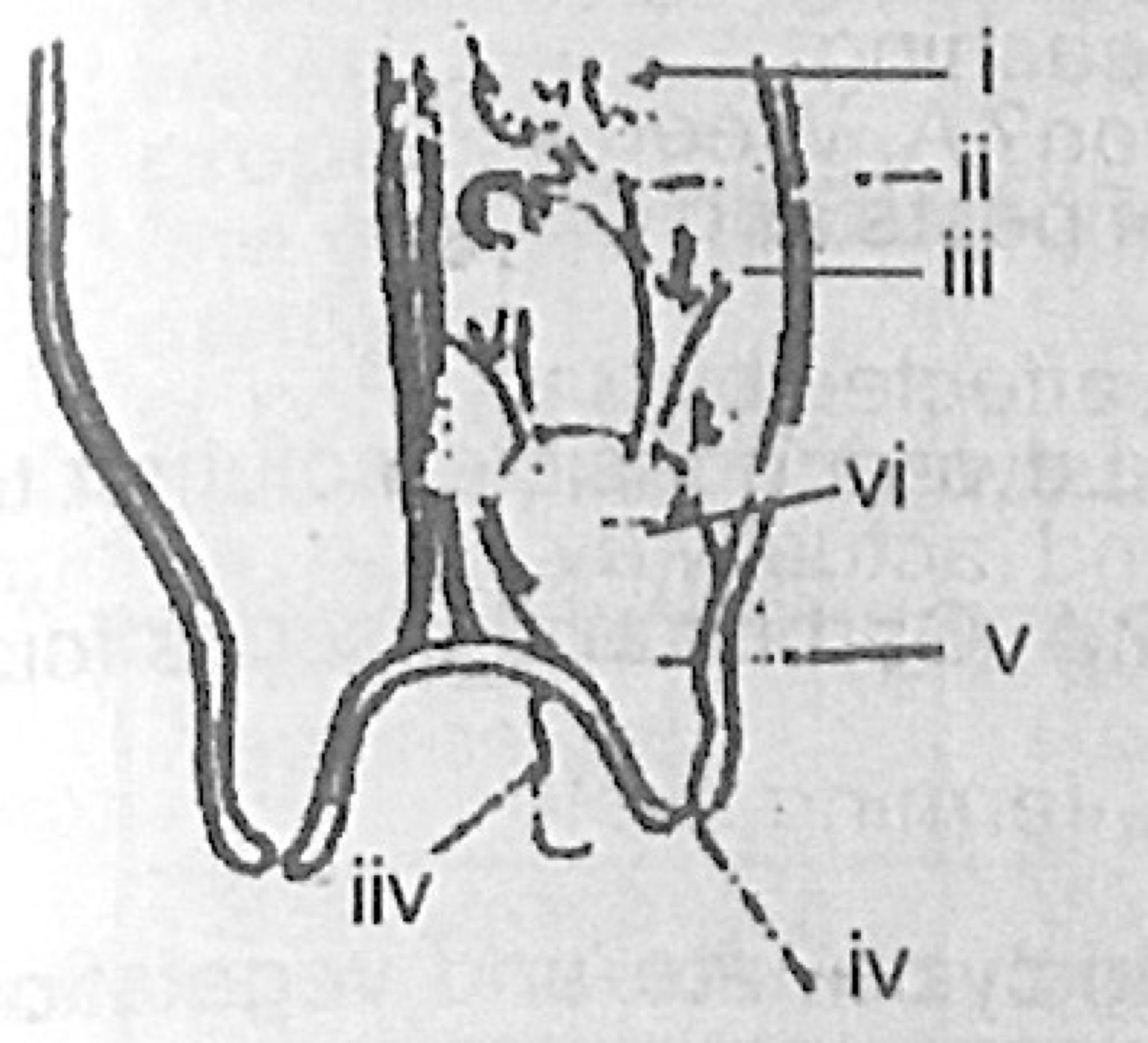
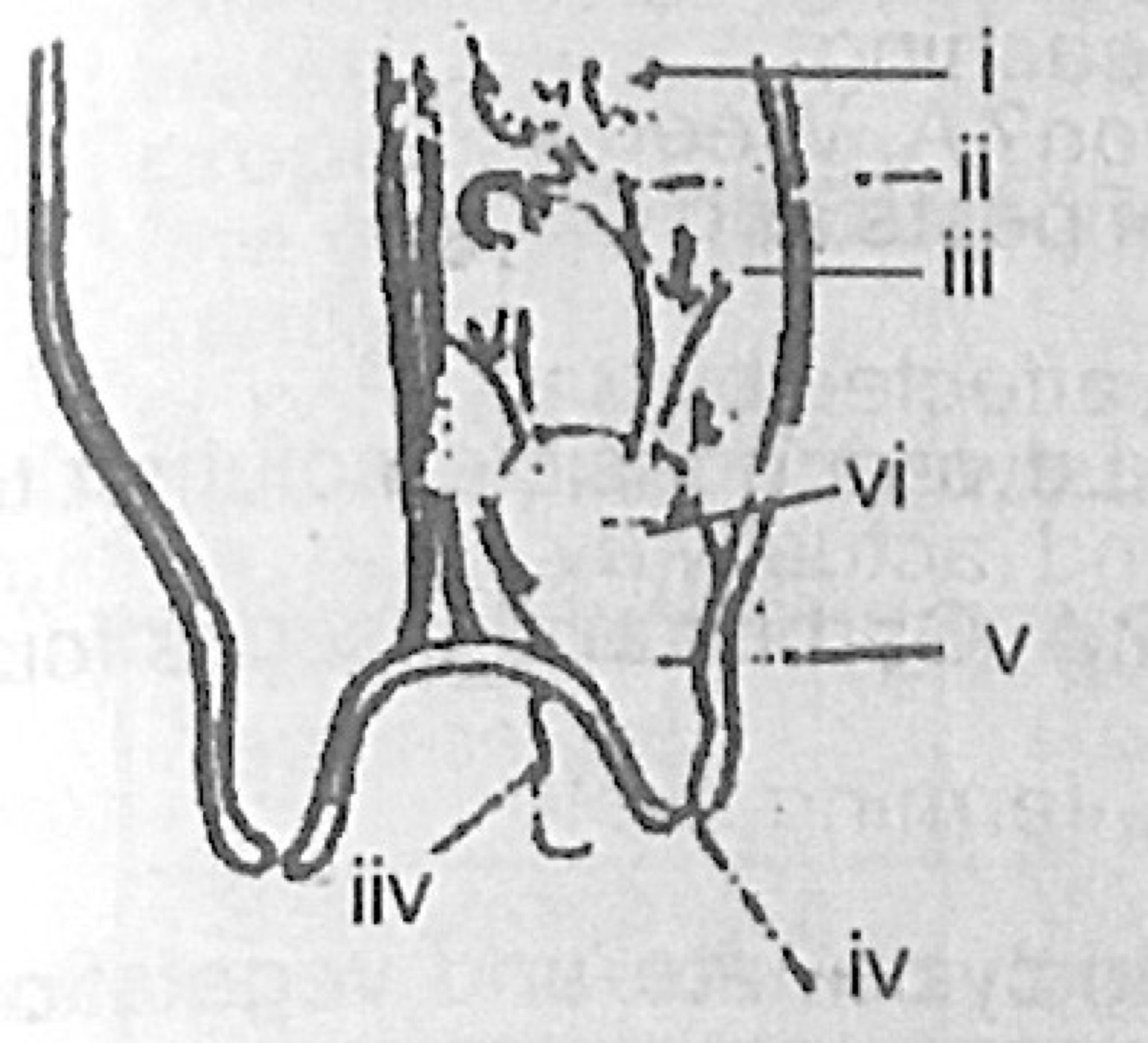
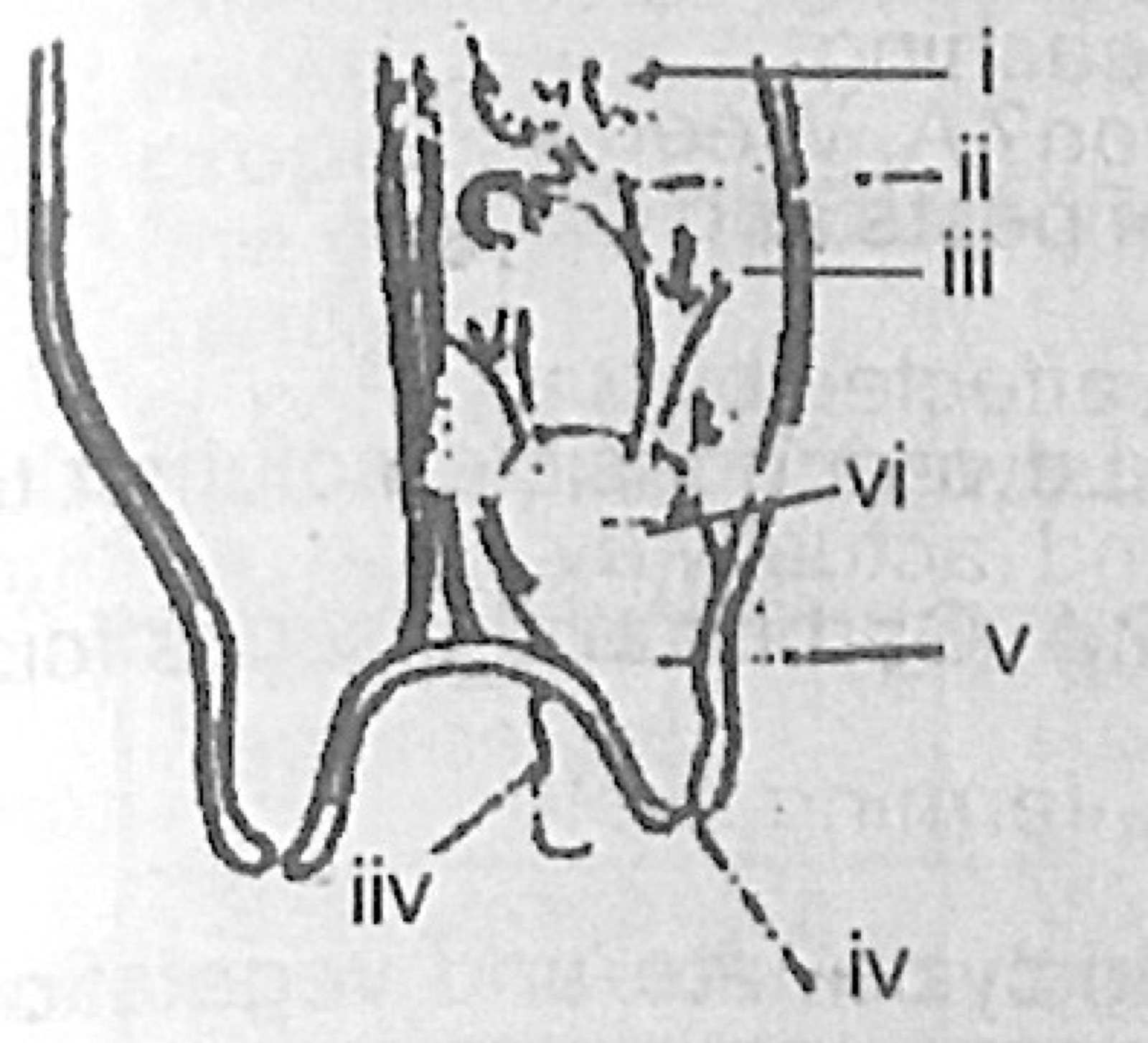
Study the diagram (a cross between homozygous tall pea and homozygous dwarf pea, rows labelled I, II and III). The diagram explains the Mendel's law of
A.segregation
B.independent assortment
C.chromosomal mutation
D.homozygosity
E.heterozygosity.
Show the answer and explanation
Answer: A (segregation)
Explanation
A one-character (monohybrid) cross showing alleles separating into gametes illustrates the law of segregation.
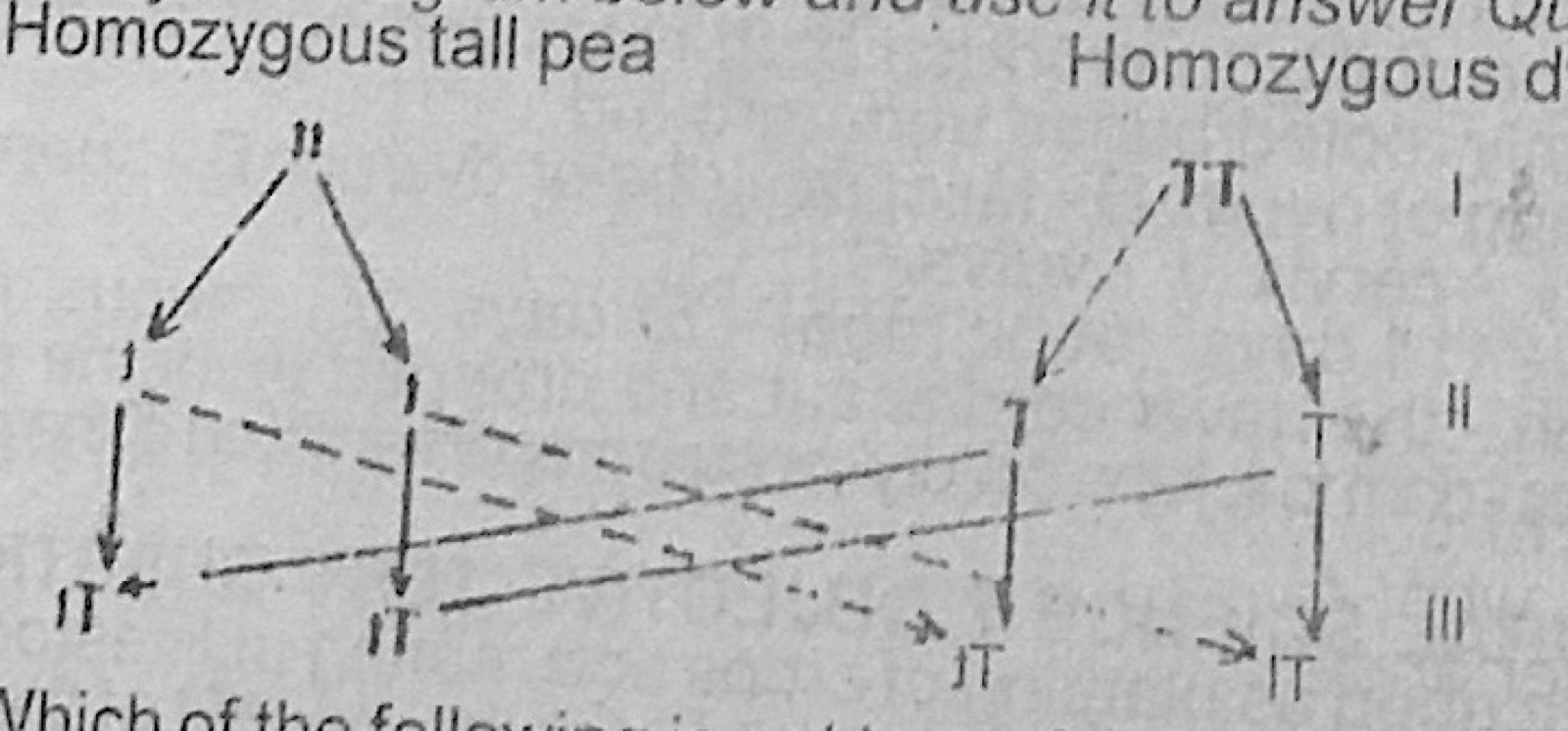
Study the diagram (a cross between homozygous tall pea and homozygous dwarf pea, rows labelled I, II and III). Which of the following is not true of the progenies labelled III? They are
A.the first filial generation
B.all tall pea plants
C.produced by a monohybrid cross
D.of the same genotype
E.different phenotypes.
Show the answer and explanation
Answer: E (different phenotypes.)
Explanation
All F1 offspring are Tt, so they all look tall; they do not have different phenotypes.
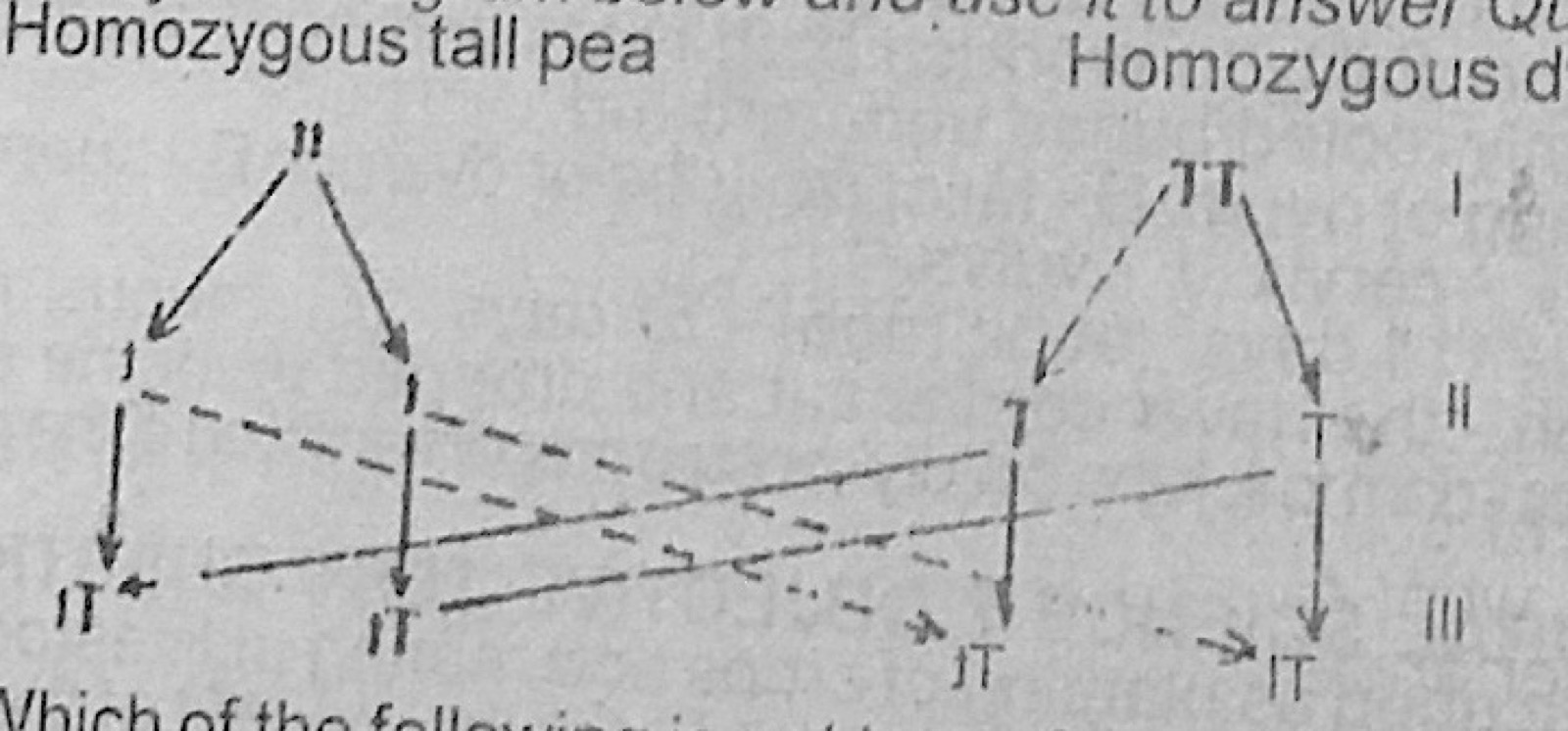
Study the diagram (a cross between homozygous tall pea and homozygous dwarf pea, rows labelled I, II and III). If the individual crops obtained in III are crossed, the phenotypic ratio of tall to dwarf progenies would be
A.3 : 1
B.1 : 2 :1
C.2 : 1
D.1 : 2
E.4 : 0
Show the answer and explanation
Answer: A (3 : 1)
Explanation
Tt × Tt gives TT, Tt, Tt, tt: three tall to one dwarf.
Discuss eight problems of agricultural development in Nigeria and suggest one possible solution to each of the problems.
Show the model answer
Model answer
Any eight problems, each with a matching solution: Land tenure/shortage – enforce Land Use Act, make land available Lack of credit – cheap loans, agricultural banks, cooperatives Scarce/costly inputs – subsidies, timely distribution of seeds and fertilizer Poor storage and processing – build silos, processing plants Poor transport – build and maintain rural roads Poor marketing/low prices – guaranteed minimum prices, cooperatives, marketing agencies Illiteracy and weak extension – adult education, more extension workers Pests and diseases – supply pesticides, research into resistant varieties Lack of rural amenities/rural–urban drift – provide water, electricity, health care Low mechanisation – tractor hiring services Unstable government policies – consistent policies
(a)(i) What is farm surveying? (ii) Outline the importance of farm surveying. (b) List and discuss four survey equipment commonly used in the farm.
Show the model answer
Model answer
(a)(i) Farm surveying is measuring and mapping a piece of farmland to find its size, shape, boundaries and features (ii) Shows exact size and boundaries; helps plan layout of plots, buildings, roads; helps calculate inputs (seed, fertilizer); prevents land disputes; needed for loans/title documents; helps in drainage and irrigation design (b) Any four: ranging poles – mark stations and straight lines; Gunter's chain – measures distance (20.1 m, 100 links); measuring tape – measures length; prismatic compass – measures bearings/direction; arrows/pegs – mark points; offset staff; theodolite – measures angles; plane table and level
Explanation
Define, give its uses, then describe what each instrument does.
(a) Mention two major elements of climate. (b) Discuss six ways by which climate and vegetation influence soil formation.
Show the model answer
Model answer
(a) Any two: rainfall; temperature; relative humidity; wind; sunshine/light (b) Any six: rainfall supplies water for chemical weathering (hydrolysis, solution); heavy rain causes leaching and erosion; temperature changes cause expansion and contraction of rocks; high temperature speeds chemical reactions and decomposition; wind erodes and deposits particles; vegetation adds organic matter (humus) when it decays; roots break rocks and bind soil; plant cover protects soil from erosion; organisms in vegetation release acids that weather rock
(a) Explain the term soil structure and state its importance in agriculture. (b) State four properties each of clay and sandy soil.
Show the model answer
Model answer
(a) Soil structure is the arrangement or grouping of soil particles into aggregates (crumbs, plates, blocks, prisms); good (crumb) structure improves aeration, drainage, water holding, root penetration, microbial activity and resistance to erosion; makes tillage easier (b) Clay: fine particles (below 0.002 mm); high water-holding capacity; poorly drained and aerated; sticky when wet, hard and cracks when dry; high nutrient-holding capacity; heavy to till Sandy: coarse particles; low water-holding capacity, drains quickly; well aerated; low nutrients, easily leached; light and easy to till; warms up quickly
Explanation
Define structure, then contrast clay and sand point by point.
In a tabular form, discuss cocoa, yam and millet production under the following sub-headings: (a) climatic requirement (b) soil requirement (c) cultural practices (d) method of propagation
Show the model answer
Model answer
Cocoa: (a) rainfall 1250–2500 mm well distributed, temperature 21–32 °C, high humidity, shade when young; (b) deep, well-drained loamy soil rich in humus, pH 6–7; (c) nursery, shading, transplanting at about 3m × 3m, weeding, pruning, spraying against black pod and capsids, fertilizer; (d) seeds; also cuttings, budding Yam: (a) rainfall 1000–1500 mm, temperature 25–30 °C; (b) deep, well-drained fertile loam; (c) making mounds/ridges, planting setts at about 1m × 1m, staking, weeding, mulching, fertilizer; (d) setts (tubers or minisetts) Millet: (a) low rainfall 250–750 mm, high temperature, plenty of sunshine; (b) light sandy loam, tolerates poor soils; (c) planting at start of rains, spacing about 75 cm × 30 cm, thinning, weeding, bird scaring; (d) seeds
Explanation
Set out the answer as a table with crops across and headings down.
(a) State the laws of Mendel. (b) Discuss three advantages and two disadvantages of (i) introduction (ii) selection in crop improvement.
Show the model answer
Model answer
(a) First law (segregation): the two factors (alleles) for a character separate during gamete formation so each gamete carries only one Second law (independent assortment): factors for different characters are passed on independently of each other (b)(i) Introduction – advantages: quick way of getting improved varieties; widens genetic base for breeding; new crops/varieties with high yield or resistance; cheap. Disadvantages: may not adapt to local conditions; may bring in new pests/diseases (ii) Selection – advantages: uses locally adapted plants; simple and cheap; improves yield, quality and resistance over time. Disadvantages: slow; cannot create new characters (only uses existing variation)
Explanation
State both laws, then three advantages and two disadvantages for each method.
(a) What is rangeland? (b) Discuss seven practices of management and improvement of rangeland.
Show the model answer
Model answer
(a) Rangeland is a large area of natural grassland, shrubs and scattered trees on which livestock graze, usually not cultivated (b) Any seven: controlled/rotational grazing; correct stocking rate to avoid overgrazing; reseeding/oversowing with improved grasses and legumes; fertilizer application; weed and bush control; controlled burning; provision of water points; fencing and paddocking; pest and disease control; resting (deferred grazing)
Explanation
Define rangeland, then explain each practice briefly.
Explain how each of the following practices can bring about high fish yield from a fish pond: (a) deweeding (b) desilting (c) supplementary feeding (d) fertilization.
Show the model answer
Model answer
(a) Deweeding: removes aquatic weeds that compete for nutrients and oxygen, hide predators and hinder harvesting (b) Desilting: removes mud deposits, keeping the pond deep with enough water volume and oxygen, and removing toxic gases (c) Supplementary feeding: gives extra feed (e.g. pellets, bran) so fish grow faster and can be stocked at higher density (d) Fertilization: adds nutrients that increase plankton, the natural food of fish
Explanation
Link each practice to food, oxygen or space for the fish.
Enumerate eight functions of an extension agent in the life of a rural farmer.
Show the model answer
Model answer
Any eight: teaches farmers new methods and research results; demonstrates improved practices; helps farmers get inputs (seeds, fertilizer, chemicals); links farmers to credit sources; carries farmers' problems back to researchers; helps form cooperatives/farmers' groups; advises on marketing; helps improve rural living (home economics, health); motivates and encourages adoption; organises field days and shows; keeps farmers informed of government policies
(a) Explain the meaning of agricultural finance and agricultural credit. (b) Name six sources of agricultural credit available to the small-scale farmer. (c) Mention six problems associated with agricultural credit.
Show the model answer
Model answer
(a) Agricultural finance is the study of how money (capital) is obtained, managed and used in farming; agricultural credit is money or inputs lent to farmers to be repaid later, usually with interest (b) Any six: commercial banks; agricultural/development banks (e.g. Bank of Agriculture); cooperative societies; microfinance banks; government agencies/ADPs; money lenders; friends and relatives; thrift and savings (esusu) groups (c) Any six: lack of collateral; high interest rates; delay in approving loans; small amounts given; misuse/diversion of loans; poor repayment/default; illiteracy and difficult procedures; lack of records; corruption/bureaucracy
Explanation
Define both terms, then list six sources and six problems.